Rewilding With Horses

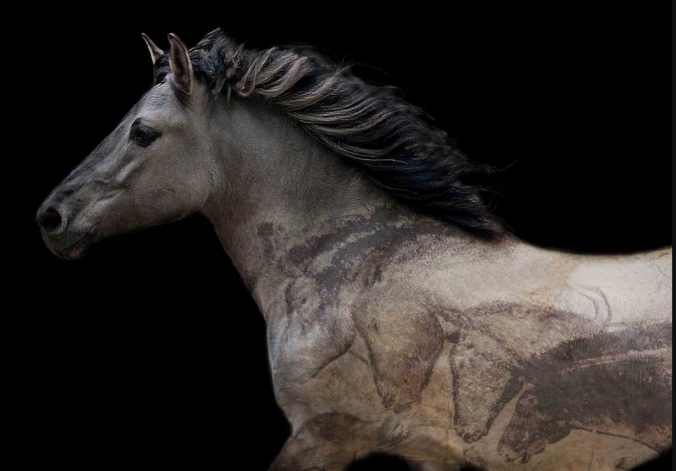
The poster for “TARPAN: Repainting An Ancient Picture” . Horsefly Films

The poster for “TARPAN: Repainting An Ancient Picture” . Horsefly Films

Related to a recent post, on an interesting “what if” question that has no answers, here is a kind of answer. Thanks to Rewilding Europe for this press release:

It is the worthy result of over a year of work by Jen Miller and Sophie Dia Pegrum, two American filmmakers at Horsefly Films. It is also the second in their ongoing series of informative and beautiful films documenting and celebrating rare horse breeds and the unique, and often vanishing, cultures that surround them. Continue reading

Feral, Reviewed

washington-square

Thanks to Conservation for this review of a book I first started hearing about last year, and now have even more motivation to read:

ADD A FEW SPECIES. PULL DOWN THE FENCES. STEP BACK.

Brandom Keim reviews George Monbiot’s Feral

The early twenty-first century is a soul-searching moment for conservation. With each new report of vanishing species and dwindling biodiversity, the last century’s great successes grow distant. Fundamental ideals and assumptions, in particular our cherished notions of wilderness, often feel ill-fitted to a crowded planet of more than 7 billion people. Continue reading

For All Our Blacksmith Friends, A Tribute

video-featured

Click the image above to watch an amazing short film. For the short time I spent time apprenticing as a blacksmith, before realizing how amazingly challenging this craft is, I thought I might become someone like this. I did not have it in me. But I learned respect for those who do. So I am happy to share this film for all those with the talent it takes, and those who may not have been quite aware of what it takes:

The Blacksmith: A Short Film About Art Forged From Metal

“I’m exploiting the maximum of what you can ask a piece of metal to do.”

Birds, Gastronomy, Cultural Heritage–Is It Entrepreneurial Conservation?

ORTOLAN-articleLarge

Michel Guérard, left, the chef of Les Prés d’Eugénie, and Jean Coussau, the chef of Relais de la Poste, are among a handful of chefs trying to bring the ortolan back to the restaurant menu in France. Credit Ulrich Lebeuf/M.Y.O.P for The New York Times

We do not link often to the countless stories of rhino populations being decimated due to poaching, not because they are depressing, which they are; but because there have been no breakthrough entrepreneurial conservation stories related to that tragedy. Ditto for elephants and other charismatic megafauna–overwhelmingly depressing and no solution in sight, with the rare glimmer of hope.

So, when I see an article like the one below, even though it focuses on charismatic minifauna rather than megafauna, I take note. We pay a disproportionate amount of attention to birds on this platform for reasons that should be clear to regular readers of these pages, so for now a question to all ornithologically advantaged readers: is the reference to the unpublished Canadian study at the end of the article real or bogus? If the latter, please share your knowledge through our comment section and we will provide the publisher a crowd-sourced, fact-checked update to the article.

This is one of the exceptional articles for which we provide full text because of its urgent environmental value, with the expectation that you will click through to the source to give proper credit, with thanks to the New York Times:

“The bird is absolutely delicious,” said Mr. Guérard, who recalled preparing ortolans for Mitterrand and his successor, Jacques Chirac, back when it was legal. (Mitterrand was said to linger over two ortolans in his last supper before his death in 1996, also consuming three dozen oysters, foie gras and capon.)

“It is enveloped in fat that tastes subtly like hazelnut,” Mr. Guérard said, “and to eat the flesh, the fat and its little bones hot, all together, is like being taken to another dimension.”

But the campaign has provoked environmentalists, who accuse the chefs of engaging in a publicity stunt to promote what they say is an archaic custom that will further endanger the bird, and that treats the ortolan inhumanely before it is killed. Continue reading

51 Ways To Have Your Porridge

Definitely not traditional: two colorful takes on porridge, from Friday's London Porridge Championships. Dai Williams/Courtesy of the National Porridge Championship

Definitely not traditional: two colorful takes on porridge, from Friday’s London Porridge Championships. Dai Williams/Courtesy of the National Porridge Championship

I loved it when we found out that one of our favorite companies was sponsoring a competition for porridge-making at exactly the time we were first planning the menu for 51.  And since opening, 51 has offered both sweet and savory options for porridge on its breakfast menu, but thanks to this story in one of our go-to food knowledge sources we are thinking that we can and must do more to expand the porridge horizons of our guests:

Dr. Samuel Johnson’s dictionary once summarily dismissed porridge, defining oats as a “grain, which in England is generally given to horses, but in Scotland supports the people.”

That was in the 1700s. These days, porridge is seen as more cool than gruel. Today is World Porridge Day — and to celebrate, London hosted its own porridge-making competition. Continue reading

Conservation, Passenger Pigeons, History Of Extinction

Gérard DuBois

Gérard DuBois

My favorite doomsday journalist (and I mean that as the highest compliment) posted over the weekend an unamusing memo to remind us that this is an important centenary anniversary. It ups the ante on our commitment to the community of birdwatchers, casual and serious alike, who support important conservation of wildlife habitat all over the world.

It is not amusing to be reminded about various tragic commons, especially ones for which collective action would seem to have been achievable. We link to these stories in the hope that doomsday outcomes will become less likely if we remind ourselves often enough.

Yesterday the ever-better New York Times, newspaper of record that pays more and better attention to environmental issues than most other publications, saw fit to print this piece by the Executive Director of the Cornell Lab of Ornithology, for which we give our thanks and share with you in whole due to its value as a public service:

ITHACA, N.Y. — THE passenger pigeon is among the most famous of American birds, but not because of its beauty, or its 60-mile-an-hour flight speed. Nor is it a cherished symbol of our great country. No, we remember the passenger pigeon because of the largest-scale human-caused extinction in history.

Continue reading

Our Gang, Thevara, On Independence Day

It has been a while since so much of the gang was gathered in one place at one moment. If you look back through the Our Gang, Thevara series over the life of this blog, you will find these, our usual suspects, all represented one time or another. Today, Independence Day 2014, they wanted their voices heard and faces seen again!

Seed Vault, Conservation For The Long Run

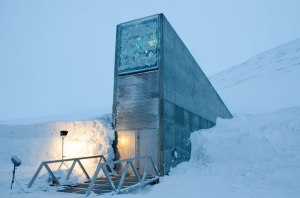
Travels to the seed vault on top of the world

Travels to the seed vault on top of the world

In advance of a story of our own, albeit set in the tropics at our upcoming beach resort, on this same topic, we thank Conservation for the story  they offered in an earlier issue of their magazine about this seed vault way way north:

…One day in Svalbard lasts four months, and the sun never sets; one night lasts four months, and the sun never rises. The other four months consist mainly of either long days with short nights or long nights with short days. Here the equinoxes—the two days annually with 12 hours each of daylight and darkness—really mean something. But what does “a day” mean here, and how many are there in a year? Continue reading

“Patagonia Sin Represas”–Finalmente

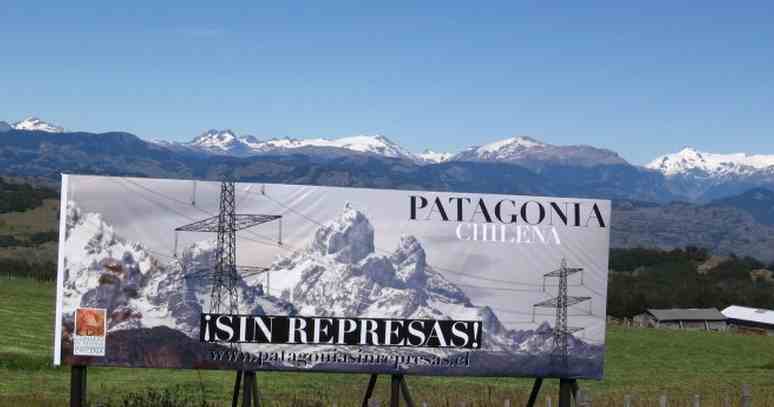
One of the many billboards representing the outcry from environmentalists and concerned members of the tourism sector

One of the many billboards representing the outcry from environmentalists and concerned members of the tourism sector

It’s been some years since our work brought me to this magical part of the world, but all of Patagonia and the specific region of Aysen have long been close to our hearts. So the news that the Chilean government overturned their 2011 approval of the HidroAysén project was happy indeed. The Baker and Pascua Rivers, previously slated for a series of 5 dams, are two of Patagonias wildest, and that’s saying a lot in a country filled with rugged beauty as diverse as it’s 4,300 kilometer length can possibly hold.

Part of that diversity has the potential to offer multiple options for renewable energy sources other than hydro-electric power. Solar power from the Atacama Desert, wave and tide projects from that enormous coastline, as well as wind turbines in areas of the country where winds reach gale force strength on a regular day are all possible options.  Continue reading

Poacher Is A Poacher Is A Poacher

The fossil of a Tarbosaurus bataar, which was returned to Mongolia after it was poached and sold for $1 million, in an undated handout photo. Fossil poachers have become a major problem for paleontologists, wreaking havoc on the sites of dinosaur remains. (U.S. Immigration and Customs Enforcement via The New York Times) -- EDITORIAL USE ONLY

The fossil of a Tarbosaurus bataar, which was returned to Mongolia after it was poached and sold for $1 million, in an undated handout photo. Fossil poachers have become a major problem for paleontologists, wreaking havoc on the sites of dinosaur remains. (U.S. Immigration and Customs Enforcement via The New York Times)

I have normally thought of poachers in relation to live animals and especially endangered species, but here is news that broadened my knowledge of what gets poached and what happens as a result:

On the morning of October 17, 2012, a cadre of federal agents and sheriff’s deputies in Gainesville, Florida, went to the home of a suspected fossil smuggler named Eric Prokopi and arrested him.

As I reported in The New Yorker in January, 2013, the case against Prokopi was unusual and aggressive: it included several counts of felonious smuggling, and characterizations of the defendant as a “one-man black market.” Two months after his arrest, Prokopi pleaded guilty to smuggling the bones of a Tarbosaurus bataar, a Tyrannosaurus rex cousin that lived seventy million years ago in the Gobi Desert of Mongolia, which prohibits the commercialization of natural history. Continue reading

Go Ahead, Laugh About Climate Change

climate-change-comedy-290I am not 100% certain that laughter is an antidote to anything, but every now and then it seems like the only option. HOW TO LAUGH AT CLIMATE CHANGE, by Michelle Nijhuis, had its intended effect on me:

Continue reading

Become Ocean Is The Water Music Of Our Times

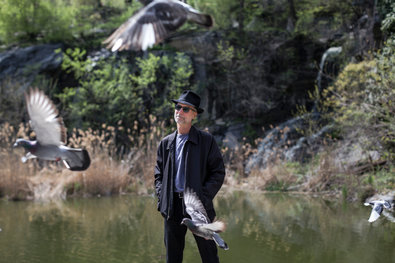
Chad Batka for The New York Times. “It’s impossible for us to separate who we are from where we are”: John Luther Adams, the composer of “Become Ocean,” in Morningside Park in Manhattan.

Chad Batka for The New York Times. “It’s impossible for us to separate who we are from where we are”: John Luther Adams, the composer of “Become Ocean,” in Morningside Park in Manhattan.

Thanks to Corinna da Fonseca-Wollheim for A Composer Attuned to the Earth’s Swirling Motion, in which John Luther Adams discusses “Become Ocean,” which will be performed on Tuesday at Carnegie Hall, and his other environmentally themed works. Their discussion rings true to us. Where we are is a large part of who we are.

That resonates with La Paz Group’s ethos. If we are not sensitive to where we are, who are we? We wonder that every day, so we recommend the article in today’s New York Times Arts section that offers a well-deserved review and praise of the work of an environmentally-inspired/concerned composer who we first heard about last July when the New Yorker‘s music critic wrote the following:

The hundredth anniversary of Stravinsky’s formerly scandalous Rite of Spring, on May 29th, raised the question of whether a twenty-first-century composer can produce a comparable shock. Perhaps not: the twentieth century elicited such a numbing array of shocks, both in art and in reality, that the game of “Astonish me”—Diaghilev’s famous command to Cocteau—may be temporarily played out. Still, astonishment comes in many forms. There are shocks of beauty, shocks of feeling, shocks of insight. Such were the virtues of John Luther Adams’s Become Ocean, a forty-two-minute piece for large orchestra, which had its première at the Seattle Symphony on June 20th. Like the sea at dawn, it presents a gorgeous surface, yet its heaving motion conveys overwhelming force. Whether orchestras will be playing it a century hence is impossible to say, but I went away reeling. Continue reading

Collapsitarians Rising

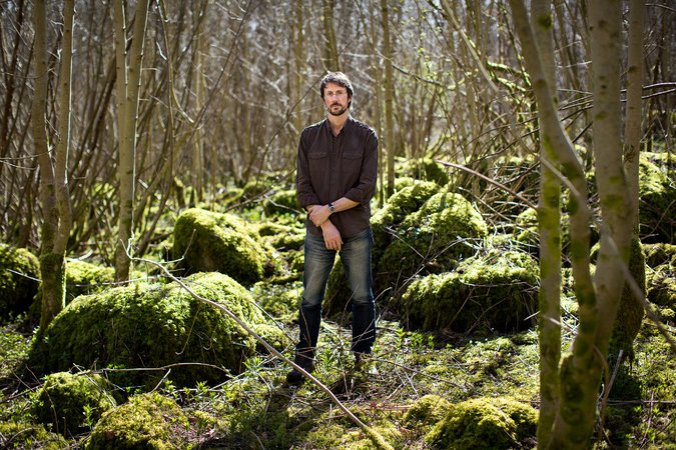
Paul Kingsnorth. Photo by Kenneth O Halloran

Paul Kingsnorth. Photo by Kenneth O Halloran

Collapsitarian sounds decidedly like the opposite of our approach on this platform, but in this profile I recognize observations and motivations, and even actions if not conclusions, out there among the practitioners. Read the story in this week’s New York Times Magazine:

By DANIEL SMITH

After decades of fervent environmental activism, Paul Kingsnorth decided it’s too late — collapse is inevitable. So now what?

If that seems intriguing, and especially if you want to smile and even laugh a bit, visit Paul Kingsnorth’s website:

OAQs

(Occasionally Asked Questions)

Could you puff yourself up in a few paragraphs of third person prose please?

Certainly. Paul was born in 1972. He studied modern history at Oxford University, where, as well as studying, he edited the student newspaper and was politically radicalised by his involvement in the road protest movements of the 1990s. Continue reading

Costa Rica And India, Friends In And Friends Of Democracy

14-oscar-arias-indiaink-tmagArticle

Jeffrey Arguedas/European Pressphoto Agency

I was rushing through an airport recently, in transit between one workplace and another, when the man in the picture above walked past me and our eyes connected; we both stopped.  We were not in his country or mine. There was no reason for him to remember who I was, but I had good reason to greet him with “Mr President, you are looking well.” The man has not seemed to age a day since I first met him nearly 20 years ago.

To my astonishment, he recognized me and reminded me that our last meeting was in his office in Costa Rica with a group of conservation-oriented investors interested in that little country’s commitments to its national park system. Oscar Arias played an important role, as President nearly three decades ago, and then again as President in the last decade, innovating a more sustainable future for the national park system, and these investors were interested to hear his views.

Lest anyone misinterpret this as an exercise in name-dropping, my point in mentioning this is very much the opposite. Costa Rica, to use a great metaphor from an otherwise not great sport, “punches above its weight class” in conservation, in health indicators, in education, and even in happiness.

This explains its success in attracting foreign direct investment, and makes all the more remarkable that a Nobel laureate who has twice been president of Costa Rica is approachable and friendly, generous with his time. It is the Costa Rican way, without regard to status. He has time to say hello to a random gringo in an airport. He has time to come to India to say hello to the 15o million new voters (added to the hundreds of millions of experienced voters) engaged in the current exercise of the world’s largest democracy: Continue reading

Long-Form Science Writer On Vacation In One Of Our Favorite Places

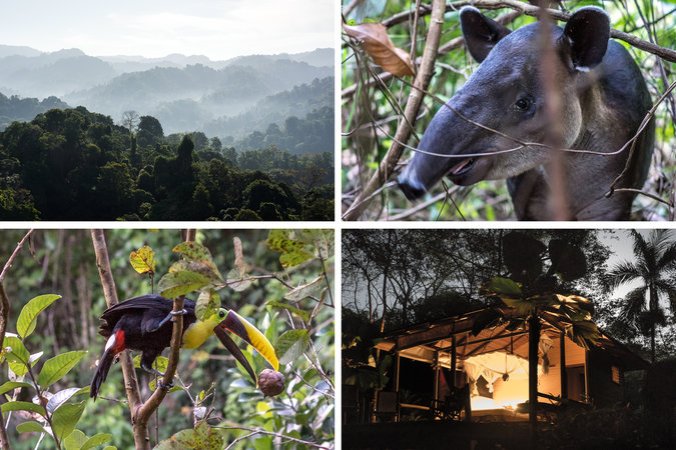
Clockwise from top left: Rain forest in Corcovado National Park; a tapir in the park; a cabin at Bosque del Cabo Rainforest Lodge; spying on a toucan at the lodge. Credit Scott Matthews for The New York Times

Clockwise from top left: Rain forest in Corcovado National Park; a tapir in the park; a cabin at Bosque del Cabo Rainforest Lodge; spying on a toucan at the lodge. Credit Scott Matthews for The New York Times

As might be guessed from many of the sources linked to here, several of us are fans of long-form narrative and some enough so that we listen to a podcast dedicated to interviewing long-form journalists. We love well-crafted descriptive wording. Our friends in Costa Rica generally, and the Osa Peninsula especially, must be delighted to have Amy Harmon‘s long-form knowhow working in their favor in this week’s Travel section of the New York Times.

BdCShirtBy almost unbelievable coincidence, while wearing the shirt to the left (selfie by yours truly, dear reader) I was listening to a podcast interview with Amy Harmon  at the moment this article–what first caught my eye was the title about travel to Costa Rica–came onto my screen. Then, seeing it was by Amy Harmon I had to read it immediately for another reason. We have a large collection of posts dedicated to science writers and their craft, but none yet dedicated to her work (this post is the first step of correcting that negligence). Below, excerpts of the description of the experience she had at Bosque del Cabo, a property where many of our guests who stay at Xandari also visit, and vice versa:

…Our first stop, Bosque del Cabo, was a 40-minute ride by taxi from Puerto Jiménez, the biggest town on the peninsula with a population of 1,780. I had chosen one of the two cabins at Bosque just steps from the rain forest, at the edge of a large clearing planted with native trees and plants. A half-mile away from the main lodge area, these “garden cabinas” are reached by a trail through the forest that crosses high above a river over a suspension bridge… Continue reading

Chefs Do The Most Surprising Things, At 51 In Kerala’s Historic Mattanchery Neighborhood, And Elsewhere

Photograph by Brian Ach/Getty

Photograph by Brian Ach/Getty

The kitchen team at 51 has gone from concept and recipe development, to food trials, to opening and ongoing operations, to continued taste tests, rather nonstop for months. They have risen to the challenge–Malabar cuisine showing off its Eastern Mediterranean multicultural influences–and surprised our palates pleasurably. But now a quick break with a fun story, for the team at 51.

Everyone loves a well-planned and meticulously executed surprise when the outcome is a big smile. Why not chefs, too? Chef stories are on our radar lately and this one, if it is to be believed in all details, has a surprise within a surprise in that these culinary artists who have all “made it” still deem to sleep in modest accommodation in the interest of pulling off the party of a lifetime, in secret, for someone they care about:

For forty-eight hours this week, some of the world’s most acclaimed chefs, who hold twenty Michelin stars and myriad awards between them, were living in hiding in New York City. The twenty non-New Yorkers were sequestered together deep in Williamsburg, in dingy rental apartments with thin mattresses on wooden slats, horrible lighting, and half-eaten bags of Doritos strewn about. Continue reading

Amazon Not Prime

Screen Shot 2014-04-04 at 9.06.54 AMJeff Bezos wants Amazon to be “Earth’s most customer-centric company.” What do customers’ interests and concerns include? We believe customers increasingly care about the environmental practices, and cultural impact, of companies they buy from.

George Packer published a profile of Amazon in mid-February that raises questions about the modern form of capitalism, especially with regard to its impact on culture. Today in a follow up blog post about Amazon on the New Yorker’s website Packer brought to our attention this study about cloud computing’s best and worst corporate citizens. Amazon does not fare well in the analysis. Click the image to the left to go to the full publication, but start with the quick summary below:

Executive Summary

For the estimated 2.5 billion people around the world who are connected to the internet, it is impossible to imagine life without it. The internet  has rewoven the fabric of our daily lives – how we communicate with each other, work and entertain ourselves – and become a foundation of the global economy.

Seemingly on a daily basis, new businesses that use the internet as their foundation are disrupting and often replacing long-standing business models and industries. From music and video to communications and mail, more and more of our “offline” world is moving online. We can expect that trend to continue and accelerate as the global online population reaches 50% of the world’s projected population, moving from 2.3 billion in 2012 to an expected 3.6 billion people by 2017. Continue reading

Extinction And Its Discontents

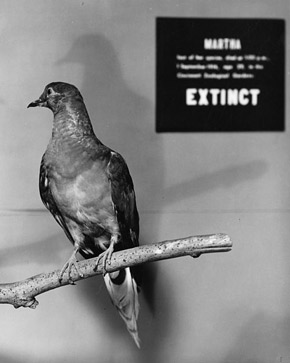
Photograph: Smithsonian Institution Archives.

Photograph: Smithsonian Institution Archives.

I consciously favor stories of alternative approaches and progress on solving environmental challenges rather than the easier-to-find doom and gloom stories, which can have the effect of making one want to turn off the news altogether. I also strive, often in vain, to not be trite. But on occasion I am willing to push that edge as well–pop tarts? yes, when the story is worth telling. Among the toughest topics is extinction, because of its foreverness, and repeated stories with ethical heaviness embedded. Still, I try.

Elizabeth Kolbert, the New Yorker‘s point person on ecological challenges, not least mass extinction, has a remarkable ability to make information about impending cataclysm compelling; she compels me with that information to open my eyes rather than shut them; she also has reasoned ideas about that information, as this post on the magazine’s website displays:

Sometime in the summer of 1914, probably on September 1st but perhaps a few days earlier, the last passenger pigeon on Earth expired. The bird, named Martha, had spent most of her life at the Cincinnati Zoo. Until a few years before her death, she had a companion, George, who shared her ten-by-twelve-foot cage. Whether the two ever tried to mate is unknown. Like the Washingtons, they left no heirs. Continue reading

Inspiration, 51

Photograph by James Pomerantz.

Photograph by James Pomerantz.

This post is for the team at 51, a new restaurant we are opening soon, located on the waterfront of Fort Cochin’s harbor in the history-intact, spice-trading Mattanchery neighborhood. That team is a group of men and women, chefs, support cooks, self-made cuisine historians, and other interested parties collaborating on a new concept.  It is a concept, but deftly avoiding pretension. More about fun historical convergences, good taste, and communities interacting over long stretches of time to create new food ways. Following is a restaurant review whose accompanying photo was the main draw, but so was the notion of foraging that has become so compelling to foodies of late:

It seems strange to say that the best thing at a place that specializes in juice cleanses is the porchetta, but Foragers Market and Table encapsulates the contradictory nature of the New York diet, serving quality food that feels “healthy,” and is often local and organic, but with none of that dull avocado-based asceticism. Continue reading

What Do Mammoths And Passenger Pigeons Have In Common?

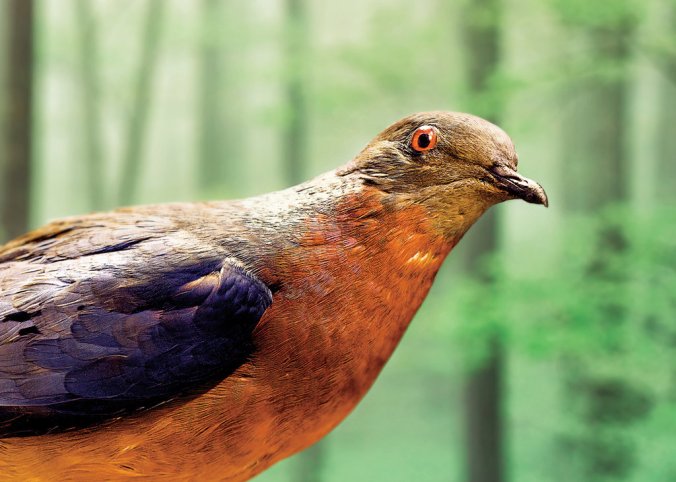
Passenger Pigeon Extinct 1914. Billions of the pigeons were alive just a few decades earlier. Like the other animals shown here, it has been proposed for de-extinction projects. Credit Stephen Wilkes for The New York Times. Passenger pigeon, Museum of Comparative Zoology, Harvard University.

Passenger Pigeon Extinct 1914. Billions of the pigeons were alive just a few decades earlier. Like the other animals shown here, it has been proposed for de-extinction projects. Credit Stephen Wilkes for The New York Times. Passenger pigeon, Museum of Comparative Zoology, Harvard University.

He had me at mammoth. When he added passenger pigeon, I demonstrated the definition of click bait. I had to learn more. I will reserve judgement for now, but can recommend your reading what I have just read. Both species may be back in business soon, with the assistance of de-extinction science according to this story in the current New York Times Magazine.  Not far from the beginning of the story, this fascinating letter is excerpted:

…Brand became obsessed with the idea. Reviving an extinct species was exactly the kind of ambitious, interdisciplinary and slightly loopy project that appealed to him. Three weeks after his conversation with Flannery, Brand sent an email to Church and the biologist Edward O. Wilson:

Dear Ed and George . . .

The death of the last passenger pigeon in 1914 was an event that broke the public’s heart and persuaded everyone that extinction is the core of humanity’s relation with nature. Continue reading