Gulf Of California Partnership

Reviewing events in the region since I was last there, I came across this news (three years late, for something this interesting, is better than never to learn about it). WWF, to its great credit and the world’s benefit, found creative ways to partner with entities during the time since I completed my small task for them.  Listening to this man speak on behalf of the aquarium, I see the enormous educational impact such an institution can have (and here I must acknowledge that I have always found zoos and aquariums melancholia-inducing places, with charismatic mega-fauna trapped in relatively small spaces for us to muse over; but I am changing my perspective):

The WWF press release at the time started:

Long Beach, Calif., April 30, 2008— Described by Jacques Cousteau as the world’s aquarium, Mexico’s Gulf of California is one of five marine ecosystems in the world with the highest diversity of wildlife.

Continue reading

Mission-Driven Development in Baja California Sur

In the first third of the 17th Century the Spanish crown sent Jesuit priests to establish missions in what is now Baja California Sur.  The fourth of these–Misión San Francisco Javier Vigge Biaundó–was active from 1699-1817.  What is amazing is that the installation has remained intact even centuries after its last priest left (abandoning the missions at the gun-pointing insistence of the crown as independence movements fomented, which is a story worthy of your further investigation).  Having found this particular oasis in the last third of the 17th Century, the priests cultivated grapes, dates, olives and other produce which, remarkably, still grow here today.

This slideshow requires JavaScript.

It is visually and olfactorally stunning to be in a place with the cactus and other desert flora native to the region Continue reading

La Giganta, Baja California Sur

As noted in the first and second posts on this topic, the question at hand is whether there is a formulation that can effectively bring thousands of hectares of private lands into a conservation area that is supported by entrepreneurial activity.  That activity puts conservation and social welfare of the local communities as the top priorities–the motivation for bringing conservation-minded travelers to valorize these protected areas.

This slideshow requires JavaScript.

Continue reading

Gulf Of California

I had not been exposed to the corridor known as La Giganta, which you can see in the background of the above photo, when I carried out my work on behalf of WWF several years ago.  Now that I have, over the last week, I can only say that it had such an impact on me that I am still processing it.  It is partially the geology of this portion of the peninsula known as Baja California Sur.  It is partially how that geology intersects with the marine ecosystem. But it is mostly–and here I refer to the impressions I am still processing–the intersection of local people with those two natural wonders that really got to me.  The photo above looks from the back of a panga (the type of boat local fishermen use) as we departed a property that is best described as an oasis. Continue reading

A Four Year Echo Of Hope

For all of the challenges facing the Gulf Of California region ecologically, global trends in sustainable tourism offer potential solutions.  Broadly speaking, the mass tourism model propagated on the most accessible coastal regions of the world—particularly those visited by European and North American travelers—has been challenged by this alternative model.

Still, the mass tourism model has its advocates, in Mexico as in other parts of the world, and creeps into the planning models of destinations where sustainable development is the nominal platform. This happens because for at least half a century the notion of success or failure in tourism development has been defined according to this older model.  If WWF is to have an effective strategy for conservation in the GOC region, then a clear definition of competitiveness vis a vis sustainability must be established.

Those words opened the first draft of a report submitted four years ago . Continue reading

Walton Ford, Come To India!

In my last post, I walked along a border–the one separating the land of nostalgia from the land of meaning–and am still not sure which side of the border I was on.  One person’s memory lane is full of madeleines, and another’s may have no particular there there (so be it, glass houses and all).  The link to Brother Blue is the puzzle.  Can anyone, out of context, realize who that man was and what he accomplished from that little bit of Lear jive?  I do not know.  But recycling is an ethos that India is instilling, so I go with it.

The thread linking Thoreau and Brother Blue for me the other day kept un-spooling, and led me back to my favorite living artist:

A Few More Dots

Seth’s reference yesterday to one of the writers who most influenced me, combined with Amie’s reference today (do give a moment to her link on Niemann’s brilliance) to autumn, caused some sort of mnemonic chemical reaction.  It started by thinking about the quotation of Thoreau overnight.  By the time I saw Amie’s mention of autumn this morning, I suddenly remembered a trip I took to Walden Pond in the autumn of 1979.  Continue reading

Connecting Dots

This slideshow requires JavaScript.

The news of Jad Abumrad being selected as a MacArthur Fellow, the so-called “genius grant” in recognition of his accomplishments and his future contributions, was worthy of celebration.  That defenestration reference led me back to that episode, which was a series of oddly connected sub-segments on the topic of Falling.  I use the word odd at the same time that I think: these are clearly examples of structured relevance.

What’s more odd is the coincidence between the Jad news and the fact that I just recently had pulled out material from my doctoral dissertation that I had only looked at one other time since 1997.  I pulled it out for the presentation I made to the students at Brown mentioned here.  Some visual highlights of that presentation (more on my dissertation, which is more clearly linked to Seth’s post here, and this one too, another time) are in the slideshow above, and complement Radio Lab’s treatment of the same (cue up at just prior to the 35th minute of this episode if you can download it and listen to it on your own player). Continue reading

Watch It On National Geographic Channel

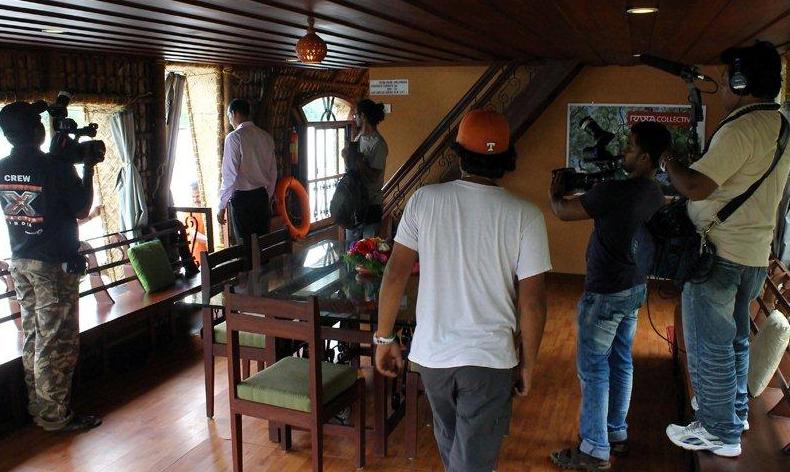
Our colleagues offer amazing experiences on the backwaters of Kerala, in the houseboats described here, with some visual support here and here; and once more here (really, look at it to get a sense of grocery shopping in our neighborhood); so no surprise that a film crew and remarkable cast of characters asked to spend time with them.  The crew of 15 or so (I lost count) was from all over India; so was the cast.  The four featured men in this film are part of a “bucket list” adventure that is being filmed in the locations ranked most highly in a national competition as “must go.” Kerala’s backwaters made that list. Raxa Collective’s houseboats were chosen as the venue for best experiencing those backwaters.

The four men–a student, an IT marketing executive, an Indian Capoeira master-in-training, and a famous Bollywood actor–met for the first time not long ago, and by the time we met them they seemed like old friends.  By the time it airs on the National Geographic Channel, that will stand out as much as the fabulous locations (I like the picture hanging on the wall past the camera man).  We will share more on the broadcast times when we have them.  The photo below is Milo’s, and we have some additional photos by Sung from this particular day (they were on the houseboats for many more days), more on which as we have those photos, and hopefully some film outtakes.

Collective Action & Learning

This site has more than one expression of gratitude for the founders, funders, faculties and students at more than one institution of higher learning.  Students have written their own descriptions of gratitude for experiences that such schools (as well as their families and communities) have prepared them for.  Recently I have interacted with the faculty and students of a course at Brown University and the takeaways keep on giving and then giving some more. Now, I extend an invitation, or recommendation, to students elsewhere: join!

I do not necessarily mean, as in here, join us.  Just as well if you can support the efforts here or here or here; otherwise take your pick from other posts on this site.

I direct this to students at a course at Cornell University, taught by Steve Wolf.  They are challenged to figure out the collective action problem, and solve it practically.  Side note: some recent graduates of Cornell, such as Nicole and Katrina, have shared their personal experiences in projects inspired by the topics in this course; a couple of examples are here and here (see their other posts by clicking on their names on the right side of this site); so has Adrien, a couple of years out of Amherst; and David, who would have graduated Brown a few years ago if he had not been busy forming this organization.

You get the point.  I hope that more of you join, wherever you may. And you are more than welcome here.  We all look forward to your contributions.

Brown Takeaways, & Galapagos Giveaways

For the work we do, there are a few places always on my radar.  I do not mean some search engine tool for getting all the news on such and such.  I mean radar in the sense of, what really matters?  Why? When and where did it start mattering for me?  September, 1983 at JFK Airport is at the very top of the list, believe it or not, but I will save that story for another day. August, 1988 at Cornell University is near the top, as is February, 1995 in Costa Rica.  The Galapagos Islands joined the list in July, 1998 when I had my first work assignment there.  Ever since, I have had WWDD? buzzing in my thoughts, something like a bumper sticker in the back of my mind that cannot and will not go away.

This story from 2000 is a reminder of one my my subsequent visits.  Continue reading

Takeaways & Giveaways

The mention of Brown and the questions students raised in a postscript exchange of ideas continues to inspire.

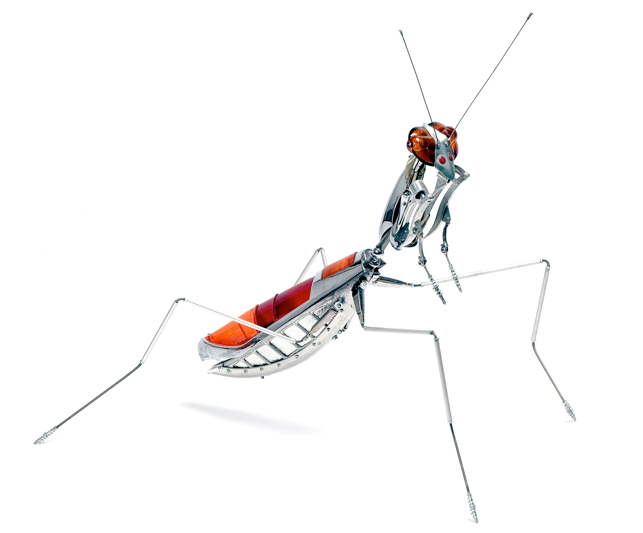
In a world of give and take, another mention of our favorite sculpteur of late is one way to think again about the fable mentioned here.  Ants are not just the worker drones implied, and grasshoppers are not just the partiers implied.  Could it be that the praying mantis has the answer? :

Takeaways

The video clip above is what comes to mind after a bit of reflection. Thanks to Alan, Bill and 30+ others, I have not only fonder thoughts for Brown University, but food for thought.  The course ENGN 1930, aka Social Entrepreneurship, asks students to provide brief, written reflections on class sessions, readings, etc.  In my session with them, I started by sharing my experience completing a PhD and moving to Costa Rica in the mid-1990s.  I then described the process of learning from both public sector leaders and entrepreneurs there, and eventually forming a company that practices entrepreneurial conservation.

The gist of several of the “takeaways” from students is the reasonable question that I am chewing over now: are the Raxa Collective initiatives examples of social entrepreneurship?  Is La Paz Group practicing social entrepreneurship?  The snarky, if partially true reply would have been that I do not care all that much what it is called.  Continue reading

Footprints

As of this writing, the biographical section of this author’s personal website begins with an inaccuracy that can be easily forgiven.  He just hasn’t updated it yet.  That’s okay, glass houses and all.  But what about all the students interested in topics like this, at places like Brown and Cornell, who want to figure out how one becomes Charles C. Mann?  We learn a bit about the initial C in his name, but not about how he got interested in this topic, he prepared to research it, write it, etc.  That’s okay too.

He brings light to so many topics that we take for granted, even those of us studying some of these topics–do you picture the local population of what is now North America, pre-Columbus, riding horses?–that we can be thankful that he has been busy at researching and writing this book, and less busy explaining to us how he learned to do such work.  Just this passage should get you thinking:

Newspapers usually describe globalization in purely economic terms, but it is also a biological phenomenon; indeed, from a long-term perspective it may be primarily a biological phenomenon. Two hundred and fifty million years ago the world contained a single landmass known to scientists as Pangaea. Geological forces broke up this vast expanse, splitting Eurasia and the Americas. Over time the two divided halves of Pangaea developed wildly different suites of plants and animals. Before Colón a few venturesome land creatures had crossed the oceans and established themselves on the other side. Most were insects and birds, as one would expect, but the list also includes, surprisingly, a few farm species—bottle gourds, coconuts, sweet potatoes—the subject today of scholarly head-scratching. Continue reading

Footprints & Impact

No sooner had I posted the words of a former President of Brown University than a colleague at Cornell sent me news that Mathis Wackernagel is serving a term as a Rhodes Professor (as it is known in shorthand).  This brought to mind two things: first, this book that was published as I was completing my doctoral dissertation and starting work in Costa Rica on a related topic (more on which, soon); second, the President of Cornell University during all of my seven years on campus.  The book was to have a huge, lasting impact.  The same is clearly true for President Rhodes, whose hand I had the honor to shake more than once.  The confluence of events in 1996–this book’s publication and an unrelated group of grateful and generous Cornell alumni creating this Professorship that would later honor the book’s author–is pretty cool:

Frank H. T. Rhodes Class Of ’56 University Professorship

To commemorate their 40th reunion, the Class of 1956 initiated an endowment to create the Frank H. T. Rhodes Class of ’56 University Professorship in honor of Cornell’s ninth president (1977–1995). The purpose of the Rhodes Class of ’56 Professorship is to strengthen the undergraduate experience by bringing to the university individuals from every walk of life who represent excellence of achievement and to create opportunities for interaction with undergraduates. The endowment also makes it possible to create public events related to the professorship such as lectures, performances, films, art exhibits, or conferences. Rhodes Class of ’56 Professors are full members of the faculty while in residence. Appointments are awarded for a period of three years. During each year of their appointment, Rhodes Class of ’56 Professors visit the campus for a week to engage in a variety of activities including public lectures, ongoing courses, and collaborative research.

Those Brown People

In a post some weeks ago on this site, thanks were given to several individuals who have advanced education for all humanity, and provided La Paz Group some of its most talented Contributors.  In this, my first post on this site, I would do the same for Nicholas Brown and all the others responsible for the experience I had yesterday; but the list would be long.  Instead, I will pay tribute to them all through an anecdote about a few:

I was giving a lecture in Quito, Ecuador last year about themes you would recognize as La Paz Group-ish.  In the discussion period after my lecture I was asked if I was aware of “the brown people” in Ecuador.  While many people I have worked with in Ecuador over the last 14 years have skin pigment darker than my own, I would never refer to them that way, so I replied politely that I was not aware of them. Continue reading

Monsooning Coffee & Tasting The Place

Monsoon_Malabar_m.pngWe have been beta on a service that allows an actual taste of the places where we work.  Coffee, from our friends in Nicaragua; honey, wild-hunted in India, Africa and South America; the salt that Ghandi promoted; and the pepper that we have written about more than once.  And so on. The point is that you can taste the difference of a food or a beverage based on where it comes from, and that is evocative. For example, coffee grows all over the world, and not only the growing conditions vary but so do the post-harvest traditions:

I head off to attend a friend’s wedding in India.  It happens to be at the same time as the beginning of the monsoon season so I can’t resist the temptation of organizing to visit the coffee monsoon processing town of Mangalore on the Malabar coast.  It is the only place in the world where this most unique of coffees is processed: Monsoon Malabar

I land at the new Bangalore airport which is now world-class, slick, big and impressive.  It is so far removed from the old Bangalore airport I last visited sixteen months ago where you were jolted into a profound awareness that you were in a foreign country for real: with hordes of people lining the exit ramp and traffic going in six directions at once and a cacophony of horns, calls and mass humanity pressing on all sides. The new airport is much more sedate and orderly and the immersion into the wonderfully varied and exotically, pungent Indian culture is now a little more gradual. Continue reading

Honey, Hope & Future Cod

Milo’s post yesterday is of special interest to various initiatives we support related to food.  We will have much more to say on bees (and honey), but for now, it gets us thinking. Combined with Seth’s recent post, touching on the subject of overfishing (do read Mark Kurlansky’s books related to food, in addition to Cod), provide a reminder to stop and take a breath.  In a world full of challenges that daunting, how do we keep our wits about us?  How do we remain, fundamentally, hopeful?  An answer, but not necessarily with explanation, can be found sometimes in art (defined as you choose).  If we do not solve the tragedy of the commons with fisheries, might we still hope for a beautiful future for marine life that looks something like this?

Lomax Legacies

Creative effort always deserves credit, and on occasion deserves valorization.  The fellow that drew this chart definitely deserves credit:

He has done his homework, both musically and legally, to deliver a punchy sermon with good graphic and multi-media accompaniment. His moral question for us to wrestle with:

grateful as I am to Alan Lomax for recording and disseminating so much great folk music, I remain baffled as to why he was allowed to copyright it. Our creative heritage deserves better stewardship than our current laws provide.

Continue reading

A “Travel” Book That Moved Me

If you have already read his more famous books, and enjoy his writing, you will wonder why this one is not considered among Umberto Eco’s most important.  He does not even mention it in one of the best interviews he has granted in the English language.

Strange. My being in India now is at least in part due to this book. For the work we do it is an illuminating text, in an Eco-intuitive, not everything is as it seems kind of way. If I made a list of top 10 choices for the one book to take on one of those desert island strandings, this would be on it.