Wilerson S. Andrade/Flickr.com
Thanks to Anthropocene:
Could more efficient photosynthesis help feed the world?
Wilerson S. Andrade/Flickr.com
Thanks to Anthropocene:
Could more efficient photosynthesis help feed the world?
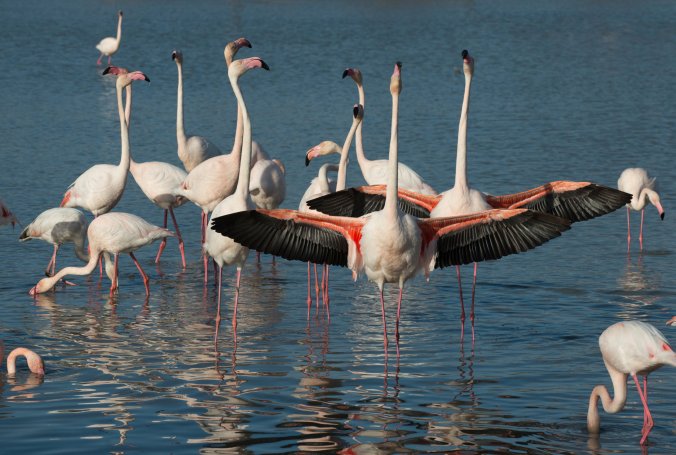
Flamingos strutting their stuff at a park in the Camargue region of southern France. Credit Jean E. Roche/Minden Pictures
Thanks to Tuesday’s Science section in the New York Times:
Flamingo Mating Rules: 1. Learn the Funky Chicken
By
Flamingos are very good dancers. They twist and preen, they scratch their heads, they march in unison. They poke a wing in one direction and a leg in another. Continue reading
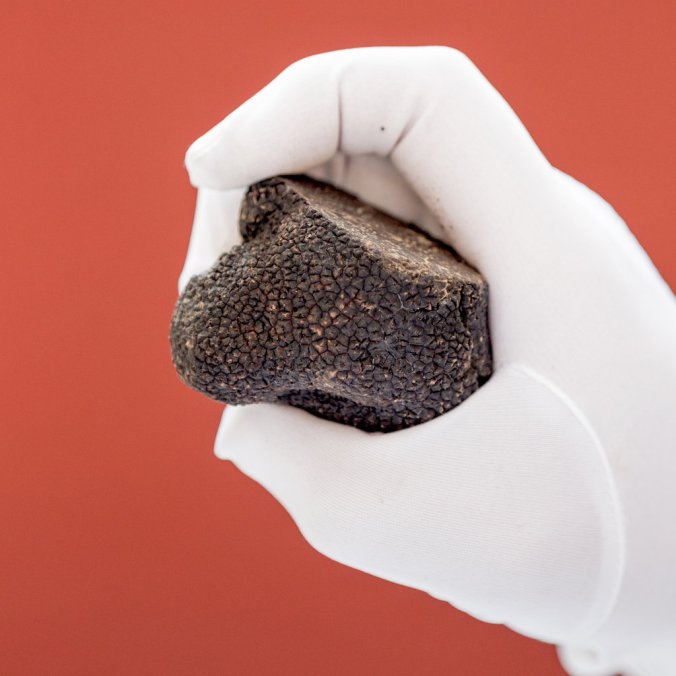
Black truffles at La Toque restaurant in Napa, Calif. The owner, Ken Frank, who buys truffles from Australia, backs efforts to grow them in Napa. Credit Jason Henry for The New York Times
Because they are such a mystery, and intersect various of our interests in these pages, we feel compelled to share this:
Has a Start-Up Found the Secret to Farming the Elusive Truffle?
The American Truffle Company has a new technique that it says can expand the range of the Perigord truffle in North America, but success is proving costly. Continue reading
As whale season draws near in Baja California Sur, our ears become attuned to this type of singing.
Thanks to TED-Ed and Conservation Biologist Stephanie Sardelis and her talented team for so beautifully answering an age-old question.
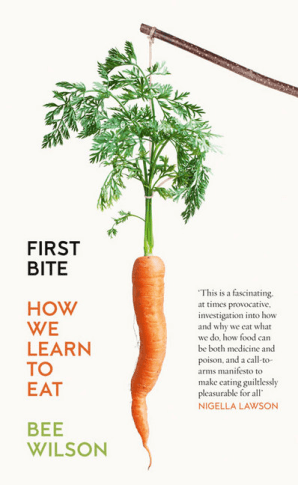 When an author of Bee Wilson’s stature publishes it is not surprising to see reviews in the news outlets that we tend to source from in these pages. For the book to the right the first we saw was How Do We Get To Love At ‘First Bite’? on National Public Radio (USA), followed by reviews in the New York Times and the Guardian among others. We had even read the publisher’s blurb:
The way we learn to eat holds the key to why food has gone so disastrously wrong for so many people. But Bee Wilson also shows that both adults and children have immense potential for learning new, healthy eating habits. An exploration of the extraordinary and surprising origins of our taste and eating habits, First Bite explains how we can change our palates to lead healthier, happier lives.
But we had not gotten around to linking out to any of these reviews. Better late than never:
TEACHING GROWNUPS HOW TO EAT
By Nicola Twilley
Until the twentieth century, Japanese food was often neither delicious nor nourishing. Junichi Saga, a Japanese doctor who chronicled the memories of elderly villagers from just outside Tokyo, in the nineteen-seventies, found that, in the early years of the century, most families scraped by on a mixture of rice and barley, accompanied by small quantities of radish leaves, pickles, or miso. Animal protein was almost entirely absent in the Buddhist country, and even fish, as one of Saga’s informants recalled, was limited to “one salted salmon,” bought for the New Year’s celebrations, “though only after an awful fuss.” Continue reading
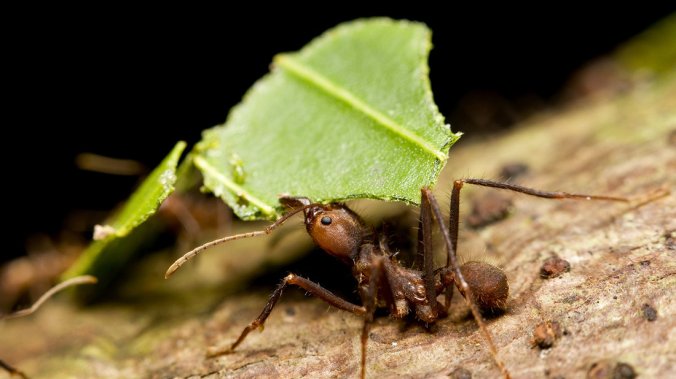
Various species of ants engage in some kind of agriculture. Here, a leaf-cutter ant gathers food for its fungus farm. Mark Bowler/Science Source
Thanks to National Public Radio (USA):
Who Invented Agriculture First? It Sure Wasn’t Humans
Ants in Fiji farm plants and fertilize them with their poop. And they’ve been doing this for 3 million years, much longer than humans, who began experimenting with farming about 12,000 years ago. Continue reading

If you are a salmon-eater, you will want to spend the 101 seconds to see (click above for a short video), and perhaps a couple minutes more to read, this multimedia explanation of how to improve your prep of this fish. Thanks to Wired for this one:
Master the Chemistry of Juicy, Tender Salmon
JENNIFER CHAUSSEE
IF YOUR PAN-SEARED salmon didn’t quite turn out right, you may be tempted to blame it on the type of salmon you bought—maybe it was farm-raised instead of wild—but none of that should matter if you understand the chemistry of how this colorful fish cooks. For another episode of Edible Science,
Dan Souza, ultra chef-nerd and co-author of the new Cook’s Science by America’s Test Kitchen, shows us how brining and low temperatures can help enhance the flavor and retain the moisture of salmon, no matter what kind you buy. Continue reading
©Lori Panico
We are glad to see market forces at work in this matter:
Another Major Norwegian Investor Divests From Dakota Access Pipeline
Stefanie Spear
Odin Fund Management, one of Norway’s leading fund managers, announced Thursday that it sold $23.8 million (243 million NOK) worth of shares invested in the companies behind the Dakota Access Pipeline. Continue reading

Photo: Phil Roeder, Flickr Creative Commons
We are reminded of this episode of a podcast dealing with concrete’s surprising awesomeness, with some new science to add support:
Concrete jungles can soak up carbon
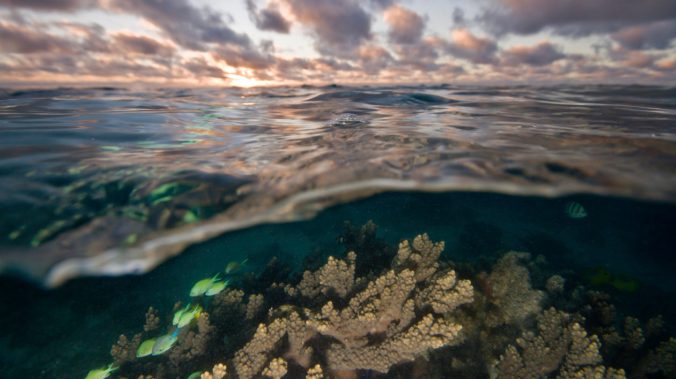
Acropora coral and blue green chomis on Ningaloo Reef in Western Australia. Photo © Steve Lindfield
Thanks to James Fitzsimons and The Nature Conservancy’s Australia program for this one:
Big, Bold & Blue: Lessons from Australia’s Marine Protected Areas
BY JUSTINE E. HAUSHEER
Australia has one the largest systems of marine protected areas in the world, from the coral-covered Great Barrier Reef to the sub-Antarctic Macquarie Island. Now, a new book details the lessons learned by Australian scientists, policymakers, and communities during more than 130 years of marine conservation.
The book — Big, Bold & Blue: Lessons from Australia’s Marine Protected Areas — gathers lessons learned from academia, government, NGOs, indigenous communities, and the fishing sector. Continue reading

Under current legislation, European bioenergy plants do not have to produce evidence that their wood products have been sustainably sourced. Photograph: Wolf Forest Protection Movement
Thanks to the Guardian for this coverage of disturbing news from Europe:
Protected forests in Europe felled to meet EU renewable targets – report
Europe’s bioenergy plants are burning trees felled from protected conservation areas rather than using forest waste, new report shows
Arthur Neslen
Protected forests are being indiscriminately felled across Europe to meet the EU’s renewable energy targets, according to an investigation by the conservation group Birdlife. Continue reading

Brandon Celi
This book review puts our work, with would be categorized as providing recreation services, in an interesting context:
Steven Johnson on How Play Shaped the World
By
WONDERLAND
How Play Made the Modern World
By Steven Johnson
322 pp. Riverhead Books. $30.Steven Johnson’s “Wonderland” makes a swashbuckling argument for the centrality of recreation to all of human history. The book is a house of wonders itself. Marvelous circuits of prose inductors, resistors and switches simulate ordinary history so nearly as to make readers forget the real thing. Red wires connect haphazardly to blue, and sparks fly. Who needs a footnoted analysis of “the ludic,” as play is known to the terminally unplayful? Barnumism of the Johnson kind is much, much more fun. Continue reading
 We have appreciated the salt, a feature of National Public Radio (USA) since we started this platform. Even more so at a time of the year when food, and its significance to culture, is so strong in one part of the world. Their stories are not strictly about the taste pleasures of food, usually; more about the many other pleasures food can provide. So today, which is Thanksgiving Day in the USA, we are particularly grateful for their contributions:
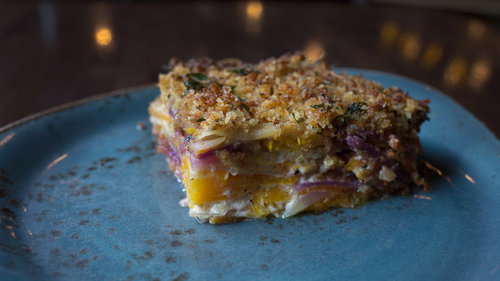
At Thanksgiving, If You Take Sides, Make Sure They’re As Tasty As These
Chef Mike Isabella, a renowned restaurateur, has devised some delectable spinoffs of traditional turkey accompaniments, while staying true to classic roots. Continue reading
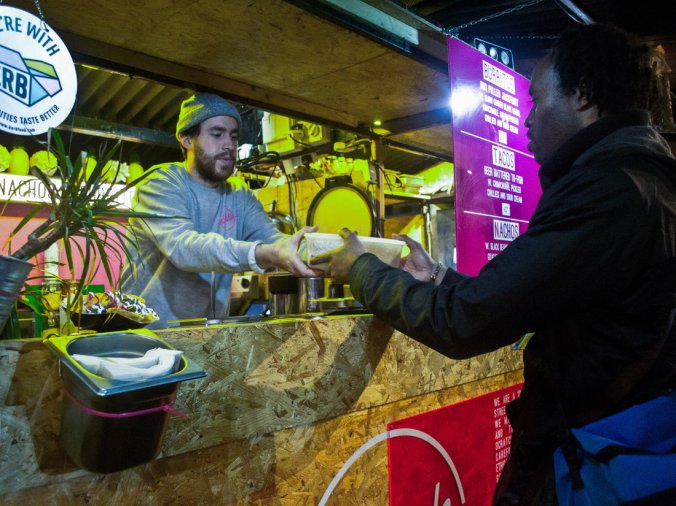
Junior Herbert, a volunteer with Olio, collects leftovers from vendors at London’s Camden Market. London has become a hub for apps and small-scale businesses that let restaurants and food vendors share leftovers with the public for free, and otherwise reduce the amount of edibles they toss. Maanvi Singh for NPR
Green entrepreneurship is alive and well in London (thanks to National Public Radio, USA, and its program the salt for this story):
Eat It, Don’t Leave It: How London Became A Leader In Anti-Food Waste
MAANVI SINGH
It’s around 6 o’clock on a Sunday evening, and Anne-Charlotte Mornington is running around the food market in London’s super-hip Camden neighborhood with a rolling suitcase and a giant tarp bag filled with empty tupperware boxes. She’s going around from stall to stall, asking for leftovers.
Mornington works for the food-sharing app Olio. “If ever you have anything that you can’t sell tomorrow but it’s still edible,” she explains to the vendors, “I’ll take it and make sure that it’s eaten.” Continue reading
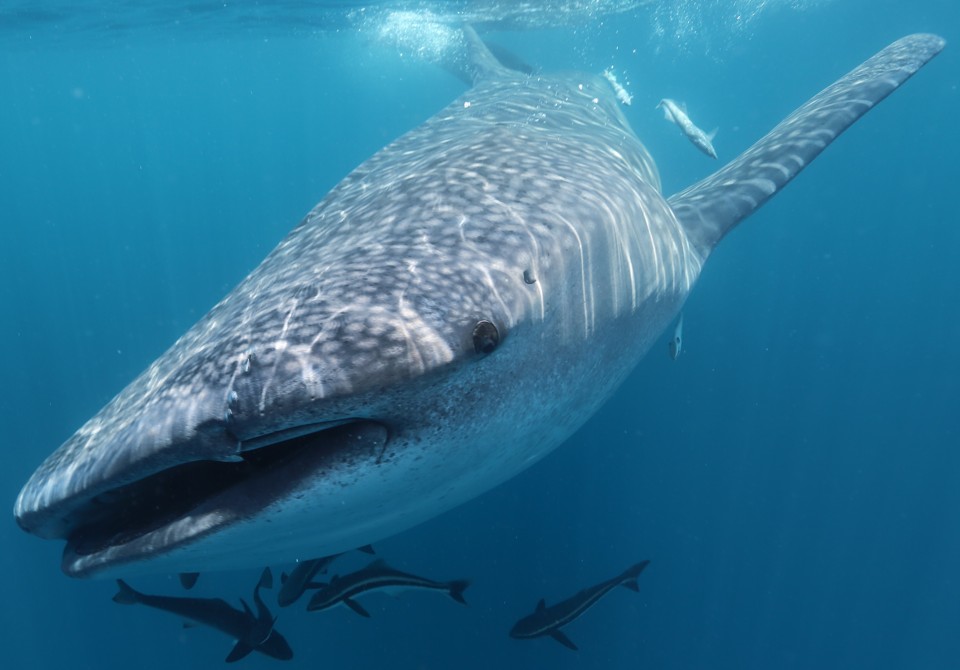
A whale shark in the Persian Gulf. Steffen Sanvig Bach
This is the future of marine ecosystem science (thanks as always to Ed Yong and the Atlantic’s ongoing commitment to compelling coverage of environmental issues):
The World’s Biggest Fish in a Bucket of Water
Scientists used DNA floating in just 30 liters of seawater to count the endangered whale shark across two oceans.
ED YONG
If you lean over the side of a boat and scoop up some water with a jug, you have just taken a census of the ocean. That water contains traces of the animals that swim below your boat—flecks of skin and scales, fragments of mucus and waste, tiny cells released from their bodies. All of these specks contain DNA. And by sequencing that DNA gathered from the environment—which is known as environmental DNA, or eDNA—scientists can work out exactly what’s living in a patch of water, without ever having to find, spot, or identify a single creature.
And that helps, even when the creature in question is 18 meters long. Continue reading
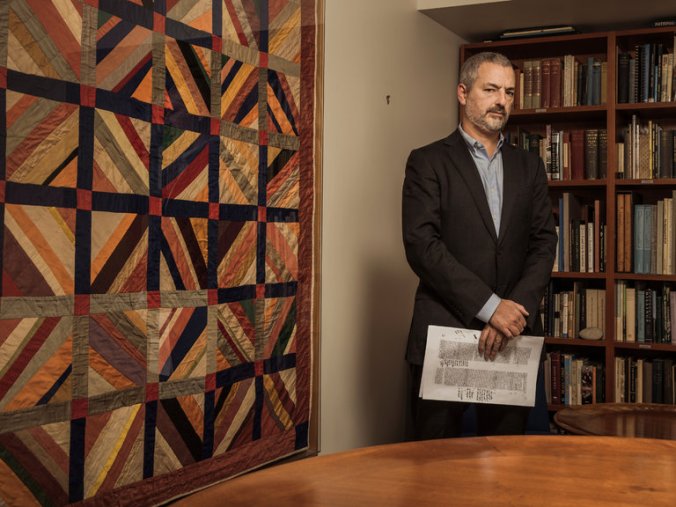
David Kaiser, is a fifth-generation Rockefeller and the head of a family fund fighting Exxon Mobil. Credit Sasha Maslov for The New York Times
The saying “that is rich” means, in this case, something more like–Really, Exxon Mobil?
Exxon Mobil Accuses the Rockefellers of a Climate Conspiracy
By
Exxon Mobil, under fire over its past efforts to undercut climate science, is accusing the Rockefeller family of masterminding a conspiracy against it. Yes, that Rockefeller family. Continue reading

WorldFish/Flickr
Anthropocene has a good summary of this recent scientific study on freshwater fish as a potentially robust, sustainable food supply that has been neglected:
We’re overlooking a giant piece in the global food security puzzle
When we think of sustainable fisheries, we tend to focus on oceans and even aquaculture. But there’s an important source of fish protein that’s often overlooked: freshwater fish. An expansive new study finds that fishing pressure and other threats to freshwater fish is greatest precisely where biodiversity is greatest. It also reveals that a very high proportion of the world’s population—particularly the poor and malnourished—depend heavily on this resource for food security. Continue reading
Nathan Heller is one of the most consistently engaging, most compelling writers out there, and this new article is one more piece of evidence:
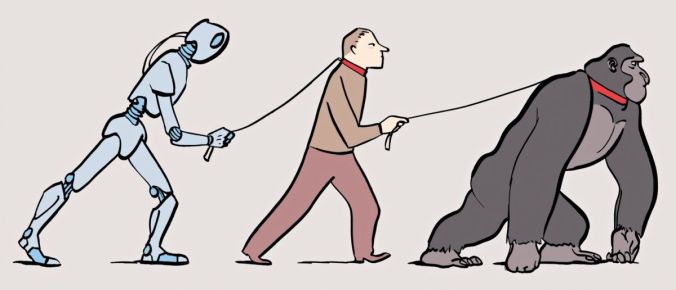
IF ANIMALS HAVE RIGHTS, SHOULD ROBOTS?
We can think of ourselves as an animal’s peer—or its protector. What will robots decide about us?
Harambe, a gorilla, was described as “smart,” “curious,” “courageous,” “magnificent.” But it wasn’t until last spring that Harambe became famous, too. On May 28th, a human boy, also curious and courageous, slipped through a fence at the Cincinnati Zoo and landed in the moat along the habitat that Harambe shared with two other gorillas. People at the fence above made whoops and cries and other noises of alarm. Harambe stood over the boy, as if to shield him from the hubbub, and then, grabbing one of his ankles, dragged him through the water like a doll across a playroom floor. For a moment, he took the child delicately by the waist and propped him on his legs, in a correct human stance. Then, as the whooping continued, he knocked the boy forward again, and dragged him halfway through the moat.
Harambe was a seventeen-year-old silverback, an animal of terrific strength. When zookeepers failed to lure him from the boy, a member of their Dangerous Animal Response Team shot the gorilla dead. The child was hospitalized briefly and released, declared to have no severe injuries. Continue reading

We wish the Earl well, and appreciate his efforts:
Ireland to Plant Largest Grove of Redwood Trees Outside of California
By Steve Williams
An estate in Ireland has revealed plans to create a redwood grove that will be the largest of its kind outside California. The initiative serves as a testament both to Ireland’s heritage and its commitment to fighting global warming. Continue reading

We are curious to know more:
Imposter fish may be more sustainable
In a first of its kind study, researchers tackled the environmental and financial impacts of consumers purchasing mislabeled fish. And—as upsetting as the mislabeling of any food is—they found a surprising silver lining. Continue reading
 Organikos