Ecosystem Services in Paris Agreement

We’ve reviewed ecosystem services several times over the years, including payment for them, the potential for ecotourism as a service, and we’re glad to read that the idea is becoming popular again with the new Paris Agreement. Kelly Barnett reports for GreenBiz, starting with coverage on the Adaptation Futures conference in Rotterdam:

In just three days here, roughly 40 presentations focused on the subject of “ecosystems and ecosystem based-adaptation,” and they focused on everything from the restoration of salt marshes that protect coastal communities from rising tides to the protection of Brazil’s Atlantic Forest, which supports a massive agricultural economy.

The event comes just two weeks after Earth Day, when 175 countries signed the Paris Agreement to combat climate change   in part by “ensuring the integrity of all ecosystems, including oceans, and the protection of biodiversity, recognized by some cultures as Mother Earth.”

Continue reading

Read Roger

26cohen-master675

Bleached coral in the Great Barrier Reef. Credit Agence France-Presse/XL Catlin Seaview Survey

Today’s editorial, from his current perch in Australia, is typical of the most reasoned editorialist currently writing for an English language major daily that we know of; so, worth a read:

Coral vs. Coal

Roger Cohen

MELBOURNE, Australia — Tim Flannery, a scientist and environmentalist who was named Australian of the Year in 2007, lost his job in 2013. The right-wing government of then-Prime Minister Tony Abbott shut down the Climate Commission that Flannery headed in a peremptory move designed to demonstrate its contempt for climate change. The commission had been established two years earlier to provide “authoritative information” to the Australian public. Continue reading

The Origins of E-Ink

Some of us contributors to the blog are Kindle users. We all have friends that are obstinate book-handlers and would never give up the feeling of rustling pages or the musty smell of yellowing paper, and we understand the appeal, but sometimes the convenience of having several books packed into one slim package is too much to give up. But one thing we’ve taken for granted is the relatively new technology of e-ink. How does it work? When was it invented? Chau Tu reports for Science Friday in an article from a few weeks ago:

When Amazon introduced its first Kindle back in 2007, it raved about the e-reader’s “crisp, high-resolution electronic paper display that looks and reads like real paper, even in bright sunlight.” The tablet did not use the LCD screens that most consumers saw on their laptops or TVs. “It reflects light like ordinary paper and uses no backlight, eliminating the eyestrain and glare associated with other electronic displays such as computer monitors or PDA screens,” Amazon boasted.

Continue reading

Better Packaging for the Ocean’s Sake

Over the years we have referenced Ecovative Designs before, as a mycological solution for styrofoam and way to reduce reliance on petrochemicals. Recently we learned about a new method of replacing plastics that doesn’t involve fungus–at least not directly. Using the byproducts of beer-making (which technically includes yeast, a fungus), the Saltwater Brewery partnered with WeBelievers to create edible six-pack rings for beer cans, as you can see in the video below:

Continue reading

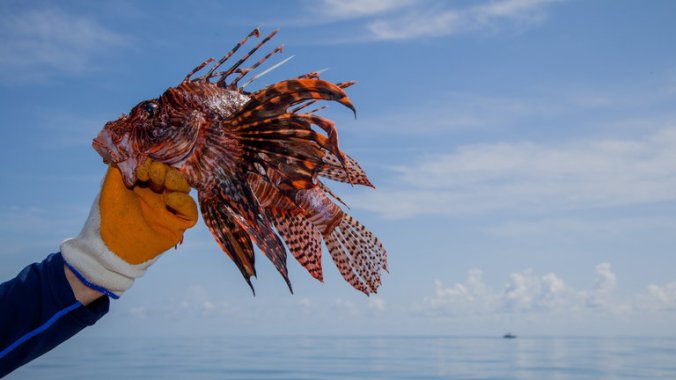
Lionfish Initiative Spearheaded By Whole Foods In Florida

5158843f5fcbe.image

Florida Stores First Region to Offer New “Spearited” Catch of the Day

We are not purposely low tech, but we do not use tracking devices for news topics we care about (this topic we have tended to leave to Phil Karp, a contributor who first brought it to our attention a few years ago, and is highly attuned to the news and trends related to lionfish entrepreneurial conservation). We just watch the news sources we are inclined to trust, and try to get exposed to new news sources as frequently as possible. Those of us tracking news from India sometimes are late picking up important stories, like this one that has already been out for more than a day as it comes to our attention.

No matter. We like it, and for the record we want to share good news when we encounter it. This comes from ABC television affiliate WWSB in Florida, USA. We consider it a public service announcement, and so quote in full here, but still please click to the source of the story so they get credit:

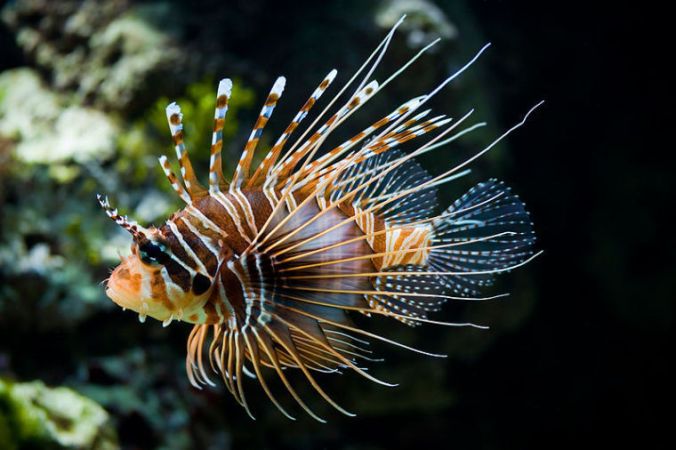
A hub for certified sustainable seafood, Whole Foods Market® is excited to offer shoppers a fresh and delicious new seafood option – lionfish. The fish is a nonnative, invasive species that has a potential negative impact on indigenous species and habitat. By reducing the number of lionfish in the wild, Whole Foods Market® will help to improve the serious environmental threat they cause. Continue reading

A Call to Cut Truck Emissions in EU

Image © prweb.com

The Guardian just keeps the good environmental news coming. Any initiative to reduce carbon emissions is helpful, and to have big companies with clout promote such a goal is admirable and a good sign of cooperation to come. Arthur Nelsen reports:

An alliance of companies including Ikea, Nestle and Heathrow airport have called on the EU to pass new laws cutting truck emissions within two years, to meet promises made at the Paris climate conference.

Heavy duty vehicles make up less than 5% of Europe’s road traffic but chug out a quarter of the sector’s carbon emissions – more than airplanes – and their fuel efficiency has hardly changed in two decades.

Continue reading

Lionfish Initiative In Florida

tbfish1-master768.jpg

Capturing lionfish is typically done by divers with spears. Credit Angel Valentin for The New York Times

We never tire of hearing about new initiatives to eradicate this introduced species, and like the way the folks in Florida are thinking outside the box:

Florida Needs a Lionfish King or Queen. It Could Be You.

By

Ladies and gentlemen, behold an opportunity to become maritime royalty. The Florida Fish and Wildlife Conservation Commission is hosting the Lionfish Challenge, a statewide hunting competition intended to encourage divers to capture, kill and eat the beguiling beauties, which have been invading western Atlantic waters and gobbling up native species for at least two decades. The title of Lionfish King or Queen goes to whoever captures the most lionfish by Sept. Continue reading

Tar Sands Impact Air Pollution via Aerosols

Tar sandstone from the Monterey Formation of Miocene age; southern California, USA. Photo © Wikimedia contributor James St. John

Obviously we never thought that extracting oil from tar sands was ecologically friendly, but a new study published in Nature has found that, in Canada (but presumably everywhere else too), the process releases much more fine particle air pollution than previously believed. Bobby Magill reports for Scientific American:

In one of the first studies of its kind, scientists have found that tar sands production in Canada is one of North America’s largest sources of secondary organic aerosols—air pollutants that affect the climate, cloud formation and public health.

The study, published Wednesday in the journal Nature, showed that the production of tar sands and other heavy oil—thick, highly viscous crude oil that is difficult to produce—are a major source of aerosols, a component of fine particle air pollution, which can affect regional weather patterns and increase the risk of lung and heart disease.

Continue reading

More Good Fishery News in Arctic

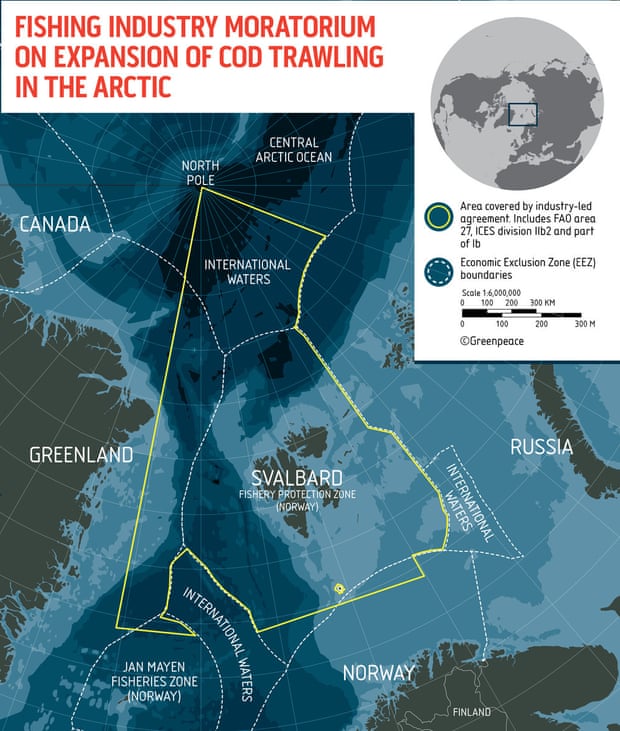
Map of the area of northern Barents Sea including the waters around Svalbard where some of the world’s largest seafood and fishing companies have committed not to expand their search for cod into. Photograph: Greenpeace

We read yesterday about countries agreeing to stand against piracy in fishing, which is great, and The Guardian is continuing its optimistic reporting by sharing news on leading seafood-consuming companies have decided to source from industrial fisheries that don’t target a particularly pristine Arctic region. Jessica Aldred reports:

Fishermen and seafood suppliers struck a major deal on Wednesday that will protect a key Arctic region from industrial fishing for cod.

Companies including McDonald’s, Tesco, Birds Eye, Europe’s largest frozen fish processor, Espersen, Russian group Karat, and Fiskebåt, which represents the entire Norwegian oceangoing fishing fleet, have said their suppliers will refrain from expanding their cod fisheries further into pristine Arctic waters.

“From the 2016 season the catching sector will not expand their cod fishing activities with trawl gear into those areas where regular fishing has not taken place before,” the deal reads.

Continue reading

Please Do Not Close The Door, Iceland

lead_large (2)

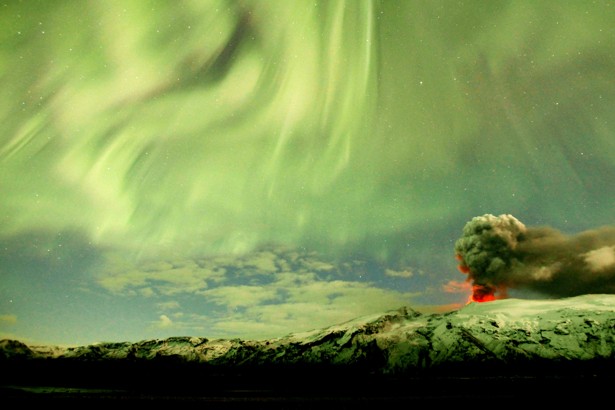
The Northern Lights above the ash plume of Iceland’s Eyjafjallajokull volcano Lucas Jackson / Reuters

We have had a thing for Iceland for a few years now, mainly due to Seth’s honors thesis. But none of us currently contributing to this blog have actually been there, yet. There is a plan in the air, very vaguely, for several of us to meet up there one day soon. Thanks to writers such as the Atlantic‘s Feargus O’Sullivan, and our own ongoing discussion on travel conundrums, we are not rushing into the plan, but contemplating it in back burner mode. We know we cannot wait forever:

Iceland vs. Tourists

It’s not easy fitting 1.2 million annual visitors onto an island of 330,000 residents.

Fighting Flouting Fishing Fleets

3888

Chinese boats banded together with ropes, after alleged illegal fishing in South Korean waters in the Yellow Sea off the southwestern coast county of Buan. Photograph: Dong-A Ilbo/AFP/Getty Images

Tragedy of the commons on the high seas, fought by those who perceive their interests in common enough to do something about it (a tricky thing, as we note frequently), once again in the news.  Thanks to the Guardian, and environmental reporter Emma Bryce, for this reportage:

Tens of countries sign up to shut pirate fishers out of their ports

The first of its kind, a new international treaty obliges signatories to intercept pirate fishers before they can sell their catch

In March, the Argentinian coast guard shot at and sank a Chinese vessel that was alleged to be fishing illegally in Argentinian waters (the crew were all rescued). While it’s unclear whether the boat was committing crime, the incident showed that the tension surrounding pirate fishing is reaching a peak, marked elsewhere by increasing conflict, and the detainment and scuttling of illegal fishing fleets. But for pirate fishers, the financial gains appear to be worth these risks. Continue reading

A Bird’s Journey Tracked, Mapped & Shared

Screen Shot 2016-05-25 at 5.20.45 AM.jpg

From National Public Radio (USA) today, this should have your attention even if you are not a birder:

We Followed A Snowy Owl From Maryland To Ontario

At the end of 2013, snowy owls started showing up far south of their usual winter range. The big white birds were reported in South Carolina, Georgia, even Florida.

Dave Brinker, an ecologist with the Maryland Department of Natural Resources, had never seen anything like it. Continue reading

Cacti in Trouble from Collectors

Mammillaria herrerae. Photo © Jardín Botánico Regional de Cadereyta

While we have amateur ornithologists, herpetologists, mycologists, and entomologists who contribute to this blog, we haven’t had many botanists around, and therefore we learned something new today about cacti: they’re a group of plants that’s only present in the Americas, apart from one species that grows in Madagascar, Sri Lanka, and South Africa. We also read some bad news from a Cool Green Science blog post by Christine Peterson, which is that 31% of cacti species have a threatened status, a terribly high proportion. Peterson writes,

The smugglers carried their tiny prizes tucked away in suitcases of jalapeños and dirty laundry. The spicy fruit was supposed to deflect inspections. Perhaps they thought the dirty laundry would do the same. Another rare item sat nestled in a new box of Uncle Ben’s Rice. Russians had a hard time finding Uncle Ben’s Rice back home, says Nicholas Chavez, Special Agent in charge of the Southwest Region for the U.S. Fish and Wildlife Service.

From the Los Angeles airport, the six Russian men weren’t carrying precious art or poached ivory. They were smuggling cacti stolen from National Parks and Indian Reservations. Some of the cacti they had were labeled appendix two, which means they aren’t currently “threatened with extinction but may become so unless trade is closely controlled,” according to the Convention on International Trade in Endangered Species of Wild Fauna and Flora.

Continue reading

Intangible Heritage In Ireland

p03swypw

Irish landscape

Apropos of this post yesterday, and many that preceded it on the topic of intangible patrimony (thanks to the BBC):

How The Irish Lost Their Words

New storytelling groups are reintroducing the Irish to ancient myths and the art of blarney.

By Rory Boland

I always knew my Uncle Peter was setting up for a story when he’d lean back in his bar stool. Nothing dramatic, nothing too flashy, just a gentle recline – always followed by a more determined pushing away of his half-drunk pint of Harp and a wipe of the whiskers. Stage set, audience warned, he’d begin by saying “C’mere ‘till I tell you.” By the time that pint of Harp was drained, half the pub would be leaning in to listen and laugh. Continue reading

More than 1/3 of North American Bird Species at Risk of Future Extinction

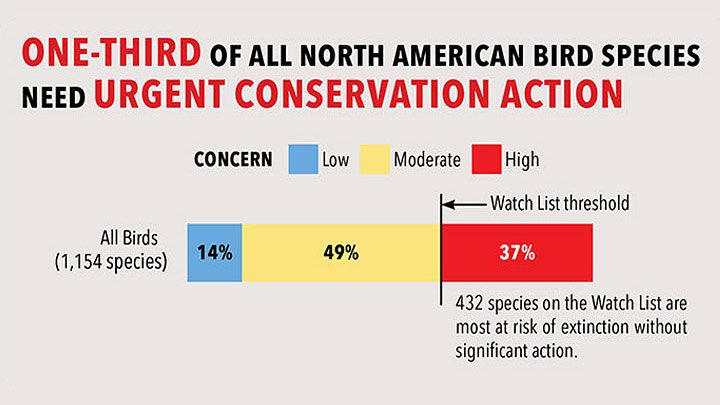
The analysis of all 1,154 bird species in Canada, the U.S., and Mexico identified 432 species that meet the criteria for the Watch List © NABCI

Climate change, habitat loss, and predation are all threats to birds in Canada, the United States, and Mexico, among other challenges facing the species throughout North America, with migratory shore birds being classified as particularly vulnerable. Scientific American reports with Reuters reporting, but make sure to check out the North American Bird Conservation Initiative information page too:

OTTAWA, May 18 (Reuters) – More than a third of all North American bird species are at risk of becoming extinct unless significant action is taken, scientists who are part of a tri-nation initiative said on Wednesday, adding that ocean and tropical birds were in particular danger.

The study, compiled by the North American Bird Conservation Initiative and the first of its kind to look at the vulnerability of bird populations in Canada, the United States and Mexico, said 37 percent of all 1,154 species on the continent needed urgent conservation action.

Continue reading

TNC Building Beaver Dams

View of a series of existing beaver dams downstream of beaver dam analogue restoration reach. Photo © The Nature Conservancy (Kristen Podolak)

Beavers can be highly destructive in the wrong environment, but are keystone species wherever they’ve been around for long enough to have designed their ecosystem. And in areas where for a number of reasons beaver populations have dwindled so much as to see deterioration in the habitat, The Nature Conservancy thinks that adding artificial dams can help restore the land by affecting sedimentation, creating floodplains, and storing water. Kristen Podolak, Rodd Kelsey, Sierra Harris, and Nathan Korb report:

The Nature Conservancy is working like a beaver (Castor canadensis) by mimicking beaver dam building to restore streams and floodplain habitat in Montana and California.

No kidding. Last year we built twelve instream structures that look and act like beaver dams on two streams in Montana and we plan to build six more in a small creek in Childs Meadow, California this fall.

Why try to act like beavers? Beavers are not a panacea and can be a nuisance when they block water diversions or chew down people’s favorite trees, which is why they have been persistently trapped and killed or relocated in many areas across North America.

Continue reading

Photosynthesis as Biofeedback for Adjusting Light Levels in Greenhouses

Photo of a small commercial indoor growing setup by CJP

We’ve recently shared interesting methods to improve the growth of plants, whether in the commercial or domestic setting. We learned that tomatoes may reduce need for pesticides, that plants can grow fairly well in artificial bubbles underwater, and now that technology might soon develop to use a metric of how much one’s plants are photosynthesizing to determine how much light they need, in an effort to cut electricity use. Catherine Elton reports for Conservation Magazine on a study published in the Journal of the American Society of Horticultural Science:

Indoor agriculture is gaining in popularity, and there are high expectations that—at a large enough scale—it could help satisfy the growing demand for food. But whether indoor farms, often called vertical farms or plant factories, make economic or environmental sense is hotly debated.

Continue reading

Well Done, Portugal!

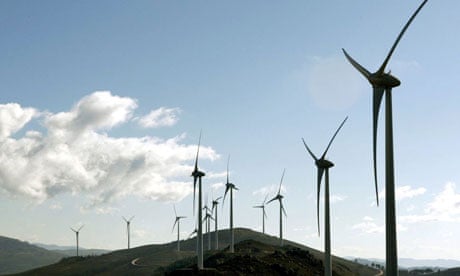
Europe’s biggest wind energy park [in 2008] in the northern region of Viana do Castelo, Portugal. Photograph: Estela Silva/EPA

Always on the look for good news in the sphere of renewable energy, we found out this week that Portugal, a country with a population of over 10 million, operated for 107 hours solely on the alternative energy sources from wind-, solar-, and hydro-powered electricity. Arthur Nelsen reports for The Guardian:

Portugal kept its lights on with renewable energy alone for four consecutive days last week in a clean energy milestone revealed by data analysis of national energy network figures.

Electricity consumption in the country was fully covered by solar, wind and hydro power in an extraordinary 107-hour run that lasted from 6.45am on Saturday 7 May until 5.45pm the following Wednesday, the analysis says.

Continue reading

Weed-whacking Goats in New York City

Photo © babygoatsandfriends.com

Goats are fun creatures, providers of milk, cheese, and meat, and also simply petting experiences. Apparently, they can even be rented out as lawn-mowing weed controllers, eating unruly plants where pesticides would otherwise be used. And certain parks in New York City are getting goats on contract to meet that need, as Olga Oksman reports for The Guardian:

Overexcited children and reporters mill around the fence enclosing part of the Prospect Park woodlands. “Daddy, daddy, look!” one eager little boy yells. Everyone is craning their necks, raising their cameras to get a shot. The latest celebrities to grace Brooklyn are a group of eight weed-eating goats, and they are taking up residency through the end of the summer.

Later this week, Prospect Park has arranged a wine and cheese reception so the public can formally meet the goats, which range from Nubian to Angora and Pygmy breeds. Tickets have already sold out.

Continue reading

Solar Thermal vs Photovoltaics

Photo © German Aerospace Center

Solar power is always on our radar, but we understand that storing the electricity from photovoltaics can be an issue. Today we are learning about a new solar technology for the first time, even though it revolves around something that we benefit from every day: the sun’s heat. Umair Irfan reports for Scientific American‘s ClimateWire section on this interesting idea being researched in Europe:

COLOGNE, Germany—At Germany’s aerospace agency, the next frontier is capturing the sun here on Earth and keeping it on tap.

In a 4-year-old glass and steel building near the Cologne-Bonn Airport, researchers at the German Aerospace Center (DLR), Germany’s equivalent of NASA, are working on new ways to produce more heat than light in order to smooth over intermittency, one of the biggest drawbacks of solar power on the grid.

Continue reading