The World’s Oldest

A photographer’s pilgrimage to see the world’s oldest. Before the signs of climate change sees them disappear.

In 2007, photographer Rachel Sussman made a pilgrimage to Florida’s 3,500-year-old Senator Tree. The pond cypress’s mottled gray trunk stretched 125 feet into the sky, and sported a bronze plaque gifted by Calvin Coolidge in 1929. Sussman snapped a few pictures, but, upon review, wasn’t thrilled with the results. “I thought, ‘Oh, I’ll just come back sometime,'” she remembers.

Five years later, a meth user snuck into a space in the trunk of the tree, lit up, and burned the whole thing down. Sussman came back and photographed the charred remains. “It really was this moment challenging my sense of permanence and impermanence,” she says.
Continue reading

365 Days in the Wilderness

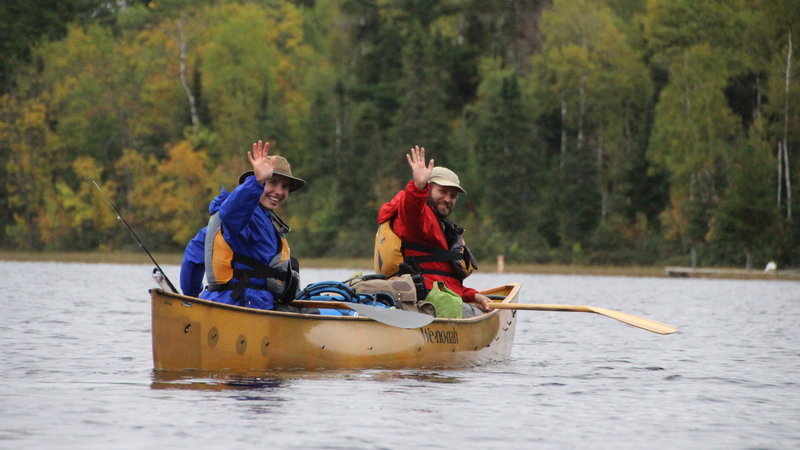
Amy and Dave Freeman paddle into the Boundary Waters, starting their 365 days in the wilderness to raise awareness of mining plans in the region.PHOTO: Alex Chocholousek

Amy and Dave Freeman paddle into the Boundary Waters, starting their 365 days in the wilderness to raise awareness of mining plans in the region.PHOTO: Alex Chocholousek

The Boundary Waters Canoe Area Wilderness is located in the northern third of the Superior National Forest in northeastern Minnesota. Over 1 million acres in size, it extends nearly 150 miles along the International Boundary adjacent to Canada’s Quetico Provincial Park and is bordered on the west by Voyageurs National Park. The BWCAW contains over 1200 miles of canoe routes, 12 hiking trails and over 2000 designated campsites. Wilderness offers freedom to those who wish to pursue an experience of expansive solitude, challenge and personal integration with nature.

And now some, or all of it, may be lost to sulphide mining.

Continue reading

Building an Empire, A Fish at a Time

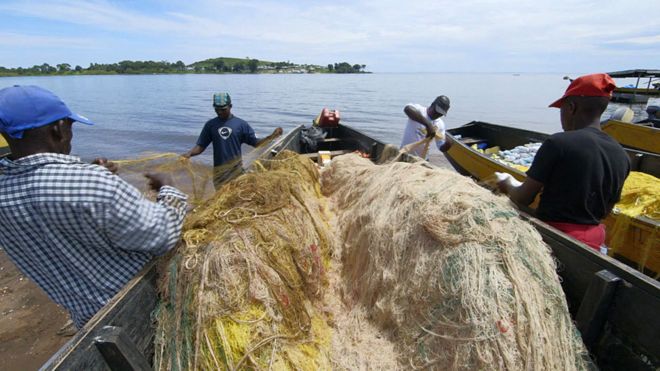
When Mama Sylvia started fishing 27 years ago, all she had was a small canoe, which she paddled with an oar. PHOTO: BBC

When Mama Sylvia started fishing 27 years ago, all she had was a small canoe, which she paddled with an oar. PHOTO: BBC

We talk about sustainable development. Often, the definition is relegated to the environment domain alone and does not cover social and human capital. The United Nations has identified gender equality as one of the key Millennium Development Goals, validating the fact that every small victory is a step forward for the larger good. Like Mama Sylvia’s story.

Gertrude Nabukeera, or Mama Sylvia as she is usually known, stands with her arms resting on her hips as she supervises a handful of men unloading the catch from a fishing boat. It’s early in the morning and the boats are bringing their night’s catch in at the Nakatiba landing site, on the island of Bugala in Lake Victoria, Africa’s largest expanse of fresh water. More than 400m long and lined with motor-driven boats, this landing site is owned and run by Mama Sylvia.There are concrete stalls from which she sells the catch of the day, and to the right an icebox the size of a freight container in which she stores the fish.

It’s unusual for a woman to be the boss of a fishing business in Uganda, or anywhere else for that matter, but even more surprising is the fact that she herself was once a fisherwoman – one fisherwoman among many, many fishermen.

Continue reading

Lessons of Islam in a Temple

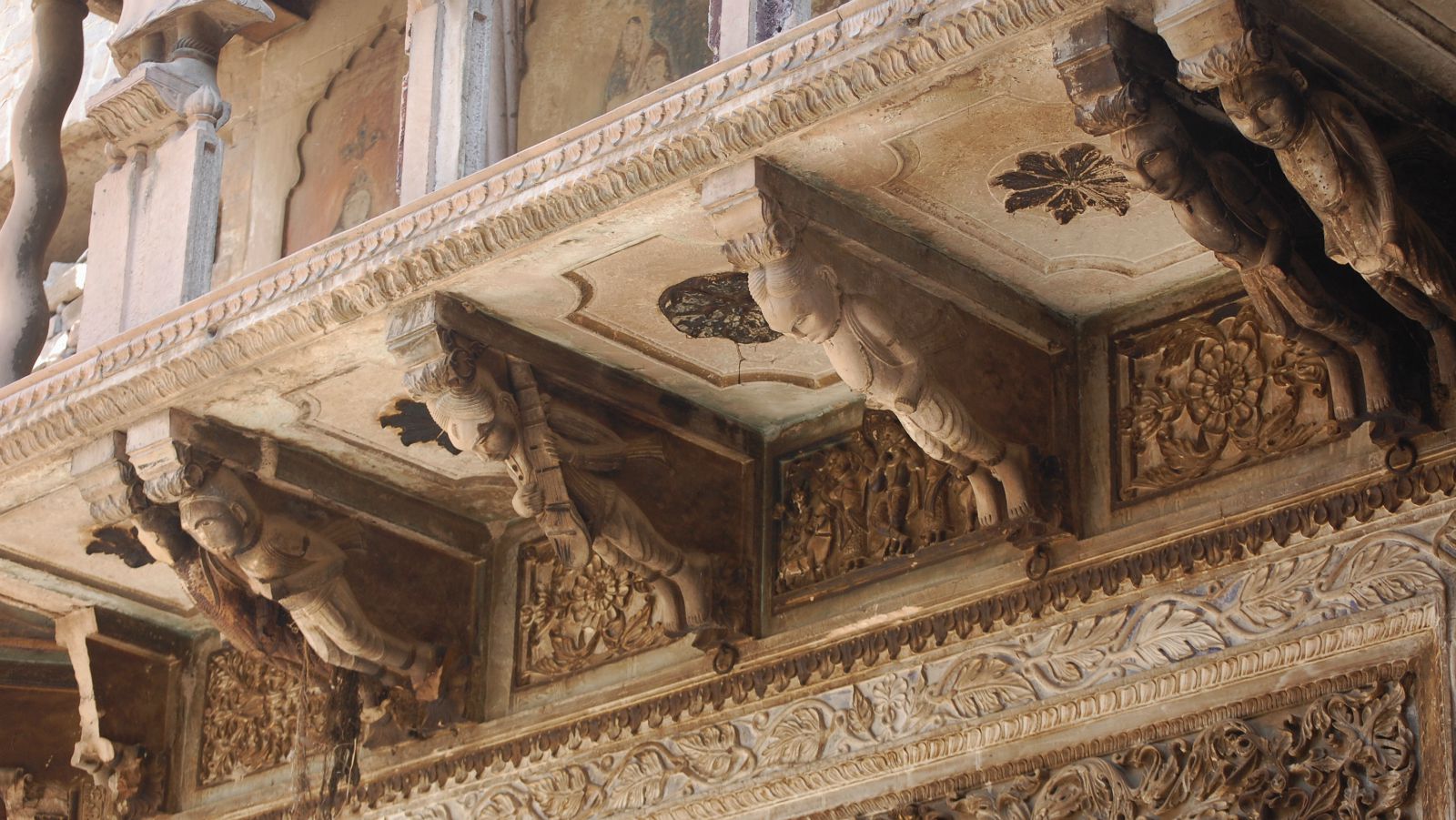
Some Hindu temples in Pakistan are now Islamic schools. PHOTO: Rida Arif

Some Hindu temples in Pakistan are now Islamic schools. PHOTO: Rida Arif

Given the volatile relationships between India and Pakistan, any sentence that involves the two nations is fraught with speculation and scrutiny. Talking of a temple and a mosque in the same breath spells secularism in a liberal setting but portends unrest in another quarter. And when you do hear of goodwill where these worlds meet amicably, it’s a story worth sharing. Like this one about how ancient temples in Pakistan have turned into centers of Islamic teaching.

We stood at the entrance of the temple, not sure if we would be allowed to go inside.

It was a double-storey structure with a small round balcony. The door was made of wood with intricate patterns on it, while there were fading remnants of frescoes on the wall. Judging by the entrance, I could only imagine how beautiful this structure must be from the inside. The only problem was that this temple was not vacant. It wasn’t even taken over by an individual family, as has happened in many other cases. In that situation, I could have requested them to allow me to see the temple from inside. But this was now controlled by the women’s wing of an Islamic religious organisation called Minhaj-ul-Quran, founded by the famous preacher-turned-politician Tahir-ul-Qadri.

Continue reading

Helping Salmon Get By

Drought and man-made obstacles lead fishery to boost releases of Chinook into Sacramento River, in hopes that a few thousand return to spawn.  PHOTO: Livescience

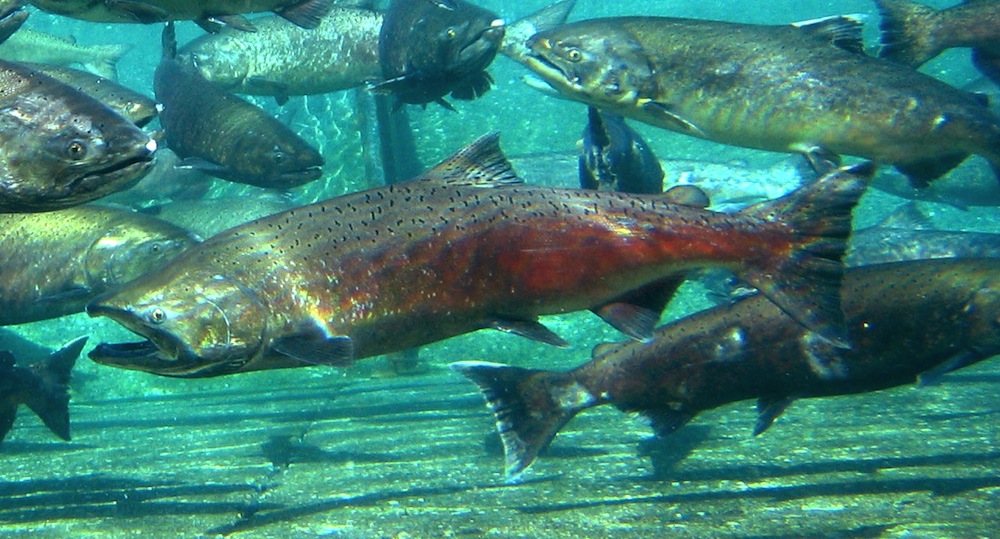
Drought and man-made obstacles lead fishery to boost releases of Chinook into Sacramento River, in hopes that a few thousand return to spawn. PHOTO: Livescience

To boost the dwindling population of natural chinook salmon in California, hundreds of thousands of fish are spawned and released by federal and state agencies every year. This year, 600,000 salmon were released earlier than normal because of a historic drought in California.

The California drought, the state’s worst on record, has taken a terrible toll on those already-diminished winter Chinook salmon runs. It’s not just that there isn’t enough water; there’s not enough cold water, especially after competing interests such as urban areas and big agriculture—each equipped with more political muscle than wild salmon advocates have—take their share. In 2014, the returning winter Chinook numbers were the worst that fishery officials had ever seen. In a normal year, about 25 percent of the eggs produce baby salmon healthy enough to migrate; last year, with only 5 percent surviving their infancy in the unusually warm water, nearly the whole winter run was wiped out.

Continue reading

A Statement in Energy Saving

A passive house, a project from Parsons the New School for Design in 2011, is so well insulated that it needs little or no energy for heating and cooling. PHOTO: MATT MCCLAIN FOR THE WASHINGTON POST/ GETTY

A passive house, a project from Parsons the New School for Design in 2011, is so well insulated that it needs little or no energy for heating and cooling. PHOTO: MATT MCCLAIN FOR THE WASHINGTON POST/ GETTY

Energy efficiency is one of the easiest and most cost effective ways to combat climate change, clean the air we breathe, improve the competitiveness of our businesses and reduce energy costs for consumers. And Habitat for Humanity may be onto something with its new range of “passive” homes that aggressively save energy.

The passive standard is buoyed by efforts to fight climate change, because buildings account for 40 percent of total U.S. energy use and 10 percent of its greenhouse gas emissions. In September, New York City’s Mayor Bill de Blasio hailed it as one way to help the Big Apple meet its goal of slashing emissions 80 percent from 2005 levels by 2050

Continue reading

Celebrating Flour Power

The Poderanchem Fest will pay tribute to the state's unique baking traditions and the people who keep them alive. PHOTO: Scroll

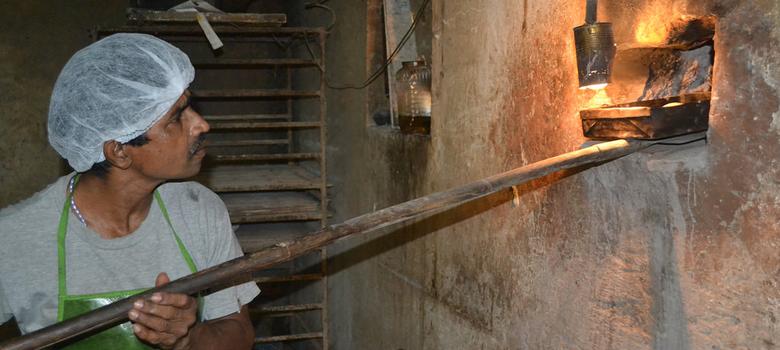
The Poderanchem Fest will pay tribute to the state’s unique baking traditions and the people who keep them alive. PHOTO: Scroll

India is home to celebrations that pan religions, occasions like harvest, birthdays of legendary heroes, and more. And now the country gets its first platform celebrating bakers. All the way from the tourist-laden beaches of Goa.

It’s the sound of Goa. Every morning at the crack of dawn, the bulb horn of the poder wakes up people across the state, encouraging them to start their day with cheap, freshly baked bread.  On Friday, the state’s humble bakers will finally get turn in the spotlight. Goa’s first Poderanchem Fest, or Baker’s Festival, being hosted in the leafy North Goa village of Succorro, will feature a baker’s parade and stalls selling traditional and new varieties of pao, in addition to the region’s favourite foods to eat the bread with.

Read more here.

Flood-proofing Education

Architect Rezwan’s idea is to combine a school bus with the schoolhouse, and use the traditional wooden boat to create a floating space to bring primary education to doorsteps. PHOTO: ABIR ABDULLAH/ SHIDHULAI SWANIRVAR SANGSTHA

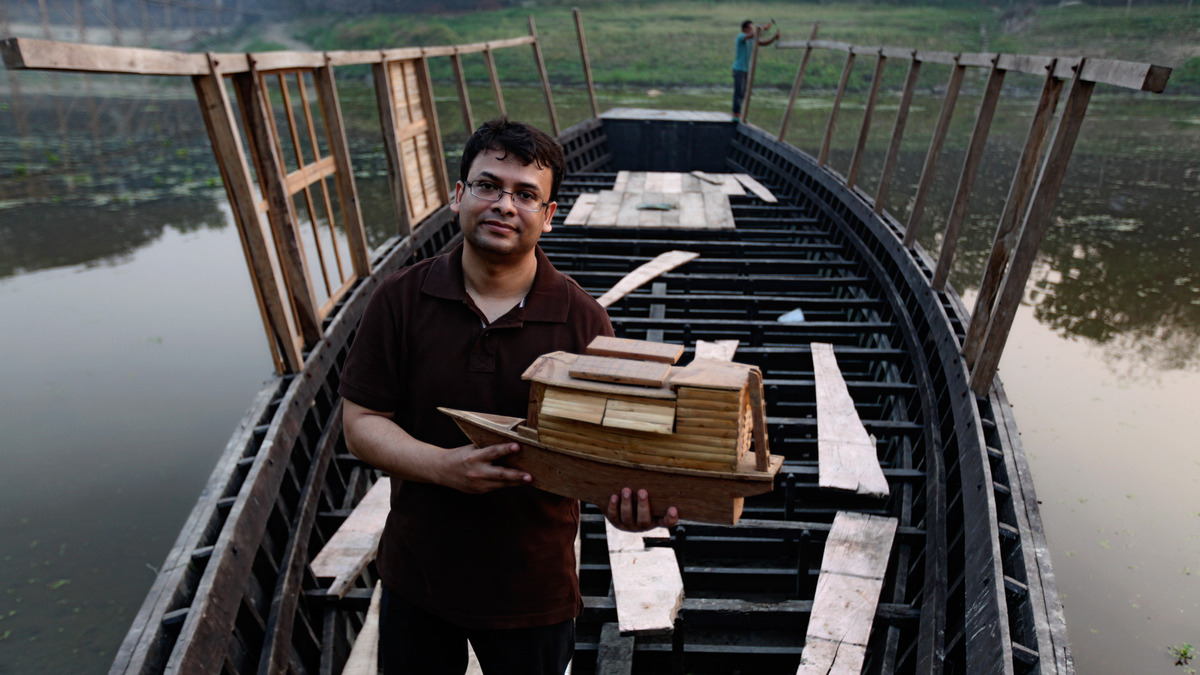
Architect Rezwan’s idea is to combine a school bus with the schoolhouse, and use the traditional wooden boat to create a floating space to bring primary education to doorsteps. PHOTO: ABIR ABDULLAH/ SHIDHULAI SWANIRVAR SANGSTHA

Bangladesh is prone to flooding due to being situated on the Ganges Delta and the many distributaries flowing into the Bay of Bengal. Coastal flooding, combined with the bursting of river banks is common, and severely affects the landscape and society of Bangladesh. 75% of Bangladesh is less than 10m above sea level and 80% is floodplain, therefore rendering the nation very much at risk of periodic widespread damage, despite its development. One man, who as a child often found himself cut off from school, did not want the future generations to face the same plight.

His idea: using boats to facilitate education at the time of floods.

Continue reading

A Clean Breath of Life

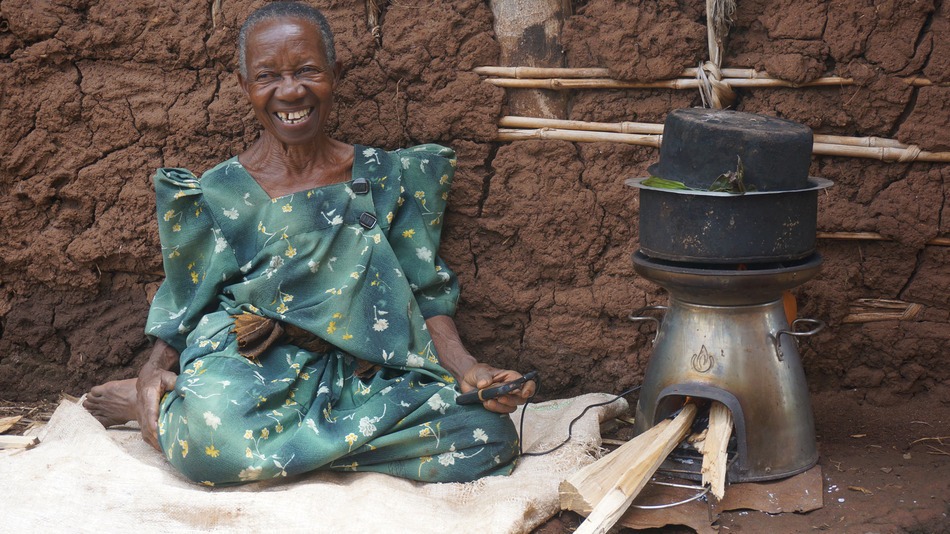
In addition to eliminating 94% of the smoke and 91% of the carbon dioxide emitted by open fires, the HomeStove can save households as much as $8 to $10 per week just on fuel, the company says. the HomeStove can save households as much as $8 to $10 per week just on fuel. PHOTO: Biolite

In addition to eliminating 94% of the smoke and 91% of the carbon dioxide emitted by open fires, the HomeStove can save households as much as $8 to $10 per week just on fuel. PHOTO: Biolite

According to the WHO, 4.3 million people die prematurely every year from illnesses attributable to household air emissions from cooking with solid fuels, which kill more people every year than malaria, HIV and tuberculosis combined. Women and children, who spend the most time near open flames in developing countries, are most at risk. And the gravity of the dangers of indoor air pollution pushed  product developers Alec Drummond and Jonathan Cedar to maximize the use of the off-the-grid stove they were initially designing for campers.

“We’d seen that by blowing air in a particular place in a wood fire, you can really improve combustion and turn a rudimentary fuel into a super hot, controllable, clean combustion process,” Cedar tells Mashable. “We were fascinated by this idea that you could take waste product and turn it into a useful energy source.”

“The question was: How do you do that without batteries, which still tie you back to the grid?” he says.

Continue reading

Fortune at the Bottom of the Tea Cup

On Canadian tasseomancer Amy Taylor's vintage tea-leaf reading cups, your reading is determined by where your leaves fall on the preprinted symbols on the cups. PHOTO: Mike Taylor for NPR

On Canadian tasseomancer Amy Taylor’s vintage tea-leaf reading cups, your reading is determined by where your leaves fall on the preprinted symbols on the cups. PHOTO: Mike Taylor for NPR

Divining fortune from tea leaves has been around for almost as long as there has been tea, over five thousand years. Tea-Leaf reading which is also known as Tasseomancy like any other divination art has multiple origin histories. Tea-leaf reading tells fortunes using the symbols and the patterns formed by the residue of tea left in the cup. More of an art rather than a science, there are no universal guidelines that dictate what the patterns mean. Tea-Leaf reading is mostly done as a daily reading about life, love, work and money issues, though a longer timeframe may be determined as well.

Continue reading

Extinction By Accident

Vaquitas are considered the smallest and most endangered cetacean in the world. Credit: Paula Olson/Wiki Commons

Vaquitas are considered the smallest and most endangered cetacean in the world. Credit: Paula Olson/Wiki Commons

The world’s most endangered marine mammal is a small porpoise called the vaquita — Spanish for little cow. The vaquita has been under threat for years, but now the poaching of a rare fish may be driving the tiny Mexican porpoise to extinction.Scientists estimate that fewer than 100 vaquita porpoise exist today, all of them in the upper Gulf of California. Vaquitas are small porpoises with big eyes and a permanent grin. None have ever survived in captivity. Poachers are killing the vaquita, but they are actually targeting another endangered fish, the totoaba.

Continue reading

Giving Up Electricity

A wood-fired stove at Lehman's (Photo: sonja/Flickr)

A wood-fired stove at Lehman’s (Photo: sonja/Flickr)

What started as a small hardware store serving the local Amish in Kidron, Ohio, grew into something much bigger than founder Jay Lehman ever dreamed. Gathering four pre-Civil War era buildings under one soaring roof, today the store is a place to embrace the past: from old-fashioned treats and sodas to practical, non-electric goods for a simpler life.

The story of the Lehman store is one of “peddling historical technology”. A story of being old-school. And being good at it. Their top-selling products have not changed for decades. Wood stoves, gas refrigerators, oil lamps, water pumps, and water filters are always popular: if you don’t have electricity, you still need ways to store food, stay warm, light the night, and access water.

“We’ve known the term ‘off-the-grid’ for many, many years,” Ervin says. “But now it’s a thing.”

Continue reading

The Art Movement of the 20th Century

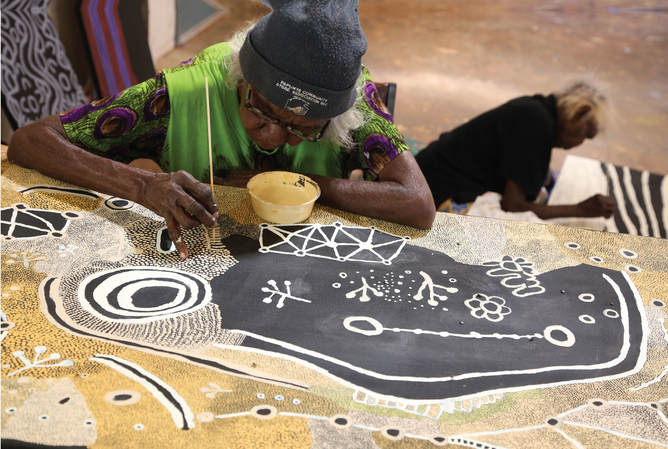
Martha MacDonald Napaltjarri (in foreground) and Mona Nangala painting at Papunya Tjupi art centre, Papunya, 2015. Photo: Helen Puckey

Martha MacDonald Napaltjarri (in foreground) and Mona Nangala painting at Papunya Tjupi art centre, Papunya, 2015. Photo: Helen Puckey

Have you heard of Papunya? The birthplace of what is touted as the century’s greatest art movement? The Conversation looks at how the movement has given birth to indigenous artists’ collectives, transformed communities, empowered women and forms a grand narrative on Aboriginal art:

The emergence of ‘dot’ paintings by Indigenous men from the western deserts of Central Australia in the early 1970s has been called the greatest art movement of the twentieth century.It all changed at a place called Papunya. Papunya was a ‘sit-down’ place established in the early 1960s, 240 kilometres northwest of Alice Springs in the Northern Territory (NT). The settlement brought together people from several western desert language groups: the Pintupi, Warlpiri, Arrernte (Aranda), Luritja, and the Anmatyerr, who were unaccustomed to living in close proximity to each other. Papunya was described as a ‘centralised government settlement established as a marshalling point for Aboriginal people displaced from their traditional lands’ (Curator Hetti Perkins, Papunya Tula: Genesis and Genius, Art Gallery of New South Wales– external site, 2000).

Continue reading

When Stories Travel the World

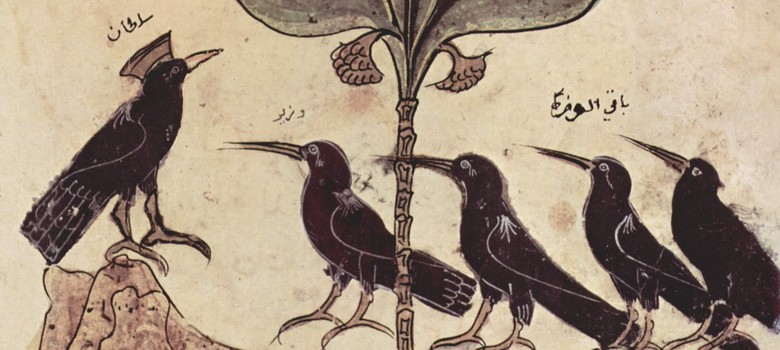
Few books have been narrated, written, re-written, translated and adapted as much as Panchatantra, the collection of tales of wisdom. PHOTO: Scroll

Few books have been narrated, written, re-written, translated and adapted as much as Panchatantra, the collection of tales of wisdom. PHOTO: Scroll

For more than two and a half millennia, the Panchatantra tales have regaled children and adults alike with a moral at the end of every story. Some believe that they are as old as the Rig Veda. There is also another story about these fables. According to it, these are stories Shiva told his consort Parvati. The present series is based on the Sanskrit original.

A king, worried that his three sons are without the wisdom to live in a world of wile and guile, asks a learned man called Vishnu Sharman to teach them the ways of the world. Since his wards are dimwits, Vishnu Sharman decides to pass on wisdom to them in the form of stories. In these stories, he makes animals speak like human beings. Panchatantra is a collection of attractively told stories about the five ways that help the human being succeed in life. Pancha means five and tantra means ways or strategies or principles. Addressed to the king’s children, the stories are primarily about statecraft and are popular throughout the world. The five strategies are: First Strategy: The Loss of FriendsSecond Strategy: Gaining FriendsThird Strategy: Of Crows and OwlsFourth Strategy: Loss of Gains and Fifth Strategy: Imprudence.

Continue reading

A Conversation of Whistles

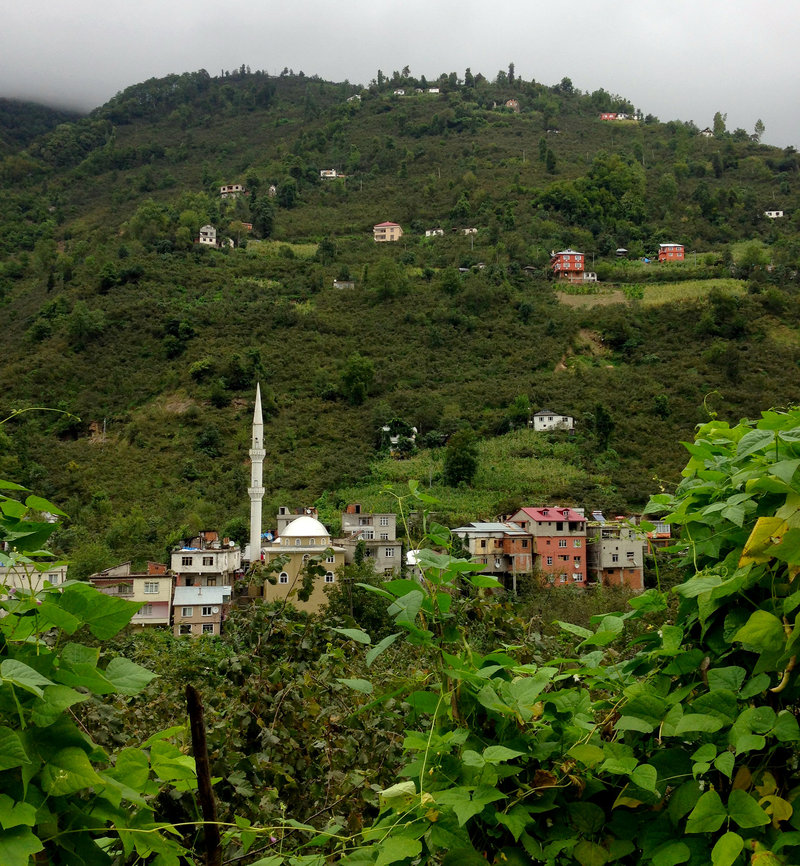
Steep hills surround the village of Kuskoy, high in the mountains above Turkey's Black Sea coast. Some villagers here can still understand the old "bird language," a form of whistled Turkish used to communicate across these deep valleys. Peter Kenyon/NPR

Steep hills surround the village of Kuskoy. Some villagers here can still understand the old “bird language,” a form of whistled Turkish used to communicate across these deep valleys. PHOTO: Peter Kenyon/NPR

Is it always necessary to use words to communicate? Theoretically, there’s verbal communication and its non-verbal counterpart of body language, gestures, and the like. What if the communication is to pass over valleys and hills – spontaneously? Then, a whistled language – with its origin in bird calls – is the answer. Ask the “bird whistlers”.

In a remote mountain village high above Turkey’s Black Sea coast, there are villagers who still communicate across valleys by whistling. Not just whistling as in a non-verbal, “Hey, you!” But actually using what they call their “bird language,” Turkish words expressed as a series of piercing whistles.

The village is Kuskoy, and it’s inhabited by farmers who raise tea, corn, beets and other crops, and also keep livestock. The landscape is unusual by Turkish standards, and the residents are also considered a bit eccentric by other Turks.

Continue reading

Opening the Arctic Vault

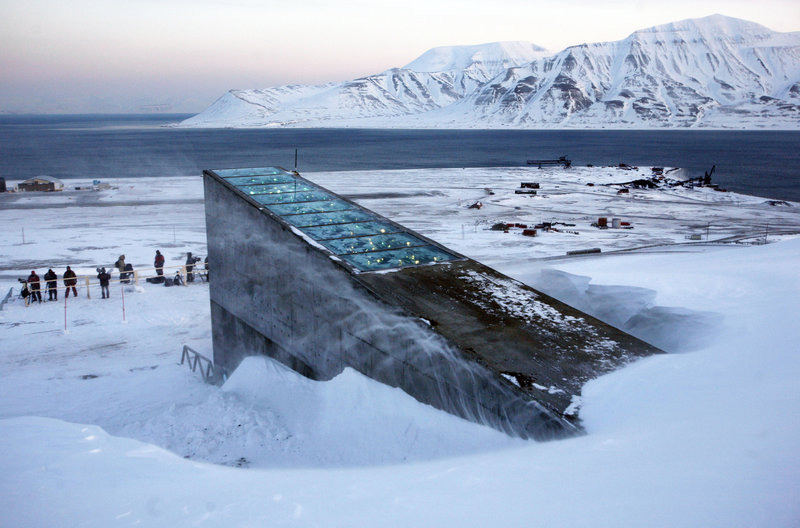
The Svalbard Global Seed Vault was inaugurated in 2008. The "doomsday vault" lies inside an Arctic mountain in the remote Norwegian archipelago of Svalbard. For the first time, scientists are taking some seeds out. PHOTO: John McConnico/AP

The Svalbard Global Seed Vault was inaugurated in 2008. The “doomsday vault” lies inside an Arctic mountain in the remote Norwegian archipelago of Svalbard. For the first time, scientists are taking some seeds out. PHOTO: John McConnico/AP

The ongoing civil war in Syria has led to the first-ever withdrawal from the Svalbard “doomsday” Global Seed Vault, a giant storage unit for plant seeds that’s tucked into the side of a frigid mountain in Norway. In the seven years since the Vault opened, hundreds of thousands of seed samples have gone into its icy tombs. And not one has come out—until now. This week the International Center for Agricultural Research in Dry Areas asked for the return of 325 little black boxes of seeds it had stored in the Svalbard vault. For many years, the center housed its own seed bank near Aleppo, Syria. Now, its scientists hope to use the Svalbard samples to regenerate that collection outside of their war-torn home.

Continue reading

More a Passion Than a Language – Catalan

The estelada, the flag of Catalan independence, during a demonstration in Barcelona. Photograph: Manu Fernandez/AP

The estelada, the flag of Catalan independence, during a demonstration in Barcelona. Photograph: Manu Fernandez/AP

Catalonia,the northeastern corner of Spain, is heading to polls. A move in which we could possibly see a new independent state. Amid the political predictions, the election narrative closely shadows what has held this population together. The Catalan language. One that finds its being in the fact that banning something could lead to its preservation.

This Catalan reaction is also expressed by a Catalan writer exiled in Mexico, Pere Calders, in his 1955 short story, “Catalans in the World”. A Catalan traveller in the Far East, at an evening party encounters a parrot which, to his surprise, utters Catalan phrases. He was overcome by emotion: “Many were the things which made us different but there was a language which made us one… Early that morning, when I left, I had a softer heart than the day I arrived.”

Continue reading

4,000 Years of Shared History

The African baobab, though, is most widely distributed both in its home continent and in the neo-tropics where enslaved Africans were brought to work. PHOTO: Gavin Evans

The African baobab, though, is most widely distributed both in its home continent and in the neo-tropics where enslaved Africans were brought to work. PHOTO: Gavin Evans

The Baobab tree is a native African tree with numerous valuable advantages including food, shelter, clothing, medicines, hunting, fishing, water storage, etc. It is considered sacred and immortal and its species is as old as 5000 years.And some of this is heritage is shared with India as well.
In the French novella The Little Prince, the titular prince comes from a very small asteroid planet called B612 where soil is full of baobab seeds. He tells the author that if left to grow, the baobabs would become so numerous and huge that they could make the little planet explode.On Earth, though, baobabs are quite the opposite. Anyone living in Africa where baobabs grow to enormous sizes would be able to tell you about the numerous benefits the trees provide for humans and animals.They would probably describe the marvellous generosity of its trunk and its hospitality to many creatures, and extol the hardy and light fruit pod with its deliciously powdery pulp and nutritious seeds that remain fresh and edible over long periods of time.
But there is a mystery to baobabs, as they are also found in India. How did they get there?

Continue reading

When Temples Teach About Forests

Traditional temple gardens, called Nandavanam, are strewn along the banks of the river Tamaraparani that originates in the Western Ghats, India. Each is attached to one of the 150-odd temples in the region, some as old as 1,000 years. PHOTO: Scroll

Traditional temple gardens, called Nandavanam, are strewn along the banks of the river Tamaraparani that originates in the Western Ghats, India. Each is attached to one of the 150-odd temples in the region, some as old as 1,000 years. PHOTO: Scroll

Sacred texts are guides to living while temples and the religious community teach a thing or two about what has been and what will be. But do temple gardens move beyond their aesthetic value and stand for something greater? Yes, their valuable insights into living ecosystems.

Some of these old surviving forest patches are invaluable when it comes to shining a light on what a forest might have been like in the area several thousand years ago, like a relic to an ancient civilisation. Considering the Indian government’s rapid march towards creating new forests to combat deforestation, sacred groves, their histories and regeneration can be a blueprint to such plans. “In short, one could say sacred groves provide a small window into an ecosystem’s past,” said Osuri. “They might even provide a source population and a reference library.”

Continue reading