There Is No Effective Resistance To This Charm

We cannot resist sharing the snake stories of our own team members, and we also seem to favor this related topic of domesticated wild creatures gone amok; a story whose variations, it is now clear to us, we will never tire of as long as Amie keeps finding gems like this, as long as Phil continues to post about entrepreneurial solutions, and as long as the New York Times does not tire of sending its best reporters on the occasional odd wild something chase:

retro-python-wildpets-thumbWideRETRO REPORT

The Snake That’s Eating Florida

Burmese pythons appear to be in the Florida Everglades to stay, just one of a number of unwanted animals that have invaded America.

The Mysteries Of Elena Ferrante

Path of Figs, 2012. Giulia Bianchi.

If you have not heard of Elena Ferrante before, you may want to start here, here, or here. But then come back here for this review. Thanks to the nplusone magazine website:

Those Like Us

On Elena Ferrante, by Dayna Tortorici,Issue 22: Conviction, Spring 2015

WHENEVER I HEAR someone speculate about the true identity of Elena Ferrante, the pseudonymous Italian novelist of international fame, a private joke unspools in my head. Who is she? the headlines ask. Don’t you know? I whisper. In my joke I’m sitting opposite someone important. The person promises not to tell, so I say:

She’s Lidia Neri.

She’s Pia Ciccione.

She’s Francesca Pelligrina. Domenica Augello.

Different names, every time, but the reaction is the same: a momentary light in the listener’s eyes that fades to bored disappointment. An Italian woman from Naples, whose name you wouldn’t know. Who did you expect?

Continue reading

The Extreme Present

Post_extremePresent1

We play a modern game by a modern set of rules, and just found that there is a name for the game–the extreme present–by listening to a few men and women discuss it on a stage in London recently. It is not our main game, but the game we play to enable our main game to succeed. We upload, we post, we tweet, we text and we otherwise try to catch your attention in order to have the chance to convince you that our issues should be your issues, and that you should come to our places to support our issues in those places.

We call our main game entrepreneurial conservation and we use modern communications technology, and its social media tools, and the whole bundle of scary social implications that come with those, to play that game. The scary social implications are not only in the form of people constantly looking and pecking at their smart phones.

Listen to this discussion to get the big picture. It takes a bit of effort to find the podcast of those men and women on the London stage, because as of this moment it is only available on iTunes, but we believe it will be worth the two extra minutes, and then the hour of listening. In iTunes paste this link, and then find the title below as one of the most recent podcasts:

THE EXTREME PRESENT: AN EVENING OF SELF-HELP FOR PLANET EARTH

With Shumon Basar, Douglas Coupland and Hans Ulrich Obrist

In the space of just 20 years, the internet has transformed us completely. It has changed not just the structure of our brains, but the structure of the planet. Our attention spans have narrowed to the length of a Beatles song. Our lives used to feel like stories; now they’ve collapsed to a perpetually refreshing stream of tweets and posts. We outsource our memory to the ‘Cloud’, and remember nothing we don’t have to. All that exists is immediately in the now. The internet, like all technologies, is not being shaped to resemble humans. Humans are being shaped to resemble the internet. Welcome to the age of the Extreme Present.

Continue reading

Dear Citizens Of Malta, Please Embrace The Ban

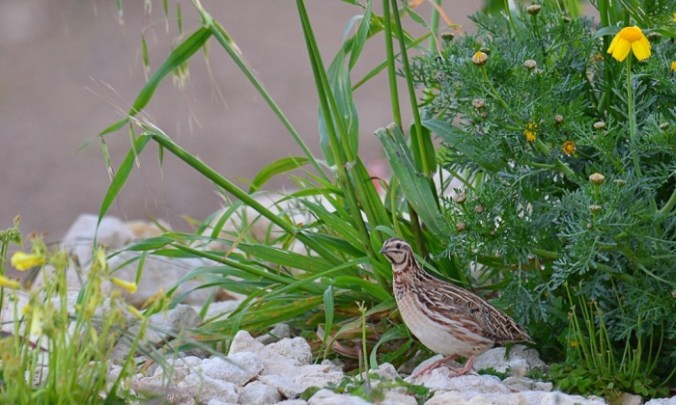
Activists say hunters use the currently legitimate spring season for hunting quails (above) to illegally hunt other birds. Photograph: Natalino Fenech

Activists say hunters use the currently legitimate spring season for hunting quails (above) to illegally hunt other birds. Photograph: Natalino Fenech

We have noted previously the odd (to us) behaviors that can be easily interpreted (not only by us) as abominable treatment of birds. It is not only a regional thing in the Mediterranean, this incomprehensible desire to decimate bird populations. From the Guardian, this news on the efforts of a dedicated group of activists:

Vote could see the spring hunting of birds such as quail and turtle doves, which is outlawed in the rest of the EU, banned in Malta

in Malta

Fiona Burrows is the kind of activist that hunters in Malta love to hate.

The Nottingham 30-year-old has been threatened, cursed at, and pushed around while doing the job she says she lives for: stealthily filming the illegal hunting of protected migratory birds and reporting perpetrators to the police.

Burrows takes precautions – she always parks her car facing an exit route and has even bought wigs to avoid detection by hunters – but she thinks these are probably not enough.

“Something bad is going to happen to me sooner or later,” she says. “It’s inevitable.” Continue reading

Foundation Earth, Randy Hayes, Cheaters and Fair Play

LogoTransp2We have not linked to this foundation before, but we have been listening to and reading Randy Hayes on the subject of climate change recently, and think this is a good primer to share about the foundation’s strategy and goals:

Toward A True-Cost Economic Model: Cheater Economics, Fair Play, & Long-Term Survival

Over the next century communities worldwide will experience an unprecedented shift of weather instability. Extreme weather events are ecological spasms often driving economic spasms and regional collapses. Concerned citizens and opinion leaders need to prepare before these eco-spasms proliferate. Far from being prepared, most leaders and power brokers are not mindful of the rethinking that is required. This working paper and appendix offers a brief economic vision, a set of economic principles, and list of problematic trends to help respond to the challenges as we work for a better day. –Randy Hayes

Mountains

Continue reading

Understanding The Lost Decade Of Young Turtles

Turtles in the study were less than two years old; they can take 10-20 years to reach sexual maturity

Turtles in the study were less than two years old; they can take 10-20 years to reach sexual maturity

Thanks to the BBC for this story:

‘Lost’ sea turtles don’t go with the flow

A tracking study has shown that young sea turtles make a concerted effort to swim in particular directions, instead of drifting with ocean currents.

Baby turtles disappear at sea for up to a decade and it was once assumed that they spent these “lost years” drifting.

US researchers used satellite tags to track 44 wild, yearling turtles in the Gulf of Mexico and compared their movement with that of floating buoys. Continue reading

Kathryn Schulz, Come To Kerala

Screen Shot 2015-04-10 at 6.14.56 AM

Past invitations have been sent to environmentally-oriented illustrators, to entrepreneurial conservation artists, to sandplay free spirits, to wildlife management scientists, and to food prodigies; but not enough attention has been paid, in our invitations, to word specialists. So, moving right along, Kathryn please be our guest. We would love to host you here and/or here and/or here.

We have not read the book in the link above, nor even a review of the book, but we are linking to its homepage because there you will find not only information about her book but also links to the two TED talks given by the author, whose profession is listed as Wrongologist. Catchy titles are not what catch us. Scintillating writing on the meaning of words does. For that, you could not do much better than starting here, which will also justify our invitation, as wordplay appreciators, to one of the best:

What Part of “No, Totally” Don’t You Understand?

BY KATHRYN SCHULZ

Not long ago, I walked into a friend’s kitchen and found her opening one of those evil, impossible-to-breach plastic blister packages with a can opener. This worked, and struck me as brilliant, but I mention it only to illustrate a characteristic that I admire in our species: given almost any entity, we will find a way to use it for something other than its intended purpose. We commandeer cafeteria trays to go sledding, “The Power Broker” to prop open the door, the Internet to look at kittens. We do this with words as well—time was, spam was just Spam—but, lately, we have gone in for a particularly dramatic appropriation. In certain situations, it seems, we have started using “no” to mean “yes.”

Here’s Lena Dunham demonstrating this development, during a conversation with the comedian Marc Maron on his podcast “WTF.” The two are talking about people who reflexively disparage modern art: Continue reading

Danish Can-Do Greenery

Screen Shot 2015-04-10 at 5.53.12 AM

Read a bit about their work, mission and invitation, and contagion takes on a new meaning:

Sustainia is a think tank and consultancy headquartered in Copenhagen, Denmark. We identify readily available sustainability solutions across the world and demonstrate their potential impacts and benefits in our work with cities, companies, and communities.

By focusing on innovative breakthroughs, inspiring alternatives and new opportunities, Sustainia is shaping a new narrative of optimism and hope for a sustainable future that seeks to motivate instead of scaring people with gloom and doomsday scenarios. Continue reading

Working To Survive, Alternate Edition

7_wide-3e7cde0913bd4deea8f50800b59f674482c45b98-s1300-c85

The St. James vineyard at the Abbey of New Clairvaux. The 20 brothers of the abbey belong to an order with a tradition of winemaking that dates back nearly 900 years. Lisa Morehouse for NPR

Thanks to the folks over at the salt, at NPR (USA):

Continue reading

From The Department Of Save It For Later

Screen Shot 2015-04-09 at 4.58.56 AM

Anyone, anywhere, who believes that something is worth saving (preserving, conserving, protecting, etc.) enough to dedicate time and effort, among other resources, we are likely to support it however we can. Our Bird of the Day feature is an example that goes back to one man’s collection of photographs he took personally containing all the birds, endemic and otherwise, that inhabit and/or migrate through south India. This collection is part of his passionate commitment to wilderness conservation in Kerala and other neighboring states.

We asked, in 2011, if Vijaykumar would allow us to publish his photographs in the interest of promoting conservation. He said yes. By now we have probably published all of the collection as it was in 2011, but he is still photographing and contributing. And four years later we have talented birders, many of whom are also exceptional wildlife photographers, contributing their photographs from all over the world. Seth became an employee of the Cornell Lab of Ornithology that same year, and that has led to a whole bunch of other interesting bird-related posts that we host.

Meanwhile New York City has rarely been a subject we cover from a conservation perspective, though its Public Library is of special interest to us. We have not linked to Jeremiah’s blog previously, but it is the type we favor, as you might have noticed, so here goes. Maybe there is more NYC in store for us.

Continue reading

Ecological Intelligence, Desperately Needed, Requires Social Intelligence, The Foundation Of Which Is Individual Emotional Intelligence

Screen Shot 2015-04-08 at 11.41.53 AM

To do what we do, at Raxa Collective, and to do it well, and to succeed, requires alchemy. We are neither sure we are doing it, nor how to do it, nor whether it can be explained; thus, alchemy. No formula. For those of us with management education, of a certain age, there was a certain author who brought alchemy closer to theory, and so closer to the grasp. A conceptual grasp more often than an actual grasp. Mastery? Not even close. But try? Yes. In the beginning it was all about emotional intelligence, but expanded in interesting directions to now include even ecological. Important ideas. Powerful tools. In the current Education section of the New York Times, a small dose that helps understand why:

How to Be Emotionally Intelligent

What makes a leader? Knowledge, smarts and vision, but also the ability to identify and monitor emotions and manage relationships.

Northern California’s Public Media Shares Art History With Communities Local And Global

Sonya Noskowiak, Calla Lily, 1932. (Courtesy Center for Creative Photography)

Sonya Noskowiak, Calla Lily, 1932. (Courtesy Center for Creative Photography)

Thanks to KQED (Public Media for Northern California, including National Public Radio and Public Broadcasting System, both of which would have the Raxa Collective seal of approval, if such a thing existed, for their excellent service to their communities) for this story of a not well enough known photographer:

Sonya Noskowiak: A Groundbreaking but Forgotten Photographer

By Matthew Harrison Tedford

…Another photograph, Calla Lily(1932), also possibly shown at the de Young, demonstrates Noskowiak’s thoughtful treatment of light. The flower’s milky white spathe is set against a vacuous black background. The flower appears as if floating, but the light falls on the veins of the leaves, grounding the luminous spathe.

A work titled Sand Pattern (1932) looks like aerial photographs of the Sahara or a satellite image of some uncharted Martian desert. Tentacles of sand stretch out in all directions as if they’re grasping for a nearby oasis. The sand resembles the aluminum powder found in an Etch A Sketch, almost shimmering. In actuality, the patterns might cover an area no larger than a footprint, possibly on a Carmel beach. Continue reading

The Rare Bird That Makes The News

CHESTNUT-BREASTED__2365682r

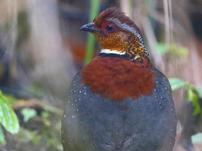
RARE FIND: Chestnut-breasted Partridge. Photo: Gururaj Moorching.

We most love the online edition of the national Indian newspaper, The Hindu, for its occasional willingness to put news like this on the same footing with the “noise” of the more typical “real” news:

Bengaluru shutterbug captures rare Partridge

Mohit M. Rao

Immense patience and a stroke of luck granted wildlife photographer Gururaj Moorching a two-minute encounter with the rare bird.

Continue reading

Wild, Walk, Wonder

12onnature1-mediumThreeByTwo210-v2Keeping it wild is a wonder of its own. Thanks to Britain for that; and to the New York Times for bringing it to our attention:

The Living Beauty of Wicken Fen

In one of Britain’s oldest nature reserves, Darwin collected beetles and Saxon warlords hid from invaders. But walking there now is more than a visit to the past.

Water And Its Discontents

The California drought has prompted Governor Jerry Brown to mandate a twenty-five-per-cent reduction in the state’s water usage. CREDIT PHOTOGRAPH BY FREDERIC J. BROWN / AFP / GETTY

The California drought has prompted Governor Jerry Brown to mandate a twenty-five-per-cent reduction in the state’s water usage. CREDIT PHOTOGRAPH BY FREDERIC J. BROWN / AFP / GETTY

Thanks to this post we learn that writers from one of our most valued sources of cultural and environmental long-form journalism and rapid-fire website posts sometimes travel to Costa Rica, and we can only hope they will consider Xandari a home away from home on such travels. But more importantly, in this post, we are reminded that the environmental footprint of the foods we eat is a relatively new topic for most of us. Did you consider the almond, the way you consider beef, to be one of the greedier foods, in terms of the water-intensity of its life cycle? Until reading this post we were clueless on that topic:

Drought City

BY DANA GOODYEAR

“Los Angeles Residents Walk Up to 4 Hours Per Day to Look for Potable Water”: I read this headline in a small monthly that covers the coastal province in northwestern Costa Rica where I was travelling, but it took me a moment to realize that this was not about the city of nearly four million where I pay my water bill, and not a joke, though it was April 1st. Los Angeles, in this case, referred to a fifteen-family town in the Central American highlands. But my Los Angeles is in for it, too, and it is a measure of how imminent and ominous these changes feel that my mistake seemed, for a moment, plausible—a new extreme in a year’s worth of shocking news about the effects of the California drought. Continue reading

Finding Solutions In The Wild, And Out Of The Wild

_81599510_b709fc07-2c46-44c7-8996-3e28da839ced

We normally do not link out to stories of man and wild animal bonding. But occasionally the story has more than aw shucks or just aw value; this is one of those. So is this one. Thanks to the BBC’s magazine for this story:

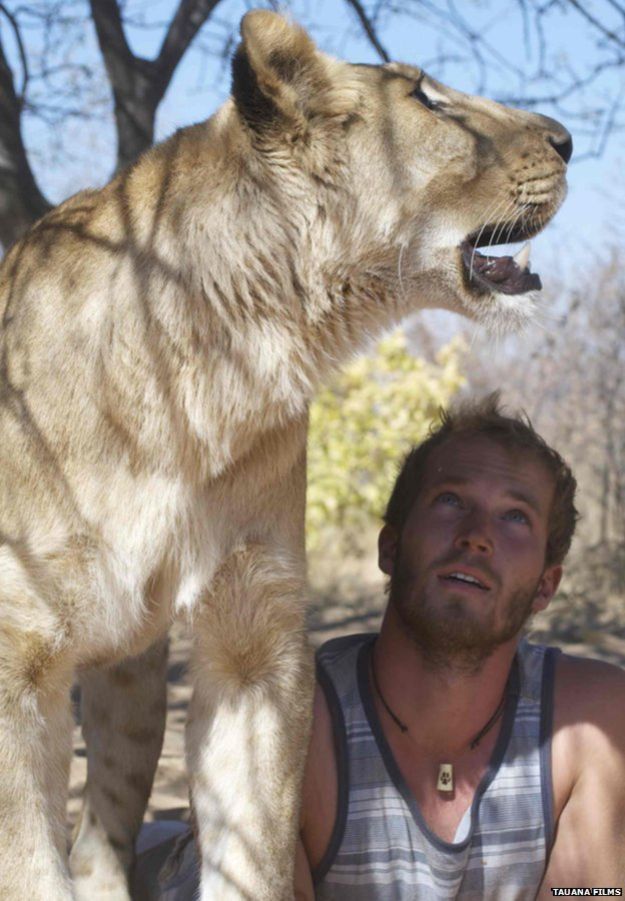
The lion hugger

In 2012 Valentin Gruener rescued a young lion cub and raised it himself at a wildlife park in Botswana. It was the start of an extraordinary relationship. Now an astonishing scene is repeated each time they meet – the young lion leaps on Gruener and holds him in an affectionate embrace.

“Since the lion arrived, which is three years now, I haven’t really left the camp,” says Gruener.

“Sometimes for one night I go into the town here to organise something for the business, but other than that I’ve been here with the lion.”

The lion he has devoted himself to is Sirga – a female cub he rescued from a holding pen established by a farmer who was fed up with shooting animals that preyed on his cattle.

Continue reading

Disrupting The Odds

An entrepreneur uses his laptop near graffiti-decorated walls at Hubspace in the Khayelitsha township. Emily Jan/NPR

An entrepreneur uses his laptop near graffiti-decorated walls at Hubspace in the Khayelitsha township. Emily Jan/NPR

Entrepreneurship always catches our attention, especially when the odds appear long from the standard perspective:

Far From Silicon Valley, A Disruptive Startup Hub

EMILY JAN & ADAM SEGE

Starting a business is tough anywhere.

But when you live in a place where many people lack basic services, such as electricity and toilets, it’s even harder.

These are the obstacles facing new business owners in South Africa’s townships — sprawling communities designated for nonwhites during apartheid. Apartheid may be history, but two decades into democracy, townships remain overwhelmingly disadvantaged.

Internet service and office space are difficult to come by. There are few sources of investment from within the community, and if you manage to interest a potential funder who is an outsider, you have to hope you can manage to travel to a meeting.

Continue reading

Inspired By Libraries Without Borders

jacob-lawrence-library-1

from a series on libraries by Jacob Lawrence.

What a wonderful surprise, to come across this talk by Kenan Malik, on a topic that has been of interest to us for some time:

I gave a talk at the launch at London’s Institut Français of Libraries without Borders, the charity inspired by Patrick Weil that aims to increase global access to books and libraries. Also speaking were Ian McEwan, Lisa Appignanesi, Barbara Band and Patrick Weil himself. Here is a transcript of my talk.


Let me begin with a story not of a library or a book but of a grand piano. The one grand piano in Gaza, that was discovered still intact in a theatre destroyed by an Israeli missile during last year’s war. A piano that has been restored string by string, hammer by hammer, by Claire Bertrand, a young French music technician who travelled to Gaza specially to bring the piano back to life, in a project financed by Daniel Barenboim. Continue reading

Be Wary, Is The Point

Crouch-Amazon-dash-button-690

What would the opposite of a blog-crush be called? Whatever that is, we may have it for Amazon, not least because of their various commercial practices we cannot admire–though we admit to finding Jeff Bezos one of the most fascinating individuals alive today. But also because of our resistance of the standard rush to advance consumerism, and our wariness of innovations that make consumerism more difficult to resist, which this blog post explores in punchy terms:

The Horror of Amazon’s New Dash Button

BY IAN CROUCH

Amazon’s new Dash Button, which will allow shoppers to reorder frequently used domestic products like laundry detergent or paper towels with the click of a real-life button, is not a joke. Many people assumed it was, mostly because the announcement came the day before April Fool’s, but also because the idea seemed to poke fun at Amazon’s omnipresence, making it visibly manifest with little plastic one-click shopping buttons adhered to surfaces all over your home.

There was also something slightly off about the promotional video. Continue reading

The Dumbest Experiment In History, By Far

Screen Shot 2015-04-05 at 7.14.35 AM

It’s official, our blog-crush on this particular conservation-focused entrepreneur. We have not yet heard (click above for a podcast in which “Neil deGrasse Tyson explores the future of humanity with one of the men forging that future: billionaire entrepreneur Elon Musk, CEO of SpaceX and Tesla Motors. Co-hosted by Chuck Nice and guest starring Bill Nye.”) or yet read (continue below to Motherboard‘s interview) anything to make us question that he is the real deal; a living, breathing visionary achiever of heroic proportions:

Elon Musk: Burning Fossil Fuels Is the ‘Dumbest Experiment in History, By Far’

Written by JASON KOEBLER, STAFF WRITER

Elon Musk, founder of Tesla and SpaceX, and chairman of SolarCity, and the guy who dreamt up the hyper loop, says we shouldn’t need an environmentally motivated reason to transition to clean energy. We’re probably going to run out of oil sometime; why find out if we can destroy the world while we do it, if an alternative exists?

“If we don’t find a solution to burning oil for transport, when we then run out of oil, the economy will collapse and society will come to an end,” Musk said this week during a conversation with astrophysicist and Cosmos host Neil deGrasse Tyson. Continue reading