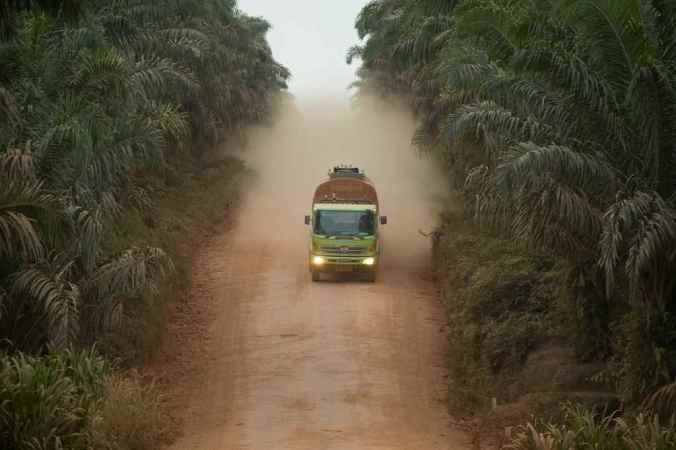
A Cargill-run palm plantation in Borneo in 2009. Image: David Gilbert/RAN
Every now and then we of non-technical education read an article written by and for a technical audience, and kind of get it, and feel the stretch is worth the effort. Raxa Collective works in locations where palm oil is grown, and recently has scouted locations in Borneo that make this article both eye-opening and eye-popping:
The Race for Sustainable Palm Oil
Palm oil is a wonderfully versatile and cheap raw material. On its own or via chemical derivatives, the oil makes its way into many packaged foods and into household products ranging from fine cosmetics to heavy-duty detergents.
Some 63 million metric tons of palm oil is harvested annually from tropical plantations, 87 percent of it coming from Malaysia and Indonesia. Palm oil is derived from the flesh and kernel of the fruit of oil palms. Demand for the oil is set to exceed 70 million metric tons by the middle of the next decade.
But palm oil’s large-scale use has environmental costs. In Southeast Asia, it is the leading driver of deforestation. Indonesia has the third-largest area of contiguous tropical forest in the world, but according to a 2007 United Nations Environment Programme report, 98 percent of the country’s natural rainforest will be destroyed by 2022 unless strict conservation measures are implemented. Continue reading




















 Organikos