Bummer Of A Finding

Another day, another news cycle. Another week, another wave of stories on topics we care about, some fun, some inspirational, some downright scary. In science news, a story we find not particularly surprising, but we must share it:

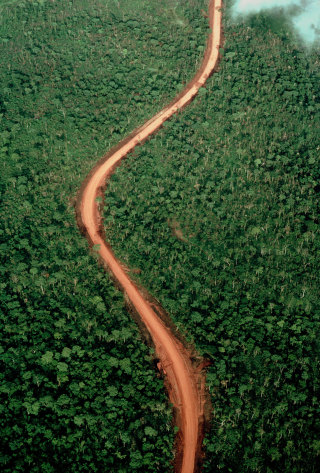
24RAINFOREST-thumbStandardAmazon Forest Becoming Less of a Climate Change Safety Net
By JUSTIN GILLIS

The ability of the Amazon basin to soak up excess carbon dioxide is weakening over time, researchers reported last week.

Kerala’s Legacy Around The World

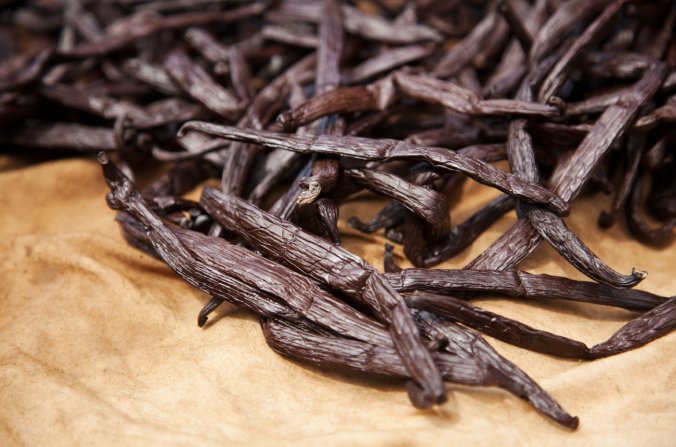
Vanilla is seemingly a prima donna spice because its pods have to be hand-pollinated and then boiled and dried in the direct sun for only one hour. iStockphoto

Vanilla is seemingly a prima donna spice because its pods have to be hand-pollinated and then boiled and dried in the direct sun for only one hour. iStockphoto

Spices enrich in more ways than one. Raxa Collective’s home base in Kerala has more stories than we can ever recount to prove this point. Some of the world’s most loved (and enriching) spices originate in Kerala. But for now, we put our attention elsewhere in the spice world. Our friends in Zanzibar are deserving of this attention (thanks to the NPR program, the salt, as always):

Let’s start with a spice quiz. One is a bean discovered in Mexico. One’s a tree native to India. One’s the seed of a fruit discovered in Indonesia.

Today vanilla, cinnamon and nutmeg can all be found in any spice farm in Zanzibar — the East African archipelago that was used as a spice plantation by the 18thcentury Omani Empire. Continue reading

If You Happen To Be In New York City

PHOTOGRAPH BY DAN WINTERS

PHOTOGRAPH BY DAN WINTERS

We have said since early on, and plenty of times since, that in these posts we cannot claim to be either committed vegetarians nor committed meat eaters. Rather, we believe–yawn at your own risk–in moderation. This upcoming show sounds like a worthy outing for a novel take on the topic:

Ab Ex meets Zap Comics in the wild imagination of Trenton Doyle Hancock (seen above in his Houston studio). In his boisterous mythologies, villainous vegans do battle with good-guy, meat-eating mutants, and Torpedo Boy—a superhero that Hancock, now forty, first drew in the fourth grade—swoops in to save the day. Continue reading

Another Reason To Flock to Ranganathittu Bird Sanctuary

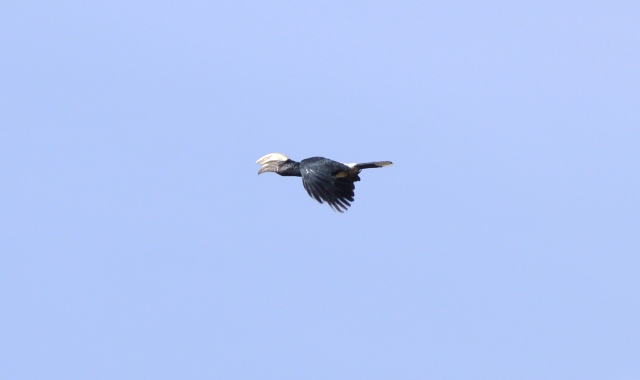
It’s not surprising that for the 3rd year running India has been among the top 3 participating countries in the Audobon Society’s Great Backyard Bird Count. According to GBBC statistics, India nearly doubled the number of checklists submitted to more than 6,800 and reported the greatest number of species with 717.

Many of those lists have come from the south Indian states of Karnataka and Kerala, so we’re excited to help promote this additional forum for Celebrating Birds.

Karnataka’s first Bird Festival aims to put focus on birds and bird watching in Karnataka. To provide a platform for well-known naturalists, experts, forest officers, bird photographers to share their insights & thoughts. This festival also focusses on putting bird conservation on the center-stage and raise the attention of nature enthusiasts and general public towards the significance of birds and the important role they play in the ecosystem.

Continue reading

What Drives Some Conservationists Some Of The Time Is Simply The Beauty Of Nature

3087c3af6ee01389ba74194f4da920c4


Click on the image above to go to the publisher’s website and their preferred purchase options for this book; the publisher’s blurbists have this to say about it:

An award-winning author’s stirring quest to find and understand an elusive and exceptionally rare species in the heart of Southeast Asia’s jungles.

In 1992, in a remote mountain range, a team of scientists discovered the remains of an unusual animal with beautiful long horns. It turned out to be a living species new to western science — a saola, the first large land mammal discovered in 50 years. Continue reading

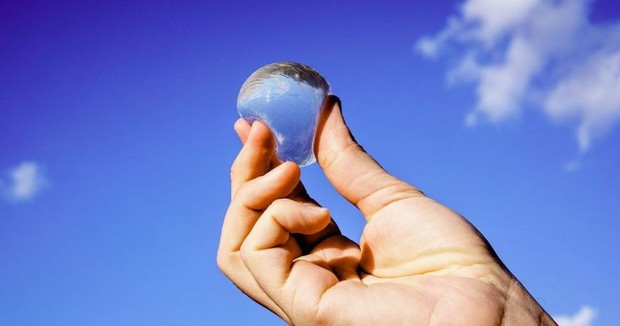
Water, Blobs, And The Future Of Thirst-Quenching On The Go

Skipping Rocks Lab

Skipping Rocks Lab

Thanks to one of the many sister websites of the Atlantic, this story about the future of packaged water:

In the future, rehydrating on the go might not mean chugging from a bottle, but inhaling a gelatinous, edible blob that looks like water floating on the space station. Continue reading

Language Spoken Is Knowledge Saved For A Rainy Day

150330_r26311-320

The consequences of losing a language may not be understood until it is too late.

At first glance, or quick skim, this will inject a darting depression into your soul, because of the seeming hopelessness. But then the grace of the writing, and the beauty of the story, will wash away the darkness and, very possibly, inspire you. Read it, and if you have thoughts, or actions, to share with us on the entrepreneurial (or other) conservation of intangible patrimony please share a comment below:

It is a singular fate to be the last of one’s kind. That is the fate of the men and women, nearly all of them elderly, who are—like Marie Wilcox, of California; Gyani Maiya Sen, of Nepal; Verdena Parker, of Oregon; and Charlie Mungulda, of Australia—the last known speakers of a language: Wukchumni, Kusunda, Hupa, and Amurdag, respectively. But a few years ago, in Chile, I met Joubert Yanten Gomez, who told me he was “the world’s only speaker of Selk’nam.” He was twenty-one.

Yanten Gomez, who uses the tribal name Keyuk, grew up modestly, in Santiago. Continue reading

If You Happen To Be In Ithaca: But You Don’t Have To Be

One of the many reasons we highlight the Cornell Lab of Ornithology on the pages of this site is the vastness of their offerings to both students and the general community (actual and virtual) sharing current studies in the field of ornithology. Continue reading

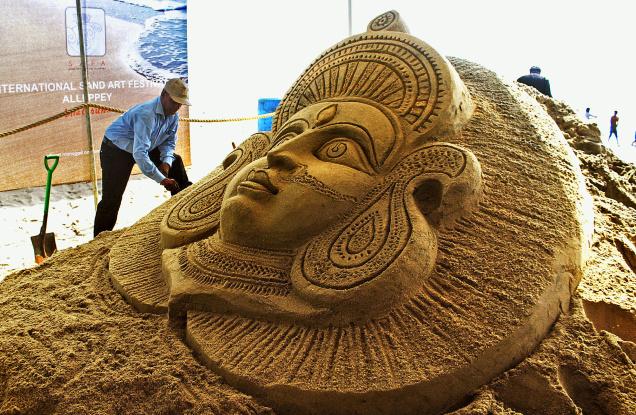
Marari Pearl Welcomes Sand Artists And Spectators to SAFA

An artist prepares a sand installation at the Alappuzha beach during the trial run of the international sand art festival that will be held in April.– Photo: By Special Arrangement

An artist prepares a sand installation at the Alappuzha beach during the trial run of the international sand art festival that will be held in April.– Photo: By Special Arrangement

Thanks to the Hindu for  bringing this to our attention:

safa-logoCome April, sand sculptures and paintings will adorn the picturesque Alappuzha beach. An international sand art competition, titled Sand Art Festival Alleppey (SAFA), is being jointly organised by the Tourism Department and the SAFA Foundation from April 18 to 26.

We love the logo, and the website for SAFA, and will assist any of our guests at Marari Pearl with the opportunity to participate, either as artists or spectators.

And the Wheels of the Bus Go Round and Round…

Bristol’s Bio Bus runs on faeces and household waste. Photograph: Ben Birchall/PA

A little over 2 years ago contributor Megan Madill wrote about one of the “Green Cities” of Europe, not to mention all the wonderful bike sharing (and bike friendly) initiatives worldwide.

But this news from the city of Bristol via the Guardian takes first prize. The innovation itself is a wonderful thing, but our applause actually goes more to the cheeky graphics.

UK’s first ‘poo bus’ hits the road

Britain’s first “poo bus”, which runs on human and household waste, goes into regular service this month. Continue reading

Largest Marine Reserve, 2015 Edition

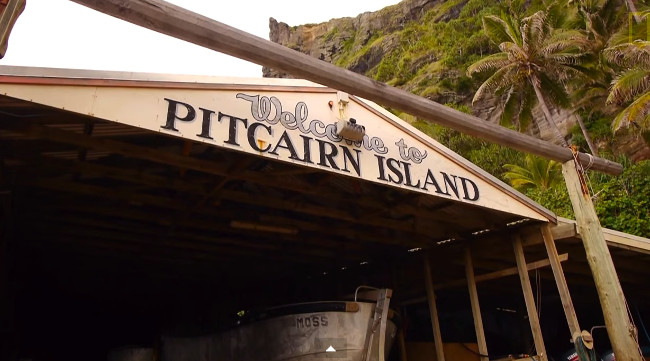
Pitcairn’s residents implored the UK government to protect the area, which is threatened by illegal fishing.

Pitcairn’s residents implored the UK government to protect the area, which is threatened by illegal fishing.

We hope they keep getting formed in larger and larger swaths of territory, and we will celebrate every time the ante gets upped this way:

British Prime Minister David Cameron’s government announced the creation of the world’s largest contiguous ocean reserve on Wednesday, protecting 322,000 square miles around the remote Pitcairn Islands in the South Pacific. To put that in perspective, that’s three and a half times the size of the United Kingdom and bigger than the state of California, according to National Geographic. Continue reading

Progress, Evolution & Design

Screen Shot 2015-03-21 at 10.38.33 AM

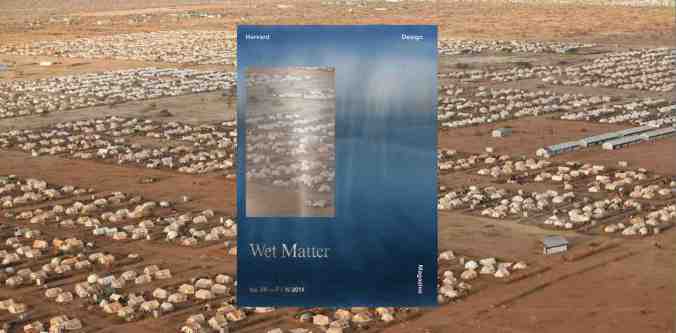
Thanks to the Harvard Gazette for bringing our attention to this magazine, published twice yearly by the Harvard University Graduate School of Design:

Making print modern

New look for Harvard Design Magazine deepens focus on ‘Wet Matter’

By Corydon Ireland, Harvard Staff Writer

In an age of bits and bytes and pixels and text on screens, Harvard Design Magazine — relaunched in a new format last year ― fervently embraces the thingness of print, the quotidian actuality of paper and ink.

The right wordsmiths were on hand to recast and renew the magazine, which is produced at the Harvard Graduate School of Design.

Continue reading

Progress, Destruction & Roads

Nijhuis-Habitat-Fragmentation-320

A new study looks at the worldwide effects of habitat fragmentation. CREDIT PHOTOGRAPH BY GEORG GERSTER / PANOS

From the Elements section of the New Yorker’s website, this note on roads, a clear symbol (and tangible form) of what most of us would count as progress, related to development, is worth a two minute read. Another reminder that roads, like other signs of progress, can also have unintended and irreversible destructive consequences for nature, for habitat that also sustains human life:

The first paved highway across the Brazilian Amazon began, in the nineteen-seventies, as a narrow, hard-won cut through dense rainforest. The road, which connects the northern port city of Belém with the country’s capital, Brasília, twelve hundred miles away, was hailed as a huge step in the region’s development, and so it was: it quickly spawned a network of smaller roads and new towns, drawing industry to the Brazilian interior. But the ecological price was high. Today, much of the Belém-Brasília highway is flanked by cattle pastures—a swath of deforestation some two hundred and fifty miles wide, stretching from horizon to horizon. Across the planet, road construction has similarly destroyed or splintered natural habitats. In equatorial Africa’s Congo Basin, logging roads have attracted a new wave of elephant poachers; in Siberia, road expansion has caused an outbreak of wildfires; in Suriname, roads invite illegal gold mining; and in Finland, so many reindeer are killed by cars that herders have considered marking the animals with reflective paint. Continue reading

Not In Our Kitchens, But Maybe In Yours?

This is a subject that we will be seeing more of, for sure. But for the record, a basic rule we live by at Raxa Collective is that we never have and never will slip such critters into food on the sly. We see the day coming, though we are not confident to predict how soon, when it is taken for granted that some portion of protein in the diets of people in even the most well-developed economies comes from insects. One more story in that vein,from our friends at the EcoWatch website, inspired by the recent TedX talk linked to above:

Maybe you’ve see little cans of chocolate-covered ants or grasshoppers in the exotic food section of your grocery and thought to yourself, “Yuck—who eats that?” Insects may not come to mind when you think of superfoods. But they could be the next hot “alternative” protein. They’re low in fat and loaded with fiber.

You might be surprised to learn you may have been eating insects already. Continue reading

Clothing Past, Experienced In The Present

One of Hortense Mitchell Acton’s Callot Soeurs gowns in the Camera Verde of Villa La Pietra. The gold and silver lace at the neck, the apron skirt, and the five metallic rosettes across the chest recall the forms of a Gothic cathedral. The sleeves are made of metallic lace, now oxidized. PHOTOGRAPHS BY PARI DUKOVIC

One of Hortense Mitchell Acton’s Callot Soeurs gowns in the Camera Verde of Villa La Pietra. The gold and silver lace at the neck, the apron skirt, and the five metallic rosettes across the chest recall the forms of a Gothic cathedral. The sleeves are made of metallic lace, now oxidized. PHOTOGRAPHS BY PARI DUKOVIC

It is likely that the New Yorker is the publication we link to the most, between its magazine and its website. If so, there is a reason. They care about stories we care about, enough to put their best writers and photographers on the task:

PortfolioMARCH 23, 2015 ISSUE

Twenty-One Dresses

BY AND

A number of years ago, a young painting conservator entered a forgotten storeroom in a fifteenth-century Florentine villa and stumbled on a pile of Louis Vuitton steamer trunks. She opened them and discovered a collection of exquisite dresses, the kind usually seen only in movies, or inside protective vitrines in museums. Closer inspection revealed silk labels, hand-woven with the name “Callot Soeurs.” Continue reading

Place, Memory And Experience At Present

Screen Shot 2015-03-20 at 7.02.51 AM

Our kind of project, and we look forward to the experience:

MADE WITH KICKSTARTER

In Japan, a Farmhouse Becomes a Journalist’s Elegy

UK Birders Unite

Voting for a National Bird seems like the perfect example of a ornithologically related Citizen Science activity.

Two amazing things happened in the mid 60′s. The Robin was voted Britain’s national bird and…

The surprising thing is neither has happened since.

Well, all that is about to change. David Lindo (AKA The Urban Birder) feels the Robin’s many decades in power needs to be challenged, so he is fronting a campaign to help find Britain’s new national bird. Running alongside this year’s General Election will be this alternative Election, which we’d love you to take part in. Continue reading

The Critic As Cold Water Splashed Refreshingly On The Face Of Modernity

Schjeldahl-Bjork-690

Björk is a restlessly experimental (and therefore fallible), tremendous creative force, not a tarnishable brand. CREDIT PHOTOGRAPH BY JONATHAN MUZIKAR


The opening paragraph of this brief review is worth the click, but the point we would like to bring to your attention is what follows. Sometimes an artist’s museum show can be taken down, critically speaking, with the museum bearing the brunt of the shame. And this point is directly linked to the now well-established concern that art in our age is as much a racket as it is an essential embodiment of culture. This reviewer, and his peers quoted in the opening paragraph, remind us of why we depend on critics for the insight that comes with an occupation whose singular focus is to help us decide whether a certain journey is worth making, or not:

…And yet Björk is unscathed. All the critics (now including me) hasten to acknowledge her musical genius and personal charisma. No detour into lousy taste—even at times her own, as in her partnership, lately ended, with the mercilessly pretentious Matthew Barney—can dent her authenticity. Her music videos (an oasis at the show, in a screening room) typically bring out the best in collaborating directors, musicians, designers, costumers (notably the late Alexander McQueen), and technicians. But if she chances to bring out the worst in star-struck curators, so what? Björk is a restlessly experimental (and therefore fallible) tremendous creative force, not a tarnishable brand. Continue reading

Marari Pearl Is Open; Some Promises We Can Make, And Others We Cannot

A policeman found a rare natural pearl (above) in his seafood stew that may bring $10,000 to $15,000 at auction.  PHOTOGRAPH COURTESY KAMINSKI AUCTIONS

A policeman found a rare natural pearl (above) in his seafood stew that may bring $10,000 to $15,000 at auction. PHOTOGRAPH COURTESY KAMINSKI AUCTIONS

March 13 we had the opening party for Marari Pearl. The festivities were fantastic; our team is stoked to serve. We are ready for you. Come on over! We have a thing for the pearl, as you will discover. We do serve seafood, primarily, and we set high expectations. However, they should be kept in check relative to the good fortunes of this patron at a restaurant in New England:

Cop Finds Rare Pearl Worth 10,000 Clams—in His Clam Stew

Formed by a grain of sand? Hardly ever in natural pearls; it’s usually to enclose a parasite.

Continue reading