Pop Up Restaurant Trends

Savory yogurt is one of this year’s top food trends. Photo credit: Blue Hill Yogurt / Facebook page

Savory yogurt is one of this year’s top food trends. Photo credit: Blue Hill Yogurt / Facebook page

Thanks to EcoWatch for this note on trending foodways to watch this year:

On today’s Here & Now, host Jeremy Hobson talked with foodies Kathy Gunst, resident chef for Here & Now, and J.M. Hirsch, food editor for the Associated Press, about some of the trends in food for 2015.

Several trends that the guests identified include, savory yogurt, butter and full-fat dairy, mini vegetables and “new” whole grains such as freekeh, hemp, chia and spelt. Continue reading

The Ecological Health Of Oceans In Dire Need Of Support

The news that is fit to print, for better or worse as it impacts our mood and our sense of hope (or sense of doom on occasion), includes this review of the current best knowledge on marine ecosystems by one of our favorite science writers:

Ocean Life Faces Mass Extinction, Study Says

Scientists find what they say are clear signs that humans are beginning to damage oceans on a catastrophic scale, but there is still time to preserve their ecological health.

Friends, Collaboration And Awesome Accomplishment

Yosemite climbers reach summit of El Capitan

Yosemite climbers reach summit of El Capitan

News feeds–especially those that give attention to adventure, and extreme sports and rock climbing in particular–are full of this story just now about two friends accomplishing one of the greatest challenges left in the small specialty sport. We are not at all devoted to the sport, but in the last year or two have developed a fascination, based on another climber’s feats and travails, mainly because of the collaboration component of climbing.

© AP Photo/Tom Evans, elcapreport In this Jan. 8, 2015 photo provided by Tom Evans, Kevin Jorgeson celebrates his finishing the climb of Pitch 15 while two photographers shoot video and stills from above…

© AP Photo/Tom Evans, elcapreport In this Jan. 8, 2015 photo provided by Tom Evans, Kevin Jorgeson celebrates his finishing the climb of Pitch 15 while two photographers shoot video and stills from above…

Today’s news brings the collaboration part back to the forefront, in this case not due to absolute requirement but due to friendship. It is touching, in that “feel good” sense related to hoping you would do the same thing in the circumstance described; but more than that, it is just awesome:

YOSEMITE NATIONAL PARK, Calif. (AP) — American rock climber Tommy Caldwell was first to pull himself atop a 3,000-foot sheer granite face in Yosemite National Park, followed minutes later by his longtime friend Kevin Jorgeson.

The pair embraced and then Jorgeson pumped his arm in the air and clapped his hands above his head. After years of practice, failed attempts and 19 grueling days scaling the vertical wall on El Capitan by their bloodied fingertips, the friends at last grasped success.

“That’s a deep, abiding, lifelong friendship, built over suffering on the wall together over six years,” said Caldwell’s mother, Terry, among some 200 people in the valley floor thousands of feet below who broke into cheers at the climbers’ historic feat Wednesday.

She said her son could have reached the top of the world’s largest granite monolith several days ago, but he waited for his friend to ensure they made it together. Continue reading

Ulhas Kashalkar, Musician’s Musician

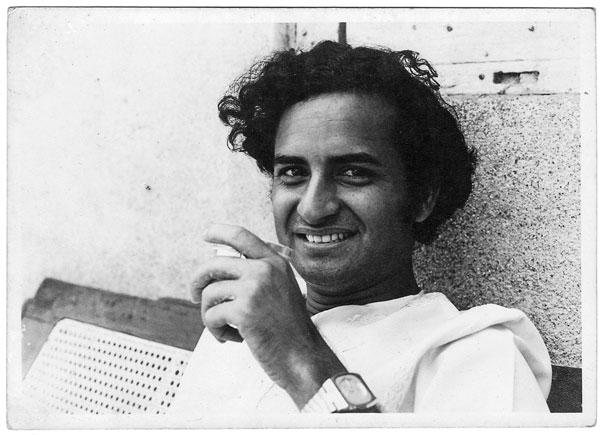
COURTESY ULHAS KASHALKAR. Kashalkar’s genius lies in his inventive yet rooted artistry. In a sweet, malleable voice, he channels an intellectual disposition into emotionally powerful renditions.

COURTESY ULHAS KASHALKAR. Kashalkar’s genius lies in his inventive yet rooted artistry. In a sweet, malleable voice, he channels an intellectual disposition into emotionally powerful renditions.

When we first discovered the magazine we knew we would come to count on it for stories of interest from time to time, and today we find such an occasion:

A Fine Balance

How Ulhas Kashalkar became one of the greatest musicians of our time

By Sumana Ramanan

ONE

MINUTES BEFORE THE LIGHTS DIMMED and the Hindustani vocalist Pandit Ulhas Kashalkar walked onto the stage at Mumbai’s National Centre for the Performing Arts, the eminent singers Ashwini Bhide-Deshpande and Padma Talwalkar took their seats in the front row. The vocalist and veteran critic Amarendra Dhaneshwar sat a few rows behind them. Other listeners looked around to see who else had come. Several younger singers were there as well: Noopur Kashid, Rutuja Lad, Amita Pavgi-Gokhale and Saylee Talwalkar. The turnout for Kashalkar’s concert, held last September, was not unusual; for at least a decade, he has been considered a musicians’ musician. Still, expectations were high: what would the maestro sing for this audience?

Continue reading

Recycling Nature’s Leftovers, A Puzzle

DOES SALVAGE LOGGING MAKE THINGS BETTER OR WORSE?

Thanks, as always, to Conservation for the summary of important scientific findings:

DOES SALVAGE LOGGING MAKE THINGS BETTER OR WORSE?

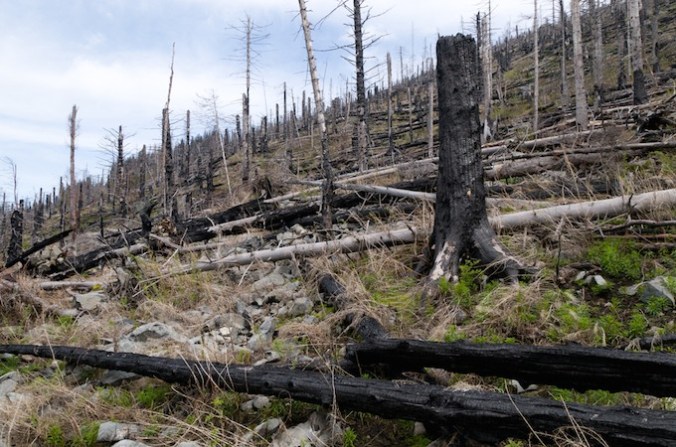
When a serious wildfire rips through a forest, it has a tendency to kill nearly all the trees in its path. Then come the logging companies. On one hand, to log a burned forest makes a good deal of sense. Some of the timber is still useful, and it’s a way to derive some economic benefit from a landscape that’s otherwise devastated. The process, called “salvage” logging, typically operates in two phases. In the first phase, machines called “feller-bunchers” come through, cut down the dead trees, and pile them into bunches. In the second phase, machines called “skidders” are brought in. Their function is to take those piles of felled trees and cart them back down the mountain. Continue reading

More Less Than Good News Related To The Effects Of Climate Change

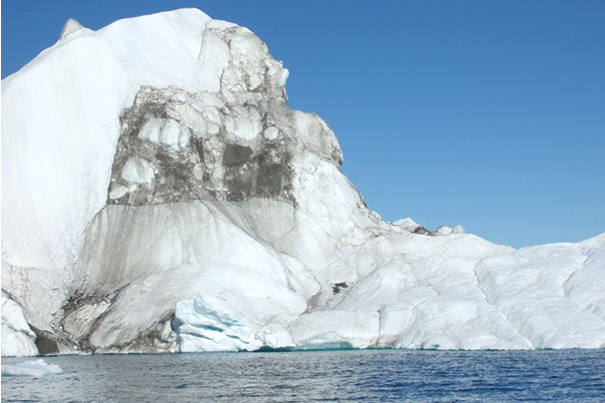
Sea level correction. Increase has been more intense than previously understood, study says

Photo by Robert Kopp. “What this paper shows is that sea-level acceleration over the past century has been greater than had been estimated by others,” said Eric Morrow, a recent Ph.D. graduate. “It’s a larger problem than we initially thought.”

We were not looking for more bad news today, really; but science has that unrelenting need to march forward, and this news from the latest finding is not so good (thanks to Harvard Gazette):

Sea level correction

Increase has been more intense than previously understood, study says

By Peter Reuell, Harvard Staff Writer

The acceleration of global sea level change from the end of the 20th century through the last two decades has been significantly swifter than scientists thought, according to a new Harvard study. Continue reading

Sometimes The Truth Is Hard To Believe

Photo by Christopher Halloran/Shutterstock.com, modified by Phil Plait

Photo by Christopher Halloran/Shutterstock.com, modified by Phil Plait

We try to minimize the doom and gloom and accentuate the solutions; but sometimes our eyebrows rise to new heights and we must share:

Yup, a Climate Change Denier Will Oversee NASA. What Could Possibly Go Wrong?

By Phil Plait

So, Sen. Ted Cruz (R-Texas) was just named to be the chairman of the Subcommittee on Space, Science, and Competitiveness as Republicans take over the Senate. This subcommittee (which used to be just Space and Science but was recently renamed) is in charge of oversight of, among other things, NASA.

This is not a good thing. Just how bad it is will be determined. Continue reading

Avian Odyssey

As Seth and his team are in flight for their odyssey in search of the golden swallow, it seems fitting that we come across the stories of epic avian journeys. Just about a year ago we posted about the bar-tailed godwit, and it seems the species has some stiff competition in the semipalmated sandpiper.

Scientists from the Manomet Center for Conservation Sciences recovered data from a geolocator tagged sandpiper from sub-Arctic Coats Island revealing that the bird flew over 10,000 miles in the past year, including a remarkable six day, 3,300-mile nonstop flight across the Atlantic Ocean. Continue reading

More Reasons To Disconnect

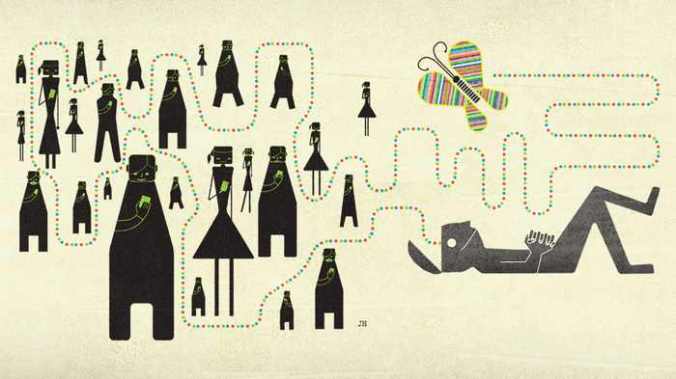
Illustration by John Hersey/Courtesy of WNYC

Illustration by John Hersey/Courtesy of WNYC

Desire to drop everything and release yourself from the constant ringing, pinging distraction? We’ve suggested disconnection before. We have suggestions on where to do it too, some offering pure relaxation and others offering immersion in culture. But why do it? Plenty of reasons, and you do not need us to explain. Nonetheless, from National Public Radio (USA) a fun, unconventional reason:

Bored … And Brilliant? A Challenge To Disconnect From Your Phone

Studies suggest we get our most original ideas when we stop the constant stimulation and let ourselves get bored. The podcast New Tech City is challenging you to disconnect — and see what happens.

Screen Shot 2015-01-13 at 3.55.58 AM

Continue reading

If You Happen To Be In Fort Kochi

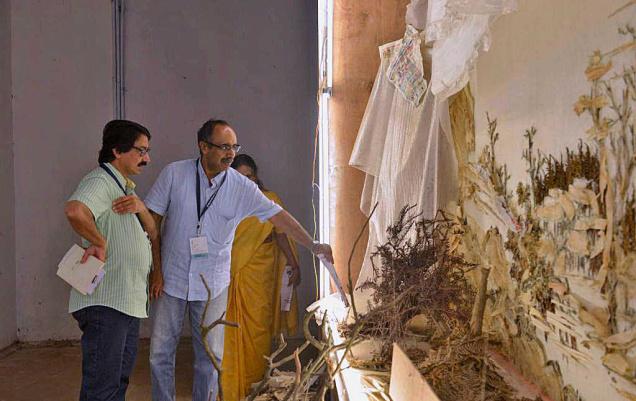
V. Venu, director-general of the National Museum in Delhi (in blue), viewing Xu Bing’s work at Aspinwall House  in Kochi on Sunday.

V. Venu, director-general of the National Museum in Delhi (in blue), viewing Xu Bing’s work at Aspinwall House in Kochi on Sunday.

If you are in town before the end of March, come see the show. We have mentioned the event in these pages more than once between its first iteration and this year’s; and if you follow Spice Harbour‘s social media you would have seen, among other things, that the formal opening of that property doubled as a fundraiser for KMB, as it is affectionately known to Raxa Collective. In today’s Hindu, an article reminds us that the event is not just for fancy folks, but serves a deeply important cultural education service for Indians of all backgrounds and education levels:

Prominent figures from the world of art, film personalities, art students, and the public turned up in large numbers at the Kochi Muziris Biennale on Sunday, even as the event completes a month on January 12.

Among the visitors to the contemporary art event on Sunday was V. Venu, director-general of the National Museum in Delhi. “The kind of consistent engagement by people from every walk is what makes the Biennale an unparalleled successful event in the country,” said Dr. Venu. Continue reading

Expeditions In The Interest Of Science, Nature And Conservation

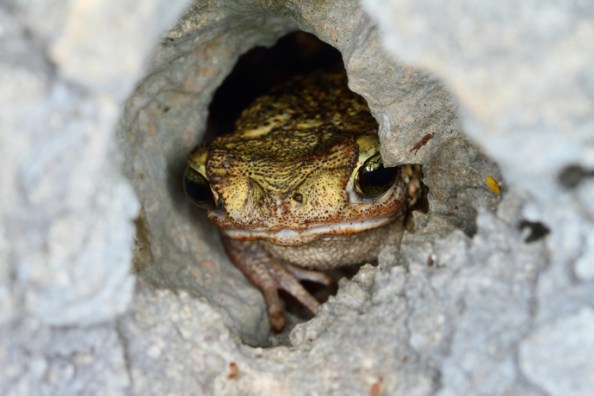
A male toad of an undescribed species hides in the limestone of the southwestern Dominican Republic. CREDIT PHOTOGRAPH COURTESY MIGUEL A. LANDESTOY

A male toad of an undescribed species hides in the limestone of the southwestern Dominican Republic. CREDIT PHOTOGRAPH COURTESY MIGUEL A. LANDESTOY

There is a reason why we highlight birds every single day. They are spectacular in many diverse ways, as well as beautiful in more ways than can be counted, and sometimes smile-inducingly odd; always exceptional ambassadors to the human world from their natural habitats, which are under constant pressure and threat. Birds may seem more charismatic than amphibians but from an ecologist’s point of view they are both extremely valuable indicators of ecosystem health. If you have been following Seth’s posts about the preparation for the Smithsonian expedition he is about to embark on, you will likely agree they would enjoy crossing paths with the team described in this story:

The southernmost corner of the Dominican Republic is dominated by limestone karst, a landscape with the look and feel of a petrified giant sponge. Snakes, small mammals, and fat, furry tarantulas live in the fissures and holes in the karst, as do toads, including one species that is not yet fully known to science. I met this new toad at three o’clock one late-fall morning, in a karst forest off a mining road near the town of Pedernales. I was with Miguel Landestoy and Robert Ortiz, a pair of freelance field biologists who have been friends since their youth, and who still spend much of their time looking for amphibians. Continue reading

If You Happen To Be In Ithaca

Bijayini Satpathy, top, and Surupa Sen in two duets, “Dheera Sameere” and “Kisalaya Sayana,” in Chennai, India. Credit Jyothy Karat for The New York Times

Bijayini Satpathy, top, and Surupa Sen in two duets, “Dheera Sameere” and “Kisalaya Sayana,” in Chennai, India. Credit Jyothy Karat for The New York Times

On February 4 Nrityagram, a dance troupe from India, will perform “Songs of Love and Longing” at Cornell University’s Barnes Hall. We normally do not take note of such performances at university campuses, even when the artist is from India. But this troupe is exceptional. Last week not far from Raxa Collective’s operations in Kerala, in the neighboring state, a Nrityagram dance performance led to this remarkable review in the New York Times:

A Sublime Touch, From Head to Heel

Odissi Stars at a Dance Festival in Chennai, India

JAN. 6, 2015

CHENNAI, India — Who are the greatest dancers in the world today? Most of the contenders considered in the West for this category are the roving international stars of ballet. But many of today’s finest dance artists have been performing here at the Music Academy’s weeklong dance festival, which ends on Friday. Some — all women — have touched on the sublime.

Three have been practitioners of the Odissi genre: Sujata Mohapatra, who performed on Sunday, and the two leading dancers of the Nrityagram company, Surupa Sen and Bijayini Satpathy, who presented solos and duets on Monday. (I’ll consider other festival performances next week, some no less superlative.)

Odissi is the classical idiom deriving from the eastern state of Orissa (now named Odisha). Though its roots go back 2,000 years, by the 1940s and ’50s it was scarcely known, whereas now it is taught and performed around the world. These three artists exemplify the qualities that have often made Odissi seem the most sensuously poetic of all dance idioms.

Continue reading

Flipping Tortoises

Credit: RubberBall / Alamy. Via BBC

A couple of our contributors have connections to tortoises through the Galápagos Islands, or at least from reading about them in the news. We’d always been aware of the danger for tortoises if they were flipped on their backs, but had never given the issue much evolutionary thought to consider the variations in the animals’ shells. Now, scientists at the University of Belgrade have published a paper on the self-righting ability of Hermann’s tortoises, which live in the Mediterranean. Matt Walker writes for the BBC:

Depending on your point of view, it is one of life’s great questions.

How does a tortoise that has flipped onto its back, get up again?

It’s not a rhetorical question, and it goes beyond being a metaphorical or metaphysical query, or a subject for drunken debate.

For a tortoise it is a deadly serious matter; being able to right itself counts as one of life’s epic struggles, a potential matter of life and death.

Continue reading

Particulate Matter Pollution

A view of the Eiffel Tower through smog in March. Several regions of France experienced high levels of particulate pollution that month. Credit Patrick Kovarik/Agence France-Presse — Getty Images. Via The New York Times.

We’re always interested in learning about pollution and ways to counter it, no matter what kind of pollution it is. Roughly a week ago Michael Greenstone, the Milton Friedman professor of economics at the University of Chicago, wrote a piece for the New York Times about particulate matter pollution, which we have limited knowledge of. Some of the data Greenstone explained was fairly surprising, and we learned more about this serious form of air pollution. Here he is on the topic:

The World Health Organization considers fine particulate matter pollution levels higher than 10 micrograms per cubic meter to be unsafe. The majority of American cities are in the safe zone, with the average pollution level at 9.6. Thirty-three percent of cities are above the W.H.O. standard. Those cities tend to be geographically dispersed throughout the United States, but are predictably cities with heavy industry and driving, like Cleveland, Chicago, Los Angeles and Philadelphia. Outside of the W.H.O., the United States has its own particulate matter standard of 12 micrograms per cubic meter. The pollution in 13 percent of American cities is higher than that.

Continue reading

Using Gravity as Glue

Michael Grab, whose work we have shared previously, is still working his magic with rocks. Stacking stones with the upmost precision and patience, he then destroys his precarious creations in ways that look amazing when played backwards, as shown towards the end of the video above. Grab shares with thisiscolossal:

Balance requires a minimum of three contact points. Luckily, every rock is covered in a variety of tiny to large indentations that can act as a natural tripod for the rock to stand upright, or in most orientations you can think of with other rocks. By paying close attention to the vibrations of the rocks, you will start to feel even the smallest “clicks” as the notches of the rocks are moving over one another. In the finest “point-balances,” these clicks can be felt on a scale smaller than millimeters, and in rare cases can even go undetected, in which case intuition and experience become quite useful.

Continue reading

Teen Invents Lego Braille Printer

We’re constantly amazed at the inventiveness and creativity of people around the world. A few weeks ago, PBS aired a story about a thirteen-year-old entrepreneur who created a braille printer out of Legos that is cheap enough to provide better opportunities for literacy among the sight-impaired. Quotes from the transcript are below, or you can click on the video above to watch the feature.

JACKIE JUDD: At the age of 12, Shubham Banerjee learned how random the universe can be.  One seemingly inconsequential occurs, in this case the ring of a doorbell, and life changes in a big way.

SHUBHAM BANERJEE: I looked out.  No one was there.  But I did see a flyer over there, and which asked for donations for the visually impaired.

I asked — I didn’t know why.  I just asked a random question to my parents.  How do blind people read?  They didn’t really have time for me, so they said: “Sorry, I’m busy.  Can you go Google it?”

JACKIE JUDD: And one thing lead to another.

Continue reading

Cod, Revisited

Atlantic Cod. Photo credit Pat Morris.

We’re always happy to find another reason to link to an old environmental history post on cod, or fish stocks in general. In an op-ed for the New York Times a few days ago, environmental and maritime historian W. Jeffrey Bolster starts to answer the question, “Where have all the cod gone?”

PORTSMOUTH, N.H. — IN November, regulators from the National Oceanic and Atmospheric Administration shut down recreational and commercial cod fishing in the Gulf of Maine, that enchanting arm of the coastal sea stretching east-northeast from Cape Cod. They did not have much choice: Federal law requires action to rebuild fish stocks when they are depleted, and recent surveys revealed cod populations to be at record lows, despite decades of regulations intended to restore them.

Continue reading

The Gears in Planthopper Nymph Legs

Igor Siwanowicz’s image of planthopper nymph gears won 9th place in the Olympus BioScapes International Digital Imaging Competition. Photo by Igor Siwanowicz, HHMI Janelia Research Campus, Ashburn, Virginia. Via Science Friday.

In September of 2013, Science published a paper by Malcolm Burrows and Gregory Sutton titled, “Interacting Gears Synchronize Propulsive Leg Movements in a Jumping Insect.” The two British biologists were discussing the fascinating structures they had found in the legs of small insects called planthoppers. At the top joints of each pair of legs, the tiny jumping insects had gears with interlocking teeth that synchronized the kicking motion between the two appendages, so that the planthoppers could jump straight rather than slightly to the left or right if one leg had acted even slightly before the other.

Covering the story back in September, Joseph Stromberg wrote for Smithsonian Magazine that:

To the best of our knowledge, the mechanical gear—evenly-sized teeth cut into two different rotating surfaces to lock them together as they turn—was invented sometime around 300 B.C.E. by Greek mechanics who lived in Alexandria. In the centuries since, the simple concept has become a keystone of modern technology, enabling all sorts of machinery and vehicles, including cars and bicycles.

Continue reading

On the Art of Snowflakes

Snowflake, by Steve Begin/flickr/CC BY-NC-SA 2.0

For those of our readers in the appropriate climates to be receiving snow this time of year, we have some information on snowflake collection/observation that might be of interest; for those in milder or more tropical climes, we have a science experiment to create your own crystal formation in the shape of a snowflake! Let’s start with finding snowflakes in the wild. You can start by watching this Snowflake Safari video from Science Friday, or if you prefer reading, we have excerpts below (also via SciFri) from the book Mama Gone Geek by science writer Lynn Brunelle:

When the snow starts falling, grab your kids, coats and boots, a couple of pieces of black construction paper, and a magnifying glass or two if you have them. As the snow is falling around you, catch a couple of snowflakes on your black construction paper and observe them with your magnifying glass, comparing how the snowflakes are similar and different. Count how many sides or points the snowflakes have and if any snowflakes appear to match.

Continue reading