Ithaca Featured in NatGeo’s Intelligent Travel Section

Cornell’s McGraw Tower. Photo by S. Inman

Over the last several years, dozens of our interns have been Cornellians, and some have even been born-and-bred Ithacans. It is often said that Ithaca is “ten square miles surrounded by reality,” for reasons that we won’t go into here and might be gleaned from the text below. But if Ithaca is sometimes seen as a bubble, then it can be expected that students at Cornell University or, to a lesser degree, Ithaca College live in an even more insulated shell that separates them from the city of Ithaca.

So it’s somewhat refreshing to see a descriptive post by an Ithaca resident–but McGill University graduate–in National Geographic’s Intelligent Travel section. Under the “Beyond the Guidebook” category, Alizé Carrère wrote a quick but information-packed list of things that she loves about her city, which you can read below or here:

Summer is the best time to visit my city because that’s when Ithaca really comes to life. Many of the college students leave for summer break, so the city opens up and all of the best outdoor attractions are in their prime. You can enjoy waterfall hikes, summer concerts in the park, patio happy hours, fresh produce in local restaurants, and twilights that stretch into the nine o’clock hour.

You can see my city best from the top floor of Cornell University’s Johnson Art Museum, which reveals a near 360-degree view of Ithaca, including Cornell’s beautiful campus and the south end of Cayuga Lake. The museum itself, which looks like a giant sewing machine, was designed by renowned architect I.M. Pei, the creative mind behind the striking (and once controversial) glass pyramid in front of the Louvre.

Continue reading

For Peat’s Sake, Conserve Amazonia

BBC: In Amazonia’s most carbon-dense ecosystems, an estimate 90% is stored underground as peat

A couple of weeks ago, we featured a story from another British news source about the peat success story in Indonesia, where the new president has pledged to tackle his country’s deforestation rate, the highest in the world. President Joko Widodo announced that both rainforest and peatland would be protected under his governance, even if that meant cracking down on the powerful plantation companies.

This week, scientists at institutions in the UK, Finland, and Peru published a paper in Environmental Research Letters calculating that peatlands, rather than rainforest, are the most dense store of carbon in Amazonia. Mark Kinver reports for BBC News:

Writing in the paper, the scientists observed: “This investigation provides the most accurate estimates to date of the carbon stock of an area that is the largest peatland complex in the Neotropics.”

They said it also confirmed “the status of the [Pastaza-Marañón foreland basin in north-west Peru] as the most carbon-dense landscape in Amanozia”.

“We expected to find these peatlands but what was more of surprise was how extensive they were, and how much this relatively small area contributed to Peru’s carbon stock,” explained co-author Freddie Draper from the University of Leeds.

The 120,000 sq km basin accounts for just about 3% of the Peruvian Amazon, yet it stores almost 50% of its carbon stock, which equates to about three billion tonnes.

Continue reading

First Witnessed Bonobo Birth

© BBC

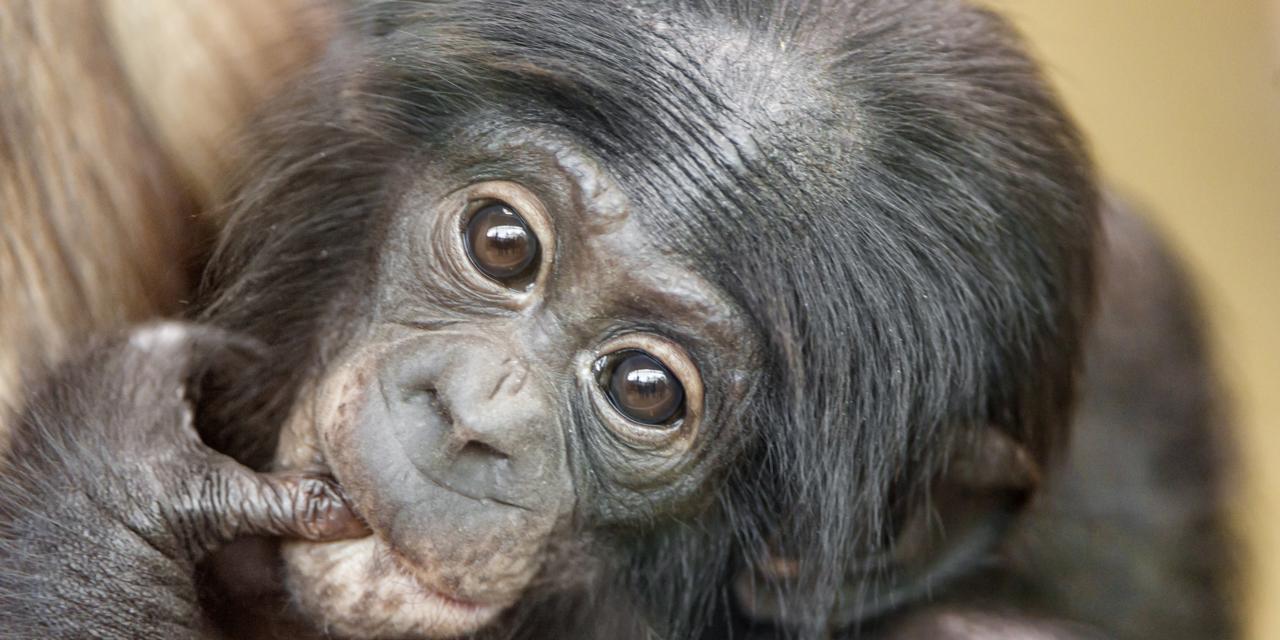
Bonobos are the smaller and less researched species of chimpanzee, and just a few days ago the first birth witnessed in the wild by a human took place in the Democratic Republic of the Congo. The three main discoveries that primatologist Pamela Heidi Douglas made while observing the birth were: the mother bonobo gave birth in a tree, rather than on the ground; the mother had two other females present at the birth, who may have served as midwives or at least supporters; and the mother and her female friends all ate the placenta after the birth. Matt Walker reports for the BBC:

For almost two years, Douglas has followed and studied the bonobos at Luikotale, as part of her research towards her PhD.

“One component of my Ph.D. research is the study of reproductive endocrinology in female bonobos,” she told BBC Earth.

To do this, Douglas regularly collected urine samples from Luna and other females in the community on a regular basis.

These were tested with human pregnancy kits, which can detect pregnancy in bonobos as well as other non-human primates.

Continue reading

Predatory Selection

© BBC

Writing for the BBC Earth section, Colin Barras explores “how the ‘art of killing’ changed the world.” Did multicellular organisms arise because single-celled ones were too easily attacked? Did skeletons evolve primarily as protection against predators? And, maybe the hardest question to answer with certainty: did animals move from water to land because it would be easier to avoid getting eaten? Read the excerpted introduction below and follow the link to learn about these theories and others from Barras.

If you’ve ever seen a lion or a polar bear on the hunt, you know how powerful predators can be. Life may well have been troubled by these killer species since its very beginning, over 3.5 billion years ago, and they have wrought untold death and destruction. As a result they get a bad press: even the word “predator” stems from the Latin term to rob or plunder. Small wonder that, when people imagine paradise, it normally doesn’t have any predators in it.

Continue reading

Hyphal Highways

Hyphae are filaments of cells that join together to make the structures in fungi. When you look at the fuzzy patch of mold growing on any of the fruit in your kitchen, you’re looking at lots of hyphae growing into the strands of mold (chances are the mold is a strain of Botrytis cinerea). There’s hundreds of reasons to be studying fungi today — the parasitic wonders they can achieve, the materials they can provide through science in the future, and the foods and medicines that can be cultivated or collected from them.

Continue reading

Aquatic Ecstasy, Safely

Greg Long at the the 2004-2005 Mavericks Big Wave Surf Contest; Half Moon Bay, March 2, 2005. CREDIT PHOTOGRAPH BY BY ROBERT B. STANTON/WIREIMAGE VIA GETTY

Greg Long at the the 2004-2005 Mavericks Big Wave Surf Contest; Half Moon Bay, March 2, 2005.
CREDIT PHOTOGRAPH BY BY ROBERT B. STANTON/WIREIMAGE VIA GETTY

We are looking forward to the arrival in a few weeks of our colleague Derek, coming to us from Costa Rica, where he grew up at Bosque del Cabo. Which means that, among other things, he is a surfer dude like his dad. Which means, while he knows the thrill of a wave he also knows that safety is essential.

Derek will be leading the Aquatic Ecstasy initiatives at our newly opened Marari Pearl and this blog post below reminds us of one of his key imperatives if there is to be any lasting effect of aquatic ecstasy. Safety. We excerpt the blog post below beginning the quotation after some gruesome description of what waves can do, and some language (the type of salty language that surfer dudes use in the most harrowing situations) that our younger readers do not need to see, but you can read the whole post here):

…With more influential surfers wearing the vests, inflatable technology caught on quickly. Dorian’s Billabong wetsuit, too, found a market among professionals. (Neither the V1 suit nor Patagonia’s vest are available commercially yet.)

“No one’s doing anything in giant surf without flotation devices unless they’re trying to act macho or something,” Hamilton said. Continue reading

Ecological Hero That Happens To Be Charismatic

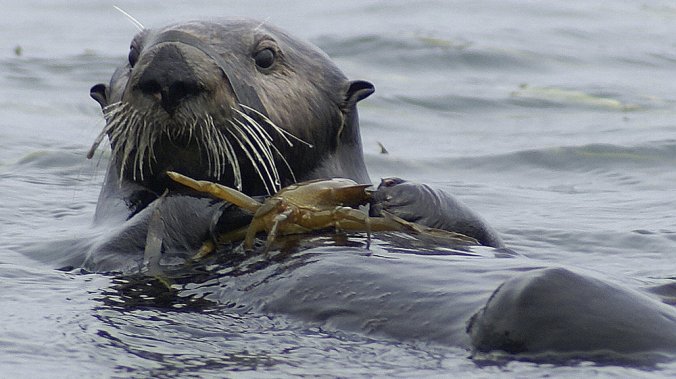
This sea otter, about to eat a crab in the Elkhorn Slough National Estuarine Research Reserve, is cute, sure. But more importantly, it's indirectly combating some harmful effects of agricultural runoff and protecting the underwater ecosystem. Rob Eby/AP

This sea otter, about to eat a crab in the Elkhorn Slough National Estuarine Research Reserve, is cute, sure. But more importantly, it’s indirectly combating some harmful effects of agricultural runoff and protecting the underwater ecosystem. Rob Eby/AP

Listen to this four minute explanation of how important sea otters are, not just for entertainment purposes but for the ecological services they provide:

On the roof of the Monterey Bay Aquarium in Monterey, Calif., in a large plastic tank, a sea otter mother named Abby floats with her adopted pup, known as 671.

For up to nine months, Abby will raise her little adoptee, and when 671 is ready, she will be released into a protected inland salt marsh called Elkhorn Slough, just off Monterey Bay.

That’s where 671 will set to work to preserve the estuary, says Tim Tinker, who tracks otters for the U.S. Geological Survey. Continue reading

The Importance of Whale Poo

Whales often feed at depth but return to surface waters to defecate. Their faecal plumes fertilises the surface waters and help plankton thrive. Caption: The Guardian. Photograph: Reinhard Dirscherl/Getty Images

We’ve posted about ambergris before, but this article by The Guardian‘s George Monbiot covers a completely different type of significance when it comes to cetaceans’ excrement. Here’s more from Monbiot:

I can hear you muttering already: he’s completely lost it this time. He’s written a 2,000-word article on whale poo. I admit that at first it might be hard to see the relevance to your life. But I hope that by the time you have finished this article you will have become as obsessed with marine faecal plumes as I am. What greater incentive could there be to read on?

In truth it’s not just about whale poo, though that’s an important component. It’s about the remarkable connectivity, on this small and spherical planet, of living processes. Nothing human beings do, and nothing that takes place in the natural world, occurs in isolation.

Continue reading

Understanding Gleeful Goats

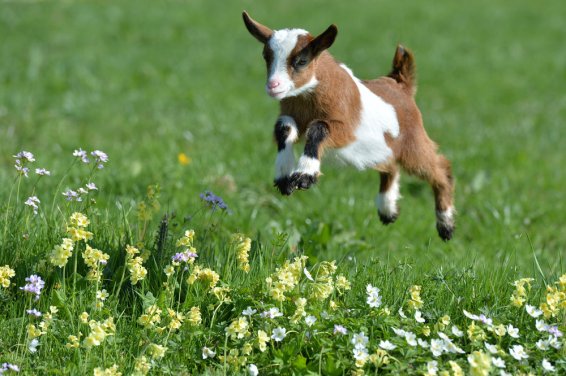
Farmers raise millions of goats, but little has been known about whether their ruminants are happy. Now we know better. Kerstin Joensson/AP

Farmers raise millions of goats, but little has been known about whether their ruminants are happy. Now we know better. Kerstin Joensson/AP

Thanks to National Public Radio (USA) for this story on their blog with a funny name, which covers a subject much on our mind as our farm-to-table program at Kayal Villa prepares to supply 51 with dairy from our happy herd:

Goats are having a moment, and we’re not just saying that because our blog is called Goats and Soda.

There are nearly 900 million goats in the world today, up from 600 million in 1990. The reason for this goat spurt is the growing popularity of goat cheese, goat milk and goat meat.

For goat farmers to do a good job, they need to understand their goats. And that’s where Alan McElligott comes in. He’s a senior lecturer in animal behavior at the Queen Mary University of London. And he says that goats are “underrepresented” in animal welfare studies. Continue reading

Not Cool, Greenpeace

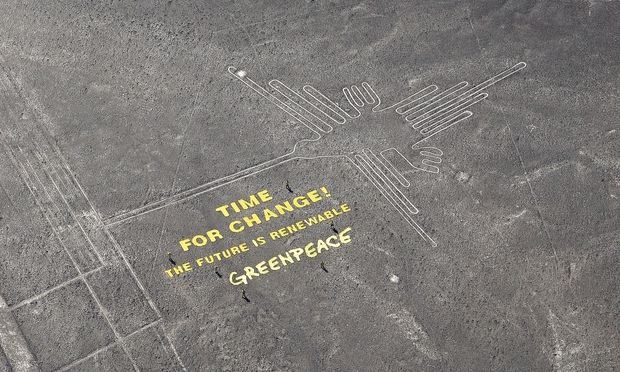
Greenpeace’s ‘time for change’ message next to the hummingbird geoglyph in Nazca. Photograph: Thomas Reinecke/TV News

Greenpeace’s ‘time for change’ message next to the hummingbird geoglyph in Nazca. Photograph: Thomas Reinecke/TV News

Hard to believe, but sometimes otherwise smart people do really dumb things, and sometimes apologies cannot correct the damage:

Greenpeace has apologised to the people of Peru after the government accused the environmentalists of damaging ancient earth markings in the country’s coastal desert by leaving footprints in the ground during a publicity stunt meant to send a message to the UN climate talks delegates in Lima. Continue reading

Reducing The Carbon Footprint Of A Sport

Niels Ackermann for The New York Times

Niels Ackermann for The New York Times

It is not a story told from a conservation perspective, but this New York Times article makes us wonder how many sports might reduce their natural resource consumption as radically as this one does:

PURSUITS

Skiing as It Was Before Chairlifts

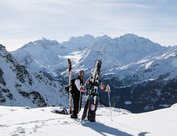
Ski mountaineering, Alpine touring or skinning — propelling yourself up the mountain before swooshing back down — is a throwback to the sport’s early days, before chairlifts.

Cool Green Science Celebrates The Celebrate Urban Birds Initiative

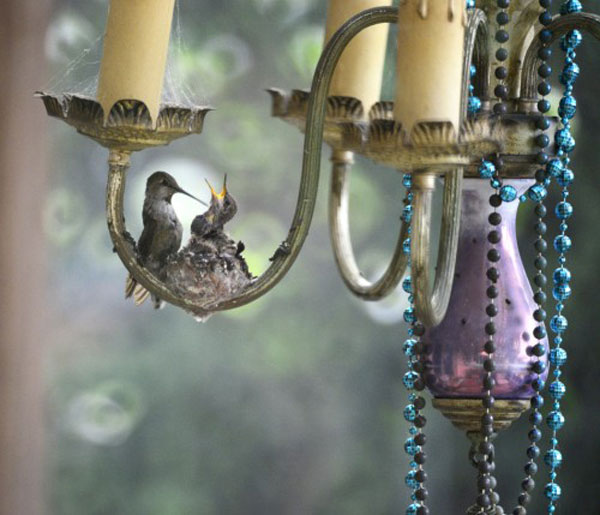
Hummingbirds nesting in a patio chandelier. Photo by Lydia D’moch for the CUBs Funky Nests in Funky Places 2014 competition.

Hummingbirds nesting in a patio chandelier. Photo by Lydia D’moch for the CUBs Funky Nests in Funky Places 2014 competition.

The Nature Conservancy is currently promoting their blog called Cool Green Science, which we expect to be a new source for us to regularly share links to on topics we particularly care about.  We like the blog’s stated purpose:

noun 1. Blog where Nature Conservancy scientists, science writers and external experts discuss and debate how conservation can meet the challenges of a 9 billion + planet.

2. Blog with astonishing photos, videos and dispatches of Nature Conservancy science in the field.

3. Home of Weird Nature, The Cooler, Quick Study, Traveling Naturalist and other amazing features.

Cool Green Science is managed by Matt Miller, the Conservancy’s deputy director for science communications, and edited by Bob Lalasz, its director of science communications.

Of course we would like you to consider visiting Xandari for this purpose, but we appreciate Lisa Feldkamp’s point. She is the senior coordinator for new science audiences at The Nature Conservancy and earlier this week she posted on a topic that is near and dear to us:

What is Celebrate Urban Birds?

You don’t need to book a trip to Costa Rica or the Amazon to enjoy great birding. Continue reading

Healthy Hybrids In Vivid Living Color

Kalettes, BrusselKale, Lollipop Kale and Flower Sprout: This little vegetable, a cross of kale and Brussels sprouts, goes by a lot of names. Rain Rabbit/Flickr

Kalettes, BrusselKale, Lollipop Kale and Flower Sprout: This little vegetable, a cross of kale and Brussels sprouts, goes by a lot of names. Rain Rabbit/Flickr

Our farm to table program in support of 51‘s Malabar Soul Food menu, in which Kayal Villa‘s acreage is serving double duty as beautiful and bountiful, is in full swing, so National Public Radio (USA)’s story here catches our attention:

Does a cross between Brussels sprouts and kale sounds like your vegetable dream come true? Maybe so, if you’re someone who’s crazy for cruciferous vegetables and all the fiber and nutrients they pack in.

Meet Kalettes, a hybrid of the two that looks like a small head of purple kale. It arrived in U.S. supermarkets like Trader Joe’s and Whole Foods this fall, and is being marketed as “a fresh fusion of sweet and nutty.” Continue reading

Birds, Feathers, And Birds Of A Feather

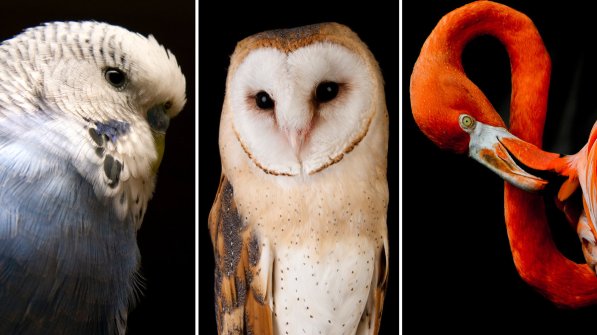
Recent research sequenced 48 bird species, including (from left) the budgerigar, the barn owl and the American flamingo. (Left and center)iStock; (Right) Chris Minerva/Ocean/Corbis

Recent research sequenced 48 bird species, including (from left) the budgerigar, the barn owl and the American flamingo. (Left and center)iStock; (Right) Chris Minerva/Ocean/Corbis

Thanks to National Public Radio (USA) for this podcast of a story we know our ornithologically-inclined readers will appreciate:

What do a pigeon and a flamingo have in common? Quite a bit, according to a reordering of the evolutionary tree of birds.

One of a series of studies published Thursday in Science is the latest step toward understanding the origins of the roughly 10,000 bird species that populate our planet. Continue reading

Lima, Climate Change, Key Takeaways

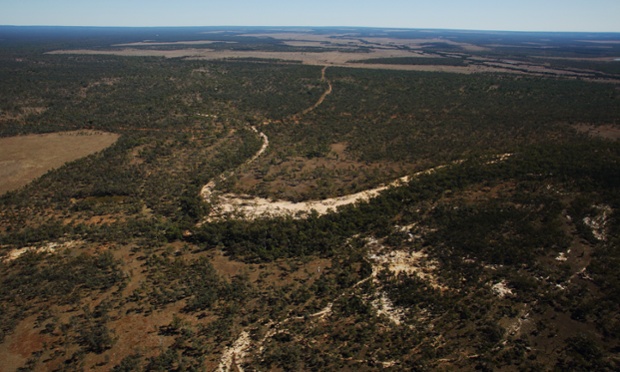
The Galilee basin in central Queensland: ‘it would produce 6% of the carbon necessary to take the planet past a 2C temperature rise, the red line set by the world’s governments’. Photograph: Andrew Quilty/PR

The Galilee basin in central Queensland: ‘it would produce 6% of the carbon necessary to take the planet past a 2C temperature rise, the red line set by the world’s governments’. Photograph: Andrew Quilty/PR

We new that his leaving 350 would not mean any retreat from activism. Proof positive here. Thanks to Bill McKibben and the Guardian for their attention to this week’s meetings in Lima:

The world’s nations are meeting in Lima, near the equator, to pledge and promise about global warming. But the actual worth of those promises can be more accurately gauged in the far north and the far south of the planet, where real decisions in the next months will show whether the climate concern is rhetorical or real.

By now most people know about the northern example: the tar sands of Alberta. Some time in the coming months the new Republican-controlled Congress will demand that Obama approve the construction of the Keystone XL Pipeline. If he vetoes that call and sticks to his principles, it will help keep expansion of the tar sands complex in check. That won’t make up for America’s vast expansion of oil and gas drilling in recent years, but it will send some kind of signal: there is a limit somewhere to how much fossil fuel we plan to extract. Continue reading

Bugs Illustrating Important Things

bug-art-starry-night

Thanks to Conservation for this story, more inspiring than the other one we just posted:

Steven Kutcher is an artist, an entomologist, a teacher—and a Hollywood bug wrangler. Kutcher got his start in bug art in the 1980s when he was asked to figure out how to make a fly walk through ink and leave footprints for a Steven Spielberg–directed TV project. From there he went on to work with carpenter ants in Copycat, giant mosquitoes in Jurassic Park, and stampeding spiders in Arachnophobia—of course. Continue reading

A Human’s Best Illustration Of Important Stuff

179571de-e7d8-4a39-82bf-ad6bef672f58-620x372

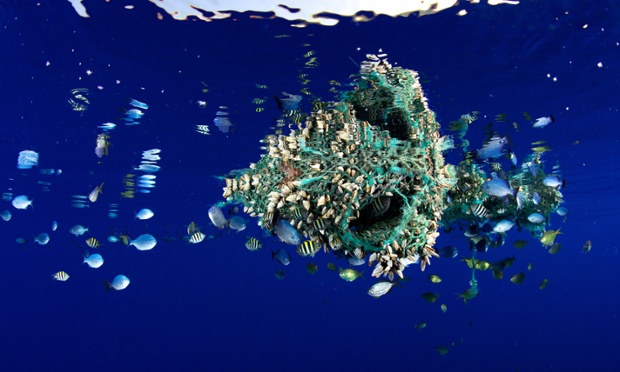
Plastic pieces in the ocean damage wildlife and enter the food chain when ingested by fish. Photograph: Bryce Groark/Alamy

Thanks to the Guardian for ongoing coverage of the world’s great environmental challenges:

Full scale of plastic in the world’s oceans revealed for first time

Over five trillion pieces of plastic are floating in our oceans says most comprehensive study to date on plastic pollution around the world

More than five trillion pieces of plastic, collectively weighing nearly 269,000 tonnes, are floating in the world’s oceans, causing damage throughout the food chain, new research has found.

Data collected by scientists from the US, France, Chile, Australia and New Zealand suggests a minimum of 5.25tn plastic particles in the oceans, most of them “micro plastics” measuring less than 5mm.

Continue reading

Museum As Pollinator

07SUBGUGGENHEIM-thumbStandard-v2A New Art Capital, Finding Its Own Voice

As plans for the Guggenheim Abu Dhabi go forth, those involved are hoping to speak to the art history of many nations.

Cosmopolitanism expands its reach. A good thing, we believe. Thanks to the New York Times Arts section for that story.