To Dye For Author Interviews

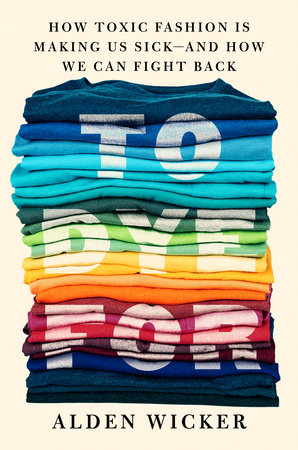
None of us wants yet one more environmental hazard to worry about. But ignorance is not bliss. Wired offers an interview with Alden Wicker about the book to the right, and the Fresh Air podcast with her is also worth the listen, especially if you have sensitive skin and/or have ever wondered if your clothing was the cause of certain kinds of discomfort. Women of reproductive age, especially, listen to both:

Your Clothes Are Making You Sick

This week, we talk to the author of To Dye For, a new book about toxic fashion and the abundance of harmful chemicals in our clothing.

HOTOGRAPH: ALFIAN WIDIANTONO/GETTY IMAGES

HAVE YOU EVER put on a new shirt and discovered that it makes you feel itchy? Or taken off a new pair of pants at the end of the day to find that the fabric has given you a rash? This problem is increasingly common as more chemicals are added to our clothing when they’re dyed or treated with additives that make them resistant to stains, wrinkles, and odors. Some of these chemicals are irritants that can cause breathing problems or skin issues. Others are toxic enough to trigger life-altering autoimmune diseases. Since the fashion industry operates within loose regulations, the problem of toxic apparel isn’t going away anytime soon.


Paris & Continuous Greening

Paris’ iconic zinc roofs can heat up to 194 degrees F on a hot summer day. JAN WOITAS / PICTURE-ALLIANCE VIA GETTY IMAGES

We have celebrated the many greening efforts made in Paris over the last decade, and today is a small but important addition to our knowledge of those commitments. Our thanks to Jeff Goodell in Yale e360:

A rendering of a rooftop terrace installed by the Parisian startup Roofscapes. ROOFSCAPES

Paris When It Sizzles: The City of Light Aims to Get Smart on Heat

With its zinc roofs and minimal tree cover, Paris was not built to handle the new era of extreme heat. Now, like other cities worldwide, it is looking at ways to adapt to rising temperatures — planting rooftop terraces, rethinking its pavements, and greening its boulevards.

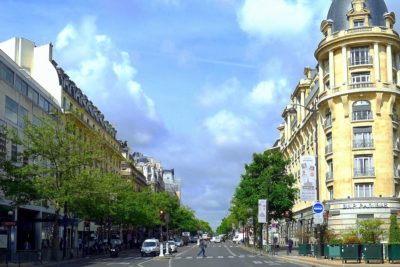
The tree-lined Boulevard des Italiens is much cooler than nearby streets that lack trees.

The tree-lined Boulevard des Italiens is much cooler than nearby streets that lack trees. MBZT VIA WIKIPEDIA

There’s a long tradition in France of taking August off for holiday. Paris virtually shuts down as the temperature drifts around in the seventies, and people go to the beach or the mountains to cool off and relax. Think of it as an old‑fashioned adaptation to heat. People who stick around during August are often older or have jobs that require them to stay and keep the city functioning. Continue reading

Climate Optimism, Part 2

Hilary Swift for The New York Times

Bill McKibben’s occasional optimism notwithstanding, he and Al Gore are the two most visible alarmists on climate change. Even in the worst of circumstances both find reason to point out our remaining options for actually doing something.

Our thanks to David Gelles and the New York Times for rounding out the doom and gloom with a bit of hope:

Al Gore on Extreme Heat and the Fight Against Fossil Fuels

The past few weeks have him even more worried than usual.

It’s been 17 years since former Vice President Al Gore raised the alarm about climate change with his documentary, “An Inconvenient Truth.” Since then, he’s been shouting from the rooftops about the risks of global warming more or less nonstop. Continue reading

Climate Optimism Part 1

Illustration by João Fazenda

Bill McKibben acknowledges in his most recent newsletter that in spite of all his efforts over the decades, he and we all are failing on climate change mitigation. But he has not given up hope:

Big Heat and Big Oil

A rapid end to burning fossil fuel would arrest the heating that has caused extreme damage in recent weeks; and that rapid end is possible.

In the list of ill-timed corporate announcements, historians may someday give pride of place to one made by Wael Sawan, the new C.E.O. of Shell, the largest energy company in Europe. In 2021, Shell said that it would reduce oil and gas production by one to two per cent a year up to 2030—a modest gesture in the direction of an energy transition. Continue reading

Why Are We Not More Afraid Of The Heat?

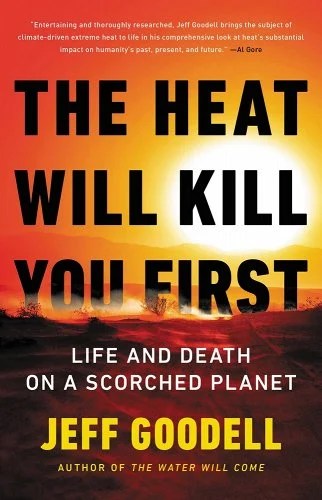
Jeff Goodell shares his opinion in the newspaper of record in the USA. It will serve as a preview of his book to the right, reviewed here. He has also spoken about this topic. There is no pleasure to be had here. Only awareness, and the question why we are not doing more:

In Texas, Dead Fish and Red-Faced Desperation Are Signs of Things to Come

In 2019, I happened to be visiting Phoenix on a 115-degree day. I had a meeting one afternoon about 10 blocks from the hotel where I was staying downtown. I gamely thought I’d brave the heat and walk to it. How bad could the heat really be? I grew up in California, not the Arctic. I thought I knew heat. I was wrong. After walking three blocks, I felt dizzy. After seven blocks, my heart was pounding. After 10 blocks, I thought I was a goner. Continue reading

Reviving Plants Lost To Time

A branch of Blutaparon rigidum, collected on a 1905-1906 expedition to the Galapagos Islands, contains hundreds of potentially viable seeds. NEW YORK BOTANICAL GARDEN

We have touched on the topic of reviving extinct species only a few times previously, and as obvious as it seems we must mention that reviving plant species sounds like a more sound ambition. So, thanks to Janet Marinelli and Yale e360 for this story:

Back from the Dead: New Hope for Resurrecting Extinct Plants

Armed with new technology, botanists are proposing what was once thought impractical: reviving long-lost plant species by using seeds from dried specimens in collections. The challenges remain daunting, but researchers are now searching for the best de-extinction candidates.

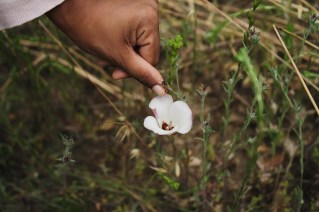
In January 1769, botanists Joseph Banks and Daniel Solander found a daisy in Tierra del Fuego, at the southern tip of South America. Continue reading

Paint It Very White

In one green-gloved hand, a man wearing goggles holds a paint brush dripping with bright white paint. His other hand holds a plastic container of the white paint under the brush to catch the drops.

Xiulin Ruan, a professor of mechanical engineering at Purdue University, has created the whitest paint on record with his students. John Underwood/Purdue University

We once again have Cara Buckley to thank:

Scientists at Purdue have created a white paint that, when applied, can reduce the surface temperature on a roof and cool the building beneath it.

Xiulin Ruan, a professor of mechanical engineering at Purdue University, didn’t set out to make it into the Guinness World Records when he began trying to make a new type of paint. He had a loftier goal: to cool down buildings without torching the Earth. Continue reading

Anthropocene Representative Location

A wide view of a lake with trees surrounding it and blue sky with clouds in distance. We now have a place to match to the name for our epoch:

The Human Age Has a New Symbol. It’s a Record of Bomb Tests and Fossil Fuels.

A scientific panel has picked Crawford Lake, Ontario, to represent the Anthropocene, a proposed, and hotly contested, new chapter in geologic time.

For almost 15 years, a panel of scholars has been chewing over a big question: Has our species transformed the planet so much that we have plunged it into a new interval of geologic time? Continue reading

The Scale Of Conservation Needed To Mitigate The USA’s Carbon Footprint

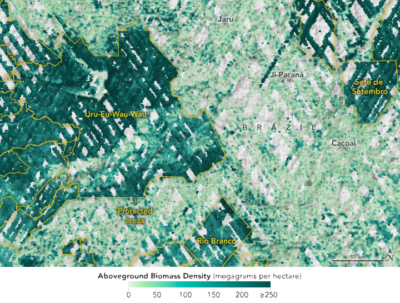
Protected areas, outlined in yellow, in a swath of the Brazilian Amazon are richer in trees than are other areas.

Protected areas, outlined in yellow, in a swath of the Brazilian Amazon are richer in trees than are other areas. NASA

Thanks to Yale e360, a very simple way to put scale on the value of protected areas, and at the same time consider the carbon footprint of the country that emits the most:

World’s Protected Lands Are Safeguarding More Carbon Than the U.S. Emits in a Year

If left unguarded, many of the world’s protected lands would have likely been burned, logged, or otherwise degraded, unleashing huge sums of heat-trapping gas. Continue reading

Lula’s Commitments Continue Progress

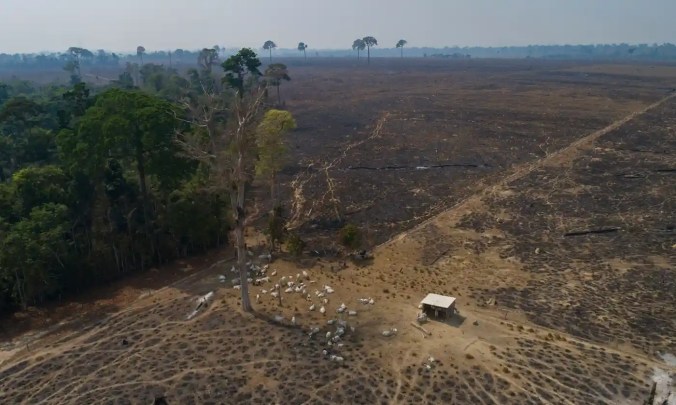
Cattle graze on land recently burned and deforested by cattle farmers near Novo Progresso, in Para state. Photograph: André Penner/AP

A short note following up on the progress reported earlier from our big and very important neighbor to the south:

Brazil: Amazon deforestation drops 34% in first six months under Lula

Government data shows marked reduction against same period last year, reversing trend of destruction during Bolsonaro reign

After four years of rising destruction in Brazil’s Amazon, deforestation dropped by 33.6% during the first six months of President Luiz Inácio Lula da Silva’s term, according to new government satellite data. Continue reading

What An Owl Knows, Reviewed

The Economist reviews this new book by Jennifer Ackerman, and if you do not subscribe to that magazine you can see other reviews here or here:

A raptor’s mystique inspires “What an Owl Knows”

They know rather a lot, reveals the book’s author, Jennifer Ackerman

With a face as round as the first letter of its name and a stance as upright as the last—along with human-like features and a haunting cry—the owl has a mystical, mythical perch in the imagination. Difficult to spot because of their mostly nocturnal habits, and sporting cryptic plumage that helps them melt into landscapes, owls, writes Jennifer Ackerman, are the most enigmatic of birds…

George Musser Talks With Michael Levin For Nautilus

Nautilus is not one of our go-to sources for inspiration, but with conversations like this it is obvious we should be paying more attention to their work. Thanks to George Musser for this article:

The Biologist Blowing Our Minds

Michael Levin is uncovering the incredible, latent abilities of living things.

Michael Levin, a developmental biologist at Tufts University, has a knack for taking an unassuming organism and showing it’s capable of the darnedest things. He and his team once extracted skin cells from a frog embryo and cultivated them on their own. With no other cell types around, they were not “bullied,” as he put it, into forming skin tissue. Instead, they reassembled into a new organism of sorts, a “xenobot,” a coinage based on the Latin name of the frog species, Xenopus laevis. It zipped around like a paramecium in pond water. Continue reading

Bill McKibben On Degrowth Movements Past & Present

Bill McKibben gives a thorough reconsideration of what, if any, growth is helpful now:

To Save the Planet, Should We Really Be Moving Slower?

The degrowth movement makes a comeback.

John Maynard Keynes once observed that dating from “say, to two thousand years before Christ—down to the beginning of the 18th century, there was no very great change in the standard of life of the average man living in the civilised centres of the earth. Ups and downs certainly. Visitations of plague, famine, and war. Golden intervals. But no progressive, violent change.” Continue reading

Rewilding On The Beara Peninsula

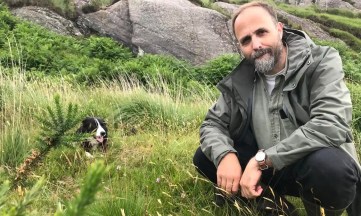
Eoghan Daltun with his dog on his farm, where native trees such as sessile oak, rowan and downy birch have self-seeded. Photograph: Rory Carroll/The Guardian

Rewilding remains one of our favorite topics to read about, and we share accordingly. Thanks to Rory Carroll for this article in the Guardian:

‘The result was amazing’: one man’s mission to reforest a barren Irish hillside

Eoghan Daltun has spent 14 years rewilding part of Beara peninsula into a showcase of diversity

Eoghan Daltun stood on a slope and pointed to a distant vista of verdant fields, craggy hills and conifer trees across the Beara peninsula in west Cork. Continue reading

The Diligence Of Local Bees

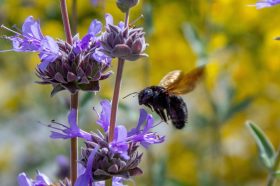
Native Bees Yield Hardier Flowers Than Honey Bees, Research Finds

Bees getting the scientific attention they deserve, our thanks to Yale e360 for summarizing and sharing these findings:

Native Bees Yield Hardier Flowers Than Honey Bees, Research Finds

Flowers pollinated by native bees produce fitter offspring than flowers pollinated by honey bees, according to a new study carried out in San Diego, California. Continue reading

Celebrating Energy Independence

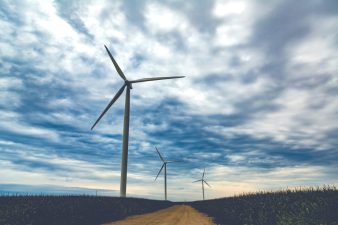
he Pioneer Prairie Wind Farm along the Iowa-Minnesota state line. TONY WEBSTER VIA WIKIPEDIA

If you are in the USA and are looking for more reasons to celebrate independence, consider renewables (thanks to Yale e360):

U.S. Wind and Solar Overtake Coal for the First Time

In a first for the U.S. power sector, wind and solar have generated more electricity than coal so far this year. Continue reading

Panthera’s Puma Program

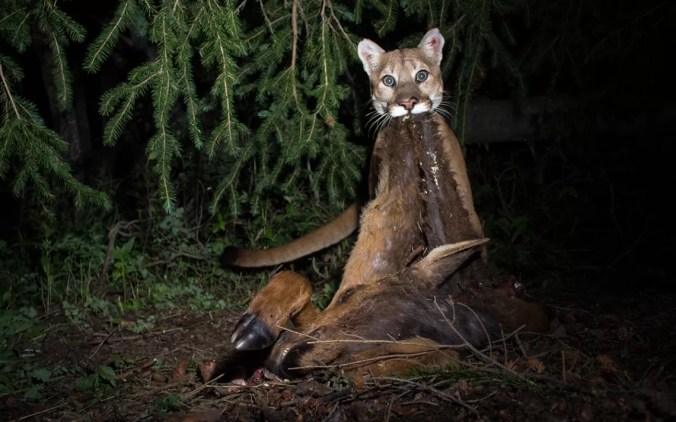
Puma in Wyoming. | Photo by Neal Wight, courtesy of Panthera

Thanks to Grace van Deelen for this article in the magazine of the Sierra Club:

Mountain Lions Are Murder Gardeners

By leaving carcasses, mountain lions create lush landscapes for future victims that could attract prey

If you’re hiking in Yellowstone and stumble upon an unusually lush landscape, you might have found a mountain lion’s garden. Continue reading

California Bumble Bee Atlas

Leif Richardson examines a queen bee. Grace Widyatmajda/NPR

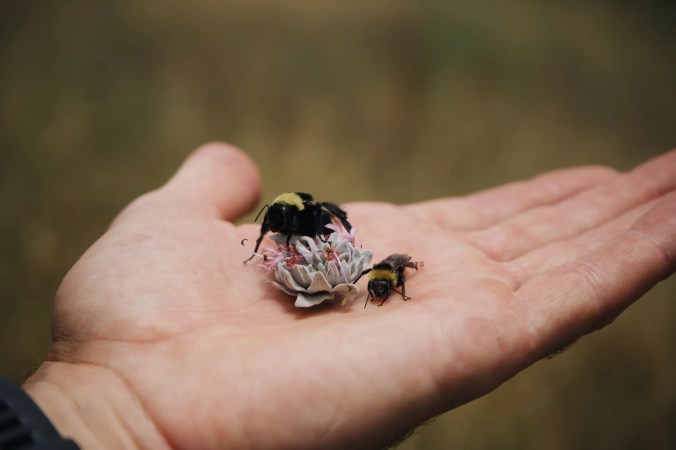
Bumble bees need help and the California Bumble Bee Atlas Project is on it. Thanks to National Public Radio (USA) for bringing it to our attention:

Krystle Hickman, a bee photographer and volunteer for the Bumble Bee Atlas Project, carefully places a bee onto a flower.
Grace Widyatmadja/NPR

Nets, coolers and courage: A day in the life of a volunteer bee conservationist

I never realized how fuzzy a bumble bee is until I got to hold one between my fingertips. It feels like a furry black and yellow bear, buzzing with its tiny body, wriggling with its legs.

The conservation biologist Leif Richardson, who handed me this bee a moment ago, has some advice for holding it. “You’re going to squeeze harder than you think you need to, but not so hard that you hurt him.” Continue reading

Climate Migration’s Upsides

Reporting from Niger, the Economist offers a glass-half-full consideration of a daunting topic (the podcast version of this story is excellent), and pulls it off:

image: josh haner/the new york times/redux/eyevine

The surprising upside of climate migration

To adapt to climate change, people will move. The results will not be all bad

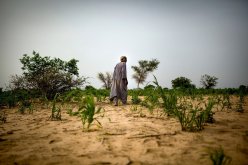
On the outskirts of Niamey, the capital of Niger, it looks as if the countryside has moved to the city. Clusters of dome-like wooden huts have popped up. Cows and goats are tethered in the shade. Waves of rural folk have arrived, largely because of climate change. Continue reading