Electric Car Sharing In London

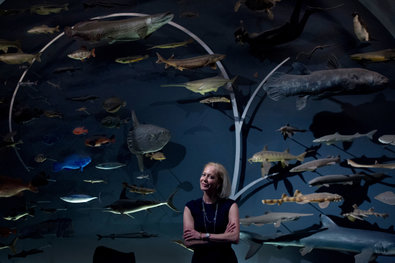
Vincent Bollore, CEO of investment group Bollore, poses by an electric car following a news conference in London March 12, 2014. CREDIT: REUTERS/OLIVIA HARRIS

Vincent Bollore, CEO of investment group Bollore, poses by an electric car following a news conference in London March 12, 2014. CREDIT: REUTERS/OLIVIA HARRIS

Various reports in the last year or so of sharing means of transportation focused on bicycles, which itself seemed remarkable; now reports of car-sharing schemes make it seem almost impossible to believe. Whether it is altruism, rational economics, or something else at work here we will soon find out:

First it was pedal power; now Londoners are being offered electric transport to dodge their way around the city.

French billionaire Vincent Bollore on Wednesday unveiled plans to park 3,000 electric cars on London streets by 2016, as part of a car share project that emulates the popular bike hire scheme started in 2010 under Mayor Boris Johnson.

Bollore, chief executive of the group bearing his name which set up the Autolib electric car-sharing program in Paris in 2011, said electric car hire could help cut congestion and reduce pollution in the British capital. Continue reading

Not For Vegetarians, Nor For Kids In Some Cultures, But Worthy Of Consideration

The New York Times Dining section has this video to ponder “another” white meat for those so inclined:

Roasted Rabbit

Rabbit is no harder to cook at home than chicken. Melissa Clark shows how to enhance this lean meat with olives, lemon and feta cheese.

Holi, 2014 Edition

This slideshow requires JavaScript.

Each year, we in the south of India wish to be in the north of India for this celebration that marks the end of winter. We have linked to some great photo spreads in other publications, and this year choose the Reuters photojournalists’ snapshots to mark this year’s Holi.

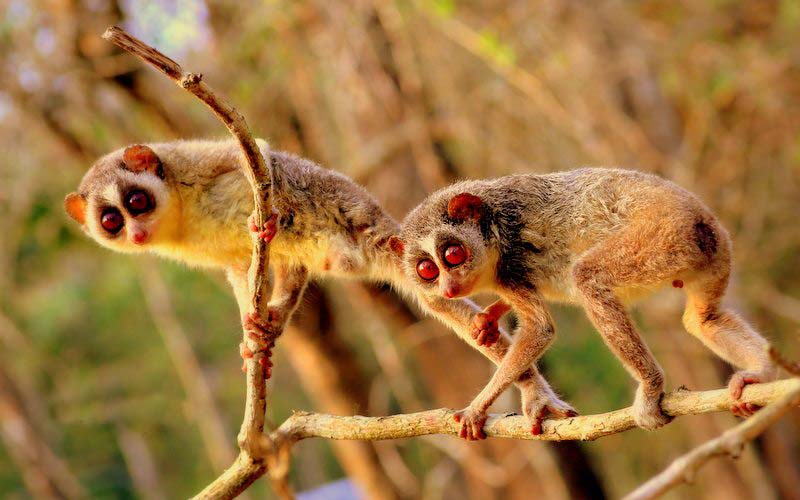
Slender Loris – Loris tardigradus

Photo credits : Sanjayan

Photo credits: Sanjayan

The Slender loris is commonly found in the tropical rainforests of Southern India and Sri Lanka. This small animal with a vestigial tail and extremely thin arms and legs is primarily known by the huge round eyes that dominate their face, which give it excellent night vision. Continue reading

Science, Private Interests, Troubling Trend

privatescience1-sfSpan-v2

Béatrice de Géa for The New York Times. Wendy Schmidt and her husband are advancing ocean studies.

Click the image at left to go to the story, in the Science section of the New York Times, about what seems a troubling trend. There is something unsettling about science being increasingly influenced by individuals’ private interests rather than society as a whole. It has nothing to do with their being billionaires, but with the fact that science historically has advanced Continue reading

Reclaimed Rainforest Wood, In The Interest Of Art

From the New York Times Sunday HOME AND GARDEN section, a short video we appreciate:

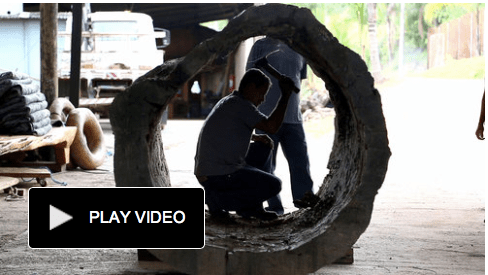
Studio Visit With Hugo França

The Brazilian designer Hugo França reclaims felled wood from the rainforest to create sculptural furniture.

10 Years Of Thought Factory Design, Essential Member Of Raxa Collective’s Collaborative Community

This slideshow requires JavaScript.

We are thinking of the awesome folks at Thought Factory Design today as we review stationary for Spice Harbour, menu layouts for 51, and the logo for a new property we have recently accepted responsibility for (more on which when that logo is ready). They are members of our community with whom we collaborate more than just about anybody. They definitely get our commitment to conservation, and strengthen our ability to creatively pursue solutions. Continue reading

Ocean Ownership And Caveat Emptor

carved-ocean

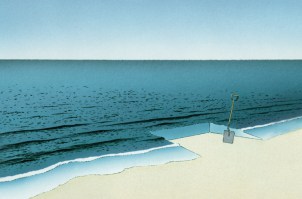
The U.S. has laid claim to 2.5 billion acres of coastal seas, but that vast area produces very little seafood for Americans. Therein lies a dilemma: should the U.S. cultivate giant offshore fish farms in its piece of the sea or keep taking most of the fish we eat from foreign waters?

Conservation magazine raises the following question, and goes a long way to answering it in their current issue:

NATIONS HAVE CARVED UP THE OCEAN. NOW WHAT?

…In the minds of most consumers, there is a clear dividing line between which fish are wild and which are farmed. But the truth is that this line is increasingly a blurry one.  Continue reading

Scientists Working On Infrared-Based Renewable Energy

Harvard physicists Federico Capasso (left), Steven J. Byrnes (right), and Romain Blanchard propose a new way to harvest renewable energy. (Photo by Eliza Grinnell, SEAS Communications.)

Harvard physicists Federico Capasso (left), Steven J. Byrnes (right), and Romain Blanchard propose a new way to harvest renewable energy. (Photo by Eliza Grinnell, SEAS Communications.)

Thanks to the Harvard School of Engineering And Applied Sciences for this press release of important renewable energy scientific news:

Infrared: A new renewable energy source?

HARVARD PHYSICISTS PROPOSE A DEVICE TO CAPTURE ENERGY FROM EARTH’S INFRARED EMISSIONS TO OUTER SPACE

By Caroline Perry

When the sun sets on a remote desert outpost and solar panels shut down, what energy source will provide power through the night? A battery, perhaps, or an old diesel generator? Perhaps something strange and new.

Physicists at the Harvard School of Engineering and Applied Sciences (SEAS) envision a device that would harvest energy from Earth’s infrared emissions into outer space.

Heated by the sun, our planet is warm compared to the frigid vacuum beyond. Thanks to recent technological advances, the researchers say, that heat imbalance could soon be transformed into direct-current (DC) power, taking advantage of a vast and untapped energy source. Continue reading

Rock, Water, Science, News

A diamond from Juína, Brazil, containing a water-rich inclusion of the olivine mineral ringwoodite. Richard Siemens/University of Alberta

A diamond from Juína, Brazil, containing a water-rich inclusion of the olivine mineral ringwoodite. Richard Siemens/University of Alberta

What makes scientific information newsworthy? One possibility is when the information conveyed may have profound implications for life on earth. This Scientific American article about a rock is really about water, and about a kind of water that many of us had never been aware of:

…”It’s actually the confirmation that there is a very, very large amount of water that’s trapped in a really distinct layer in the deep Earth,” said Graham Pearson, lead study author and a geochemist at the University of Alberta in Canada. The findings were published today (March 12) in the journal Nature.

The worthless-looking diamond encloses a tiny piece of an olivine mineral called ringwoodite, and it’s the first time the mineral has been found on Earth’s surface in anything other than meteorites or laboratories. Ringwoodite only forms under extreme pressure, such as the crushing load about 320 miles (515 kilometers) deep in the mantle. Continue reading

UK Organics Back In Black

The nation's appetite for organic food is growing. Photograph: Nick Turner/Alamy

The nation’s appetite for organic food is growing. Photograph: Nick Turner/Alamy

Thanks to the Guardian‘s ongoing coverage of environmental issues, this story about sales of organics in their home market:

Sales of organic food and drink rose by 2.8% last year after successive years of decline, fuelled by strong growth among independent retailers and healthy online sales. Continue reading

If You Happen To Be In Oxford

spires_view__970

As we continue menu/kitchen-testing at 51, we confront daily the question of how much meat we want to offer guests, how to source it ethically, and how to improve our vegetarian options.  This book has generated considerable food for thought, so to speak. March 27 at 4pm, during the Oxford Literary Festival, co-author of the book Farmageddon, which is reviewed here and here, will be speaking for one hour. Wish we could attend. If you can and do, please send video or notes:

39829The chief executive of Compassion in World Farming Philip Lymbery uncovers the trend towards mega-farming that he says is threatening our countryside, farms and food. He says farm animals have been disappearing from our fields as food production becomes a global industry. And the recent horsemeat scandal demonstrates that we no longer know for certain what is entering the food chain. Lymbery collaborated with Sunday Times journalist Isabel Oakesott onFarmageddon, an investigation into mega-farming that ranges from the UK to Europe, the USA, China, Argentina, Peru and Mexico. Continue reading

Mind-Bending Race

This slideshow requires JavaScript.

A friend who lives in Costa Rica left a few weeks ago for a visit to Alaska. We did not learn until after he was already there what it was he planned to do there during the deepest depth of winter. We knew he was serious about endurance racing. We also believed that we knew something about expedition races, both in terms of adventure and endurance.  A post on the New Yorker‘s website, about the results of this year’s Iditarod, reminded us to search on the race our friend is in, to learn more about its details, and now our minds have been bent:

WHAT THIS RACE IS ALL ABOUT

The Iditarod Trail Invitational is the world’s longest winter ultra marathon by mountain bike, foot and ski and follows the historic Iditarod Trail from Knik, Alaska over the Alaska Range to McGrath and to Nome in late February every year one week before the Iditarod Sled Dog Race. The short race 350 miles finishes in the interior village of McGrath on the Kuskokwim River and the 1000 mile race finishes in Nome. Racers have to finish the 350 mile race in a previous year before they can enter the 1000 mile race.

We invite 50 racers to take part in this unique challenge every year.

To qualify for the race go to our sub page “qualifiers” or “winter training camps” to find out more. Continue reading

Yosemite, Raxa Collective Promises To Tread Lightly


Where do you go, if Raxa Collective is both your work and your pleasure, when you want to get away from your normal day to day scenery–which by all means is awesome? Is there such a word as awesomer? Awesomest? Four Raxa Collective contributors have agreed to meet in Yosemite in late May to determine the awesomeness. They will hopefully share their findings in these pages at that time.  For now, vimeo just makes us all wish we were in Yosemite now.

Music That Never Ceases To Please, Inspire

00017089

A gospel choir leads the congregation in song during a Sunday service at the National Pentecostal Church, Johannesburg, South Africa. Photo by Dieter Telemans/Panos


Some music inspires, and a smaller subset inspires over and over and over again.  Thanks to Aeon for this article about, possibly, why:

What is music? There’s no end to the parade of philosophers who have wondered about this, but most of us feel confident saying: ‘I know it when I hear it.’ Still, judgments of musicality are notoriously malleable. That new club tune, obnoxious at first, might become toe-tappingly likeable after a few hearings. Put the most music-apathetic individual in a household where someone is rehearsing for a contemporary music recital and they will leave whistling Ligeti. The simple act of repetition can serve as a quasi-magical agent of musicalisation. Instead of asking: ‘What is music?’ we might have an easier time asking: ‘What do we hear as music?’ And a remarkably large part of the answer appears to be: ‘I know it when I hear it again.’ Continue reading

Himalayan Honey Harvest

This slideshow requires JavaScript.

Like birds, bees are a common thread on these pages, for both their innate beauty, and their importance to life on earth. Although much of the honey on the market in the world today comes from cultivated hives, the history of gathering wild honey goes back millennium. 

For generations the Gurung tribespeople of central Nepal have assembled twice a year around cliffs filled with colonies of  the world’s largest honeybee, Apis laboriosa. This dangerous Himalayan honey-harvest was recently documented by U.K.-based travel photographer Andrew Newey, who spent two weeks capturing this dying tradition, which is under the threat of commercialization.

“For hundreds of years, the skills required to perform this dangerous task have been passed down through the generations” writes Newey, “but now both the bees and traditional honey hunters are in short supply.” Continue reading

A Classic Sustainable Tourism Development Story

Himanshu Khagta. Children in Mawlynnong working to clean the village, where a reputation for tidiness has been both a blessing and a curse.

There is no such thing as “typical” when it comes to sustainable tourism development. By definition, each story is about that particular place.  But this one, courtesy of India Ink, provides a textbook case study example of sustainable tourism development being about community self-determination.  As for the notion that this comes with a built-in curse, we tend to believe that such curses are a function of and prevented by the same strategic planning, decision-making and action that blessings come from:

MAWLYNNONG, India — Anshuman Sen was barely a year out of college when, in 2005, he traveled to Meghalaya, a hilly northeastern state distant both in miles and cultural resemblance from what the locals call “mainland India.”

Mr. Sen was shooting pictures of the state’s bountiful natural wonders for Discover India, a travel magazine, when an acquaintance suggested visiting Mawlynnong, a remote village in the jungle along the border with Bangladesh that had acquired minor local renown for its fastidious cleanliness and a nearby bridge made entirely of living tree roots.

“I was only there for four or five hours,” said Mr. Sen, “but I couldn’t believe how beautiful it was, and neither could anyone at the magazine.” He had to write about it, even if he hadn’t spent a full day there. Continue reading

Improving Governance For The Environment, One Citizen And One Pollinator At A Time

We have been noting increasing stories about loss of pollinators in the USA and Europe, and especially notice how seriously this problem is taken in the UK. Solutions? Not so obvious.  But we are on the lookout each day for innovations in both the public and private sectors. This UK governance procedure seems a promising mechanism for getting citizens aware of, then involved finding solutions for environmental challenges such as the alarming loss of pollinators nationwide:

A consultation on the National Pollinator Strategy: for bees and other pollinators in England

Overview

Defra is seeking views on a proposed national pollinator strategy for bees and other pollinators in England.  The strategy sets out proposals to safeguard these important insects given their role in pollinating many food crops and wild plants and their contribution to our food production and the diversity of our environment… Continue reading

Women’s Empowerment In Kerala, A Success Story

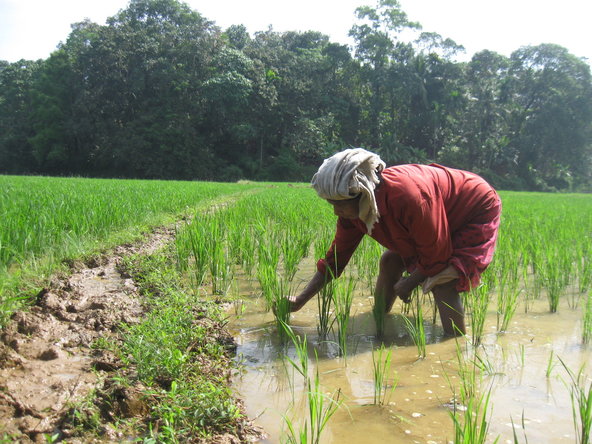
Vishnu Varma. A Kudumbashree worker involved in community farming near the Kerala village of Kadakkanad. Around 260,000 workers currently till and harvest more than 60,000 acres throughout the state.

Vishnu Varma. A Kudumbashree worker involved in community farming near the Kerala village of Kadakkanad. Around 260,000 workers currently till and harvest more than 60,000 acres throughout the state.

Thanks to India Ink, and Vishnu Varma, for this article about several million women, in communities across the state where we call home, collaborating their way to empowerment:

ERNAKULAM, Kerala — In a country that has been criticized as lacking commitment to women’s rights, one program in the southwest state of Kerala has been quietly serving as an example that a government can indeed successfully empower women, both economically and socially. Continue reading

Birders’ Cinematic Moment

This slideshow requires JavaScript.

The last time big name celebrity got attached to a cinematic treatment of birdwatching, the results were underwhelming, though not a total disaster. Just kind of embarrassing if you care about birding and would like the activity to gain more traction with a wider audience. Thanks to the Cornell Lab of Ornithology for pointing us to this, and to Ben Kingsley for his participation’s likely boost to its chances for success:

We’re excited about the release of a new birding movie, A Birder’s Guide to Everything. It’s a touching story that explores broad themes of growing up and growing wiser, while following four young actors and Sir Ben Kingsley on the trail of a possibly extinct species.  Continue reading