Glowing, Growing And Going

From sea horses that glow red to bright green eels, researchers have discovered 180 species of fish that fluoresce under blue light.

Green and bright. We get it. The future favors those who broadcast well, and these green eels qualify. As do the great science writers we tend to follow. From the excellent home for such writers, the Science section of the New York Times:

Fluorescence Is Widespread in Fish, Study Finds

By JAMES GORMAN

The findings, that at least 180 species and 16 orders of fish are biofluorescent, have implications for their evolution and behavior. (See the related  video, Fluorescing Fish) Continue reading

Photographing A Community In Flux, With Empathic Eyes

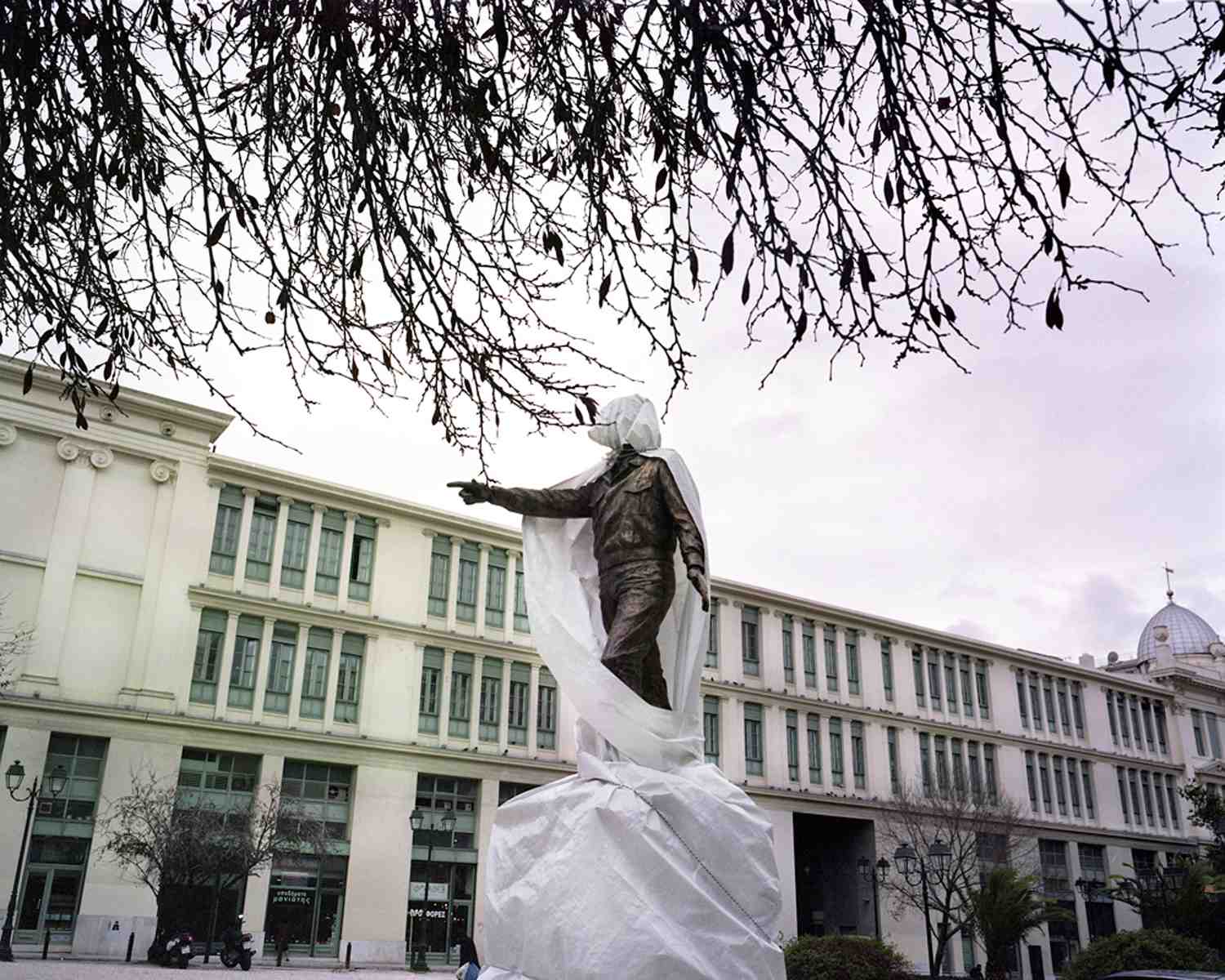
Statue under construction of Alexandros Panagoulis, resistance fighter against the fascist regime. Photograph by Eirini Vourloumis

Statue under construction of Alexandros Panagoulis, resistance fighter against the fascist regime. Photograph by Eirini Vourloumis

For numerous reasons, Raxa Collective has deep care for the fortunes of Greece, of Greeks, and especially for the institutions that will move Greece to a better future. In no particular order, a few reasons for this deep care: one of Raxa Collective’s founders entered an immersion language tutorial in Greece for most of 1981, and developed an affection for the place that became a lifelong commitment; the grandmother of two Raxa Collective contributors is from Greece, and so their family in Athens has been living through the unfolding of events the rest of us see as headlines; two other contributors to Raxa Collective met in New York’s JFK airport 30+ years ago waiting to board a flight to Greece, and have made frequent pilgrimages back to Greece to pay tribute to its importance in their lives; several Raxa Collective contributors were recently in Greece tasting organic olive oil from the village where that grandmother is from, and Raxa Collective is currently developing a project to support that organic olive oil initiative.

A blog post by the New Yorker‘s Elissa Curtis brought to our attention today the photography of a Greek who has captured some arresting images that is relevant to us for any and all of the above reasons:

As the economic crisis roiled Greece, the photographer Eirini Vourloumis stepped away from the chaos and found quiet spaces in her home country to tell the story of disruption and decline. She had returned to Greece after eleven years abroad, and she saw it again with fresh eyes. Continue reading

If You Happen To Be In Bombay

50 year anniversaries are always worth noting. Whether it is a marriage, a birthday, or the opening of an art gallery, let’s have some fun.  Thanks to The Caravan, we see just enough about The Dreamers to want to visit Chemould Contemporary Art Gallery during the next visit to India’s thriving commercial and artistic capital, ideally before the “Aesthetic Bind” exhibition finishes in early April:

UNTIL THE 1940S, art in Bombay was an occasional pleasure for the city’s European and Indian elite, displayed most prominently at an annual exhibition sponsored by the Bombay Arts Society that was more a social event than an artistic initiative. Continue reading

Brown, Crickets, Entrepreneurship And Kickstarter

This slideshow requires JavaScript.

We have been following both Kickstarter and Brown University for some time, with interest in how this generation of graduating entrepreneurs from universities are pursuing careers in sustainability-related fields. And now, a word about alternative sources of nutrition that intersects these interests:

10g bioavailable protein. All-natural. Gluten/grain/soy/dairy free. Made in America.

Exo will introduce to the West one of the most nutritious and sustainable protein sources in the world: insects. Through combining cricket flour (slow roasted and milled crickets) with organic and all-natural ingredients such as raw cacao, dates, almond butter and coconut, we have created a bar that is high in protein, low in sugar, incredibly nutritionally dense, and packed with omega 3 fatty acids, iron and calcium. Our bars are free of: unnatural sugars, gluten, grains, dairy, soy, artificial preservatives and anything processed. Continue reading

Sun Bear Habitat, Palm Oil Cultivation, And The Conflict Of Interests

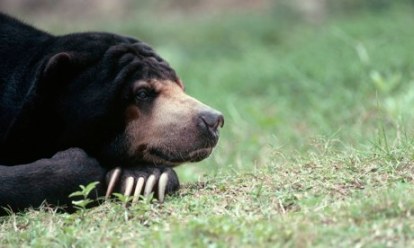
Sun bearJust as we were beginning to worry about what might have happened, months having passed since the Guardian’s Environment section had an article we wanted to link to, yesterday we encountered a semi-precious and today a gem quality article that reminds us of why we check that section each day:

Like a proud dad, Siew Te Wong’s office walls and desk are covered in baby pictures, but unlike ordinary infants these possess four-inch claws and a taste for insects and honey. Wong, a leading sun bear researcher, has a heartfelt passion for the world’s smallest bear that is as big as the problems facing the species. Continue reading

Conversation, Conservation, Controversy

We have recommended more conversation, and we mean all kinds, including the occasional heated debate. When it comes to the subject of climate change, we do not feel obliged to air the views of big-moneyed propagators of denial.  When it comes to potential solutions to slow the acceleration of climate change, or mitigate its impact, or such reasonable areas of debate, the doors are wide open, topically speaking.

We hope to learn from citizen scientists, research scientists and practitioners alike so we can become better informed and make better judgements on this complex topic. Take a look at the wording of this memo from the “Sierra Club Grazing Core Team” to Sierra Club staff and volunteers “(particularly those involved with sustainable-energy/climate-change campaigns, and commercial grazing on public lands)” before watching the TED talk above:

Summary

Recent widespread interest in Holistic Management (HM), primarily stemming from Allan Savory’s presentation at the February 2013 Long Beach, CA, TED conference, makes it important that Club members and staff be consistent in their response to calls for application of HM. Savory has received considerable attention for his claim that application of HM to husbandry of ungulate livestock (typically cattle) in the world’s grasslands could sequester sufficient atmospheric carbon to reduce atmospheric carbon concentrations to pre-industrial levels. The Sierra Club’s Grazing Core Team urges the Sierra Club to reject HM as a tactic to reverse climate change for the following reasons: Continue reading

Successful Women Writers, Entrepreneurial Exemplars

circa 1923:  American author Willa (Sibert) Cather (1873 - 1947) uses a ledge while writing outdoors during a vacation in New Hampshire.  (Photo by New York Times Co./Getty Images)

circa 1923: American author Willa (Sibert) Cather (1873 – 1947) uses a ledge while writing outdoors during a vacation in New Hampshire. (Photo by New York Times Co./Getty Images)

Writing in the New Yorker‘s website section titled Page-Turner, Joan Acocella posted recently about the tendency of women writers, historically, to begin their writing careers later than their male counterparts.  She uses Willa Cather’s case as an example and draws a conclusion that could  as easily be applied to entrepreneurship (bold added below to highlight the conclusion):

…By her thirties, she had acquired a very good job, as the managing editor of McClures, an important New York magazine. She got to go to Europe and meet famous writers. But secretly she herself wanted to be a writer. She was sure she could not be. The most honored novelist of that time, the nineteen-tens, was Henry James: refined, complicated, urban. Cather, meanwhile, was still kicking the dust of Red Cloud off her shoes. Finally, at thirty-seven, in what must have been a wrenching act Continue reading

More Reasons To Spend Some Time In Mozambique

This pygmy chameleon is one of many such unique and new species discovered in the Mount Mabu forest of Mozambique. Photograph: Kew Gardens/Julian Bayliss

This pygmy chameleon is one of many such unique and new species discovered in the Mount Mabu forest of Mozambique. Photograph: Kew Gardens/Julian Bayliss

Bob Dylan, in 1976, released a song called Mozambique. It does not mention biodiversity as one of the reasons to visit the country, but it is better written than the following headline (something has happened to the Guardian‘s Environment section in recent months):

Protect the Mozambique forest found on Google Earth, scientists say

Mount Mabu rainforest teeming with new and unique species including pygmy chameleons and bronze-colour snakes

We will leave it to the grammar police and philosophers to parse those two sentences (commercial software should not be the focus of a headline justifying conservation; and these are certainly not new species but newly discovered); nonetheless we recommend reading the excellent information about this ecosystem: Continue reading

Welcome To Raxa Collective’s Learning Laboratory, Cardamom County

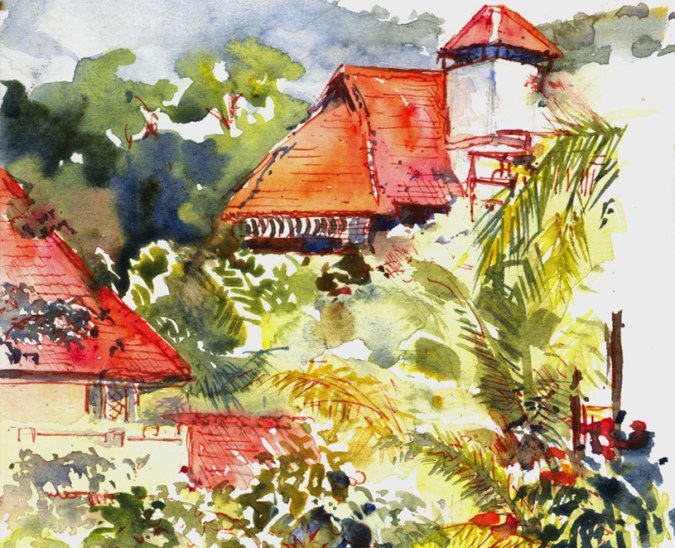
Cardamom County, by Maxine Relton

Every year right about now, a group of painters arrives to Kerala from England. They are led by a professional artist who also teaches, and during their several days’ stay at Cardamom County we enjoy watching their sketch books fill up. The watercolor above is an example of what we have seen in the past, and we are looking forward to this year’s new collection.

It is not only the colors and impressionistic views of our property we enjoy seeing, but the learning process itself.  Each of the last few years, as Raxa Collective has expanded the number of properties in its portfolio, Cardamom County’s unique value as a learning laboratory has become more and more clear. Interns, trainees, and most of all guests–many of whom, while still at Cardamom County or after returning home, choose to share news about their experience with us, or on the themes of community and/or collaboration and/or conservation from around the world) are all essential components of the learning laboratory’s chemistry.

Today, we welcome a group of nearly one dozen new employees to Raxa Collective. Continue reading

Adding Some Interesting Facts To The Conversation

  If we do have more conversation in 2014 and beyond, it will definitely be improved with the science writers we have been following the last few years, and the successors who follow in their footsteps. For example, we appreciate Virginia Hughes and the kind of writing that she publishes all over the place, and which National Geographic‘s Phenomena website collects under the name Only Human, with this most recent example here:

An Old and Optimistic Take On Old Age

I’ve been reading and thinking a lot lately about the process of aging. Many scientists who study it argue — quite convincingly — that it’s the most important scientific topic of our time. In his 1997 bestseller Time of Our Lives, biological gerontologist Tom Kirkwood writes that the science of human aging is “one of the last great mysteries  Continue reading

A Life Leading To India’s Independence

Penguin Books India recently published this book about the Mahatma’s earlier years, which is reviewed here and publisher’s blurb provided below:

Gandhi Before India

by Ramachandra Guha

In 1893, when Mohandas Gandhi set sail for South Africa, he was a 23-year-old briefless lawyer who had failed to establish himself in India. The two decades that he spent in South Africa were to be the making of the Mahatma.  Continue reading

If You Happen To Be In Washington, DC

This slideshow requires JavaScript.

At the Smithsonian, there is an exhibit specially made for the yoga aficionados of the modern world, with just a few weeks more to go:

Yoga: The Art of Transformation

October 19, 2013–January 26, 2014

Arthur M. Sackler Gallery

Yoga is a global phenomenon practiced by millions of people seeking spiritual insight and better health. Few, however, are aware of yoga’s dynamic history. Opening this fall at the Smithsonian’s Arthur M. Sackler Gallery isYoga: The Art of Transformation, the world’s first exhibition of yogic art. Temple sculptures, devotional icons, vibrant manuscripts, and court paintings created in India over 2,000 years—as well as early modern photographs, books, and films—reveal yoga’s mysteries and illuminate its profound meanings. Continue reading

Changing Tastes In India

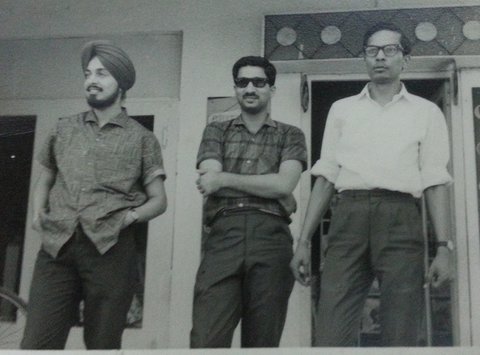
Courtesy of K.D. Singh K.D. Singh, left, and Kuldeep Shankar, right, owners of “The Steakhouse,” with their mutual friend Anil Arora at the store in New Delhi in the 1960s.

Courtesy of K.D. Singh. K.D. Singh, left, and Kuldeep Shankar, right, owners of “The Steakhouse,” with their mutual friend Anil Arora at the store in New Delhi in the 1960s.

Thanks to India Ink for this article on the evolution and sometimes radical change in food shopping and consumption patterns in India. For those of us from foreign countries working, interning, volunteering with, or visiting as guests of Raxa Collective in India, this news can be put in perspective only relative to the time since 2010, when excellent ice cream became available in Kerala on a regular basis; then, excellent gelato; and more recently otherworldly staples such as good olive oil have found their way onto the shelves of certain grocers.

That may matter to some of us non-Indians more than to our Indian colleagues and friends. Suppliers to our lodging properties continue to supply the high quality domestic inputs we need to produce top quality south Indian cuisine–no change sought on that front until now, as we prepare to open 51, our new restaurant in Mattanchery which will highlight some of the eastern Mediterranean influences on Malabar cuisine, more on which another time. For now, just a shout out of this story:

These days, it’s easy to find once-exotic foods like spaghetti and Parmesan cheese at grocery stores in India. Continue reading

More Conversation Is More Interesting In More Languages

“It’s on the left,” he says. “No, it’s southeast of here,” she says. iStockphoto

If we are going to engage in more conversation in 2014 and beyond, we all would do well to do so with as much perspective as possible, wherever we are. This reporting on scientific findings about bilingualism is particularly interesting for those of us in India, where most of our colleagues speak a minimum of two but often three or four distinct languages:

Lera Boroditsky once did a simple experiment: She asked people to close their eyes and point southeast. A room of distinguished professors in the U.S. pointed in almost every possible direction, whereas 5-year-old Australian aboriginal girls always got it right.

She says the difference lies in language. Boroditsky, an associate professor of cognitive science at the University of California, San Diego, says the Australian aboriginal language doesn’t use words like left or right. It uses compass points, so they say things like “that girl to the east of you is my sister.” Continue reading

Committing To More Conversation In 2014

Well over a year ago there was an interview podcast that several of us at Raxa Collective listened to, discussed, and determined to write about, but none of us did. The idea was lost for nearly 15 months. Then, all of a sudden, in the first post today the word conversation appeared in a manner that reminded us of the Fresh Air interview with Sherry Turkle headlined:

In Constant Digital Contact, We Feel ‘Alone Together’

October 17, 2012

The book was reviewed in the New York Times three years ago this month, and together with the interview we just remembered, is still very much worth the while:

As soon as Sherry Turkle arrived at the studio for her Fresh Air interview, she realized she’d forgotten her phone. “I realized I’d left it behind, and I felt a moment of Oh my god … and I felt it kind of in the pit of my stomach,” she tells Terry Gross. That feeling of emotional dependence on digital devices is the focus of Turkle’s research. Her book, Alone Together, explores how new technology is changing the way we communicate with one another. Continue reading

Can Hunting Help An Endangered Species?

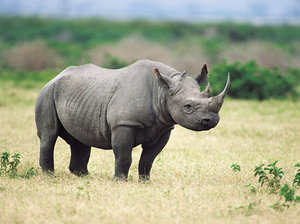
Tom Brakefield/Getty Images

Tom Brakefield/Getty Images

To Save The Black Rhino, Hunting Club Bids On Killing One

by NPR STAFF

December 29, 2013

Hunters of wild ducks have been extremely important contributors to, and activists for, wetlands preservation in the USA. Does that mean hunting is good for conservation? National Public Radio in the USA covered a story a few days ago that, as a headline cast hunting in a grotesque light, but listening to the participants there was a whole new perspective. Raxa Collective has no plans to add hunting to the list of activities it offers travelers, but we are obliged to participate in the conversation:

Fewer than 5,000 black rhinos are thought to exist in the wild, and in an effort to preserve the species, the Dallas Safari Club is offering a chance to kill one.

The Texas-based hunting organization is auctioning off a permit to hunt a rhinoceros in Nambia. It’s a fundraiser intended to help save the larger population. Continue reading

Getting The Story

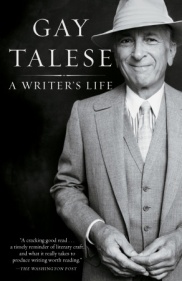
His autobiography has been in print since 2007, but Longform helped bring that book back to our attention by bringing Gay Talese on stage at New York University recently, to talk about his life writing for Esquire in the 1960s and for The New Yorker today.  He tells his story during the onstage interview as only a master story-teller can. It is about listening; crafting; working: building a community of sources and fellow-writers:

“I want to know how people did what they did. And I want to know how that compares with how I did what I did. That’s my whole life. It’s not really a life. It’s a life of inquiry. It’s a life of … knocking on a door, walking a few steps or a great distance to pursue a story. That’s all it is: a life of boundless curiosity in which you indulge yourself and never miss an opportunity to talk to someone at length.” Continue reading

If You Happen To Be In Denmark

We have been paying a lot of attention to Iceland in the last year, and we do not expect that to change very soon. At least not until May of this year.  But we will always consider the two poles of the planet worthy of our time and investigation. There is an excellent exhibition website separate from the museum’s website pages about this exhibit whose last month has just begun:

ARCTIC

September 26 2013 –  February 2 2014

Louisiana’s major, multi-faceted autumn exhibition explores a wonderful, fragile, frightening and powerful world. ARCTIC is a story about dreams, destiny, adventure and beauty. It is a tale of fear, fascination, desire, downfall, and survival in spite of everything. A quest for a location, real and imagined, that through the centuries has stirred up strong drives and emotions, fascinating and attracting artists, scientists, writers and adventurers alike.  Continue reading

Snow Leopard Caught In Camera Trap

The shot of a snow leopard captured by one of the six cameras installed at Gangotri National Park, Uttarakhand, on Monday. Photo: Virender Singh Negi

The shot of a snow leopard captured by one of the six cameras installed at Gangotri National Park, Uttarakhand, on Monday. Photo: Virender Singh Negi

We have one last 2013 story about cats caught in camera traps, and intend to continue in 2014 highlighting camera traps as scientific tools in the interest of conservation, not only cats, but all types of creatures great and greater as well as small and smaller. Thanks to the Hindu‘s reporting on this good news out of one of India’s protected natural areas in the north:

Officials of the Gangotri National Park have a reason to rejoice — the camera trap set up at the Gangotri-Gaumukh road has captured video and still images of a male and female snow leopard, confirming for the first time the existence of these cats there. Continue reading

Entrepreneurship In India

Atul Loke for The New York Times. Rahoul Mehra and his wife, Glennis Matthews Mehra, started Saf Labs, a biotechnology trading company in Mumbai.

Atul Loke for The New York Times. Rahoul Mehra and his wife, Glennis Matthews Mehra, started Saf Labs, a biotechnology trading company in Mumbai.

India Ink closes out 2013 with a story near and dear to the hearts of all entrepreneurs in India at this moment, and Raxa Collective appreciates the coverage (even if we are not exactly an American-style start-up, we can relate):

American-Style Start-Ups Take Root in India

In a nation with a reputation as a tough place to do business, American tech entrepreneurs are importing the Silicon Valley mind-set. Continue reading