Ornithologically Challenged

In his new book about the passenger pigeon, the naturalist Joel Greenberg sets out to answer a puzzling question: How could the bird go from a population of billions to zero in less than fifty years? Painting by Walton Ford.

In his new book about the passenger pigeon, the naturalist Joel Greenberg sets out to answer a puzzling question: How could the bird go from a population of billions to zero in less than fifty years? Painting by Walton Ford.

No sooner had we completed our reading of this article in the last issue of 2013 when the New Yorker‘s first issue of 2014 arrived with a practically unbelievable account of the history of passenger pigeons, which we know many of our readers will appreciate this link to (note to the man behind the illustration: Walton Ford, the welcome mat is still out for you in Kerala, and we extend it to welcome you in Costa Rica now as well; plenty of interesting creatures in either place to captivate your fertile imagination):

Imagine that tomorrow morning you woke up and discovered that the familiar rock pigeon—scientifically known as Columba livia, popularly known as the rat with wings—had disappeared. It was gone not simply from your window ledge but from Piazza San Marco, Trafalgar Square, the Gateway of India arch, and every park, sidewalk, telephone wire, and rooftop in between. Would you grieve for the loss of a familiar creature, or rip out the spikes on your air-conditioner and celebrate? Perhaps your reaction would depend on the cause of the extinction. If the birds had been carried off in a mass avian rapture, or a pigeon-specific flu, you might let them pass without guilt, but if they had been hunted to death by humans you might feel honor-bound to genetically engineer them back to life. Continue reading

Self-Sufficiency Taken To The Outer Extremes

Before the lights go out on the last New Yorker issue of 2013, one more of several articles we found worth the read, and relevant to our common themes of interest–community-building, innovation, environmentalism, farming, etc.–on this blog, even if we tend to incremental change rather than the radicalism on display here:

Marcin Jakubowski, the owner of a small farm in northwestern Missouri, is an agrarian romantic for high-tech times. A forty-one-year-old Polish-American, he has spent the past five years building industrial machines from scratch, in a demonstration of radical self-sufficiency that he intends as a model for human society everywhere. He believes that freedom and prosperity lie within the reach of anyone willing to return to the land and make the tools necessary to erect civilization on top of it. His project, the Global Village Construction Set, has attracted a following, but among the obstacles he has faced is a dearth of skilled acolytes: the people who show up at his farm typically display more enthusiasm for his ideas than expertise with a lathe or a band saw. Continue reading

An Entrepreneur’s Entrepreneur

The video above captures some of the spirit and personal style of a lesser-known but behind the scenes very influential entrepreneur in the hotbed of entrepreneurship. Better yet. listen to this interview with Nolan Bushnell to appreciate more fully what the early days of Silicon Valley were like, from one of Steve Jobs’s confidants:

Nolan is considered one of the pioneers of the video game industry. Nolan developed the first coin operated game (Computer Space), as well as Atari’s popular debut game, Pong.  Nolan also founded Chuck E. Cheese’s, a game centric restaurant chain.   Continue reading

Cardamom Harvesting At Cardamom County

Cardamom Harvesting

Cardamom Harvesting

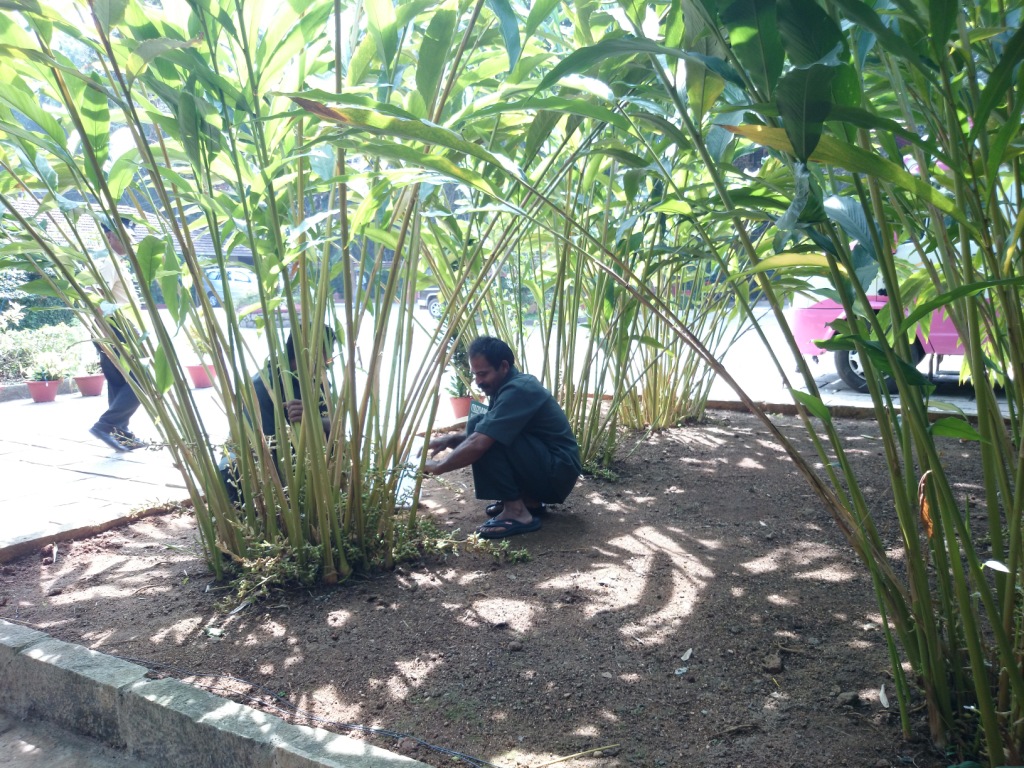
At Cardamom County we believe in organically grown vegetables and spices to provide our guests with the best produce that can be used to make the most sumptuous meals. We grow organic vegetables, fruits, spices and even eggs from our own farm. These pictures show our cardamom being harvested by staff members. Continue reading

The Shifting Sands Of Relevance

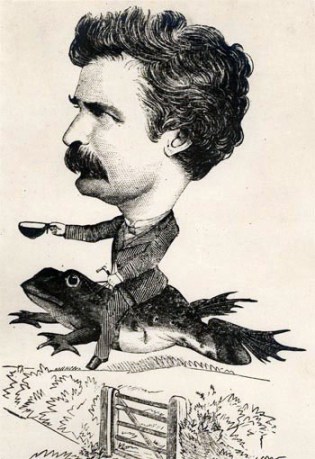
An essay published today in Lapham’s Quarterly reminds us of one man’s contribution to the travel writing genre in a previous century, in comic form but with clear hints at important cultural issues related to travel.  The main theme of the essay, which is that not all writing important at a given moment in time travels well over time, is a humbling one considering the writer who is the subject of the essay:

On November 18, 1865, the New York Saturday Press published a short sketch called “Jim Smiley and His Jumping Frog” about a frog-jumping contest in rural California. It “set all New York in a roar,” reported one journalist, and soon went viral, reprinted in papers from San Francisco to Memphis. The story’s author was Mark Twain, the pseudonym of a twenty-nine-year-old writer born Samuel Clemens. At the time, Twain was living in California, enjoying provincial renown as a Western humorist. The success of “Jim Smiley” made him nationally famous. “No reputation was ever more rapidly won,” observed theNew York Tribune. Continue reading

Channel 13, Tens Of Millions Of Community Beneficiaries, And One Man’s Contribution

We recently mentioned how we rarely get to link to Hertzberg written commentary, and here is one more of those rare opportunities. The man he writes about, unknown to any of us at Raxa Collective, was involved in the creation of an institution that several of us were deeply influenced by.

Channel 13, serving the New York City metropolitan area television community, started several Raxa Collective contributors (and many millions of our generation and subsequent generations) on Sesame Street as children in the 1970s, and well into adulthood we were still watching Channel 13’s excellent programming. But none of us remembers this particular show Hertzberg writes about.

Technology, including television, is neither good nor bad; it is how we use it that makes it one or the other or somewhere in between. Television today seems mostly to have abandoned its potential for good, but here was a man continuing to stick to its potential for good well into his 80s. Anyone so important to the history of Channel 13 is a community-building hero, even if it is otherwise difficult to associate television with heroism or community:

In the spring of 1954, my parents finally allowed themselves to bring a TV set into our home—a state-of-the-art DuMont, black and white, of course, with the aspect of an alien insect: spindly legs, pointy antennae, a body entirely dominated by a single bulging, bulbous eye. Reception was spotty: ghosts, chance of snow, iffy horizontal hold. But what a wondrous treat.

Mom and Pop maintained that they had bought the set for the Army-McCarthy hearings. I believed them. I still believe them. But even at our tender ages, my sister (age eight) and I (ten) were perceptive enough to notice that they had grown awfully tired of having to wangle invitations from people as their only access to Sid Caesar and Imogene Coca. Continue reading

Support Your News Sources

Our blog is a mix of first person accounts and references to stories from major news sources around the world, mostly about communities (unique forms of heritage, unique approaches to getting important things done for community members, etc.), about conservation (especially examples of entrepreneurial approaches to the conservation of unique cultural and natural heritage), and about collaboration (especially in relation to communities and conservation). We scan far and wide for stories. We depend on newspapers to which we do not subscribe, in return feeding traffic back to their websites. We think this is a fair exchange, but what do we know? It is definitely worth further investigation.

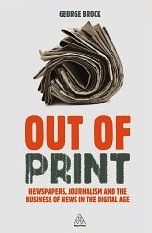
Whatever news sources you regularly depend on, you should read this review by Nicholas Lemann in the Times Literary Supplement about this book that documents, in the context of the USA, the economic challenges facing the newspaper business:

People tend to have little sympathy with accounts of crisis in a trade or profession. It comes across as evidence of excessive self-preoccupation, or as a prelude to special pleading before government.Journalism’s difficulties seem to be drawing this kind of reaction from many people who aren’t journalists. Isn’t the press still a swaggering, even power-abusing actor in politics and society? Doesn’t it command vast attention and resources? Isn’t more news being read by more people than ever before? Continue reading

Gift-Giving Across Species

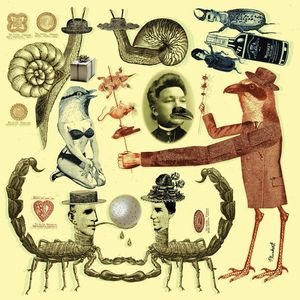
David Plunkert …Gift-giving has been seen in spiders, birds, mammals and the land snail, which shoots darts at its intended.

If you think humans are unique as gift-givers, think again, and read Natalie Angier’s current article in The New York Times:

…The drive to exchange presents is ancient, transcultural and by no means limited to Homo sapiens. Researchers have found striking examples of gift-giving across the phyletic landscape, in insects, spiders, mollusks, birds and mammals. Many of these donations fall under the rubric of nuptial gifts, items or services offered up during the elaborate haggle of animal courtship to Continue reading

Opposable Thumbs Are Great, But What About Flexible Memory?

Robert Krulwich/NPR

Robert Krulwich makes us wonder, as always:

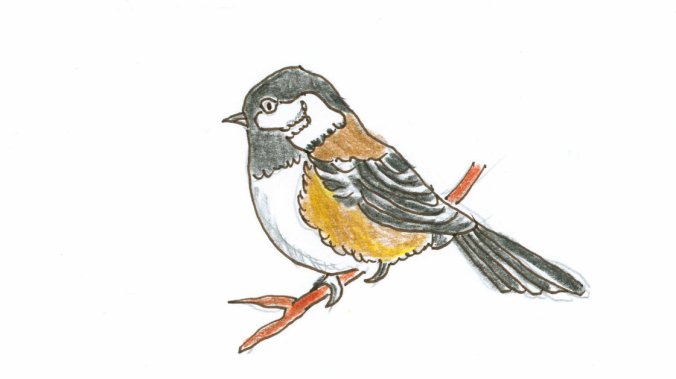
What Chickadees Have That I Want. Badly

First I look in my right coat pocket. Nothing. Then my left. Nothing. Then my pants, right side — no. Then my pants, left side — yes! This is me at my front door, looking for my keys. Every day.

Continue reading

Butterflies, The Ultimate Muse

2064_f8bf09f5fceaea80e1f864a1b48938bf

Mary Ellen Hannibal, author of The Spine of the Continent, and winner of Stanford’s Knight-Risser Prize in Western Environmental Literature, sheds light on the importance of butterflies to one of the previous century’s great writers:

The life and work of the novelist Vladimir Nabokov referenced many symbols, none so much as the butterfly. Butterflies prompted Nabokov’s travels across the United States, exposing him to the culture and physical environment that he would transform into his best-known novel, Lolita. Butterflies motivated his parallel career in science, culminating in a then-ignored evolutionary hypothesis, which would be vindicated 34 years after his death using the tools of modern genetic analysis. And it was the butterfly around which some of Nabokov’s fondest childhood memories revolved. Continue reading

Cooperation And Exploitation In Bird Communities


In a story about the co-evolution of two sides of the “kindness of strangers” coin Ed Yong, one of the most readable of the current pantheon of great science writers shares some scientific findings that we consider to be heartening:

The common cuckoo is famed for its knack for mooching off the parental instincts of other birds. It lays its eggs in the nests of at least 100 other species, turning them into inadvertent foster parents for its greedy chicks. For this reason, it’s called a brood parasite. Continue reading

Experiments In Plant Intelligence

The article we linked to here is now unlocked so non-subscribers can access the full story, and the video currently posted on the New Yorker‘s website (click the image above to go to the source) is a good accompaniment:


Last week, in our World Changers Issue, Michael Pollan wrote about the growing field of plant neurobiology and the ways that plants seem to exhibit intelligence, intention, and even choice. Continue reading

Odd Architects And Other Natural Wonders Brought Into Better Focus

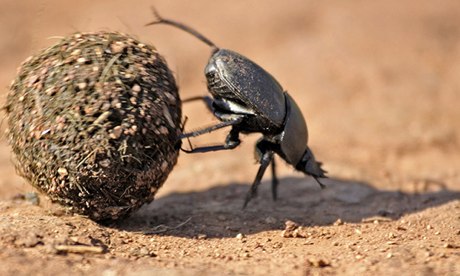
Photograph: Arco Images GmbH / Alamy/Alamy

Photograph: Arco Images GmbH / Alamy/Alamy

The Guardian is preparing us for 2014’s new lineup of nature shows on television by highlighting the role of technology in bringing us a closer view of all things wild, including more than one of the types of amazing creatures we like featured in the photo above:

An unusual line-up of stars will make their names on television next year. They include the gigantopithecus, a huge extinct ape – resurrected through the wonders of CGI – which will frolic in 3D with David Attenborough in Sky’s Natural History Museum Alive.

The south-east Asian tree shrew and the dung beetle will bear testimony to the hardships that the world’s tiniest animals endure, in BBC1’s Hidden Kingdoms, while Dolphins: Spy in the Pod, also on BBC1, will reveal the intimate lives of wild cetaceans through the use of cameras fitted to robot fish. Continue reading

Conservation’s Answer To A Butterfly’s Lost Food Supply

Setting the Table for a Regal Butterfly Comeback, With Milkweed

From this week’s Science News section of the New York Times, an article by Michael Vines about how:

Conservationists have planted milkweed, a favored food of the butterfly, along migratory routes where natural habitat has been plowed under for crops.

Then And There, Here And Now

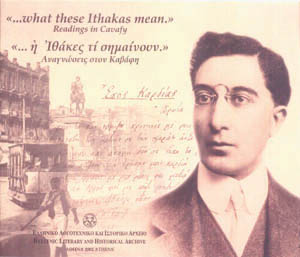
Orhan Pamuk says that “C. P. Cavafy makes no explicit reference to himself in his best and most stirring work; and yet, with every poem we read, we cannot help thinking of him.”

Does it take an Istanbulian to know one? Does it take a great writer to know one? You do not need to be a fan of poetry, nor of this particular poet, to appreciate the observations of one of the great observers of our time, with regard to living here and there but neither here nor there, and with regard to the idea of universality in art:

Cavafy was born in Alexandria, Egypt, in 1863, to a Greek family of wealthy drapers and cloth merchants. (The word kavaf, now forgotten even by Turks themselves, is Ottoman Turkish for a maker of  Continue reading

What Part Of Sacred Is So Difficult To Understand?

Navajo activist Klee Benally chains himself to an excavator on the San Francisco Peaks, which he and 13 tribes consider sacred. Ethan Sing

Navajo activist Klee Benally chains himself to an excavator on the San Francisco Peaks, which he and 13 tribes consider sacred. Ethan Sing

We are encouraged to see more coverage of these important cultural-ethical issues:

The Paris auction of 27 sacred American-Indian items earlier this month marks just the latest in a series of conflicts between what tribes consider sacred and what western cultures think is fair game in the marketplace. Continue reading

Welcome, Xandari

Seen from one angle, the sun is setting over the pool on Xandari’s western perimeter; the way this photo is taken makes it appear that way, but if seen from Kerala, the sun would just be rising.  Just hours ago, Xandari joined Raxa Collective.  Welcome! Continue reading

Greening The Green, With Plastic?

Photo by Julian Herbert/Getty Images

Photo by Julian Herbert/Getty Images

We rarely have the chance to link to the writing of Hendrik Hertzberg, one of the New Yorker‘s cleverest turners of phrase, because he so frequently writes on political matters (generally outside our scope on this site).  But when he writes on another topic, it is invariably worth reading if nothing else for the quality of his writing.  This one, as it happens, is closer to our general range of interests because of the ecological implications:

On Wednesday came news that, starting in 2016, the Bank of England will replace its paper currency with plastic.

This doesn’t mean that our British cousins will thenceforth have to make all their purchases with credit cards, as in, “Do you take plastic?” They’ll still have folding money, but it will be printed on sheets of plastic polymers—a stiffer version of the stuff that the plastic bags which disfigure the trees of New York City are made of. Continue reading

One More Way To Reduce Your Carbon Footprint (And Handprint)

People typically wash their hands seven times a day in the United States, but they do it at a far higher temperature than is necessary to kill germs, a new study says. The energy waste is equivalent to the fuel use of a small country. PHOTOGRAPH BY GAETAN BALLY/KEYSTONE/CORBIS

People typically wash their hands seven times a day in the United States, but they do it at a far higher temperature than is necessary to kill germs, a new study says. The energy waste is equivalent to the fuel use of a small country. PHOTOGRAPH BY GAETAN BALLY/KEYSTONE/CORBIS

Which small country are they referring to?  Does it matter? No. Just read on to be awed by the news that something you may have thought to be important to your health is actually not; and worse, it is costly to the earth’s health:

It’s cold and flu season, when many people are concerned about avoiding germs. But forget what you think you know about hand washing, say researchers at Vanderbilt University. Chances are good that how you clean up is not helping you stay healthy; it is helping to make the planet sick. Continue reading

Indian Art, The Business Side Of The Story

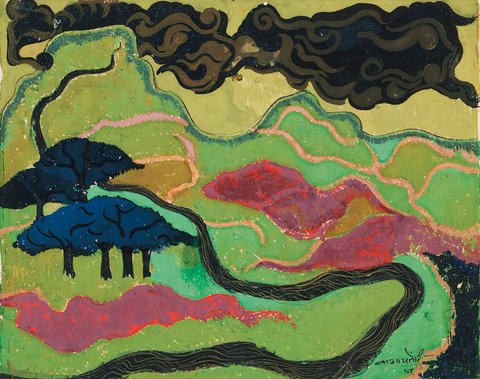
Christie’s Images Ltd. 2013 An untitled artwork by Vasudeo S. Gaitonde.

Christie’s Images Ltd. 2013. An untitled artwork by Vasudeo S. Gaitonde.

We would not know whether to say this news is welcome or not, but we thank India Ink for it nonetheless.  On the one hand we have been inclined to disfavor the hyper-commercialization of art. On the other hand, it seems better to know that Indian artists are now getting their fair economic shake relative to Western artists:

Demonstrating the robust demand for Indian art, Christie’s first auction in India almost doubled its high estimate of $8 million to bring in $15.4 million, or 965.9 million rupees, selling nearly all the works on offer and breaking a number of records for Indian artists. Continue reading