Opposite the badminton field, which part of the year serves as cow pasture, is a wall with these hand-painted signs announcing the December dates for the tournament that these players have been practicing for–singles, doubles, juniors, seniors, etc.. Raxa Collective is proud sponsor of this tournament. Live webcam coverage (maybe) so stay tuned.
Author: Organikos
Tiger Census In Kerala Is Well Under Way

2,088 field staff taking part in the eight-day exercise in five landscapes
Today’s Hindu newspaper reports that:
The eight-day phase-one of the all India tiger estimation 2013-2014 by 2,088 field staff began in the forests of the State on Monday.
The estimation, at the initiative of the National Tiger Conservation Authority (NTCA), is a countrywide exercise conducted every four years to assess the status of wild tigers, co-predators, prey species, and their habitat. Continue reading
Tough Times’ Temptations

Computer-generated images of the ‘EuroVegas’ gambling complex and conference centre outside Madrid
This was never a good idea for Spain. When we first read the horrifying news that Madrid was not only willing, but desperately vying, to become home to a megacasino and all the dark arts that accompany such a beast, we did not have the heart to share those reports. The ick factor hung like a cloud imagining it. In the last week, news broke that the whole deal had fallen through; here is a recap of the story’s perfect ending, from the New Yorker‘s website:
The puns practically wrote themselves, last week, when headlines announced that the billionaire casino magnate Sheldon Adelson had folded on a years-long bet to build a mega-casino in Spain. Dubbed EuroVegas, it was supposed to be Adelson’s foothold on the Continent: a thirty-billion-dollar venture, replete with twelve hotels, nine theatres, six casinos, and three golf courses.
A year earlier, Adelson had chosen Madrid as the sunny, temperate hub for his European incursion. He’s had a captive audience ever since. Presiding over a wobbly economy and an unemployment rate of around twenty-five per cent, the Spanish government was desperate for any large-scale investment, let alone one as immense as Adelson’s. The project’s gaudy name provoked derision, even revulsion, in some quarters in Spain. Continue reading
Massachusetts, A Relevant Kerala Benchmark

David Foster, director of the Harvard Forest, speaking at a news conference to announce the launch of a new Harvard Forest Study on future scenarios for the Massachusetts Landscape, looking as forests as infrastructure. Rose Lincoln/Harvard Staff Photographer
An article in the Harvard Gazette illustrates one kind of collaboration we hope to see more of in our home state of Kerala, India. The state of Massachusetts, USA is fortunate to be home to Harvard University and a wealth of resources–financial, yes, but more importantly ideational–that Harvard generates. Kerala has its own wealth of resources, and we hope to see here more collaboration between the public and private sectors, as well as academic institutions, such as we see in this article:
For the last two years, researchers, nonprofit representatives, and state officials have put their heads together to figure out how to maintain Massachusetts’ status as one of the nation’s most densely populated yet most heavily forested states.
Massachusetts’ forests expanded for 150 years as people abandoned farms for urban life and reached a high-water mark in the 1970s, when they covered nearly 70 percent of the state. In the face of expanding development, however, forest cover has since declined, down to 60 percent, with further declines likely.
The result of the collaboration is a report by the Harvard Forest and the Smithsonian Institution. It lays out four possible futures for the state’s forests and highlights one, called “forests as infrastructure,” that would dramatically increase both logging and land conservation, while also encouraging clustered development to minimize forest loss. Continue reading
Extraterrestrial Citizen Science
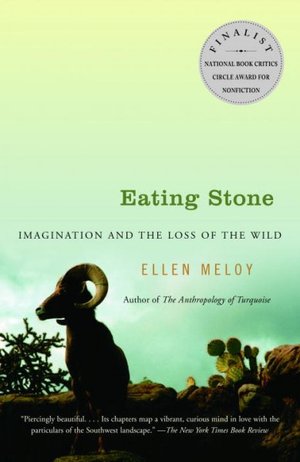 Robert Krulwich riffs on (or off) this book in a recent post on Krulwich Wonders titled:
What’s That Clinging To The Towering Wall And Why Doesn’t It Fall Off?
In the spirit of citizen science, of which Krulwich is a master promoter, it makes sense to share this post of his on the same day that we posted about citizen science related to creatures that fly, and creatures that swim. These ones climb, but not on earth as we know it. While calling them extraterrestrials is not quite accurate, you will get the point:
Maybe you’ve seen this, (it’s gotten around), but I’m still gobsmacked. Totally amazed. We’re in northern Italy looking at the face of the Cingino Dam, and here and there on the vertical stone wall, you’ll see a few dark specks. Continue reading
Borneo, Birds And The Field Method Of Learning Science
More than one contributor to this site has been a fan of the Cornell Laboratory of Ornithology for several decades. During graduate school, for example, when Sapsucker Woods provided more than just a walk in the woods. The Lab’s fan base is global, for good reason, both among casual bird lovers and more serious bird watchers. The Lab became the focus of professional interest to several of us when we began managing lodges in the rain forests of Central America, and we discovered what we had not known while at Cornell: it has the largest collection of field recordings of bird songs in the world. Guests at our lodges were awed by this resource when it was pointed out to them. The images above reflect more recent appreciation we have for the Lab. Continue reading
Radical Interpretation Of Plants’ Secret Lives

When he goes out on a limb he invites others to join him, and like any journalist worth his salt he keeps pushing further out onto the limb. The venues in which he publishes deserve credit for having faith in readers willing to get out onto that limb:
In 1973, a book claiming that plants were sentient beings that feel emotions, prefer classical music to rock and roll, and can respond to the unspoken thoughts of humans hundreds of miles away landed on the New YorkTimes best-seller list for nonfiction. “The Secret Life of Plants,” by Peter Tompkins and Christopher Bird, presented a beguiling mashup Continue reading
Superior Urban Design, Superior Health

Happy City: Transforming Our Lives Through Urban Design by Charles Montgomery, published in November 2013 by Farrar, Straus and Giroux, LLC. Copyright © 2013 by Charles Montgomery. All rights reserved.
The text below is excerpted from the book above (click above to go to the source), and we thank Slate for publishing what amounts to a public health announcement disguised as a commentary on urban design. Because several of Raxa Collective’s contributors and more than a few of those who follow this blog have lived in, worked in or gone to school in Atlanta the case study here hit home to more than one of us:
…Of every 100 American commuters, five take public transit, three walk, and only one rides a bicycle to work or school. If walking and cycling are so pleasurable, why don’t more people choose to cycle or walk to work? Why do most people fail to walk even the 10,000 daily steps needed to stay healthy? Why do we avoid public transit? Continue reading
Wild Mushrooms
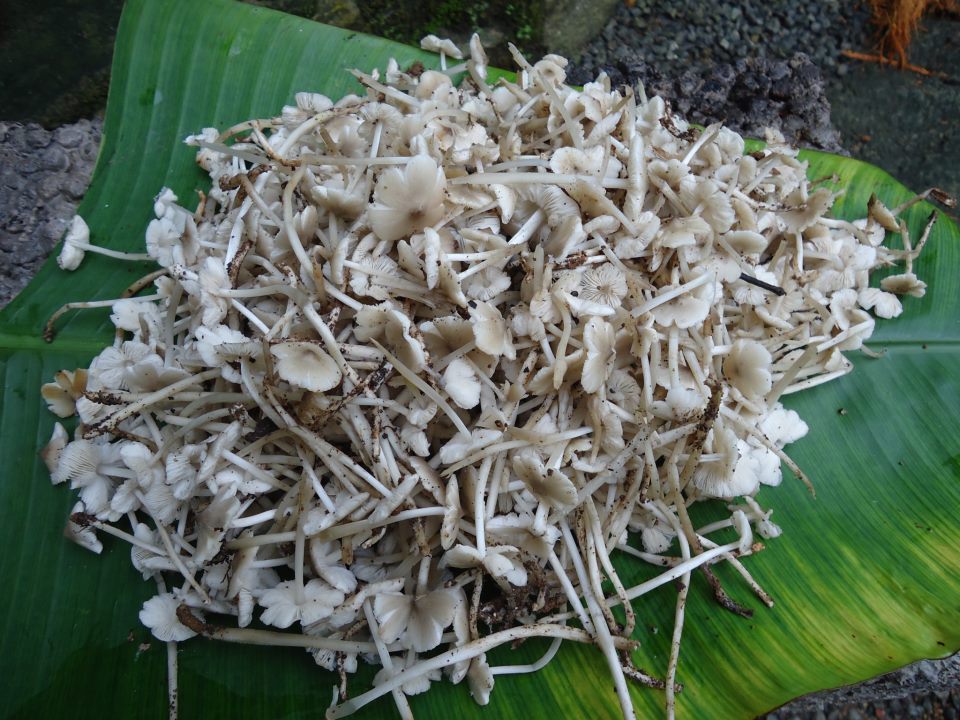
Wild Mushrooms
Mushrooms are found on almost every continent and due to the rich flora of Kerala they usually flourish unattended in the Western Ghats. Wild mushrooms are used for cooking various dishes from curries to dry starters and are relished by vegetarians and non-vegetarians alike. Continue reading
Eco On Journeys Of The Mind
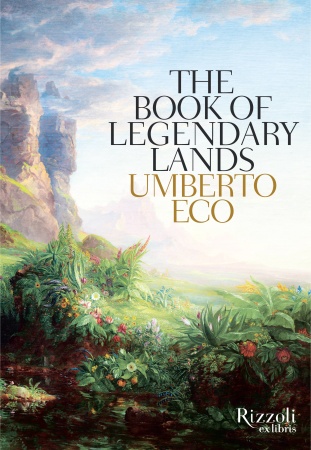
If you are a fan of Umberto Eco, and/or alternative travelogues, this book may be for you. If only the former, you might want to just go here or here. In its blurb for Eco’s new book (click the image to the right to go to the source), the USA publisher Rizzoli Ex Libris has this to say, which make it at least worthwhile to search the book reviews:
A fascinating illustrated tour of the fabled places in literature and folklore that have awed, troubled, and eluded us through the ages. From the epic poets of antiquity to contemporary writers of science fiction, from the authors of the Holy Scriptures to modern raconteurs of fairy tales, writers and storytellers through the ages have invented imaginary Continue reading
Masking Cultural History

(A man looks at an antique tribal mask, Tumas Crow Mother, circa 1860-1870, revered as a sacred ritual artifact by the Native American Hopi tribe in Arizona, displayed at the Drouot auction house ahead of its sale in Paris December 9, 2013. REUTERS/Christian Hartmann)
Reuters reports today on a remarkable act by a foundation to restore cultural artifacts, at long last, to their rightful place (click the image above to go to the source):
An American foundation bought nearly two dozen Native American artefacts and will return them to the Hopi tribe in Arizona, which had mounted legal challenges to their planned sale by a French auction house. Continue reading
A Different Kind Of Travelogue
 We are unabashedly in favor of reading, thinking and decision-making in advance of travel, during travel, and after travel. We are also in favor, when the fancy strikes, of just hitting the road without knowing why, where to, or for how long. On our pages you will find posts for either end of the spectrum from meticulously planned to wanderlust journeys. It is about discovery. So this book caught our attention. Nothing to do with hobbits, as reviewed by the Monitor (click the book image to the left to go to the source) it sounds like the perfect prelude, accompaniment or postscript for travel in a part of the world we have not been covering in our pages as much as we maybe should:
…In “The Discovery of Middle Earth,” Robb sets out to establish the momentous contributions made to the arts of cartography and communication by the once-great Celtic peoples, who at various points in history spread all the way from modern-day Turkey to Ireland. In the process, he consults old documents, interviews experts, examines artifacts, and bicycles more than 26,000 kilometers across France, taking his readers along with him… Continue reading
Demolition, Conservation, Fascination

Image ©Maria Kazanova/123rf
They just keep coming, these good reads from Conservation Magazine; this one, thanks to Megan Molteni about how the business of demolition is getting greener (click the image above to go to the source):
The modern age is built upon concrete. Concrete is cheap to make, easy to transport, and highly formable—making it a ubiquitous and universal feature of the developed landscape. But unlike building materials that defined past eras, concrete doesn’t exactly stand up to the test of time. Concrete structures have an expiration date—they can last up to 100 years in some situations, but often much less—after which they need to be demolished and rebuilt. And that process creates a lot of waste. Approximately 200 million tons of waste concrete are generated annually in the U.S. alone. About half of that is recycled, and the rest of it winds up in landfills. But what if that concrete could be given a new life as a filter for runoff? Or what if we could eliminate that waste altogether with a new and smarter way to demolish buildings? Two recent innovations explore these possibilities for a greener concrete afterlife. Continue reading
Culinary Flag-Waving
We’ve noted before how local cuisine helps to define local culture. From the regional to the national people are proud of their food ways.
We love these literal examples !
Perception, Responsibility And Good Taste

Thanks again to Roberto Kwok and her contributions to the Conservation This Week feature in Conservation Magazine, which recently carried this story:
ECO-LABEL MAKES COFFEE TASTE BETTER
December 5, 2013
Mmm, that environmentally-friendly coffee tastes good. Or does it? According to a study in PLOS ONE, people presented with two cups of coffee are more likely to prefer the taste of the eco-labelled one — even if the brews are in fact identical. Continue reading
Keystone XL Just Got More Interesting

Photograph by Chip Somodevilla/Getty.
We stay away from politics as much as possible, but on occasion it is a topic we cannot avoid if we want to stay tuned to important environmental issues. Keystone XL is one we have been following from various angles in the last year or so. Here is some hopeful news about the future of this issue, especially if you know something about politics in the USA (click the image above to go to the source):
Shortly after the 2012 election, John Podesta was invited to speak at a board meeting of the American Petroleum Institute. Podesta is an outspoken environmentalist who served as Bill Clinton’s White House chief of staff and then founded the Center for American Progress, an influential liberal think tank. A.P.I. represents the interests of the oil-and-gas industry. Continue reading
MFA, Welcome
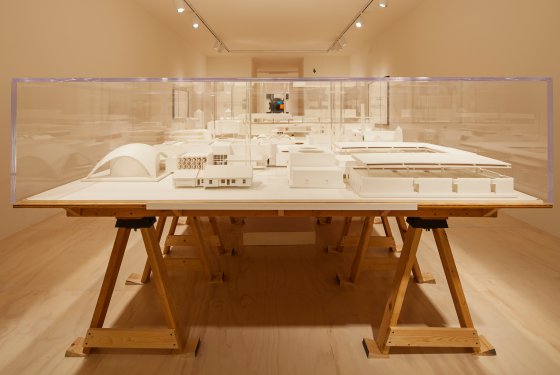
Educational Complex, by Mike Kelley, at MoMA PS1.
We do not claim to be experts on education in the fine arts, but we do know one person who went to RISD who added a huge amount of value to several Raxa Collective initiatives, and we would welcome him (and other members of the design team he was part of) back in a heartbeat. For now, we can just share these thoughts by a more well-informed person (beware the four-letter words and strong opinion):
In her excellent essay, now out in Modern Painters, artist Coco Fusco pulls back the curtains on the risky business and chancy racket of the Master of Fine Arts degree. Fusco deftly addresses, among other things, how M.F.A. programs are “discursive battlefields.” Continue reading
Controlling The Appetite To Feed
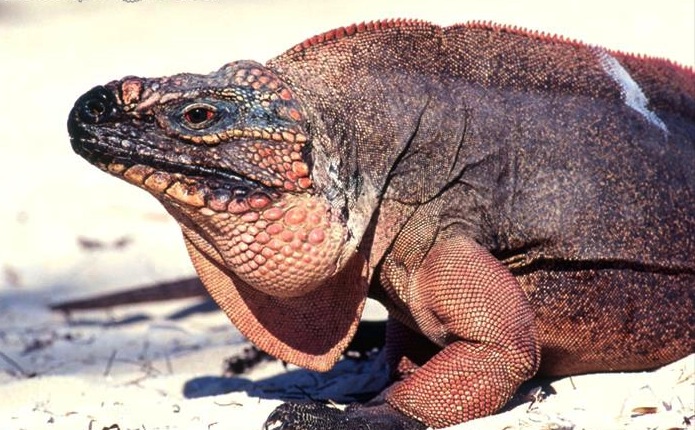
Bahamian Rock Iguana (click image to go to photo’s source)
In its Conservation This Week feature, Conservation Magazine (last week) carried the following, which we hope gets plenty of circulation (we wish it was not even necessary to say so, but wishful thinking is not sufficient):
TOURISTS: STOP FEEDING JUNK FOOD TO IGUANAS
December 6, 2013
On islands in the Bahamas, tourists routinely feed iguanas grapes, cereal, ground beef, and even potato chips. This unnatural diet could be affecting the health of these endangered reptiles, researchers warn in Conservation Physiology. Continue reading
Carbon Connectivity
Antarctic Exploration One Century Ago
Thanks to the Guardian‘s occasional history lessons via photography, like this one:
Eschewing the race for the South Pole, geologist and explorer Douglas Mawson took his scientific expedition to the eastern Antarctic – a region totally unmapped and unexplored. Here is a glimpse of the photographic archive that records their epic journey
 Organikos