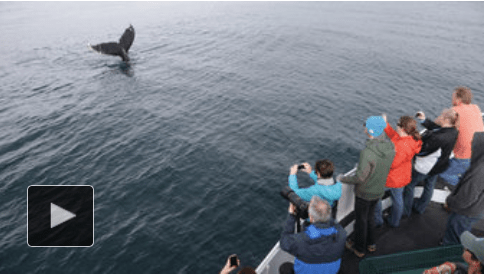
Sea Eagle Selfie

Caught red-beaked: This eagle grabbed a small wildlife camera in western Australia, flew away with it and then pecked away at the lens.

Caught red-beaked: This eagle grabbed a small wildlife camera in western Australia, flew away with it and then pecked away at the lens.

Thanks to National Public Radio in the USA for this story, which looks like it could be product placement (for Bushnell, to whom we can only say bravo even if we are not generally thrilled by the blurring of journalism and commerce) disguised as oddball news:

We’ve been fascinated by an “eagle cam” trained on a nest in Iowa and been thrilled by the view from a camera attached to an eagle that soared above Chamonix, France.

If you liked those, you’ll likely be interested in this, too:

Earlier this year, a young sea eagle picked up a small wildlife camera from the banks of western Australia’s Kimberley Margaret River, rangers tell the Australian Broadcasting Corp. Continue reading

The Rich Life Of Samuel Beckett

This slideshow requires JavaScript.

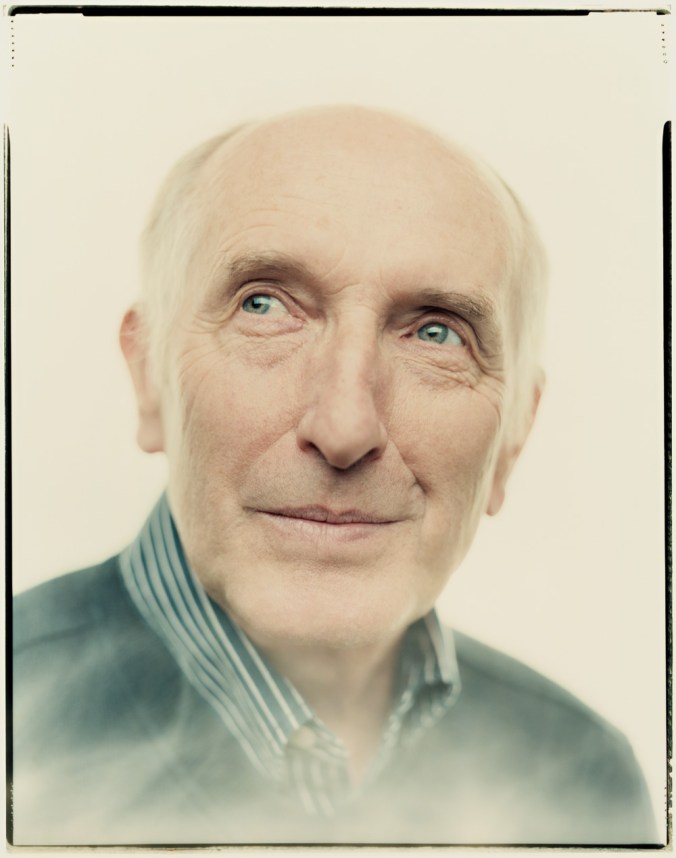
For those of us (and there is more than one of us among Raxa Collective contributors to this blog) who took advanced literature courses during high school in the 1970s, when Samuel Beckett was still writing and directing, this post on the New Yorker‘s website is a thrill.  Beckett was taught in a manner that made him seem to a teenager like a contemporary Shakespeare.  We had no images of him to know how amazing his face was, nor any details of his life until a biography that came out after his passing.  So, we appreciate this:

In this week’s issue of the magazine, Hilton Als reviews the current production of Samuel Beckett’s “Waiting for Godot,” directed by Sean Mathias, at the Cort Theatre.

In contrast to the minimalism of his plays, Beckett himself led a rich life. An Irishman in Paris, he met James Joyce in the nineteen-twenties, and the author took Beckett under his wing as a research assistant for a book that eventually became “Finnegans Wake.”

Continue reading

Wine In India

Kuni Takahashi for The New York Times. Sampling the product at York Winery.

Kuni Takahashi for The New York Times. Sampling the product at York Winery.

Thanks to India Ink for bringing our attention to a story about our neighborhood, broadly defined:

Cultivating a Wine Region in India | “In India, where whiskey is the alcoholic drink of choice and teetotalers exist by the legions, a wine culture has been almost nonexistent,” Shivani Vora wrote in The New York Times. Continue reading

Camera Trap Commentary

The following was contributed by Dr. Jason G. Goldman to Scientific American‘s blog. The author received his Ph.D. in Developmental Psychology at the University of Southern California, so when we read his views on camera traps, a subject that we have posted on as often as possible, we can feel confident that his scientific perspective is a worthy one:

…Maybe it’s because camera traps offer up a rare opportunity to catch a glimpse of nature on its own, undisturbed by our species. It’s a romantic notion, isn’t it? Nature untouched. It’s foolish to think that humans exist apart from nature; we are but one species in a massive tree of life. As in physics, so too in wildlife biology. Continue reading

Technology, Activism, Discontent & Keeping It Honest

Doug McLean

It was just recently when we started noticing it on the Atlantic‘s website, and needed some time to determine the fit with our blog:

By Heart is a series in which authors share and discuss their all-time favorite passages in literature.

It took this one to make us realize the fit:

Jonathan Franzen on the 19th-Century Writer Behind His Internet Skepticism

His new book translates works by Karl Kraus, whose misgivings toward progress mirror Franzen’s belief that technology can be “very harmful” to artistic production.
 OCT 1 2013, 3:43 PM ET

We have several times linked to stories involving Franzen, and there is no question that it is in part because of his bird-loving devotions; but it is not only that.  We put ourselves in his corner a few months ago and there are plenty of paradoxes in this corner but read this to appreciate the depth of Franzen’s sense of purpose related to technology, starting with Joe Fassler’s excellent commentary:

Karl Kraus, the Austrian satirist, playwright, and critic of the mass media, was born in 1874 and ran the magazine Die Fackel (“The Torch”) from 1899 until his death. And according to novelist Jonathan Franzen, he was the first-ever iteration of what we might now call a media theorist. Continue reading

One Of The Art World’s Mysteries Demystified

LEFT, COURTESY OF TIM JENISON. Left, Tim Jenison, with part of the optical apparatus he created above him, at work in his San Antonio studio. Right, Vermeer’s The Music Lesson, the painting Jenison chose to re-create.

LEFT, COURTESY OF TIM JENISON.
Left, Tim Jenison, with part of the optical apparatus he created above him, at work in his San Antonio studio. Right, Vermeer’s The Music Lesson, the painting Jenison chose to re-create.

Thanks to Kurt Andersen and a magazine we do not normally scan (but maybe we should; click the image above to go to the source):

In the history of art, Johannes Vermeer is almost as mysterious and unfathomable as Shakespeare in literature, like a character in a novel. Accepted into his local Dutch painters’ guild in 1653, at age 21, with no recorded training as an apprentice, he promptly begins painting masterful, singular, uncannily realistic pictures of light-filled rooms and ethereal young women. After his death, at 43, he and his minuscule oeuvre slip into obscurity for two centuries. Then, just as photography is making highly realistic painting seem pointless, the photorealistic “Sphinx of Delft” is rediscovered and his pictures are suddenly deemed valuable. By the time of the first big American show of Vermeer paintings—at the Metropolitan Museum of Art, in 1909—their value has increased another hundred times, by the 1920s ten times that. Continue reading

Tackling Tough Topics

Author Vaclav Smil tackles the big problems facing America and the world.   Andreas Laszlo Konrath

Author Vaclav Smil tackles the big problems facing America and the world. Andreas Laszlo Konrath

Thanks to this interview in Wired magazine (click the image above to go to the source) we hear a bit about the craft of a thinker-writer’s approach to major economic, environmental and technological puzzles, one book at a time, but at an amazing pace:

You’ve written over 30 books and published three this year alone. How do you do it?

Hemingway knew the secret. I mean, he was a lush and a bad man in many ways, but he knew the secret. You get up and, first thing in the morning, you do your 500 words. Do it every day and you’ve got a book in eight or nine months.

What draws you to such big, all-encompassing subjects?

I saw how the university life goes, both in Europe and then in the US. I was at Penn State, and I was just aghast, because everyone was what I call drillers of deeper wells. These academics sit at the bottom of a deep well and they look up and see a sliver of the sky. They know everything about that little sliver of sky and nothing else. I scan all my horizons. Continue reading

The River Project, A Template From New York Ready For Replication

Photograph by Peter Keegan/Keystone/Getty.

Photograph by Peter Keegan/Keystone/Getty.

The news in this New Yorker website blog post is the short and sweet specialty we most enjoy:

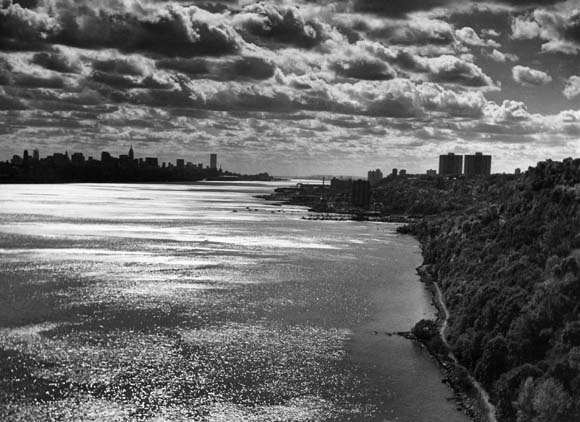
On a recent Wednesday that felt like the first of winter, about a hundred and fifty children—mostly under seven—and their parents gathered at Pier 40, over at West Street and Houston. Their mission: to thank for their service the numerous small riverine creatures that have whispered their secrets to the kids since last spring, and liberate them. The River Project’s tanks needed to be drained and emptied for winter. Ergo, fishy freedom. Continue reading

Designing With Imperfection In Mind


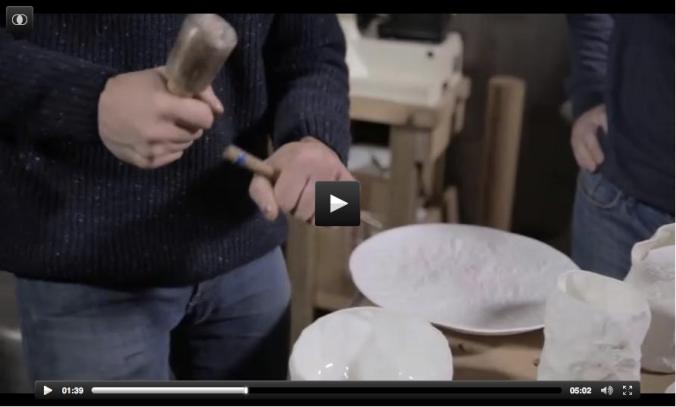
Raxa Collective’s social enterprise initiatives, its entrepreneurial conservation projects, its hospitality services–pretty much anything we do can approach perfection on a great day but we are always mindful of being human.  We are competitive but never boast. Humility is important. We strive for design excellence but know that beauty is in the eye of the beholder. So, we emphasize our commitment to artisan ethos. Spend five minutes with the designer in this video (click above to go to the Guardian’s website where the video is based) to see and hear someone in a completely different field whose views we can very much relate to.  Go here to read what he says about it and to see the entire collection:

Crockery
Fine bone china tableware. Made in Staffordshire, England.

A collection of fine bone china tableware slip-cast from plaster models carved by hand, with glazed interior for functionality and raw exterior reflecting the modest surface texture of the plaster original. Continue reading

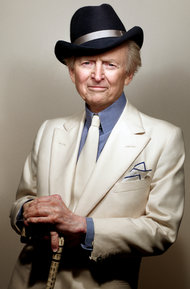
Thanks For Your Notes, Tom

Mark Seliger/Little, Brown and Company, via Associated Press

Mark Seliger/Little, Brown and Company, via Associated Press

When we read a great book, we get transported into a world of the author’s creation. We are not expected, nor do we normally want, to think about what went into that creation.  Literary critics, perhaps, but not we lay readers. One exception to this general rule is when a writer comes along and changes things with his or her style of writing.  Then, we might be curious about the craft itself. We have posted on this topic from time to time for various reasons related to Raxa Collective’s commitment to written documentation of our experiences. Today, one such craftsman has decided to share his craft (at a wow price, for both him and the recipient, we note). A few excerpts about this news as reported in the New York Times:

…But now, Mr. Wolfe is about to be enshrined in one of the city’s most august institutions, thanks to the sale of his archives to the New York Public Library. Continue reading

Vegan Viewpoint

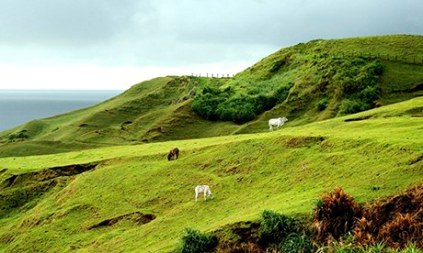
'By preventing the growth of trees and other deep vegetation in the hills, and by compacting the soil, grazing animals cause a cycle of flash floods and drought.' Photograph: Farley Baricuatro (www./Getty Images/Flickr RF)

‘By preventing the growth of trees and other deep vegetation in the hills, and by compacting the soil, grazing animals cause a cycle of flash floods and drought.’ Photograph: Farley Baricuatro (www./Getty Images/Flickr RF)

One of the editorialists at the Guardian whom we read for an unflinching environmentalist perspective, today on veganism:

He did it quietly, and the decision is the better for that: Al Gore, according to reports in the US press, has gone vegan.

Certain things could be said about other aspects of his lifestyle: his enormous houses and occasional use of private jets, for example. While we can’t demand that everyone who espouses green causes should live like a Jain monk, I think we can ask that they don’t live like Al Gore. He’s a brilliant campaigner, but I find the disjunction between the restraint he advocates and the size of his ecological footprint disorienting.

So saying, if he is managing to sustain his vegan diet, in this respect he puts most of us to shame. I tried it for 18 months and almost faded away.  Continue reading

Western Ghats Ecosystem Must Be Protected, But Humans Will Be Humans

The Hindu

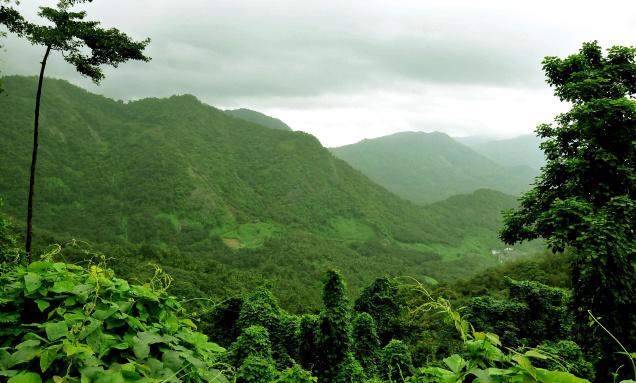
Local farmers in the Western Ghats, like their counterparts everywhere, generally want to be unencumbered to do what farmers do. Any given morning we wake up feeling complete solidarity with farmers. Full stop. We wake up every day looking for opportunities to support conservation where we live and work. Full stop. Currently, one such region where we work, known as the Western Ghats in southern India, is wrestling with the challenge of letting farmers be farmers while also allowing the ecosystem–one of those rare places worthy of being called a biodiversity hotspot–to continue to be the ecosystem.  Sometimes, farmers and ecosystems do not get along well. We thank the Hindu for its coverage of this issue, which is much more complicated than one article can convey:

…The sites, spread over 34 countries, “harbour the majority of the populations of more than 600 birds, amphibians, and mammals, half of which are globally threatened. Many of these irreplaceable areas are already designated as places of ‘Outstanding Universal Value’ under the UNESCO World Heritage Convention,” the report said. Continue reading

More Liberal Arts In India

Courtesy of Ashoka University. An artist’s impression of Ashoka University, currently under construction in Kundli, Haryana.

From today’s India Ink some good news related to India’s changing education system (we consider more liberal arts anywhere, any time, a positive development):

NEW DELHI – For decades, India’s institutes of technology and management, the famed I.I.T.’s and I.I.M.’s, have been seen as the pinnacle of this country’s higher education, offering world-class courses and above all, employability to its graduates. Continue reading

Sabarimala Festival

Lord Ayyappa

Lord Ayyappa

Sabarimala Temple is one of the most important pilgrim centres in India. Every year, lakhs of devotees throng this holy shrine situated amidst the thick forest of Periyar Tiger Reserve. Pilgrims have to undertake 41 days vritham (penance) consisting of strict celibacy. Females between the age of 10 and 50 are not permitted in the shrine. Continue reading

Crossing the Borders of Cuisine or Who Is General Tso Anyway?

NYTimes reporter Jennifer 8. Lee talks about her culinary mission for the origins of familiar Chinese-American dishes, that in many cases aren’t really either one and in others have combined to form a new cuisine.

Let me present the question to you: If our benchmark for Americanness is apple pie, you should ask yourself, how often do you eat apple pie, versus how often do you eat Chinese food..If you think about it, a lot of the foods that Americans think of as Chinese food are barely recognizable to Chinese. For example, I took a whole bunch of fortune cookies back to China, gave them to Chinese to see how they would react. Continue reading

Cats In The Ghats

Whether wild or domesticated, cats are unique in their ability to compel. If you are a cat person, you know that to be true. If you are not a cat person, you probably also know it to be true. Here in the Western Ghats region of south India, we take cats to be among our most important beneficiaries of whatever tangible outcomes we can generate through our entrepreneurial conservation initiatives. Mainly we are focused on initiatives with the Periyar Tiger Reserve, but on the lookout constantly for more opportunities. Earlier this year we started tracking Panthera because of these interests. Their website (click the logo to the left), and the mission as stated here, are worth revisiting from time to time:

Panthera’s mission is to ensure the future of wild cats through scientific leadership and global conservation action. Continue reading

The Art Industrial Complex

Zwirner at home, with a painting by Raymond Pettibon. “Nobody’s selling expensive stuff like we do with the frequency we do,” Zwirner said. “This is an industry in its golden age.” Photograph by Pari Dukovic.

Zwirner at home, with a painting by Raymond Pettibon. “Nobody’s selling expensive stuff like we do with the frequency we do,” Zwirner said. “This is an industry in its golden age.” Photograph by Pari Dukovic.

Art as industry? Say it ain’t so! But if it is, then better to say so clearly, unambiguously:

Very important people line up differently from you and me. They don’t want to stand behind anyone else, or to acknowledge wanting something that can’t immediately be had. If there’s a door they’re eager to pass through, and hundreds of equally or even more important people are there, too, they get as close to the door as they can, claim a patch of available space as though it had been reserved for them, and maintain enough distance to pretend that they are not in a line. Continue reading

If You Build It They May Come, But If You Build It Better Will They Pay For It?

fairTradeLogoThe following paper has been influential since its publication more than two and a half years ago, and seems destined to have a lengthy shelf life, which we hope to contribute to.  It is not only interesting theoretically, but gets at practical questions we consider existential at the level of our enterprise. If consumers (in our case travelers) are willing to pay a fair premium for building and operating a business that is more sensitive to environmental and social responsibility, we can afford to engage in fair trade; if they are not really willing, uh oh…

We are more than happy to share our empirical evidence, but for now let’s take a look at some scientifically-derived evidence:

Consumer Demand for the Fair Trade Label: Evidence from a Field Experiment

Jens Hainmueller

Massachusetts Institute of Technology (MIT) – Department of Political Science

Michael J. Hiscox

Harvard University

Sandra Sequeira

London School of Economics

April 1, 2011

MIT Political Science Department Research Paper No. 2011-9B

Abstract: 

A majority of surveyed consumers claim to prefer ethically certified products over non-certified alternatives, and to be willing to pay a price premium for such products. There is no clear evidence, however, that people actually seek out such ethically certified goods and pay a premium for them when shopping. We provide new evidence on consumer behavior from experiments conducted in a major U.S. grocery store chain. Continue reading

Learning To Dance Yakshagana

Courtesy of Karnataka Mahila Yakshagana A scene from Yakshagana performed by female artists in Bangalore, Karnataka, in January.

Courtesy of Karnataka Mahila Yakshagana. A scene from Yakshagana performed by female artists in Bangalore, Karnataka, in January.

Thanks to India Ink for bringing to our attention this article by Kavitha Rao:

BANGALORE — In a quiet Bangalore home, a group of middle-aged women are learning to walk, talk and dance like men. Continue reading