If You Happen To Be In London

This slideshow requires JavaScript.

If you are a fan of big welding projects that appear to result from an artisan ethos, and a fan of Bob Dylan, and find yourself in London in the coming weeks, this show called Mood Swings may be for you:

“I’ve been around iron all my life ever since I was a kid. I was born and raised in iron ore country – where you could breathe it and smell it every day. And I’ve always worked with it in one form or another. Continue reading

Understanding India, Day By Interesting Day

Pawan Kumar/Reuters

Pawan Kumar/Reuters

Those of us living in India, who are not from India, are on a quest to understand our new home. We share these stories from time to time, taken from mainstream publications in India and elsewhere, about what we are learning. With a photo like this, we could not resist such an explanatory story, in the form of an editorial from this week’s Sunday Review section of the New York Times: Continue reading

Will We Ever Tire Of This? Probably Not

Oil, coal and gas companies are contributing to most carbon emissions, causing climate change and some are also funding denial campaigns. Photograph: David Gray/Reuters

Oil, coal and gas companies are contributing to most carbon emissions, causing climate change and some are also funding denial campaigns. Photograph: David Gray/Reuters

It bears repeating:

The climate crisis of the 21st century has been caused largely by just 90 companies, which between them produced nearly two-thirds of the greenhouse gas emissions generated since the dawning of the industrial age, new research suggests.

The companies range from investor-owned firms – household names such as Chevron, Exxon and BP – to state-owned and government-run firms.

The analysis, which was welcomed by the former vice-president Al Gore as a “crucial step forward” found that the vast majority of the firms were in the business of producing oil, gas or coal, found the analysis, which has been published in the journal Climatic Change. Continue reading

Questions About Urban Agriculture

The University of Washington’s magazine, Conservation, has a set of provocative new articles in the food-focused current issue, including this one:

The cultural—and agricultural—quest to reclaim and reform the food system appeals primarily to relatively privileged, mostly white urbanites. Committed to the pulse of city life, these advocates generally view the countryside as a place for weekend getaways. Still, they want to be close to the point of food production and in turn are bringing agriculture into the city, one vacant lot at a time, to close the gap between farm and fork. Continue reading

Writer’s Routines

How Jhumpa Lahiri wrote “The Lowland.”

All contributors to this site can appreciate the concerns of a professional writer and her daily routines related to writing.  Our writing is always brief, and by definition for the format meant to be more casual, but it still requires discipline and effort.  Writers should write, yes, even when it is “just” a weblog like this one. But how? Routines matter.  It is worth hearing in her own words one great writer’s comments on this:

…During a visit to Lahiri’s house in Brooklyn (she currently lives full-time in Rome), we asked how she went about writing the book.  Continue reading

Stop The Rot

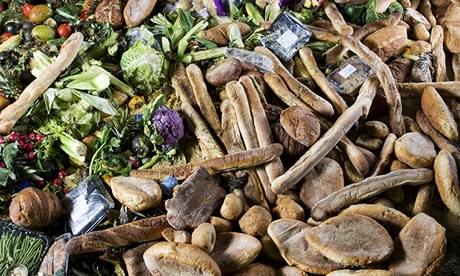
One-fifth of what households buy ends up as waste, and around 60% of that could have been eaten, according to a report from the government’s waste advisory group, Wrap. Photograph: Murdo MacLeod

One-fifth of what households buy ends up as waste, and around 60% of that could have been eaten, according to a report from the government’s waste advisory group, Wrap. Photograph: Murdo MacLeod

The Guardian carried a story recently about how in the UK food producers, sellers and consumers are being urged to support a ban on food waste going to landfills by 2020 to which we add our hurrah:

…Compulsory collections of food waste from all homes and businesses by local councils are among a series of measures recommended in a new report to enable food waste to be harnessed as a valuable resource to provide energy, heat and benefits for agriculture.

The ambition is to save the UK economy over £17bn a year through the reduction of food wasted by households, businesses and the public sector, preventing 27m tonnes of greenhouse gases a year from entering into the atmosphere.

The new study, Vision 2020: UK Roadmap to Zero Food Waste to Landfill is the culmination of more than two years’ work and has the backing and input of local authority and industry experts. It sets the framework for a food waste-free UK by 2020. Continue reading

Collaboration For Impact

Photograph: Robert Knight Archive/Redferns/Getty.

You need not be a fan of his guitar style, which is unique; nor his producer credentials, which are significant. You do not even have to like the Rolling Stones to appreciate the following:

(It is worth noting, perhaps, that before Keith Richards encountered Cooder, he was essentially a strummer. After their encounters, during which, Richards has written, he took Cooder for all he was worth, the modern Rolling Stones, with the two guitars attempting to manage rhythmically and harmonically what Cooder accomplished with one, were born.) Continue reading

Waste Not, Want Less

The Atlantic‘s Senior Editor, James Hamblin, MD, has advice we are compelled to share:

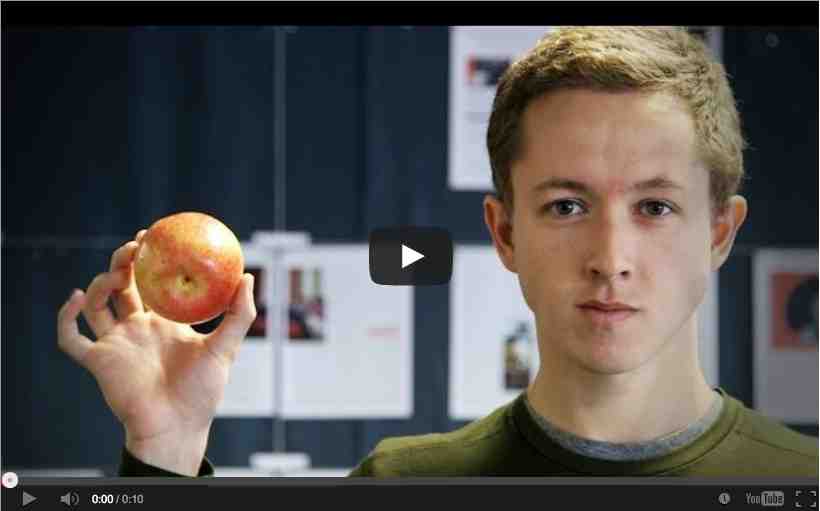
What do you think an apple core is? What’s the thing we throw away?

It is a ghost. If you eat your apples whole, you are a hero to this ghost. If you do not, you are barely alive. Come experience vitality.

Earlier this year, in “How to Eat Apples Like a Boss,” a video by Foodbeast, the Internet was promised the gift of confidence in apple-eating. Elie Ayrouth ate an apple starting at the bottom, proceeding to up to the top, and finishing with a wink to the camera, as bosses do. Eating as such, Foodbeast said, the core “disappears.”

Continue reading

Engineering A Safer Future On The Road

The Google car knows every turn. It never gets drowsy or distracted, or wonders who has the right-of-way. Illustration by Harry Campbell.

In most of the developing world, or at least where La Paz Group operates and where more and more European and North Americans are engaged in experiential travel, road conditions and driving habits are “different.” It is our educated guess that these travelers do not consider driving time to be their favorite part of these experiences. We do not hide from this fact. On the contrary, we take our drivers’ safety training seriously.  But we are always on the lookout for new approaches.  This week’s new New Yorker magazine, hot off the press, is the annual technology-focused issue.  An article there has got us thinking and discussing:

Human beings make terrible drivers. They talk on the phone and run red lights, signal to the left and turn to the right. They drink too much beer and plow into trees or veer into traffic as they swat at their kids. They have blind spots, leg cramps, seizures, and heart attacks. They rubberneck, hotdog, and take pity on turtles, cause fender benders, pileups, and head-on collisions. They nod off at the wheel, wrestle with maps, fiddle with knobs, have marital spats, take the curve too late, take the curve too hard, spill coffee in their laps, and flip over their cars. Of the ten million accidents that Americans are in every year, nine and a half million are their own damn fault. Continue reading

Science-Education-Technology Convergence


Museums and libraries are the stewards of culture in many ways. They both offer us a place to go for quiet contemplation as well as dynamic discovery. Kudos to the Smithsonian for accepting new technologies with open arms and sharing it with their researchers, curators, educators and conservators, and thereby with us.

Continue reading

Education As Social Enterprise

Everyone in modern market economies accepts that companies need to make a buck (rupee, yen, peso or what have you), and generally no one grudges them the opportunity to do so, as long as they do so responsibly. Grudging can follow a company’s bold commitment to “do no evil” when that company is discovered to have done something less than awesome. This raises the stakes for social enterprises, who from the outset claim to do something other than for pure profit motivation. Daphne Koller, Co-Founder of  Coursera, makes a compelling case for having risen to the occasion in this podcast interview:

Coursera was launched in 2012 and reached its first one million users faster than Facebook or Twitter. Coursera is one of a number of companies offering massive open online courses– or MOOCs– to address a growing global population and the rising costs of on-campus higher education.

Continue reading

Dear Dr. Rodrigues, Thank You From The Western Ghats

The research of Dr. Ana Rodrigues and her colleagues, much appreciated by our team here in the Western Ghats (no hard feelings, of course, that Colombia has a hotspot considered greater in terms of irreplaceability), is featured in a story in today’s Guardian

…”This beautiful mountain, which is not far from cities and towns, is being colonised by rich people building second homes,” said Dr Ana Rodrigues, a researcher at the CEFE-CNRS institute in France, who led the new study. The team’s analysis of the world’s 173,000 nature reserves identified 138 that were “exceptionally irreplaceable.”

Continue reading

Cricket, Worship

We have mentioned cricket on more than one occasion, because of its place of importance in the Indian culture.  If you are not from here, or at least here, in India, it may be difficult to understand this importance. Now is as good a time as any to begin understanding it. Tunku Varadarajan, a research fellow at the Hoover Institution, provides some helpful hints and lessons about the sport, and the country, in an OpEd in today’s New York Times about the one man who has been practically deified in recent times:

India, Where the Gods Live On … and On

…Tendulkar, whom everyone calls Sachin, is the most revered cricketer in India…In fact, it would be entirely accurate to describe him as the most revered contemporary Indian, or even, with only a pinch of hyperbole, the most revered Indian since Mahatma Gandhi held the nation in thrall… Continue reading

Wendell Berry Sharing His Wisdom, With Gandhian Revolutionary Overtones

You have heard his name enough times to recognize it, but you may not be sure what for. If this guy is in the room to listen, it is likely to be interesting. Thanks to Bill Moyers for sharing this:

Wendell Berry, a quiet and humble man, has become an outspoken advocate for revolution. Continue reading

Thank You, Britain

A headline in today’s Hindu that catches our attention:

Hindu logoBritish businesses in India to contribute £100 million annually towards CSR

British companies are expected to contribute around £100 million per annum to corporate social responsibility (CSR) activities in India with new amendments to the Indian Companies Act.

Continue reading

Art Versus Commerce

Photograph: Christie’s LTD

Photograph: Christie’s LTD

Since we are not a site for art criticism, we have not found the words to say so, elegantly, but we see a worthy distinction between art and commerce. In a blog post called “The Circus” we have found a one minute reading assignment to recommend:

A hundred and forty-two million dollars and change is a lot of money, or is it? What would the former possessor have done with the wad if he or she—or a corporate it—hadn’t splurged, at Christie’s in New York, yesterday, on the triptych “Three Studies of Lucian Freud,” by Francis Bacon? Nothing as interesting, certainly. Far larger amounts of money move around the world—numbers falling on one balance sheet, rising on another—night and day, and few notice. Most entail commodities (stuffs, like oil or wheat, sold by metric measure) or abstractions (stocks and bonds, financial instruments). When a tangible, useless object is the occasion, in public, there’s drama, though the stakes are relatively trifling. Continue reading

A Hint Of Evil, And Laughter May Be The Only Antidote

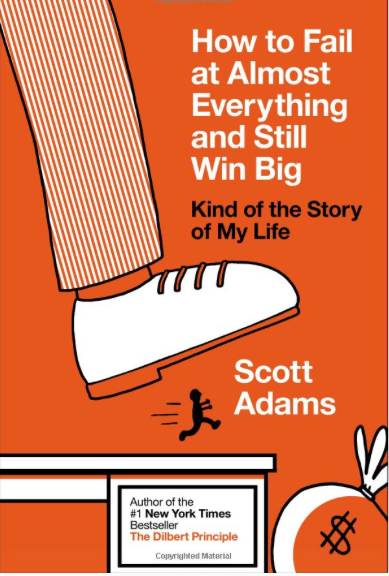
Thanks to this HBR Ideacast we had the opportunity to listen to the author of this book discuss its core message(s). Anyone who has looked at a few Dilbert cartoons can pretty well figure out that its author is not what you may think a typical MBA is. About 10 minutes into the podcast, the most remarkable statement, worthy of your attention, begins:

DAN MCGINN: So you’re saying management really doesn’t matter?

SCOTT ADAMS: I think it’s certainly something you can do wrong. So avoiding doing it wrong is the big thing. And I think if you’re a bit of a psychopath or sociopath, I don’t know the exact definitions of those, you know, if you push people to think that you being happier, and you as the manager making more money, and you as the company making more money is more important than the employees’ own personal life and their health, then you’re a great manager. And you absolutely can do great things. And you’ll probably be able to reproduce that wherever you go. Continue reading

The Contribution Of Old Photographs To Thinking Ahead

This slideshow requires JavaScript.

With news this past weekend of one of the largest tropical storms in recorded human history still fresh, our antennae are up.  We believe in looking back in the interest of looking forward. The beginning and ending lines of this article can induce even those most unlikely to visit Sotheby’s next week:

For more than 100 years, nearly every time a ship ran aground off the coast of Cornwall, a man would arrive on the scene to document the wreckage. Continue reading

Food-Related Whodunnit

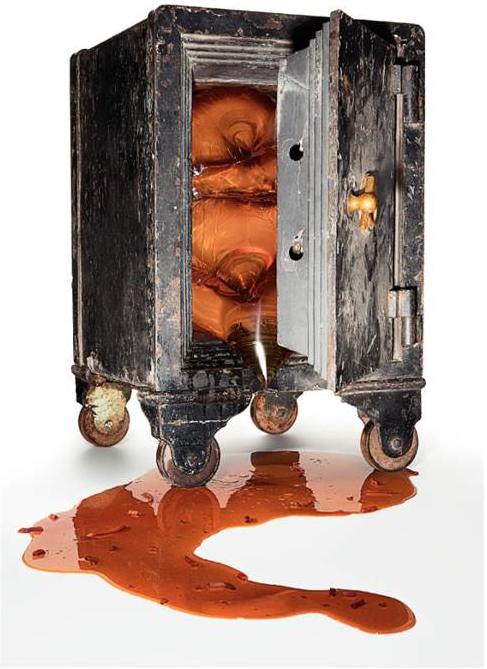
Illustration for "HOT GREASE, The Wild West of used-cooking-oil theft"

Illustration for “HOT GREASE, The Wild West of used-cooking-oil theft”

Food and/or its by-products are not the centerpiece of any literary genre that we know of, other than cookbooks and more recently food histories.  This week’s New Yorker has a welcome addition in the annals of food as a key ingredient in other genres:

A few months ago, in a clanging, hissing plant on the outskirts of Newark, a tanker truck backed up to a deep reservoir and delivered thousands of dollars’ worth of raw material—what people in the rendering industry sometimes refer to as “liquid gold.” The plant’s owner is a company called Dar Pro, and the C.E.O., Randall Stuewe, looked on while a hose from the truck gushed a brown fluid, filled with fine sediment and the occasional mysterious solid. Slowly, the pit became a pool, whose surface frothed and eddied and gave off a potent odor of old French fries, onion rings, and batter-fried shrimp. “Used cooking oil,” Stuewe told me. “We process two billion pounds a year.” Continue reading