Seeds Of Change

Rounding out the hat trick of food-related stories for today, this story details the intersection between food, commerce and governance:

Kauai has a long agricultural history – from the first Polynesian settlers thousands of years ago bringing taro — a starchy pacific vegetable – to plant, to biotech-companies producing genetically-modified crops today. When Captain James Cook landed on the island in 1778 — little did he know that he had stumbled upon a farmer’s utopia. Continue reading
Understanding Food More, Better

This slideshow requires JavaScript.

Speaking of food transparency, if you have not yet watched any of the lectures, you are missing an amazing opportunity to learn about the science of food from some of the greatest chefs of our time, in one of the great institutions of higher education. Click here to see this article at its source, and/or click the link below to visit the website where the course’s recordings of lectures by visiting guest chefs, including this one, are made available:

When Joanne Chang ’91 was approached by a cable TV network in 2006 to host a show about the science of sweets, she was thrilled. The owner of the landmark Flour Bakery and graduate of Harvard College, where she was an applied mathematics concentrator, Chang always enjoys discussing her pastries, but she loves talking about them at the molecular level best.

Continue reading

Food Transparency

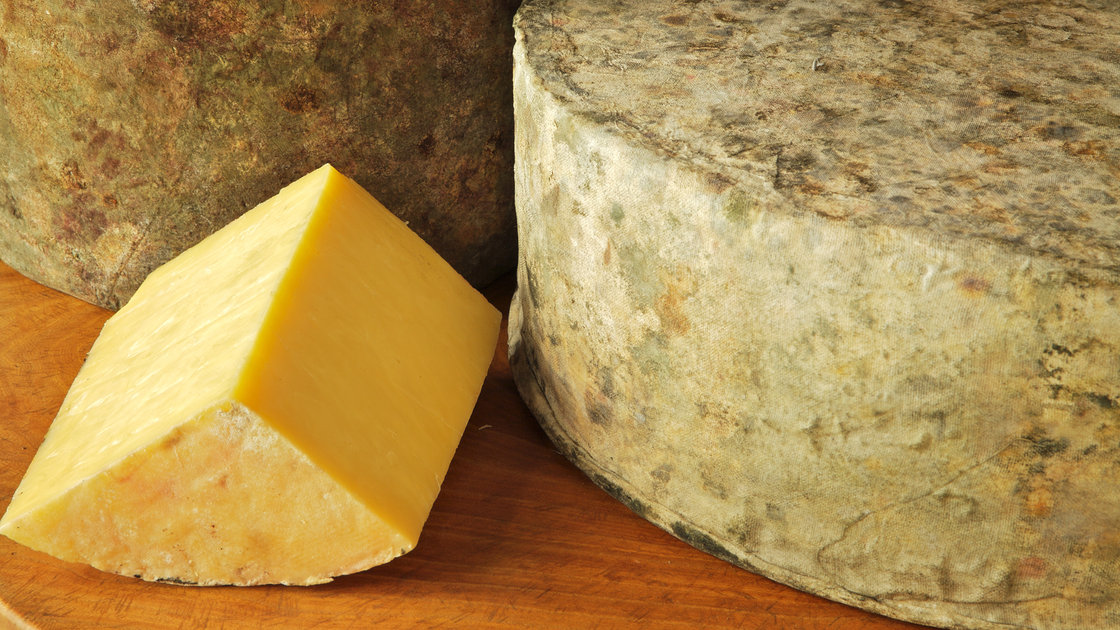
Shelburne Farms' clothbound cheddar has a bright yellow color because it's made from the milk of cows that graze on grasses high in beta-carotene. Courtesy of A. Blake Gardner

Shelburne Farms’ clothbound cheddar has a bright yellow color because it’s made from the milk of cows that graze on grasses high in beta-carotene. Courtesy of A. Blake Gardner

We have been posting on the topic of transparency in food several times each year since starting this blog, so this news/commentary podcast fits in a tradition:

The news from Kraft last week that the company is ditching two artificial dyes in some versions of its macaroni and cheese products left me with a question.

Why did we start coloring cheeses orange to begin with? Turns out there’s a curious history here. Continue reading

The Educational Mission Of A Food Entrepreneur

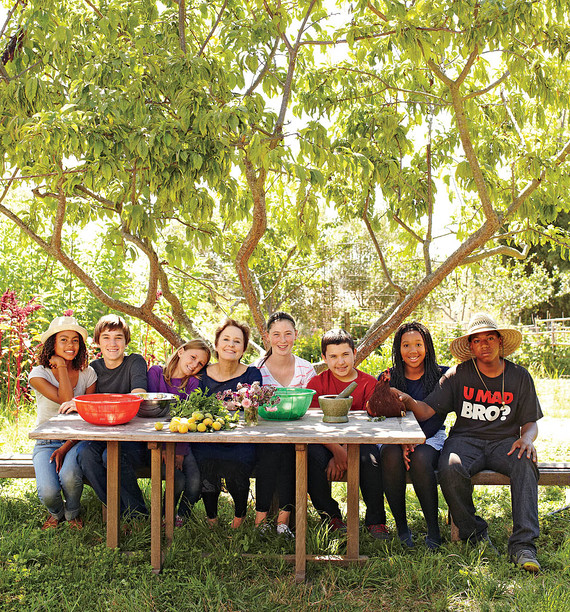
With students, under an elephant heart plum tree at the Edible Schoolyard Photography by William Abranowicz

With students, under an elephant heart plum tree at the Edible Schoolyard Photography by William Abranowicz

We never tire of listening to Alice Waters or watching for her next move. This article is ostensibly focused on an award from the Wall Street Journal, but we are most interested in the educational component of her work, which closes out the article:

AS THE EDIBLE SCHOOLYARD moves toward its third decade, Waters aims to expand its curriculum into high school programs, like at Edible Sac High, a Sacramento charter high school—housed within the second-oldest high school west of the Mississippi—where Waters’s ideals have been incorporated. Continue reading

Blogrolling Is Alive And Well


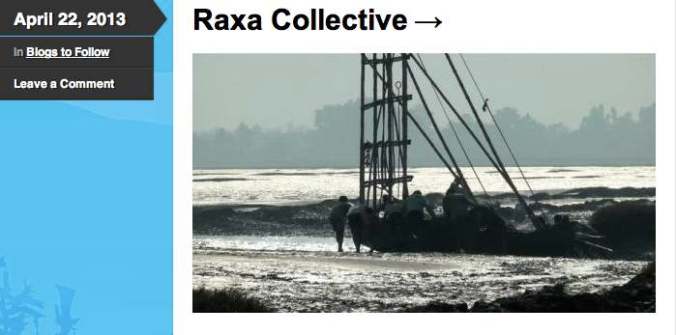
We do not stop enough to smell the roses, so to speak.  Every day someone or something, somewhere, points to someone or something here. On our blog we link out to stories we find worthy of passing along, and likewise other bloggers point back to our blog and blog posts to spread the word. This rosy moment we would like to bring your attention to the blog where this was posted with the photo above:

This is Raxa Collective, an amazing website based in India, whose mission is to connect people and groups involved in entrepreneurial conservation projects. Continue reading

Into The Mind, Come To Kerala!

Jake may be our guide into a future where surfing plays a larger role in Raxa Collective’s portfolio of experiential offerings. For now, he is going to paint his masterpiece at Pearl Beach and take things one step at a time from there. This clip is from a film we hope to premier in Kerala in the coming months. We have sent an invitation, formally, to Sherpas Cinema, and will keep you posted on whether and when this may happen:

This is a story of rising to the ultimate challenge. Having the courage to risk fatal exposure and the perseverance demanded on the quest for achievement. These are not solely physical feats, they are mental conquests. Continue reading

If You Happen To Be In New York

Screen Shot 2013-11-04 at 6.31.12 PM

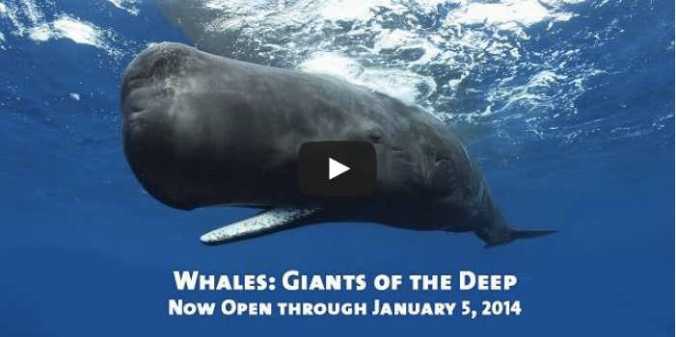
The exhibition goes well beyond that big whale you may remember in that great open space at the Museum:

Whales: Giants of the Deep explores the latest research about these marine mammals as well as the central role they have played for thousands of years in human cultures. From the traditions of New Zealand’s Maori whale riders and the Kwakwaka’wakw peoples of the Pacific Northwest to the international whaling industry and the rise of laws protecting whales from commercial hunting, the exhibition traces the close connections humans and whales have shared for centuries.  Continue reading

The Newest, Dismalest Branch Of Science

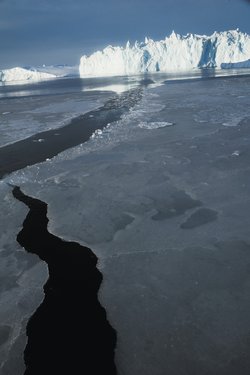
Stanley Greene/NOOR/Redux Greenland, photographed from a boat navigating the melt where dog sleds used to travel across the ice, October 2009

Stanley Greene/NOOR/Redux
Greenland, photographed from a boat navigating the melt where dog sleds used to travel across the ice, October 2009

We prefer the news about solutions to challenging problems. Preferably positive news. Preferably innovations that invoke smiles. Sometimes, dismal is the only way to move forward. Thanks to the New York Review of Books, and Paul Krugman for this review:

Forty years ago a brilliant young Yale economist named William Nordhaus published a landmark paper, “The Allocation of Energy Resources,” that opened new frontiers in economic analysis.1 Nordhaus argued that to think clearly about the economics of exhaustible resources like oil and coal, it was necessary to look far into the future, to assess their value as they become more scarce—and that this look into the future necessarily involved considering not just available resources and expected future economic growth, but likely future technologies as well. Moreover, he developed a method for incorporating all of this information—resource estimates, long-run economic forecasts, and engineers’ best guesses about the costs of future technologies—into a quantitative model of energy prices over the long term. Continue reading

Outdoor Classrooms

Christian Phillips Photography

Christian Phillips Photography

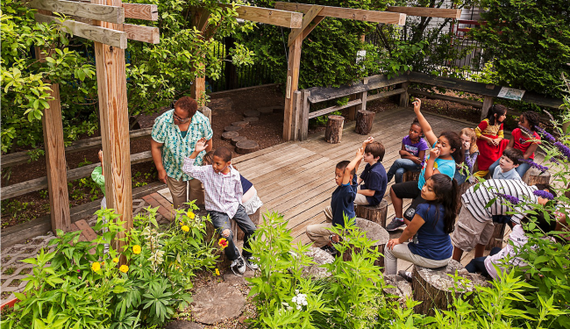
The Atlantic has always had excellent coverage of educational issues; environmental issues as well. This article melds the quality of their attention to both topical areas quite well:

‘Nature Is a Powerful Teacher’: The Educational Value of Going Outside

At more than 80 Boston public schools, teachers are moving the classroom outdoors.

Four years ago, the nurse at Boston’s Young Achievers School was overwhelmed. Previously a middle school, Young Achievers had recently become a K-8 school and there was no appropriate space for recess. Instead, according to a teacher at the school, students spent recess in “a disorganized, cracked, muddy parking lot,” where they ran between and bounced balls off of cars. Continue reading

Give Us This Day

Click the image above to go to the video, and the blog post, highlighting this couple’s approach to the entrepreneurial conservation of heritage, practically in the form of a sacrament:

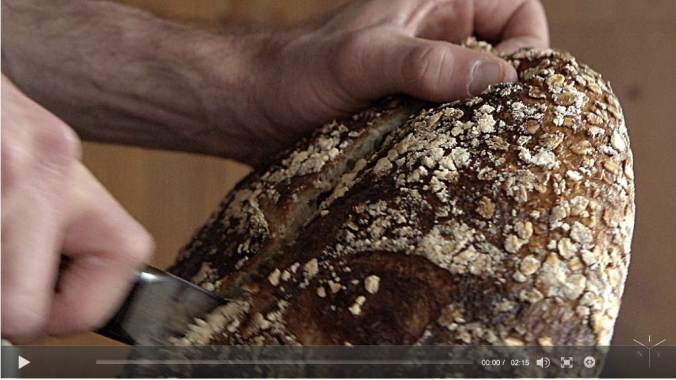
“I remember when Alice, at Chez Panisse, switched to grass-fed beef. It seemed so crazy at the time,” Chad Robertson, the co-owner of San Francisco’s Tartine Bakery, says between bouts of kneading dough. He stands at a long wooden counter toward the back of the bakery, where bins of various heights populate the shelves and floor. Inside the containers are grains of assorted colors and sizes, waiting to be sprouted or ground into flour and then transformed into hearty loaves. “Now look at grass-fed beef,” Robertson continues. “The price has dropped. It’s in the restaurants, and it’s everywhere. The same seems to be happening with these grains.” Continue reading

Thinking, Reviewed

If we had to stop scanning hundreds of news sources to support the habit we have of linking to stories that match our interests (we do not plan to stop) and read from only one source on the internet (preposterous to make a point), this site would be a good candidate. We rarely have the opportunity to link to it, because there is not much overlap with our themes of community, conservation or collaboration; but as a source of important ideas, and the occasional book review it is unbeatable:

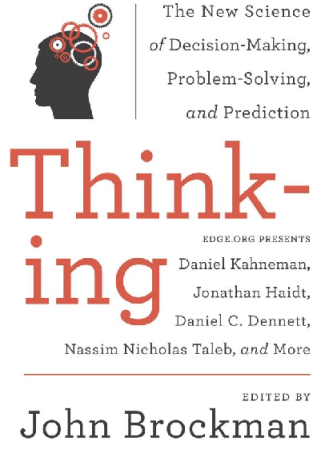
“The confidence people have in their beliefs is not a measure of the quality of evidence but of the coherence of the story that the mind has managed to construct.” Continue reading

Todd Bretl, Come To Kerala!

This slideshow requires JavaScript.

We have been linking photographers with wildlife since the inception of Raxa Collective. We believe that the more amazing photographs of nature people are exposed to, the more they will care about the need for conservation of wildlife habitat. From organizing nature photography workshops, to sharing the photographs of friends and members of our team in our outreach, we embrace the medium’s power to motivate.

While most of his photographs are underwater, and most photography we have promoted so far is not, Todd Bretl is definitely worthy of the same kind of invitation we have extended to other masters of their domain (whatever form it might take, whether the person is famous or not as famous as they should be, even surprising ones). It is not just his obvious talent, but his sense of purpose. According to the bio on his website:

Raised on a boat in Bermuda, Todd grew up with the ocean as his playground and constant companion. Continue reading

Valuing Monarch Butterflies

Image © Doug Lemke | Shutterstock

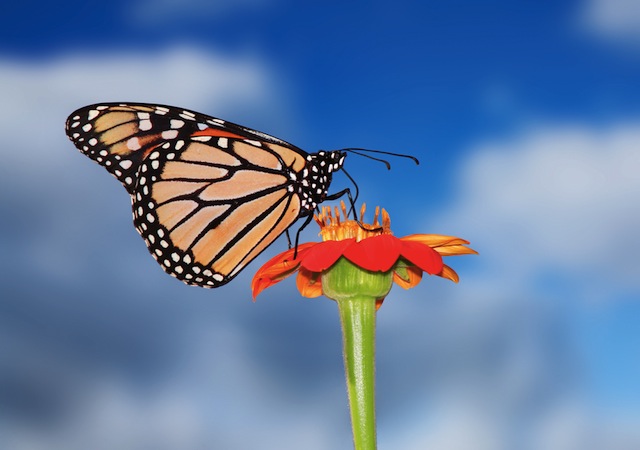
Image © Doug Lemke | Shutterstock

Thanks to the University of Washington’s Conservation magazine website for this discussion of the key question facing La Paz Group and other conservation-focused entrepreneurial firms (here focused on a particular kind of butterfly but our interest is in how people participate in conservation through travel experiences):

How much would people pay to save the iconic monarch butterfly? A lot, according to a new study in Conservation Letters. Based on survey data, the authors estimate that American households are willing to spend about $4 to 6 billion to support monarch conservation.

Even people who aren’t butterfly-lovers are likely to have heard about the monarchs’ spectacular migrations from the northern U.S. and Canada to Mexico and California. “People’s interest in monarchs and their fascinating, visible biology is obvious,” the researchers write. They note that seven states have adopted the monarch as their official insect or butterfly, and the U.S., Canada, and Mexico hold festivals in the monarch’s honor. Continue reading

Good Idea, So Go Out And Make Him Do It

After meeting with Obama, one activist felt challenged to make the case “why this pipeline is not in our country’s best interest.” Illustration by Paul Rogers.

After meeting with Obama, one activist felt challenged to make the case “why this pipeline is not in our country’s best interest.” Illustration by Paul Rogers.

Ryan Lizza, the New Yorker‘s Washington correspondent, published an article last month that explained the defining environmental of the current generation of US citizens, according to one of our heroes. The article is mostly about a wealthy, possibly powerful financier who our hero has influenced on this issue.  But it is also a good primer on the issue itself.  If you do not have time for the whole article, an even more efficient primer is this podcast interview with Lizza, late in which the activist’s challenge becomes mantra; but read the article if possible. Then, if you are a citizen of the USA, go make Obama do it:

On the day of his second Inauguration, in January, Barack Obama delivered an address of unabashed liberal ambition and promise. As recently as early April, before the realities of the world and the House of Representatives made themselves painfully evident, the President retained the confidence of a leader on the brink of enormous achievements. It seemed possible, even  Continue reading

If You Happen To Be In London

Stephen White. Dayanita Singh with her ‘Museum of Chance, 2013: Go Away Closer’ exhibition at Hayward Gallery in London, United Kingdom.

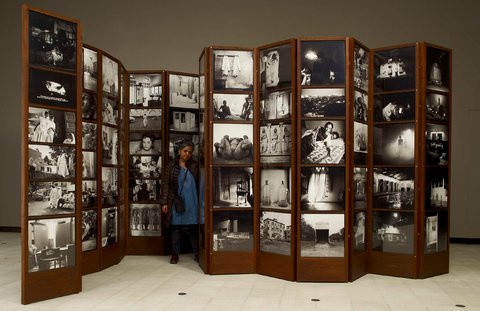
Stephen White. Dayanita Singh with her ‘Museum of Chance, 2013: Go Away Closer’ exhibition at Hayward Gallery in London, United Kingdom.

It looks like our kind of exhibition (thanks to India Ink for the reference):

During a recent visit to the Hayward Gallery in London, two vendors’ carts were parked against a wall, and a row of visitors stood with their backs to them as they read the introduction to “Go Away Closer,” unaware that the carts were part of the exhibition featuring the works of the photographer Dayanita Singh. Continue reading

Cool Season Is Upon Us In Kerala

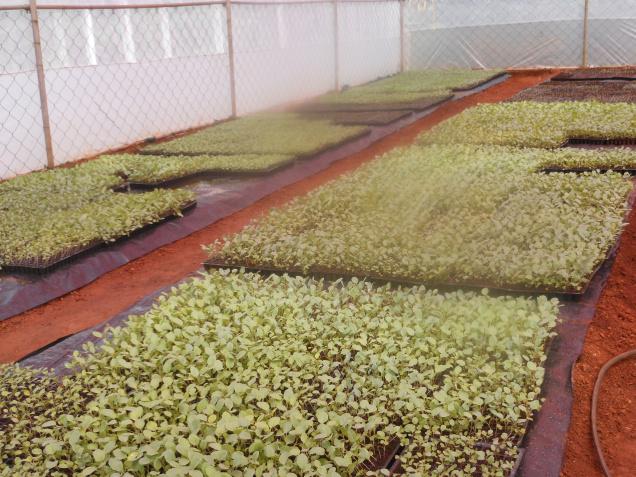
The Hindu. The cool season vegetable nursery of the Seed Processing Plant, Alathur, Palakkad under VFPCK.

The cool season vegetable nursery of the Seed Processing Plant, Alathur, Palakkad under VFPCK.

Raxa Collective has been on a mission to increase and improve the transparency of our food sourcing since 2010. Already, Cardamom County had established an organic garden and River Escapes had been engaged in local sourcing from fishermen in the backwaters. Milo was the first to suggest we add culinary quality oyster mushrooms to our organic gardens, and he set up the cultivation system there. The next leap forward was the development of Kayal Villa as a quiet retreat set on 6.5 acres of aquaculture and agriculture estate.

Next? Coolness.

‘Tis the season to plant veggies (thanks to The Hindu’s coverage of agricultural issues in Kerala):

The cool season vegetable cultivation in the plains of the district will start next week and end in February.

During the period, the Seed Processing Plant at Alathur, under the Vegetable and Fruit promotion Council, Keralam (VFPCK) will supply 10 lakh seedlings of cabbage and cauliflower to popularise cool-season cultivation using safe methods. Continue reading

Sign Of The Times

The only time(s) we link to commercials is when there is some point of interest related to our main themes, and/or if the amusement value is too good to resist. In this case, while we strongly prefer the hand made roti that many of Raxa Collective’s team members make and serve up at various properties, this appliance could be a signal that the economic progress of India has made such actions quaint history for the average local household:

Rotimatic is world’s first fully automatic roti making appliance. Continue reading

Margam Kali

Photo credits : Sindhu J

Photo credit : Sindhu J

Margam Kali is one of the traditional group dances of Kerala practiced by Syrian Christians. The dancers wear the traditional  Kerala Christian dress (white dhoti and blouse) while singing, dancing and rhythmically clapping around a lighted lamp. The dance form dates back to the 16th century during the Portuguese era, telling the story of the arrival of St. Thomas to the Malabar coast. Continue reading

Rainforests, Primary And Otherwise

Thanks to the Guardian for bringing this to our attention:

At an age when freedom passes allow pensioners to take on the challenge of clambering to the top deck of a bus, Dr Francis Hallé is more likely to be found perched at the top of a tree.

The retired professor of botany is 75 and has just completed his first film. In it he can be seen standing, without a safety rope, on a branch of a massive moabi tree 230 feet above the forest floor. Continue reading

New Biography Of Gandhi

There was an uproar, just around the time that Raxa Collective was forming, over Joseph Lelyveld’s biography of Gandhi.  Many of us were new to India then, and had not understood just how much, how deeply and in how many ways Gandhi meant more than just history to all Indians. The international news coverage seemed as surprised as some of us, but generally did what they were supposed to do in reporting. This newspaper in particular seemed as objective as possible in reporting about the impact of a book that one of its own former editors had authored. Now, another biography, and we look forward to it. Thanks to the New York Times and their India Ink news service:

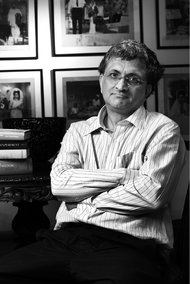
Ramachandra Guha is one of India’s foremost public intellectuals and historians. “Gandhi Before India,” his first volume of a two-part biography of Mohandas K. Gandhi, was published in India earlier this month. India Ink spoke to Mr. Guha about his decision to work on a biography of Mr. Gandhi, his choice to make Mr. Gandhi’s years in South Africa as the first volume of the biography, and Mr. Gandhi’s journey from a boy in the western state of Gujarat to his return to India as a major political figure. Continue reading