Jack London & Literature’s Role In Environmental History

Caleb Crain‘s book review of this biography will no doubt be of interest to any of our readers who follow Seth’s work on the history of environmentalism.  Subscription to the New Yorker is required, and worth it, but here is the blurb available to all prior to passing the pay wall:

Jack London never felt that he got enough meat. When he was seven, he stole a piece from a girl’s basket—an incident that he called “an epitome of my whole life.” Although his mother claimed that “he didn’t go hungry in our house!” and a childhood friend recalled being served steak during a visit, London insisted that he had been deprived. “It has been hunger,  Continue reading

Cenote, A Mesoamerican Phenomenon

Thanks to National Geographic‘s Newswatch service for bringing this story, related to SUNY Albany’s work in a part of the world still being explored, to our attention:

The Mayapán Taboo Cenote Project will undertake an extensive exploration of the underwater cave, Cenote Sac Uayum, to document 20+ submerged skeletons and artifacts. Team leader and National Geographic Grantee Bradley Russell will also investigate the modern belief that a supernatural power- a feathered serpent- guards the water within. Continue reading

2013 Wildlife Photographer of the Year

The spat: For several hours, the noisy sounds of courtship and mating were all Joe McDonald was treated to as he sat, sweltering in the hot sun, in a boat on the Three Brothers River in Brazil's Pantanal. So when the female jaguar finally emerged from the undergrowth and walked down to the river to drink, he was grateful for the photo opportunity. But that was just a start. After slaking her thirst, the female flopped down on the sand. Then the male appeared. After drinking and scent-marking, he approached the female, who was lying in what appeared to be a pose of enticement. At least, that's what both Joe and the male thought. She rose, growled and suddenly charged, slamming the male back as he reared up to avoid her outstretched claws. His own claws were sheathed. "I couldn't believe the energy and intensity of those three seconds," says Joe. The pair then disappeared into the undergrowth to resume their courtship, leaving Joe with a sense of awe and a rare, winning image. (Joe McDonald / Wildlife Photographer of the Year 2013)

The spat: For several hours, the noisy sounds of courtship and mating were all Joe McDonald was treated to as he sat, sweltering in the hot sun, in a boat on the Three Brothers River in Brazil’s Pantanal. So when the female jaguar finally emerged from the undergrowth and walked down to the river to drink, he was grateful for the photo opportunity. But that was just a start. After slaking her thirst, the female flopped down on the sand. Then the male appeared. After drinking and scent-marking, he approached the female, who was lying in what appeared to be a pose of enticement. At least, that’s what both Joe and the male thought. She rose, growled and suddenly charged, slamming the male back as he reared up to avoid her outstretched claws. His own claws were sheathed. “I couldn’t believe the energy and intensity of those three seconds,” says Joe. The pair then disappeared into the undergrowth to resume their courtship, leaving Joe with a sense of awe and a rare, winning image. (Joe McDonald / Wildlife Photographer of the Year 2013)

Thanks to Atlantic’s website for bringing this to our attention:

The Wildlife Photographer of the Year competition, founded in 1964, is an annual international showcase of the very best in nature photography. Owned by the Natural History Museum and BBC Worldwide, the contest includes 18 individual categories, ranging from birds and mammals to “Creative Visions” and “Nature in Black & White.” Continue reading

Ants, Wasps And That Nagging Question

Mr. Zimmer’s the one to finally comment on the suspicious similarities between ants and wasps, in blurb form here and in full form linked below to his New York Times column:

Growing up on a small farm, I was able to get to know the insects that lived on the property pretty well. Some I liked, and some I hated. Continue reading

Fellow Travelers

We pointed to this interview he gave some time back, in which he talks about how his company came to be, and what it has meant to him personally. We have enjoyed news stories in the last couple years covering some of his company’s innovative approaches to making their business model viral–not only so consumers are more hooked, but so that other entrepreneurs get hooked on their business model.  In our own small way we are fellow travelers, at La Paz Group, with Patagonia’s much older, established business; we hew to the same path even as our particulars could not be more different.

This letter by Patagonia’s founder provides his simple explanation of what this new initiative of the company is all about. The website’s FAQ section explains it all in a nutshell:

…What are the responsibilities of Patagonia Works as the holding company?

The Responsibilities of Patagonia Works:

  •   Nurture entrepreneurial ventures
  •   Incubate environmentally responsible companies
  •   Diversify corporate holdings
  •   Extend the reach and the influence of the brand to new markets
  •   Influence the global business paradigm
  •   Offer a new way to measure return on invested capital
  •   Provide long-term economic health with consideration of environmental and social risk
  •   Promote The Responsible Economy, Patagonia’s ongoing environmental campaign
  •   Provide best-quality shared services and allow each business to focus on product, quality, sales and customer experience

Continue reading

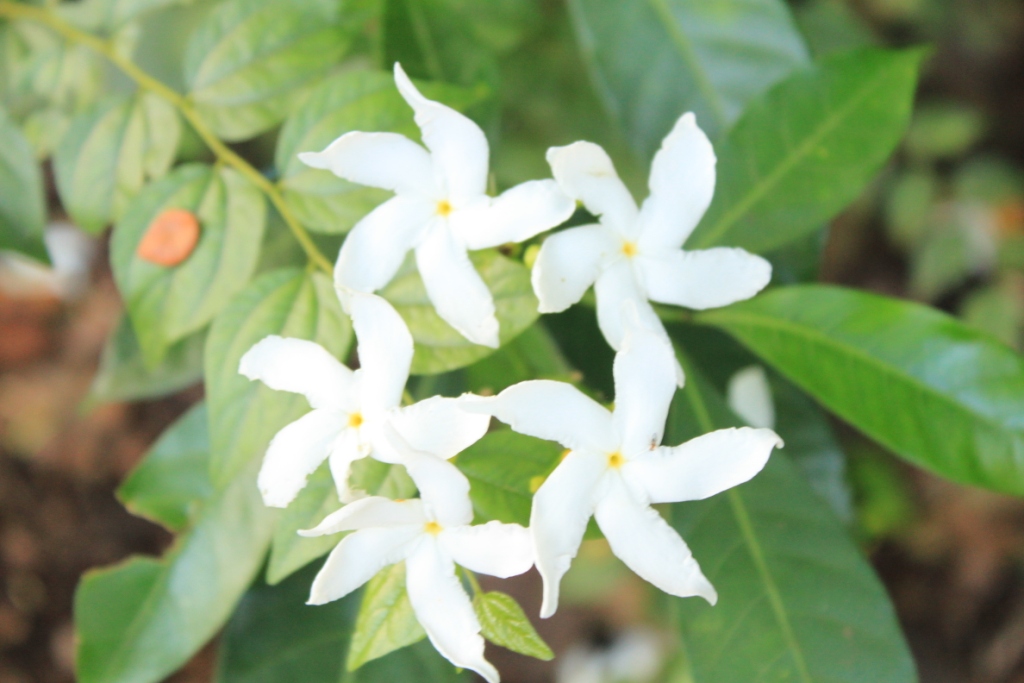
Nandyarvattam Plant

Tabernaemonta divaricata

Tabernaemonta divaricata

Nandyarvattam, also known as Crape Jasmine or East Indian Rosebay,  is an evergreen shrub is commonly found in Kerala. It can grow up to 5 to 6 feet and blooms throughout the year. Continue reading

Library, Social Enterprise, Community

Raxa Collective’s work, mostly in rural communities, brings us into contact with many organizations–public sector, private sector and hybrids–that carry out work that does not look anything like the work we do, but with some of the same objectives. Business models differ, but the mission is focused on improving the opportunity set of communities. This organization is our idea of a trifecta:

Our Model

READ Global brings together educationenterprise and community development to create lasting social change in rural communities. READ partners with rural villages to build Community Library and Resource Centers (READ Centers) that offer knowledge, information and opportunities to villagers that lack the most basic educational resources.

READ Centers are designed to serve whole communities and their surrounding areas. Resources are available for all – adults, children, students, teachers, women and even those who are illiterate.

Take a look at our new photo essay to learn more about our programs, and to see the faces and stories behind the “READ Effect”: a testament to how READ Centers serve as catalysts to uplift entire communities. Continue reading

A Camera Trap By Any Other Name

Humpback whales lunge feeding in the Inside Passage of Southeast Alaska during summer on an overcast day. Photograph by Mark Kelley, Alaska Stock Images/National Geographic Creative

Humpback whales lunge feeding in the Inside Passage of Southeast Alaska during summer on an overcast day. Photograph by Mark Kelley, Alaska Stock Images/National Geographic Creative

A sweet invention, that camera trap.  Call it what you will, but the more we capture on film, it seems, the better we understand:

Humpback whales are known for their bubble nets. In Cape Cod Bay (map), the marine mammals spend the summer blowing bubbles in circles under the water and then lunging through roiling schools of fish for a mouthful of water and sand lance, a skinny, finger-length fish.

If you watched humpbacks only from the surface, you’d think that was how they got all their food. But a team of scientists has been putting tags on the whales to snoop on them underwater. They found something surprising: Humpbacks actually spend a lot of time feeding at the bottom. (Watch video of humpback whales blowing bubble nets.) Continue reading

Algal Jazz

The radio show Living on Earth, produced by Public Radio International (thanks to their contributors and sponsors!), first carried this story about a biologist who intuited an interplay between marine microbes and jazz music.  The interview with that biologist is here, both as podcast and transcript. Thanks to the University of Washington’s Conservation magazine for bringing it back to our attention before it floated off on the horizon:

Music in the key of algae

In the age of Big Data, making sense of the information deluge is no small feat. But biologist and jazz-music fan Peter Larsen of Argonne National Lab thinks he has a powerful way to capture the complex interplay between microbial life and the physical environment: bebop music.

Larsen’s data-driven compositions are generated by observations collected at the L4 marine monitoring station, a data buoy operated by the U.K.’s Plymouth Marine Laboratory and Marine Biological Association. The buoy records weekly measurements of temperature, salinity, nutrient levels, and other parameters. In addition, researchers classify and measure the abundance of zooplankton and phytoplankton from samples collected at the site. Continue reading

A 3-Way Intersection As Puzzle: Property Rights, Community Rights, Conservation

We will leave surfing topics to the resident expert, Jake. But this short documentary poses a conundrum that, while we instinctively side with the surfers, challenges us as stewards of property on India’s coast line. We want everyone to have access to the beach, but we want to prevent the kind of “tragedy of the commons” that is evident when no one has clear responsibility and authority for stewardship.

As we prepare to open Pearl Beach in a few months on a pristine section of Kerala’s coast, we have taken an approach that minimizes our footprint on the land while allowing us to do what we do, hosting guests from around the world, giving them an authentic taste of local nature and culture, and channeling the profits to conservation.

Continue reading

Reading, Libraries & Good Citizenship

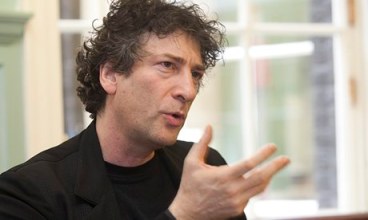
'We have an obligation to imagine' … Neil Gaiman gives The Reading Agency annual lecture on the future of reading and libraries. Photograph: Robin Mayes

‘We have an obligation to imagine’ … Neil Gaiman gives The Reading Agency annual lecture on the future of reading and libraries. Photograph: Robin Mayes

Libraries still have enough friends that we do not yet count them out, but the challenges they face are undeniable. Thanks to the Guardian‘s coverage of one prominent writer’s address on this important topic:

Neil Gaiman: Why our future depends on libraries, reading and daydreaming

A lecture explaining why using our imaginations, and providing for others to use theirs, is an obligation for all citizens

It’s important for people to tell you what side they are on and why, and whether they might be biased. A declaration of members’ interests, of a sort. So, I am going to be talking to you about reading. I’m going to tell you that libraries are important. I’m going to suggest that reading fiction, that reading for pleasure, is one of the most important things one can do. I’m going to make an impassioned plea for people to understand what libraries and librarians are, and to preserve both of these things. Continue reading

High Tide in New York City

This slideshow requires JavaScript.

(all photos ©Ken Brown)
In India, as with the rest of the world, sometimes life gets the best of us and we miss out on the cyclical events that have marked time for millennia. Once again we have Ken Brown to thank for both bringing this event to our attention and documenting it so well.
I know it sounds like something from the Discovery Channel, but a truly remarkable event takes place each year when a 460 million year mating ritual is enacted on the beaches of New York City during a full moon high tide. Continue reading

Parents, Kids, Travel

Whether it is to India or somewhere less far afield geographically, culturally, culinarily this advisory essay is well taken:
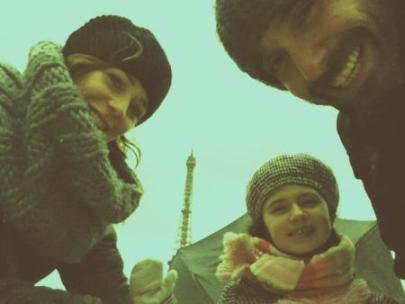
Taking a child out of the country is no small feat. Heck, taking a child to grandma’s house for the holidays can be exhausting! Not only is it important to prepare logistically for your trip—plane tickets, passports, itineraries, etc.—it is important to prepare your child emotionally, physically, and awesomely. Your mini-me is about to become a citizen of the world, and you are already nailing it.

Shark Basks In Glow Of Recovery

Mystery creature: basking sharks are increasingly seen in British waters during the summer, but little is known about where they go in the winter. Photograph: Alex Mustard

Mystery creature: basking sharks are increasingly seen in British waters during the summer, but little is known about where they go in the winter. Photograph: Alex Mustard

Not everyone will be uniformly happy, perhaps, but we count ourselves happier upon seeing this news:

This summer, on the western edges of Britain and Ireland, was a time of gentle monsters: great black fins parading sedately off the beaches, leviathans floating in warm sea as docile as Granddad on a lilo. From Cornwall to Donegal, local papers ran stories of swimmers’ and kayakers’ encounters with sharks “Bigger than Jaws!” “The size of a bus!” But most of the reports went on to say that the fish – which can indeed grow to 11m, a double-decker’s length – were strangely blasé about the panicky, flapping humans. In fact, they didn’t seem interested at all. Continue reading

Photographer + Professor + Himalayas = Collaborative Book

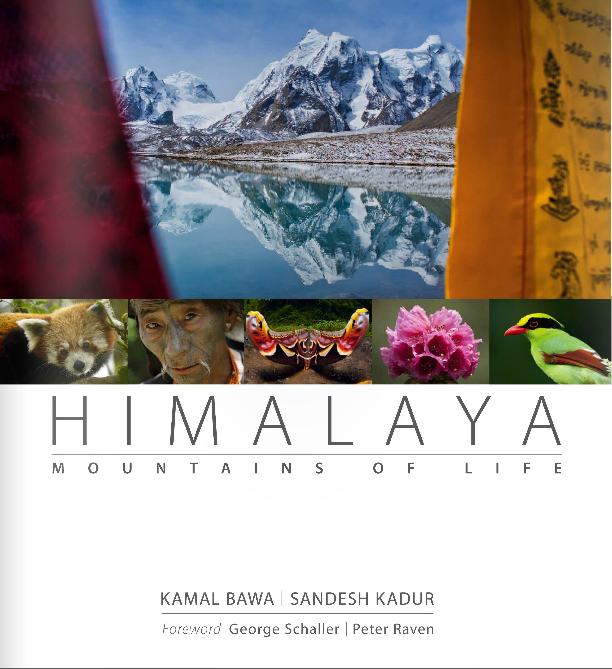
The blurb is enough to get our attention, but the images on the book’s website (click the image above to see) make the journey palpable:

The Eastern Himalaya—land of Gods, of ancient mountain kingdoms, of icy peaks and alpine meadows—is like no other place on Earth. The life and landscapes of the region are as diverse, spectacular and fragile as the mountains themselves. Even today, these mountains hold many mysteries: unnamed species, primeval cultures and the promise of magical cures to heal all of humanity. Himalaya—Mountains of Life takes us on a journey of biocultural discovery, from the great canyon of Yarlung Tsangpo and the Siang Gorge in the east to the Kali Gandaki Gorge in the west. Along the way, Himalaya demonstrates through breathtaking imagery and words, why the preservation of this heritage is so important—not just for us, but for the future of all life on Earth. Continue reading

If You Happen To Be In Middlebury (Vermont, USA)

Mostly, when we have been thinking of Middlebury lately, it has been in relation to the College there, and one of its favorite sons.  But there are plenty of other reasons for a visit:

InSite is a home for local living. Our design was inspired by our hometown of Middlebury, VT where the community is friendly, approachable, and engaging. Team Middlebury believes that towns such as ours can contribute to social, economic, and environmental sustainability. Continue reading

If You Happen To Be In Sydney

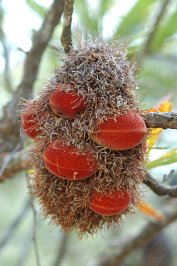
Fruit of Banksia aemula

Fruit of Banksia aemula

Tomorrow, at long last, the latest greatest seed bank in the world is opening:

The Australian PlantBank

The Australian PlantBank is a science and research facility of the Royal Botanic Gardens and Domain Trust and is located at the Australian Botanic Garden, Mount Annan. It houses the Trust’s seedbank and research laboratories that specialise in horticultural research and conservation of Australian native plant species, particularly those from New South Wales.

Visiting PlantBank

The Australian PlantBank opens to the public on Saturday 12 October, 12 noon to 4 pm.

Continue reading

Rice Flour Murukku

Praveen Kumar

Murukku is a crunchy tea time snack traditionally served in Kerala homes and tea stalls. The main ingredient for murukku is rice flour, with cumin and red chili powder added for flavour and asafetida for added colour.

Library, Guardian Of Spiritual Treasure

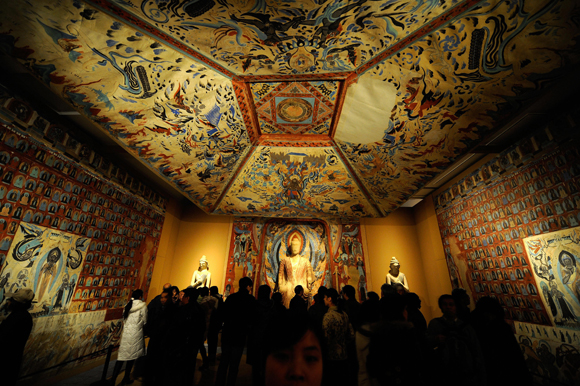
Visitors visit a replica parts of the Mogao Cave during the Dunhuang Art Exhibition in Beijing on February 20, 2008.  The exhibition displays collections mostly from the Dunhuang Grottoes which were constructed between the 4th and the 14th century, including recovered antres, original painted sculptures and their replicas from Library Cave of Dunhuang. Dunhuang, located in Jiuquan of Northwest China's Gansu province along the historic Silk Road, is in danger of being swallowed by sands of the adjacent Kumtag desert, which are creeping closer at a rate of up to four metres (13 feet) a year. (Photo credit TEH ENG KOON/AFP/Getty Images)

Visitors visit a replica parts of the Mogao Cave during the Dunhuang Art Exhibition in Beijing on February 20, 2008. The exhibition displays collections mostly from the Dunhuang Grottoes which were constructed between the 4th and the 14th century, including recovered antres, original painted sculptures and their replicas from Library Cave of Dunhuang. Dunhuang, located in Jiuquan of Northwest China’s Gansu province along the historic Silk Road, is in danger of being swallowed by sands of the adjacent Kumtag desert, which are creeping closer at a rate of up to four metres (13 feet) a year. (Photo credit TEH ENG KOON/AFP/Getty Images)

We tend to avoid topics pertaining to religion, spirituality or related highly personal matters that sometimes can lead to misunderstandings, misapprehensions, or worse; but our love of libraries, of archives, of discoveries are all satisfied in one fell swoop of a blog post, and we are particularly impressed to learn that Gutenberg may not be the only key to understanding the history of printing:

Just over a thousand years ago, someone sealed up a chamber in a cave outside the oasis town of Dunhuang, on the edge of the Gobi Desert in western China. The chamber was filled with more than five hundred cubic feet of bundled manuscripts. They sat there, hidden, for the next nine hundred years. When the room, which came to be known as the Dunhuang Library, was finally opened in 1900, it was hailed as one of the great archaeological discoveries of the twentieth century, on par with Tutankhamun’s tomb and the Dead Sea Scrolls. Continue reading