Food Futures

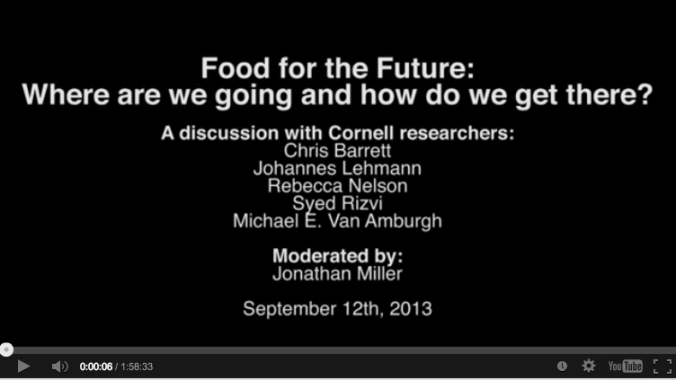
No one would mistake this for entertainment.  It is two hours of research findings, all wrestling over complex food issues. No gastronomic delights. Rather, the puzzle over how to feed a rapidly multiplying human population.  Click the screen above to go to the video:

By 2050, 2 billion more people are expected to be vying for food and energy. Access to fresh water and arable land will be heavily constrained. And the food supply for the world’s 9 billion people will be increasingly produced under flood conditions, drought or both, as climate change accelerates. Continue reading

The Big Thaw

2009 Jökulsárlón, Iceland. Destined to melt, an 800-pound chunk of ice glows in moonlight, from the National Geographic story “Meltdown.”

2009 Jökulsárlón, Iceland. Destined to melt, an 800-pound chunk of ice glows in moonlight, from the National Geographic story “Meltdown.”

On our pages we like to narrate stories, sometimes stories that people would rather not hear. If a “picture is worth a thousand words” then James Balog’s images for National Geographic tell a poignant narrative.

The pictorial language has the unique ability to penetrate the human heart and mind and photography has the power to alter the course of civilization through perception. My main subject has been the collision between human needs and nature, it’s always seemed to me that’s one of the pivotal issues of our moment in history Continue reading

Orangutans Will Appreciate Your Support

The well-known supporters of World Land Trust make a strong case for all of us to to our part during this upcoming campaign:

Big Match Fortnight

Date and Time: 2 – 16 October 2013

Big Match Fortnight is World Land Trust‘s (WLT) major fundraising effort for 2013. During the fortnight all donations to WLT will be matched making them go further.  Continue reading

Naivedyam – Kadum Payasam

Photo credits : Ranjith

Photo credits: Ranjith

Naivedyam (Kadum Payasam) is offered on banana leaves after a pooja ceremony at many South Indian temples. The traditional dessert is placed before the temple deity and consumed as a holy offering. Continue reading

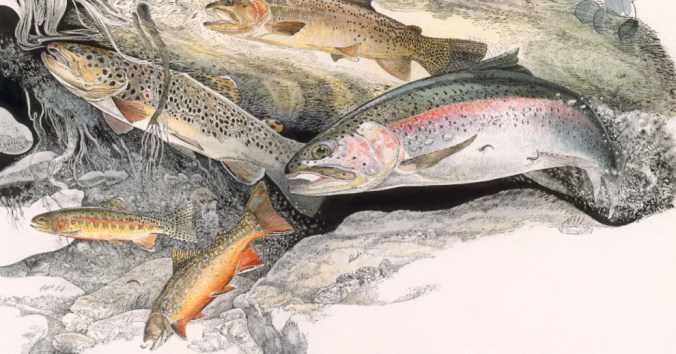
Extinction Reversal

When Phil first mentioned the series he would share here, the fit could not have been more perfect. It was based on his own experience as a diver; on his own informed understanding of environmental challenges at once universal and personal (as a diver, he has witnessed changes that disturb him); on his role as a citizen science participant; and on his belief in entrepreneurial conservation as a solution to some otherwise intractable challenges.

We prefer the first person here, but also share as much as we can of what science has to say on these subjects through our reliable cadre of science journalists. Carl Zimmer, over at National Geographic‘s Phenomena site, writes about genetically engineering in the wild, which raises important, obvious and not so obvious ethical issues:

Back in April, I wrote in National Geographic about the provocative idea of bringing extinct species back to life. In the five months that have passed since then, I haven’t spotted any mammoths or saber-tooth lions drifting through my front yard. If “de-extinction” ever does become real, it won’t for quite a while.

What I have seen over the past five months is a new conversation. Part of the conversation has revolved around the specifics of de-extinction. Some people are open to the possibilities of rebuilding genomes and embryos of vanished species. Some people find it a flashy distraction from the real work of fighting the current wave of extinctions. Continue reading

How To Get To And From Kerala

As FAQs go, the one we answer most often at Raxa Collective is: what is the best way for me to get to Kerala? As answers go, we could not do better than refer you directly to the video above and for that we give thanks to our colleagues at Kerala Tourism.  Try not to smile every time the narrator says the name of the capital city…

Kamal Mahal – Hampi, Karnataka

Photo credit : Ramesh Kidangoor

Photo credit: Ramesh Kidangoor

Hampi is a World Heritage Site village located on the southern bank of the river Tungabhadra in Karnataka. Kamal Mahal is one of Hampi’s secular or non-religious structures  Its unusual design blends elements of Muslim and Hindu architecture. The building’s function is not exactly known but the quarters are believed to have been used by Hampi’s female guards.

Speaking Of Science Journalism

“This is our artificial sun,” Joel Ager said, as he gestured with mock grandeur toward a metal box about the size of an old computer tower. A glowing lens, which looked like it was transplanted from a projector, shined out of a hole in its side. It was aimed at a beaker filled with water sitting a few inches away. Ager’s colleague produced a metallic toothpick-sized stick, alligator-clipped it to electrodes, and dunked it. Under the light, the submerged stick became a luminous red.

And this is Annalee Newitz, Andrew Revkin said, as he got on with down-to-earth reporting at his Dot Earth blog.  She writes clearly. She looks funny (as in, she has a sense of humor, which is equally clear from her writing). This is Annalee Newitz in her own words.
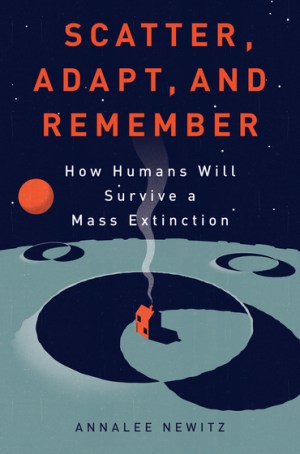
And this is Annalee Newitz, in her own words, on the topic of the end of the world as we know it (click the image above, or here, to go to the full version of her recent post on the New Yorker website) in her new book:

This speculative and hopeful work of popular science focuses our attention on humanity’s long history of dodging the bullet of extinction—and suggests practical ways to keep doing it. From bacteria labs in St. Louis to ancient underground cities in central Turkey, we discover the keys to long-term survival. This book leads us away from apocalyptic thinking, into a future where we live to build a better world.

Science reporting is an art as much as it is anything else. Facts are an essential ingredient (along with humor and others) in our daily doses of information-sharing.
Science Journalism And The Dynamics Of Democratizing Commentary

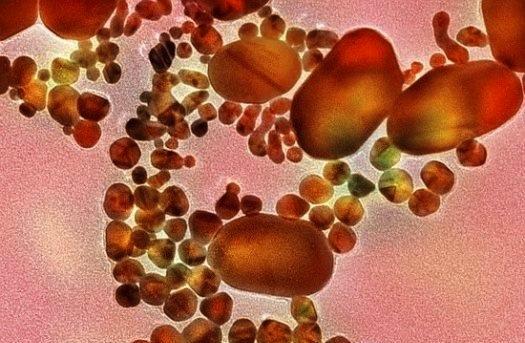
Wellcome Images

Wellcome Images

Lovely, thoughtful, radical stuff happening over at this old school publication as it navigates the new world of social media (click the image above to go to the source):

Comments can be bad for science. That’s why, here at PopularScience.com, we’re shutting them off.

It wasn’t a decision we made lightly. As the news arm of a 141-year-old science and technology magazine, we are as committed to fostering lively, intellectual debate as we are to spreading the word of science far and wide. The problem is when trolls and spambots overwhelm the former, diminishing our ability to do the latter. Continue reading

Little Wonder

Thanks to the Science section folks at the New York Times, who have added to an already excellent Tuesday paper section with lots of excellent online resources such as this (click the image to the left to go to the video):

SCIENCE

ScienceTake: A Frog’s Secret to Sticking

Nature is full of animals with amazing abilities that scientists are trying to understand, and the torrent frog is one of them. True to its name, it lives stuck to waterfalls.

Resurgence Research

European bison (Bison bonasus) Bialowieza forest, Poland, Poland

European bison (Bison bonasus) Bialowieza forest, Poland, Poland

I am just now downloading the study (link is below), so have not read it in detail yet; but it looks promising:

Wildlife Comeback in Europe study released

The Eurasian beaver, European bison and White-tailed eagle have all been highlighted as species that have made a remarkable comeback in Europe over the past 50 years, according to a first ever in-depth report released today (26 September).

Scientists from the Zoological Society of London (ZSL), BirdLife International and the European Bird Census Council (EBCC) worked with experts from across Europe to gather relevant data about the distribution and abundance of selected species. The resulting report, ‘Wildlife Comeback in Europe’, describes how, why and where 37 mammal and bird species have recovered over the past 50 years, providing important lessons for the conservation of these and other species.

Professor Jonathan Baillie, ZSL’s Director of Conservation says: “It is essential that we both celebrate and learn from major successes in conservation.  This study helps us understand the interventions and conditions necessary for a broad range of species to experience similar recoveries.” Continue reading

Cats And Dogs And The Golden Rule


This slideshow requires JavaScript.

When we posted about a unusual collaboration between cheetahs and shepherd dogs, we started watching for more news on the same.  This website tells a different story about feline-canine common interests, with a clear reminder about the human interest in behaving more empathetically toward our neighbors:

CHEETAH AND AFRICAN WILD DOGS NEED LOTS OF SPACE: Of all the large carnivores of Africa cheetahs and wild dogs need lots of space. Recognition of this led to the RANGE WIDE CONSERVATION PLANNING PROCESS bringing together all sectors of society to develop frameworks under which all stakeholders – government, community and private – can work together to ensure the survival of these iconic species. Use this website to learn more about this innovative approach, the distribution of the two species, who is working to help them and what is being done on the ground. Continue reading

Hoteliers, Collective Action, And Outcomes As Yet Unwritten

CheHotelUnion

Raxa Collective has a commitment to the locations in which we operate our hotels, resorts and houseboats: we strongly prefer to hire, train and employ local community members.  Recently this sign has been visible in Thekkady, near Cardamom County.  It is meant to attract hotel workers to join the union representing the hospitality labor force across the state, and hangs in front of one of that union’s offices.  Without any irony or sarcasm, this photo was snapped by one of our contributors to stimulate conversation among several other contributors. Continue reading

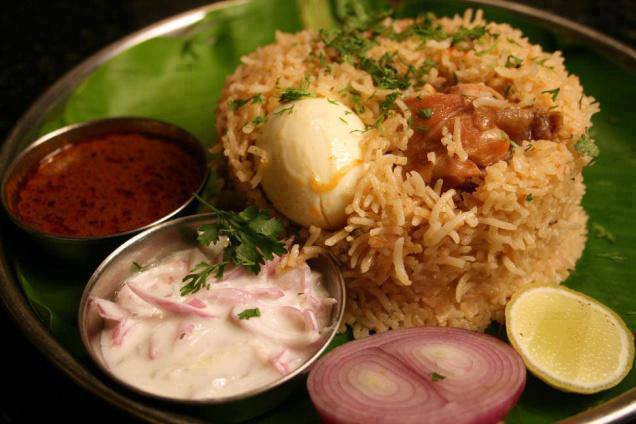
Flavours Of Kerala – Dum Biryani

Dum biryani

Dum biryani

Dum biryani is a baked rice dish layered with meat (chicken, mutton or beef ) that first originated in the Mugal cuisine of the 16 th -19 th centuries. It was a festive dish, costly to prepare and eaten mainly in the royal courts. Traditionally the biryani pots were sealed with dough before baking then cracked open at the table in a technique called Dum. Continue reading

Popularity Contests Some Will Never Win

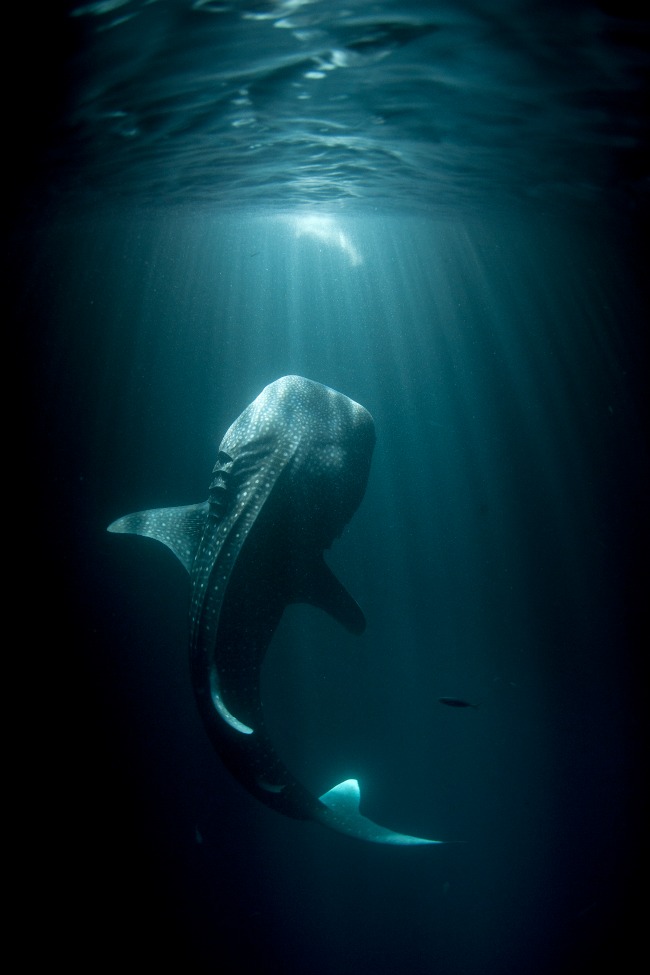
05SharksPeople@Thomas P. Peschak

Whale shark. (Thomas Peschak / University of Chicago Press)

We note from time to time the tallies of our most popular posts and writers. Seth still has the record for “most instantaneously viral” with Volcano Sandboarding (3,000+ views in the first couple days after it was posted); Tim’s Carbon Emissions Series: Vacationers’ Diets is by far the most viewed with nearly 9,000 readers to date; Salim is by far the most widely read of our contributors, just having passed the 50,000 mark for views of his daily series on the natural and cultural heritage of south India (Thiruvathira Kali (Traditional dance of Kerala) being the most popular with nearly 3,000 views).

Phil’s most recent post has been a runaway hit, and rapidly approaching 1,000 views within a couple weeks it is on pace to put him in the ranks of our most popular contributors.  So when we saw the photo above, we thought of Phil’s series with the hope he contributes another post soon. Dr. Tenner’s book review, from which that photo comes, provides an essential reminder of facts, as well as visual testament to the beauties and tragedies associated with sharks, to counter whatever perverse attention those Shark Week shows purvey:

…Thomas Peschak makes an eloquent visual case for the sublimity of sharks—and also for their conservation. He notes that the media still devotes far more attention to rare shark attacks than to the urgent need to protect them from human depredation, especially the shark fin trade. He might have noted that Peter Benchley, who became wealthy through the 1970s novel and film Jaws, regretted the fear he had sown and became a shark advocate. In the long run, though, China’s removal of Mao Tse-Tung’s ban on shark fin soup as bourgeois decadence in 1987 may have resulted in more shark slaughter than all the horror books, films, and news items together. Great conservation photography like Peschak’s, one must hope, will have the power to change attitudes globally…

Continue reading

Localism, Activism And The Future Of Retail In The Bay Area

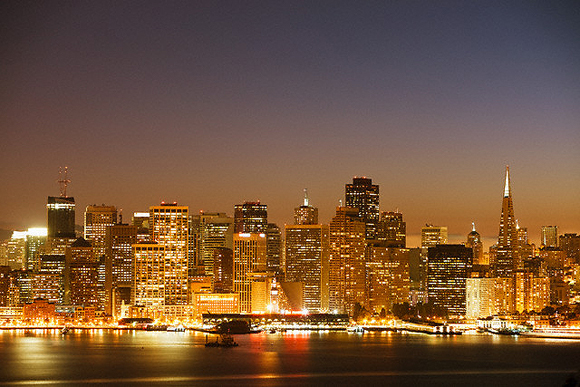
San Francisco, California, USA --- A view of the city lights of San Francisco, just after dusk, from Yerba Buena Island. --- Image by © Ed Darack/Science Faction/Corbis

San Francisco, California, USA — A view of the city lights of San Francisco, just after dusk, from Yerba Buena Island. — Image by © Ed Darack/Science Faction/Corbis

An important word on localism and activism, combined, in a post on the New Yorker‘s website about a San Francisco effort to support local retailers and resist formula retailers:

Jefferson McCarley, a forty-two-year-old San Francisco resident, used to work at Gap’s headquarters, coördinating the logistics of moving merchandise to the shelves of Gap and Old Navy stores. Like the city itself, he has a knack for reinvention. He told me that when Gap laid him off during the recession, he became the general manager of a sleek independent bike shop in the city’s Mission District. Soon, he was voted vice-president of the local merchants association, and joined a group of mom-and-pop-business owners called Keep Valencia Local, which works to stop chain stores from opening locations on the street of that name. Back in 2009, merchants on Valencia Street had helped to kill American Apparel’s bid to move in. Continue reading

Education, Social Entrepreneurship, And The Next Wave Of Innovation

Entrepreneur Offers India’s Aboriginal Children Opportunity to Attend School

From the transcript of a segment on a PBS (USA public television) program some months back (click above to go to the video) that gets us thinking about our outreach programs in south India:

FRED DE SAM LAZARO: Here, education begins with meeting the most basic needs on an industrial scale and free of charge to the students.

ACHYUTA SAMANTA: Now they’re going for lunch.

FRED DE SAM LAZARO: How many students?

ACHYUTA SAMANTA: It is approximately now 8,000-plus are going for lunch. Continue reading

A Hero’s Welcome On Familiar Ground

Stephanie Mitchell/Harvard Staff Photographer. “My goal is to bring at least some of you out of retirement and into a life of climate-change activism,” said Bill McKibben, who delivered the annual Robert C. Cobb Sr. Memorial Lecture, sponsored by the Harvard Institute for Learning in Retirement.

This article, about one of the activists we have favored in past posts more than once, is worth a spark to the imagination about the power that could be unleashed if he has captured the attention of his fellow alumni:

If you Google “Bill,” the first hit you get is the phrase “Bill me later.” It’s an accidental tribute to the writer-turned-activist whom everyone calls by his first name: Bill McKibben ’82, who spoke at Harvard Tuesday.

McKibben’s message for years has been that oil-based economies shelve the issue of the environmental costs of fossil fuels. When it comes to the natural systems that support humanity — clean air, fresh water, and pristine seas — the message from developing countries has been: Bill me later.

Well, the bill is due, McKibben said, and it may be too late to pay. Seas are rising, temperatures climbing, storms intensifying, and floods and droughts worsening because of fossil fuel emissions, a statement with a 95 percent chance of certainty, according to the Intergovernmental Panel on Climate Change, up from 66 percent in 2001. Continue reading

Blackbucks Back

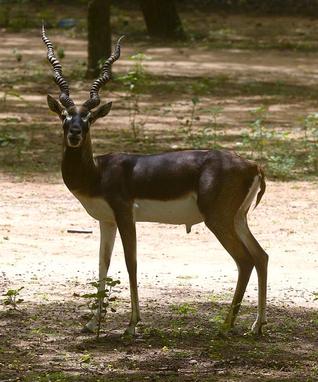
The blackbuck was made the flagship species on the IIT-M campus. Photo: K.V. Srinivasan. The Hindu

We commend the work of IIT-M, and thank the Hindu for its occasional coverage of conservation’s small but important victories:

…R.J. Ranjit Daniels of Chennai-based CareEarth, a biodiversity research organisation, said during 2006 there were reports of dwindling blackbuck population on the IIT-M campus. At that time, the population was recorded to be 12. Following this, the IIT authorities entrusted the work of documenting the biodiversity on the premises to CareEarth.

A team of trained biologists was roped in for the work and it identified the precise number of blackbucks, both male and female. The team also mapped the critical blackbuck habitat on the premises. Continue reading

Photography, History, Destiny

There is more than one photography-history-literary continuum buff out there for whom this link-post is intended. One is our erstwhile contributor of great photographic compositions and written reflections on his own photographs; as Milo heads west, he heads toward history. His family history, at minimum. His Inman predecessors first headed west centuries back when Kansas was the great frontier. But this guy is always looking forward while his brother puts some perspective on it all, taking a closer look through the rearview mirror.

Milo follows in the footsteps of several generations of painters, photographers and printmakers in his family who all headed west.  One of them, in San Francisco now, has even shown an affinity for Civil War era photography of the type reflected on in this article on the Atlantic‘s website, so we shout this one out to Milo, Seth and Paul in particular:

Let’s play a short, highly contrived game, called called “Smile or Grimace?”

Here’s Major General Samuel P. Heintzelman, an officer of the Federal Army, photographed during the war:

Library of Congress

Library of Congress

Continue reading