Poet, Publisher, Arboreal Millionaire

Dennis Publishing staff planting native broadleaf saplings for The Heart of England Forest project that has planted one million trees, Warwickshire. Photograph: The Heart of England Fores

Dennis Publishing staff planting native broadleaf saplings for The Heart of England Forest project that has planted one million trees, Warwickshire. Photograph: The Heart of England Fores

We like, therefore we link:

A scheme by one of Britain’s most successful entrepreneurs to reforest the heart of England planted its millionth tree.

Poet and publisher Felix Dennis said he was proud to have planted the first 10% of his ambitious vision. “I’m hoping that long after I’m dead that the charity I founded will one day be the proud possessor of 25,000 acres of woodland planted with 10 million native broadleafed trees, completely open to the public,” he said. Continue reading

An Early Great, Revealed


This slideshow requires JavaScript.

At first glance, it might seem to be a group of photos from the box of one of those street vendors in Paris. Not so, as Luc Sante points out in the New York Review of Books:

Charles Marville is best known for his government commission to photograph the neighborhoods of Paris slated for demolition during Baron Haussmann’s reconfiguration of the city between 1853 and 1870. In fact, that is virtually all he has been known for, a matter the authors of Charles Marville: Photographer of Paris are eager to rectify. Continue reading

Malampuzha Dam – Kerala

Malampuzha Dam

Malampuzha Dam

The biggest irrigation reservoir in Kerala, Malampuzha Dam, is located in the Palakkad district. Beautiful gardens, an amusement park and a rock garden surround the lake, made even more picturesque with the Western Ghats as the background.

Continue reading

Franzen’s Dilemma

Photo by Kaveh Kazemi/Getty Images

Photo by Kaveh Kazemi/Getty Images

It is going to be our generation’s contribution to the colloquial cliche; equivalent to Catch 22.  Maria Bustillos makes the best case, in the fewest and least heavy words. for a great writer to change his mind. She is compelling. But he is an activist for a good cause, so we must be in his corner, even if it is just wiping the sweat:

Jonathan Franzen has a real gift for getting people into a tizzy. This time, the fracas was occasioned by a September 13th essay he wrote for the Guardian (“What’s Wrong With the Modern World”) excoriating our “media-saturated, technology-crazed, apocalypse-haunted historical moment” and lauding the early-twentieth-century Viennese satirist Karl Kraus, whose essays Franzen reveres, as a prophet for our own times. Though the essay’s specific criticisms are so familiar as to be unremarkable—he writes that Salman Rushdie “ought to have known better” than to “succumb” to Twitter, and rages against Amazon’s depredations of the book trade and the various hegemonies of Apple—in the few days since its publication, the author has been accused of irrelevance and cane-shaking, his sex life and his digestion have been impugned, and Rushdie told him to “enjoy [his] ivory tower”; he’s been called “an old windbag,” “a whingeing miseryguts,” and a “Chardonnay bore,” and has been generally dragged through the digital mud. Continue reading

Fish Or No Fish, Take Stock

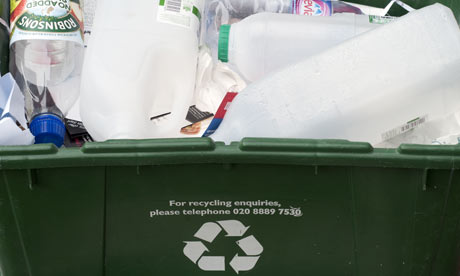
When asked why they recycled, 89% of people in 2010 identified the danger of climate change as a motivator. Photograph: Alex Segre/Rex Features

Thank you, Sarah:

As a member of the science and technology select committee I am delighted to have secured and be participating in an inquiry into public understanding of climate change.

As we have interviewed expert witnesses and considered a range of written evidence, one thing has struck me in particular. While there is an ongoing public discussion on climate change that needs more scientific input and greater participation, a clear development in recent years has been the rise in the numbers of people prepared to do something about climate change. Continue reading

Emerging Photographers , Subscribe

This slideshow requires JavaScript.

We have been experiencing an acceleration in the growth rate of our admiration for the New Yorker‘s embrace of its digital future. We believe this erstwhile magazine is worth a subscription. We have nothing to gain by saying so other than the theoretical possibility that more subscribers and visitors to their site makes their recent innovations and improvements more worthy of more such experimentation. Such is our social media obligation: to point out to our friends what we take note of. Earlier this month we noticed this and neglected to share, but we correct that now:

As part of our ongoing Emerging Photographers series, today we’re highlighting the work of Sara Cwynar, a Vancouver native who lives and works in Brooklyn. I have been following her work for a while, and was drawn in particular to the monochromatic “Color Studies” as well as the series “Accidental Archives”—both of which drew on a confluence of literature, kitsch, and photographic tropes, which she cites as inspirations. Most recently, Cwynar has been preparing for her solo show, opening this week, at the Cooper Cole Gallery in Toronto, where she will début a new collection of photographs called “Flat Death” (a reference to Roland Barthes). I caught up with Cwynar to find out more about the exhibition and her latest work. Continue reading

Fish Stock

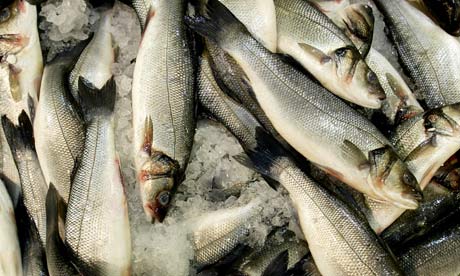
A display of Sea bass for sale at Billingsgate Fish Market in London. Photograph: Scott Barbour/Getty Images


Seth got us started with historical perspective on this topic a couple years back, and Phil recently created the most popular series of posts of the year, also on this topic; we have even tried sharing a sense of humor when possible.  But grim tidings continue:

First it was the cod, then the haddock, the swordfish and even the anchovy – now sea bass looks likely to join the list of no-nos for eco-conscious dinner party menus.

Stocks of the palatable species have sunk to their lowest in the past 20 years, according to a new assessment by the International Council for the Exploration of the Seas. Continue reading

Urban Pollination Studied By Seattle’s Citizen Scientists

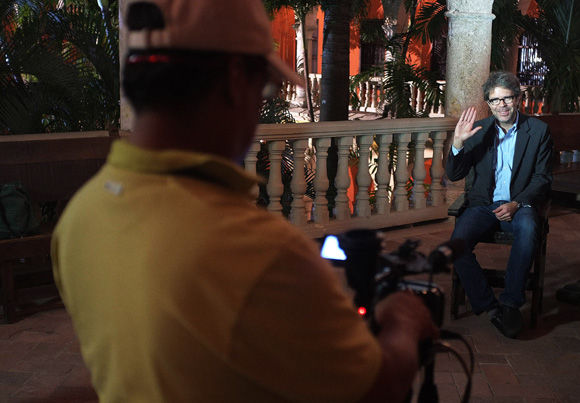
Thanks to this coverage commitment we came across the video above and this accompanying explanation:

…Marie Clifford and Susan Waters, graduate researchers at the University of Washington in Seattle, have found a way to get around scarce research funding: citizen scientists. The Urban Pollination Project (UPP), co-founded in 2011, takes Seattle community gardeners and trains them to collect data on local bees. Tapping into citizen scientist efforts, Clifford and Waters can gather data from 35 Seattle community gardens – a scale of research otherwise outside of their resources and funding capabilities. Continue reading
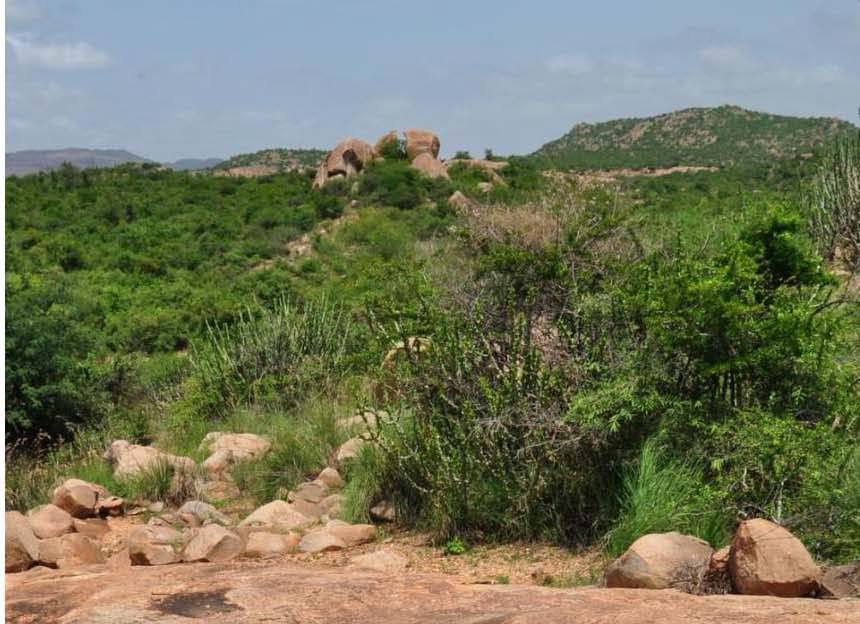
Really, Karnataka?

Forest near Daroji Sanctuary, Karnataka; photo credit: Santosh Martin

Forest near Daroji Sanctuary, Karnataka; photo credit: Seshadri K.S

We’ve stated before that our site is not dedicated to outrage, but we do make an effort to point out questionable environmental decisions by corporations and countries when we see them.

So when it came to our attention that the minister of tourism in the Indian state of Karnataka was spearheading a plan to create a zoo/wildlife safari within the buffer zone of the Daroji Bear Sanctuary we had to take notice. According to Santosh Martin, honorary wildlife warden for the region

The fragile ecosystem is home to critically endangered species of both animals and plants including pangolins, sloth bears, wolves, leopards, etc., which are classified as Schedule I by the WPA. This site is also a breeding ground for the Indian eagle owl, brown fish owl and possibly the blue tailed bee eater. More than 150 bird species have been documented in this area by naturalists which include the yellow-throated bulbul, painted spur-fowl, painted sand grouse, etc. Continue reading

Historian Cross-overs

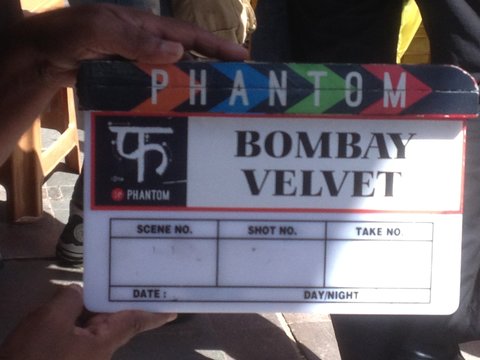
Photo: Gyan Prakash. A clapper board for the film “Bombay Velvet”.

For anyone who has been following Seth’s posts on this site over the last couple years, there has been a notably strong dose of history in many due to his decision to focus his undergraduate studies in environmental history. Summer 2013–an archival deep dive quite distinct from his previous summers in the present reality of Galapagos, Nicaragua, India, Jordan, Chile, Croatia, Costa Rica, France–was spent in Ithaca, his first summer there since the series of summers 1992-1995 (birth year through toddlerhood, when his father was engaged in history-based doctoral dissertation research). Is there a DNA tracer for history appreciation?

This comes to mind reading Gyan Prakash’s account of his experience mixing history and film.  For the many readers of university age who follow Seth’s writings the reasonable question might be what he plans to do with that degree once he graduates.  We expect that in the coming months as he approaches graduation this will start popping up as a theme in his posts. What good is history? Consult Mr. Prakash for inspiration:

On July 28, I flew to Colombo, the capital of Sri Lanka, to join the filmmaker Anurag Kashyap,  the actors Ranbir Kapoor and Anushka Sharma, and a massive crew making the movie “Bombay  Velvet.” In 2004, drawing on my research on the history of Mumbai, I had written the outline for a retro film noir  aimed at capturing the momentous transformation of Mumbai’s milieu of jazz clubs and industrial society in the 1960s. Continue reading

Bringing Biology to Life

We may not be Science Geeks per se, but we’re clearly fans of that type of thing! Not to mention that some of “our own” being deeply involved in Citizen Science projects around the world…

So we say Kudos to the National Science Teacher’s Association for creating curriculum and publishing textbooks that are both real and engaging.

“Observing the life cycle of monarch butterflies and following their remarkable migratory journeys between Canada, the United States, and Mexico … 

“Tracking climate change by recording the dates of first leaf, flower, and fruit of local trees, shrubs, flowers, and grasses …

“Discovering which bird species migrate, where they go, and when …

“Exploring life cycles and population dynamics of frogs, toads, and other animals in nearby ponds … Continue reading

Herpetologist Confidential

This slideshow requires JavaScript.

Thanks to the scientific journal Nature, the history-biology continuum is alive and full of intrigue as the story below shows (click here for a podcast related to the same story):

Before leaving for the Philippines as an undergraduate in 1992, Rafe Brown scoured his supervisor’s bookshelf to learn as much as he could about the creatures he might encounter. He flipped through a photocopy of a 1922 monograph by the prolific herpetologist Edward Taylor, and became mesmerized by a particular lizard, Ptychozoon intermedium, the Philippine parachute gecko. With marbled skin, webs between its toes and aerodynamic flaps along its body that allow it to glide down from the treetops, it was just about the strangest animal that Brown had ever seen. Continue reading

Charisma & Conservation

The video above stands on its own, worthy of a few minutes, but it brings to mind the role of charisma in conservation. We find it easier to worry about large, iconic species. Some creatures are brought back from the brink of extinction, only to experience the same fear and hatred, or worse, fate that brought them to that brink in the first place.  The editorial below, from today’s Guardian, reminds us that the uniquely human form of charisma called celebrity plays its own role, raising interesting questions.  Why celebrate not vultures and their mostly unknown guardians? Adam Welz has a few relevant thoughts:

My last post was about the need to reduce demand for rhino horn and ivory in Asia to stem Africa’s current poaching crisis. This week my inbox bulged with photos of mega-celebs trying to do just that.

Actor Edward Norton filmed a couple of public service announcements in New York on Tuesday to raise awareness of the illegal ivory trade, and yesterday Prince William, David Beckham and basketball player Yao Ming got together in London to film another brace of spots about rhino and elephant killing. The ads will go out this year as part of campaigns put together by the nonprofit WildAid, working in conjunction with other organisations. Continue reading

Obviously Worth A Look

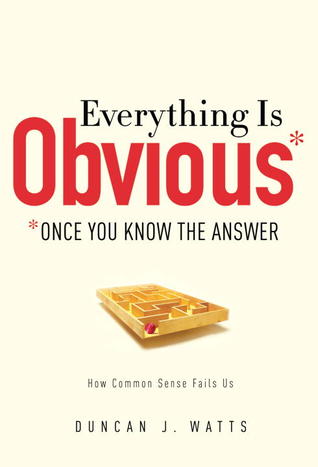
Avid consumers of Malcolm Gladwell’s scientific gumshoe writings for the masses, occasional consumers of Daniel Kahneman‘s constant illuminations of cognitive science, and those who just watch out for randomly passing-by phenomenal thinker/researcher/writers, will likely appreciate this from the Cornell Alumni Magazine profile of Watts:

A central part of Watts’s argument is that hindsight isn’t 20/20; it’s reductive and unreliable. In a section on the Mona Lisa, for example (see excerpt), he discusses how the painting languished in relative obscurity for centuries, only becoming world famous after it was stolen from the Louvre in the early 1900s—but since the idea of its greatness owing to a fluke is so inherently unsatisfying, people ascribe post-facto “common sense” explanations. (It’s the smile! It’s the fantastical background! It’s the genius of Leonardo da Vinci!) Continue reading

Vadam Vali (Tug of War)

Photo credits : Ramesh Kidangoor

Photo credits: Ramesh Kidangoor

Vadam Vali is a traditional game played by both men and women during the Onam festival. In this team event each team works to show their strength and unity by pulling their opponents across the center line.  Continue reading

If You Happen To Be In Amsterdam

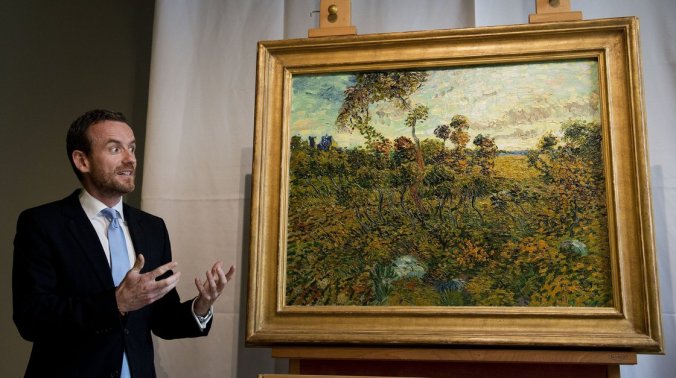
Alex Ruger, director of the Van Gogh Museum in Amsterdam, at the unveiling Monday of Vincent Van Gogh’s Sunset at Montmajour. Olaf Kraak /AFP/Getty Images

National Public Radio in the USA picks up this remarkable story, which makes us think of Amsterdam in the autumn as a wonderful place to be:

A painting that had earlier been thought to be a fake and had been stored for decades in the attic of a Norwegian home has now been identified as a long-lost work by Vincent Van Gogh.

Continue reading

Understanding Better How Our World Works

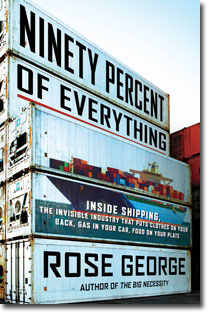
We are frequently late to the party. Fortunately it is often just in the nick of time.  This time, thanks to one of the podcasts we regularly listen to for exactly this purpose, we re-discovered Rose George (having first learned of her through her book previous book, The Big Necessity) and discovered her new book as it hits the market. There does not appear to be much in direct relation to community, conservation or collaboration  within this book, but we appreciate the author’s dedication to a topic that helps us understand better how our world works:

On ship-tracking websites, the waters are black with dots. Each dot is a ship; each ship is laden with boxes; each box is laden with goods. In postindustrial economies, we no longer produce but buy. We buy, so we must ship. Without shipping there would be no clothes, food, paper, or fuel. Without all those dots, the world would not work.

Freight shipping has been no less revolutionary than the printing press or the Internet, yet it is all but invisible. Away from public scrutiny, shipping revels in suspect practices, dubious operators, and a shady system of “flags of convenience.” Continue reading

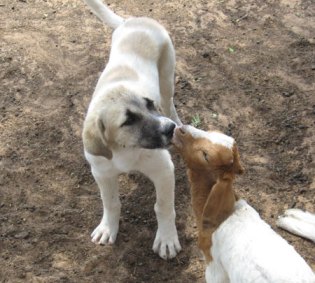
Cheetahs And Shepherd Dogs, Partners In Entrepreneurial Conservation

Thanks to a friend’s travels to the southern tip of Africa, a story from the field about colleagues we hope to meet soon. The friend learned of this program during a visit to a Cape Town winery (cheers to them and that; click the logo to the right to read more than we can share here):

Cheetah Outreach

Promoting the survival of the free ranging, Southern African cheetah through environmental education and delivering conservation initiatives.

As a result of the success of Cheetah Conservation Fund’s livestock guarding dog programme in Namibia, a trial programme was launched by De Wildt’s Wild Cheetah Management Project (WCMP) and Cheetah Outreach in 2005 to introduce the Anatolian shepherd to serve farmers in South Africa. To give this trial the best possible chance of success, farmers  Continue reading

Walking the Talk

Nowadays people are sitting 9.3 hours a day, which is more than we’re sleeping, at 7.7 hours. Sitting is so incredibly prevalent, we don’t even question how much we’re doing it, and because everyone else is doing it, it doesn’t even occur to us that it’s not okay. In that way, sitting has become the smoking of our generation.

If business innovator Nilofer Merchant had her way there would be a “surgeon’s general warning” placed on desk chairs around the world. But she isn’t only referring to the health reasons why we shouldn’t be sitting as much as we are. Continue reading

Athapookalam

Photo credits: Ramesh Kidangoor

Photo credits: Ramesh Kidangoor

The first day of the Onam celebrations starts on Atham day during the Malayalam month of Chingam, which this year falls today, 7th September 2013. The date is ten days before Thiruvonam. The creation of Athapookalam is an important part of every Onam festival. This special, circular arrangement of flowers  is one of the most iconic Onam traditions. Continue reading