Debt Is Not Desirable And Prison Is Not Pretty, But Debtors’ Prison?

You can see what the publisher has to say about this book by clicking on the image to the right.  You can read about the book and its author, and even sample an excerpt. But our attention was brought to the book via this site, which provides a different excerpt from the book. We find this one intriguing because we see the author’s use of a literary figure to make a point about economics, entrepreneurship, risk-loss-gain tradeoffs, morality, civic duty and more:

“On October 29, 1692, Daniel Defoe, merchant, pamphleteer, and future best-selling author of Robinson Crusoe, was committed to King’s Bench Prison in London because he owed more than 17,000 pounds and could not pay his debts. Before Defoe was declared bankrupt, he had undertaken such far-flung ventures as underwriting marine insurance, importing wine from Portugal, buying a diving bell used to search for buried treasure, and investing in some seventy civet cats, whose musk secretions were prized for the manufacture of perfume. Continue reading
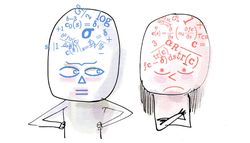
Boys, Girls, Science And Geek Myths

Thanks, as always with Natalie Angier, for incisive reportage on an important scientific concern:

Peter Ostrander, the tireless coordinator and cheerleader for a renowned science and mathematics magnet program at Montgomery Blair High School in Silver Spring,  Continue reading

Brought To You Live, From The Bugaboos

This slideshow requires JavaScript.

It’s been a pleasure sharing our story here with #thenewyorkermag. Today is the last day of our posts. Thanks for following from the whole crew: @alexhonnold@conradclimber@jimmy_chin@robfrostmedia@renan_ozturk. Photograph by Conrad Anker.

The photos themselves offer a moment of escape.  That is sufficient, but you might want to read the captions (like the one above, which accompanies the last photo, of the climbers smiling), in which case go to the post on New Yorker‘s website.  Better yet, the whole interview with Renan Ozturk excerpted here, is there:

What is your background, both as a climber and as a filmmaker, artist, and photographer? Continue reading

Greece Is Feeling The Love

Several of the most frequent contributors to this platform walked together in this quintessentially Greek passageway in 2008–the quality of the light, the stone, the feel this image gives can take you straight back to Greece for a moment if you let it.  So can this blog post from Messy Nessy, a new acquaintance:

Traveling the roads of Greece these past few days, it hasn’t taken long for the dollhouse-sized roadside chapels to become a bit of an obsession for me– which means stopping the car at every single one to snap a photo, of course. Some are elaborate little things made of terracotta or even marble, plonked in the middle of nowhere, high up in the mountains; no village or houses for miles, and yet impossibly, most of them are faithfully maintained with a candle always burning inside.

Continue reading

Bees Provide Much

Earlier this week we highlighted a new clearing house for bee news, and now we have come across another, deeper well of knowledge related to bees, and all that they do/provide more than honey. Who knew, for example, that among the important physical realm issues he pondered, bees figured into this man’s thinking:

“If the bee disappeared off the surface of the globe then man would only have four years of life left. No more bees, no more pollination, no more plants, no more animals, no more man.” Albert Einstein

This and more, from CIBER (Centre of Integrative Bee Research) at the University of Western Australia in Perth, Western Australia. Their cross-disciplinary research team includes: Continue reading

Photographic Wonder

Marvin Heiferman. Photo: Alex Welsh/WIRED

We know that one day, hopefully not too far off, the wunderkind of La Paz Group’s photographic contributors will get his gear fired up and we will be displaying his latest wonders here again. We hear that his hiatus in Ithaca, NY since about one year ago has run its course, full of fascinations, back-looking reflections, photographic recapitulations, and even small distractions. Onward, westward, as ancestors of his did in previous centuries. More from Milo soon, we hope.

Meanwhile, on the topic of photography and wonders, Wired offers an interview to illuminate what might not otherwise be obvious at first glance:

For his book Photography Changes Everything, Marvin Heiferman spoke to experts in 3-D graphics, neurobiology, online dating, the commercial flower industry, global terrorism, giant pandas, and snowflake structure to understand the infinite ways imagery affects our everyday lives… Continue reading

Discovery, Conservation’s Better Half

Wilderness conservation, marine or terrestrial, is difficult. On a good day the challenge might be described as a complex puzzle, which has its pleasures; but on most days it is slogging and increasingly, dangerously warlike.

On the best days, we observe, conservationists have the thrill of discovery. Thanks to the Guardian‘s commitment to reporting on the environment, and specifically for this story that highlights that discovery of species is an ongoing enterprise, one more reason why posts like this, and this, among others are so important in getting us all to do our part:

‘Walking shark’ discovered in Indonesia

Previously unknown fish, Hemiscyllium halmahera, uses its fins to move along the sea bed in search of crustaceans Continue reading

If You Happen To Be In Hillsborough, NC (USA)


We note and share the occasional tributes to careers we might not have had the chance to think about. This post catches our attention just as the earlier ones did, but in particular thanks to the collaborative exploration between father and daughter:

“For the past forty years, my father has travelled around America as a telephone-pole salesman,” Sara Macel writes in the afterword to her forthcoming book, “May the Road Rise to Meet You.” The book is a visual narrative of her father’s professional life, the life he lived separately from their shared family experience. Macel and her father, Dennis, retraced his steps and photographed places he may have passed along the way. Continue reading

The Journalism-Academic Complex

Illustration to John Seabrook's 2011 article "Snacks For A Fat Planet" showing: Indra Nooyi, the C.E.O. of PepsiCo, says it must be a “good company” in a moral sense.

Illustration to John Seabrook’s May 16, 2011 article “Snacks For A Fat Planet” in the New Yorker. showing: Indra Nooyi, the C.E.O. of PepsiCo, says it must be a “good company” in a moral sense.

The Military-Industrial Complex that then-exiting President Eisenhower warned about is unfortunately alive and well, as we saw in the previous decade, when journalists were mostly asleep at the wheel, often even contributors to the dark complex. But journalism has been reborn in some quarters with a new sense of purpose, and new approaches to vigilance that is worthy of the Fourth Estate. Diligent investigative journalism allied with advanced academic research-driven thinking skills produces a better complex.

Case in point: when accomplished academics such as Professor Aaron Chatterji share cogent, punchy follow up posts to articles that caught our attention years back, today’s news on labor activism meets yesterday’s analysis of the intersection of food/health trends and corporate buzz phrases like social responsibility. Thanks to this Duke University professor, New Yorker readers get follow up on a story that might otherwise have been fading, but should not:

Nooyi has backed up her rhetoric with concrete steps, acquiring healthier brands like Tropicana and Quaker Oats and creating Pepsi Next, a lower-calorie version of the flagship brand. She even hired a former official from the World Health Organization to oversee the reforms. Continue reading

When The Going Gets Tough, Name Names

Bill McKibben is not likely to give up,  but you knew that already. Click the image above to go to the video and the new petition:

Petition to the WMO to name extreme storms after climate change deniers. Continue reading

Bee News, Weekly

Thanks to the Guardian‘s expanding coverage of an important topic with a series that routinely rounds up bee news (yes, it sounds funny, but try living without bees):

About this series

Concerned about the the worldwide bee crisis? Join us for Buzzfeeds, a weekly analysis featuring our resident bee expert Alison Benjamin Continue reading

Fish Feed

Aquaculture is found world-wide but one irony of the industry is that often wild caught fish are used as feed for their farm raised cousins, which is both counter-productive and environmentally unsustainable. A recent breakthrough by scientists at the University of Maryland Center for Environmental Science’s Institute for Marine and Environmental Technology will make that vicious cycle a thing of the past.

“Aquaculture cannot sustainably grow and expand to meet growing global population and protein demand without developing and evaluating alternative ingredients to reduce fishmeal and fish oil use,” said the study’s lead author, Dr. Aaron Watson.

Supported by another paper published in the Journal of Fisheries and Aquaculture, the team has proven that a completely plant-based food combination can support fast-growing marine carnivores like cobia and gilthead sea bream in reaching maturity just as well as—and sometimes better than—conventional diets of fish meal and fish oil made from wild-caught fish. Continue reading

Pulluvan Pattu

Photo credits : Ramesh Kidangoor

Photo credits: Ramesh Kidangoor

Pulluvan Pattu is the music sung by the caste known as Pulluvas, which means lower caste. It is accompanied by hand-made stringed instruments such as Pulluva Veena.  In Kerala this is the traditional music is associated with the worship of Snake Gods.

Clothing Without Pretension


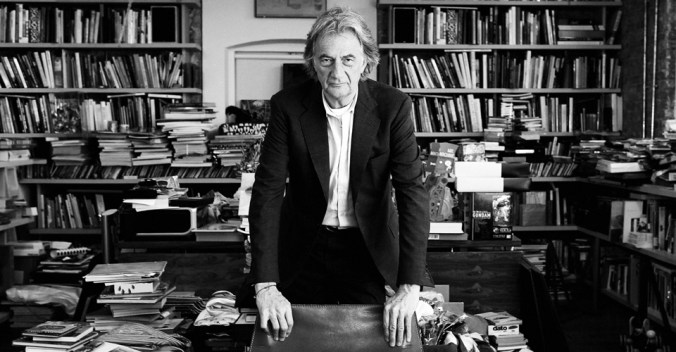
This may be the only time you find a link related to clothing on this site.  But it is not the clothing that motivates the link.  We liked the way this fellow explained his unique humility, so we have watched the same publication for more surprises.  Here is one. A man of considerable success and apparently little pretension. Artisan ethos.  Nothing about conservation, but a pretty clear sense of community (never mind the blue bloods and rock stars; it is the early morning conversations with the road sweeper that we can relate to) and at least with his five decades of marriage a clear sense of collaboration as well:

What’s the best thing and what is the weirdest thing you’ve ever received?

I have a fan that has been sending me things covered in stamps for over 20 years. I don’t even have any idea who it is, there’s never any letter. Around my desk at the moment I have a red watering can for the garden, a yellow sunflower, a bowling pin, a boat-shaped birdhouse, a yellow chicken and a long piece of wood, all covered in stamps with the address on it. So that’s just one crazy thing. But I get all kinds of things – I just had a little book sent to me, a story about me by a 10-year-old schoolgirl. Continue reading

Foraged Cuisine

The concept of ethical eating isn’t new to these pages and neither is the suggestion that cuisine might be the secret weapon in the fight against invasive species. So we were thrilled to read about chef, artist, environmentalist and social activist Bun Lai’s menus based primarily on what he can forage from his 100 acres of shellfishing grounds off of the Thimble Islands in Connecticut.

The kitchen is the perfect place to exhibit the spirit of exploration and creativity–why not exploit it as a method of controlling ecological pests?

Chidambaram Natraja Temple – Tamil Nadu

Photo credits : Ramesh Kidangoor

Photo credits: Ramesh Kidangoor

Chidambaram is uniquely interesting because it is the only temple complex to understood to be built primarily between the 12th and 13th centuries. This temple is dedicated to Lord Shiva. A huge Shiva Ganga tank is the one of the main attraction of this temple. Continue reading

Be, Cause (Simon Pearce)

This slideshow requires JavaScript.

He is an entrepreneur, so we find him interesting.  As with some other entrepreneurs featured on this podcast, we find him more interesting because of a higher calling in his business model.  He starts with excellence as defined by a few keywords–simplicity, quality, clarity, individuality, functionality–but he clearly cares about family and others outside his business. We find him most interesting because Simon Pearce contributes to the common good.  It is these ethics, not revealed directly in the From Scratch interview, but visible (though not “in your face” visible) on his company’s website, that make him worthy of more attention:

KP LoveYourBrain Bowl

Simon Pearce will DONATE 100% of THE PROFITS from the sales of the KP LoveYourBrain Bowl to the Kevin Pearce Fund.

Continue reading

What Would You Do For Perfect Coffee?

We appreciate those who make the effort to figure out the best way to make coffee, and especially those who share the art and science freely.  Here, from the Atlantic‘s website (always full of extras too eccentric or esoteric for the print version of the magazine) a bit from the science side:

It was November 23, 2010. We were in Surf City, North Carolina, getting ready to fortify ourselves before another grueling day. As the thin, black liquid oozed into the stained carafe, we stood bleary-eyed. We were roommates, Marine infantry officers, perpetually sleep-deprived from the training, the planning, the preparations for war. Back then coffee was little more than a bitter, caffeine-delivery system. It was just what we needed to stay awake.

We were missing so much. Continue reading

Scientific Findings About Those Famous Cousins

According to fable attributed to Aesop, there was once a country mouse who invited his cousin who lived in the city to come visit him…If you do not know that story, it is easy to find. The moral of that story seems to be that peace and quiet in the country ultimately provide a better life than the dangers of the city, no matter the attractions of the latter.  Hard to argue with that, unless you are a city mouse at heart.  And/or if your mouse brain has been hardwired that way. In which case, you can thank the tendency of humans to transform the natural environment into built space. Carl Zimmer explains recent scientific findings along these lines:

Evolutionary biologists have come to recognize humans as a tremendous evolutionary force. In hospitals, we drive the evolution of resistant bacteria by giving patients antibiotics. In the oceans, we drive the evolution of small-bodied fish by catching the big ones. Continue reading

How The Catcher In Rye Works

At first light Richard Dale collects migrating birds caught in the mist net Photograph: Dan Kitwood/Getty Images

At first light Richard Dale collects migrating birds caught in the mist net Photograph: Dan Kitwood/Getty Images

We have paid attention to the places where birdsong, and other ornithological phenomena, are studied since the beginning of this blog 2+ years ago.  Thanks to the Guardian for this slide show to tell a short story:

Birds are recorded at the ringing station in Rye – in pictures

Bird ringers, aided by the British Trust for Ornithology, are this month recording hirundines and other migratory birds at a private reserve in East Sussex