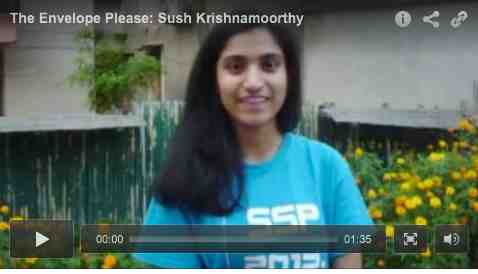
From India to Cornell, We Wish Sush All The Best

TataScholarCornell


One day we hope to replicate Tata Scholarship program’s hard currency support, but for now do our part through internships and volunteer programs (browse through our contributor section to see plenty of examples).  Here is someone we hope to invite to intern with us; for now we invite all our Cornell friends to extend a warm welcome, as we know they will. Hopefully you have followed this whole series, but if not you might want to go back and read Sush’s earlier posts to appreciate this one more:


Sush Krishnamoorthy, a student from New Delhi, is part of “The Choice” class that includes student-bloggers from Nairobi, Kenya; Topeka, Kan.; Seattle; Rogers, Ark.; Las Vegas; New York City; and Hunting Valley, Ohio. Her ninth post is below. — Tanya Abrams

Early in the college application process, I classified colleges as “dream” schools and “reach” schools based on their acceptance rates. It is popular advice to do so. Also, the terms “selectivity” and “acceptance rate” are often used interchangeably, and this indicated to me that the higher the acceptance rate of a college, the easier it is to get in. Continue reading

If You Happen To Be In New York City

This slideshow requires JavaScript.

An artist seemingly after our own heart, thinking as we do about the impact of light pollution. Through May 4, you can see for yourself. From the Danziger Gallery’s website:

Thierry Cohen was born in Paris in 1963. He began his professional career in 1985 and is seen as one of the pioneers of digital photography. His work has been shown at the Palais de Tokyo, and the Musee de l”Homme in Paris, and in 2008 was an official selection of the Mois de la Photo. Since 2010 he has devoted himself to a single project – “Villes Eteintes” (Darkened Cities) – which depicts the major cities of the world as they would appear at night without light pollution, or in more poetic terms: how they would look if we could see the stars. Continue reading

2013 Goldman Award Winner

2013_azzamalwash_profile

Recently brought to our attention due to a short documentary, today’s news puts new wind in his sails with the award of this much-deserved prize (click the image to the right to go to the website):

Giving up a comfortable living and family life in California, Azzam Alwash returned to war-torn Iraq to lead local communities in restoring the once-lush marshes that were turned to dust bowls during Saddam Hussein’s rule.

The Mesopotamian marshlands in southern Iraq are known by many as the birthplace of civilization. Situated between the Tigris and Euphrates rivers, the area was once an oasis of aquatic wildlife filled with lush reed beds, water buffalo, lions, foxes and otters. It was also one of the world’s most important migratory flyways for birds.

In the mid-1990s, Saddam Hussein burned, drained and poisoned the area in retaliation of Shiite Arabs, who had staged uprisings following the Kuwait invasion and fled to the marshes for refuge. The wetlands once known as the Garden of Eden turned to dust bowls, driving out the descendants of ancient Sumerians who had inhabited the area for thousands of years. Continue reading

A Great Magazine Becomes A Great Insititution

The consistently superb essayist Adam Gopnik, who often writes about topics unrelated to the themes of our blog, in this week’s New Yorker writes on a topic close to our heart (click the image above to go to the article, subscription required):

Magazines in their great age, before they were unmoored from their spines and digitally picked apart, before perpetual blogging made them permeable packages, changing mood at every hour and up all night like colicky infants—magazines were expected to be magisterial registers of the passing scene. Yet, though they were in principle temporal, a few became dateless, timeless. The proof of this condition was that they piled up, remorselessly, in garages and basements, to be read . . . later. Continue reading

Simple Superiority

On the margins of topics we pay attention to on this site, there is a steady stream of posts related to some of today’s great thinkers and researchers on the topic of decision-making and related topics. Here is more.  But simpler, we presume. We have not read the book yet; only this review from the New York Times:

Less is more. The bare essentials. Back to basics. User-friendly. No fine print. Clutter-free. Transparent. Clean. Easy. Back in the mid-19th century Henry David Thoreau exhorted us to “simplify, simplify,” and his appeal to distill things down to “the necessary and the real” has only gained more resonance, as our Internet-driven, A.D.D. culture has grown ever more complex and frenetic. Continue reading

Photographs Of Life In Pre-Soviet Russia

This slideshow requires JavaScript.

From a photographer-centric website called Lens Culture, this photobook review of a collection called Nostalgia helps us visually ponder a now forgotten world through a particular lens:

Nostalgia: The Russian Empire of Czar Nicholas II Captured in Color Photographs

photographs by Sergei Mikhailovich Prokudin-Gorskii Continue reading

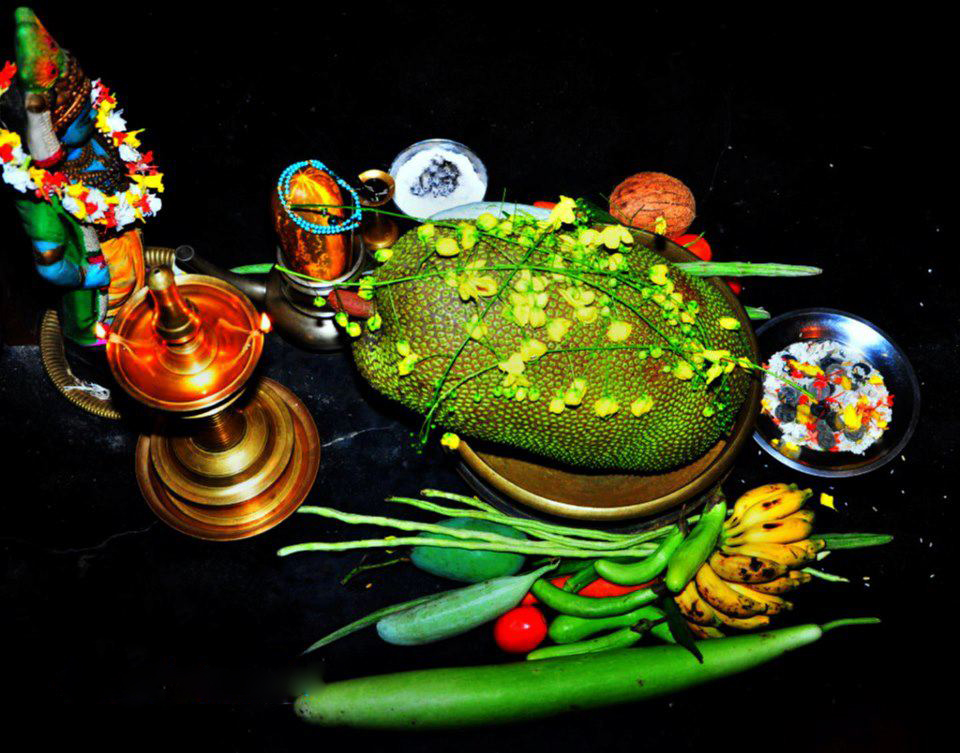
Festival Of Kerala- Vishu

Photo Credit: Abhay

Photo Credit: Abhay

Celebrated on the first day of the Malayalam month of Medam (which in 2013 falls on April 14th) Vishu is one of Kerala’s most important festivals. The parallel festival to the Onam harvest celebration, Vishu is the festival of sowing. All Hindu households begin the day with offerings called vishu kani. This consists of a ritual arrangement of auspicious articles like raw rice, fresh linen, golden cucumber, betel leaves, banana, jack fruit , yellow flowers (indian Laburnum) and a metal mirror. Continue reading

Innovative Cross-Cultural Sound

Thanks to the folks who created the music-recording studio (more on which to come) we had the opportunity to experience this live:

Hindugrass at Manifold Recording

Kicking off our recording sessions for the new album with a live performance in the magnificent music room at Manifold Recording. Continue reading

Coffee Maker Verification

This slideshow requires JavaScript.

No promotion, per se.  We like the message, and we are curious, if you have had experience with this machine, whether you can verify for us the claims of the company:

By using hand-powered pressure coffee making becomes a more involving pleasure. As you become more experienced you can fine-tune how you use the ROK espresso maker to produce espressos to your personal taste.  Continue reading

Earth Day In Historical Context

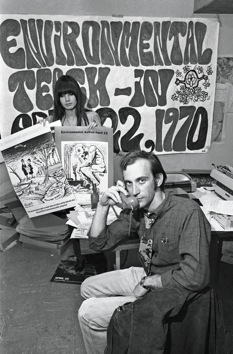
Earth Day began as a minimally organized teach-in.

Earth Day began as a minimally organized teach-in.

Those who do not know their environmental history may or may not be doomed, but they are missing something. Knowing the history is a pleasure in itself, as this article in the current issue of the New Yorker demonstrates.  Know this:

…Earth Day’s success was partly a matter of timing: it took place at the moment when years of slowly building environmental awareness were coming to a head, and when the energy of the sixties was ready to be directed somewhere besides the Vietnam War and the civil-rights movement. A coterie of celebrated environmental prophets—Rachel Carson, David Brower, Barry Commoner, Paul Ehrlich—had already established themselves, and Rome reminds us of  Continue reading

A Fresh Social Enterprise Story

This slideshow requires JavaScript.

We are happy to spread the news about social enterprises we encounter, even if we have not yet tested their products.  In this case, it is the Origins story that catches our attention:

FreshPaper was created by a young inventor who happened upon the active ingredients after accidentally drinking some tap water while visiting her grandmother in India. Her grandma gave her a home remedy – a mixture of spices, which kept her from getting sick. (Click here to hear the story in her own words.) Continue reading

Novague’s Electricity Chair

This slideshow requires JavaScript.

This appears to be the only product of this design firm that has an ecologically sound intent–does it work? we wonder, so please let us know if you know–which you can read about by clicking in the rocking chair link in the “works” section:

Rocking Chair

It has triggered the media interest about me, my studio and our work. Continue reading

University-Based Groups Worth Noting

syn-mosaic

An occasional feature, beginning here, will point to university-based groups–informal organizations, living arrangements, secret societies, etc.– we can relate to:

Co-operative societies bring forth the best capacities, the best influences of the individual for the benefit of the whole, while the good influences of the many aid the individual.

Leland Stanford
October 1, 1891
Stanford University Opening Ceremonies

Ecology’s Social Enterprise

ESA


This organization (click the banner above to go to the site), new to us but working its way to a centennial birthday (click the banner below to go to that section on the website)–

ESA History


A meeting was held at Columbus, Ohio, on December 28th, 1915, at which it was decided to organize the Ecological Society of America….The interests and activities of this society will be of the broadest character, embracing every phase of the relation of organisms to their environmental condition…–The Geographical Review 1916–

About the Ecological Society of America

1914: The beginning…

–is as modern and practical as one could want, including this section on its website titled Explore Ecology As A Career with a wealth of links and related resources:

Ecology As A Career

What Do Ecologists Do? Continue reading

Foodie’s Feature


NYT Food

Click the image for today’s Sunday New York Times, our annual favorite edition, dedicated to Food and as recently more and more is the case, particular attention is paid to the intersection between food and wellness:

The Food & Drink Issue

Time to supersize your bean burger and sweet potato fries.

Take A Walk In The Park!

Brain fatigue is reduced by strolling through a park, The New York Times reports:

Researchers have long theorized that green spaces are calming, requiring less of our so-called directed mental attention than busy, urban streets do, but it had not been possible to study the brains of people while they were actually outside, moving through the city and the parks. Continue reading

If You Happen To Be In London

SensButterfly


Click the image above to go to the video at the website of London’s Natural History Museum, and click here to go to an excellent podcast of an interview conducted by the Guardian‘s Camila Ruz with the exhibition’s curator, Blanca Huertas.  The exhibition is now open:


In the exhibition, butterflies are everywhere, so take care… they may even land on you or on the paths where you walk. Continue reading