Willfully Contemplating

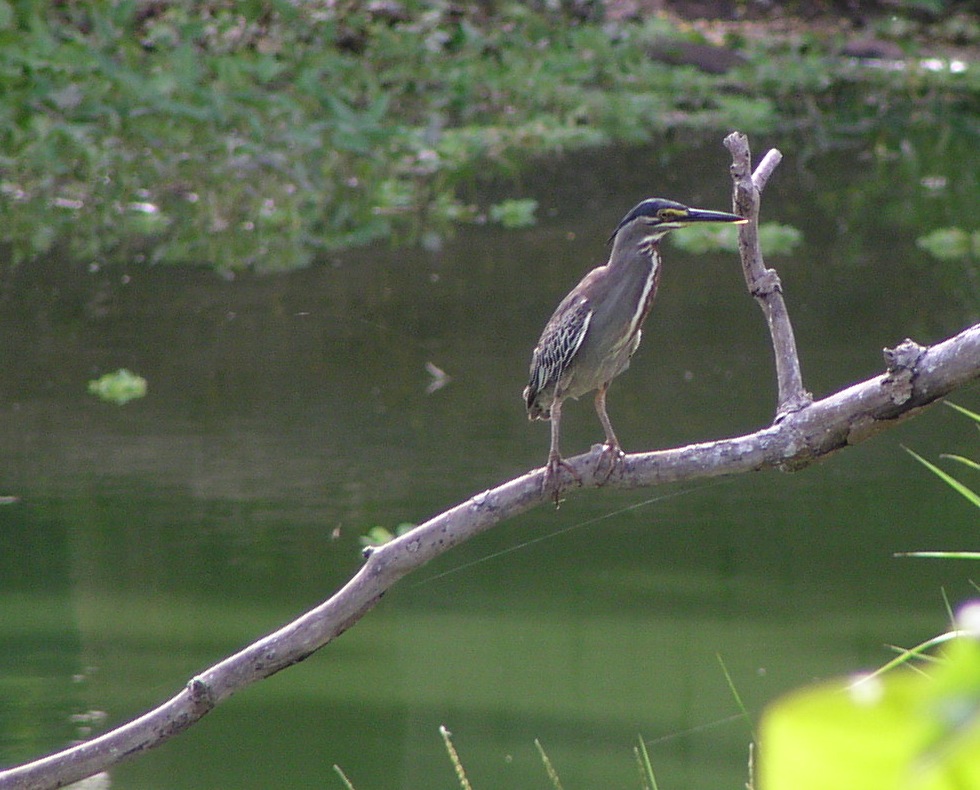
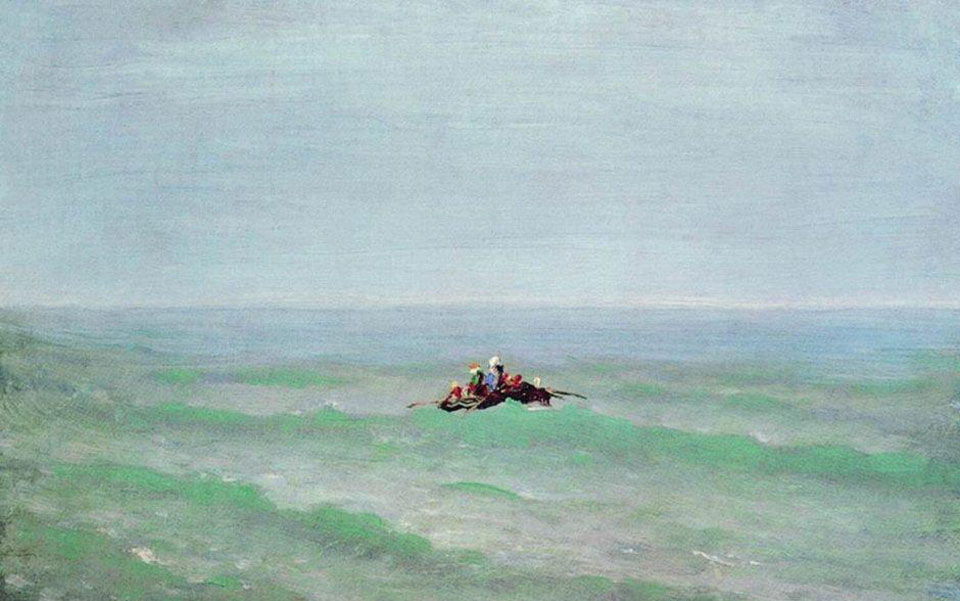
A Boat in the Sea by Arkhip Kuindzhi, c.1875. Oil on canvas.

A Boat in the Sea by Arkhip Kuindzhi, c.1875. Oil on canvas.

We tend to favor action as a general rule on this site, but without contemplation where would we be? Two choice paragraphs from a recent philosophical musing in one of our newly favored  and now reliably interesting online publications:

…After three years, I was no wiser than when I started. Did we choose freely? Or were we just victims of larger historical, social and biological forces? It was impossible to tell. What I did realise was that philosophers had been struggling with such questions for thousands of years, but were no closer to understanding the answer than they were when they started out. Continue reading

Innovation And Toxic Hope

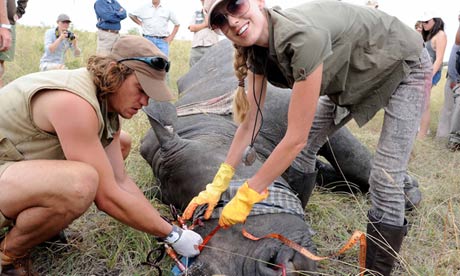
The Sabi Sand Game Reserve is injecting non-lethal chemical mixtures into rhino's horns. Photograph: David Smith/Sabi Sand Game Reserve

The Sabi Sand Game Reserve is injecting non-lethal chemical mixtures into rhino’s horns. Photograph: David Smith/Sabi Sand Game Reserve

We have only occasionally mentioned the facts surrounding the epidemic slaughter of rhinoceros, mainly because the stories are hopelessly hopeless almost (but not all) all the time. This one may be either another case in point, or a perverse example of innovation in times of extreme need. Click the image above to go to the story in the Guardian:

A game reserve in South Africa has taken the radical step of poisoning rhino horns so that people risk becoming “seriously ill” if they consume them.

Sabi Sand said it had injected a mix of parasiticides and indelible pink dye into more than 100 rhinos’ horns over the past 18 months to combat international poaching syndicates. More than 200 rhinos have been poached so far this year in South Africa, driven by demand in the far east, where horn ground into powder is seen as a delicacy or traditional medicine. Continue reading

Is Giving the Secret to Getting Ahead?

This slideshow requires JavaScript.

From this week’s Sunday New York Times an article by Susan Dominus in which the:

organizational psychologist Adam Grant argues that the key to hyperefficiency is tirelessly helping others. Continue reading

Shopping Shifts

Lifestyles of Health and Sustainability (LOHAS) is a description, a name, a trend we have mentioned plenty of times in so many words, but not previously using this acronmyn. If you have not already seen it, you can expect to see it more now.  We appreciate its blog, which you can sign up for by clicking through from this article in it (click the LOHAS banner image in this post):

…In the improving but not yet booming economy of 2013, Patricia Aburdene, author of the New York Times bestseller “Megatrends 2000” and most recently “Conscious Money” (Atria Publishing; $16 paperback), predicts priorities and values will play a bigger role in shaping spending decisions. Continue reading

Nature Books: Birds

9780810996137

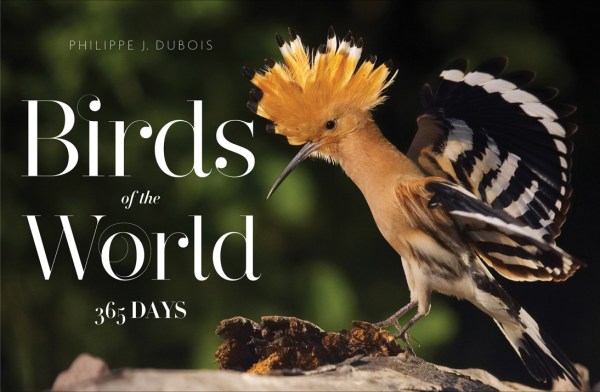
Looking through this publisher‘s catalogue, we see they give attention to a wide variety of charismatic flora and fauna.  For example, this book (click the image above to go to the source):

Birds of the World: 365 Days gives this perennially popular subject the 365 treatment: ornithologist and conservationist Philippe J. Dubois presents a “day in the life” of a year’s worth of species from five continents. The stunning images of birds in action, taken by some of the best avian photographers in the world, illustrate the text beautifully. Continue reading

Kerala Cities – Ernakulam (Kochi)

Photo Credits: Ramesh Kidangoor

Photo Credits: Ramesh Kidangoor

Known as the commercial capital of Kerala, Ernakulam is the one of the largest cities in the state. Ernakulam refers to the eastern part of the twin cities Ernakulam-Kochi. Alive and throbbing with people, shopping centers, cinemas, hotels, offices, plush buildings, and restaurants; the factors that come together to create the quintessential city life can be experienced here with an International Airport an hour away. Ernakulam is the only city in Kerala where one can experience the conveniences of an urban lifestyle that is now increasingly prevalent in the larger cities of India, in addition to the criss-crossing backwaters that make the area famous. Continue reading

Natalie Angier Strikes Again

This slideshow requires JavaScript.

We used the terminology natural born killers too soon. Apparently these unassuming creatures are the real efficient ones. And, like cats, disguised as gracefully admirable, and often unnoticed. In today’s New York Times Science section there is a story by one of our favorite science writers:

Science Times: April 2, 2013

New research suggests that dragonflies may well be the most brutally effective hunters in the animal kingdom. Continue reading

Nick Cave And Grand Central Station’s 100th Birthday

This has captured our attention, and will not let go. Why?  Maybe it is because the artist’s name (but definitely not his work) is identical to that of another non-mainstream artist who, according to the most widely used search engines, is alot more well-known.  But that cannot be all there is to it. For some it could be the strong memory of Grand Central Station and the seeming incongruity of its use as a stage, even on the occasion of a birthday party.  For others it may be as simple as a question.  What are those costumes?  A post in on the New Yorker‘s website explains:

…Cave, who was born in Missouri, in 1959, and is based in Chicago, where he serves as director of the Art Institute’s graduate fashion program, has been producing Soundsuits—which can be displayed as inert sculptures, or can be worn, often by their creator, “activated” to produce a variety of noises—for nearly twenty years. He has made Soundsuits from an array of found materials including dryer lint, sequins, sweaters, socks, buttons, feathers, human hair, and vintage toys. His first Soundsuit was made of twigs, in reaction to the beating of Rodney King. Continue reading

Eyes Of Other Animals (#2 Of 2)

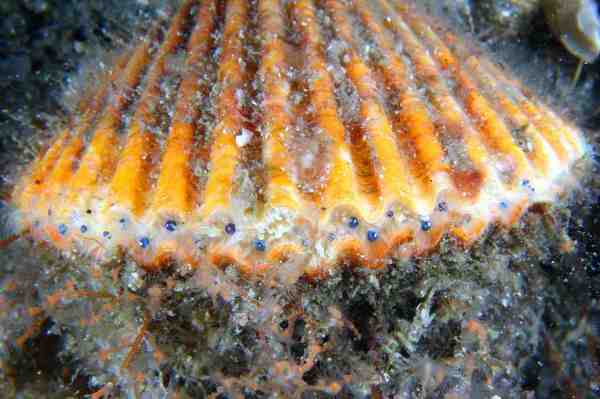
Thanks to The Atlantic‘s Alexis Madrigal, we have some coverage of this topic that we had honestly never thought about, but which makes total sense now that we have some information about it.  Eyes matter in ways more than just the obvious practical:
Unless you are an avid scuba diver, when you think of scallops, you probably think of linguine and garlic more than oceans and shells. That’s because we only eat the muscle of the scallop: You never see them in context.

Holi, Incredibly Colorful India

This slideshow requires JavaScript.

For those of us non-Indians living in this colorful place, thanks to the Atlantic Monthly‘s decision to publish these photographs on its website.  That way, when we write home to family and friends, they will not have to just take our word for it.  The will see: India is incredible.


Eyes Of Other Animals (#1 of 2)

This slideshow requires JavaScript.

The charisma of whales is normally associated with their size, their ancient history, their apparently gentle approach to life. But it is not only those; the eyes have a role to play in why we love these creatures, among others (more on which in a subsequent post). Thanks to Alex Madrigal and The Atlantic for their attention to this topic:

Both humans and whales are mammals, so our eyes are derived from a common ancestor. Not only can we look at whales and they can look back at us, but we know enough about optics to infer their eyes’ capabilities from their anatomy. Animal eyes can be imagined as technological systems evolved with biological materials.

“We will make the fairly bold claim that it is sensible to approach eyes in essentially the same way that an optical engineer might evaluate a new video camera,” write Michael Land and Dan-Eric Nilsson, the authors of the Oxford University Press treatment of our topic, Animal Eyes.

Their eyes capture light in ways we can understand. Their eyes have a focal length. Their eyes have a maximum resolution.

So, what does the world look like to a whale? Continue reading

Kindi – Traditional Kerala Water Vessel

Kandi

Kindi

The Kindi is integral to all rituals and ceremonies in Kerala. The spouted vessel is made out of  bronze (odu), and is mainly used for Hindu’s Poojas. In Kerala each and every household keeps a kindi for special occasions. Continue reading

Reviving an Iraqi Oasis

This slideshow requires JavaScript.

Thirty years ago, Iraq’s Mesopotamian Marshes were referred to by biblical scholars as the Garden of Eden. Fed by the iconic Tigris and Euphrates rivers, for more than 7,000 years this enormous marshland of over 6,000 square miles (twice the size of the Everglades National Park) provided a bountiful home for both wildlife and humans. A large population of indigenous people, the Ma’dan Tribes known as Marsh Arabs, had thrived there for centuries. But in the political conflicts of the 1990s, Saddam Hussein attempted to eradicate them by destroying the marshes on which they depended for survival. The canals and embankments that both diverted the river water away from and prevented it from entering the area caused the marshes to shrink to less than 10% of its original size, transforming the remainder into a parched, lifeless desert; forcing the wildlife and the people to leave.

We are happy to write that the story doesn’t end there. Continue reading

Whales In Perspective

Abrams, publisher of the book above, was also publisher for another conservation-friendly artist featured on our pages. They have a series of books that showcase wonders of nature in spectacular fashion, and we encourage a visit to their site by clicking the image above:

Photographer and conservationist Bryant Austin’s breathtaking photographic project Beautiful Whale is the first of its kind: It chronicles his fearless attempts to reach out to whales as fellow sentient beings. Continue reading

The Great Paddy-City Migration

For those of us living and working in Rising Asia, much in this book either rings true from experience or is eye-opening about things that may be lurking just around the corner, out of sight.  Kerala is a long way from Lahore, in every sense.  But at least the basic notion–that the world has only in the last year or so become one in which a majority of us are urban dwellers for the first time in human history, and not long from now it will be a super-majority–can be felt in Raxa Collective’s back yard.  The great migration from paddy to city is noisily happening all around us each day.  What of it?

Mr. Hamid has alot to say about that, good, bad and ugly.  An interview he conducted to discuss the book can be heard in this podcast.  The book is likely to anger some, but it has received positive reviews, even from often-tough critics:

“Mr. Hamid reaffirms his place as one of his generation’s most inventive and gifted writers.” –Michiko Kakutani, The New York Times

Continue reading

Really, Ecuador & China?

Ecuador-map-001

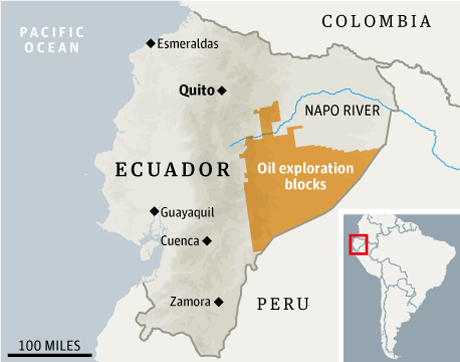
From today’s Guardian (click the image above to go to the source):

Ecuador plans to auction off more than three million hectares of pristine Amazonian rainforest to Chinese oil companies, angering indigenous groups and underlining the global environmental toll of China’s insatiable thirst for energy. Continue reading

Painter’s Progress

ChuckClose


There does not seem to be a weak link in this chain: From Scratch consistently delivers. Earlier samplings were, with few exceptions, mostly interviewees who we know about and admire at the intersection of conservation and commerce.  Chuck Close, pictured to the right in a self-portrait from 1994, is another exception in terms of theme. But like his paintings, his role as entrepreneur is a matter of perspective: seen from one distance, then like any great entrepreneur he combines determination with creativity to do what he must do, even in the face of adversity most of us cannot even imagine.  From another distance, his distaste from the commercial dimension of his chosen calling appears anti-entrepreneurial (but of course this is why he is among the most celebrated living artists). He is a mirror opposite of all the things we find distasteful and dreadful about the so-called “art world.”  Click the artist’s image to go to the interview:

When we see a painting hanging on the hallowed walls of a museum, we get a sense of an artist’s technique and imagination, but we don’t get a sense of the process and hurdles that artist faced on the way to critical acclaim. Continue reading