
Photo Credit: John Mason
Photo Credit: John Mason
 He is the Theatre Critic for The Toronto Star, and let this fellow make a statement that is probably unparalleled in this sort of venue or any other venue for that matter. Artists are often reticent to share their views on meaning or interpretation, their craft, their purpose. This one puts it all out there, and Richard is wise to let him go at it. Continue reading
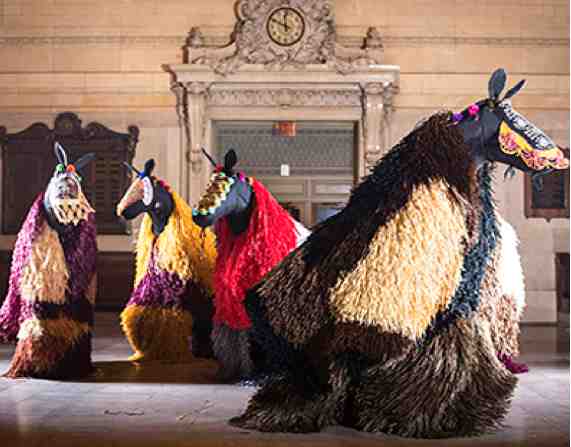
Many people happen to be in New York City. It happens all the time. People just show up. But this time is different (as they all are, and so on). In discussion recently, several of us at Raxa Collective agreed that the first time they heard of someone named Nick Cave, a rather offbeat artist to say the least, was through the music in a film that may have had the best soundtrack of any film ever. Now, continuing that offbeat approach, he shows up in a train station of all places. Only thing is, it is not the same Nick Cave. That soundtrack Nick Cave was the real deal. So is this one. How many Nick Caves are there?
Nick Cave/ HEARD • NY
Presented by MTA Arts for Transit and CREATIVE TIME
Vanderbilt Hall, Grand Central Terminal
March 25 – 31, 2013 Continue reading
We have mentioned this fellow more than once, and we have an ongoing thing for libraries (thank you Toronto Public Library for making this possible, and may you do the right things in order to live forever!). Now we must mention the journalist who conducts this “interview” by asking few questions, brilliantly, and then brilliantly getting out of the way and letting his interviewee speak. And speak he does. If you have a better definition of art, operatic or otherwise, please let us know. This is worth every minute, so wait until you have time to watch it from beginning to end.

Photo credit: John Mason
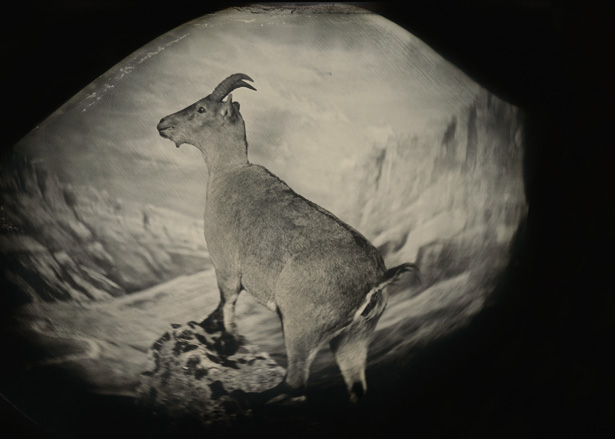
Bringing Them Back to Life.
The revival of an extinct species is no longer a fantasy. But is it a good idea?
One of our favorite science writers brings interesting ideas to life, weirdly but masterfully. And fun. But this one tilts heavily to weird, except for the fact that this is real:
On July 30, 2003, a team of Spanish and French scientists reversed time. They brought an animal back from extinction, if only to watch it become extinct again. The animal they revived was a kind of wild goat known as abucardo, or Pyrenean ibex. Continue reading
Photo credit: John Mason

© Die Post Swiss Post has asked Ursus Wehrli to create a tidied up stamp – the stamp is NOW available at every Swiss post office
There is an entertaining video from five years ago of this comic artist presenting his “work” and a book review from 18 months ago on Trendland that is worth a look because it presents an excellent sampling of Ursus Weherli’s images, and you can decide relatively quickly whether you want more or not (one purpose of a book review, well fulfilled in this case:
Organizational skills aren’t usually something you look for in an artist, but in Ursus Wehrli‘s case, they’re definitely something of value…
His most famous image is likely this one below, but the stamp above commissioned by Swiss Post shows an evolution of sorts, which you can see after reviewing the images in that book review. It also shows an idea, a concept, on a roll. Where did it come from? Where is it going?

For some of us New Yorkers, it was a superb experience attending the India debut of Norah Jones in Mumbai recently. The most recent installment of the India Ink series that mashes up images, themes and ideas related to the commonalities and differences between New York and Mumbai is a perfect complement to that recent musical outing: Continue reading

Photo credits:Ramesh Kidangoor
The coconut tree plays an integral part of the lifestyle and the economy of the Kerala. (In fact, the name of the state itself has coconut in its etymological roots.) There are numerous products and byproducts derived from the tree. In addition to its use for food, beverage and coir, its tender leaves are used for decorating houses, Temples and churches. Continue reading

Inimitable. Some of us love superlatives, and some of us find them tedious; but all of us will agree that this fellow is inimitable (click the image above to go to his work directly):
Recently, I created an app called Petting Zoo. It is an interactive app for iPhones and iPads, and creating it was a difficult but interesting process. Continue reading

Click the image above to go to the full post by James Fallows at Atlantic Monthly‘s website:
Short version: a unique natural mountain configuration has made a site in Utah the best place in America for one particular pursuit. The pursuit is paragliding, and the location, Point of the Mountain south of Salt Lake City, has a very unusual combination of topography and natural windflow that makes it a perfect soaring spot. Point of the Mountain has attracted devotees from around the world, as shown below, and built a substantial tourist economy. But to get more gravel, a mining company has for the past ten days been bulldozing away the very ridgeline that is the basis for this world-renowned activity — as if earth-movers started chewing up a famous skiing slope or dredging sand from Malibu or Waikiki. It’s the familiar story of mountain-top removal mining, in a new setting with new effects.

Photo credit: John Mason

A meeting of doctors at the university of Paris. From a medieval manuscript of “Chants Royaux”, Bibliothèque Nationale, Paris.
Click on the image to the right to go to the source, an online publication we have consistently enjoyed so far:
The lone survivor of traditional Western European ‘scientific’ culture is science.
It has survived because it is now the handmaid of technology, without which contemporary civilization would collapse utterly. Anyone who doubts this should try to get a research grant for genuinely “pure” research.Today, in European cultures, and in other cultures that have borrowed it, science per se is strictly peripheral at best. It is not only inseparable from technology; it is all but completely divorced from philosophy. This is a far cry from the Middle Ages.
The centrality of science in all spheres of Western European culture was ensured when the crucial elements — all of them — were borrowed during the Crusades, more or less simultaneously, from Classical Arabic civilization. Continue reading

Click the banner above to go to the blog, and the image below to go to the most recent post:
Boucher’s Birding Blog: Mamba Meets Bushbaby
MARCH 15, 2013 | by: Timothy Boucher
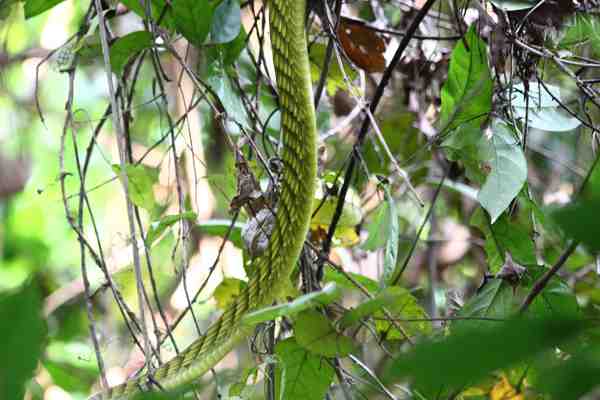
Many visitors see the canopy walkway as a low-tech amusement ride. But look closely, and wonders await: like this green mamba slithering past. Tim Boucher/TNC
Sometimes when you go birding, you can’t help but see other animals – elephants, army ants, beautiful butterflies.
Occasionally, if you get out early (as birders always do), you can get to a park before the crowds and you might see something really special (and, in this case, gruesome).
In January, we traveled to Ghana for some superb birding. Our visit included the famous canopy walkway at the Kakum National Park near the Ivory Coast. The seven bridges strung high up in the trees usually teem with visitors who have no appreciation of the amazing birdlife. Continue reading
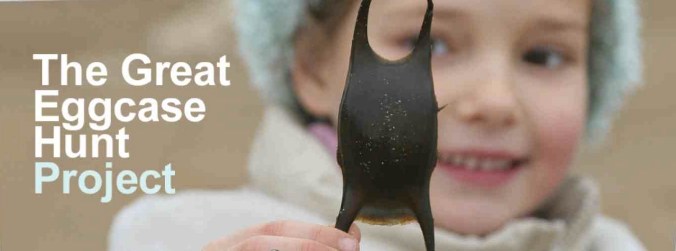
If you are like most people, the words shark and trust do not normally work well together in the same sentence. Sharks are predators, and predators predate. So unless you are a professional you should not take anything for granted when in their waters. But the two words work together well in a sentence about this organization, and the project they have launched to help sharks is intriguing. Entrepreneurial, even. Click the image above to read more about this initiative:
With over 600 species of skate and ray worldwide, at least 16 species have been regularly recorded in UK coastal waters; most of these species reproduce by laying tough leathery eggcases on the seabed. Of more than 30 species of British sharks, only two species lay eggcases that are commonly found on our beaches; the Smallspotted Catshark and the Nursehound. Continue reading

Carl Safina. In Amboseli National Park in Kenya, a herd of savanna elephants moved toward hills where they would spend the night.
What words might make us care enough to take action on behalf of these animals? Perhaps the words of those in the field, watching the paramilitary-style poachers, and who have traced the value chain for which those killers kill. From today’s New York Times a powerful editorial from two such people:
…In China and other countries in the Far East, there has been an astronomical rise in the demand for ivory trinkets that, no matter how exquisitely made, have no essential utility whatsoever. An elephant’s tusks have become bling for consumers who have no idea or simply don’t care that it was obtained by inflicting terror, horrendous pain and death on thinking, feeling, self-aware beings…

Photo Credit: John Mason
Krulwich is our go-to guy on a certain kind of day. A day when important scientific ideas might otherwise put us to sleep, and just need a fresh approach to get our attention. Today is one of those days, and the pied piper of fun science delivers a short and sweet one:
Continue reading

There are plenty of reasons to be concerned about the intersection of business interests and political interests around the world. As an entrepreneurial organization, we take a business approach to what we care about, and believe in the rights and responsibilities associated with influencing public policy. But we also believe in the importance of transparency, clear rules of the game, and common sense decency. We do not believe in making a buck at any cost. We do not believe companies who cut corners and sacrifice others’ wellbeing for the sake of making a buck are serving society’s interests.
So, in a series of shout outs to investigative journalists whose critical work points us to the ugly back alley activities of businesses and open air atrocities of little countries as well as otherwise commendable huge countries, we now return to one company for the second time:
Remember that one time? In Congress? When an anonymous group of House Republicans tried and failed to sneak a rider into the farm bill that would have exempted agribusiness from liability for biotech crops and all but eliminated the government’s power to regulate them? Good times. Continue reading
 Organikos