Foodways Through The Long Lens Of History And Brought To Your Attention By A Great Magazine

9780465021765

In this week’s New Yorker, two great things that add up to more than two great things:

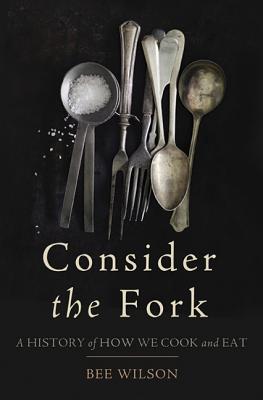
Jane Kramer reviews “Consider the Fork: A History of How We Cook and Eat,” by the British food writer and historian Bee Wilson. It’s more than a book review, though: The New Yorkers European correspondent brings into it her own passion for cooking and her years of writing about food.

The book review mentioned above is discussed in a podcast on the magazine’s website, meaning the book to the left generating two contributions from one of that magazine’s finest writers.  How does 1 + 1 add up to more than 2?  Here is a magazine, against all odds of print journalism in the 21st century, adding value with the very technology that is killing other publications.  Creative destruction, culling out weaker publications, is also working its magic. Continue reading

Rainbow Warrior, Greenpeace And New Zealand

Our hope is that it is a peaceful vessel, bringing justice in a tough world for marine ecosystems:

The new Greenpeace Rainbow Warrior ship sailed into Melbourne’s Port Phillip Bay this week ahead of a six-week tour that aims to highlight the planned coal expansion projects that threaten the survival of Australia’s Great Barrier Reef

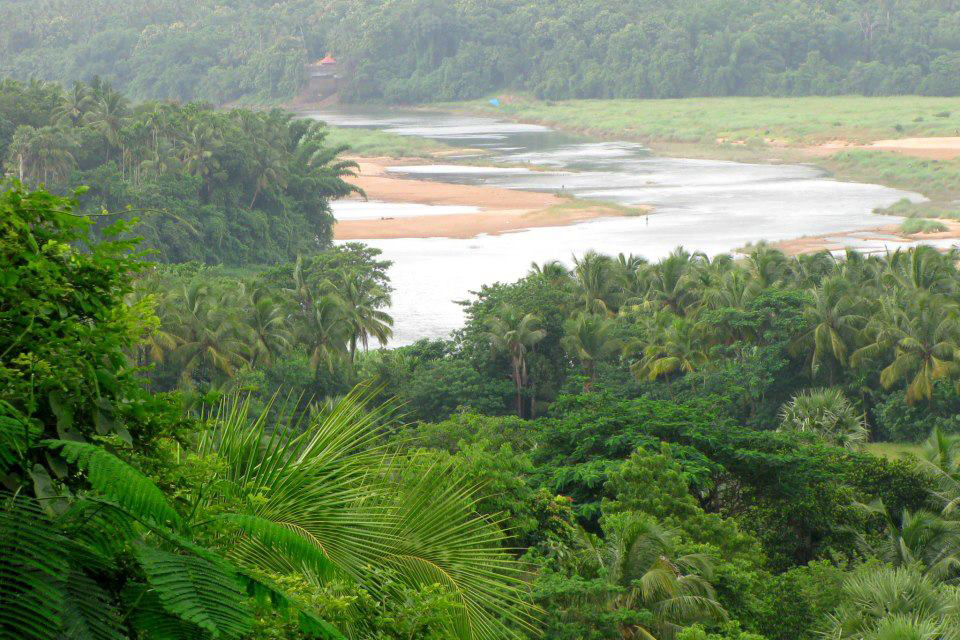
Beauty Of Kerala – Palakkad

Photo Credits: Jisa

Photo Credits: Jisa

Palakkad is a vast expanse of verdant plains interspersed with hills, paddy fields, rivers, mountains, streams and forests. A 40 km break in the mountains known as the Palakkad Gap serves as a gateway to Kerala from the north, giving access to the land situated at the foot of the Western Ghats. The pass acts as a corridor between Kerala and neighbouring Tamil Nadu and plays a major role in the trade contacts between East and West coasts of peninsular India. Continue reading

Automotive Alternatives Expanding

Mahindra Reva promises E2O electric car will go on sale this month

Mahindra Reva promises E2O electric car will go on sale this month

Because of their impact on the environment globally, we pay attention to this blog for news on the greening of cars and the automotive industry.  They, for their part, cull from important journalistic enterprises such as The Economic Times:

Mahindra Reva is determined to launch its E2O electric microcar in India this month, despite the end of federal subsidies that lower the purchase price for consumers. Continue reading

See CITES Save

Loading rosewood timber on trucks at the port of Toamasina (Tamatave), Madagascar. Photograph: Babelon Pierre-Yves/Alamy

Loading rosewood timber on trucks at the port of Toamasina (Tamatave), Madagascar. Photograph: Babelon Pierre-Yves/Alamy

If the proclamations and rules coming out of CITES are even half-implemented, endangered species of various domains–aquatic, terrestrial, animal and plant–will find themselves on roads less perilous than the ones they have been on in recent decades:

Every species of mahogany and rosewood tree in Madagascar gained new protection on Tuesday against a rampant logging trade that threatens to wipe out some species before they are even discovered.

The 178 nations at the world’s biggest wildlife summit agreed unanimously to strictly regulate the international trade in mahogany timber. Continue reading

Interesting Intersections

This slideshow requires JavaScript.

We have pointed him out before, and will likely continue to do so; here, with a link to a catalogue archiving some of his earliest work as an adult artist. And there is a podcast of the radio show about entrepreneurs, From Scratch, featuring an interview with this artist that allows him to sit remarkably well with pioneers at the intersection of conservation and other pursuits:

Andy Goldsworthy

Sculptor

Some sculptors work with materials like bronze or marble, which last forever; but others build sculptures made of ice or snow, which last only a few moments.  Continue reading

Clouded Leopard, Malaysian Forest Reserve


In the same regard as sharing important, if small news about conservation efforts, we think it is important for as many people as possible to view animals in the wild in order to sense the importance of conserving their habitat. In this five minute recording, we see the first and only recorded clouded leopard, which is interesting enough.  But we also see its hunting ground, which is a scrappy opening within the forest (making the filming possible) rather than a dense forest cover (more difficult for filming, to state the obvious) where we would more likely find a leopard hunting in Kerala. Continue reading

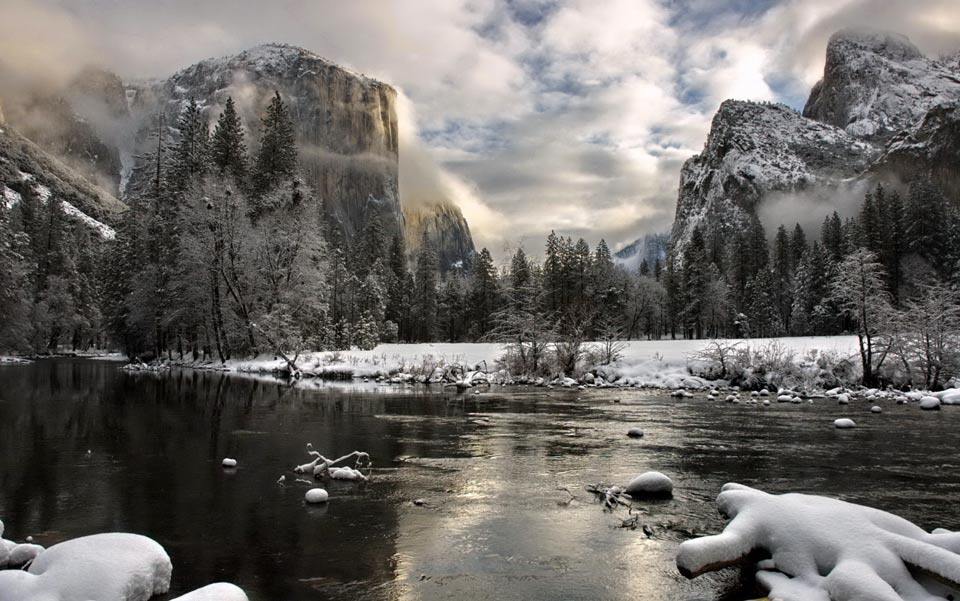
Yosemite’s Finest

Sunrise over the Merced River after a winter snowstorm, Yosemite National Park, California. Photo by Flickr/Getty Images

Sunrise over the Merced River after a winter snowstorm, Yosemite National Park, California. Photo by Flickr/Getty Images

Listen to the description of Yosemite in the words of someone who knows:

I sit in an alpine lake basin and eat my lunch: cheese and crackers, lemonade, and an apple. I lay my head on my knapsack, which is almost an extension of myself. I have had it for a long time, and thanks to all of the food I have carried in it, it is an odoriferous repository of memory of peaks climbed and meadows traversed, of the sounds of meadow thrush in canyons, of canyons idled in to feel sunlight and wind on skin, to see the waning light of day and the starry light of night, and be bathed in the ambience of alpenglow. The sounds of gurgling streams — like Beethoven’s Ninth Symphony — banish all worry from the human soul. Continue reading

Traditional Kerala Attire

Photo credits: Ramesh Kidangoor

Kasavu Mundu and Kasavu Neryathu are traditional handloom cotton fabrics with Kasavu (golden brocade) used for saris and as dress material by the Malayalee people. Woman elegantly wear the mundu (sarong type skirt) and neryathu (draped shoulder cloth) over a traditional sari blouse. Kerala men wear the mundu around the waist and the neryathu around the shoulders. Continue reading

Conservation Could

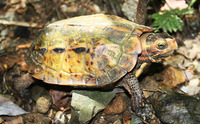
The Ryukyu Black-breasted Leaf Turtle is the subject of Japan's first ever listing proposal to CITES © Taku Sakod

The Ryukyu Black-breasted Leaf Turtle is the subject of Japan’s first ever listing proposal to CITES © Taku Sakod

We are always hoping for good news related to wildlife, whether through habitat conservation, rebounding endangered species, or any of a number of other worthy initiatives to reverse human impact on our fellow species on this planet. We often find more bad news than good. Several stories we have linked to recently report on the progress, and lack thereof, at the CITES gathering in Thailand. This conservation story evokes a certain engine that could:

Bangkok, Thailand, 8th March 2013—Japan is asking the world’s governments to help protect the Ryukyu Black-breasted Leaf Turtle, a rare turtle found on only three small islands in the Okinawa group. Continue reading

Vegetarian Roulette

joe-yonan

Yonan says he became a vegetarian in part for health reason, but also for environmental ones.

Click the image above to go to the podcast of this interview with Washington Post food editor Joe Yonan. It is funny to think that committing to a vegetarian diet could pose a career risk to anyone, but if you are a food-focsed writer or editor, of course:

You could see how high cholesterol might be a job hazard for these folks. “The meals that we food people get into can sometimes be way over-the-top of the kinds of things that normal people eat,” Yonan says.

But it’s not just foodies who are cutting back on meat. In a poll conducted last year with Truven Health Analytics, NPR found that 39 percent of adults surveyed said they eat less meat than they did three years ago. The main reason they cited for the change? Health concerns. Continue reading

The Poetry of Science

This conversation between two luminaries of modern science: Neil deGrasse Tyson, astrophysicist and host of NOVA and evolutionary biologist Richard Dawkins is as poetic as it is informative, and well worth the time it takes to listen.

Professor Dawkins says that science is the poetry of reality. We take pleasure in his and Professor Tyson’s expanded bandwidth… Continue reading

CJ, Kashmir And Awesome Powder At The Top Of The World

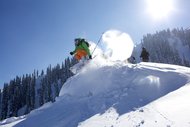
Russ Juskalian for The New York Times. A skier in a backcountry section of the Gulmarg area.

Our friends at the New York Times appear to agree with our friend CJ that the place to be this ski season is Kashmir. Click the image to go to the story in the Travel section of Sunday’s edition:

The risks of a ski trip to Kashmir? Security, avalanches and the altitude. The rewards? Perfect powder, an absence of crowds and staggering Himalayan beauty.

Continue reading

If You Happen To Be in New York City

This slideshow requires JavaScript.

From today until May 19 the New-York Historical Society will begin hosting a multi-phased exhibition of Audubon‘s early, exuberant period as an illustrator-naturalist:

Audubon’s Aviary: Part I of the Complete Flock

To celebrate the sesquicentennial of the New-York Historical Society’s purchase of the Audubon avian watercolors and the the release of the lavishly illustrated book Audubon’s Aviary: The Original Watercolors for “The Birds of America”―published by the New-York Historical Society and Skira/Rizzoli and winner of a 2013 New York Book Show Award Continue reading

For Foodie Friends

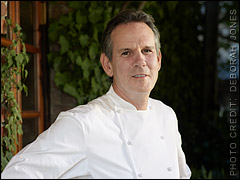
This is the third of the “From Scratch” entrepreneurship-focused podcasts we have sampled, and each one so far has been excellent. The first two had a very strong connection to conservation, which explains why we sampled them first.  This one has no connection to conservation, but there is a great spirit of community embedded in everything Keller says. He is notably clear-headed in acknowledging the role his family played in his development, and how his eventual success was due to people who might not have been expected to support him.  Click the image above to go to the podcast.

Continue reading

Mammals In Modern Habitats

This slideshow requires JavaScript.

Little did we know that there was an organization called The Mammal Society, let alone that they sponsor such a phenomenal photo competition each year (see some of the prizes offered to understand why so many people contribute).  We appreciate the acknowledgement that wild mammals are increasingly found in domesticated locations, which is not how it should be but here is what it looks like:

In 2012-2013 we ran the first Mammal Photographer of the Year competition for amateur photographers. Judges, including Kate MacRae, AKA “Wildlife Kate”, and photographer Steve Magennis are looking for images that tell a story, show rare behaviour, highlight mammals in a fragile environment, or make the ordinary extraordinary. The aim was to bring mammals into public focus, raising awareness of the issues they face, and hopefully encouraging us to appreciate the species that are often overlooked but essential to the health of our habitats. Continue reading

Read, Weep, Act

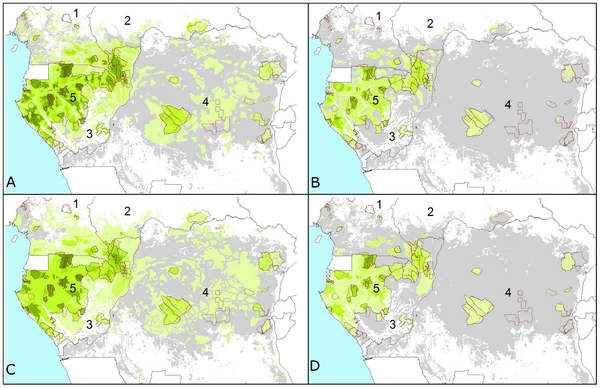
Figure 1. Elephant dung density and range reduction across the Central African forests.

A just-released scientific study documents the destruction.  Roughly 25,000 elephants per year are killed in Africa to feed the demand for ivory in Asia, and the pace has increased in the last decade such that, in another decade, extinction is possible.  A petition that led to one important-sounding announcement provided momentary hope until it was noted that no dates or even vague timelines were committed to.  For now, we have only the clear, cold facts of science and whatever stimulus these findings provide for us to take action:

Abstract

African forest elephants– taxonomically and functionally unique–are being poached at accelerating rates, but we lack range-wide information on the repercussions. Analysis of the largest survey dataset ever assembled for forest elephants (80 foot-surveys; covering 13,000 km; 91,600 person-days of fieldwork) revealed that population size declined by ca. 62% between 2002–2011 Continue reading