
Photo Credit: Adam Riley, Rockjumper Birding Tours
Asumura Village, Brong Ahafo Region, Ghana
Photo Credit: Adam Riley, Rockjumper Birding Tours
Asumura Village, Brong Ahafo Region, Ghana
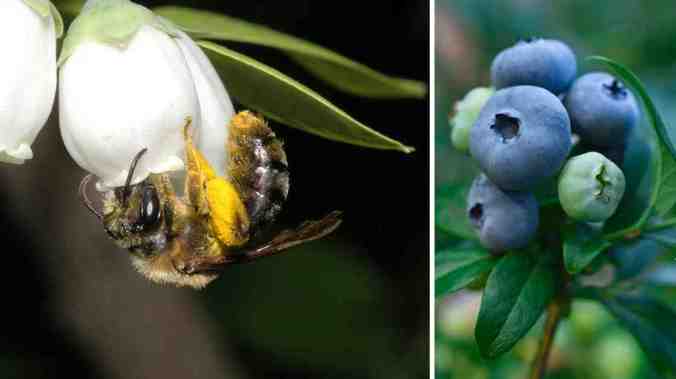
Wild bees, such as this Andrena bee visiting highbush blueberry flowers, play a key role in boosting crop yields. Left photo by Rufus Isaac/AAAS; Right photo courtesy of Daniel M.N. Turner
We like stories about bees for many reasons, but mostly in relation to the seemingly unrelated topics of food and collective action. In less than five minutes, this podcast news story adds important information to the mix:
Some of the most healthful foods you can think of — blueberries, cranberries, apples, almonds and squash — would never get to your plate without the help of insects. No insects, no pollination. No pollination, no fruit.
Farmers who grow these crops often rely on honeybees to do the job. But scientists are now reporting that honeybees, while convenient, are not necessarily the best pollinators. Continue reading
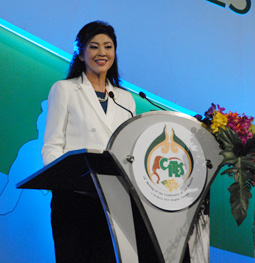
On behalf of elephants, the 1.5 million people who signed a petition to this end, and all the other people who care about their welfare, including the ecosystems where they continue to exist in the wild, we extend our strongest thanks for this announcement–years late but still very much appreciated. We hope, following the smiling moment at this important meeting, you will back it up with strict enforcement (click the image to the left for the full press release on the CITES website):
On behalf of the Government and people of the Kingdom of Thailand, I would like to welcome all of you to Bangkok, for the 16th Meeting of the Conference of the Parties to the Convention on International Trade in Endangered Species of Wild Fauna and Flora or CITES CoP16. Continue reading
When we invite an artist to visit us, it is mostly but not always because we think their work would fit well with the natural environments where we work. And, of course, because we love what we have seen of their art. The slideshow above includes current and boyhood illustrations by an artist who would hopefully appreciate our daily attention to his beloved creatures in various places:
…The artist and author James Prosek uses vivid and highly detailed watercolors to capture the natural world. He’s compared often to Audubon, though unlike the 19th-century artist’s focus on birds, Prosek’s work most often focuses on animals with fins instead of feathers. Continue reading

Photo Credit: John Mason
Mole National Park, Ghana
The Oxapampa-Ashaninka-Yanesha UNESCO biosphere reserve in central Peru. The Welsh funds will help the Ashaninka preserve their forests. Photograph: Nicholas Gill/Alamy
“For Wales? Why Richard, it profit a man nothing to give his soul for the whole world. . . but for Wales!” ― Robert Bolt, A Man for All Seasons
When Richard Rich betrayed, he did so for rewards related to Wales. Thomas More, in top shelf literary insult, takes him to task for it by emphasizing the pathos of having betrayed for profits as meager as Wales.
If you have been to Wales, you know it has nothing to be ashamed of in terms of physical beauty. And as for cultural beauty, Dylan Thomas or Richard Burton could tell Robert Bolt or Thomas More for that matter a thing or two about Wales. But now, Wales shows a creative streak in this contribution to conservation, perhaps a deeper greatness than other classics in its history. Continue reading
TED’s blog has this description of the man who it awarded $1 million this year:
It’s a question on so many minds: what will the future of education look like?
It’s something Sir Ken Robinson has asked for decades…Robinson got the opportunity to announce the winner of the 2013 TED Prize, someone who has a bold answer.
“So many kids are disengaged from education and there’s a tendency to confuse testing with learning,” says Robinson in his introduction. “What drives learning is curiosity, questioning … What fires people up to learn is having their mind opened up by possibilities.”
And with that, he revealed the winner of the $1 million TED Prize: education innovator Sugata Mitra, who has given two TED Talks over the years and released a TED ebook called Beyond The Hole in The Wall.

In one of its last posts before dissolving, Green Blog has this interview that serves as an excellent primer on climate change:
Dieter Helm has long been frustrated that, despite more than two decades of international negotiations, the world has failed to tackle climate change. So he got angry, he said, and decided to write a book about it: “The Carbon Crunch: How We’re Getting Climate Change Wrong — and How to Fix It.” Continue reading
From an article linked in one of our alumni emails we learned about an organization with a worthy set of initiatives and actions:
Katerva is building unique platforms to create and leverage its global action network:
- The Katerva Awards – The pinnacle of global sustainability recognition. Through them, the best ideas on the planet are identified, refined and accelerated for global impact. Continue reading

Photo credits: Ramesh Kidangoor
Ottanthullal is a combination of music, dance and linguistic variations, which is characterized by wit and humor. The most appealing aspect of the performance is the combination of storyteller and dancer in one actor, who effortlessly switches from one to the other. Continue reading

Associated Press. Stuart Chapman, a regional representative of the World Wildlife Fund, presented a petition for a blanket ban on the ivory trade to Thailand’s prime minister, Yingluck Shinawatra, on Wednesday.
You might want to lend your signature to the petition mentioned below, for which we thank WWF:
As my colleague Erik Olsen just noted here, many threatened species will be competing for attention when officials from 177 countries open a conference on the trade in endangered species on Sunday in Bangkok. Continue reading

Click the image above to take action. Thanks to Oxfam for the insistence that we hold the usual suspects accountable for the foods that make their way to our grocers:
You’re more powerful than any of the Big Ten food companies. Without you, they won’t stay big for long. Use Facebook and Twitter to nudge your favourite brands. Contact the CEO personally and tell them what needs to change. We’ll be constantly updating the scorecard so you can see the impact you’re having. Continue reading
Photo Credit: Douglas Bruce

Pattu Pavadai is a traditional South Indian dress, especially in Kerala and Tamil Nadu. They are frequently made from the famous Kanchipuram silk fabrics. Young girls wear Pattu Pavadai during ritual functions and special occasions.

Photo Credit: Stephen Crafts
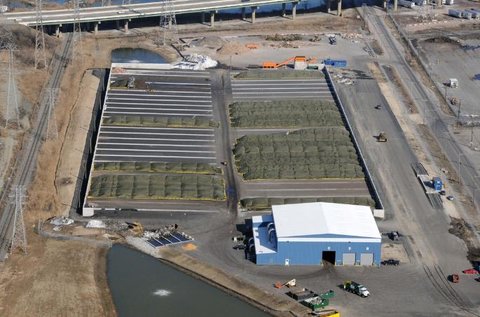
Corrado Construction. The Wilmington Organic Recycling Center in Delaware now produces some 75,000 tons of compost a year.
Thanks to Green Blog for coverage of the progress made getting this process in line with market forces:
Is it possible to make a living by turning rotting food into usable compost while also helping to curb greenhouse gas emissions and reduce landfill disposal costs?
The Peninsula Compost Company of Wilmington, Del., thinks so. Since 2009 it has been taking in growing quantities of spoiled food from supermarkets, restaurants, schools, and other sources and converting it in a matter of weeks into dark, moist, friable compost for use by landscapers, farmers and private gardeners. Continue reading

Photo Credit: Mr. Vijay Mampilly

From our friends in the north comes our favorite kind of cultural festival–all mixed up. It is reviewed in this podcast and explained on the Kennedy Center’s website:
About the festival
February 19-March 17, 2013, the Kennedy Center presents Nordic Cool 2013, a month-long international festival of theater, dance, music, visual arts, literature, design, cuisine, and film to highlight the diverse cultures of Denmark, Finland, Iceland, Norway, and Sweden as well as the territories of Greenland, the Faroe Islands, and Áland Islands. Continue reading

A Mayfly nymph. Photo by Daniel Stoupin, www.microworldsphotography.com
Yet another fascinating view of the world from Aeon, whose very name conflates the single into the infinite, making everything a matter of perspective.
When the Dutch cloth merchant Antonie van Leeuwenhoek looked at a drop of pond water through his home-made microscope in the 1670s, he didn’t just see tiny ‘animals’ swimming in there. He saw a new world: too small for the eye to register yet teeming with invisible life. The implications were theological as much as they were scientific. Continue reading

Associated Press. Services will be reduced at places like the South Rim of Grand Canyon National Park if automatic cuts in the federal budget take effect next Friday.
Wilderness areas are among the innocent victims of dreary political gamesmanship in a country with some of the most spectacular, and vulnerable, protected areas in the world:
Unless Congress can reach a budget agreement by March 1, the country’s national parks will be hit by a $110 million budget cut, resulting in shuttered campgrounds, shorter seasons, road closings and reduced emergency services, a parks advocacy group reports. Continue reading
 Organikos