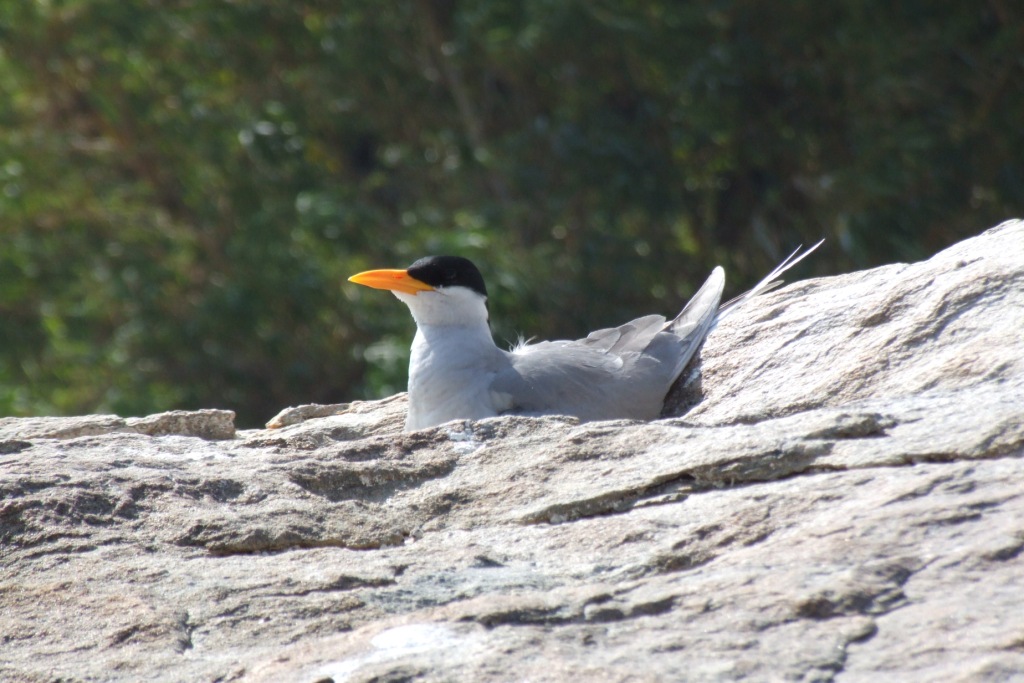
Sterna aurantia; Photo credit: Ramesh Kidangoor
Sterna aurantia; Photo credit: Ramesh Kidangoor
The one previous post on our site worth a visit on this topic happens to be a mostly funny, and fun one. If you have 34 minutes to spare, the best explanation of why this issue matters to all of us is in this podcast. Meanwhile, for those with only two minutes to spare, thanks to the Atlantic‘s attention to this matter:
If there’s one thing Schoolhouse Rock taught us all, it’s that the easiest way to explain a dry topic to someone with a short attention span is to show them a cartoon. So kudos to George Mason University economist Alex Tabarrok and Idea Rocket Animation for putting together this delightful two-minute clip laying out the case against software patents Continue reading
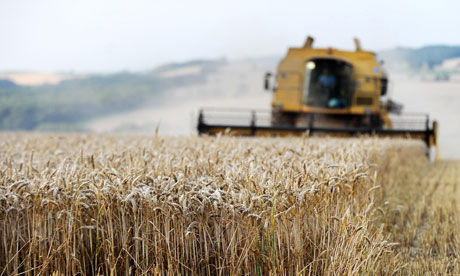
‘Not long ago, farm payments were justified on the grounds that world demand was low. Now they are justified on the grounds that world demand is high.’ Photograph: Andrew Matthews/PA
We are overwhelmingly in favor of supporting family farms whenever and wherever possible. Family farms are increasingly a form of heritage in danger of extinction. Sometimes but not always charity or government support is a solution to specific needs of family farms (search on Willie Nelson’s Farm Aid initiative for examples). But charity from the poor flowing to the wealthiest landowners? There are boundaries to the definition of a family farm that we had not thought to specify until reading this Guardian editorial today:
Squatting at the heart of last week’s summit, poisoning all negotiations, is a vast, wobbling lump of pork fat called the common agricultural policy. The talks collapsed partly because the president of the European council, pressed by François Hollande, proposed inflating the great blob by a further €8bn over six years. I don’t often find myself on their side, but the British and Dutch governments were right to say no. Continue reading
We said in a previous post that these matters are subjective. There is no accounting for taste. Still, Gerhard Richter is an artist that can clearly be understood as an artist. He is famous, yes, and also a wealth machine. But he does not seem to be doing what he is doing for fame and/or fortune. Writers should write. Artists should make their art.
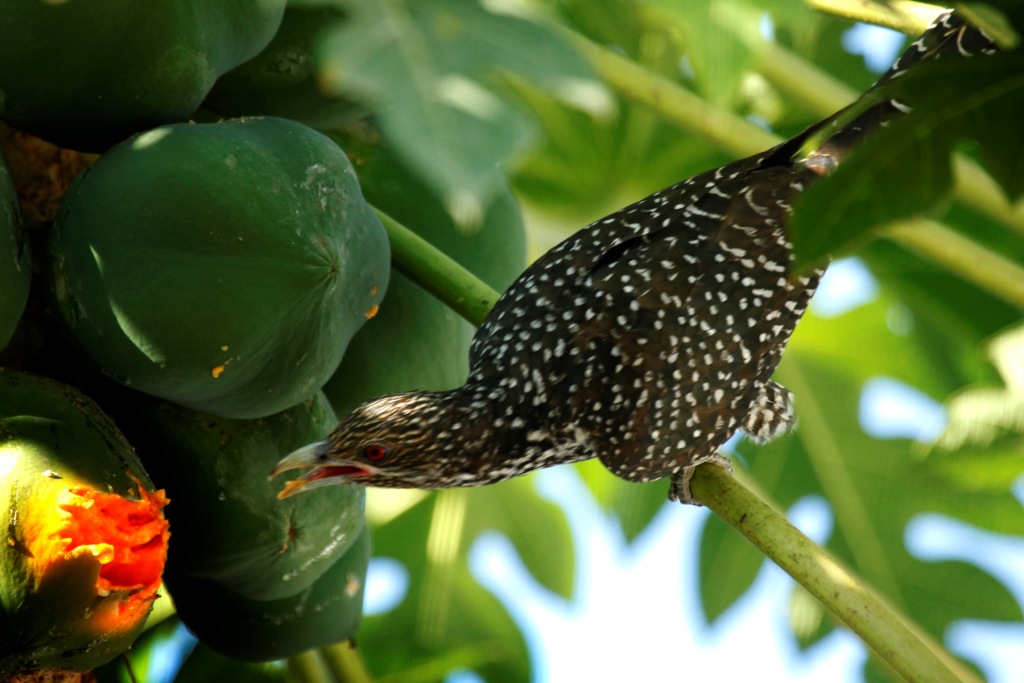
Eudynamys scolopacea; Photo credit: Joshy Manjummel
Thekkady, Kerala
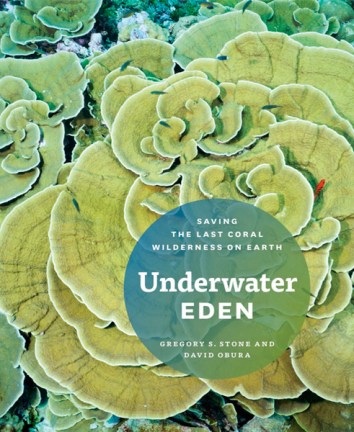
There are newer, larger marine protected areas. How and why do such areas come to be and how do they fare? According to this review the book to the left explains, and is even published as an authorial act of entrepreneurial conservation:
The Phoenix Islands Protected Area (PIPA) came into existence in 2006. It was, at the time, the largest marine protected area in the world and was the result of a courageous step by the government of the Republic of Kiribati – a South Pacific nation consisting of what was once known Continue reading
In 2003 the Metropolitan Museum acquired a significant group of paintings spanning a key period in European history, beginning with the advent of the French Revolution and concluding with the reign of Louis Philippe. Assembled by the New York connoisseur Wheelock Whitney between 1972 and 2000, this collection reveals a rich tradition of painting out of doors nearly a century before Impressionism, thus amplifying the role of the natural world as a source of inspiration Continue reading

When this great series started, it was not clear that it was being sponsored by an oil company, which seems a slippery a slope; or, perhaps the way things out to be (click the icon to the right to go to the series home page, and if you watch the “green tech” video featured at the top of the site at the time of this writing, hold your nose when ExxonMobil presents itself as the best hope for our educational future):
You could be forgiven for thinking that after the burst of attention given to clean technology in the wake of the oil price spike of 2007, innovation in energy has faded away as it has several other times in the last 40 years.
But you’d be wrong. Continue reading

SEE Algae. After its water is removed, this algae is destined to excrete biofuels.
Over at Green Blog, New York Times reporter Matthew Wald (click the image to the left to go to his report and the illustration below to go to the company’s website) writes about
…two companies that are racing to be first in commercial-scale production of motor fuel from nonfood sources. A large group of other companies is pursuing various other strategies, one or two steps behind. One of those companies is planning to use algae.
The company, SEE Algae Technology of Austria, is building a 2.5-acre factory on a sugar plantation near Recife, Brazil, that will use genetically modified algae that can eat carbon dioxide from the sugar. Adding urea and some nutrients, the algae excrete ethanol.
Any time a journalistic enterprise makes the effort to publish images, stories, video or other media that helps us understand and appreciate wildlife and the habitats they depend on, we hope to catch it and link to it here. Thanks to the BBC for these snapshots.

Wild Turkeys; Photo Credit: Stephen Crafts
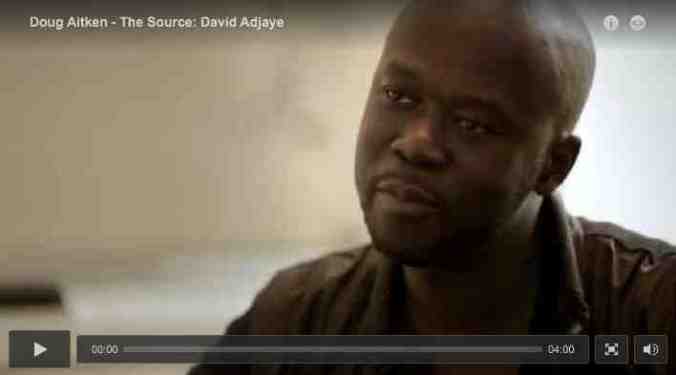
We pointed to an earlier conversation in this series. This one is about one architect’s view on story-telling. For architects, and anyone working with architects, this man’s concise but clear statement of purpose and method is an eye-opener.

Brazil soon expects to overtake the US as the world’s biggest soy producing nation. In the Amazon, soy farmers have rapidly expanded their land by using fire, bulldozers, saw mills and logging teams to clear the rainforest. But amid mounting concerns about global warming and biodiversity loss, Brazil’s government is deploying more personnel and equipment to hold the line between the food and the forest
Click above to go to the video and the accompanying story in the Guardian:
As his helicopter descends through the smoke towards an Amazonian Continue reading

The subject of this biography is the main reason to listen to this interview with the author, but not the only reason. The biographer, himself, is another: why would a professor of international relations take on such a task? He has a very good explanation in that interview.
Most importantly the interview hints at why the biography is likely worth a read: Cezanne’s intense and atypical sense of community, especially among well-regarded artists of his era, fascinates. The fact that he took up fine art relatively late in life stuns (if you did not know it already). His commitment to simple life away from the distractions of urban modernity is something we can relate to. His friend of the friendless actions inspire (except with regard to Dreyfus). The author has, according to Kirkus Reviews
researched every facet and nuance of Paul Cézanne’s life (1839–1906). His comfortable childhood in Provence, his years in Paris, where he was influenced by the Impressionists, and his dependence on the allowance from his father created the artist some suggested was “not all there.” Continue reading

A common sight in Germany: wind turbines in fields of rapeseed. Oil from the plant is made into biodiesel fuel to power cars, produce electricity and heat buildings. Credit: Osha Gray Davidson, InsideClimate News.
The second installment in a series we first linked to here (click the image to the left to go to the entire article at its source):
“What an eyesore, huh?” the man standing next to me on the beach said, nodding in the direction of a little girl flying a kite. The man, in his mid-40s, seemed to enjoy my confusion. He waited a beat before pointing beyond the girl, far out into the Baltic Sea. “There,” he said, smiling to make sure I understood Continue reading

Myophonus horsfieldii; Photo Credit: Joshy Manjummel
Wayanad, Kerala
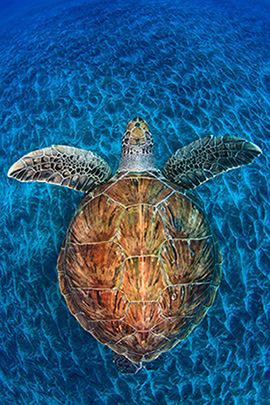
Jordi Chias

There is always a good reason to visit the museum, and now a particularly good one, if you like the image to the left. It is a sampling from the annual award program the Museum and BBC co-sponsor. For information on the exhibition, and tickets:
Veolia Environnement Wildlife Photographer of the Year
19 October 2012 – 3 March 2013
Open 10.00 – 17.50 dailyOpen late last Friday of every month October to February 2012 (excluding December) Continue reading

The Entomological Society of America (ESA) is the largest organization in the world serving the professional and scientific needs of entomologists and people in related disciplines. Founded in 1889, ESA today has more than 6,000 members affiliated with educational institutions, health agencies, private industry, and government.
If you have followed our blog you know we are not averse to celebrating the normally less celebrated corners of the natural world. We are therefore not surprised to learn of this organization, and are pleased to point to its entertaining and informative contest on YouTube. The sample video below won the Open category, and shows a swarm of predatory ponerine ants searching the African savanna for their prey–termites. When they locate a colony, they bite and sting their victims, and then return to the nest with jaws loaded with dead prey.
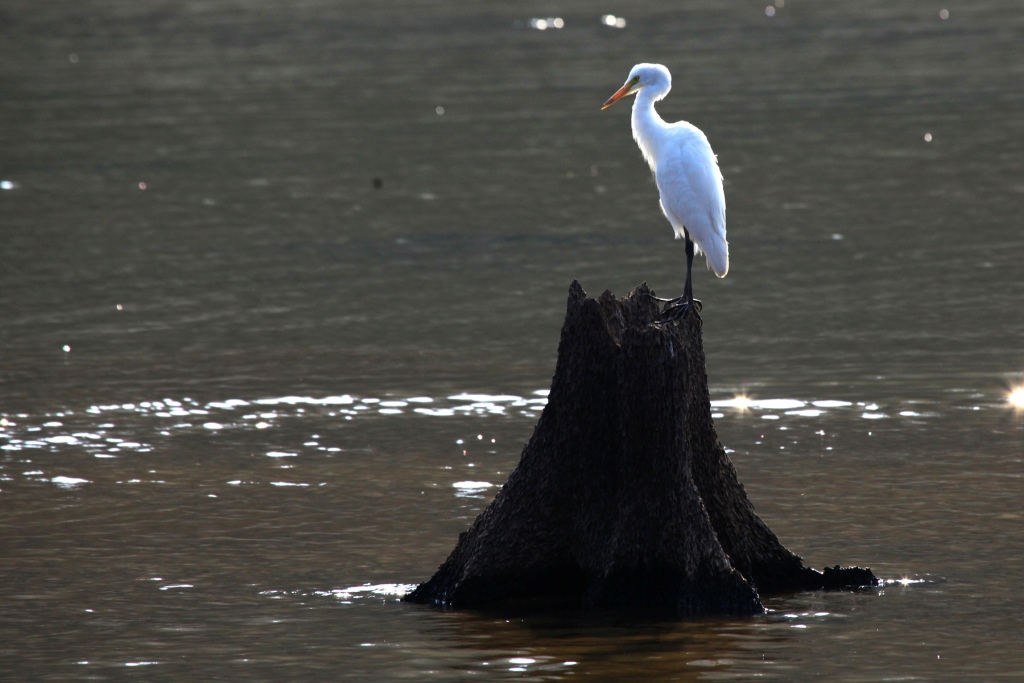
Mesophoyx intermedia; Photo Credit: Mr. Joshy Manjummel
Thekkady, Kerala

We have a photographer friend to thank for bringing this exhibit to our attention. We have the BBC to thank for offering museum exhibitions manager Phillipa Simpson’s fresh and inspiring introduction to some of the world’s most iconic nature photography. (click on the header for the BBC link with video of a narrated slideshow)
If you happen, like many of us on this site, to be a devoted fan of Mr. Adams, you will particularly appreciate the final element of the slideshow.

 Organikos