Final Thoughts On Oysters, Dunes And Conservation

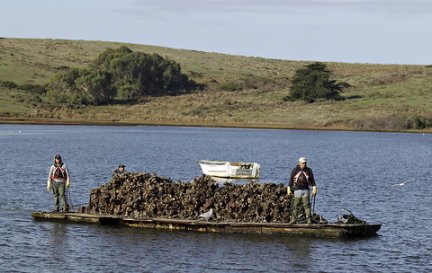
Photo: Associated Press. Workers from Drakes Bay Oyster Company bring in a load of freshly harvested oysters at Point Reyes National Seashore. Interior Secretary Ken Salazar announced last week that the operation would have to shut down.

Thanks to our oft-linked to favorite writer on such topics — Felicity Barringer — for the follow up on this story from a few days ago:

In the end, after all the money spent on the science — on cameras whose images were not carefully examined, on reports that misrepresented scientific studies, and on repeated investigations of flawed scientific work — the Interior Department’s decision not to renew an oyster company’s lease to operate within Point Reyes National Seashore largely sidestepped any scientific issues. Continue reading
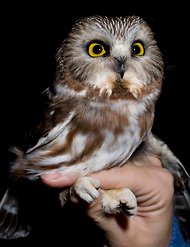
A Parliament Of Owls

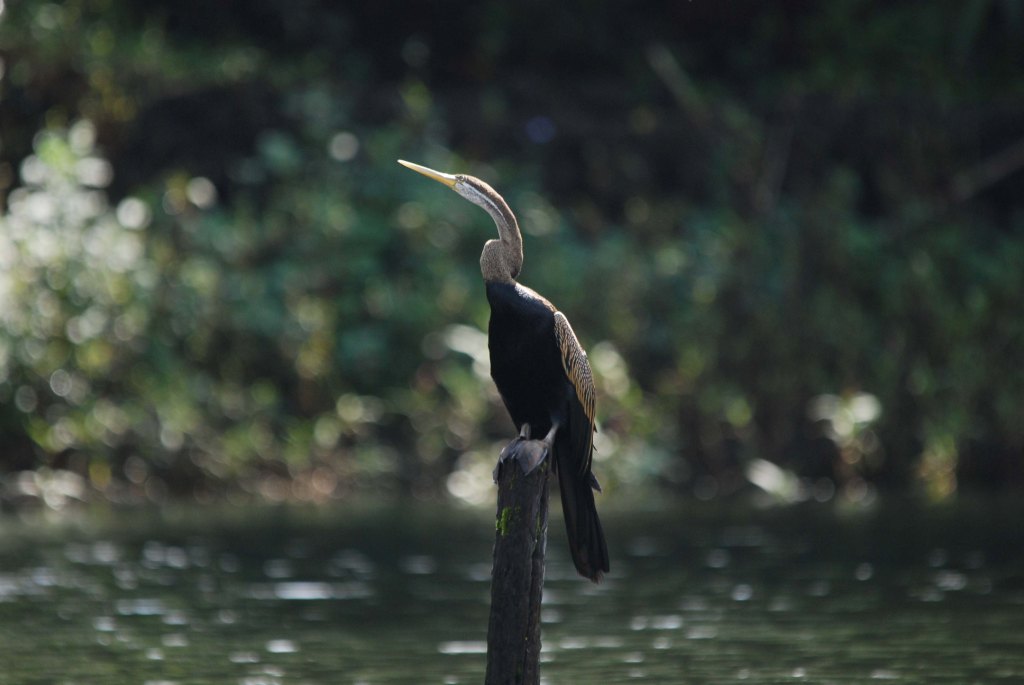
Photo: Scott Weidensaul. Little larger than a robin, northern saw-whet owls were long considered rare in the East.

Our thanks to Green Blog for this wonderful item:

Each autumn, thousands of miniature owls fill the night skies in the Northeast, gliding over forests and fields, suburbs and cities. They cast minuscule shadows as they breeze by the Empire State Building. Where they are headed, no one knows exactly. But researchers are certain of one point: there are many, many more of these little raptors, known as northern saw-whet owls, than they had suspected.

“This is a little bit of the Canadian wilderness passing through,” said Scott Weidensaul, a natural history writer who has coordinated volunteer research on saw-whet owls for 16 years. “Pretty much wherever you live in the Northeast or even in other parts of North America, there are tiny owls weighing no more than robins flying over your house.” Continue reading

Design Can Be Both Fun And Serious

A couple of recent posts by Crist, and the design process he mentioned, have led us to add some new design-oriented sites to our scanning process.  This one may not be the most visited, but it has some interesting material:

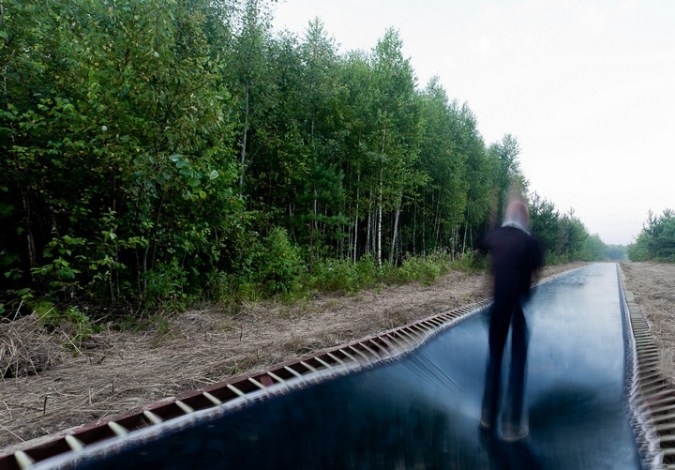
Archstoyanie is a creative festival that kicks off every year in the forest of Nikola-Lenivets, Russia. This year, the architects from Salto created a performance piece called ‘Fast Track’ – a 170 foot long track made of a trampoline! Designers Maarja KaskKarli Luik, and Ralf Lõoke built the Fast Track to challenge the concept of infrastructure that only focuses on technical and functional aspects and tends to be ignorant to its surroundings.

Click the banner above to read more about what you see below.

Archstoyanie-festival-2012-Fast-Track-Salto-Architects-4
Continue reading

An Old Fashioned Art And A Lesson In Craft

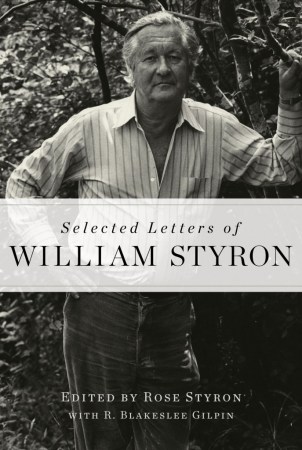
You do not need to be a fan of William Styron to appreciate the letters in this book; you only need to care about the art and craft of writing; so we thank the author’s friends at Paris Review for making these samples available (see below):

“A great book should leave you with many experiences, and slightly exhausted at the end,” explained William Styron in his 1954 Art of Fiction interview. “You live several lives while reading it. Its writer should, too.” Such is the experience in reading Styron’s Selected Letters, edited by Rose Styron and published this week. Alongside major cultural and political events of the latter half of the twentieth century are intimate accounts of family life, depression, writing, frustrations, and friendships.

Continue reading

One Wild Life Temporarily Lost, Likely To Be Found, Then To Be Lost Permanently

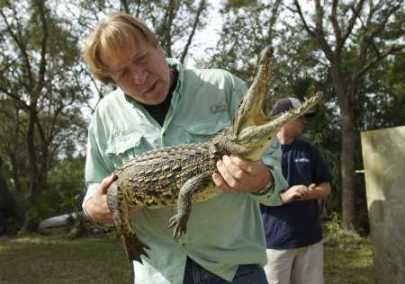
Joe Wasilewski works last month with a Nile crocodile captured near Homestead. The reptile expert says Nile crocodiles “learn that humans are easy targets.”

We do not enjoy reading about, or passing along, such stories.  But we must.  For shock value. Just not for the sake of entertainment shock value.  How and why such creatures find themselves in such locations is a topic we have dedicated at least one post to.  Wild creatures belong in the wild, except on rare occasions.  In the case below, one wild creature will lose its life as a result of someone’s misguided thoughts to the contrary:

State wildlife officials have given their agents a rare order to shoot to kill in the hunt for a young and potentially dangerous Nile crocodile loose near Miami. Continue reading

Sometimes Only The Impossible Will Do

Journalists are trained to investigate and report facts; when the occasion merits, we might want them to advocate.  This writer does her reporting and then some.  This particular advocacy will be ignored, derided as another “dead on arrival” idea, blah blah blah.  But the fiscal cliff will be a picnic compared to the other cliff we are headed toward:

It’s been almost a century since the British economist Arthur Pigou floated the idea that turned his name into an adjective. In “The Economics of Welfare,” published in 1920, Pigou pointed out that private investments often impose costs on other people. Consider this example: A man walks into a bar. Continue reading

A Fountain Of Ideas, Spouting In Many Directions

The screen shot to the right shows the simplicity of the site.  Which otherwise is an explosion of ideas, observations written with craft, and links. We wonder just about every day how she does it.  And why.  But that is on a need to know basis so we have just continued to visit her site and admired her prolific sharing. In a profile over the weekend, we learn a bit about how and why she has the stuff:

SHE is the mastermind of one of the faster growing literary empires on the Internet, yet she is virtually unknown. She is the champion of old-fashioned ideas, yet she is only 28 years old. She is a fierce defender of books, yet she insists she will never write one herself. Continue reading

Bill McKibben Down South: Activisim’s The Thing To Counter Climate Change

Click the banner to the left for an interview with the relentless organizing activist Bill MKibben, who says it all in plainspoken English:

We’ve got lots of good progress coming, it’s just much different than what we’re used to. Continue reading

Bhutan’s Gross National Happiness Measurement Is Not Meant To Be Cute, And So Continues To Challenge

The principles of Bhutan’s gross national happiness system are spelled out for pupils at a secondary school in Paro, a largely agricultural region.  Photograph: Jean-Baptiste Lope

Bhutan pioneered the challenge to standard measures of development and progress.  Hearing this for the first time, it is reasonable to smile, wistfully. It sounds like it is not meant to be taken seriously. Speak to any Bhuttanese and you will sense otherwise. The Guardian shows it continues the challenge whenever it can:

For the past three decades, this belief that wellbeing should take preference over material growth has remained a global oddity. Now, in a world beset by collapsing financial systems, gross inequity and wide-scale environmental destruction, this tiny Buddhist state’s approach is attracting a lot of interest. Continue reading

Typically Wondrous Krulwich

istock_cornfield-2

Read to the end.  It is worth every word and image:

We’ll start in a cornfield — we’ll call it an Iowa cornfield in late summer — on a beautiful day. The corn is high. The air is shimmering. There’s just one thing missing — and it’s a big thing…

…a very big thing, but I won’t tell you what, not yet.

Instead, let’s take a detour. We’ll be back to the cornfield in a minute, but just to make things interesting, I’m going to leap halfway around the world to a public park near Cape Town, South Africa, where you will notice a cube, a metal cube, lying there in the grass. Continue reading

Patterns And Repetitions

Herzog

Another in the series of video-recorded conversations Doug Aitken has had with architects and artists for this exhibition:

This project is about the roots of creativity. Many of the people in this project are working in very diverse mediums and it’s that common thread that I’m interested in. Continue reading

Language, Heritage & Meaning

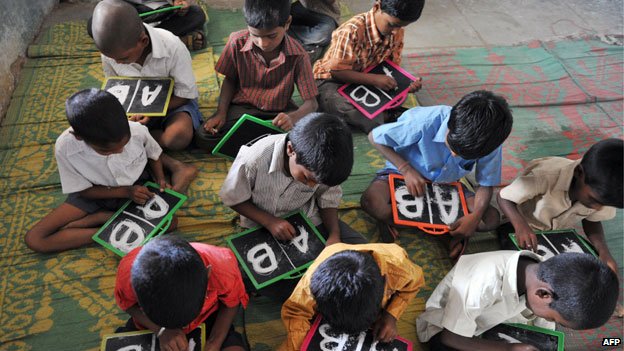
Today’s aspirational Indians want their children to go to a school where lessons are taught in English. But often the pupils leave speaking a language that would not be recognised in London or New York. Could this Hinglish be the language of India’s future?

Thanks to the BBC for this note on languages in our adopted home country:

Why, half a century after Indian independence, does English remain the language of higher education, national media, the upper judiciary and bureaucracy and corporate business? Continue reading

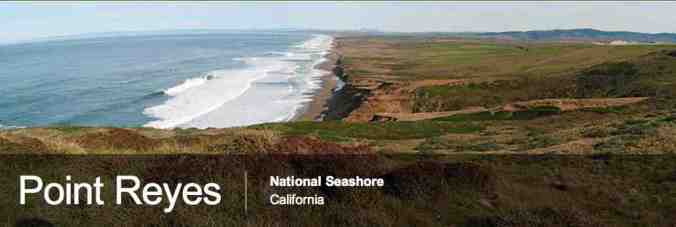
We Love Oysters, But We Love Wilderness More

Thanks to a briefing on Green Blog, we learn today that the good deed was done, as hoped:

California Oyster Farm Must Go | Ken Salazar, the secretary of the interior, announced on Thursday that he would not extend the lease of an oyster farm in the Point Reyes National Seashore in Northern California, allowing the estuary there to become a wilderness area. Continue reading

Jellyfish & Life

One of the longest and most fascinating items in the New York Times Magazine in ages:

After more than 4,000 years — almost since the dawn of recorded time, when Utnapishtim told Gilgamesh that the secret to immortality lay in a coral found on the ocean floor — man finally discovered eternal life in 1988. He found it, in fact, on the ocean floor. The discovery was made unwittingly by Christian Sommer, a German marine-biology student in his early 20s. He was spending the summer in Rapallo, a small city on the Italian Riviera, where exactly one century earlier Friedrich Nietzsche conceived “Thus Spoke Zarathustra”: “Everything goes, everything comes back; eternally rolls the wheel of being. Everything dies, everything blossoms again. . . .” Continue reading

Walk The Walk

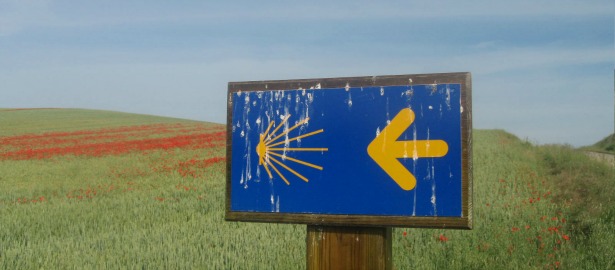
Click the image above to go to the thought piece.  It got us thinking that sometimes we can only talk the talk; other times we make the effort to at least talk the walk; on a good day we walk as we talk; but on the best days we walk the walk:

For 44 days, I walked El Camino de Santiago de Compostella. “The way to Santiago along the field of stars.”

The standard icebreaker along the dirt path is simply, expectedly, “Why are you walking?” Continue reading

Do Not Look Away


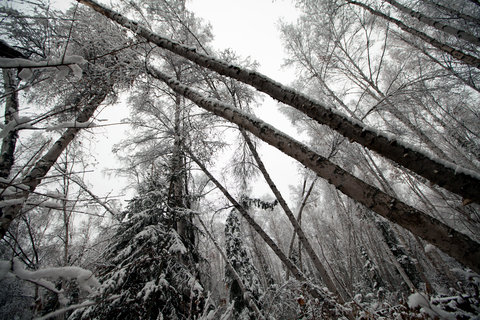
Click the image above to go to this important report, as described in Green Blog.  It would seem more pleasant to look away, but we cannot.  Anyone who has been to Siberia knows what this is about.  If you have not been to Siberia, read on:

The greatest single uncertainty about climate change is how much the warming of the planet will feed on itself.

As the temperature increases because of human emissions, feedbacks could cause new pools of carbon to be released into the atmosphere, magnifying the trend. Other types of feedbacks could potentially slow the warming. Over all, climate scientists have only best guesses about how these conflicting tendencies will balance out, though most of them think the net result is likely to be a substantial rise in the planet’s average temperature. Continue reading