Just Say No

Golden Cap holiday park is on the edge of Dorset's world heritage-listed Jurassic coast, which includes Studland Bay, above. Photograph: Adam Burton/Robert Harding World Imagery/Corbis

Golden Cap holiday park is on the edge of Dorset’s world heritage-listed Jurassic coast, which includes Studland Bay, above. Photograph: Adam Burton/Robert Harding World Imagery/Corbis

Does the world really need another five-star holiday village?  Maybe.  But does it need one in Studland Bay?  No way. Click the image above to go to the story in today’s Guardian:

One of Britain’s most popular beauty spots could be disfigured by the expansion of a modest caravan park into a five-star holiday village, say opponents of a scheme in Dorset.

Golden Cap holiday park, at the foot the highest point on the south coast, is in England’s only natural Unesco world heritage site and in an area of outstanding natural beauty. It is also surrounded by National Trust inalienable land. Continue reading
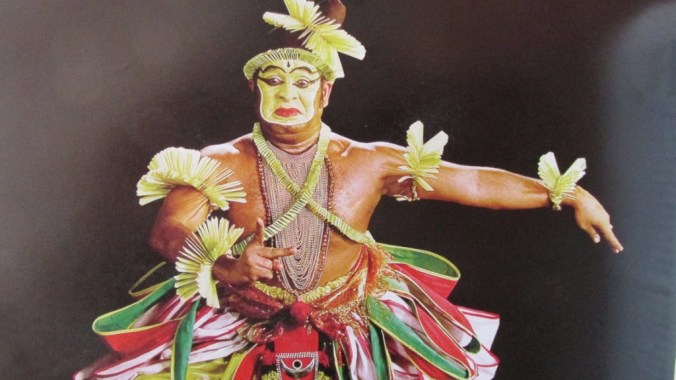
Seethankan Thullal – Art of Kerala

The story of Kerala is mirrored in the evolution of its art and culture and offers a veritable array of performing arts. Thullal is a solo performance combining dance and the recitation of stories in verse. Introduced in the 18th century, Seethanankan Thullal is the slowest of the three forms of the Thullal. Continue reading

Writing With A Sense Of Place

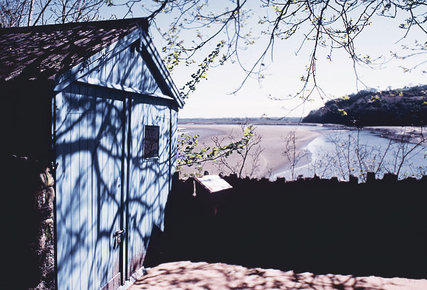
Jonathan Player for The New York Times. Dylan Thomas’s writing shed in Laugharne.

If writers should write, and they should, then where should they do it?  Perhaps a philosopher knows best (click the image above to read the full item):

…One does not have to be a Thoreau or a Rousseau for one of these modest spaces to supply what is needed to write. Identification with nature is not required (if indeed it were possible); a certain harmony with nature is already broken by putting pen to paper. Continue reading

Patterns Of Illegal Wildlife Trade

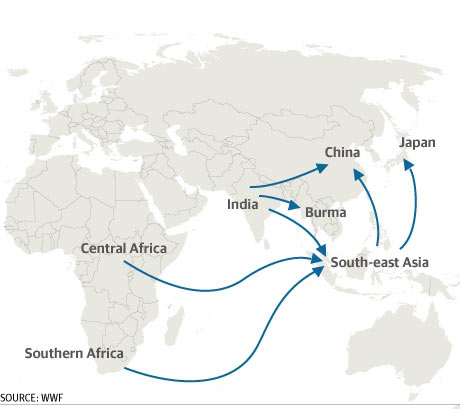
The main routes for organised criminal trade in wildlife.

This earlier post touched on WWF’s use of military technology to take on an increasingly militaristic illicit trade.  In today’s Guardian, an article with an insightful video embedded (click the map above) touches on approaches to disrupting these patterns. According to a new study commissioned by WWF and conducted by Dalberg, illegal wildlife trade is increasingly mapping on to the patterns of trade for illicit drugs and arms globally:

Organized crime syndicate members at levels 4 and 5 are often located in consumer countries, beyond the reach of enforcement authorities in range countries. For this reason, increased international cooperation is vital. Continue reading

Plowshares, Swords And Wildlife Conservation

This slideshow requires JavaScript.

Whatever your opinion about a military-industrial complex possibly running amok, you might agree that the state of endangered wildlife deserves some radical brainstorming. Today, sometimes the plowshares plunder while the swords save. It is slightly creepy to celebrate military tools, sponsored by corporations and conservation NGOs, being repurposed this way.  But these are truly times that try men’s souls.  We will chalk this one up as net-gain innovation.

Urban Agriculture

From today’s Green Blog, an interesting twister:

John Hantz says he has a dream: to purchase 140 acres of derelict land in the heart of Detroit and turn it into the world’s “largest urban farm.”

A Web site set up by Mr. Hantz, a wealthy entrepreneur, to advance his proposal says the farm would return the city “to its agrarian roots.”   Continue reading

Friends In High Places

A judge is due to decide whether to authorise a fresh round of forced police evictions in Notre-Dame-des-Landes. Photograph: Jean-Sébastien Evrard/AFP/Getty Images

Alain, meet Miranda; Miranda, Alain.  You both have done your part to reverse a long history of human unfriendliness to trees.  Those efforts strengthen the likelihood of additional collective action:

The protesters, including farmers, locals and green politicians, argue that building a brand new airport for France’s sixth largest city, which already has an award-winning airport, is both an environmental disaster and a waste of public money during an economic crisis. Support groups have sprung up across France. Continue reading

Writer Will Walk, We Will Watch

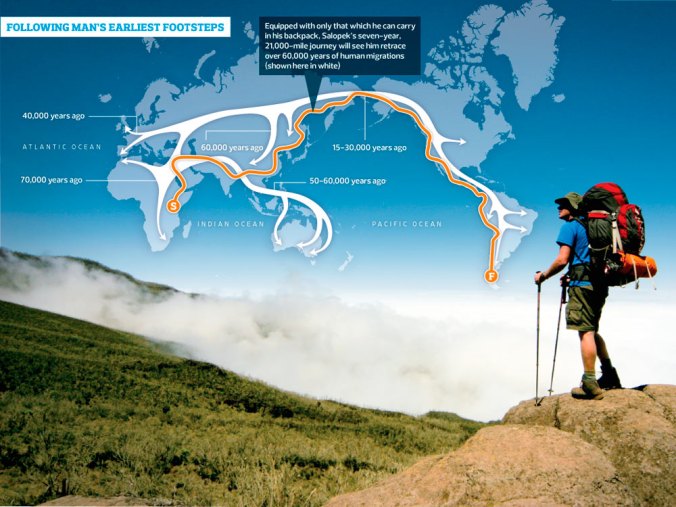
We will link to the updates as they arrive.  For now, the plan:

It will be a journalistic assignment like no other. Call it “the longest walk”.

In what is probably the longest, most arduous piece of reportage ever undertaken, Paul Salopek, an experienced writer for the Chicago Tribune and National Geographic, is embarking on the astonishing task of retracing the journey taken by early man tens of thousands of years ago.

Beginning in the exotic surroundings of the Great Rift Valley in Ethiopia, Salopek will take an estimated 30 million steps, reaching his destination seven years later, three continents away at the most southerly point of South America. Continue reading

Folks Fight Feral Felines For Frigatebirds

A male frigatebird with the distinctive red sac on its chest that is inflated during courtship. Photograph: Derren Fox

Thanks to the Guardian‘s coverage of scientific and environmental issues for this story of success involving collective action on the part of British folk who decided to fix a problem they had inadvertently created starting back in the day when Darwin was voyaging on the Beagle:

…In the early 19th century, Ascension Island was home to more than 20 million seabirds, mainly masked boobies, black noddies, brown noddies and Ascension frigatebirds. The frigatebird was considered to be the most important because it was unique to the island. Continue reading

Profile Of Smithsonian American Ingenuity Award-Winner

Click the image above to go to another note of tribute, this one in the current Atlantic, for a remarkable leader in academia, this one at the beginning of her career:

Eric Lander, director of the Broad Institute, a genomics research center affiliated with MIT and Harvard, has known Sabeti since the late 1990s, when she was an undergraduate advisee at MIT. Continue reading

Sometimes Science Says Otherwise

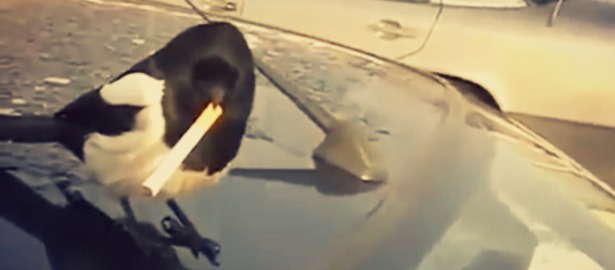
Among family, friends and colleagues everyone knows someone who has tried to kick the habit.  Many succeed. Once the habit is kicked, where does it go?  And for those who have not kicked the habit, and are still flicking the remainders about, where do those go?   Apparently, both end up in bird land, and for reasons we might find acceptable:

We never actually established why birds suddenly appear every time you are near. It might just be because you are one of the terrible, horrible people who throws cigarette butts on the ground everywhere. When a little bird waddles out and picks one up and uses it to build a nest, though, you are sort of redeemed, in that the world becomes a better place for its bird family.

Research published today in the journal Biology Letters followed urban birds and measured the amount of cellulose acetate (from cigarette filters) in their nests. The nests with more butts had fewer parasites. Continue reading

You, and 999,999 Other Email Protesters, Can Sometimes Save The World (In This Case, The One Whales Inhabit)

South Korea had planned y to conduct ‘scientific’ whale hunts similar to those carried out by Japan in the Antarctic every winter. Photograph: Momatiuk – Eastcott/Corbis

Bravo, activists of all stripes, but in this case especially the emailing type.  And thank you, Korea, for finally rejecting false justification for whale-killing and doing the right thing. Click the image above for the whole story in the Guardian (whose consistent coverage to these issues deserves credit, too):

Japan, which uses the loophole to kill hundreds of whales every year, is expected to send its whaling fleet to the southern ocean in the next few weeks.

South Korea initially said an increase in whale stocks in its coastal waters had prompted the decision to resume whaling. The fisheries ministry said rising whales numbers posed a threat to squid and fish stocks.

The ministry reportedly began to reconsider after criticism from anti-whaling nations and an online petition that attracted more than 1,000,000 protest emails in three weeks.

Et tu, Japan?

Tribute Is Due

His academic work is so far removed from what we do day to day, it would be difficult to explain why this post must be. His political activism is not the reason, though we admire his taking the side of the underdog, being friend to the friendless, giving voice to the powerless.  When someone leads as he has led, he deserves a birthday tribute.  Do yourself a favor and take 5-10 minutes to read this in its entirety, or at least these last two paragraphs:

When I was a second-year graduate student at M.I.T., Chomsky taught a class on philosophy, which I was lucky enough to sit in on. The class itself was an event, almost a circus; people came from all over Boston, not just M.I.T. Continue reading

Friends In High Places

Not all marine creatures have equal opportunity of species survival.  As in any social milieu, some are better connected than others; some have benefactors to look out for them; others do not. Thanks to Green Blog, more on the protection of certain charismatic species (but not not others) in the wild blue yonder:

Whale sharks get some respect; the bigeye tuna, not so much.

That was the gist of the message from the Western and Central Pacific Fisheries Commission, whose member nations agreed this week at a meeting in Manila to help reduce whale shark deaths in Pacific fisheries. The commission did not act on a recommendation from scientists that the catch of bigeye tuna be sharply reduced. Continue reading

Zombie Architecture & Rainforest Creatures

In the New York Times, the great science-explaining journalist Carl Zimmer writes about a mystery most of us would never otherwise encounter:

In the rain forests of Costa Rica lives Anelosimus octaviusa species of spider that sometimes displays a strange and ghoulish habit.

From time to time these spiders abandon their own web and build a radically different one, a home not for the spider but for a parasitic wasp that has been living inside it. Then the spider dies — a zombie architect, its brain hijacked by its parasitic invader — and out of its body crawls the wasp’s larva, which has been growing inside it all this time. Continue reading

Guardian, Angel, Sea Shepherd

Paul Watson, founder the animal rights and environmental group, Sea Shepherd Conservation, has returned to Antarctic waters after months on the run. Photograph: Markus Schreiber/AP

We feel fortunate to have the Guardian’s coverage of our favorite angelic trouble-maker, Paul Watson, since few other publications seem willing to pay attention to his cause. From our relatively comfortable, distant perch on dry land we nod to the southern waters where he and his band of activists righteously take on the whale-killers:

From aboard a Sea Shepherd ship, Paul Watson told Associated Press on Tuesday that his job is to protect whales, and he can’t do that if he’s in custody. He said the Sea Shepherd fleet is already in the Southern Ocean.

“I want to stay in the ocean,” the 62-year-old said. “I’m not going to be able to do that from some holding cell in Japan.”

Read the whole story here.

If You Happen To Be In London

This slideshow requires JavaScript.

Milo’s recent post got us thinking about the temptation to anthropomorphize.  Tim Flach‘s photography seems to be hugging the temptation sometimes, wrestling with it at others.

His show, just opening in London, would be a good place to start with his work.  The photos below help understand the riff on Milo’s post and his book looks worthy of any coffee table as a conversation-starter. 

Byron’s Daughter, Randomness And A Great Science Writer

The Royal Society’s recognition is enough to make even the author blush (in the video above, just barely visible in the fifth minute):

From the invention of scripts and alphabets to our current world of blogs and tweets, James Gleick tells the story of information technologies that changed the very nature of human consciousness. ‘The Information’ is the story of how we got here and where we are heading.

Professor Jocelyn Bell Burnell DBE FRS, Chair of the judges, said: “The Information is an ambitious and insightful book that takes us, with verve and fizz, on a journey from African drums to computers, throwing in generous helpings of evidence and examples along the way.  It is one of those very rare books that provide a completely new framework for understanding the world around us. It was a privilege to read.”

James Gleick said: “This is a very unexpected surprise. I am not a scientist, but I have my nose pressed against the glass. I visited the Royal Society 12 years ago to research a biography of Isaac Newton. It is a pleasure to be back again.”