Restricted Demon Butterflies are common in forests as well as countrysides, frequently seen during the rainy season. The upper side of the wings have three small white dots and just below that a long white patch. These butterflies are drawn to flowers especially lantana. Other favorite plants are Costus specoisa, Zingiber montana and Curcuma decipiens.
Author: Organikos
Mixing Up The Medicine
Although we steer clear of politics, we pay close attention to policy; we do our part to support policy outcomes that match our values and interests; and (given the complexity of it all) mostly we just try to keep on our radar the various issues that lead to the need for policy in the first place. You don’t need a weatherman. You need be neither policy wonk nor know-it-all nor tree hugger to know where those winds are blowing us. Case in point:
Dear President Obama,
As the lead negotiator for the world’s 48 Least Developed Countries (LDCs) in the United Nations climate change negotiations, I congratulate you on your re-election. I also want to express my admiration for your response to superstorm Sandy: without the preparations that you made, the impacts to those hit by the storm would have been even more devastating. As communities in the north-east work to rebuild and recover, the world has an opportunity to begin a new, reality-based conversation about climate change. Continue reading
Seeds Seen Anew
Thanks to Smithsonian Magazine‘s blog, this collection of close-up photographs of seeds…
Humans Read Stories For Perspective
We are anchored, as an organization, around experiential learning and action, not only for our interns but also in/for the communities we are part of. But this bias itself is informed by the opportunities many of us have had, through education, living in cultures other than those we were born into, access to libraries, or work experience early in life, to read our way to better understanding. We have plenty of diverse posts on this topic. In a couple of minutes, the video above sheds light on why this post, and a few follow-ups by one of our first contributors, set the bar for what we see on a good day: with the aid of good literary perspective, we can describe our experiences in a way that benefits others.
Another Good Reason To Reduce Your Carbon Footprint

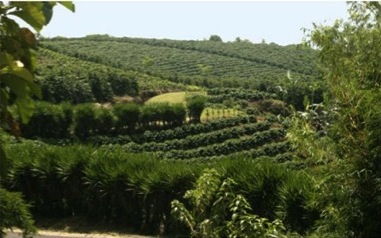
Coffee plantations surrounding Xandari, Costa Rica.
Photo: Emilia Ferreira
It is not a journal we regularly read, but the topics in this particular study–coffee and climate change–we follow closely. Click the banner above to read the (accessible to non-scientists) article:
Coffee (Coffea L.) is the world’s favourite beverage and the second-most traded commodity Continue reading
An Award, In A Word: SafetyNet
Safetynet won this year’s James Dyson Award and is explained on the website of that award program:
The goal of the SafetyNet system is to make commercial fishing more sustainable by significantly decreasing the numbers of non-target and juvenile fish caught during the trawling process. Escape Ring devices form a part of this system, and are currently the focus of the development work. The rings tackle the problem of
Another Renewable Energy Innovation
Click the image above to go to the full story from Green Blog:
KiOR, a renewable fuel start-up based in Pasadena, Tex., said Thursday that it had produced a crude oil made from wood chips at a plant in Mississippi and expected to refine it into gasoline and diesel and sell it commercially later this month. That would be a first for the cellulosic biofuel sector.
Humans Tell Stories For A Living

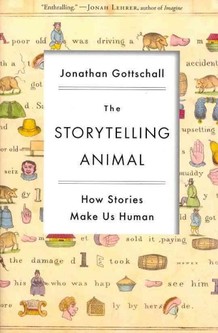
A great conversation with the author of this book is podcast here thanks to PBS and its contributors. In the current issue of American Scientist, a review:
Gottschall clearly considers it safe to say that storytelling has something to do with helping us navigate our social worlds, since we are such thoroughly social animals: “We are attracted to fiction not because of an evolutionary glitch, but because fiction is, on the whole, good for us. This is because human life, especially social life, is intensely complicated and the stakes are high.”
Alternative Bulbs, Designed For Aesthetes
From Clean Technica, a story about a new light:
SWITCH Lighting has now designed a light emitting diode (LED) bulb that is much more industrial looking, like the standard incandescent bulbs, and demonstrates many of the same qualities that consumers like without the wasted energy.
They’ve been widely praised for their sleek industrial design and have even been featured as a work of art in several art galleries. In addition, the SWITCH75 was a Consumer Electronics Show 2012 Innovations Honoree, was named by TIME Magazine as one of the 50 Best Inventions of 2011 and also received a silver rating in the prestigious Edison 2012 Awards.
Alternative Energy, Scaling To Feasibility
Click the image to the right to go to the story in the Monitor:
Like many green technologies, wind power’s main drawback is a matter of size: Small turbines are inefficient and expensive, and utility scale turbines require too much land and capital for some communities. Continue reading
Le Clos Montmartre: One Of Many Well-Kept Parisian Secrets
Because most of the 180 or so members of our organization are based in Kerala, we try to share information every day about the nature, culture and general awesomeness of south India. But some of us have lived elsewhere, and have fond memories of those places. So why keep secrets? Thanks to the website L’Atelier Vert, which is Continue reading
From Behind the Wheel: Heaven On Wheels

Thevara Ferry Junction, Thevara
Coal-Averse Collective Action In India
Rarest Whale, Never Seen Live, Leaves Clues Worthy Of Arthur Conan Doyle
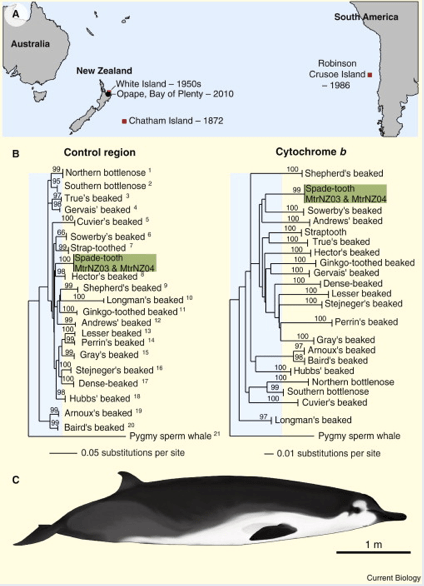
Click the image to the left for a high resolution version of the same illustration from this month’s issue of Current Biology. The full text version of the article (academic, but accessible for the motivated) can be found here, and its summary here:
The vast expanses of the South Pacific Ocean have, until recently, concealed the identity of the world’s rarest whale, the spade-toothed beaked whale (Mesoplodon traversii). Based on the scarcity of records and the total absence of previous sightings Continue reading
Fungi In Your Life–University Outreach In 10 Minutes
A Forest With Miranda Rights
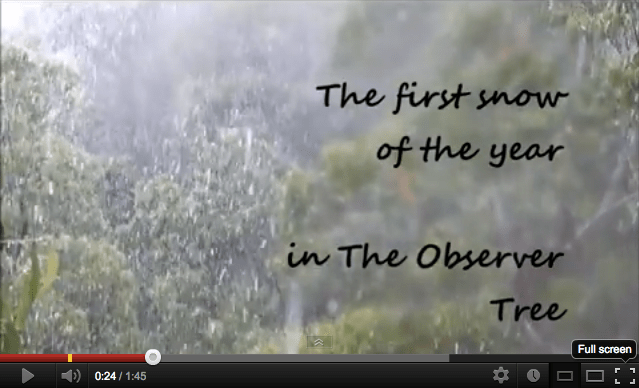
Click above for the video made by Australian environmental activist Miranda Gibson, who has been living on a platform in a Eucalyptus tree in Tasmania’s southern forest. She has vowed to stay there until the forests receive more protection from logging. She writes about it at Observertree:
Observer Tree needs your help!
I’ve been at the top of this tree for over 300 days now. I think it’s time for the world to know I’m here. The more people who find out and add their voice to the call for forest proteciton… the sooner we can save Tasmania’s forests and I can get down! Continue reading
New York Public Library Is Privileged
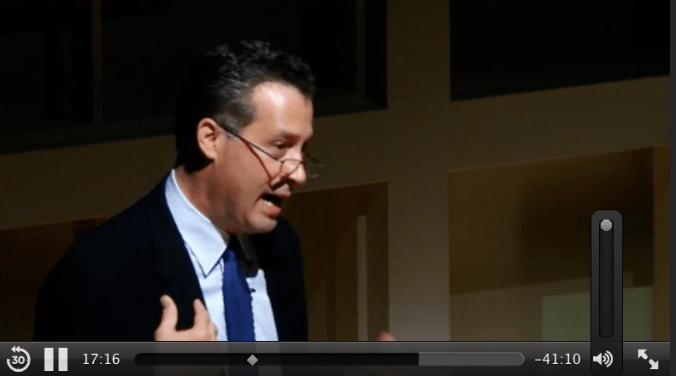
If you have an interest in books and especially their role in libraries, as we do here because of their educational and cultural contributions to communities, you could not have ignored the stories of this man‘s shift from leading Amherst College to his present role at the New York Public Library. Looking at NYPL’s history, from the 19th Century to more recent times it seems on occasion more like a tool for the aggrandizement of wealth and privilege than a public institution. But not so, or not entirely so. Speaking to research librarians in an hour-long gentle provocation, NYPL’s President and CEO frames its role in a manner any modern library lover must be willing to speculate on:
Research libraries have long been considered the intellectual hub of a community, whether it’s a university or a city. With the shift to digital content, network-based services, and globalization, research libraries have been challenged to adapt in unprecedented ways. Some even question their ongoing importance.
Nature’s Relics
Entomologist, author and photographer Piotr Naskrecki, based at Harvard University’s Museum of Comparative Zoology, has published a book whose photos we first saw here, and whose attention to cycads we first took note of here. His book is available here. For an ever-expanding catalogue of his amazing nature images with accompanying entomological (and other) interpretive guidance, see his blog here.
Orion Nature Quarterly’s Online Evolution
From a magazine we appreciate for its 30+ years of awesome long form non-fiction writing on important issues related to nature, as much as its audio-visual contributions on the same, in the item featured here:
Photographer Douglas Gayeton explains the genesis of his giant-sized, mural-like photos designed to protect from corporate marketing the meaning behind the words we use to describe sustainability. The project began as a language experiment in Tuscany, Italy.
World Class Photographs Of Earth’s Beauty
Thanks to the citizens of the USA, and the people they employ at NASA’s Earth Observatory, there is a large collection of photographs available free for the browsing. Each day they upload new, amazing images of the planet, its weather patterns, geological formations, etc. Case in point: high resolution versions of the photos above, providing fine-grained details, can be found here, here and here.