Collective Outcomes

Click the image below to go to the story:

An agricultural engineer, Pinto studied the islanders’ farming practice, compared crops and set up a scheme supported by Fase to carry out an expert appraisal. His ideas were well received and at the end of the first year the community decided to change the design of the macapis, the tubular cages used to catch prawn. The gap between the slats was enlarged to a centimetre, enabling baby prawns to slip through, thus improving stocks.

Collective work … on the Amazon estuary near Macapa. Photo: Gary Calton

When Privilege Speaks

We have said on an earlier occasion that when someone as recognized and wealthy as this speaks out on behalf of the environment, it is worth taking note.  Not because his voice is more valid than all the scientists, activists etc. dedicated to the cause.  But because every voice has a role and if more voices connected to immense privilege took the time to send messages like this, we might get where we are going a bit faster…

Would You? Could You? Should You?

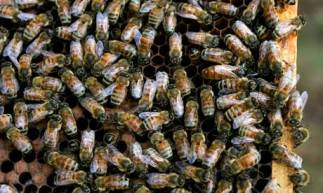
Daylight robbery: bees toiling to make honey. Photograph: Saul Loeb/AFP/Getty Images

Click the image to the right for the provocative source of the questions, which begins quite matter-of-factly:

As a vegan, honey is officially out of bounds. The originator of the vegan movement, Donald Watson, singled it out as a no-go food stuff in the British Vegan Society manifesto of 1944.

Thank You Australia!

Click the image to go to the coverage:

Australia has created the world’s largest network of marine reserves and will restrict fishing and oil and gas exploration in a major step to safeguard the environment and access to food.

The area will cover 3.1 million square kilometres (1.2 million square miles) of ocean including the entire Coral Sea, and encompass a third of the island continent’s territorial waters.’

The Great Barrier Reef is one of the areas that will be protected through the marine reserve network. Photograph: Doug Steley B / Alamy/Alamy

Chakyarkoothu – Traditional Dance of Kerala

The elegance of the classical dances of Kerala are a result of the various cultural influences that took place in the state. These classical forms are a delicate fusion of ancient classical texts and folk traditions, making them distinctive and unique. The Koothu is a solo narrative act. As the performers of the Koothu are from Chakyars- a Brahmin community, it bears the name Chakyarkoothu. Continue reading

Merged Publications & Happy Museums

Neither had been on our radar before, but with a bit of investigation, we congratulate Satish Kumar on his decision to merge them (click the image below to go to the new site hosting both publications):

A quick sampling of articles led here and to the conclusion that our site will be following this publication for news of a non-conformist nature: Continue reading

Mapping Africa’s Glaciers

The Guardian recently ran this piece, whose surprise starts in the title (glaciers in Africa?) and continues on from there:

Ptolemy thought they were the source of the Nile and called them theMountains of the Moon because of the perpetual mists that covered them; Stanley claimed to be the first non-African to see their icecap; and the many thousands of subsistence farmers who today live on the slopes of the fabled Rwenzori mountains in Uganda and the Democratic Republic of the Congo fear that warming temperatures are devastating their harvests.

This slideshow requires JavaScript.

Our Kind Of Photographer

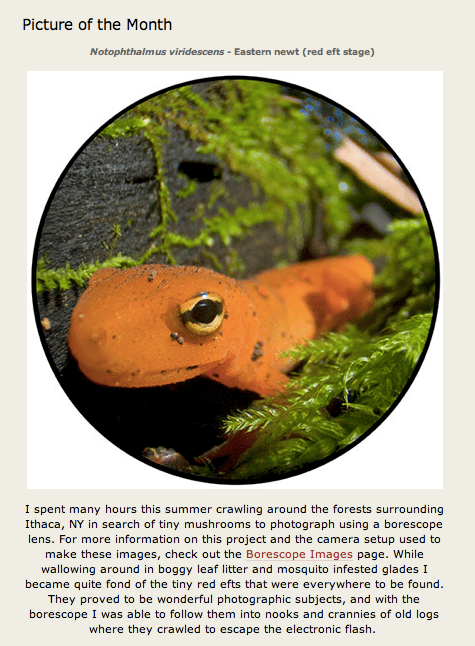
The Cornell Plant Pathology Photo Lab, run by Kent Loeffler, has an archive of photography worthy of a rainy Sunday afternoon…for now just admire this photographer’s discovery and click through (on the image below) to the other eight pictures of the month on the site:

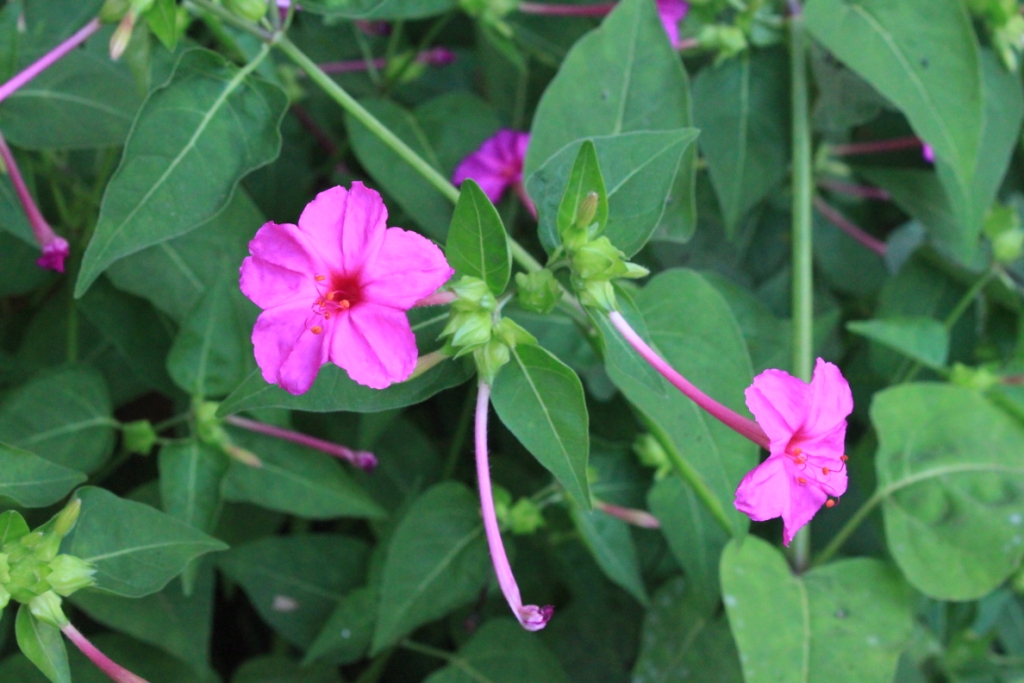
The Four O’Clock Flower (Mirabilis)

The four o’ clock flower is an ornamental, perennial, scented flower found commonly in the high ranges of the Western Ghats of India up to 800-1200m. These flowers will start to open its delicate bud in the afternoon and reach full bloom by 4 o’ clock. Continue reading

Yellow Bell Flower (Tecoma Stans)

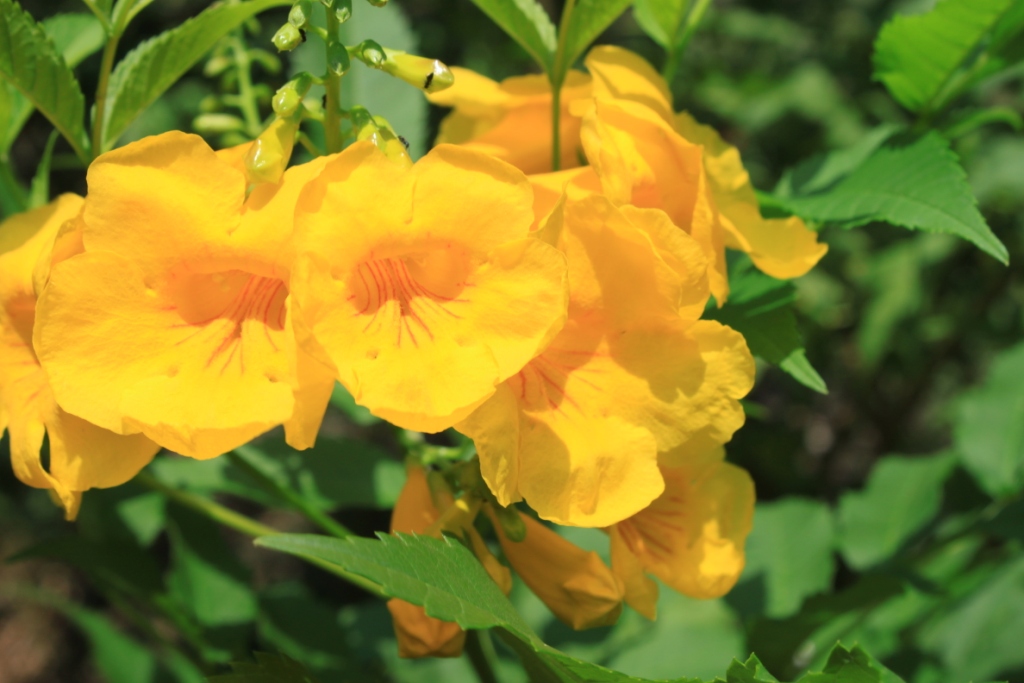
Yellow bell is an ornamental, perennial plant naturalized in the Western Ghats of India that grows to a height of 10-20 ft . The flowers are yellow and bell shaped when inverted, hence bearing the name Yellow bell flower.  Bees, butterflies and humming birds are attracted by the flowers and helping them in pollination. In Kerala, it is widely cultivated as an ornamental as it attracts everyone by its natural beauty. Continue reading

Brazilian Beef & Cornellians In Kerala

Click the image below to go to the story.  Brazil, host to the 1992 summit that put the concept of sustainable development into global consciousness, host to its follow up this year, and an erstwhile hotbed of environmentalism, is in recent years also the home of cattle-ranchers and soy farmers who slash and burn the Amazon rainforest in vast swathes to feed a growing global population.  What shall we do?

We have already noted our support of beefs with major corporations over irresponsible forestry practices; and we have a beef with US tax code that warps market forces, reduces the incentive for ecologically sound grazing practices and leads to poorer human health outcomes… but here our beef should be with beef itself, since Brazilian political leaders seem ill-equipped to contain the destruction of Amazon rainforest by enforcing that country’s already strong environmental law. May we suggest a simple change in diet?

Raxa Collective sees travelers increasingly mentioning their love of vegetarian options on the menu (e.g. here and here) so we are doubling our bet on vegetarian cuisine.  A group of seven amazing Cornellians will be working on this with us, among other green initiatives, for the next few months so the next post(s) will introduce them. Meanwhile, send your favorite veg recipes…
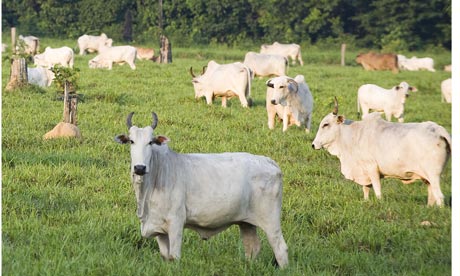
Cattle at an illegal settlement in northern Brazil: such ranches are the leading source of rainforest destruction in the Amazon. Photograph: Antonio Scorza/AFP/Getty Images

Greenpeace’s latest investigations follow a groundbreaking study in 2009 that for the first time established a clear chain of responsibility stretching from Amazonian ranches on land cleared illegally to western companies including luxury brands, supermarkets and a variety of “household name” firms using everything from leather, beef and other cattle byproducts to paper packaging. Continue reading

Yay, OK!

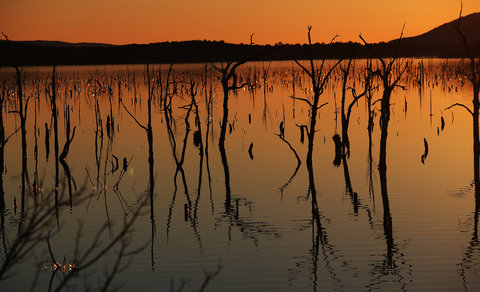
Sardis Lake, a reservoir near Tuskahoma in southeastern Oklahoma, is one of the water supply centers that could be protected by the state’s new long-term voluntary water conservation goals.  Photo: Jim Wilson/The New York Times

…You see, California is the state crusading against human-caused global warming while Oklahoma’s senior senator, James Inhofe, has just written a new book excoriating that kind of focus. Continue reading

Back To The Commons

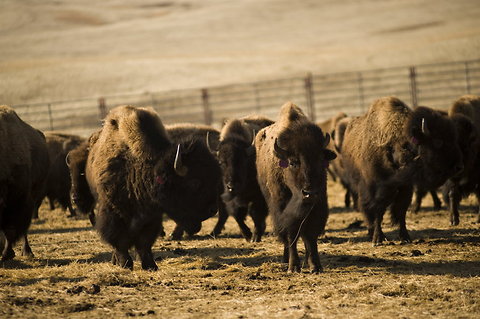
Cattle graze on public lands under federal permits, and the fee is heavily subsidized — $1.35 per head of cattle, in contrast with the $22 per head that ranchers pay for their cattle to graze on private land.

Most days we find stories that bring us back to one of the common themes affecting, and affected by, the one or more of the three “c” words in our site’s banner.  Just this last week, in two very different contexts–the Mediterranean fisheries and the great plains of the western USA–we see the potential for the tragedy so commonly affecting unrestricted and accessible open spaces.

Click the image above to go to the second of these stories.  While we do not believe markets solve all problems, and certainly do not solve the most complex problems easily, this one seems to be the definition of a no-brainer.  Or at least, the questions seem obvious: why do citizens in the USA, who contribute to ranchers abundantly at the supermarket each week, also contribute so generously on April 15 each year?  If they reduced the latter would they reduce the former? And would that not be a good thing, in terms of health and environmental considerations?

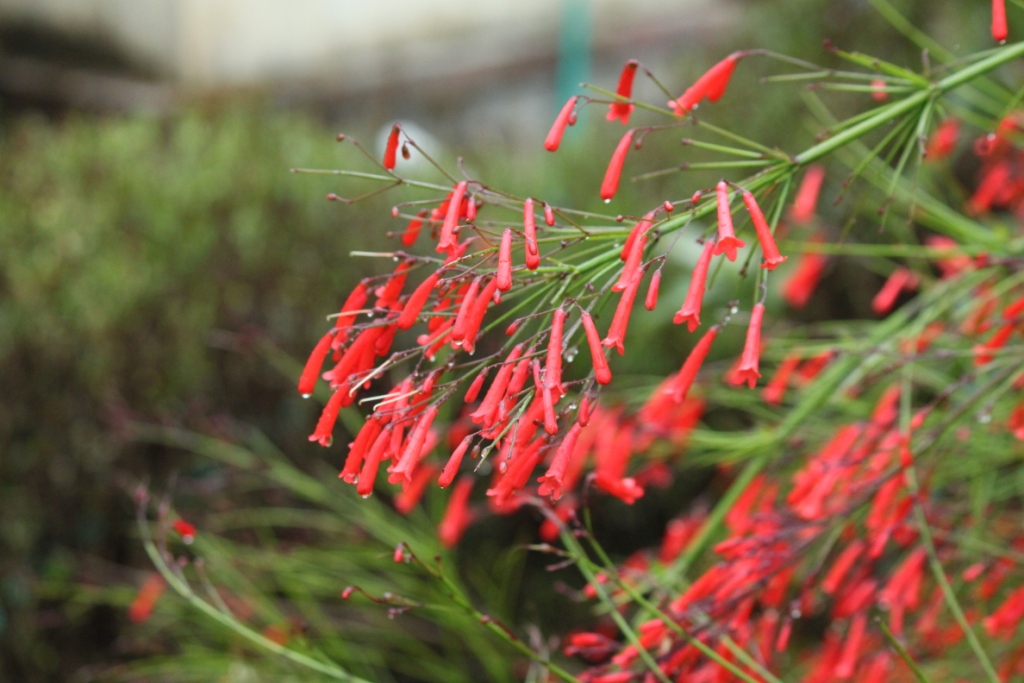
Red Trumpet Lily

The Red Trumpet Lily is an ornamental plant commonly naturalized in the high ranges of India’s Western Ghats. The flower gets its name from its trumpet shaped blossom that begins to bloom in April and ends by June. Continue reading

Southern City of Light

Guest Author: Denzel Johnson

During the 1800’s Buenos Aires hosted a wealthy group of people in what is today’s most popular district- San Telmo. The district today is as popular as it could be and hosts a series of events that accommodate locals as well as tourists as they flock between the clubs and cafes. Continue reading

Mango Culture

More subscription-worthy coverage from the New York Times:

Mangoes are objects of envy, love and rivalry as well as a new status symbol for India’s new rich. Mangoes have even been tools of diplomacy. The allure is foremost about the taste but also about anticipation and uncertainty: Mango season in the region lasts only about 100 days, traditionally from late March through June; is vulnerable to weather; and usually brings some sort of mango crisis, real or imagined.

The Patel Phenomenon

In our organization, which includes more than one American working in lodging establishments in India, a sociological investigation like this catches the eye.  Click the image to the left for a podcasted author interview.  A few fun facts:

– At least 1 out of 2 motels are owned by Indian-Americans.

– Out of those Indian-owned motels, 70 percent are owned by Gujaratis, people with roots in the western Indian state of Gujarat.

– Of those Gujaratis, three-fourths share the last name Patel. There’s even a name for these overnight establishments: “Patel Motels.”

Nishagandhi – Queen of the night

This slideshow requires JavaScript.


Night Blooming Cereus is one of the most popular garden flowers commonly found in the hill ranges of India’s Western Ghats. A member of the cactus family, its flowers are white and strong scented, with the distinction that they bloom only at night and close by dawn.