A Jersey Girl’s Introduction to Camping

Guest Author: Siobhan Powers
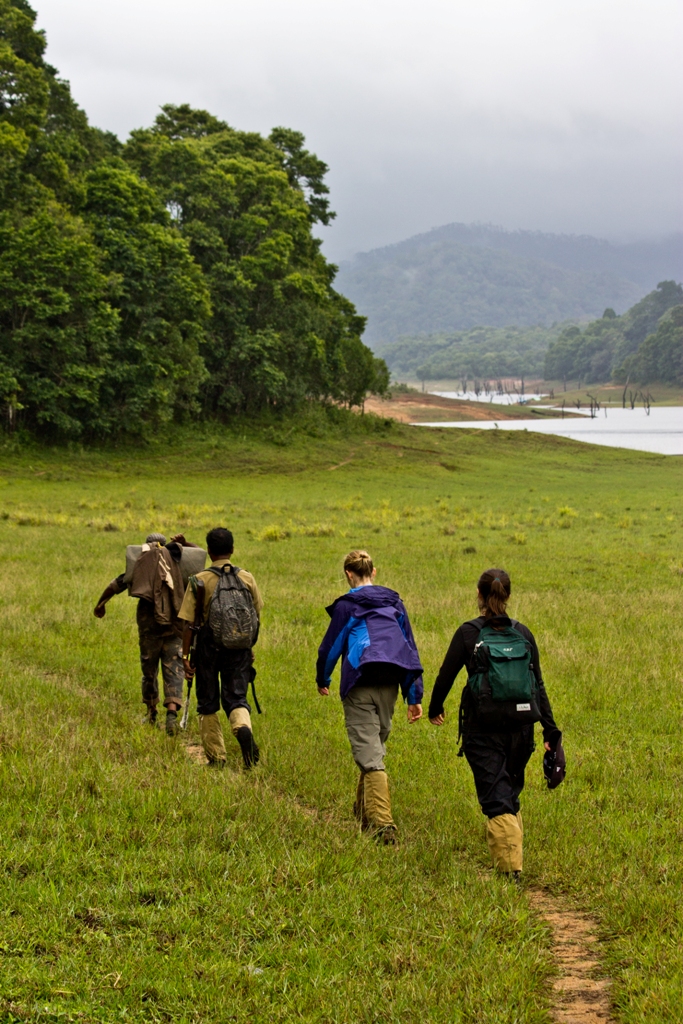
Photo Courtesy of Milo Inman

Before my journey to India, I’d never camped. Sure, I had slept in a tent in my friend’s backyard and gone to Girl Scout camp with my Scooby Doo sleeping bag, but I was feet from indoor plumbing and a roof every time. Where’s the fun in that? When I was belatedly asked to join a few interns on the Tiger Trail overnight trip into the Periyar Tiger Reserve, I was skeptical. My summer nights are usually spent running seafood to a hungry customer or chasing a high-maintenance boy across the beaches of the Jersey shore-therefore my presence in the jungles of Asia is quite ectopic, but I am an adventurous person (sometimes to my detriment). I took the opportunity for what it was- a once-in-a-lifetime chance to snuggle up to some tigers. Continue reading


Underdog Dynamics

As unabashed preferrers of the underdog, this is a topic on which we have opinions, feelings, and even some experiential knowledge;  but not many facts or figures, per se.  When a writer like Gladwell claims to have documented the art and science of the underdog, we will take note (even after Steven Pinker’s convincing surgical strike on Gladwell and the arguments on both sides after that strike)  Click the image above for video of Gladwell previewing his new book:

What should the strategy of the weak be when facing the strong? Does being an underdog—whether as a team a country or an individual—help foster creativity? Why should people at the top of their fields quit their jobs and try to reinvent themselves?

Complex Ideas Made Simple

Maths in Deauville, Normandy (Rene Maltete)

Click the image above for a Krulwich confection.  While nominally about the challenge of understanding genetics, it is actually a reminder that when we celebrate the oddball, often underdog approaches to challenging ideas or situations, we sometimes oversimplify in the interest of clever/cute and sometimes in the spirit of brevity (which Shakespeare called the soul of wit, and Dorothy Parker called the soul of lingerie).

Bullock Cart – A Traditional Transportation

The whole world is moving towards new technologies and scientific inventions, but still one can find the oldest and traditional mode of transportation in Kerala across some villages: the Bullock cart. Some merchants and travelers prefer the bullock cart over other transportation vehicles. Continue reading

Sustaining Livelihoods with Water

Guest Author: Rania Mirabueno

Mullaperiyar Dam

Mullaperiyar Dam taken by Milo Inman

View from Mullaperiyar Dam

View from Mullaperiyar Dam taken by Milo Iman

Sustainable Water Fountain

Sustainable Water Fountain taken by Seth Inman

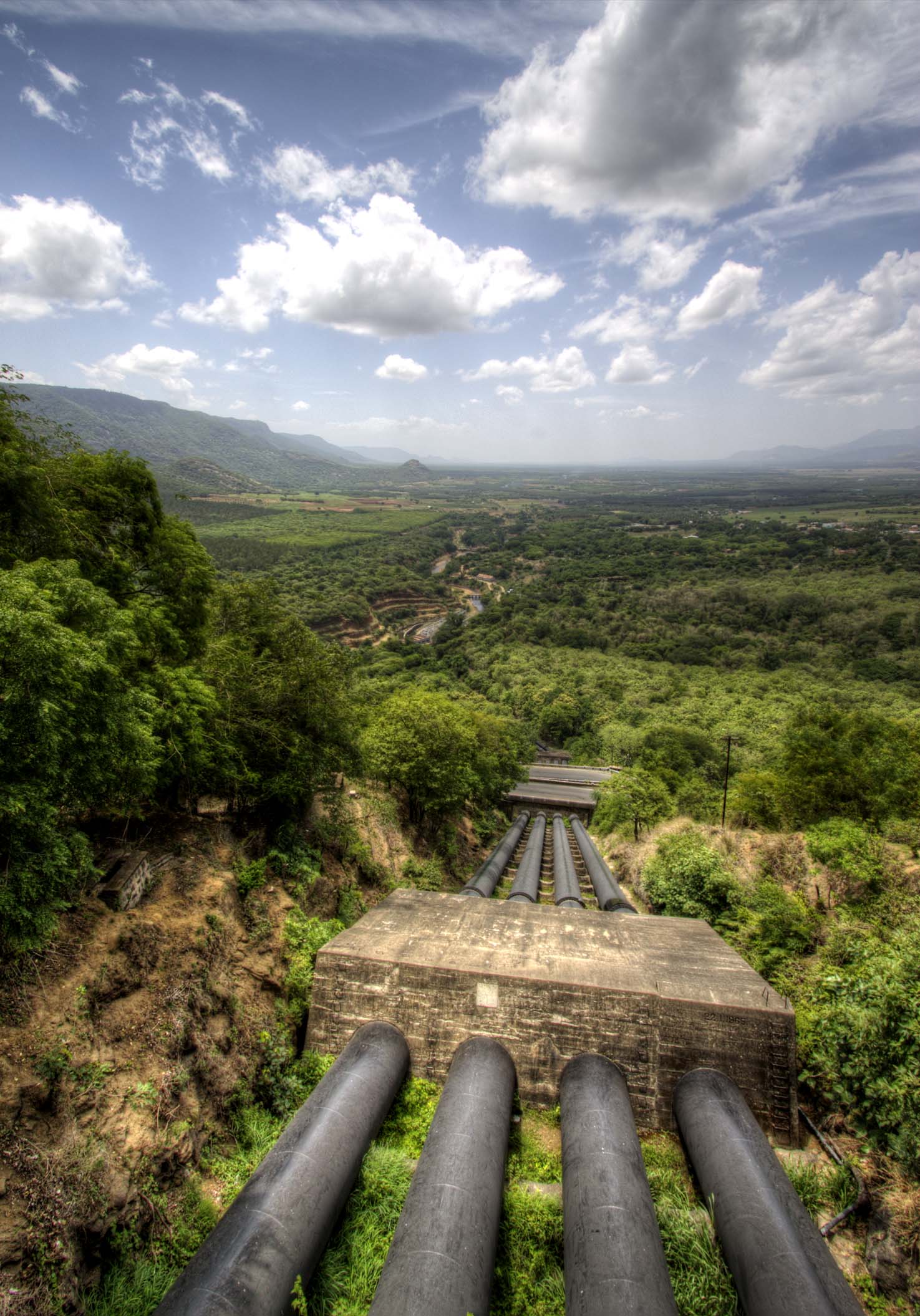
While enjoying this beautiful view into Tamil Nadu from the top of the Cardamom hills in Thekkady, Kerala, I began to think about what was behind me. A massive water system, four gigantic pipes directing water from the Mullaperiyar dam to its neighbor, Tamil Nadu. It instantly hit me how vital water is to human civilization that no pie chart or graph can depict any clearer.

The dispute of water from Kerala to Tamil Nadu rings close to my heart with similar water challenges to my home in the Southwest region of the United States. The Hoover Dam is the lifeblood for populations nearing more than 3 million in Los Angeles to Phoenix. Sustaining livelihoods of people will require creative collaborations among cities and increasing educational initiatives about how our actions as a civilization can negatively or positively affect our land and resources, especially water.

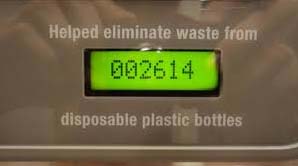
The real question is how does this EZ-fill water fountain found at Cornell University fit in with Mullaperiyar dam? Continue reading

Man-Machine Collaboration

Click the banner above to go to the source, one of National Public Radio’s many excellent podcasts (this one being among our favorite, as you may have noticed here, as well as here and here, not to mention here):

Here’s a robot from Ishikawa Oku’s physics lab at the University of Tokyo that plays rock, paper, scissor and always beats the human, every single time. Because the team that built it gave it a superpower.

The Mestizo-Indigeno Divide

Should we connect everyone, everywhere?  Another of globalization’s thorny debates, but this time argued very locally.  As always there are global implications (in this case having to do with the loss of unique cultural heritage).  Click the headline image above to go to the story in The Guardian:

The 125-mile (200km) road would pass through the Alto Purús national park in Peru, connecting a remote area to the outside world but opening up the most biologically and culturally important area of the upper Amazon to logging, mining and drug trafficking. Opponents of the plan fear it will threaten the existence of uncontacted tribes such as the Mashco-Piro. Continue reading

Rockefellers Honoring Tatas

Cornell University Photography file photo

If you have been to India, you recognize the name. In fact, you might be forgiven for thinking they own the place. But the gentleman to the right was honored recently precisely because of the means by which the company’s business interests intersect with national interests, which is largely through its commitment to the communities within which they operate.  We (the many Cornellians among us but especially the 150 or so who staff and manage Raxa Collective’s base in south India, where these values of Tata are well known) join in applause and awe.  Click the image to the right for the story:

Since the Tata Group’s founding in 1868, the company’s mission has included returning wealth to the communities in which it operates. Two-thirds of Tata Sons is owned by philanthropic trusts that were founded more than 120 years ago.

At Cornell, the Tata Group has established the Tata Scholarship for Students from India to make Cornell accessible for talented Indian students with limited means, as well as the Tata-Cornell Initiative in Agriculture and Nutrition to create programs in India to increase crop yields, introduce new agricultural technologies and improve livelihoods.

Lord Murugan – God of Tamil

Lord Murugan is the son of Lord Shiva and his wife Goddess Parvati.  He is very popular and is more frequently worshipped in the state of Tamil Nadu than the other Indian states.  He has other names (or avatars) such as Arumugan (meaning six faced), Palaniyappan, and Kadirvelan.  His vehicle is a peacock, so he is known as Mayilvahana in Tamil language.

A popular story is that when Murugan was born there were several maids willing to take care of him.  Embarrassed by having to choose, Murugan took six avatars at once so he wouldn’t have to disappoint any of them and hence was given the name Arumugan. Continue reading

We’re No Angels

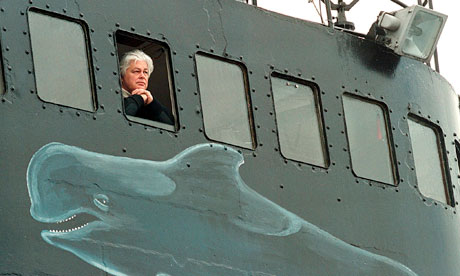
Captain Paul Watson says that the alleged incident in 2002 did not occur in Costa Rican waters. Photograph: Corbis

He’s no angel.  That would be the view of whaling and fishing interests, which include countries and big companies (plus plenty of soulless mercenaries, poachers and thugs).  Whales might think otherwise. 800 large endangered bluefin tuna, saved from poachers by this man and his organization, might too.  He counts plenty of our contributors as admiring, angel-cheering, distant observers.  Our observations are tempered by acknowledgement of the conundrums wrapped up in his in-your-face, semi-legal tactics (not our style).  But we care about fisheries and related topics as much (while trying to keep our wits about us) as those complexities.  And those forces Paul Watson is battling are certainly not always angelic themselves. Nor are we, always, for that matter.  Click the image above for the story in The Guardian:

California-based marine conservation organisation Sea Shepherd suspects that Costa Rica may have made a deal with Japan to have him extradited. Continue reading

Worth Half A Minute

Thanks to the Environment section of the New York Times, its website, the “Green” and the “Science” initiatives on that site, the above quick video of an invention that may change clean up procedures for one of the scariest new energy trends (read the story here, and then scroll down that site for earlier stories on fracking itself):

In fracking, a mix of water, sand and chemical additives is injected into a drilling well under heavy pressure to release natural gas from shale deposits. At the end of the process, some of the chemical-laden water returns to the surface along with salts, radioactive elements and other contaminants absorbed from the shale. Safely disposing of the waste from fracking without contaminating drinking water and waterways has been a major environmental and health concern.

Language & Conservation

Click the image above to go to National Geographic‘s valuable contribution to address one of the least discussed conservation crises facing the world today:

Every 14 days a language dies. By 2100, more than half of the more than 7,000 languages spoken on Earth—many of them not yet recorded—may disappear, taking with them a wealth of knowledge about history, culture, the natural environment, and the human brain.

National Geographic’s Enduring Voices Project (conducted in collaboration with the Living Tongues Institute for Endangered Languages) strives to preserve endangered languages by identifying language hotspots—the places on our planet with the most unique, poorly understood, or threatened indigenous languages—and documenting the languages and cultures within them.

Intra-Galactic Weather Forecasting

A NASA artist’s illustration of events on the sun changing the conditions in near-Earth space.

Click the image above to go to the 5-minuted podcasted explanation of a project you have likely never heard of.  But it sounds important (perhaps to explain why sometimes your mobile phone gets inexplicably scrambled) and as with the story here it may inspire the career aspirations of a few young clever dreamers:

“When one of these big storms comes in, it can actually change and flex the magnetic field around the Earth,” Stratton says. “So we’ll measure that and then we’ll see how all of that energy that’s coming out of the sun deposits into the Earth’s magnetic field, into the radiation belts.”

Ordinary satellites wouldn’t survive so much radiation. So Stratton and a large team at the Applied Physics Lab have spent years designing and building two very tough spacecraft.

Each of the spacecraft is an octagon about 4 feet tall. But once they are in space, they will deploy booms that extend about the length of a football field.

I Can Feel My Heart Beat With Kalari Moves

Guest Author: Rania Mirabueno

Image

Beyond the nature tours of the Periyer Tiger Reserve near Cardamom County, the cultural scene in Thekkady offers a traditional Kerala martial arts performance called Kalari that I would definitely recommend for everyone to experience. Kalari is truly an art form combining music, dance and performance in the context of martial arts.

What I enjoyed most about Kalari was the diverse audience that attended. Kalari attracted all ages and from all backgrounds. I was able to share a unique moment with the community to see an ancient art form. From dagger to long stick to sword, I was at the edge of my seat the entire hour. Continue reading

Climate & Civilization

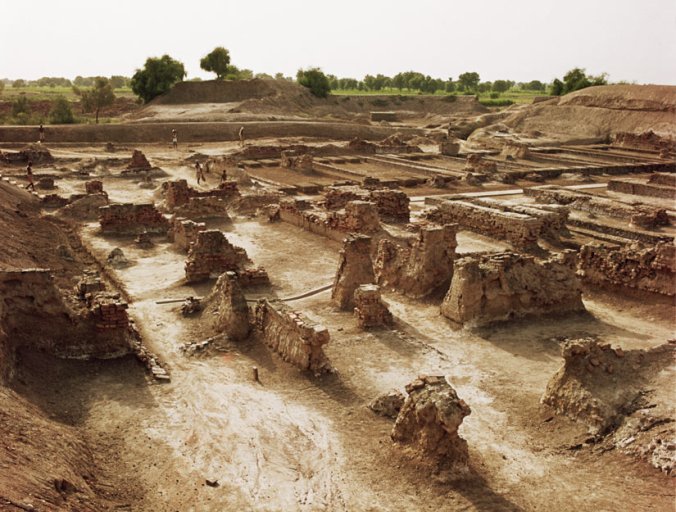
On a Monday morning, probably the last thing you want to hear about is how climate changed wiped out a civilization.  And one of our objectives on this site is to not merely serve as a feed for depressing news.  Yet this story, for all its dark implications (especially for the billion+ of us living in the region discussed in the piece) is not merely a bummer.  It also inspires on at least two levels, both related to science as it intersects with conservation. For those of us still young enough to follow in the footsteps of Jared Diamond and his many fellow scientific-discoverers, what better illumination (in a gloomy sort of way) of a potential career path?  For those of us of a certain age, with perspective already focused on future generations beyond our own, it provides fuel to the fire of our determined efforts not to ignorantly or lazily replicate age-old human errors…

Click the image to go to the story in Discovery‘s news website:

THE GIST

  • The Harappans enjoyed plumbing, complex trade routes and a system of writing.
  • The civilization built up in a “goldilocks” period when the rivers flooded often enough to support agriculture.
  • As the climate changed, so did the monsoon season, lowering the floods and support for their cities.

___________________________________________________

The mysterious fall of the largest of the world’s earliest urban civilizations nearly 4,000 years ago in what is now India, Pakistan, Nepal and Bangladesh now appears to have a key culprit — ancient climate change, researchers say.

Try Doing This On Your IPhone

Credit: Duke University Imaging and Spectroscopy Program

Click the image above to go to the item, on the website of Science:

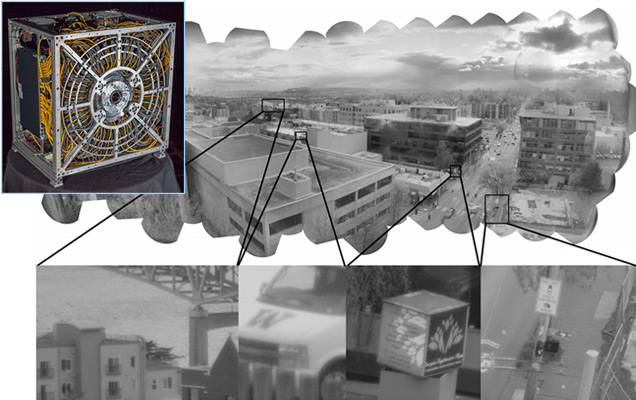
Such cameras could be useful for any number of military, commercial, or scientific purposes, the researchers suggest, changing the central challenge of photography from “Where should we point the camera?” to “How do we extract useful data from these superhuge images?”

News From Rio

After more than a year of negotiations and a 10-day mega-conference involving 45,000 people, the wide-ranging outcome document – The Future We Want – was lambasted by environmentalists and anti-poverty campaigners for lacking the detail and ambition needed to address the challenges posed by a deteriorating environment, worsening inequality and a global population expected to rise from 7bn to 9bn by 2050.

Click the image above for the coverage in The Guardian.

Hybrid Solar Electricity And Hot-water Systems For Big Buildings

Click the image to go to the story in the always-informative Green section of the New York Times website:

When photovoltaic cells make electricity from sunlight, they collect a lot of heat along the way. And they don’t work as well warm as they do cold.  Four years ago I wrote about a hybrid system that was intended both to make electricity and gather usable heat on residential rooftops. That company, now called Echo Solar, is offering its product around the country.