Novel Approaches To Environmental Concern

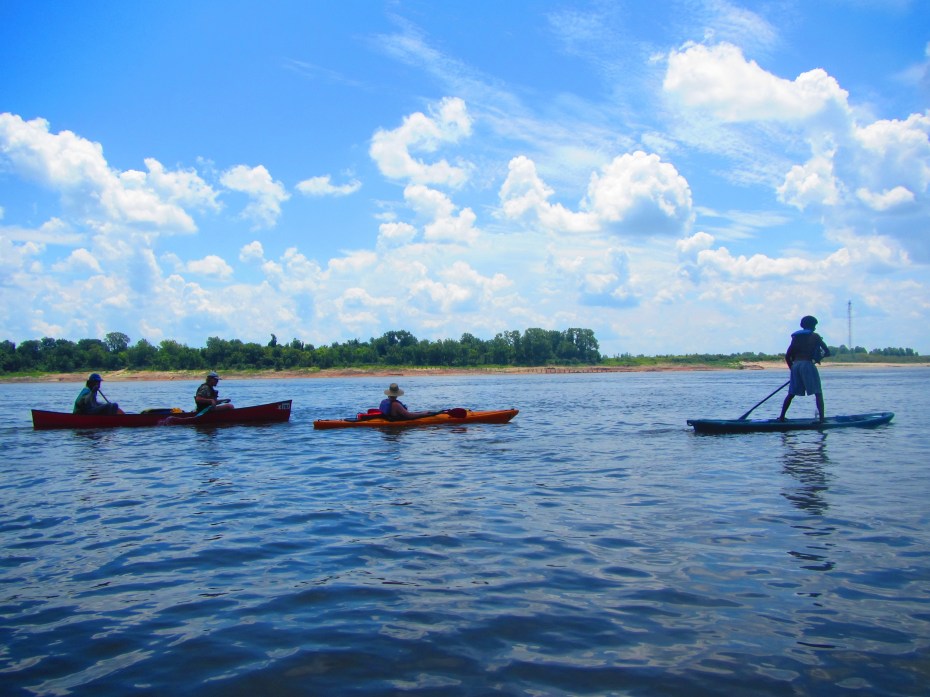
Click the image below to go to the interview, in two parts, with one of the English language’s best living writers, who with this other great writer shares a deep concern for issues facing our planet’s environment and that writer’s uncanny ability to personalize it, as he talks about

the inspiration for Michael Beard, the anti-hero in his comic novel Solar about climate change. The idea came to McEwan when he attended a gathering of 35 Nobel prizewinners, all men of a certain age, ‘big beasts’ in the scientific world who were nevertheless ‘living in their own shadow’ with their most creative years behind them.

Delicious vs. Tasty & Cardamom Calm

Guest Author: Neema Morajevi

I work at a computer.  Too much.

It stresses me out.  And I run the Calming Technology Lab at Stanford.  Ironic?  Well, I started the lab for a reason; I am my #1 client (my students are #2).

I want the productivity and efficiency of technology but I don’t want the stress usually associated with it.  And I am not alone.

I’m trying to figure out how to live sustainably in an always-on world.  One foot in the browser, the other on the grass. But which one is supporting the bulk of my weight?  It varies hour to hour.

When my wife and I decided to travel for several months, starting in India, I was more explicit in my desire to “unplug”: surely I’d be able to disconnect if I leave the country… right? Continue reading

Aesop’s Wisdom

From Science (click the image to the left for the full story) a short piece about the wisdom of not being too rational:

A thirsty crow comes across a pitcher partly filled with water but can’t reach the water with his beak. So he keeps dropping pebbles into the pitcher until the water level rises high enough. A new study finds that both young children and members of the crow family are good at solving this problem, but children appear to learn it in a very different ways from birds.

Measure For Measure

Sustainable development has been in an experimental, invent it as we go state for about two decades.  The good news is that the model has been experimented with.  The less good news is that the progress of those experiments is outpaced by less sustainable development.  Nonetheless, half glass full, it is heartening to see a bit of progress in a developed economy, especially in tough economic times.  Measurement: what a concept!

Measures of ‘capital’ will show how much natural resource – such as fish – is left, rather than just how much is being used. Photograph: Cathal Mcnaughton/PA

Click the image above to go to the story:

The state of England’s natural world and the sustainability of its society and the economy is due be published on Tuesday, tracking everything from bees, butterflies and birds to long-term unemployment, social mobility in adulthood, and knowledge and skills.

A Different Protected Status

Holstein cows that graze on the tidal flats of the Wadden Sea provide beef with a distinctive flavour, say farmers. Photograph: Angus Taylor/Alamy

Picking up on the thread that Tim started most recently, then Crist responded to and Martin further commented on, and placing all that within the larger context of our interest in conservation, here is a novel twist on protected status for an animal from today’s Guardian (click the image above to go to the story):

The meat from wading sea cows that graze on Denmark‘s west coast has been given protected geographical food name status by the EU – the same status enjoyed by champagne and parmesan cheese.

The protection covers the meat from the Holstein cattle raised in the marshes of the Wadden (wading) sea in southwestern Jutland.

“It gives us a good stamp on a good product that we have,” said Andreas Andreasen, who represents an association of local farmers.

“We sought this approval so that it could be known more widely.”

The beef is said to gain a distinct flavour from the tidal flats’ salt content, in a grazing tradition that goes back 1,000 years.

“Chefs have told us there is a distinct difference in the meat’s taste from other cows – a more powerful taste,” said Andreasen.

According to the Danish ministry of food, blind taste tests of the Wadden Sea beef proved the meat was juicier, more tender and more fragrant than conventional beef.
Across Waters to the Mississippi River Adventure

Guest Author: Rania Mirabueno

Image

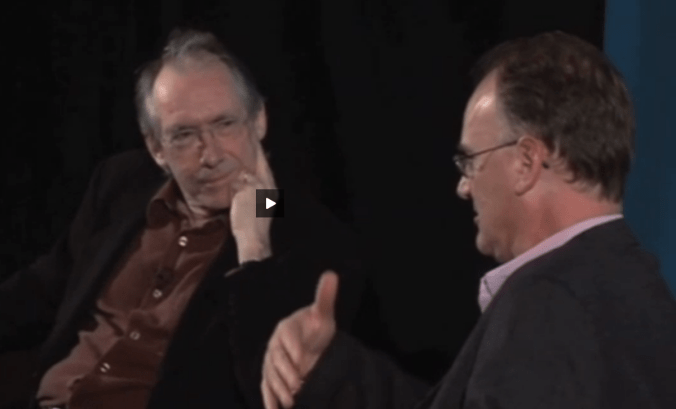
Adventurers canoeing 2320 miles of the Mississippi River.

As I recall my beautiful houseboat experience in the backwaters of Kerala with River Escapes, I cannot help but think across waters to four adventurers, who are embarking on a journey with two canoes and 2320 miles of rafting across 10 US states on the Mississippi River. Continue reading

Engineering a Conversation

Guest Author: Siobhan Powers

My roomie Chi-Chi recently blogged about miscommunication between clients and architects so I thought it may be timely to bring to light some of my own recent difficulties in conversation and work development. I could not even begin to blog about engineer-non-engineer relations as that would take all day and there’s no point-we’re nerds to the core, I’ve realized and thus, misunderstood. Recently, however, I’ve found not just confusion between myself and non-engineers, but also with my fellow engineers-my people!

I have had few moments of serious language barriers during my time in India. Most people speak at least a little English, and if not there are pictures and hand gestures that can get points across. Shopping and dining is easy enough. Camping with strangers? You’ll find something to talk about (reference my other blog post– shout-out to Chief and Wise Eyes!). Engineering conversations, however, are not like this-there are no commonalities across language boundaries that can be pointed at and then nodded about, but instead there are abstract concepts like energy and science (gasp!).

Gijo and I talking over some data in the engineering office.

Continue reading

Golden Rule Loops

the fourth instalment of the “valtari mystery film experiment” is by icelandic directors arni & kinski. their video for rembihnútur focuses on meditation:

the much needed changes in the world will happen through changes within each and every one of us. we all want and need love. this film is a celebration of sigur rós’s music and the benefit it is having in the elevation of consciousness that is happening with humankind. people are finding strength in love, care, and respect for themselves, each other, and the world we live in.

more information is here

Community Self-Help

Click the image above for the full story describing scientific investigation into a phenomenon that might be called an inverted Golden Rule:

…“Self-compassion is treating yourself with the same kindness and care you’d treat a friend,” says Kristin Neff, a professor of psychology at the University of Texas at Austin and the leading researcher in the growing field of self-compassion…

…A recent study at the University of California, Berkeley, suggests an even more surprising way to heighten self-compassion: acting compassionately toward others…

…“There was a unique benefit to giving support—the benefit wasn’t just from feeling connected or realizing that others had problems, too,” explains Breines, a doctoral candidate in psychology and the study’s lead author. During tough times, people naturally tend to focus on themselves and find it difficult to support others, she says. “But actually, as many people intuitively discover, taking the opportunity to support other people can make you feel better about what you’re going through.”…

Whale Shark Freed From Fishing Net

Another day, another story of net-freed.  Click the image below, which looks like the one in the story here, for the story told briefly by video; yet another hero story we thank The Guardian for:

Scientists free a whale shark caught in a fishing net in Indonesia’s Cenderawasih Bay. Conservation International have completed the first expedition to tag whale sharks with radio-frequency identification making them easier to track and film. Whale sharks swimming into fishing nets has become a problem in the area.

Moottil Pazham (Baccourea courtallensis)

Moottil pazham trees are found only inside the semi-evergreen forest. This unusual tree bears fruits only on the lower part of the trunk, clustered around its base in bunches. The edible portion of the fruits are hard and turn from reddish brown to pink as they ripen. They fruits are a favourite food for forest dwelling tortoise. Continue reading

Birdman Of Skomer

For our bird-loving contributors and followers, an interesting story told in a brief video, thanks to The Guardian. (Click on video image to go to the source.)
Tim Birkhead, professor of zoology at the University of Sheffield, talks to Steven Morris about his study of Amos guillemots on the tiny, uninhabited island of Skomer, south-west Wales. Birkhead first visted Skomer in 1972 as a 22-year-old PhD student interested in the sex life of the guillemot. His 40-year investigation into the birds is one of the longest-running field studies of its kind.

Heroes & Tuna

A Sea Shepherd activist cuts a tuna fishing net in the Mediterranean in 2010.
Photograph: Simon Ager/Sea Shepherd

Click the image above to read the whole viewpoint, which we have commented on previously here and here, captured briefly here:

These people are, in my view, heroes. They are stepping in where governments have failed, to protect our common heritage. They are among the few people on Earth who will be able to give a straight answer when their children ask them what they did to prevent the avoidable ecological tragedies we now confront.

Understanding Social

It is not every day that a publication comes out of left field into your life and illuminates something so interesting and important.  Take a look at this article in the Columbia Journalism Review.  The issues are huge.  The characters are a mix of the usual suspects and the unusual innovators:

Jonah Peretti was 29 and had already earned a reputation as something of a wise guy. He had been a technology teacher at a New Orleans private school when he was admitted to a graduate program at MIT. His plan was to study ways networks might foster communication among teachers, but got sidetracked midway through his master’s thesis. In 2000, Nike was inviting customers to create footwear with personalized wording. The company had been criticized widely for selling sneakers made by desperately poor people in impoverished countries. Peretti, tall, skinny and bespectacled, submitted his request: He wanted his sneakers emblazoned with the word SWEATSHOP. Nike declined. At which point, Peretti did a clever thing: he e-mailed.

Jamaican Blue Spike

Jamaican blue spike is a tropical plant, naturalized  in India and Srilanka. These plants are common in the Western Ghats of India, growing widely along stream banks and road sides as well as cultivated gardens. The flowers bloom year round, making them an attractive food source for butterflies, moths and other pollinators.

Continue reading

Let There Be Light

When art meets sustainable development, watch out.  Rather, watch.  Olafur Eliasson’s new work, a solar-powered lamp that he and Frederik Ottesen designed and developed, will be distributed throughout the developing world:

Explaining why he had developed a social project, the Berlin-based Danish artist said: “Art is always interested in society in all kinds of abstract ways, though this has a very explicit social component. The art world sometimes lives in a closed-off world of art institutions, but I still think there’s a lot of work to show that art can deal with social issues very directly.”

Eine Kleine Bankmusik

Not many people would mistake us for a bank advertising medium.  But today, full disclosure, we feel willing to play that role.  Just because the music is nice, the scene is well thought out in a family-friendly, music-as-inspiration kind of spirit.  As banks go in today’s world, this one has the right idea: it is the community that really matters; and we love the collaboration.  That town square seems well conserved, doesn’t it?

Big Organic

Stephen McGee for The New York Times The founder of Eden Foods, Michael J. Potter, among the organic stock at the Eden headquarters in Clinton, Mich.

Click on the image above to go to the story in The New York Times, which continues that paper’s journalistic investigation of the evolution of organic farming and its byproducts:

Michael J. Potter is one of the last little big men left in organic food.

Continue reading