Are Cormorants Evil?

Funny to see this headline at the same time as Martin’s photo just published; not to mention previous posts of Cormorants from time to time.

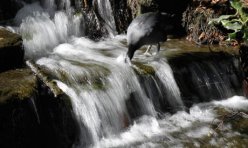
With a nickname like Black Death (click the headline for the full story), it seems some think of these amazing birds in quite strong, negative terms; they sound evil.  Are they? Of course not.  Just providing a little friendly competition to those with rod and reel:

Known to anglers as the Black Death, the cormorant is a killing machine that can swim two minutes underwater and diving 80ft. In China, fishermen hunt with trained cormorants, but in Europe the protected species is a hated rival, blamed for emptying rivers of fish.

Anglers have been petitioning the government to do something about the birds for more than a decade. But a perception that cormorant numbers are now out of control has resulted in a clamour for unprecedented action.
Nepalese Agricultural Technology

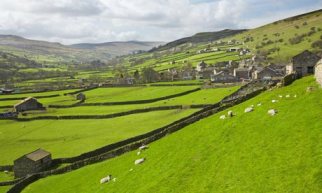
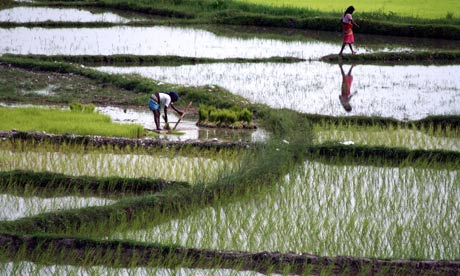
Women work at a paddy field at the village of Bamundangi, eastern Nepal. Photograph: Dipendu Dutta/AFP/Getty

Click the image above for the story about how life is changing in Nepal’s paddy:

Most of Nepal‘s agriculture is undertaken by women, but research tailored to their needs is lacking. “We need new technologies that can reduce the drudgery for them,” said Devendra Gauchan, agricultural economist and chief of the socioeconomics and agri-research policy division at the Nepal Agricultural Research Council (Narc). Continue reading

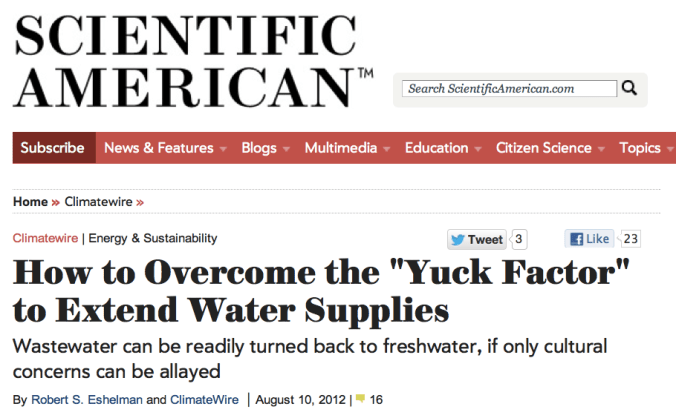
Water Recycling 101

Given these acute demands for water and constraints on current — and likely future — availability, Grant said, “the real alternative, the really only alternative, is to improve what’s called water productivity, which is essentially the amount of value services that are achieved with a given unit of water.”

Click the headline for this accessible explanation of a very complicated challenge.

Thoughtful Rejoinder

Not surprisingly, The Guardian provides a second opinion on a critically important topic:

The new discourse about “natural capital” is seen by some as another step towards the degradation of the biosphere. George Monbiot wrote in such terms this week.

He argued:  “Rarely will the money to be made by protecting nature match the money to be made by destroying it. Nature offers low rates of return by comparison to other investments. If we allow the discussion to shift from values to value – from love to greed – we cede the natural world to the forces wrecking it.”But to paint such a one-sided picture is a dangerous game.

This Guitar Sounds Better

Thanks to the Dot Earth story above (click the headline to go to the story) we learned not only more on the ongoing story of Gibson’s  illegal sourcing of endangered wood species from developing countries for its guitars, but learned about this other company.  Mr. Taylor talks straight, without being preachy, about the challenge of sourcing good wood for great guitars:

What Would Jean Jacques Rousseau Do?

Our rivers and natural resources are to be valued and commodified, a move that will benefit only the rich, argues George Monbiot. Photograph: Alamy

Click the image to the left to go to the editorial opinion of one of The Guardian‘s environmentally-oriented writers.  It starts with a quotation from Jean Jacques Rousseau; not shabby:

‘The first man who, having enclosed a piece of ground, bethought himself of saying ‘This is mine’, and found people simple enough to believe him, was the real founder of civil society. Continue reading

Calling All Collective Activists

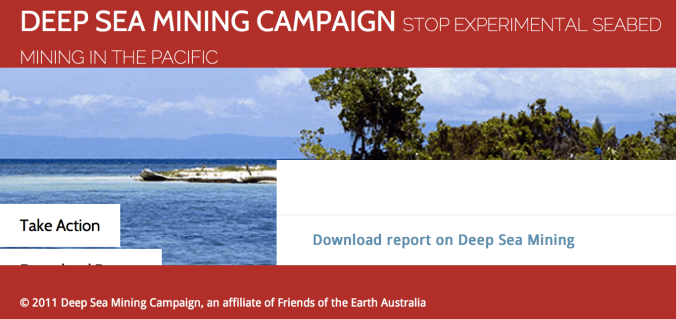
A deeply disturbing story, one among seemingly countless opportunities for any of us to jump in and build an opposition, brought the above organization to our attention.  Gold and copper, not to mention jobs, and concession revenues in a developing nation, are all important.  Up to a point.  But so is the marine ecosystem that will suffer the consequences.  The mining company and its shareholders gain if the operation is profitable; plus the livelihoods of all those working on the technology and the mining jobs to carry out these operations; plus what the PNG government earns; and then some.  It sure looked valuable enough to whomever was involved in granting the concession.

But who did the calculation on the other end of this equation?  The ecosystem valuation side.  Click the image above to see in detail (download the report) what is at stake and what might be done about it, as also reported here in The Guardian:

Nautilus alone has around 524,000 sq km under licence, or pending licence, in PNG, Tonga, New Zealand and Fiji. Continue reading

Flawed Definition Of Luxury

Beautiful, environmentally valuable natural areas increasingly seem to fit the definition of luxury, based on their scarcity and the quality of the pleasure they provide.  Golf, also, is often defined as a luxury.  Can golf and pristine wilderness both be defined, correctly, as luxuries?  Linguists, please weigh in.

Meanwhile, above, a promo clip on a new documentary about a beautiful place, Trumped (talk about misdefining luxury!).  Thanks to the Green blog at the New York Times website, this story which even an avid golfer might wince at:

On July 15, Trump International Golf Links finally opened. But not everyone was delighted to see one of Britain’s last stretches of coastal wilderness transformed into a putting green. Continue reading

A Summer in Muir Woods

Guest Author: Robert Frisch

In the summer between the first and second years of nearly every MBA program, students are tasked with finding themselves a three-month internship.  Some advise trying to round out your resume by focusing on your weaknesses.  Others say to shoot for a well-known company that will lend you credibility.  For me, I knew that I wanted to spend my time doing something that I love and feel passionate about.   A position in the realm of sustainable hospitality, land conservation, or eco-tourism was what I was looking for.  I had a few interviews for a sustainability position in a hotel real estate investment trust (REIT), talked to a conservation focused management firm based in India, and a for-profit land conservation company based in Chile.  I would have never guessed it, but I ended up accepting a position as a summer consultant to the National Parks Service in San Francisco. Continue reading

Live And Let Live

The images after the jump are from here and first came to our attention in the Guardian story (click the headline image to the left), which follows a recent interest we have taken in these mercilessly misunderstood and under appreciated wild creatures. Seth’s recent post begins a new vein in our conversation about marine conservation (for
that wait for 2/2 in that series).

Continue reading

Thank You, North Carolina

Of course, thanks to the individuals who made the direct effort to make this project possible.  Click the image above to see the visuals they produced, and click here to see those individuals.  But North Carolina’s citizens, whose taxes make the University’s operations possible, deserve our thanks too:

Our 2012 Fellows present a Powering a Nation special report, “100 Gallons.”

“100 Gallons” explores how our most critical resource goes far beyond traditional power. More than fossil fuels, commerce or industry, water powers life. Continue reading

Connecting Over Competition

Guest Author: Siobhan Powers

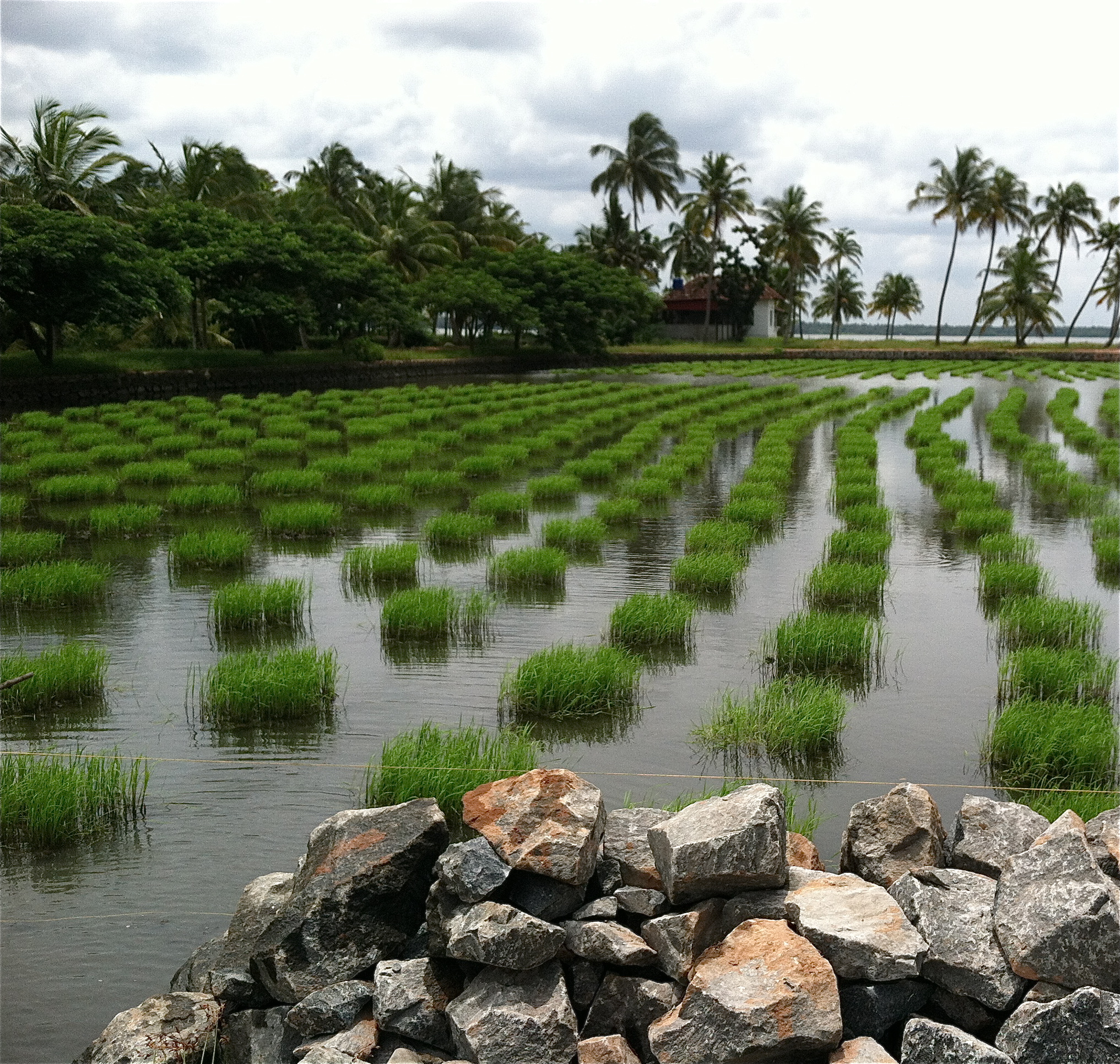
I’ve been staying in the beautiful backwaters of Kerala for the past few days, which has put me at ease as I always feel more comfortable by the water.  Jonathon and I took some time out of our workday to take a walk and get a feel of the area, including all it has to offer, both culturally and agriculturally. We interrupted the construction of a stone wall surrounding a rice paddy field and watched a young boy catch fish in a stream at the side of the narrow road. In the heat of the Indian sun’s rays, we contemplated buying ice cream, but, on our return, settled on the universal refreshing thirst-quencher that is an ice-cold cola.

Rice paddy in Panangad

Continue reading

50 Years Onward, Progress Via Anthropology

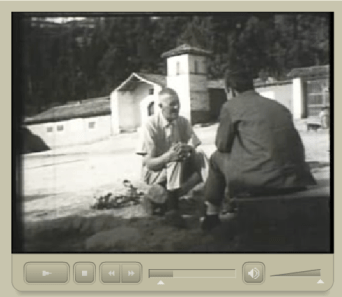
Anyone born in the USA between 1930 and 1970 would recognize the two CBS journalists in this brief documentary.  Some born elsewhere in that period might recognize them as well.  Probably few outside small towns in Central New York and Central Peru would recognize the name of the professor featured here.
So That Men Are Free
McGraw-Hill Films (1963)
Reporter: Charles Kuralt
Presenter: Walter Cronkite
 

I’m Walter Cronkite. We take you to one of the remote areas of the world to the high Andes of Peru. CBS News correspondent, Charles Kuralt reporting…The seeds came here in the head of an anthropologist, a man usually the observer, not the creator of change.  Dr. Allan Holmberg of Cornell University…

Continue reading

How Big Is A Billion?

Community, collaboration and conservation are the categorical things–ideas, actions, examples–that we most like to talk about on this site and point to with links elsewhere.  Still, perhaps half of the posts here would be hard pressed to fit into those categories in any literal sense.  This little item below, for example.  Two guys talking about cultural differences in mathematical expression.  Go figure.

Crowdsourcing Wildlife Sightings

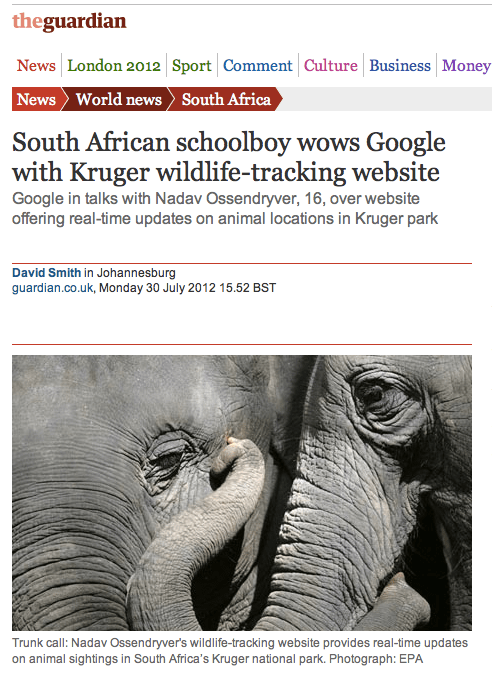
Yesterday’s Guardian had this interesting story of a young fellow’s innovation (click the image above to go to the full account):

In the decadent days when Theodore Roosevelt and British royals led African hunting expeditions, they had to rely on local trackers, patience and luck in their quest to bag “the big five”. Continue reading

Nebulaic Beauty

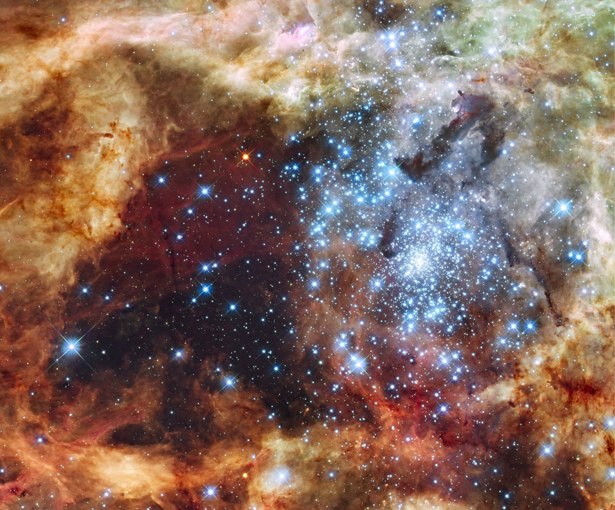
The telescope, wrought of tax dollars and scientific vision and that allowed this photograph to be taken, is a wonder in itself. But in the photo, to state the obvious, is evidence of wonder taken to a different order of magnitude.  Click the image above to go to where we encountered this celestial beauty, in The Atlantic‘s ever more useful website:

This is a nebula we used to think was a star. Located in a neighboring galaxy called the Large Magellanic Cloud, astronomers long called this object 30 Doradus, and labeled it a star. It wasn’t until the mid-18th century that Nicholas Louis de Lacaille detected that it was, in fact, a nebula. We now sometimes call it the Tarantula Nebula.

There’s no color enhancement or significant doctoring in this image: Unlike many astronomical pictures, everything shown is in the visible light spectrum. The Hubble Space Telescope took the photograph.

Religion, India, & Timeless Observations

Click the banner above to go to this literary-intellectual online magazine edited by Russell Bennetts. Click the image after the jump to go to their reprinting of an item by a lion of letters from another era, writing about a place familiar to us, translated by Louise and Aylmer Maude. It was first published in 1885 in the short story collection What Men Live By.  Thank you berfrois and thank you Leo!

The Coffee-House of Surat

by Leo Tolstoy

In the town of Surat, in India, was a coffee-house where many travellers and foreigners from all parts of the world met and conversed… Continue reading