This news item serves as another reminder of the crafty hero and the travails of his journey. The classical story works because we are always asking, what’s next? We want to know. We need to know. We care. And no matter what, we have hope. But markets tell the story their way. Stock price down 5%. The wounded hero gets no benefit of the doubt. Will the ship sail well without him at the helm? It is the entrepreneur’s ever-present existential question.
Author: Organikos
Big Ideas, Exclusive
There was a provocative item we noted a couple Sundays ago in the New York Times. One response to it has appeared in The Economist’s online site. It would seem that anyone who believes in the notion of immortal soul might not bet on their own (or anyone else’s for that matter) no matter how confident they are about a particular issue:
…I’ll bet my immortal soul that more really big ideas, whatever that means, were studied, discussed, and produced in 2010 than in 1950. The number of people with the means, opportunity, and motive to care deeply about ideas is greater than ever.
A TED talk or a book-talk spot on “The Daily Show” may not have the audience or cultural centrality of a half-hour with Dick Cavett on ABC in 1970, but more people are consuming and discussing big ideas, old and new, than ever before. The difference is that the audience and the discussion has become fragmented and decentralised.
Of course, it is a turn of phrase, effective precisely when you are confident of your own opinion but not certain of the facts. Nonetheless, the point is well taken, not least because we are so frequently awed by TED talks. It is good to have more ideas more available to more people.
But this misses the point. It is one thing to be creating big ideas (the major point in the original piece, even if it dillydallied with mentions of Norman Mailer, William F. Buckley Jr. and Gore Vidal–none of whom belong in the same paragraph with Carl Sagan let alone Albert Einstein) and another to be disseminating them more effectively and more efficiently.
New Wheels
A friend writes from Santa Monica, California (USA) that he has taken a new job with a new company producing a new kind of electric vehicle. It will be fun to watch the progress of all three. If you read his column regularly, you may recall Thomas Friedman wrote about them. So did these folks, and we are happy to know of their site. It looks like one more source for staying apprised of technological innovations and the businesses that provide to and feed from such troughs. And we like the word collaboration on their masthead.
Refresher
From the New York Times, a statistical reminder of progress to date and how far yet to go:
Over the past 25 years, the number of conservation areas set aside for the nonhuman species has grown considerably. Globally, there are now more than 100,000 protected areas, including national parks, biological reserves and marine sanctuaries. All told, they protect slightly less than 13 percent of the land on earth and slightly more than a half-percent of the oceans, though only a minute fraction are “no-take” zones that bar fishing. But can these protected areas do enough to protect biological diversity?
A Friend Shares Photos
Seth mentioned Sloboda Cinema in Dubrovnik, and by the mysteries of modern technology, and friends in faraway places, these photos have arrived, allowing a view of that location from the outside and inside:

These photos were taken a few days ago. Views of the interior follow the page break and if you have been to Dubrovnik you know how amazing the interior wall of this cinema is in historical terms. What film did Vesna see? Continue reading
Let Them Drink Frack Juice
Did he really? Was he channeling his inner snake oil salesman? Trying to demonstrate that Mr. Barnum had it right about we the people? Or cluelessly re-enacting the image of a long ago empress who was thought not to have cared one iota about the needs of common people…
…During a keynote lunch speech at the conference presented by the Colorado Oil and Gas Association, Halliburton Co. CEO Dave Lesar talked about addressing public concerns about hydraulic fracturing, which extracts natural gas by blasting a mix of water, chemicals and sand underground.
He raised a container of Halliburton’s new fracking fluid made from materials sourced from the food industry, then called up a fellow executive to demonstrate how safe it was by drinking it, according to two attendees.
The executive mocked reluctance, then took a swig. Continue reading
The Other Ithaca
Several of our Contributors have returned to Cornell, so Ithaca was in the air. A pleasant surprise, always, to be reminded of Homer’s clever hero but when travel writers do the reminding it is especially so:
…all I had to do was hop a bus or two to the port of Patra, and from there a ferry could take me, at long last, to Ithaca, the place Odysseus called home.
Trope Talk
In another short burst of wisdom, Mr. Egan brings attention to the remarkable risks that accompany forays into wilderness, quoting one of the elders of the field:
Yosemite’s most lyrical advocate, the naturalist John Muir, anticipated the urban hordes as the population moved away from field and farm. At the dawn of the 20th century, he saw the parks as places to escape “the stupefying effects of the vice of over-industry and the deadly apathy of luxury.” But Muir also expected people to have some basic understanding of the outdoors.
This paragraph is bounded by vignettes of sublime and ridiculous examples of nature providing refuge as well as danger. It is not clear why he validates a trope of ideologues–his point would have been made without the nanny state reference. Or would it?
Where’s Michael? (Week 3)
Wordsmithing: Valorize
The transitive form of this amazing, rarely used verb is defined in the OED:
To raise or stabilize the value of (a commodity, etc.) by a centrally organized scheme; generally to evaluate, to make valid.
In the work space of entrepreneurial conservation no single word captures more effectively what we are trying to accomplish with regard to natural and cultural heritage. Oddly, the etymology OED provides for the word is stuck in the 20th Century. Its roots extend back at least to the 19th Century (let’s see who knows their political theory), and the new branches of its meaning, for illustrative purposes, can be found on these pages.
Geologists In Sacred Places
We appreciate the brave young scholars who choose to be geology majors in college. Especially those who do so without Exxon-Mobil in mind as a career track. Parents probably do not make a choice like this easy, any more than they encourage their kids to major in English (the major of some of our Contributors).
This Note From The Field by a Professor at Oberlin College gives plenty of reason to think that being a geology major could not only be interesting, but meaningful on other levels.
Big Ideas Elusive?
Taking an early look at an item in tomorrow’s NY Times, we are led to wonder whether the premise, especially including this interesting empirical observation, is a statement of fact, or not:
The post-idea world has been a long time coming, and many factors have contributed to it. There is the retreat in universities from the real world, and an encouragement of and reward for the narrowest specialization rather than for daring — for tending potted plants rather than planting forests.
How will we investigate? One place to start is looking within universities, and for this many of our contributors are uniquely suited to take the challenge and seek out evidence pro and con. The gauntlet is in motion.
Where’s Michael? (Week 2)
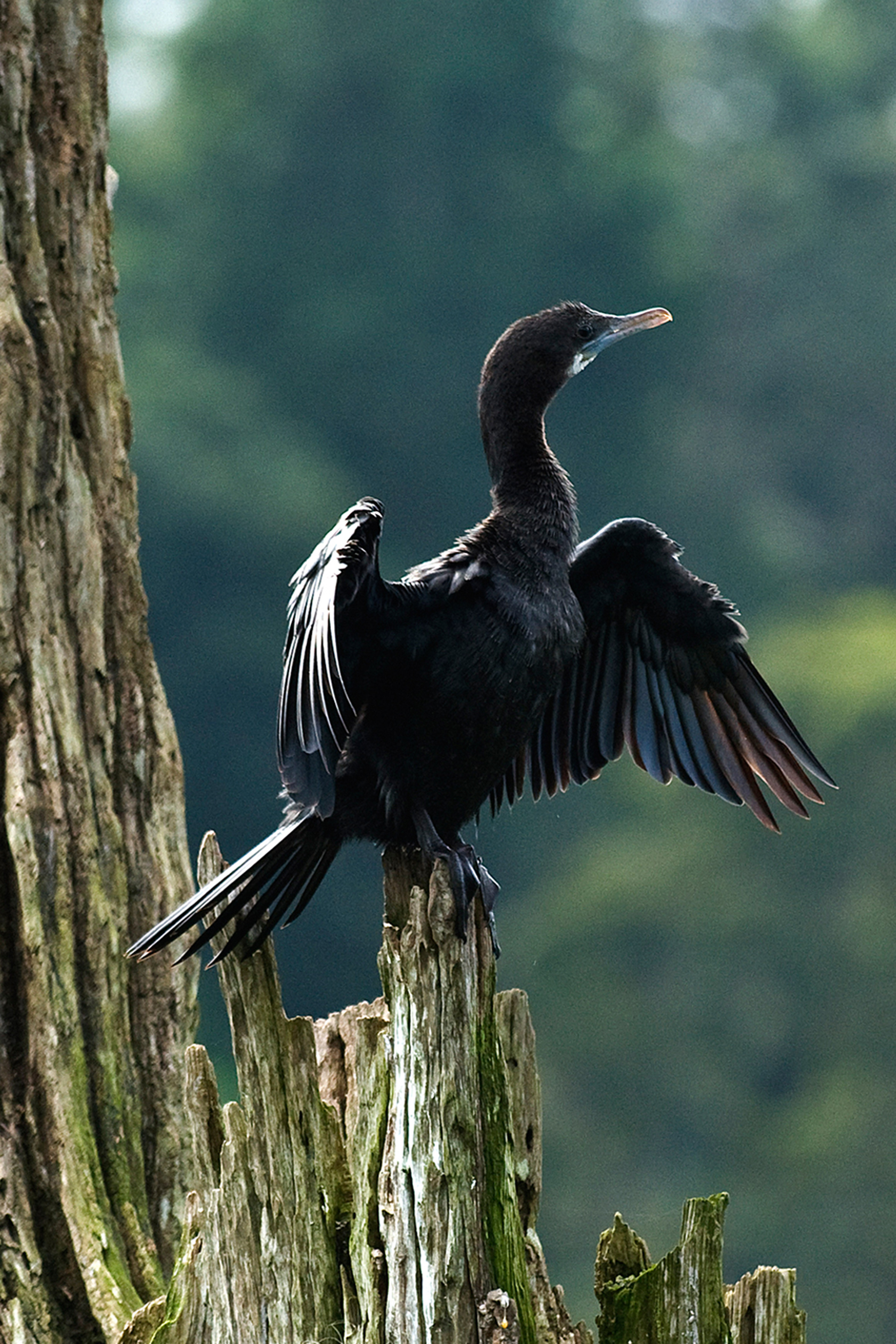
Bird of the Day: Great Cormorant (Thekkady, India)
Enough About Me, Here We Go
Guest Author: Aby Thomas
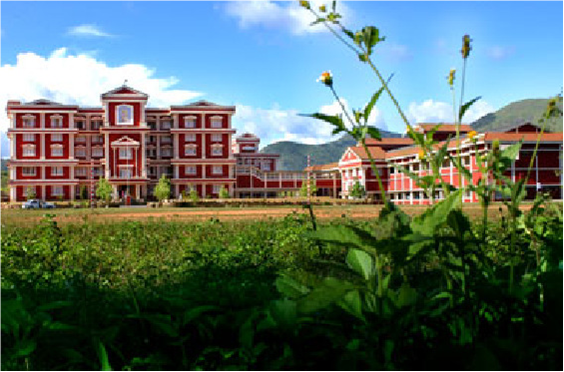 I started work recently, responsible for managing human resources at Cardamom County. It has been my dream to become a manager in the hotel field since I was young, and I am beginning to fulfill that dream. I completed my Masters in Hospitality Management(MMH) from Marian College Kuttikkanam, a near by hill station. I am putting an image of my school here in thanks for the preparation it gave me.
My family home is at a place called Vandiperiyar, 12 km away from where I work, and I can recommend anyone to visit this part of Kerala. To tell you why, I will need more time and space than my first post will allow. For now, trust me.
Since joining one month ago, I feel freshness every day. I come across different incidents that I did not expect when I was a student. Recently I got an opportunity to join Michael and be involved in the newspaper bag making training conducted by Diwia Thomas, supported by Cardamom County in tie up with the Forest Department.
Where’s Michael?
His last post was one week ago. He departed Kerala just two days ago. We miss him already. Does anyone remember the “Where’s Yuri?” series in the early 1980s, at a time when the leader of the Soviet Union was not seen in public for an extended period–a radio host in New York started a daily taunt to the Soviets, asking this in jest…
Wordsmithing: Luxury
Luxury is another word we avoid. Odd since we often eat like epicureans, sleep on fine linens when we can, and comfort is generally a creature we adore. But not odd, considering the work we do, and where we do it. Not all things can or should be available in all places, especially if conservation is the point, and collaborating with communities is the means to the end. Our friend and future Contributor Reyna hints that she will have a thing or two to say about this in the future. With regard to rethinking luxury, the Galapagos Islands provide a superb vantage point.
Why rethink it? That is, why do we avoid this ubiquitous word? OED tells us that this noun refers first and foremost to “lasciviousness, lust”. That is a good enough reason, for starters. By the third entry the definition eases up a bit, to “the habitual use of, or indulgence in what is choice or costly…” but still not much to write home about. The first ray of light is in the fourth entry, depending on a snippet of Dryden to poetically license us to re-visualize luxury: “Hard was their Lodging, homely was their Food; For all their Luxury was doing Good.”
But we do not need to go back 300 years, get too poetic, nor be preachy about it. Liberating this word may start with the therapeutic effects of pristine wilderness areas; the opportunity to disconnect on occasion from our normal, wired modern lives; the privilege of getting to know communities of people whose lives are different from our own. In short, some of the reasons why people travel. And if we can consider this lust for life, luxury is inevitable.
Wordsmithing: Resort
We do not take the word “resort” lightly. In fact, we have studiously avoided it. Common usage in the past century has gravitated to the sprawling hotel complex associated with mass tourism. But deep down, we love the word and its etymological roots. We hope to liberate it from its lingual prison.
As a noun, this word is defined by the Oxford English Dictionary (hereafter OED) as “something to which a person has recourse; an expedient, a measure.” As a verb it is defined in that dictionary as “recourse to a person or thing for aid, assistance, or the attainment of some end…also from a previous state or condition.”
Raxa, derived from the Sanskrit word (pronounced in that language to sound like “rock-shah”) — defined by the Cologne Lexicon to mean “guarding , watching , protecting , serving” — is a cousin of sorts to the word resort (in its older English usage). So, in the spirit of our commitment to entrepreneurial conservation, we are always on the lookout for innovative resorts by which communities nurture their traditional cultures and are stewards for their natural environments–quite a feat in this modern world, and worthy of celebration. Such resorts are at the heart of our mission–both a means and an end.
Forest Department Training and LiveBlog
Tomorrow is an exciting day of great import for the social enterprise we’re assisting the Forest Department with. If you haven’t read our previous entries (here’s Michael’s, here’s Amie’s, and here’s Diwia’s), we’re starting a sustainable micro-enterprise here in Thekkady aimed at employing local (mostly) women and making useful bags out of recyclable and recycled material, namely, excess newspaper. This evening, Diwia Thomas, who began a similar enterprise in Cochin, will arrive to provide a weekend training session that begins tomorrow morning at 10. We’re expecting upwards of 40 women to attend, all with the hopes of being part of this business. She will guide them through and teach them how to make quality bags, as well how to maintain and organize the operations of the business. All our meetings and conversations with Forest Department officials and local women should hopefully pay off tomorrow, and the operation should be on it’s feet by the end of the month.
Given how exciting this is for all of us, we will be hosting a live conversation about what is happening in the training session, hopefully deploying photos and videos to help you, our readers, get a sense of the event. This conversation will take place at coveritlive.com, a free liveblogging service. If you’re not familiar with this format, ‘liveblogging’ is often used for streaming important information about sporting and political events. We think it is also worth applying for this event.
So please join us! Tomorrow morning I’ll post a link, which will lead you here: click here.
We’ll be starting at around 9 AM (11:30 PM EST). If you’re in a different time zone, you can at least catch the beginning and maybe the end. It’s easy to post questions and respond on coveritlive, and the format will work much better with added voices.
See you tomorrow!
Moments of Peace
We will have more to say about cars in India. Michael made brief mention here, but the environmental questions of an emerging middle class in countries as populous as India, most of whom see cars as a definition of progress and success (thank you Mr. Ford and Engine Charlie!), are blog-cloggingly numerous. So we will tread only occasionally into this terrain. And when we do say more, we will focus primarily on one form of treachery: the horn and its contribution to noise pollution. Reading Mr. Egan’s account of a unusual moment of mass inspiration in an erstwhile car-struck city reminds us of our need to elaborate on our own plans for inspiring tranquility in the land of please-honk…
 Organikos