We are generally wary of the word style (and fashion, vogue, etc.) so with no particular link to any themes central to Raxa Collective’s mission, except maybe activism (in the most fun sense of that word) if Keef and the boys (Rocky Road) cannot manage to get you jigging, maybe this will get you going (though really, for the best moves, you’ve got to meet this gang):
Author: Organikos
The Buzz Is Worthy
The New York Times is on a roll with excellent coverage of topics we care about.
Don’t Honk To Change The Rules
Guest Author: George M. George

Driving in Kerala sometimes makes me wonder whether Dante failed to describe an essential part of that descent into the inferno.
A recent advertisement for a major automotive company actually made this statement: Make Your Own Rules.
Oh. Thank you so much. It seems that most drivers here have in fact made their own rules and do not care how the ‘game’ is played as long as they win. So it is imperative that when you get here you opt for a slower, safer drive to your destination by asking your driver to go easy on the right pedal. If you do so, you will actually enjoy the scenery, of which there is plenty. But, you will still have the sonic thrill of your life. Continue reading
Baby Elephant Rescue in Kenya
Guest Author: Nicole Kravec
 In the morning I was at my computer, preparing for a visit from Muriel, a woman from London who is a director of a top-notch research firm. She’s doing pro-bono work for the Maasai Wilderness Conservation Trust and Campi ya Kanzi Community Ecolodge (www.maasai.com) where I am, and I am preparing for her 3 day visit that starts tomorrow. After a few hours of mind-numbing regression analysis I heard some commotion outside. Continue reading
Wordsmithing: Market
Amie has written about market in various contexts, making use of both its verb and noun form. In our day to day activities, we are motivated by entrepreneurial conservation, by which we mean market-oriented solutions to complement the efforts of NGO, philanthropic and governmental efforts to preserve ecosystems and maintain the vitality of cultures.
We abhor all things fundamentalist, so the cliche of the University of Chicago notion of markets is not one we cling to (nor is the cliche apt anymore; see their contributions in the realm of behavioral economics to get a sense of where this great institution is heading in terms of hegemonic ideas). The same goes for the fundamentalism that has prevailed in the world of conservation–a belief that markets cause environmental problems but cannot provide solutions. So, in the spirit of tamping down fundamentalism of all kinds, we might look at the marginalia of this word’s definition, rather than OED‘s definition itself, as we otherwise systematically do:
Proverb: you may know how the market goes by the market folks.
We adapt this, in our daily work, to mean: let’s be realistic while we attempt creative, fun approaches to serious problem-solving.
Colombia & Kerala, South-South Cousins
In another superb field note, Paula Pedraza echoes sentiments seen in several posts by our own Contributors:
Everyday life for these people is like a lifetime of adventures for us. Working here really has been an illuminating, inspiring and humbling experience.
Michael’s reflections on the Tiger Trail comes to mind. So does the follow up to that. Speaking of Michael, we are certain that when he is back in the swing of things at Amherst College, and with a bit of encouragement from his fan base, he will be gracing these pages again soon.
Big Ideas, Inclusive
We’ve made a few references to Big Ideas–first to raise the gauntlet and recently intending to drop it. One paragraph from this article set our discussion in motion:
But if information was once grist for ideas, over the last decade it has become competition for them. We are like the farmer who has too much wheat to make flour. We are inundated with so much information that we wouldn’t have time to process it even if we wanted to, and most of us don’t want to.
David Carr, writing about how Steve Jobs has changed the landscape of multiple businesses, has added a nice twist to the discussion by noting how ideas can become outsized when they take shape as things in a particular way: Continue reading
When Good, He’s Very Good
Mark Bittman took it down quite a notch when he started up-slumming with celebrities. Nothing against Gwyneth, nor Mario. Just that this fellow is better at what he does than they are at what they do. Case in point today: he is on game.
Food Exchanges Across Centuries
An article in yesterday’s Science section of the New York Times touched on a question raised in Amie’s post. Synchronicity?
Cool, Cool Water
Our quest to find new, ever-more effective ways to live well and responsibly (simultaneously), if not Big Ideas, sometimes leads us to counter-trendy moments of truth. It feels right to discuss sustainable development using the language that has been in circulation for 25 years or so:
meet the needs of the present without compromising the ability of future generations to meet their own needs
Yet, it was a refreshing splash of water on the face, a dash of realism, to read the last line of this brief profile:
…Lassoie’s personal belief that no one wants to sacrifice their present condition for the condition of future generations.
“I’ve never met anybody anywhere who would sacrifice their children for their unborn grandchildren,” he said.
Read the article to understand the context, and you may find yourself thinking about returning to graduate school if you consider this kind of conundrum (truly good statements contrasted with realistically true statements) fascinating, as we do. Finding this profile was an extension of our investigation into the resources at Cornell University related to sustainable development and conservation, which previously led us here.
Going Social
Notice the new tab to the right inviting you to engage with our Facebook page. In the spirit of community, collaboration & conservation, we are asking you to get social and share ideas there. As an informal platform, we are connecting people from around the globe who are interested or invested in “getting in touch with the luxury that nature offers,” using any interpretation of the phrase that fits the circumstance.
Have something to say about conservation, social enterprise, sustainable tourism? Have an interesting travel story in a destination where these things may be relevant, or a first-hand experience with RAXA Collective? Photos you’d like to share? Why not share them with us and others by posting on our wall?
This is helping our momentum in making a difference… with your stories and consideration for the people and places who make travel worthwhile. Join in!
Our Gang, Thekkady
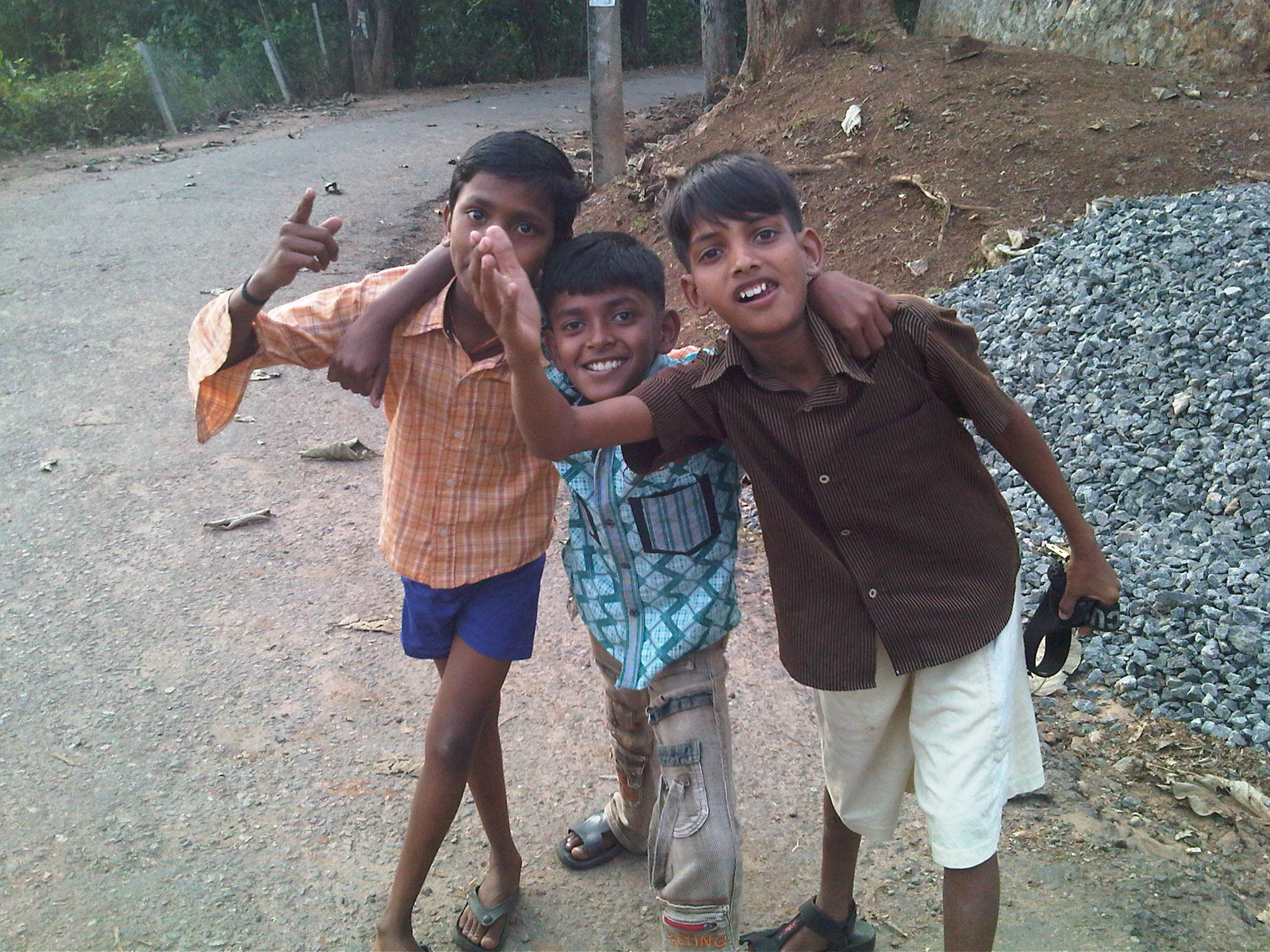
Behind Cardamom County there is a hill leading up to a ranger’s entrance to the Periyar Reserve. On that hill, there is a group of boys. If they encounter you, and you appear to have music (telltale earbuds), they will want to know what you are listening to. If they like the music, they will invite you to dance to it. It is an invitation you cannot, or at least should not, refuse. When you dance, they will dance with you, copying your moves but teaching you new ones at the same time. Practice those moves before your next visit to the hill. This little gang will invite the entire neighborhood to watch. There will be laughter. But it will be with you, not at you.
Good Formula
Is it possibly an answer to the question posed near the end of this post?
Useful Link For Educators
Ezra, Zephaniah, Amos, Edward & James
The discussion about whether or not to work under the Raxa Collective name had already been a couple hundred hours long as of early March, 2011. Emotions were at full tilt on this and that consideration when a team showed up and got us to the tipping point. Lindsay and Nicole were perfectly balanced, for these purposes, between interested and disinterested. Not to mention interesting. And sometimes very interesting.
Credit where credit is due. The fellow who founded Cornell University, from which (by some measure) we have had the most inputs for this venture, and the fellow who is credited with the decision by which Amherst College came to exist, can take a momentary bow to the fellows who represent the namesake of the business school at Dartmouth College, the funding of that business school, and (for our purposes here) most importantly the fellow who funded the initiative that brought Lindsay and Nicole to work with us and convince us of our convictions.
A Different Good
To get to a basic meaning of good using music, plenty of choices were available beyond the “folk,” “ska” and “world” categories. Bach, Handel, Mozart and Beethoven among many other classical composers had more than enough to say musically that helps us get a grip on good. The point was more about Pete Seeger’s character, and his choice to not back down and his ability to not become embittered by the injustice; the choice The Specials made to sing to protest a hero’s unjust imprisonment, or Raghu Dixit’s choice to celebrate virtue through a young girl.
For a cinematic rendering of good, Wim Wenders film Until the End of the World comes to mind, which brings the topic back to good music. Lou Reed does not normally evoke good the way Pete Seeger does, but his contribution to the soundtrack of this film, What’s Good, is worth a listen. It approaches the subject by pondering inexplicable loss. Another contributor to that soundtrack is even harder to associate with the word good, but if you listen to him in conversation, he sure sounds like he knows something about good.
Are there equations predicting good behavior other than George Price’s? If so, please share. Meanwhile, you might find Laurie Anderson’s Let X = X, a fine diversion.
Bags For Bombay
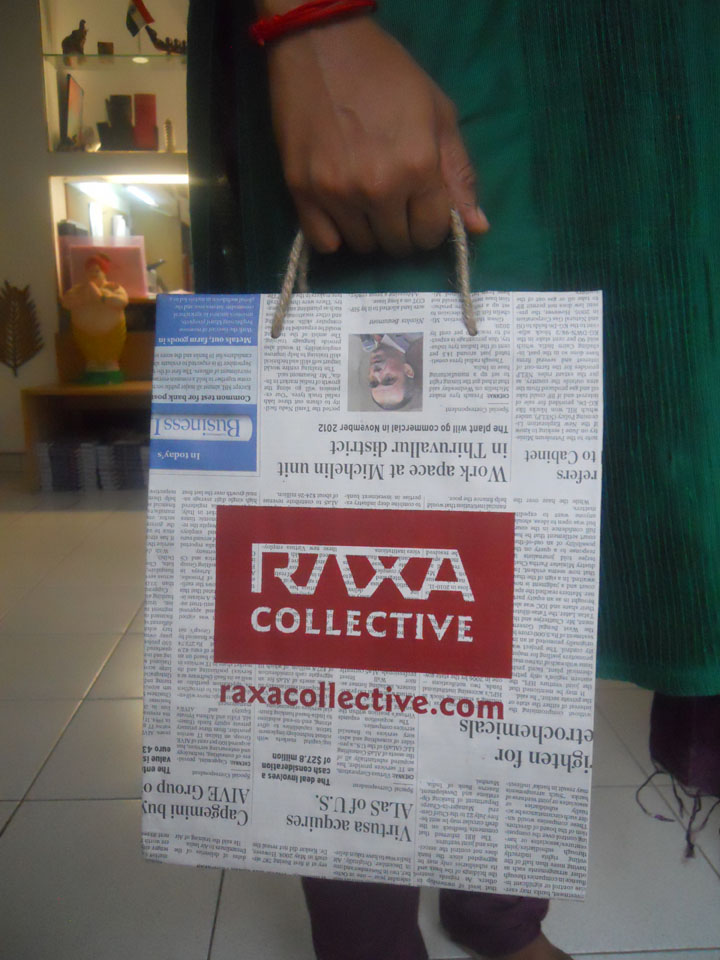
It is customary to bring fancy printed material to industry trade shows. At our next event, in Bombay during the first three days of September, instead of bringing brochures we will bring these bags. A new calling card, as it were. Thank you Diwia, and the team at Thought Factory Design, for quick response to this idea to make it happen. A special thank you to Raxa Collective team member Bruno for thinking of this initiative (he was in the middle of announcing his wedding engagement in the office when this idea came out of his mouth!) as an answer to all the paper that goes into trade shows. Now, some of it will go into our recycled bags.
And In Other News…
One day shy of a fourth opportunity to have a bit more fun with Michael’s mysterious invisibility, foiled. He is back, so we do not need to make reference to other young men of letters who stopped writing and made us all wish otherwise. And thankfully there was no resemblance to the story of Yuri Andropov after all, either. Nor to the even less humorous, or more humorless, current event question that Amy Davidson asks in her most recent blog post.
Let’s change the subject. Earthquake. No humor in that either. But for a rare short-form piece by John McPhee, take a look here, to help put such events in perspective. Amie, Milo and Adrien were all in the location McPhee describes, at the time when that piece first appeared. The folks who manage that ever-improving site where it was first posted perform a great service of recycling archival material when news brings an old piece to new relevance. Yesterday’s mention of Pete Seeger makes this worthy of recycling. It is, itself, a recycling of personal history along with a moving observation of the good guy’s aura:
His voice is a little shaky now (he talks the songs as much as sings them), his banjo picking is a little uncertain, and he required the help of his grandson, a powerful singer and guitarist with a perfect sixties name: Tao Rodríguez-Seeger. But he gave a lovely performance, and when he reappeared at the end, to sing “Down by the Riverside (Ain’t Gonna Study War No More)” with Ani and her band, there was nothing but love in that room.
An Expedition Worth Tracking
Take a look at Paola Pedraza’s post today titled Discovery and Conservation of Plants. The photos are beautiful but the concept is even better. It makes the New York Times worth subscribing to. Thank you Bill Keller!
If Willie Says So
The ideas are all ones we agree with: food transparency, corporate social responsibility, activism, etc. We do not know much about this company, but if Willie lends (or even sells) his credibility to them, we are inclined to support their campaign:
 Organikos