Counting Illegal Logging As Progress

Amid the Plunder of Forests, a Ray of Hope

28conniff-master768

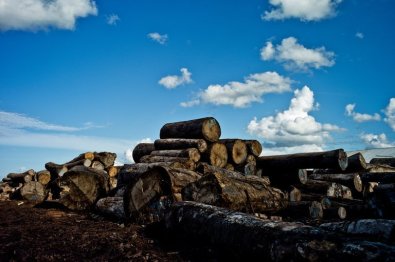
A sawmill in Peru, where more than half of the logging operations are illegal. Credit Tomas Munita for The New York Times

Strange as it may sound, we have arrived at a moment of hope for the world’s forests. It is, admittedly, hope of a jaded variety: After decades of hand-wringing about rampant destruction of forests almost everywhere, investigators have recently demonstrated in extraordinary detail that much of this logging is blatantly illegal.

maralago-4

Mar-a-Lago, Entrance to Master Suite from Cloister, 1967,
United States Library of Congress’s Prints and Photographs

This recent op-ed has a perfect final thought, and the photo here to the left is our way of offering a preview to that point. Richard Conniff, the op-editorialist, has frequently been featured in our pages, linking this type of story. You might also click the green cover below to go to one example of how this progress has been years in the making), but read this editorial all the way through before being distracted by the side stories, though they are equally relevant and important. Conniff continues:

Honduras Logging

And surprisingly, people actually seem to be doing something about it. In November, the European Court of Justice put Poland under threat of a 100,000-euro-per-day fine for illegal logging in the continent’s oldest forest, and early this month Poland’s prime minister fired the environment minister who authorized the logging.

In Romania, two big do-it-yourself retail chains ended purchasing agreements with an Austrian logging giant implicated in illegal logging there. And in this country, the Office of the United States Trade Representative, normally dedicated to free trade at any cost, has barred a major exporter of Peruvian timber from the American market after repeated episodes of illegal shipments. Continue reading

Werner, Syme & Darwin

Nijhuis-The-Book-That-Colored-Charles-Darwins-World-Secondary-Featured

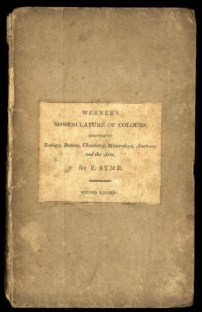
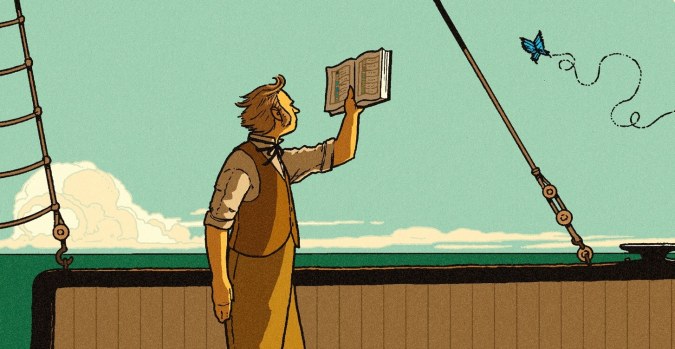
In his nearly five years aboard H.M.S. Beagle, Charles Darwin catalogued a dizzying array of new creatures. But how to show them to the people back home? Illustration by R. Fresson

9781588346216

It is a fine way to start a new week, thinking of a young person setting sail, and to narrow the focus of that thought, consider color.  We appreciate the notice by Michelle Nijhuis in the current issue of the New Yorker magazine about the upcoming re-issuing of this book, and her comment about it is welcome. Less welcome is the fact that if you click on her link to the book, or search on the title of the book with a fresh search, you will be directed to Amazon. At least if you are searching from the USA. Even from a USA-based search you can find alternatives, but from sources in places such as this excellent shop in the UK, or this one in Scandinavia. With that in mind, if the review below makes you think about purchasing the book, please consider clicking the image to the left which will link you to a bookstore in the USA that is offering it for pre-sale. Either way, enjoy this for now:

The Book That Colored Charles Darwin’s World

“I had been struck by the beautiful colour of the sea when seen through the chinks of a straw hat,” Charles Darwin wrote, in late March, 1832, as H.M.S. Beagle threaded its way through the Abrolhos Shoals, off the Brazilian coast. The water, he wrote, was “Indigo with a little Azure blue,” while the sky above was “Berlin with [a] little Ultra marine.”

Nomen1Darwin, then twenty-three, was only three months into the nearly five-year adventure that would transform his life and, eventually, the way that humans saw themselves and other species. As the voyage’s so-called scientific person, he would collect masses of rocks, fossils, animals, and plants, periodically shipping his specimens to Cambridge in containers ranging from barrels to pillboxes. Like other naturalists of his time, though, his primary documentary tool was the written word, and during the voyage he drew many of his words from a slim volume called “Werner’s Nomenclature of Colours,” published in 1814 by the Scottish artist Patrick Syme.
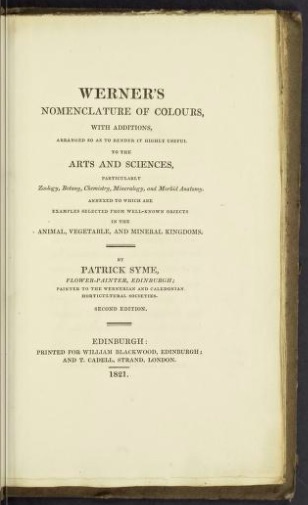
Nomen2Syme’s guide, a facsimile of which will be released in early February by Smithsonian Books, contains samples, names, and descriptions of a hundred and ten colors, ranging from Snow White to Asparagus Green to Arterial Blood Red to, finally, Blackish Brown. Based on a color-naming system developed in the late eighteenth century by the German mineralogist Abraham Werner, the guide is full of geological comparisons: Grayish White is likened to granular limestone, Brownish Orange to Brazilian topaz. Syme, a flower painter and art teacher, added comparisons from the living world. To Werner’s eyes, the Berlin Blue that Darwin saw in the Atlantic sky resembled a sapphire; to Syme, the wing feathers of a jay. Continue reading
Snowy Owl Zen

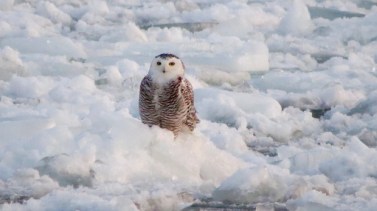
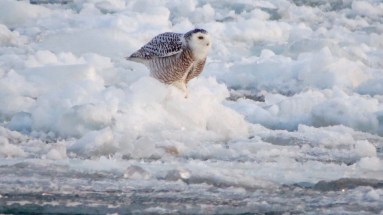
Every now and then, it is good to stop and smell the roses, which if you are a snowy owl looks like the scene above. Thanks to National Public Radio (USA) for bringing this to our attention:

26910960-2198855830128396-432316509509887686-ojpg-a9671d74dae41869

Facebook | Gary Cranfield

Gary Cranfield recorded the video last weekend while he was out on a walk with his girlfriend, Betsy Waterman, along Lake Ontario near Oswego, N.Y.

“There are usually sightings this time of year and historically there have been snowy owls in this place for years and we decided to check it out,” Cranfield, 69, told Syracuse.com.

You can watch the results of that wintry expedition above. And for those of you out there worrying, Waterman assures us the bird was not stuck — they watched it chill for 30(!) minutes on the floe before it flew away to another one.

And to David Figura for this original report:

Continue reading

A Community Of Immigrants Prevails

Michaud-Coogans-Bar.gif

Coogan’s faced a rent increase so extreme that it could not be misconstrued as a negotiating ploy. The response from the neighborhood was swift and overwhelming. Animation by Christopher Hopkins-Ward

Jim Dwyer, a New York Times reporter who we have only had reason to feature once in these pages, should have remained on our radar once we saw his attention to one of our heroes, Chuck Feeney. In particular, if we had snooped around one year ago after reading that article, we would have found this. Interesting fellow, beyond his journalistic talents. But he dropped off our radar, and for the last year we have probably missed many stories that would fit in these pages. Case in point, he wrote a story a couple weeks ago that failed to capture our attention.

And what a failure, though we might be forgiven the mistake. In the early paragraphs he mentions that the bar at the center of the story is closing because its landlord, a hospital, has plans for the building where the bar is located. That sounds not only ho-hum, but perhaps like progress; hospitals are the most communitarian of institutions, right? We correct that now:

Coogan’s, an Uptown Stalwart, Makes Its Last Stand

Smaller Footprints, Step By Step

5120x

Thanks to Chris Goodall for this quick check-list, mostly relevant to northern clime folks:

How to reduce your carbon footprint

From cutting down on meat to contacting your local representatives and investing in clean energy, here are 15 ways to help reduce global carbon emissions Continue reading

1491, 1493 & 2048

1920 (1).jpg

Ulises Fariñas

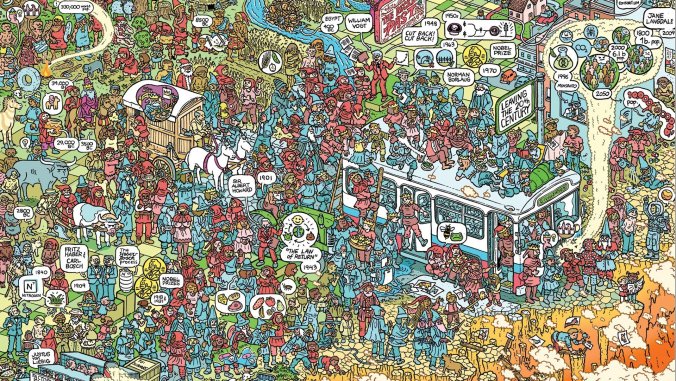
We have appreciated Charles C. Mann since our earliest awareness of his historical work when we started this platform in 2011. Now, he peers into the future, and we cannot close our eyes to the prospects he raises in this futurist epic in the upcoming edition of the Atlantic:

Can Planet Earth Feed 10 Billion People?

Humanity has 30 years to find out.

All parents remember the moment when they first held their children—the tiny crumpled face, an entire new person, emerging from the hospital blanket. I extended my hands and took my daughter in my arms. I was so overwhelmed that I could hardly think.

Afterward I wandered outside so that mother and child could rest. It was three in the morning, late February in New England. There was ice on the sidewalk and a cold drizzle in the air. As I stepped from the curb, a thought popped into my head: When my daughter is my age, almost 10 billion people will be walking the Earth. I stopped midstride. I thought, How is that going to work? Continue reading

The Big Carbon Footprint For Mining Virtual Currency

merlin_76857994_5a73f5ad-7404-4ded-9163-c32094dae9b8-master675

A computer server farm in Iceland, dedicated to mining Bitcoin. Credit Richard Perry/The New York Times

Thanks to the New York Times for this story on how much electricity is required to create virtual currencies:

SAN FRANCISCO — Creating a new Bitcoin requires electricity. A lot of it.

merlin_126054002_a85682ec-bfd6-4e56-9357-292d1a1b4fe2-master768

An employee at a Bitmain facility in Inner Mongolia, one of the biggest Bitcoin farms in the world. Credit Giulia Marchi for The New York Times

In the virtual currency world this creation process is called “mining.” There is no physical digging, since Bitcoins are purely digital. But the computer power needed to create each digital token consumes at least as much electricity as the average American household burns through in two years, according to figures from Morgan Stanley and Alex de Vries, an economist who tracks energy use in the industry.

The total network of computers plugged into the Bitcoin network consumes as much energy each day as some medium-size countries — which country depends on whose estimates you believe. And the network supporting Ethereum, the second-most valuable virtual currency, gobbles up another country’s worth of electricity each day. Continue reading

Animalism, Eel Episode


Thanks to the Atlantic’s Ed Yong for this four minutes of wonder:

It’s a remote control.
 It’s a tracking device.
 It can deliver shocks of up to 600 volts. You think the electric eel is shocking? You haven’t seen anything yet. In this episode of Animalism hosted by The Atlantic science writer Ed Yong, we investigate the subtle and sinister ways of the electric eel.

Environmental Impact From Microwave Ovens

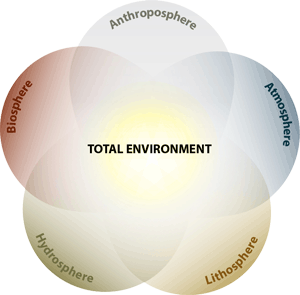
totalenvironmentThree scientists at the University of Manchester have shared their findings in a journal whose title we had not been aware of, but are glad to know is looking out for us all:

1-s2.0-S0048969717X00259-cov150hScience of the Total Environment is an international journal for publication of original research on the total environment, which includes the atmospherehydrospherebiospherelithosphere, and anthroposphere.

Since most readers of our pages likely use this type of oven on a daily basis, it seems worthy of a moment to read their findings as abstracted below:

Environmental assessment of microwaves and the effect of European energy efficiency and waste management legislation

Authored by Alejandro Gallego-Schmid, Joan Manuel F.Mendoza & Adisa Azapagic

130 M microwaves in the EU consume 9.4 TWh of electricity annually.

First LCA for microwaves to estimate the environmental effects of EU regulation

Standby Regulation will reduce impacts by 4–9% by 2020; WEEE Directive by ~ 0.3%.

Decarbonisation of electricity will reduce most impacts by 6–24% by 2020.

Eco-design regulation for microwaves should be developed to reduce resource use.

More than 130 million microwaves are affected by European Union (EU) legislation which is aimed at reducing the consumption of electricity in the standby mode (‘Standby Regulation’) and at more sustainable management of end-of-life electrical and electronic waste (‘WEEE Directive’). Continue reading

Alternatives To Dairy

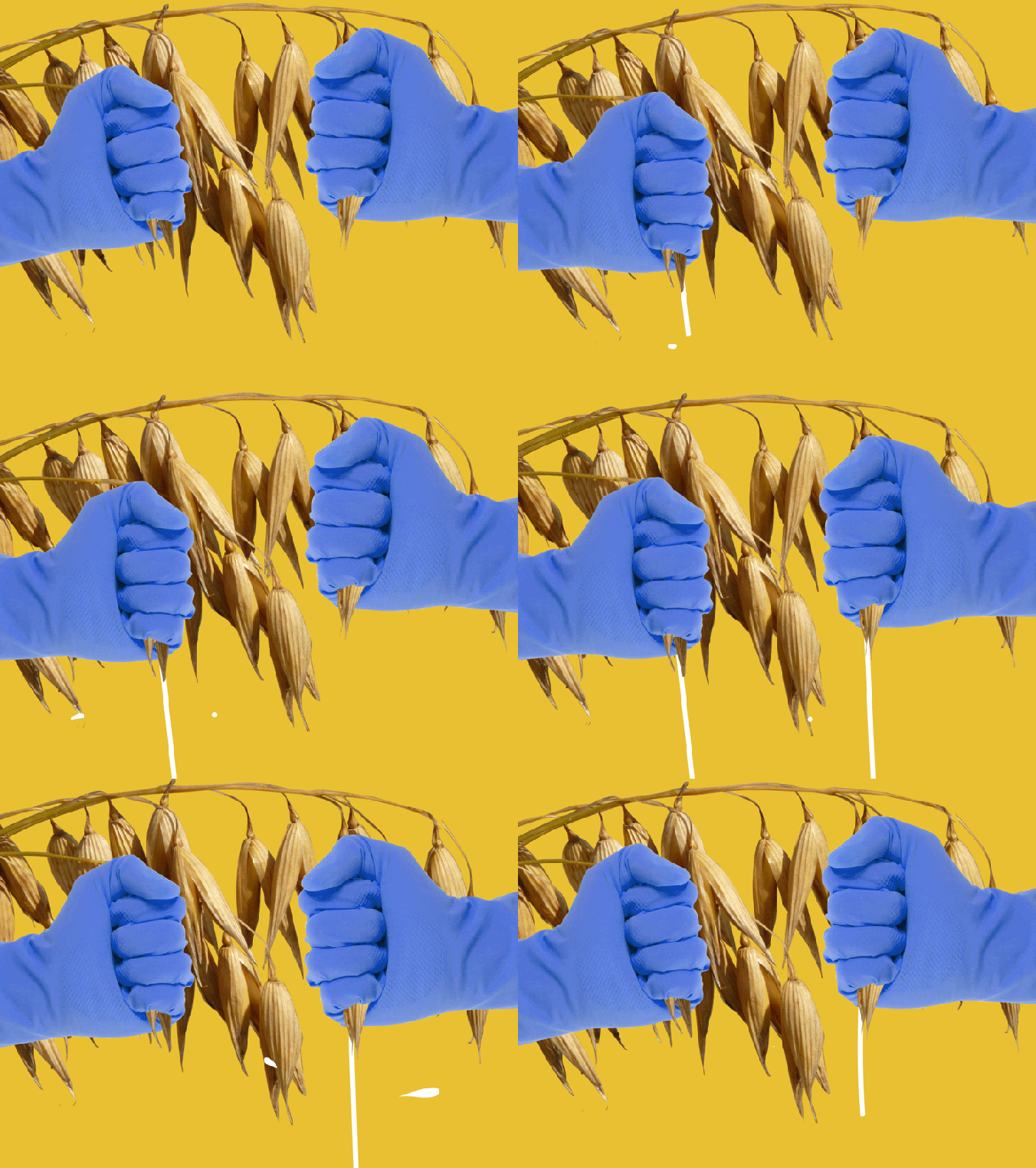
19OATLY-1-master768.gif

Photo illustration by Tracy Ma/The New York Times; Alamy (hands)

ripple-cereal_vert-25580ec96d4795beae7106681f5f2dc412d7886d-s400-c85

Ripple’s pea-based milk contains 8 grams of protein per cup, the same amount as in a cup of cow’s milk.
Whitney Pipkin/NPR

This article on the subject of a new pea-based dairy alternative–not just milk for coffee or cereal but also thicker items like Greek-style yoghurt–reported by National Public Radio (USA), reminded us of the great gif showing the milking of oats. Which reminded us to read that article too. Both worth a read:

When did finding something to put in your coffee get so complicated?

For the lactose-intolerant or merely dairy-averse, there are more alternatives to good ol’ American cow’s milk than ever. First there were powdered “creamers,” with their troublesome corn syrup solids. Then came soy, which may come closest to the real thing in nutrients and consistency. Grocery stores now stock an army of nut milks — almond, cashew, hazelnut, macadamia, you name it — which can be too grainy, too thin or frankly too flavorful. Pea milk? Sounds like a kindergarten taunt. Coconut and rice milk are basically water. Hemp milk? For the birds … and the hippies. Continue reading

Understanding Oregon Rancher Culture’s Concerns

21mag-oregon2-jumbo-v2

If, like those of us who contribute to this platform, you had been following the standoff mentioned in this article, and following the Bundys as a sidenote, this article is worth a read. The author Jennifer Percy gives full voice, as far as we can tell, to the concerns of the people from that region and specifically their opposition to all aspects of the federal government other than the military. The last three paragraphs of the article are particularly chilling but getting there is a worthy journey:

21mag-21oregon-t_CA1-superJumbo

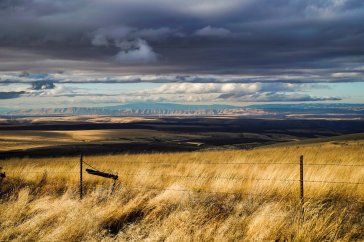
The landscape of eastern Oregon has little in common with the state’s Pacific Coast. Credit Peter van Agtmael/Magnum, for The New York Times

I took the eastern route from Idaho, on a day of freezing rain, over the Strawberry Mountains, into the broad John Day River Basin, in Oregon. I was used to empty places. Most of my childhood was spent in this region of eastern Oregon, in remote areas of the sagebrush desert or in the volcanic mountains with their jagged peaks and old-growth forests. My family moved away just before I entered high school, and I never returned; I’ve felt in romantic exile ever since. This part of America that had once belonged to my childhood became the spotlight of national news in the winter of 2016, when the Malheur National Wildlife Refuge — an old childhood haunt — became the scene of a cowboy takeover. The takeover began as a protest in the town of Burns after two ranchers were sentenced to prison for arsons on federal land. The ranchers, Dwight and Steven Hammond, caught the attention of the Nevada rancher Ammon Bundy, who thought the punishment unfair. Bundy and a crowd of nearly 300 marchers paraded through Burns, and a splinter group eventually took over the Malheur headquarters. For 41 days, they refused to leave, protesting federal ownership of public lands, which they considered unlawful and abusive. I didn’t understand what had happened since I left, why so many people seemed so disillusioned and angry.

21mag-21oregon-t_CA0-superJumbo.jpg

Joe Cronin on his ranch in the Malheur National Forest, in October. Credit Peter van Agtmael/Magnum, for The New York Times

The ground was snow-covered when I visited John Day last winter and the temperature below freezing. I was there to attend a meeting organized by Jeanette Finicum, the widow of LaVoy Finicum, an Arizona rancher who was shot and killed by government agents a year earlier. LaVoy was a leader of the Malheur occupation. He left the refuge for a speaking engagement in John Day with plans to return, but he was shot three times at an F.B.I. roadblock. For that reason, his widow was calling this event “The Meeting That NEVER Happened.” Continue reading

Birding Field Guides, Rated

field-guide-to-birds-lowres-1688

Photo: Kyle Fitzgerald

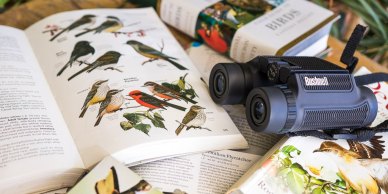
We are constantly on the lookout for information useful to birders, for birding. Clara Chaisson made some choices for Wirecutter on which field guides to rate and which was best, and she had us at methodology:

Birding together is a bonding activity in my family in the same way that game night is in other households, so I’ve been casually birding for most of my life. Since studying ornithology in college, I’ve had opportunities to make my enthusiasm for bird observation more than just a hobby; I’ve done seasonal fieldwork that required me to know how to identify all Northeastern birds by sight and sound. Even now that I have a desk job and live in a city, I still get out as often as I can.

field-guide-to-birds-top-2x1-lowres1024-1702I spent a week testing nine of the most-recommended and best-selling bird guides at Mount Auburn Cemetery—the first garden cemetery in the US—and Fresh Pond in Cambridge, Massachusetts, both of which are hotspots, or popular public birding locations, on the online birding database eBird. Continue reading
Coy-Wolf Co-Habitation

00coyote3-blog427

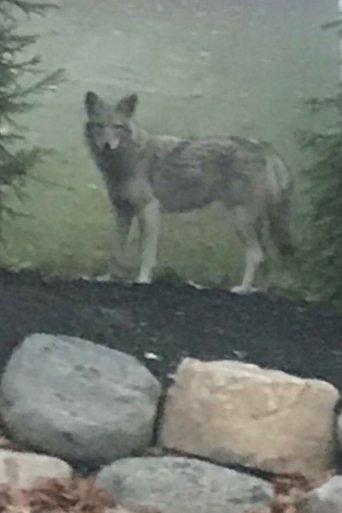
The Clarkstown Police Department posted a photograph of what they called a coywolf on Facebook last month. Credit via Clarkstown Police Department

Thanks to the New York Times for the local story follow-up to yesterday’s Yale360 globally-generalizable item on a related theme (click here or on the image to the right to go to the source):

CONGERS, N.Y. — Of all the coyotes that roam Dr. Davies Farm, looking for prey on this apple-picking orchard less than an hour from New York City, manager James Higgins says one of the pack stands out: Bigger and with more gray fur than its mates, this wolflike canine is a reason, Mr. Higgins says, there are fewer deer nibbling at Dr. Davies’s stock.

“We love having him here,” Mr. Higgins said as he drove around the property on an ad hoc coyote safari. There were no sightings, but Mr. Higgins ventured a profile of the creature: aloof, calm, uninterested in people.

“Anytime he sees any kind of human activity, he bolts,” Mr. Higgins said. “As long as he stays in his space and we stay in ours, everyone works in harmony.” Continue reading

Half-Earth Is Not Happening, But Co-Habitation Is


luisa-rivera-yale-e360_web

LUISA RIVERA / YALE E360

Thanks to Richard Conniff, whose articles about the intersection between humans and other species, and about how our museums shape our views we have shared from various sources, including this recent one from Yale360:

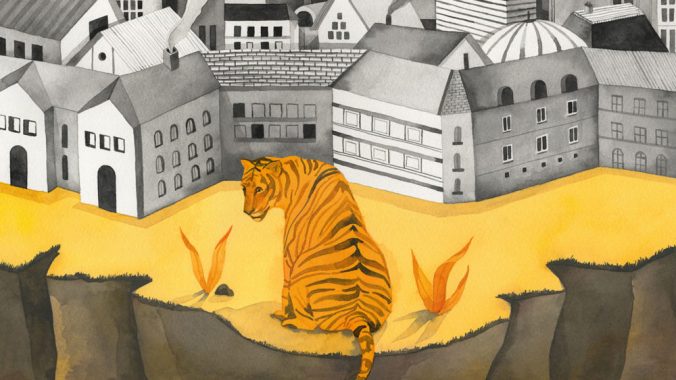
Habitat on the Edges: Making Room for Wildlife in an Urbanized World

Efforts to protect biodiversity are now focusing less on preserving pristine areas and more on finding room for wildlife on the margins of human development. As urban areas keep expanding, it is increasingly the only way to allow species to survive.

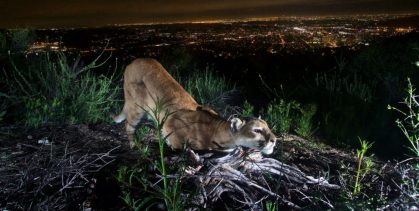
FemaleMountainLion_VerdugosMountainsGlendaleLA_NPS_web2

A female mountain lion in the Verdugos Mountains, north of Los Angeles. Also known as cougars, these animals are an increasingly common sight in the mountains surrounding Southern California’s cities. NATIONAL PARK SERVICE

One morning not long ago, in the southern Indian state of Karnataka, I traveled with a Wildlife Conservation Society biologist on a switchback route up and over the high ridge of the Western Ghats. Our itinerary loosely followed the corridor connecting Bhadra Tiger Reserve with Kudremakh National Park 30 miles to the south. Continue reading

Flour Tortillas Praised & Decolonized Diet Delineated

Arellano-In-Praise-of-Flour-Tortillas

Recent Mexican immigrants deride them as a gringo quirk. Foodie purists dismiss them as not “real” Mexican food. But good flour tortillas can be revelatory. Photograph by YinYang / Getty

DYDBookCover2

If culinary etymology is your cup of chai, you may appreciate Gustavo Arellano’s post in praise of flour tortillas. Among the reasons to thank him is this book (click the image to the right to go to the source) that we had not been aware of:

More than just a cookbook, Decolonize Your Diet redefines what is meant by “traditional” Mexican food by reaching back through hundreds of years of history to reclaim heritage crops as a source of protection from modern diseases of development. Continue reading

Whispering In The Interest Of Nature

14COMET2-master675

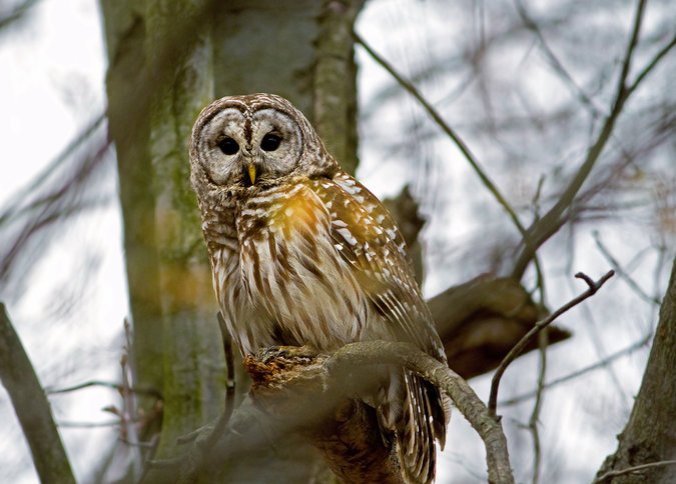
Barred owl, Maryland Credit Noah Comet

The birders among us say thank you, Noah Comet (and to the New York Times for providing the valuable real estate for this informative, charming essay):

The Delicate Politics of Chasing Owls

14COMET3-master675

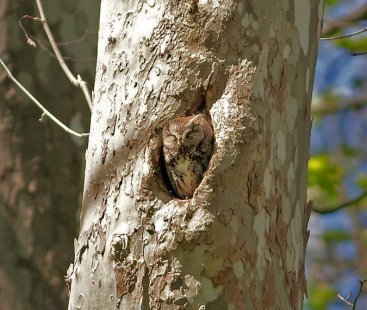
Eastern screech owl, Ohio. Credit Noah Comet

ANNAPOLIS, Md. — Owls tend to be secretive. While there are a few American species that enjoy the daylight hours, most are nocturnal and spend their days behind thick greenery or uncannily blending into the bark of the trees they nestle against. Once they’ve found a secure place to snooze, they are likely to return to that spot daily, but even if you find evidence of their presence — scat and regurgitated pellets — good luck seeing the clandestine culprits.

14COMET-slide-JG9V-superJumbo

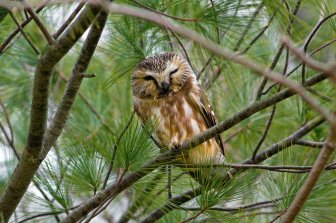
Northern saw-whet owl, Ohio. Credit Noah Comet

I’m a seasoned birder with a particular interest in owls, and on my ventures to find them, even when I have specific information on where they’ve been seen just minutes before, I’ve failed to find them more often than not. Such elusiveness makes “owling” one of the great birding challenges. Being the first to find a particular owl is regarded by some as a badge of distinction, and those who find them regularly are viewed with awe-struck reverence. Continue reading

Divesting Scales With Leadership

Screen Shot 2018-01-12 at 5.25.34 AMThanks to the Guardian for giving Bill McKibben the space to put the New York City decision in perspective:

Over the years, the capital of the fight against climate change has been Kyoto, or Paris – that’s where the symbolic political agreements to try and curb the earth’s greenhouse gas emissions have been negotiated and signed. But now, New York City vaulted to leadership in the battle.

On Wednesday, its leaders, at a press conference in a neighborhood damaged over five years ago by Hurricane Sandy, announced that the city was divesting its massive pension fund from fossil fuels, and added for good measure that they were suing the five biggest oil companies for damages. Our planet’s most important city was now at war with its richest industry. And overnight, the battle to save the planet shifted from largely political to largely financial. Continue reading

Scams Of Yore, Evolved

lead_960 (12)

Alexis C. Madrigal first showed up on our radar 5+ years ago, and is best known for his work at the Atlantic. We recently caught up on his history here, which is worth an hour if you like to geek out on any/all things longform (as we do, numerous posts will attest). He has fresh material that is worth a read, birds of a feather with reporting from a dozen years earlier on then-pernicious scams:

The Strange Brands in Your Instagram Feed

A new breed of online retailer doesn’t make or even touch products, but they’ve got a few other tricks for turning nothing into money.

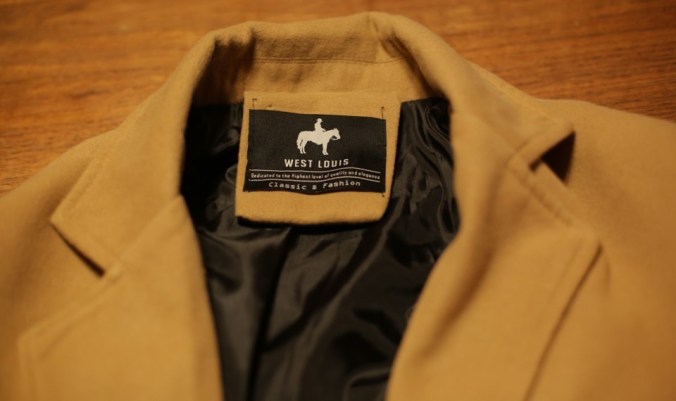
It all started with an Instagram ad for a coat, the West Louis (TM) Business-Man Windproof Long Coat to be specific. It looked like a decent camel coat, not fancy but fine. And I’d been looking for one just that color, so when the ad touting the coat popped up and the price was in the double-digits, I figured: hey, a deal! Continue reading

State By State Ranking For USA Bicyclists

SIERRA Renton Gene Coulon Park WB

PHOTO COURTESY OF MACHIKO THRELKELD

Thanks to Sierra magazine for bringing this to our attention:

Is Your State Bicycle-Friendly?

A new report ranks the best and worst places to hop on the saddle

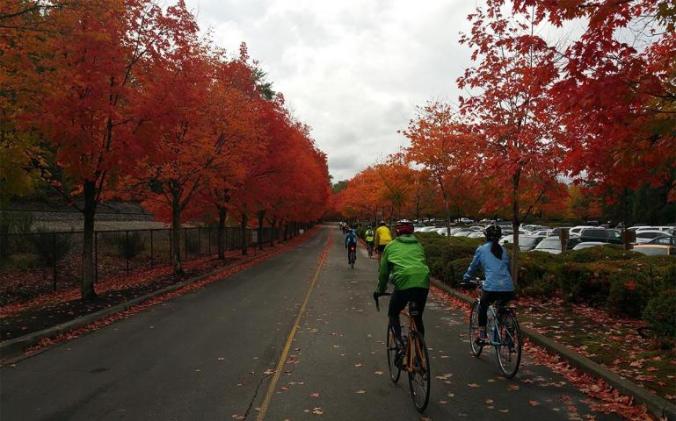
Do you live in the safest or the most dangerous state for riding a bike? The 2017 Bicycle Friendly State Report Card has the answer.

Each year, the League of American Bicyclists, an advocacy group founded in 1880 to improve street conditions for bikers, releases a detailed ranking that cyclists can use to track where it’s safe, and not so safe, to hop on wheels. The group also monitors each state’s progress toward increased bicycle safety. The rankings are derived from a variety of factors, including five key bicycle-friendly actions, federal data on bicycling conditions, and summaries with feedback on how each state can improve the safety and mobility of bicyclists. Continue reading

Undoing Dams, Animals Pitch In

ap_498416275898

Since 2014, Washington’s Elwha River has flowed freely through what once was Lake Mills and the Glines Canyon Dam. But the site still leaves a barren scar in Olympic National Park. Now, a human- and bird-led effort is turning it green again. Photo: Elaine Thompson/AP

Conservation is sometimes in the hands of animals, as this story in the current Audubon magazine illustrates:

Birds Are Helping to Plant an Entire Lost Landscape in Olympic National Park

After the largest dam removal in U.S. history, scientists, Native Americans, and wild animals are working together to restore the heart of the Elwha.

ap_081210040812

The Elwha Valley and Glines Canyon Dam prior to demolition. Photo: Elaine Thompson/AP

It’s a scorching August day in the Elwha Valley, and it only feels bleaker as we peer into the 200-foot void of Glines Canyon Dam. A sputtering trail of water marks the concrete lip where, for nearly a century, two hulking braces trapped logs, rocks, and sediments as they washed down from the mountains of northern Washington, forming a reservoir that was six times deeper than a competition-diving pool. At its height, the dam churned out 13.3 megawatts of hydroelectricity, enough to power 14,000 homes and a local paper mill. But it also seriously altered the Elwha River’s ecology, along with that of surrounding Olympic National Park. Endangered chinook salmon were cut off from their spawning sites; fish-eating birds and otters suffered; and estuaries became more brackish and shallow. Finally, in 1992, the U.S. government issued the order to destroy Glines Canyon Dam and the nearby Elwha Dam. Yet it wasn’t until two decades later when the water was completely freed. Continue reading