Vote Early, Vote Often

Voting open for crowdsourced climate change innovations

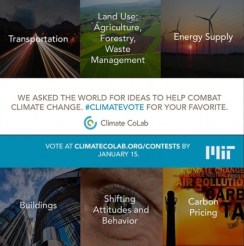
MIT Climate CoLab allows the public to vote for promising crowdsourced ideas on how to tackle climate change.

Annalyn Bachmann | MIT Climate CoLab

MIT-CCl-02_0.jpgThis is better than democracy, and as important as any citizen science initiative we know of, so we hope you will contribute:

MIT Climate CoLab has opened a public voting period to select the top innovative ideas on how to tackle climate change. A project of the MIT Center for Collective Intelligence, Climate CoLab is an online platform where over 90,000 community members from around the world work together to develop and select proposals to help solve this massive, complex issue. Continue reading

More Information, Thank You

gettyimages-629786322-56167ac88fd815c0482912a5baea16972304ffc3-s1300-c85

Contradictory consumer demands for food labels are making some food companies re-think their alliance with the industry’s traditional lobbying group. miakievy/Getty Images

Food producers may not all, or always, appreciate how much information consumers want or need, but erring on the side of more in this case makes sense to us. Thanks to National Public Radio (USA) for this story:

For at least the past decade, the Grocery Manufacturers Association (GMA) has been the unrivaled voice of a vast industry, from neighborhood grocery stores to food manufacturing giants with supply chains that span the globe. Most recently, it’s been a powerful force in fighting proposals to require information about added sugar or GMOs on food labels.

untitled-1_sq-b58cbda94a29b6944b67706c24dcb43ed57e06fb-s400-c85Today, that colossus is teetering and facing questions about its future. Over the past six months, eight of GMA’s largest members have decided to drop their membership. Each defection was quickly revealed on the news site Politico. One industry insider says that he’s seen a list of another three companies that are considering leaving the association. Continue reading

New Vehicle Technology Makes Good Business Sense

Free parking and charging stations for electric cars in Oslo. Norway offers generous incentives that make the vehicles cheaper to buy, and other benefits once they are on the road. Credit Thomas Haugersveen for The New York Times

Norway’s public policy that puts environmentalism front and center stands in stark contrast to the obvious deconstruction of protections in this country.

In Norway, Electric and Hybrid Cars Outsell Conventional Models

Sales of electric and hybrid cars in Norway outpaced those running on fossil fuels last year, cementing the country’s position as a global leader in the push to restrict vehicle emissions.

Norway, a major oil exporter, would seem an unlikely champion of newer, cleaner-running vehicles. But the country offers generous incentives that make electric cars cheaper to buy, and provides additional benefits once the vehicles are on the road.

Countries around the world have ramped up their promotion of hybrid and electric cars. As China tries to improve air quality and dominate new vehicle technology, the government there wants one in five cars sold to run on alternative fuels by 2025France and Britain plan to end the sale of gasoline- and diesel-powered cars by 2040.

Norway is ahead of the rest of the world. Continue reading

Enlisting Enzymes for Ecoefficiency

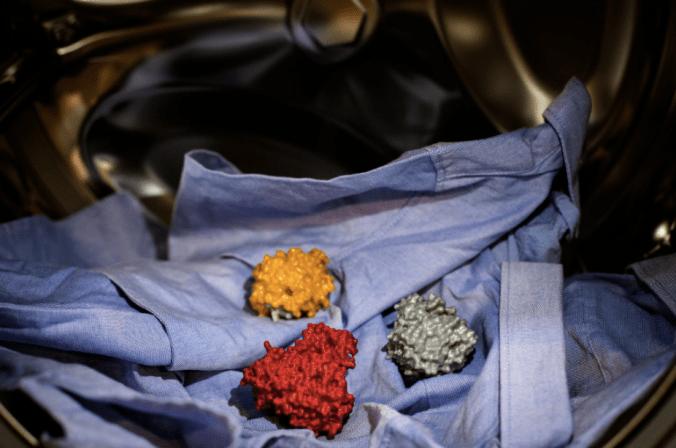
Models of stain-fighting enzymes, displayed on clothes in a washing machine. Credit Carsten Snejbjerg for The New York Times

We’ve been highlighting mycological innovation since the early days of this site, and our enthusiasm has yet to wane. The range of fungi-power will never cease to amaze.

Fighting Climate Change,
One Laundry Load at a Time

A Danish biotechnology company is trying to fight climate change — one laundry load at a time. Its secret weapon: mushrooms like those in a dormant forest outside Copenhagen.

In the quest for a more environmentally friendly detergent, two scientists at the company, Novozymes, regularly trudge through the mud, hunting for oyster mushrooms that protrude from a fallen beech or bracken fungi that feast on tough plant fibers. They are studying the enzymes in mushrooms that speed up chemical reactions or natural processes like decay.

“There is a lot going on here, if you know what to look for,” said Mikako Sasa, one of the Novozymes scientists.

Their work is helping the company develop enzymes for laundry and dishwasher detergents that would require less water, or that would work just as effectively at lower temperatures. The energy savings could be significant. Washing machines, for instance, account for over 6 percent of household electricity use in the European Union.

Enlisting enzymes to battle dirt is not a new strategy. Over thousands of years, mushrooms and their fungi cousins have evolved into masters at nourishing themselves on dying trees, fallen branches and other materials. They break down these difficult materials by secreting enzymes into their hosts. Even before anyone knew what enzymes were, they were used in brewing and cheese making, among other activities. Continue reading

Taste The Place, Yemen & Coffee In Michigan

img-8850_wide-96d9a5de4dcfc1e98058e4be37f9940b92363736-s1300-c85.jpg

A traditional pot of Yemeni coffee, mixed with cardamom and ginger, is served with a Yemeni sweet honey bread at a new Yemeni coffee shop in Dearborn, Mich. Owner Ibrahim Alhasbani sees himself as part entrepreneur, part cultural ambassador for his home country. Zahir Janmohamed

The salt, at National Public Radio (USA) has a story today about coffee, entrepreneurship and cultural illumination that is about tasting the place, a once and future key theme of our pages:

The 35-year-old owner of a new Yemeni coffee shop in Dearborn, Mich., never imagined he would enter the coffee business. Ibrahim Alhasbani was born in Yemen and grew up on a coffee farm outside the country’s capital city of Sana.

p1040537_wide-61e96f7114c07339e46dbc8eb78417f3c6facfd4-s1300-c85

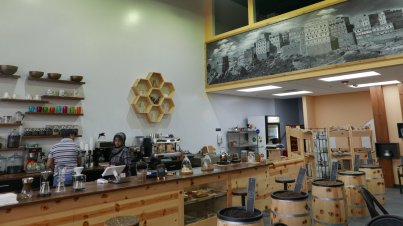
A view inside Qahwah House, a Yemeni coffee house in Dearborn, Mich. The city has a high concentration of Arabs and Arab Americans (qahwah means coffee in Arabic). Zahir Janmohamed

“I had enough coffee in my life,” Alhasbani says. “But when I moved to America and the problems started back home, I told myself I have a chance to show that Yemeni coffee is really good and that Yemen is more than just violence and war.”

A couple of months ago, he opened Qahwah House in Dearborn, a city with a high concentration of Arabs and Arab Americans (qahwah means coffee in Arabic). Continue reading

Poo-Power Innovations

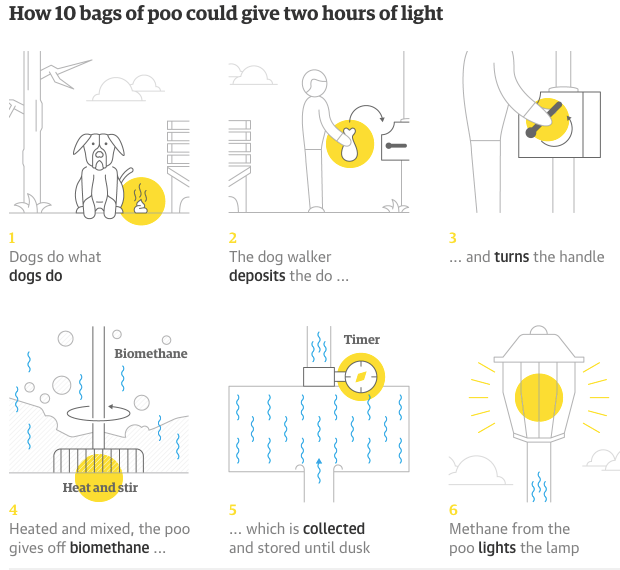
Guardian Graphic

Biomethane is an age-old concept in much of what is frequently called the “developing world”, so it’s difficult to overstate the irony of “1st world” adoption. That said, it’s heartening to read of more projects aimed at maximizing poo’s full potential.

From stools to fuels: the street lamp that runs on dog do

A long winding road climbs into a gathering dusk, coming to an abrupt dead end in front of a house. Here, a solitary flickering flame casts out a warm glow, illuminating the nearby ridge line of the Malvern Hills.

Below the light sits a mysterious green contraption resembling a cross between a giant washing machine and a weather station. This is the UK’s first dog poo-powered street lamp, and it is generating light in more ways than one.

The idea seems simple enough: dog walkers deposit the product of a hearty walk into a hatch and turn a handle. The contents are then broken down by microorganisms in the anaerobic digester, producing methane to fuel the light, and fertiliser…

…Humans have used animal dung as fuel since the neolithic period, and have known how to get flammable gas from decaying organic matter since the 17th century. Small-scale anaerobic digesters are commonplace in many developing countries, while larger plants producing heat and electricity from animal manure and human sewage have long been used in the west.

Yet the energy in most excrement still goes to waste.  Continue reading

Water Independence, A Trend Worth Watching In 2018

03Water8-master675.jpg

At Opal Springs Water Company in Oregon, raw water is prepared for shipping to the company Live Water. Credit Leah Nash for The New York Times

Closing out 2017, a note on water. Nellie Bowles wrote this story, Unfiltered Fervor: The Rush to Get Off the Water Grid, for the Food section of the New York Times. It could just as well have been in either the Science or the Tech section.

One new technology allows anyone, in dry or humid climates, to produce and store their own drinking water. The story is in the Food section presumably because it is a luxury for the improvement of your drinking pleasure; but the implications for natural resource management are interesting. And what about the projects that societies have embarked upon, forever, to determine ever-better ways to distribute necessities like water?

SOURCE: a HydropanelTM that makes drinking water from sunlight and air

main-image

A standard residential SOURCE array is made up of two panels: one primary panel and one additional panel with array sizes designed to meet your drinking water needs.

  • Daily Production

    A standard array averages 4-10 liters each day or 8-20 16.9oz standard water bottles, depending on sunshine and humidity.

  • Footprint

    Each panel is 4 feet x 8 feet (1.2m x 2.4m) and a standard array contains 2 panels.

  • Water Storage

    Each panel holds 30 liters in a reservoir where it is mineralized and kept clean for optimal taste and health. Standard arrays have 60 liters of water storage capacity.

  • Power

    SOURCE utilizes solar power and a small battery to enable water production when the sun shines and water delivery on cloudy days or at night.

The story includes several technologies that seem worth knowing about:

Continue reading

Trees, Carbon-Neutral Energy, & Ambiguous Definitions

Logs_TimberYards_Finland_GettyImages-84157450_web16x9.jpg

Thanks to Fred Pearce over at Yale Environment360 for this puzzler:

Carbon Loophole: Why Is Wood Burning Counted as Green Energy?

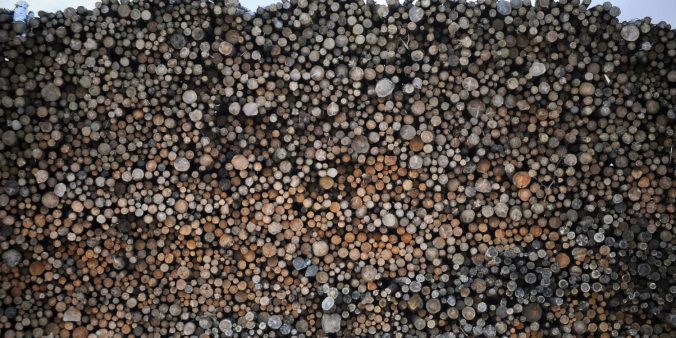
A loophole in carbon-accounting rules is spurring a boom in burning wood pellets in European power plants. The result has been a surge in logging, particularly in the U.S. South, and new doubts about whether Europe can meet its commitments under the Paris accord. Continue reading

Battery Story, 2017

Tesla grid storage South AustraliaBattery technology is the thing. It seems to be a holy grail that environmentalists and technologists can agree on for helping us, humans who want a habitable planet for generations to come, mitigate climate change. And occasionally it is at the core of short term fixes. Once the dust has settled on 2017, and we are looking back on stories that were on the positive side of long term impact on the planet, this story will probably get more attention. For now it seems like a footnote at the end of the year to note that this Tesla scheme actually seemed to work:

Tesla Grid Storage Battery Reacts Insanely Fast To Coal Power Outage

Last spring, Elon Musk made a daring bet. He claimed he could build and install the world’s largest grid storage battery in South Australia within 100 days of the date a contract was signed or the system would be free. The contract was signed on September 29. Installation was completed by the third week of November. On December 2, the giant 129 MWh system was activated. Continue reading

The Custom Proteins In Your Future

26PROTEIN-jumbo.jpg

John Hersey

Cross-Chasm Communities Collaborating

5000m

Felisa Rogers at the Guardian provides some much needed late 2017 perspective on opportunities to collaborate for the common good:

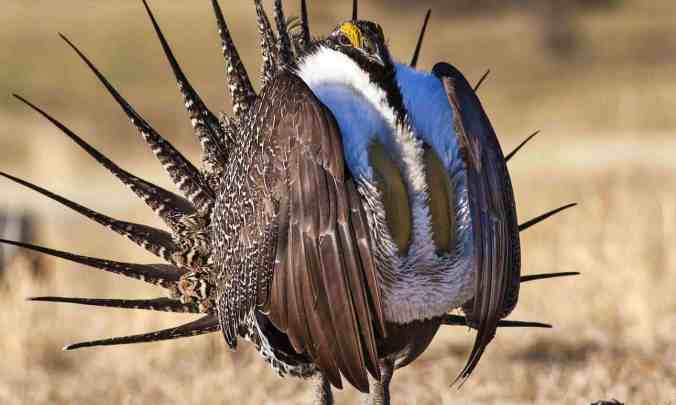
How the fight to save a bird species shows how to bridge the red/blue divide

A plan to save the sage grouse was a rare instance where ranchers, the timber industry, scientists, landowners and environmentalists all agreed on something

At 5am, the day is black, and resounds with the steady drum of rain. My husband Rich is getting ready for work. He oils his leather gloves and fills a Thermos. He’ll spend a 10-hour day in the downpour: tramping through thorny salmonberry and wading through the roaring creeks. Continue reading

Food-Canning Community

085_custom-3cbc67d5efc1188ad82ba51bf440ac69713397b9-s1300-c85.jpg

Roy Miller fills cans with cooked collard greens. Dan Charles/NPR

Thanks to the salt at National Public Radio (USA):

In A New Deal-Era Cannery, Old Meets New

Allie Hill got really serious about eating local food about eight years ago. She was cooking for three young children. “I was able to go to the farmers’ market and find my produce — fruits and veggies,” she says. “I was able to find meat, and even some dairy.”

She simply couldn’t find local version of other foods, though. These are foods that fill her pantry, like marinara sauce, apple sauce and everything else that comes to us preserved in sealed jars and cans. Continue reading

An Interesting Alternative To Ayn Rand’s Prescription For The Future

171218_r31150

The Estonian government is so eager to take on big problems that many ambitious techies leave the private sector to join it.Illustration by Eiko Ojala

This is about people with an idea pursuing it with confidence in the ability of government to achieve something that its people want. Not everyone, everywhere, would want this to be sure. But it is a vote in favor of pursuing the common good together. It is worth the read, on a cold winter’s night (or wherever you may be) for a glimpse of the future for those in small, flexible places:

Estonia, the Digital Republic

Its government is virtual, borderless, blockchained, and secure. Has this tiny post-Soviet nation found the way of the future?

Up the Estonian coast, a five-lane highway bends with the path of the sea, then breaks inland, leaving cars to follow a thin road toward the houses at the water’s edge. There is a gated community here, but it is not the usual kind. The gate is low—a picket fence—as if to prevent the dunes from riding up into the street. The entrance is blocked by a railroad-crossing arm, not so much to keep out strangers as to make sure they come with intent. Beyond the gate, there is a schoolhouse, and a few homes line a narrow drive. From Tallinn, Estonia’s capital, you arrive dazed: trees trace the highway, and the cars go fast, as if to get in front of something that no one can see. Continue reading

Preparing For Reef Wipeout, Corals Bred In Captivity

1200 (1)

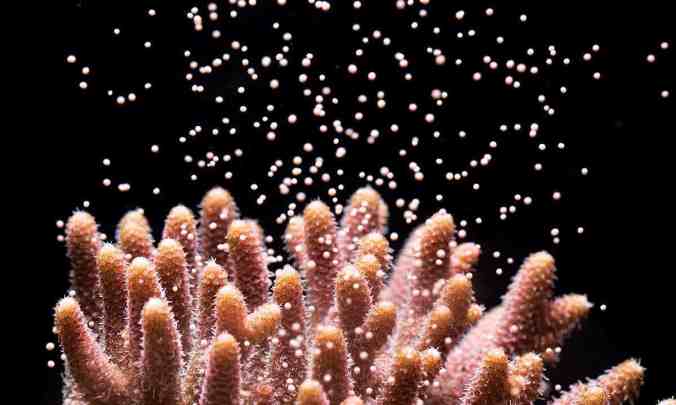
Coral spawning at the Horniman museum. Photograph: James Craggs/Horniman Museum

The Horniman Museum and Gardens in the UK is doing important work related to coral reef regeneration. Thanks to Damian Carrington and the Guardian for bringing this to our attention:

New lab-bred super corals could help avert global reef wipeout

Pioneering research on cross-species coral hybrids, inoculations with protective bacteria and even genetic engineering could provide a lifeline for the ‘rainforests of the oceans’

coral-reefs-a-globally-important-habitat-but-threaten-image-by-j-craggs-horniman-museum-and-gardens

Coral reefs are globally important habitats

New super corals bred by scientists to resist global warming could be tested on the Great Barrier Reef within a year as part of a global research effort to accelerate evolution and save the “rainforests of the seas” from extinction.

Researchers are getting promising early results from cross-breeding different species of reef-building corals, rapidly developing new strains of the symbiotic algae that corals rely on and testing inoculations of protective bacteria. They are also mapping out the genomes of the algae to assess the potential for genetic engineering.

planulae-held-in-the-tentacles-of-tubastrea-coccinea-image-by-j-craggs-horniman-museum-and-gardens

Planulae held in the tentacles of Tubastrea coccinea prior to release

Innovation is also moving fast in the techniques need to create new corals and successfully deploy them on reefs. One breakthrough is the reproduction of the entire complex life cycle of spawning corals in a London aquarium, which is now being scaled up in Florida and could see corals planted off that coast by 2019. Continue reading

Eating Habits, Deep Sea Edition

SeaFood

MBARI

Thanks to Joanna Klein:

What Eats What: A Landlubber’s Guide to Deep Sea Dining

00TB-FOODWEB-ROV-master675

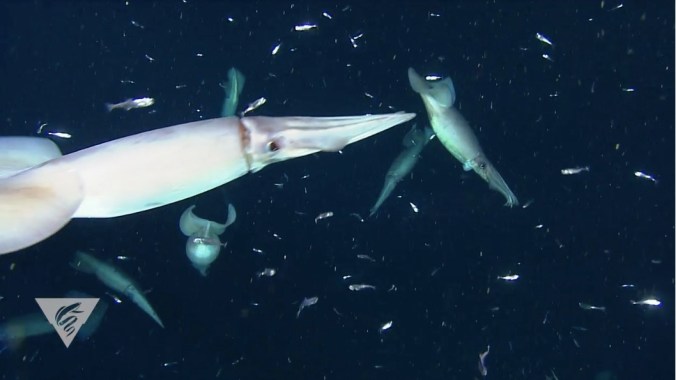
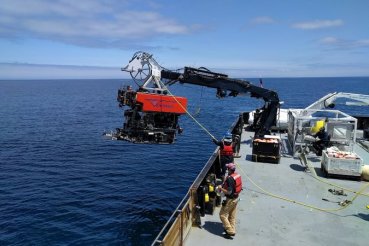
A remotely operated underwater vehicle, or R.O.V., deployed by the Monterey Bay Aquarium Research Institute, which captured images of underwater creatures devouring each other — at least, those that didn’t flee it. CreditAnela Choy/Monterey Bay Aquarium Research Institute

You’ll never go to dinner in the deep sea. It’s dark, vast and weird down there. If the pressure alone didn’t destroy your land-bound body, some hungry sea creature would probably try to eat you.

Fortunately for you, something else has spent a lot of time down there, helping to prepare this guide to deep sea dining.

For nearly three decades, robots with cameras deployed by the Monterey Bay Aquarium Research Institute have glided through the ocean off the coast of central California at depths as deep as two and half miles below. Continue reading

Will Divestment Be The Best News Of 2017?

McKibben-Fossil-Fuel-Divestment

Time and again, the petroleum industry has used its political might to stymie global action on climate change. Now cities and states have become the new battleground. Photograph by Robert Nickelsberg / Getty

Some things we lose slowly, which seems better than losing them quicker; other things we gain too slowly:

The Movement to Divest from Fossil Fuels Gains Momentum

Tuesday should have been a day of unmitigated joy for America’s oil and gas executives. The new G.O.P. tax bill treats their companies with great tenderness, reducing even further their federal tax burden.

Kolbert-Tax-Bill-National-Wildlife-Refuge

Part of the Arctic National Wildlife Refuge, known as the 10-02 area, serves as the summer breeding ground for two hundred thousand caribou. Photograph by The Asahi Shimbun via Getty

And the bill gave them something else they’ve sought for decades: permission to go a-drilling in the Arctic National Wildlife Refuge. But, around four in the afternoon, something utterly unexpected began to happen. A news release went out from Governor Andrew Cuomo’s office, saying that New York was going to divest its vast pension-fund investments in fossil fuels. The state, Cuomo said, would be “ceasing all new investments in entities with significant fossil-fuel-related activities,” and he would set up a committee with Thomas DiNapoli, the state comptroller, to figure out how to “decarbonize” the existing portfolio. Continue reading

Chocolate’s Future Is Ours To Write, Within Limits


Slowmelt

sethi_breadwinechocolate_3dWe are among those hoping that the future of chocolate is tastier, but we thankfully missed the mistaken headlines highlighted in this story below (thanks to the salt at National Public Radio, USA). So no false hopes dashed, but we pass this along in the interest of science. And to highlight an author who has recently come to our attention. A couple of us who contribute here have a copy of Simran Sethi’s book Bread, Wine, Chocolate: The Slow Loss of Foods We Love (click to the right to go to there) on our nightstand currently; she also podcasts on the topic of chocolate over at The Slow Melt (click above to go there).

Sorry Folks, Climate Change Won’t Make Chocolate Taste Better

gettyimages-626378342_wide-4e7d50db9ab7b5dcd9578cdca115148a070224e7-s1300-c85

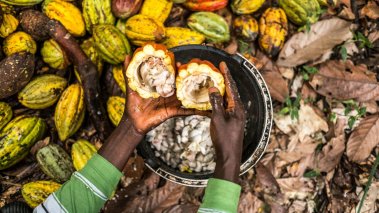
A cocoa farmer opens cacao pods with a stick to collect cocoa beans at his farm in Beni in the Democratic Republic of Congo. Eduardo Soteras/AFP/Getty Images

Two years ago, news headlines blared, “Cheese really is crack,” citing research that was widely misinterpreted as asserting cheese was addictive. Now, it’s chocolate’s turn.

Last week, several publications celebrated a new study that highlights the impacts of climate change on cocoa, stating global warming might make chocolate taste better. “Good news, chocolate-lovers,” wrote one outlet, “climate change may have a silver lining.”

Sadly, it’s not true. Continue reading

Lepidopterist’s Treasure

730

Heterosphecia tawonoides puddling on a dry leaf washed out by the river. Photograph: Courtesy of Marta A. Skowron Volponi

Thanks to the Guardian for sharing this bit of good news:

Lost species of bee-mimicking moth rediscovered after 130 years

The rare oriental blue clearwing, that disguises itself as a bee, was spotted in the Malaysian rainforest

A moth that disguises itself as a bee and was previously only identified by a single damaged specimen collected in 1887 has been rediscovered in the Malaysian rainforest by a lepidopterist from Poland.

The oriental blue clearwing (Heterosphecia tawonoides) was seen “mud-puddling” – collecting salts and minerals from damp areas with its tongue-like proboscis – on the banks of a river in Malaysia’s lowland rainforest, one of the most wildlife-rich – and threatened – regions on Earth. Continue reading

Thinking About What Matters

9781328661593_custom-98a5c984a54b82218a0fc4bb11b82f1021da6b56-s400-c85The author does not frequently show up in these pages. But when she does, it is worth noting because she says things that matter, and that gets us thinking. In the case of this book she is stating the obvious, that there is no time to spare. But sometimes it is good that someone of her stature states it anyway. Thanks to National Public Radio (USA) for this review:

Ursula K. Le Guin’s mastery of fiction has remained so consistent throughout her decades-long career, it’s easy to overlook her accomplishments in other forms. Sure, she’s the author of iconic, award-winning science fiction novels such as 1969’s The Left Hand of Darkness and 1971’s The Lathe of Heaven, not to mention the beloved fantasy series The Earthsea Cycle, which began in 1968. But those distinct works share Le Guin’s firm grasp of poetic language, science, and history. Accordingly, she’s a brilliant poet, albeit a less recognized one. Even further down on her résumé are her wins as a nonfiction writer. Her 2016 collection of essays and reviews, Words Are My Matter, won the Hugo Award for Best Related Work in 2017, despite the fact that the book did not focus exclusively on science fiction — nor do her other nonfiction collections, including The Wave in the Mind from 2004 and now, No Time to Spare, a new book that assembles some of her most cogent ruminations on everything from gender politics to anthropology to, yes, science fiction and fantasy. Continue reading

Penguins Once Had Awe On Their Side

Ancient Penguins Were Giant Waddling Predators

19SCI-ZIMMER-blog427

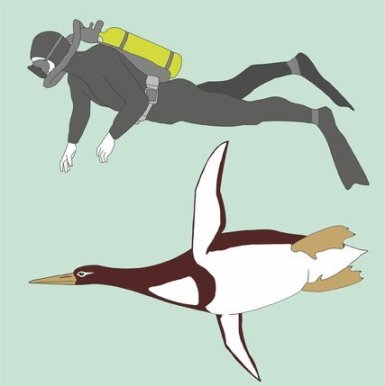
An artist’s rendering compares Kumimanu biceae, an extinct giant penguin, to a human diver. Kumimanu stood 5 feet 7 inches and weighed 220 pounds. It is among the earliest known penguin species. Credit G. Mayr/Senckenberg Research Institute

The 57 million-year-old fossil is both fearsome and comical: a long-beaked penguin that stood 5 feet 7 inches tall and weighed about 220 pounds.

“It was as tall as a medium-sized man,” said Gerald Mayr, a paleontologist at the Senckenberg Research Institute in Frankfurt, Germany, and lead author of a report in Nature Communications on Tuesday announcing the discovery.

By comparison, the tallest living species, the emperor penguin, reaches about four feet in height. Kumimanu biceae, as the fossil was named, would have towered above the emperor, and above just about all other known ancient penguins. Continue reading