Shoreline Durability

Crofton 12U Select 2017 Season

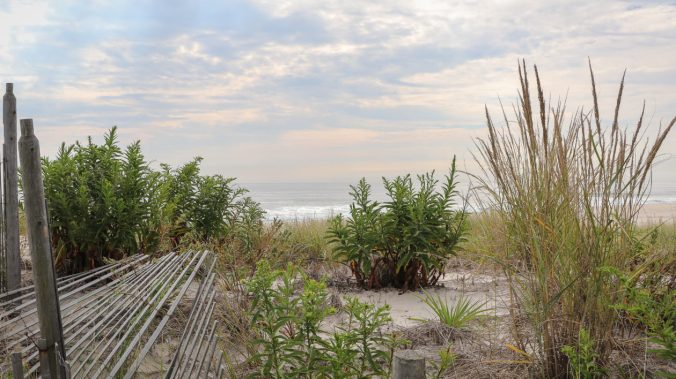
The dunes of Midway Beach have a secret ingredient hiding beneath the sand. © Cara Byington/The Nature Conservancy

Thanks to Cool Green Science:

The Secret in the Sand Dunes

Dominick Solazzo likes to say the healthy dunes at Midway Beach and South Seaside Park on the Jersey Shore have a “secret ingredient.” Of course, it’s a secret that gives itself away pretty readily when the wind blows.

Crofton 12U Select 2017 Season

Dune grasses have deep roots that help trap sand and anchor the dunes, and help them grow and resist wind erosion. © Cara Byington/TNC

“It’s Christmas trees,” Solazzo says with a smile. Discarded (natural) Christmas trees donated by the city of Secaucus, New Jersey and given a second life – so to speak – as sand dunes. And, yes, according to him and a few of his neighbors, you can smell the sharp, familiar scent of fir through late winter and part of the spring.

But why Christmas trees? In a word: structure.

“They’re like re-bar in concrete,” explains Solazzo. “They help hold the sand and the dune in place, and give it structure. And good structure matters for dunes. It matters a lot.” Continue reading
Rewilding Minelands

Flatwoods_WFA_2.10.17-26_web

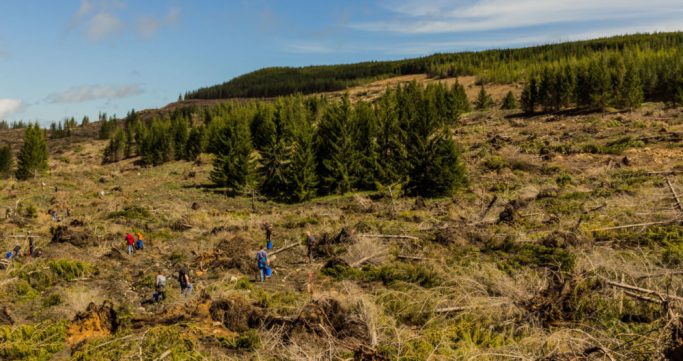
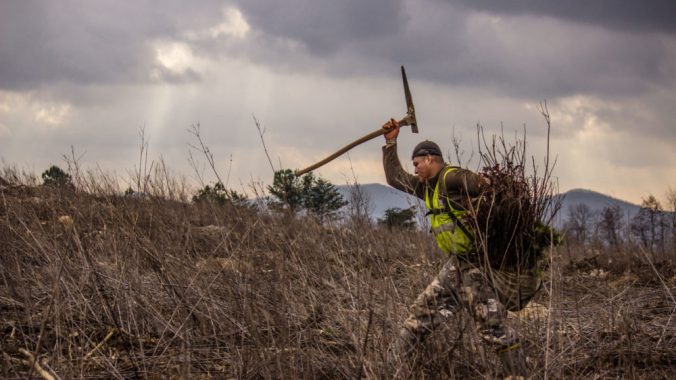
A contractor for Green Forests Work plants native hardwood and evergreen seedlings on a reclaimed mine site in Dorton, Kentucky. GREEN FORESTS WORK

Thanks to Yale 360 for this story about Green Forests Work, in a part of North America that is often considered lost, from an ecological perspective:

Reclaiming Appalachia: A Push to Bring Back Native Forests to Coal Country

Previous efforts to restore former coal mine sites in Appalachia have left behind vast swaths of unproductive land. Now, a group of nonprofits and scientists are working to restore native trees to the region — even if it means starting the reclamation process from scratch.

5.5.17_Monongahela-36_web

Volunteers fan out over a recently bulldozed plot on Cheat Mountain to plant red spruce and other native seedlings. GREEN FORESTS WORK

Near the top of Cheat Mountain in West Virginia, bulldozer operator Bill Moore gazes down a steep slope littered with toppled conifers. Tangled roots and angled boulders protrude from the slate-colored soil, and the earth is crisscrossed with deep gouges.

“Anywhere else I’ve ever worked,” Moore says, “if I did what I did here, I’d be fired.” Continue reading
Sunny-Futured Mass Transit

2048.jpg

An illustration of a solar train in action. Photograph: Esther Griffin

Thanks to Alice Bell and the Guardian for a look into the latest on harnessing the sun to power more of our transportation needs:

In 10 years time trains could be solar powered

A technique has been devised that allows electricity to flow directly from solar panels to electrified train tracks to the trains themselves making solar powered trains more feasible than ever before Continue reading
“Birds & the Bees”: More Than a Metaphor

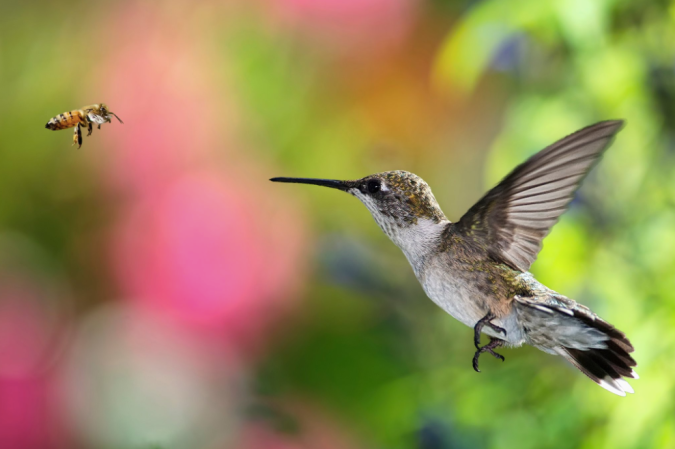
Scientists say that studying bee behavior could help them understand hummingbird behavior, too. Credit DansPhotoArt on flickr, via Getty Images

Members of our team have long been fans of bees and all bird species, with a particular soft spot for hummingbirds in particular. With their gemlike plumage and engaging personality, what’s not to love?

You Should Think of Hummingbirds as Bees With Feathers

What’s small, buzzes here and there and visits flowers?

If you said bees or hummingbirds, you got it. And you wouldn’t be the first if you mixed the two up. In Medieval Europe, some called bees the smallest birds. In Chinese and Japanese, the words for hummingbird translate into “bee bird.” Today we call the smallest hummingbird — weighing less than a penny and only a bit larger than the biggest bee — the bee hummingbird.

And now a group of researchers say we should embrace our history of lumping the two together. The way scientists study bees could help them study hummingbird behavior, too, they argue in a review published Tuesday in Biology Letters. Continue reading
The Craftwork Of Small Organisms

merlin_105802288_f62a8530-6c2d-46ae-ad3f-588b413aec3c-master768 (1)

Bacteria are responsible for the delicious taste of salami, although industrial microbes do not yield as tasty dried sausages as wild microbes. Credit Tony Cenicola/The New York Times

Fermented meat does not have the sound of mmmm to it, but we learn something new each day:

Actually, You Do Want to Know How This Sausage Gets Made

When you slice into a salami, you are enjoying the fruits of some very small organisms’ labor.

Like other dried sausages, salami is a fermented food. Its production involves a period where manufacturers allow microbes to work on the ground meat filling to create a bouquet of pungent, savory molecules. Traditionally, the bugs find their way to the sausage from the surrounding environment. But these days, industrial manufacturers add a starter culture of bacteria to the meat instead, much the way a bread baker adds a packet of yeast to her dough. Continue reading

Hidden Numbers, Brought Into Daylight

FlatironThe mission of the Flatiron Institute is to advance scientific research through computational methods, including data analysis, modeling and simulation.

The institute, an internal research division of the Simons Foundation, is a community of scientists who are working to use modern computational tools to advance our understanding of science, both through the analysis of large, rich datasets and through the simulations of physical process.

If you are seeing the name above for the first time, so are we. It has come to our attention through this profile below. The questions raised are important. The answers, to the degree there are any, are fascinating. Thanks to longform journalism, which we need now more than ever, we have profiles like this:

Jim Simons, the Numbers King

Algorithms made him a Wall Street billionaire. His new research center helps scientists mine data for the common good.

171218_r31148 (1).jpg

Simons is donating billions of dollars to science. But much of his fortune, long stashed offshore, has never been taxed. Illustration by Oliver Munday; photograph by Tim Sloan / AFP / Getty

By D. T. Max

A visit to a scientific-research center usually begins at a star professor’s laboratory that is abuzz with a dozen postdocs collaborating on various experiments. But when I recently toured the Flatiron Institute, which formally opened in September, in lower Manhattan, I was taken straight to a computer room. The only sound came from a susurrating climate-control system. I was surrounded by rows of black metal cages outfitted, from floor to ceiling, with black metal shelves filled with black server nodes: boxes with small, twinkling lights and protruding multicolored wires. Tags dangled from some of the wires, notes that the tech staff had written to themselves. I realized that I’d seen a facility like this only in movies. Nick Carriero, one of the directors of what the institute calls its “scientific-computing core,” walked me around the space. He pointed to a cage with empty shelves. “We’re waiting for the quantum-physics people to start showing up,” he said. Continue reading

Big Time Culinary Hydroponics

10farm1-jumbo (1)

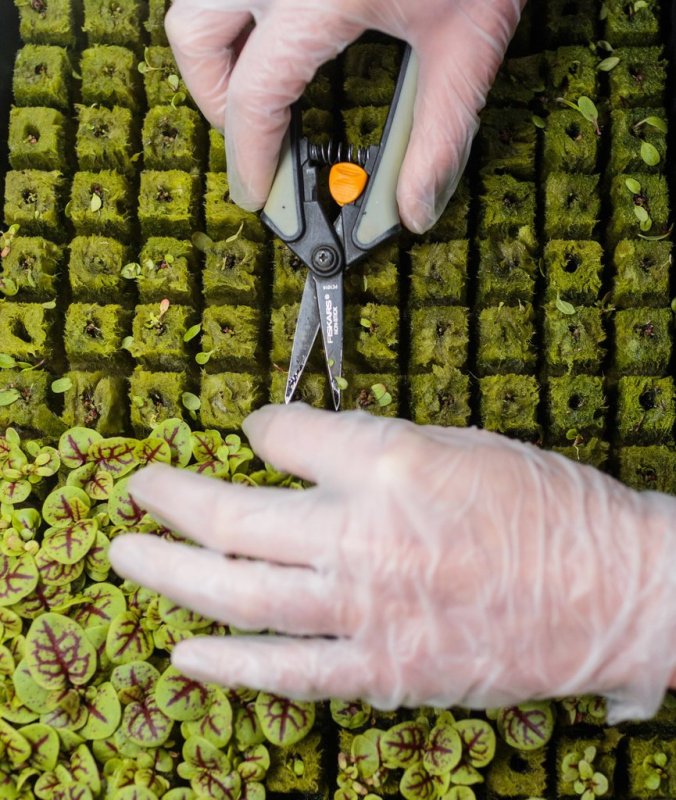
At Farm.One, a hydroponic garden in TriBeCa, red-veined sorrel is prepared for a delivery. Credit Sarah Blesener for The New York Times

We have posted on urban farming and related topics numerous times since 2011, and hydroponics as its own topic of interest plenty of times as well. Culinary and/or gastronomic topics as related to agriculture are a magnitude of order more represented in these pages. Finally, they are combined for us in one amazing article, thanks to Alyson Krueger. If you only have time to look at the photos, those alone are worth the click:

Herbs From the Underground

Farm.One just opened an indoor rare herb and flower garden in a TriBeCa basement, and many prominent chefs are flocking to it.

10farm2-superJumbo

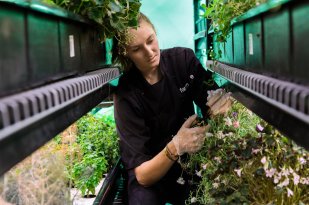
Katherine Chester, a farm hand at Farm.One, harvests for a morning delivery. Credit Sarah Blesener for The New York Times

In the basement of a loft-style building in TriBeCa that houses a vet, a dog swimming pool, an eye-and-ear infirmary, and a two-Michelin-starred restaurant, there is a working farm.

Farm.One is a hydroponic facility, which means that the plants do not grow in soil. Many of these farms are located indoors, in controlled environments, with artificial lighting.

merlin_130952510_55f499d3-d3da-473e-9c9b-329337b217c5-master675

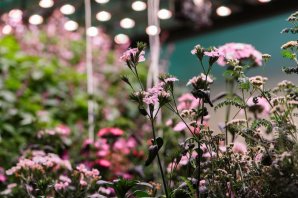
Amazon neon cherry dianthus and neon rose magic dianthus. Credit Sarah Blesener for The New York Times

The new two-room space, which opened in November in a former cycling studio for high-altitude training and an old storage area, is only 1200 square feet. There is no fresh air or natural light; there is not even a window. Yet the venue can grow around 580 varieties of rare herbs and flowers (200 at a time) that supply New York’s top restaurants. Le TurtleLe CoucouMission Chinese Food, and The Pool get regular deliveries from Farm.One, sometimes several times a week. Continue reading
Kelp Forest Versus Kelp Farm

Shutterstock_ChannelIslandsKelpCalifornia_web

Kelp forest commentary is not new to our pages, but much more frequently the generic category seaweed has been highlighted for its farming potential. We have apparently not give sufficient attention to the specific value of natural kelp forests. Thanks to Yale 360 and science writer Alastair Bland for this story:

As Oceans Warm, the World’s Kelp Forests Begin to Disappear

Macrocystis_Scott_Ling_web

The progression of the destruction of a kelp forest in Tasmania by urchins, photo 1/3.

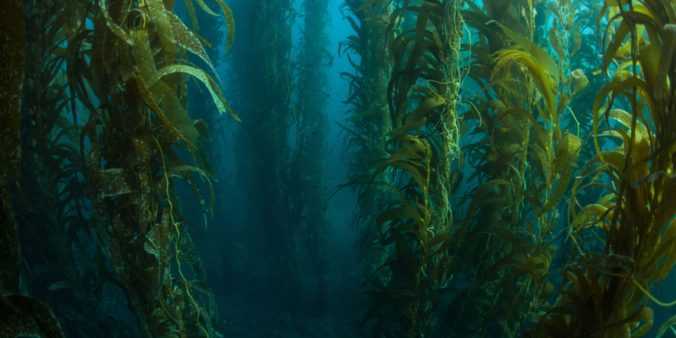
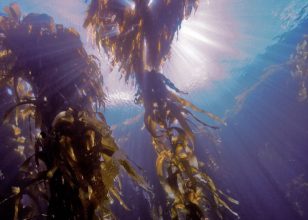
Kelp forests — luxuriant coastal ecosystems that are home to a wide variety of marine biodiversity — are being wiped out from Tasmania to California, replaced by sea urchin barrens that are nearly devoid of life.

A steady increase in ocean temperatures — nearly 3 degrees Fahrenheit in recent decades — was all it took to doom the once-luxuriant giant kelp forests of eastern Australia and Tasmania: Thick canopies that once covered much of the region’s coastal sea surface have wilted in intolerably warm and nutrient-poor water.

centro_overgrazing_phase_shift_Tasmania2_SDLing_web

The progression of the destruction of a kelp forest in Tasmania by urchins, photo 2/3.

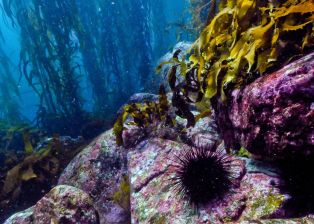
Then, a warm-water sea urchin species moved in. Voracious grazers, the invaders have mowed down much of the remaining vegetation and, over vast areas, have formed what scientists call urchin barrens, bleak marine environments largely devoid of life.

Today, more than 95 percent of eastern Tasmania’s kelp forests — luxuriant marine environments that provide food and shelter for species at all levels of the food web — are gone. With the water still warming rapidly and the long-spine urchin spreading southward in the favorable conditions, researchers see little hope of saving the vanishing ecosystem.

Diver_surveying_overgrazed_reef_web The progression of the destruction of a kelp forest in Tasmania by urchins, photo 3/3. The Australian island state has lost more than 95 percent its kelp forests in recent decades. COURTESY OF SCOTT LING Continue reading

Crowdfunding Conservation

gettyimages-869721444-79374ee2e7dfa3ba9188f3ae88ffe0c0cb438412-s1300-c85

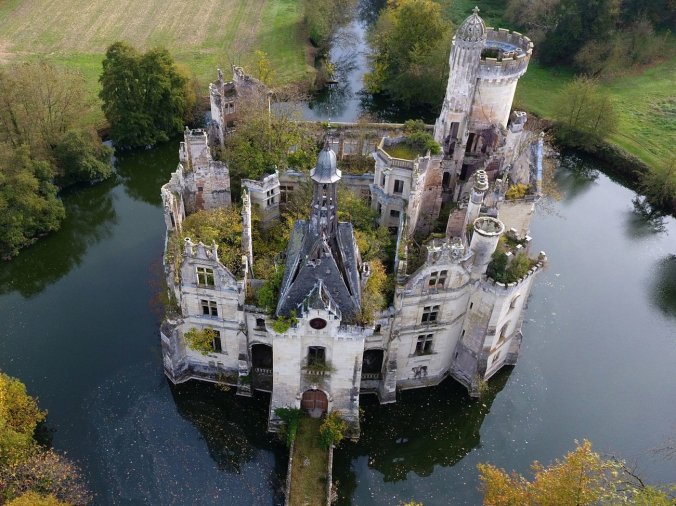
The ruined castle of La Mothe-Chandeniers in central western France. The crowdfunding site Dartagnans organized an effort to buy the chateau for 500,000 euros. Guillaume Souvant/AFP/Getty Images

Thanks to National Public Radio (USA) for this signal that trust, the cement of civilization, is alive and well in some quarters:

7,500 Strangers Just Bought A Crumbling French Chateau Together

It’s late 2017. By now, crowdfunding has been used to finance filmsboard gamesclassical musicscientific research and infertility treatments.

Dart.jpgAdd this to the list of things bought with collective purchasing power: A chateau in the French countryside, complete with moat.

Mais oui!

The platform used to raise the funds announced on Friday that the castle had been purchased by milliers d’internautes – that is, thousands of Internet users, who each paid at least 50 euros (about $60) to “adopt” the chateau and help restore it. In just 40 days, the site raised the 500,000 euros it needed to buy it. Continue reading
Entomological Society Krefeld, Citizen Scientists Making A Difference

xxbugs1-master768

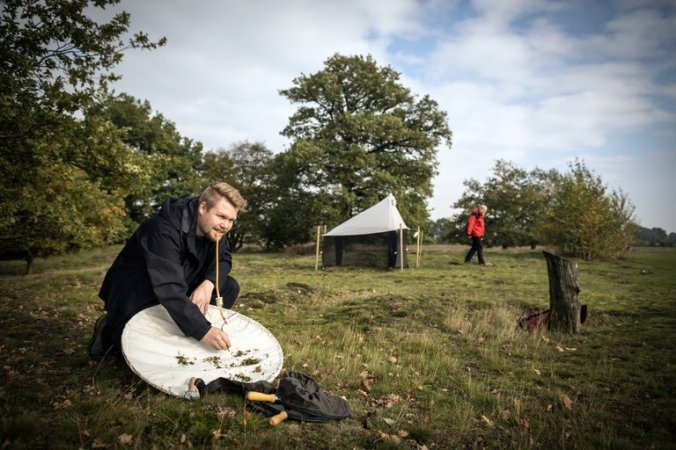
Thomas Hörren, a member of the Entomological Society Krefeld, collecting beetles from a soil sample. CreditGordon Welters for The New York Times

Thanks to Sally McGrane for this important article:

KREFELD, Germany — In a nature preserve in western Germany, an elderly gentleman approached a tent-like structure that was in fact a large trap for flying insects. Peering through thick eyeglasses, the 75-year-old retired chemist checked the plastic bottle attached at the top, filled with alcohol and bugs.

Then, with a glance at the clear, late-autumn sky, the man, Heinz Schwan, recalled comparing a 2013 haul from a trap like this one to samples taken in the same place some 20 years earlier. The drop was huge: “75 percent,” Mr. Schwan, a caterpillar lover, said.

Alarmed, the group of local insect enthusiasts Mr. Schwan is co-chairman of ran similar tests in different locations the next year. And the next year. And the next. Continue reading

Hastening Evolution

29tb-beaks01-master768

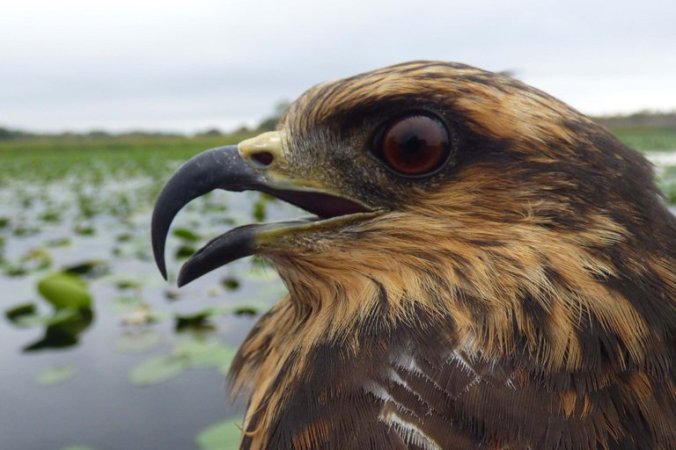
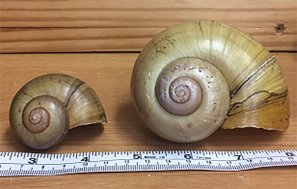
A North American snail kite in Florida. Researchers say the bird species has rapidly evolved larger beaks and bodies to eat a larger, invasive snail. CreditRobert Fletcher/University of Florida

Things Looked Bleak Until These Birds Rapidly Evolved Bigger Beaks

29tb-beaks02-master675

The invasive snails are two to five times larger than the native species, and young kites with larger bills that were able to feed on them were more likely to survive their first year. Credit Robert Fletcher/University of Florida

Conservationists have been sounding the alarm over invasive species for years, warning of the damage they can cause to habitats and native animals. But in Florida, an invasive snail might be helping an endangered bird species come back from the brink, researchers say.

The population of North American snail kites — birds that use curved beaks and long claws to dine on small apple snails in the Florida Everglades — had been dwindling for years, from 3,500 in 2000 to just 700 in 2007. Things began to look particularly bleak in 2004, when a portion of the Everglades was invaded by a species of larger snail that the birds had historically struggled to eat. Ornithologists assumed the shift would hasten the snail kite’s decline. Continue reading

St. Kilda, Now For The Birds

Fergus-St-Kilda

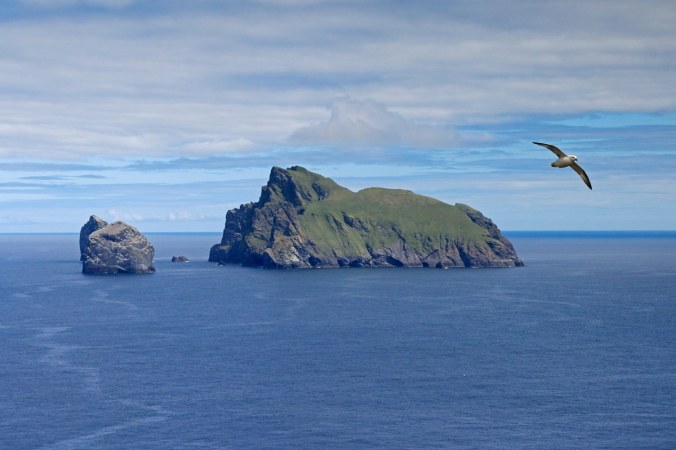
A northern fulmar in flight near Boreray, an uninhabited island in the archipelago of St. Kilda. Photograph by Philip Mugridge / Alamy

A beautiful several minutes of historical reading, thanks to Fergus McIntosh:

A Trip to St. Kilda, Scotland’s Lost Utopia in the Sea

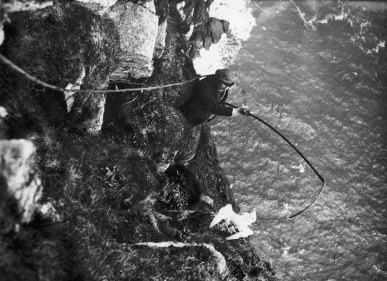
In 1877, George Seton, a visitor to the tiny Scottish archipelago of St. Kilda, observed that the men living there had an unusual physiological characteristic. “The great toes of the cragsmen are widely separated from the others, from the circumstance of their frequently resting their entire weight on that part of the foot in climbing,” Seton wrote. These men with prehensile feet were residents of the most remote settlement in the British Isles, forty miles out in the North Atlantic, where seabirds, garnered from the towering cliffs, formed the major part of their diet. A hundred years after Seton, another visitor wrote that “even today a boat setting out for St. Kilda is by no means assured of reaching its destination.”

Fergus-St-Kilda-secondary

A St. Kildan hunts seabirds on the cliffs of Hirta, May 26, 1923. Photograph by Trinity Mirror / Mirrorpix / Alamy

These were unnerving words to recall as I stood, clad in oilskins and a lifejacket, on the pier at Uig, on the Isle of Skye, at seven o’clock one morning in August. Though the air was cold and still, the sky a smooth overcast, the captain of our small boat assured us that the ocean swell would make the journey to the islands uncomfortable, and that the weather could worsen at any moment. Continue reading

Magpie & Elk, Collaborating

merlin_130680086_37fe49c2-e83c-4b1d-87f9-afbbc6c6f808-master768

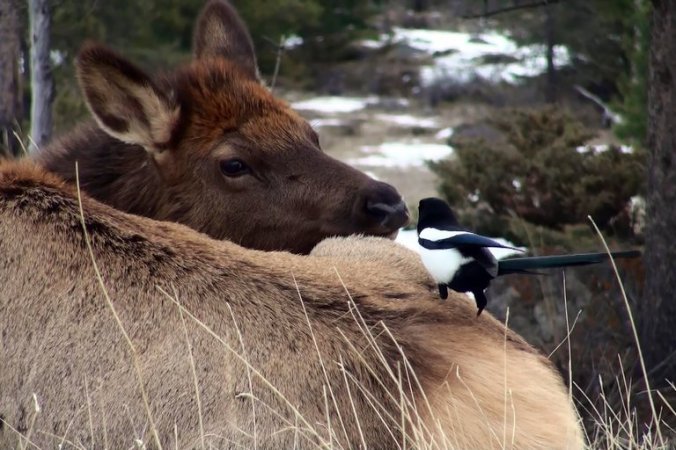
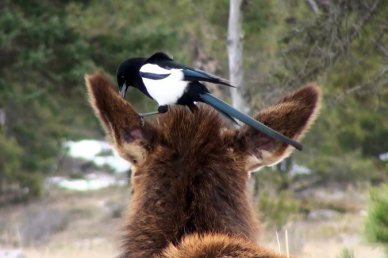
A magpie on an elk in Alberta, Canada, looking for winter ticks. Credit Rob Found

Thanks to the Trilobites feature on the New York Times website for this story of collaborative friendliness between species:

Chances are that’s a shy elk looking back at a bold magpie, in the photograph above.

merlin_130680083_3390ebbf-fde1-4f33-ba90-c09822dd4bab-master675

Scientists wonder if shy elk compensate for their bashfulness by accepting the grooming magpies. Credit Rob Found

They get along, so to speak, because the elk needs grooming and the magpie is looking for dinner. But they may have never entered into this partnership if it weren’t for their particular personalities, suggests a study published Wednesday in Biology Letters.

Let’s start with the elk. In Canada’s western province of Alberta, they’ve been acting strange. Some have quit migrating, opting to hang around towns with humans who protect them from predators like wolves. Others still migrate. Continue reading

Doomsday Discussion

Each day we scan the news for stories that will help make sense of the environmental challenges facing humanity, with special attention to potential solutions and collective action taken to rise up to those challenges. Earlier this year we declined to link out to this story that was a collection of doomsday scenarios:

NYLogo

The Uninhabitable Earth

Famine, economic collapse, a sun that cooks us: What climate change could wreak — sooner than you think.

By David Wallace-Wells

This article reporting on a recent panel at Harvard University has caused us to reconsider the decision:

112917_despair_014_605_embed

Nikhil Advani (from left), David Wallace-Wells, Elizabeth Wolkovich, Nancy Knowlton, and Campbell Webb.

…Unfortunately, that vision isn’t fiction, but rather Wallace-Wells’ summation of climate change’s little-discussed worst-case scenario for the year 2100.

“I think there’s real value in scaring people,” the journalist said Wednesday during a panel at the Geological Museum, sponsored by the Harvard University Center for the Environment.

The event, “Hope and Despair: Communicating an Uncertain Future,” explored whether doom and gloom are more effective than hope in spurring climate action. Panelists agreed that fear is a potentially powerful lever, but also insisted on the importance of covering success stories. Progress is an important motivator, keeping people from succumbing to despair in the face of bad news. Continue reading
Cacao, Spices & Imagination

chocolate_dyptch_wide-b516bb95a47d1e00652f58b3dc29f210dc8f324d-s1300-c85

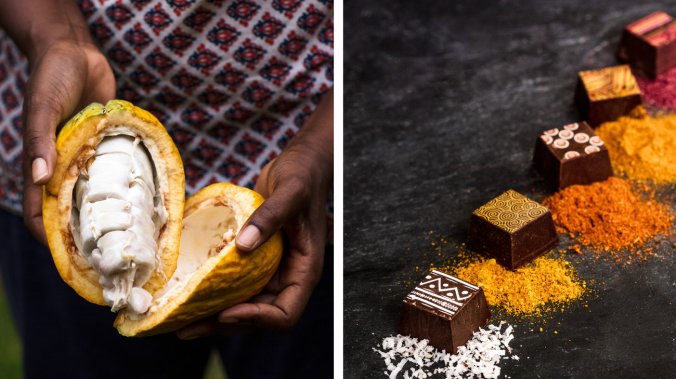
Left, a ripe cacao pod. Right, truffles from Midunu chocolates contain spices and flavors from all over Africa. Midunu Chocolates

Thanks to Amy E. Robertson and National Public Radio (USA) for telling the story of Midunu, a brief excerpt of which is sampled below:

One Woman’s Quest To Tell ‘The African Story Through Chocolate’

…While working in Senegal, Atadika joined forces with two more food-loving friends, and created a pop-up restaurant that was wildly popular. After dipping her toes in the culinary world for a couple of years, she finally took the plunge. In 2014, Atadika resigned from the UN, moved back to her native Ghana and began cooking full time.

Atadika started with catering and pop-up dinners. “It wasn’t my plan to do chocolates,” she says. “But whatever I do in food I look at in terms of adding value, and chocolate just kind of popped in, because we have this cocoa but we weren’t really processing it at the level we should be.” Midunu Chocolates was born. Continue reading
Victory Favoring Earth, We Hope

Lisa Friedman appears twice on today’s landing page of the newspaper she works for, once as co-host on a video, below, about Alaska; and again as host of an equally important story in the form of an interview, also captured on this video titled Jerry Brown on How to Fix Global Warming.

JBrown

How can policymakers fight climate change in the face of political headwinds? Gov. Jerry Brown of California addresses that question at ClimateTECH, a conference from The New York Times, in a conversation with Thomas L. Friedman. By THE NEW YORK TIMES on Publish DateNovember 29, 2017. Photo by Friedemann Vogel/European Pressphoto Agency.  Watch in Times Video »

If You Happen To Be In Mexico City

28redpaint4-master675

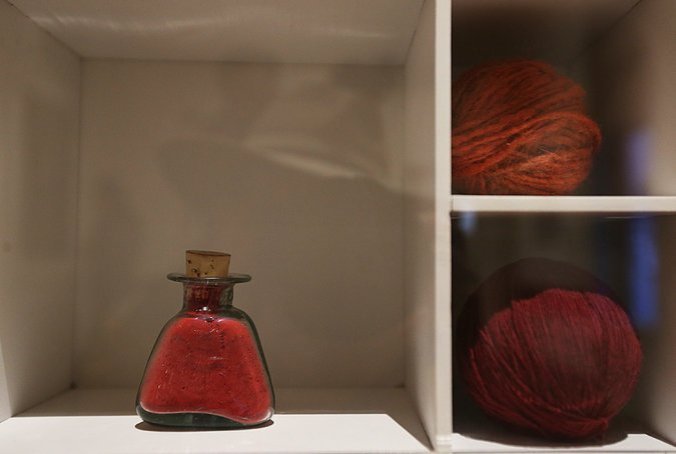
A jar of dye and some red yarn colored by cochineal, part of the Mexico City show. Credit Marco Ugarte/Associated Press

Colors used in dyes and paints in earlier centuries came from various organic and inorganic sources, and this particular red comes from an insect. An exhibit with this “Mexican red,” highlighting the relationship between nature’s sources, artists and their patrons, strikes us as as good a reason as any to curate a show:

28redpaint3-master675

Van Gogh’s “Bedroom in Arles, Third Version” (end of September 1889), which uses cochineal. The artist likened the color to the “red of wine.” Credit Musée d’Orsay, Paris

MEXICO CITY — Along with silver and gold, the first ships that sailed from the New World after the Spanish Conquest carried another treasure: a natural dye that produced a red so intense that European artists quickly embraced it as their own.

28redpaint5-blog427

“Bonjour, Monsieur Gauguin” (1889), by Gauguin, is on display in “Mexican Red,” though its use of cochineal has not been confirmed. Credit Hammer Museum, Los Angeles

The trade in this dye reaped vast riches for the Spanish crown and supplied the crimson palette that would color the sacred and secular art of Europe for more than three centuries.

An exhibition that runs through Feb. 4 at this city’s Palace of Fine Arts, “Mexican Red, the Cochineal in Art,” traces the journey of the color from the highlands of pre-Hispanic Mesoamerica to Europe. There, it became increasingly associated with the projection of power in the 17th and 18th centuries. Cochineal fell into decline in the 19th century, as synthetic dyes were introduced, but was sought out later by the Impressionists. Continue reading

Bike-Share Good Samaritanism

171204_r31068illuweb

Collin Waldoch Illustration by Tom Bachtell

We linked out to stories about bike-sharing when it was relatively new in New York. This week, an enchanting short note on a peddler of angelic behavior, and a couple examples of people who have pedaled accordingly:

Hacking the Citi Bike Points System

A program offers modest benefits to riders who help rebalance the city’s network of bicycles. One man outdid its expectations.

By Ian Parker

On a recent Monday, Glenn Reinhart, a former salesman of chemicals for the cosmetics industry, and now, in his mid-fifties, a freelance karate instructor with a fair amount of leisure time, took twenty-two rides on Citi Bikes, one after another, and then went out to breakfast in Chelsea. He had arranged to meet Collin Waldoch, who runs Bike Angels, the Citi Bike program that awards points, redeemable for extended membership and other modest benefits (a commemorative pin; a white bike key), to riders who help the company rebalance its network of twelve thousand bikes. Angels earn points for taking bikes from full stations and parking them at empty ones. A ride from one to the other might earn two or three points. When the scheme was launched, this spring, Waldoch thought that someone might, in the course of a year, earn five hundred points. By the fall, Glenn Reinhart had earned nearly eight thousand—twice as many as anyone else—and Waldoch sent him an e-mail and invited him to breakfast. Continue reading

Elegance Is Sometimes Overrated

Greenland Shark.jpg

The Strange and Gruesome Story of the Greenland Shark, the Longest-Living Vertebrate on Earth

OConnor-Strange-Gruesome-Story-Greenland-Shark

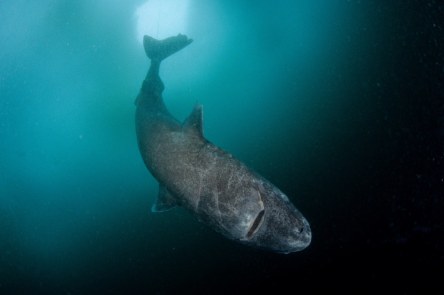
Using carbon dating and a new method involving proteins in the lens of the eye, Danish scientists have unravelled the mystery of how long Greenland sharks live. Photograph by WaterFrame / Alamy

Apart from Romantic poets and their wannabes, who would wish for elegance at the expense of longevity? Thanks to M. R. O’Connor for this inelegantly titled post:

Greenland sharks are among nature’s least elegant inventions. Lumpish, with stunted pectoral fins that they use for ponderously slow swimming in cold and dark Arctic waters, they have blunt snouts and gaping mouths that give them an unfortunate, dull-witted appearance. Continue reading

Rewilding Europe, Alive & Well


RewildBear

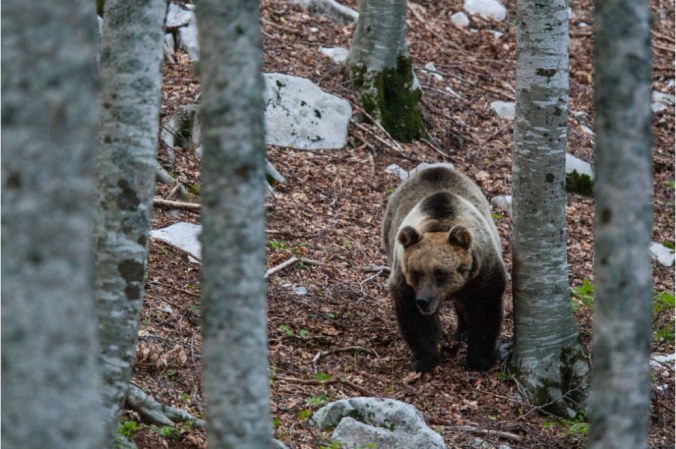
Salviamo L’Orso is committed to conserving the critically endangered Marsican brown bear (pictured here in its central Apennines habitat), and has already won many grants for its grassroots projects. Bruno D’Amicis / Rewilding Europe

It has been some time since we regularly featured news on the topic of rewilding. This announcement is as good a reason as any to revisit rewilding:

A Salviamo l’Orso project titled “Let’s take action for the Bear” was approved for funding by members of EOCA in early November, together with four other proposals from around the world.

With only 50 to 60 individuals remaining, all living in a relatively small area of the Central Apennines, the endemic Marsican brown bear (Ursus arctos marsicanus) is today critically endangered. The Salviamo l’Orso project, which comprises four conservation activities, will enhance the habitat of these magnificent animals and hopefully help them to expand their home range. Continue reading