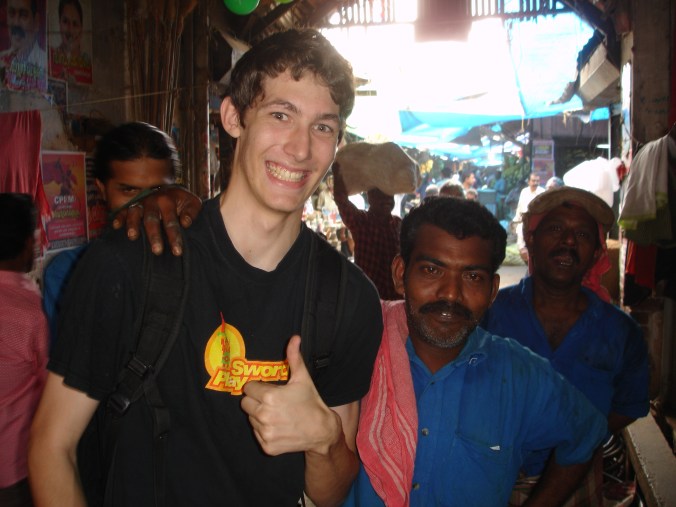
The fringes of society are not the only point of convergence for odd characters. Least of all in India. Confronted by a foreigner with a camera, a man of modest means, excited by said foreigner’s appearance and interest in him, might act rather queerly. Although this response isn’t strictly natural in the general sense, it is by no means posed or artificial, as the subject is acting entirely of their own accord. So when they proffer bananas in shock, or hide their face behind a cup of chai or a cigarette, that’s the reaction I capture. The most frequent response is nervously calling out to friends nearby to “get a load of this”.
Author: Milo Inman
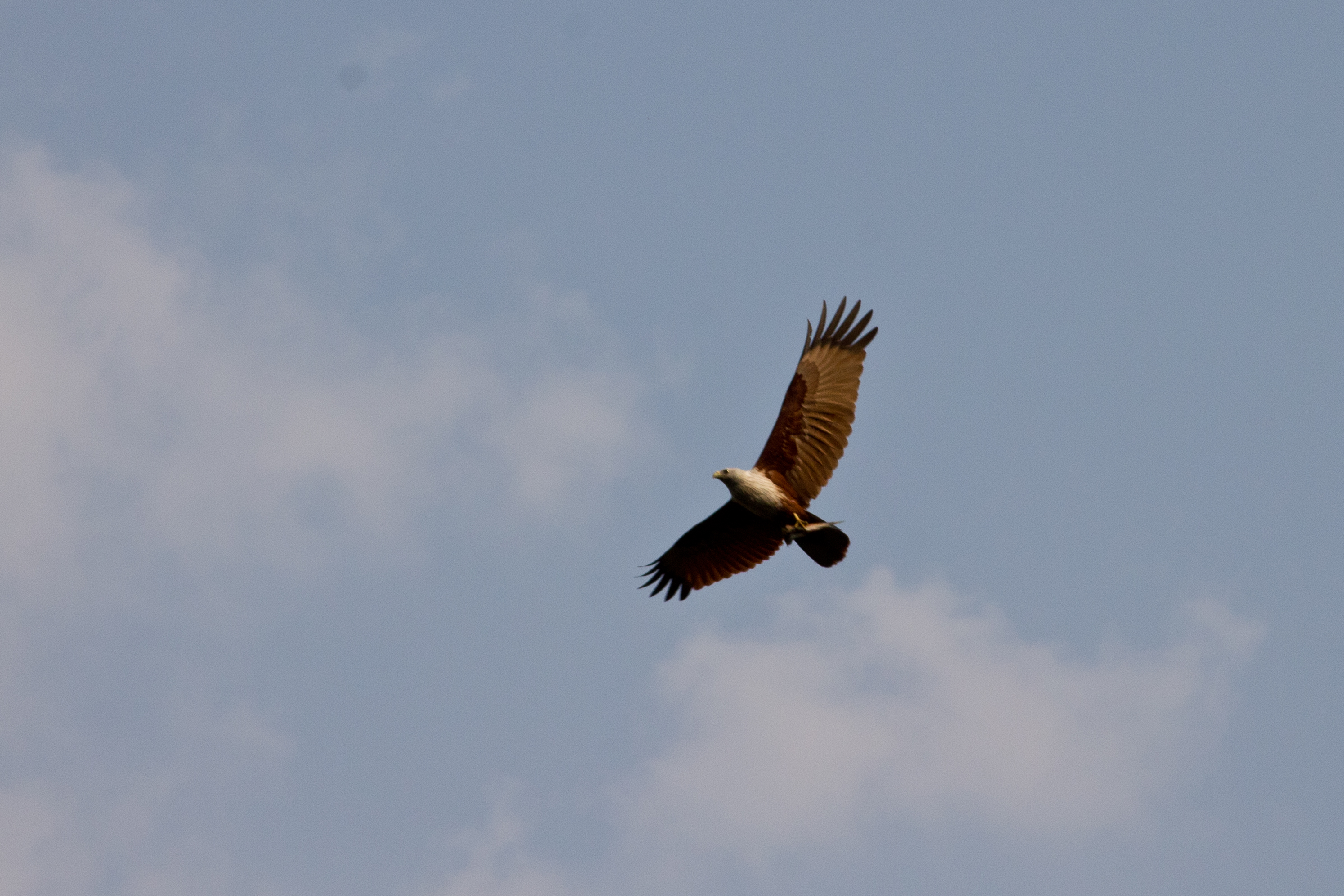
Bird of the Day: Brahmani Kite with Prey
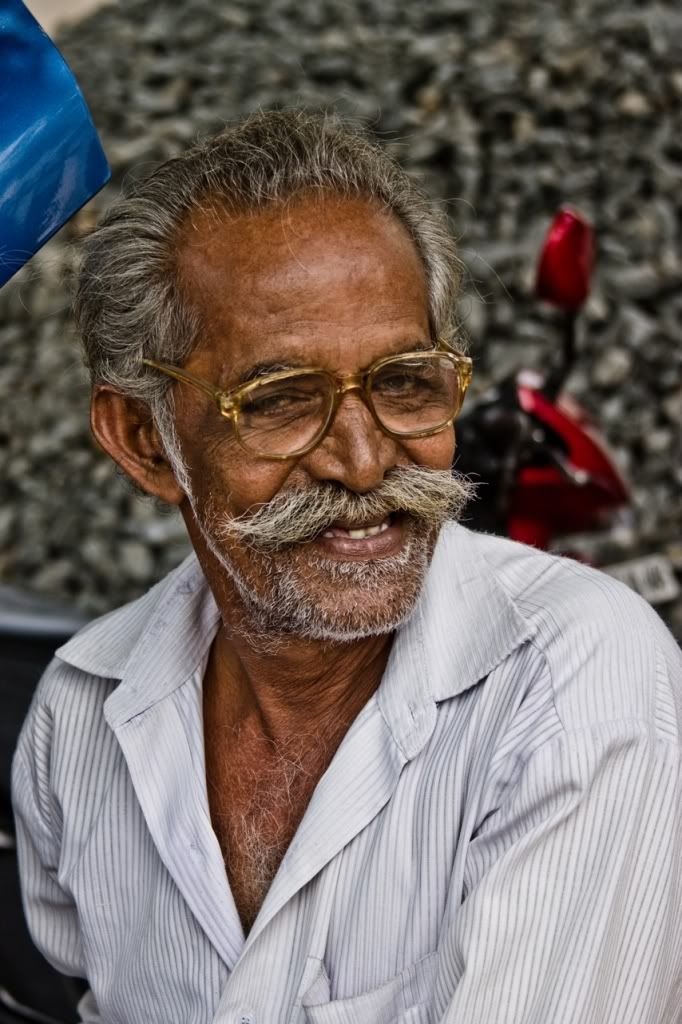
Marketable Faces: Part Two (Men of a Certain Age)
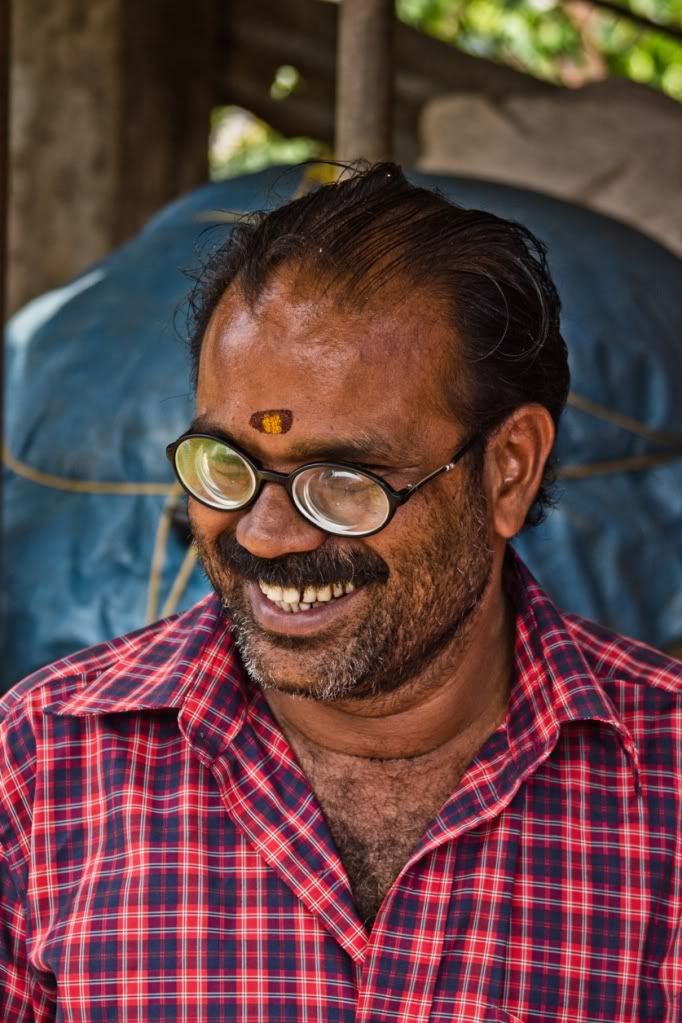
There’s something about Indian men above the age of fifty. Their features seem to lend themselves to being photographed. When they have beards, they are twice as photogenic, and when they crack a smile, it’s twice as radiant as that of a man half their age. One of my favorite aspects of the British colonial residue (or perhaps the Indian custom rubbed off on the Brits!) is the extravagant facial hair exhibited by many Indian men of a certain age – Keralites with enormous mustaches are not as common as in Tamil Nadu, but when they do it, they do it with class.
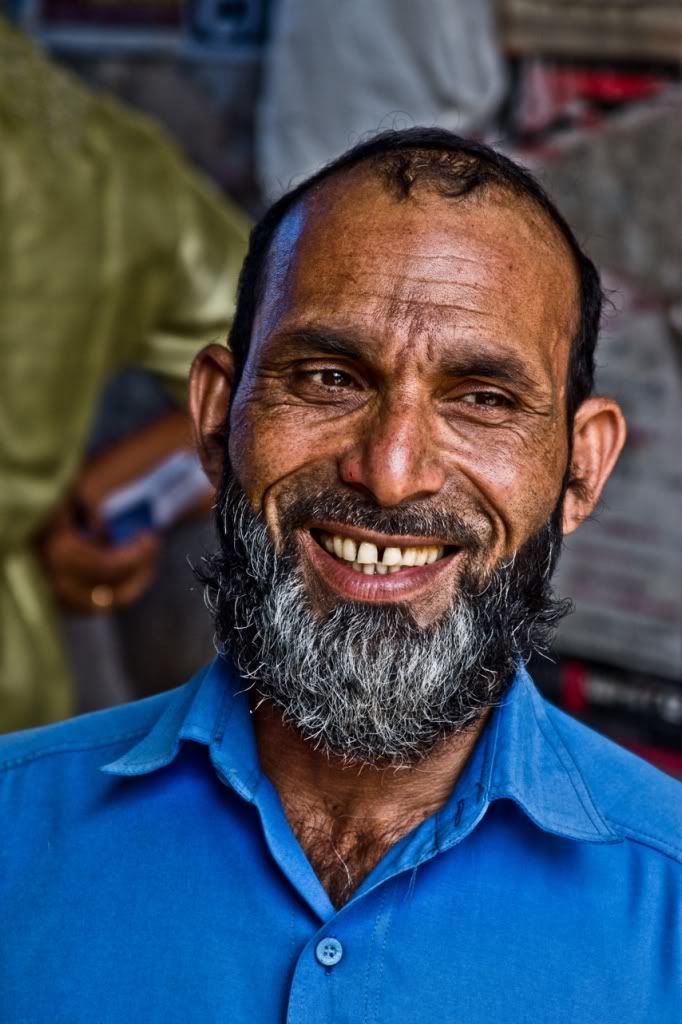
Marketable Faces: Part One (Men in Blue)
Throughout Kerala, colorful trucks unload tons of produce and commodities every morning. Wholesalers, warehouses, and markets all maintain a steady flow of goods – and the cycle begins anew each morning. I occasionally venture into central Cochin’s main market (Broadway) to photograph the process, and the colorful people that are washed about by the endless tide of fruits and vegetables, fish and fowl.
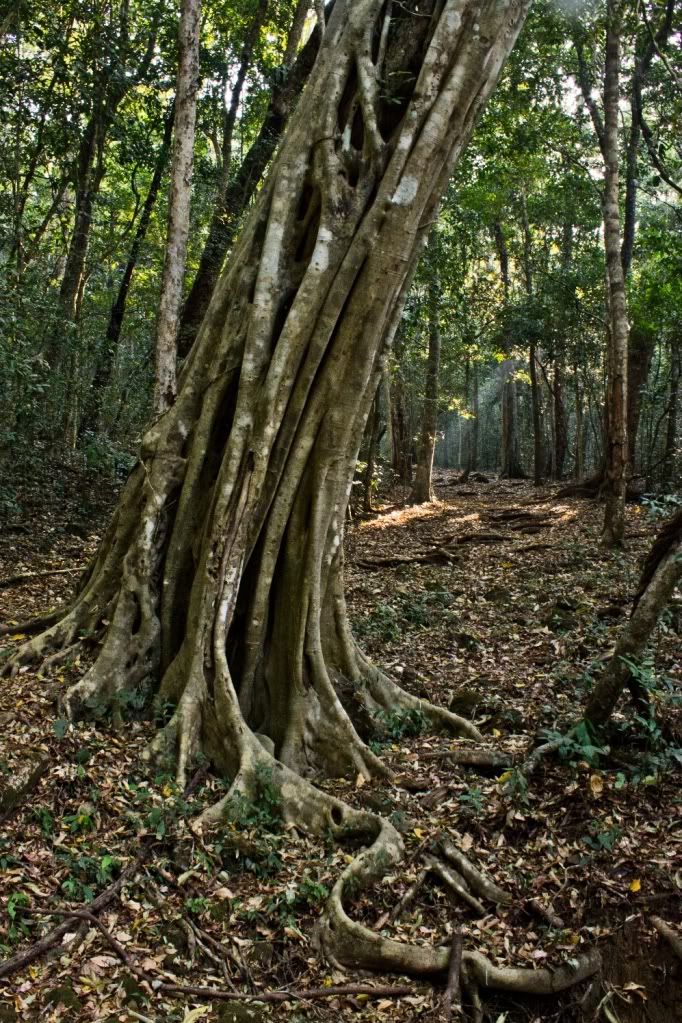
Crepuscular Forest
Elusive, elemental, and extremely beautiful – this natural phenomenon is breathtaking and actually quite simple to explain. Commonly known as light beams, crepuscular rays are caused by an effect similar to Rayleigh scattering, and are rare to see in a natural environment save near the twilight peripheries – hence the name. Steam, smoke, and dust during the rest of the day makes these beams visible to us from all angles, but short of these mediums, angle and hour are the most significant factors for seeing them.
Bird of the Day: Indian Roller

Parambikulum Tiger Reserve, Kerala
A Dry Periyar
Kerala is dry. The places I’m used to seeing so green and vibrant that they practically drip are now dry, brown and crackly. What are normally torrential waterfalls are reduced to sunbaked rock faces. Clouds occasionally float through the sky, mostly in early morning, but they haven’t shed tears throughout the season. The native plants are geared to survive this climate, as the year seesaws between dryness and enormous moisture. In the forest, untold thousands of dead leaves cover the ground, crackling with glee as trekkers pass under the trees. Continue reading
Motherly Love
The dangers of coming between a mother and her child are well known. Bears are infamous for their maternal aggression. Lionesses delegate to other lionesses their maternal duties in order to hunt, but if anything gets too close, it’s “out with their bowels”! What about herbivores? Continue reading
Tigerkill

People come to the Periyar Wildlife Sanctuary in hopes of seeing tigers. Few do, but with a dwindling population and excursions limited to the fringes of the reserve, it’s no surprise. However, the tigers that do venture on the edges of the forest, mere kilometers away from Thekkady, leave ample evidence of their lifestyle. Paw prints are a common sight, and less frequently, carcasses of their prey. Simply being in their habitat is an experience worth having. (Warning: slightly graphic images below) Continue reading
Cardamom Plantations
Kerala’s hill districts are a historical hub of trade and culture – George discussed a bit of that history in his previous post. But spice plantations, which are one of the region’s main economic assets, are not very similar to most people’s view of agriculture. Enormous flat fields of rigidly regimented plants are not a common sight here (except for rice paddies), and spice plantations are quite different from this doctrine. Continue reading
Flowers in Kerala
I’ve posted about flowers in Kerala before, with no knowledge of their names or properties. Salim has covered many flowering plant species in his posts, providing scientific, cultural, and historical insights for each species. My aim is not to educate, but to encourage further interest via art. Continue reading
It May Look Friendly…
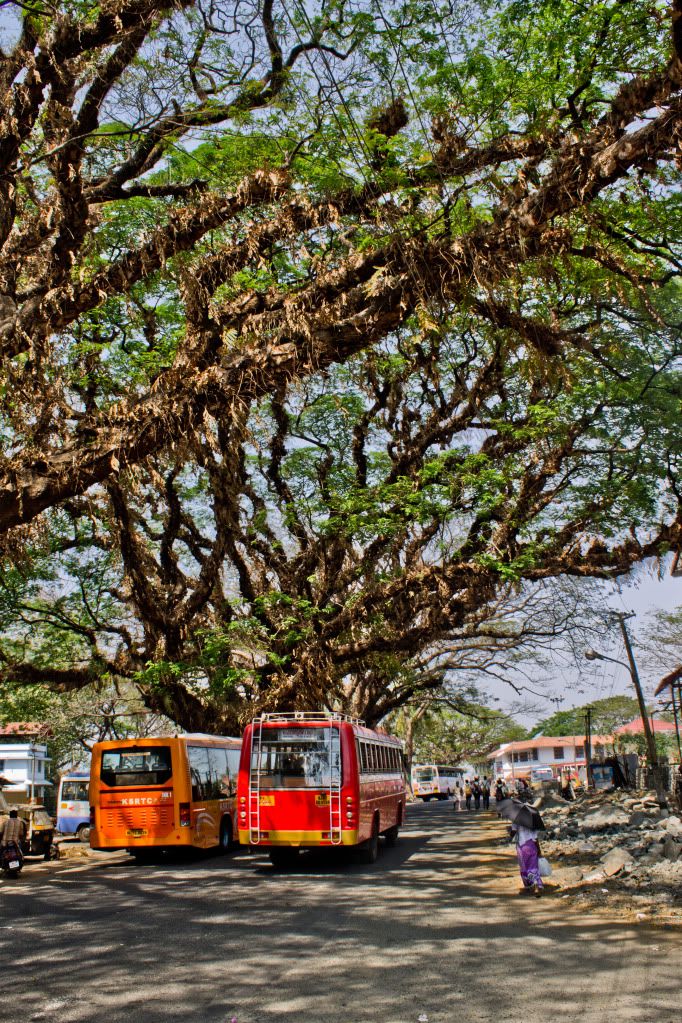
Kerala’s bus stations are scheduled Pandora’s Boxes. Locals have learned to live with the emergent demons. An unprepared visitor might have trouble coping with the dense mass of humanity that is the spirit of the Kerala State Road Transport Corporation. It is in fact questionable to me whether locals are actually bothered by the absurd multitude of other passengers, or by the laughable impossibility of gaining access to an undersized and uncomfortable seat. Who knows whether they enjoy the sensation of being in a dog-fighting spacecraft during their daily transit or not? It’s a distinct possibility that the acceptance (or insensitivity) of these people for ridiculous roads was grandfathered in during what I can only presume was the Wild West for aspiring colonial drag racers… “Exciting East”?
Peel, Warp, Rust
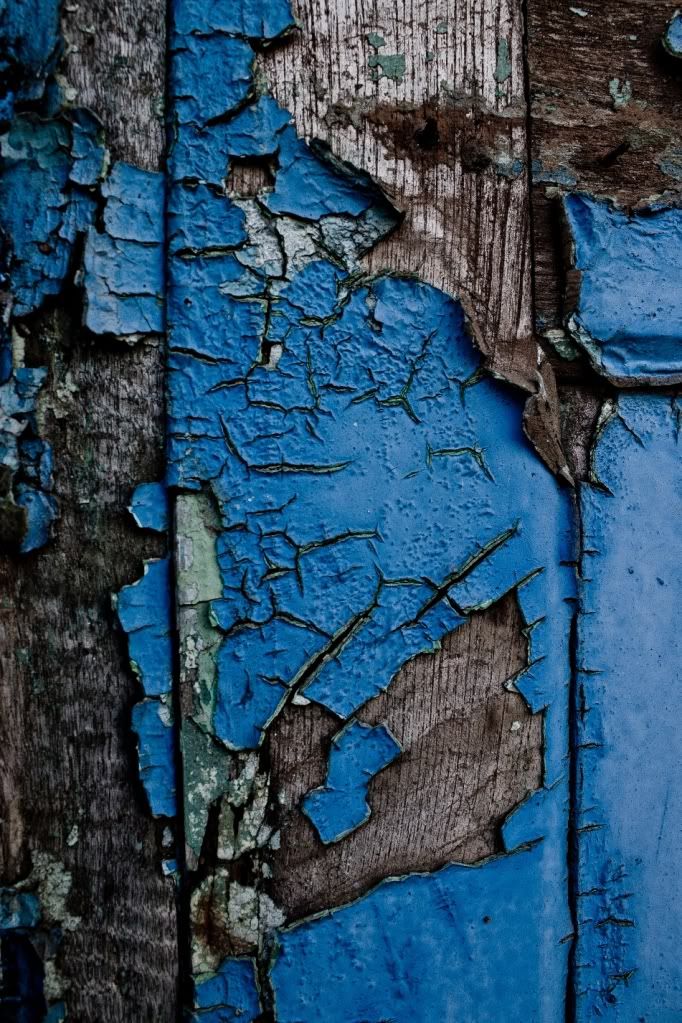
Urban decay. From a bird’s eye view, an old city overgrown may look as clean and composed as a modern metropolis. But for an insect on a wall, every surface is a landscape; cracked and scarred, bruised and faded. Paint peels, creepers climb, and dust invades, creating an eerily beautiful visage of element and age. Historic Fort Kochi has no shortage of crumbling buildings and waterfronts, most of which are still in use. Mattancherry’s spice wholesalers operate out of buildings with as much character as themselves, and ferries come and go from half-sunken jetties of old stone. Any of a thousand walls can be seen as a canvas, small pieces of which may paint a tale of time. Continue reading
Pied Paddy Skimmer, Revisited
A few days ago while walking around Kumily, I saw one of Kerala’s more common species of dragonfly, Neurothemis tullia. Having written about the species before, I didn’t photograph it as usual, until I realized I had a new accessory on my person. The reverse lens adapter is a brilliant money saver, and while not quite as powerful or versatile as a macro lens, costs close to 50 times less than a new lens. Using the final technique described here, the adapter basically replaces the duct tape and allows for much steadier hands. Focusing is still very difficult, and the focal plane is usually limited to under a centimeter, but this often allows for very unusual and abstract images. Such as this young female Pied Paddy Skimmer:
Munnaranorama
Creating panoramas is an imprecise art – a photographer has to account for several variables when planning a shot. Composition is itself the most simple of these variables – despite the fact that what you see is rarely what you get. A good vantage point at a higher altitude than the subject is ideal, although occasionally elements which frame in the view add interest to the image. Symmetry isn’t necesary, but unbalanced shots should have either objects of interest or follow the rule of thirds (which is by no means an actual rule). A panorama need not be a full 360 degrees, and besides the ‘wow’ factor there is usually little value to this property. The picture ends up being more like a strip than something easily viewable, and takes a great deal of time to see and appreciate.
Bird of the Day: Yellow-rumped Flycatcher
Blue Grass Dartlet
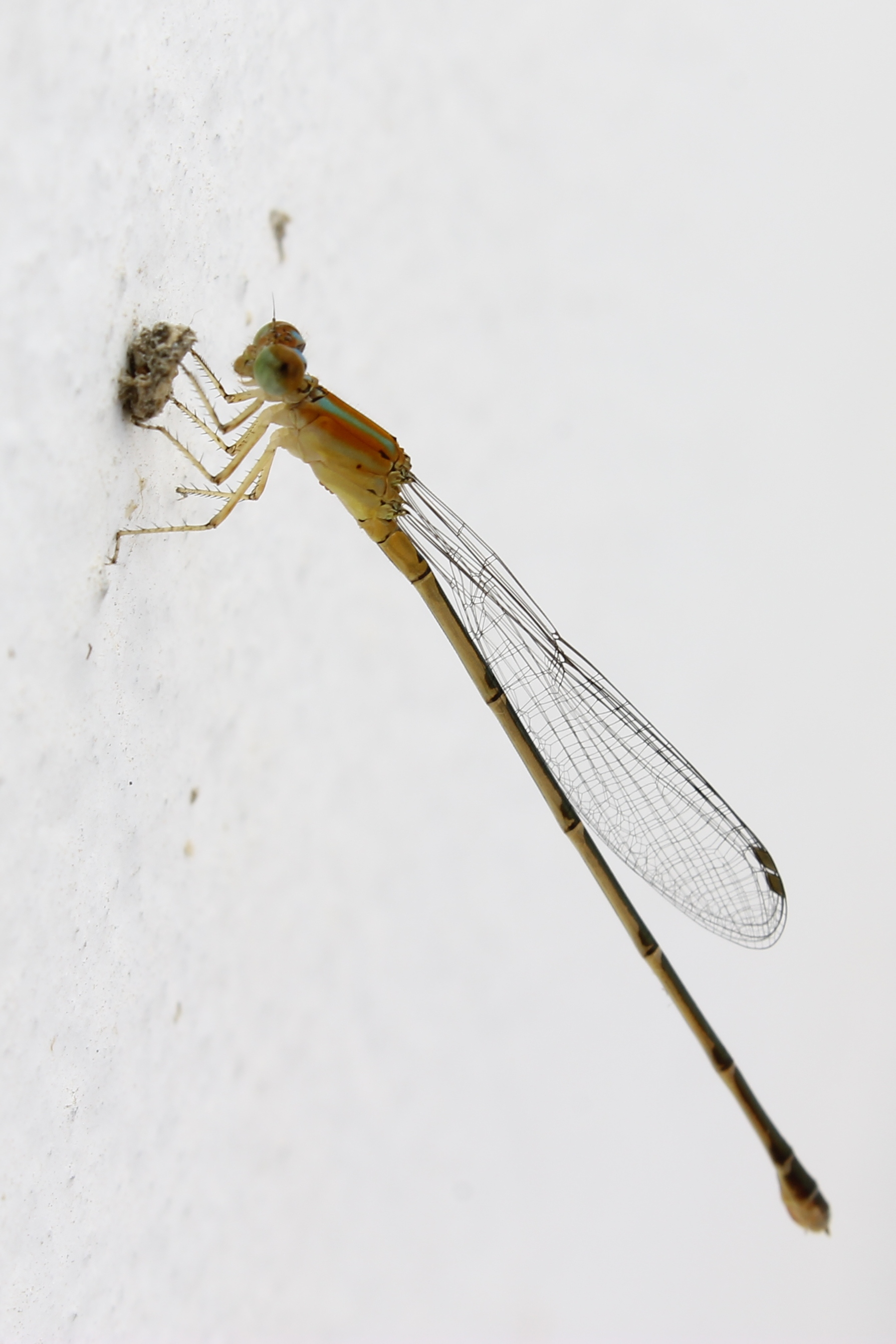
The first time I saw this species, I was dumbfounded, to say the least. We live in a 10th floor apartment in urban Cochin, which admittedly is on the banks of the backwaters. Nonetheless, I was quite surprised to see a dull-colored damselfly float through a window and over our dining room table, and out the door onto the balcony on the opposite side of the room. Fortunately, I gathered my wits quickly enough to rush back with my camera, and corralled the enigma into a corner in the balcony (non-violently, of course), and was able to get a few shots before it breezed off in the lethargic float I’ve come to associate with damselflies. The only time I’ve seen any damselfly zooming the way most dragonflies do is when they’re swooping in on their prey, at which point even the laziest, slowest, and smallest of them can put on quite a turn of speed.
As Seen From Space
In retrospect, it seems that everyone I’ve met wanted to be an astronaut at some point in their life. And then we found out about the mind-blowing mental requirements, and hastily adjusted our horizons to firemen or veterinarians, or for the ambitious, treasure hunter. But today’s astronauts aren’t the chiseled-from-fossilized-textbook astronauts of the past (at least, that’s how I’ve imagined them) – besides academic brilliance, creative thunderstorms seem to be commonplace in those launched into space. Continue reading
Male Trumpet Tail (Revisited)
A few months ago while staying at Cardamom County, I spent a morning with a wonderful character named Jain – a tribal man with an avid interest in insects and arachnids, working as a guide in the Periyar Wildlife Sanctuary, and incidentally, a friend and student of Mr. Vijaykumar Thondaman‘s. Both armed with cameras, Jain and I entered the reserve just after dawn, and spent the best part of the morning hunting dragonflies and damselflies across streams and fields, ponds and gullies. Continue reading
Saip!
In my own favorite post of the last few months (Kerala: Seeing & Learning), I briefly mentioned the word. But I didn’t make it clear just how hilarious the instances of its utterance can be, especially when the subject knows its significance.
A New Zealand writer who lived in Kerala for a few years describes a few bizarre Continue reading