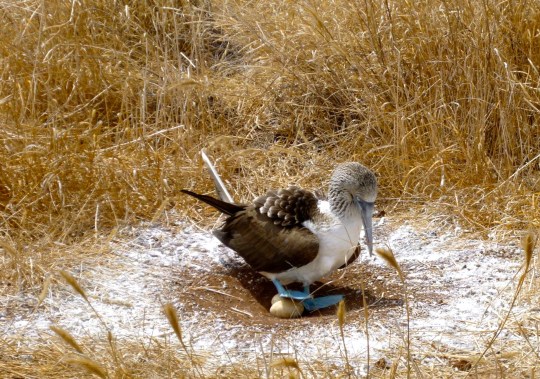
Bird of the Day: Blue Footed Boobie with Egg (North Seymour Island, Galapagos, Ecuador)
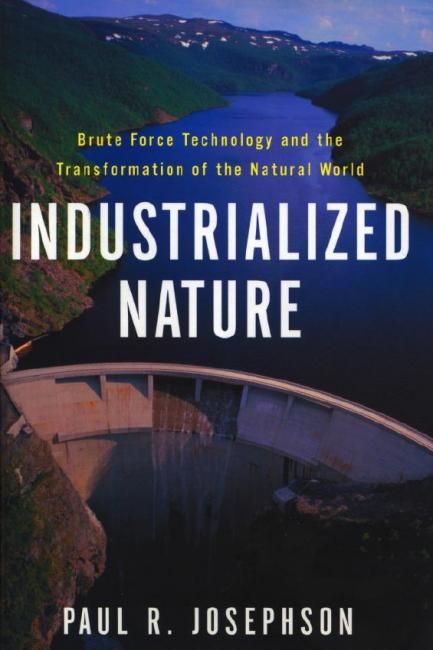 In my last book review sourced from the course I’m taking on environmental history, I hinted that some of the authors we read were very keen to list our failures of the past and quantify the damage we’ve done. Paul R. Josephson, in his Industrialized Nature, does just this, seeking to demonstrate how large-scale resource management systems almost always ensure environmental degradation and long-term losses in different ways. Dubbing these systems “brute force technologies,” Josephson studies how they were employed by varied combinations of diverse political systems, social groups, and economic goals on different types of raw materials in several countries. All led to similarly disastrous results for the ecosystems in question, but, the author argues, man’s hubris is strong enough to convince political and scientific spheres that further innovation can solve problems and maintain profitable advances in the future. While describing the ecological damage caused by brute force technologies, Josephson makes sure to include social stresses inflicted upon local communities, such as native tribes and other underrepresented groups directly affected by the overwhelmingly negative changes.
I like Joseph Gordon-Levitt.
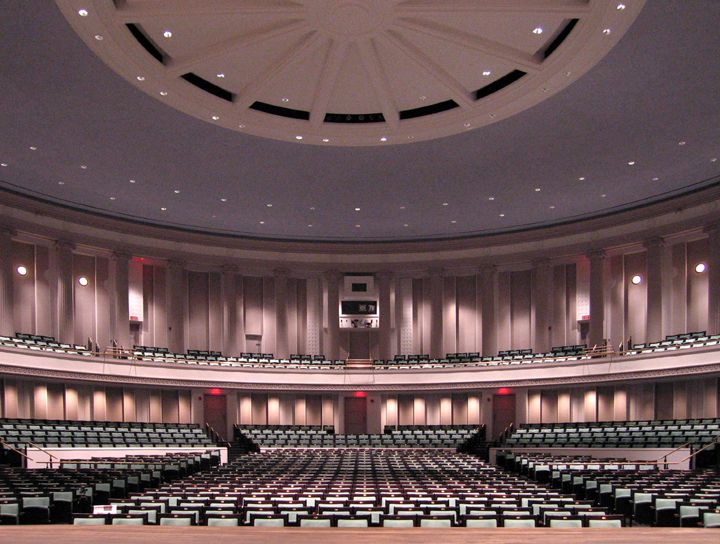
“I feel like, Socrates, or something,” said actor Joseph Gordon-Levitt while looking out at the crowd framed by the round and columned architecture of Bailey Hall.
That’s why, several months ago, when I learned he was coming to do a show in Bailey Hall at Cornell, I committed to waking up early and facing the failing web servers to buy two of over a thousand tickets that were to sell out in less than half an hour, making the show the fastest to sell out at Cornell in a while. And I only bought two because that was the limit per student — by the time I got through to the webpage only balcony seats were left. Continue reading
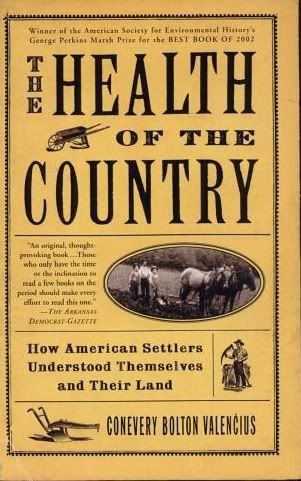 Whether merely traveling or settling down to start new lives, American emigrants to the Western frontier held certain beliefs about the “salubrity,” or health, of the land and how it could affect their own wellbeing. Such is the subject material of Conevery Valenčius’ book The Health of the Country, which explores the realm of eighteenth-century settlers as they struggled to cope with new and changing environments—primarily in Missouri and Arkansas.
Like Ann Greene in her book about horses that I reviewed last week, Valenčius does not discuss environmental degradation or change on a scale anywhere close to some other authors I’ll refer to in future posts (partly due to the limited temporal scope of the work but also given the text’s narrower subject of “medical geography”), but both The Health of the Country and Horses at Work share the distinction of being a creative sort of environmental history that readily utilizes some of this new field’s best characteristics: use of interdisciplinary evidence and modes of analysis, reconstruction of past landscapes through culture (e.g. myth, law, perception) and science, and concentration on the two-way discourse between man and nature.
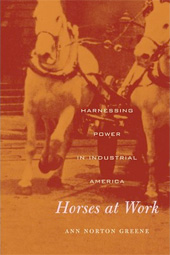
By now we all know the importance and value of recycling, right? Right. Except when wrong. So, to be clear in case my occasional thoughts of science writing as a career go somewhere: I am in a course that requires my written reflection on some amazing books and articles related to environmental history. Raxa Collective, whose blog I have been contributing to since mid-2011, has asked me to recycle some of that work for the sake of its readers. Agreed. I hope we are all right, alright?
First, one thing I am learning in university is that it is never too late to review literature. Some posts on this site point to evidence in favor of that idea. Ann Greene’s Horses at Work is just a few years old (whereas Swerve is a review of poetry from millennia past) but is already part of a canon: it made the cut for this course. Continue reading
I recently discovered that National Geographic offers grants to researchers, conservationists, and explorers between 18 and 25 years old to pursue projects around the world in archaeology, filmmaking, biology, adventure, and exploration, to name a few fields. These Young Explorers Grants, which generally range between $2000 and $5000, can often be a perfect catalyst for more or future funding for people trying to fulfill a lifelong research dream or experiment with a concrete fieldwork idea — after all, having National Geographic’s name on your list of supporters is pretty impressive, and a sign of great potential!
This morning, I attended a workshop given by several members of the National Geographic team hosted by Cornell University and sponsored by the Lab of Ornithology, The North Face, and other groups, which gave an overview of NatGeo’s mission as well as quite specific examples of research possibilities from past and current Young Explorer Grantees. Continue reading
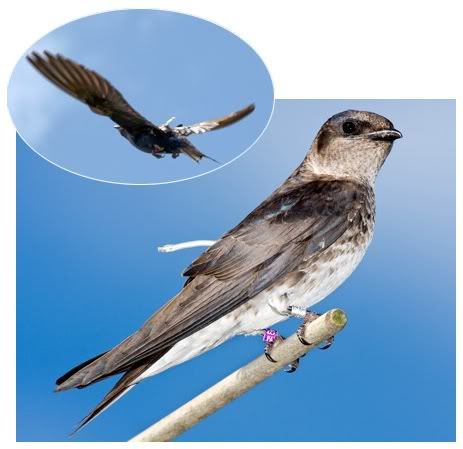
A banded adult purple martin wearing a light logger geolocator. Source: Patrick Kramer and Tim Morton, ScienceMag.
In the time it takes each of us to drink a cup of coffee, acres of tropical forest are cut down. Over the past thirty years, more than half the traditional coffee farms in Latin America have been converted to a newer growing method for higher production. Since the 1960s dozens of migratory bird species from northeastern United States have experienced long-term chronic declines in population size, with few signs of leveling off.
All these events are connected. Deforestation is occurring around the world faster than ever for plenty of reasons, but one of the most widespread and impactful ones is agriculture, and sun coffee (that is, coffee not grown under shade but in huge fields with pesticide, herbicide, and fertilizer assistance) is becoming more common to increase yields in the very same countries where North American migratory birds stay for their winters. But more about sun coffee and its negative ecological impacts later.
 Jean-Jacques Rousseau, writing in mid-18th century Geneva, discusses in The Social Contract several types of government and societies that depend on them, scorning and praising elements of each. Overall, he seems rather cynical about the possibilities of a decent society existing where the people and the government maintain an optimal state of equilibrium, but takes care not to criticize or admire one political system too closely–partly, perhaps, to avoid controversy and imprisonment or exile (which didn’t work, by the way) but also to keep his arguments logical and well-formed. He always emphasizes the generalizations, exceptions, or complexities associated with particular systems (e.g. monarchy), and rarely mentions contemporary examples when Sparta or Rome will suffice.
The Social Contract was published in 1762, and Rousseau passed away in 1778. His ideas were purportedly influential in the 1789 French Revolution (although the majority of the participants were illiterate), and it is typical to wonder what Rousseau would have thought of the execution of King Louis XVI, the formation of the National Assembly, and the rise of Maximilien Robespierre (himself an ardent supporter of Rousseau’s theories). During this year’s turbulent political season in the United States, I find myself wondering if Rousseau (who most of the Founding Fathers undoubtedly read) would have endorsed the system Americans have been so proud of.
Scuba Iguana trips start from the office on Charles Darwin Ave. either going north in a taxi to Itabaca Canal or taking a boat at the Scuba Iguana dock behind the office. All boat rides ranged from 35 to 120 minutes, and were generally pretty smooth. On the way, we could see Common Noddies, Blue-footed Boobies, Elliot’s Storm Petrels, Galápagos Shearwaters, and on North Seymour I saw a Red-billed Tropicbird twice! If I remember correctly, some Nazca Boobies were sitting on the coast of Floreana as well.
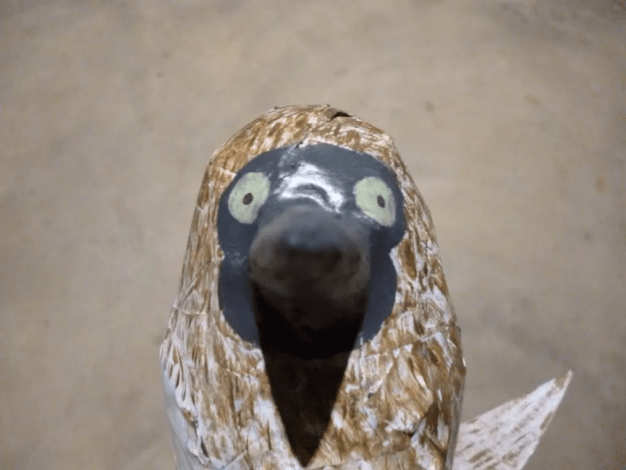
Last Wednesday was the final day the Union Educativa Modelo Tomás de Berlanga Bird Club would be gathering under my supervision. In the end, I was never able to get the papier-mâché project off the ground for most of the kids – two students did end up making penguins, but forgot to bring them to this last day to attach body parts and spray the final product with a protective varnish, and my hosts’ son painted a bird I made (looks like a male frigatebird). The photo above is of the Blue-footed Booby I made for my host family.
I just got back from Isabela Island, where I was able to snorkel with a sea lion as playful as the ones in this video (taken, once again, by the ScubaIguana guide Quike Morán), and play with it alone in the relatively shallow waters of Tintoreras (named for the reef sharks that can often be seen there; tinto is red in Spanish; you get the point).
I tried to mimic the swirling, bubble-blowing, and alternating fast and slow approaches as I played with the juvenile sea lion, and was rewarded with a dance even longer than that seen in the video. Continue reading
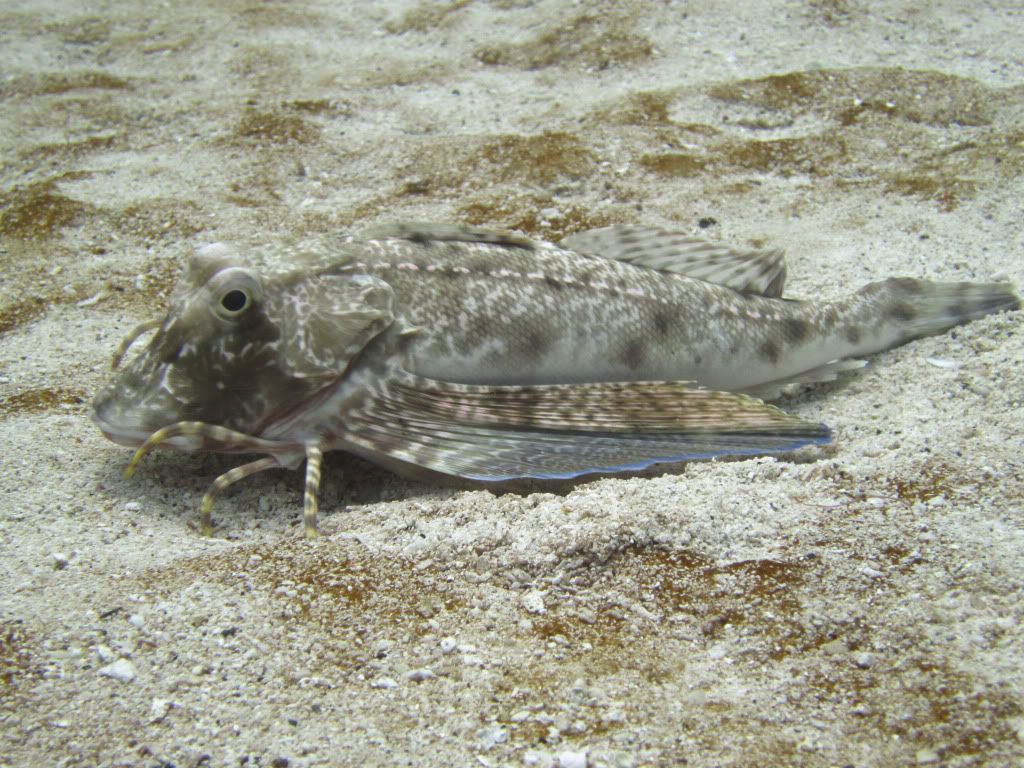
Six legs and two sail-like fins! What?!
My last post shared a video of some of my scuba trips and a few images of two absolutely bizarre ocean species: the Red-lipped Batfish and the Galápagos Searobin. I had no clue that any such creatures existed in nature, or at least not under the light of the sun no more than 15 meters below surface level. Once again, Quike Morán of Scuba Iguana took the pictures and video with a point-and-shoot digital camera in a plastic waterproof case, and the two dives featured here were at Seymour Island and Mosquera Island, north of Santa Cruz.
with a rat – Brook Run Park, GA
Last week, I had my first, second, third, and fourth dives since I got my CMAS diving certification in 2007 in Croatia. I saw two of the weirdest organisms I’ve ever encountered in the flesh (to be named in the next post), and was also able to fulfill one of my longtime wishes: to be underwater with any aquatic mammal!
I leave for a camping trip on the island of Isabela today, so for now my two brief and scheduled posts will be limited to a couple photos and the video that will be in each! All images and videos were taken by Quike Morán, my Scuba Iguana guide.
Every Monday and Wednesday evening, starting at 8:30PM, a group of Puerto Ayora residents gathers at Parque San Francisco to play Ultimate Frisbee together. About half of these 25- to 35-year olds are teachers at Tomás de Berlanga, and others work at the Charles Darwin Foundation or around town.
Parque San Francisco is a long and fairly narrow stretch of land between Charles Darwin Avenue and the shore, and to walk from Baltra Avenue (the main road that crosses the whole island from north to south) to the main pier one has to walk through the part of the park that skaters, Ecua-volley players, and Frisbee players use at different times of the day: youngsters anywhere between eight and eighteen years old are constantly skating on the cement space enclosed by steps lengthwise, a stage on one end, and a large cement ramp on the other. Metal rails are often laid out to practice rail-grinds or hopping over the rail while the skateboard rolls under it. Skaters dominate this part of the park (the other parts are a sandy playground and some benches shaded by trees lining the coast) for most of the day, until 4:30PM or so when the volleyballers come out to set up two courts on one of the rectangle. These Ecua-volley players (who deserve their own post) then share half the park with the skaters, with the occasional stray ball or board, until the late evening, when volleyball stops and the skating continues on.
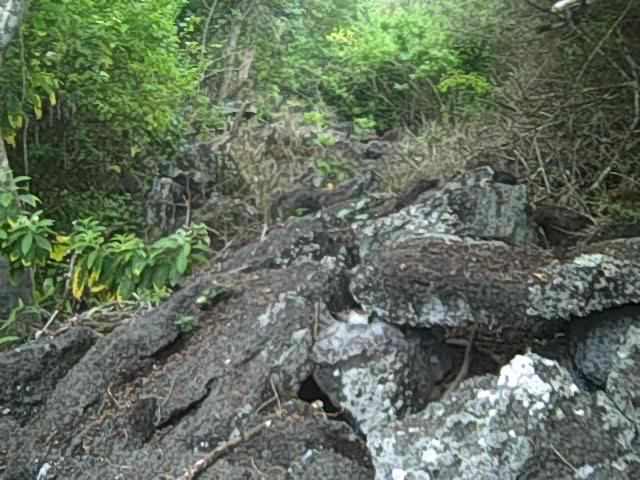 This Wednesday, I planned on walking from the school to Puerto Ayora on el camino viejo, or the “old path” that people used to walk before the asphalt road was created and cars became common. I had been told a few weeks before that the National Park recently cleared the trail and that it would be a great place to take kids to see quite a few species of finch and plenty of other birds. Last week I’d found the end of the trail on the upper edge of Puerto Ayora, and I thought I knew where to start from Tomás de Berlanga downhill.
I left the school at 10:45AM after covering 3rd graders for two hours between exams (we read eight or nine stories and then they played on their own) with my backpack full of food, snorkeling gear, and papier-mâché materials for my planned afternoon of lunch, the beach, and Bird Club. The path, which was about two meters wide of mostly cleared earth, weeds, and lots of lava rock, had the occasional green and white wooden poles the Park uses to demarcate National Park territory, and was always bordered on the left side by a barbed wire fence. Sometimes I passed farmland on the left, other times forest similar to that on the dense right side. Passion fruit often littered the path, and a couple times I passed orange trees, so I ended up never even considering the snacks in my backpack.
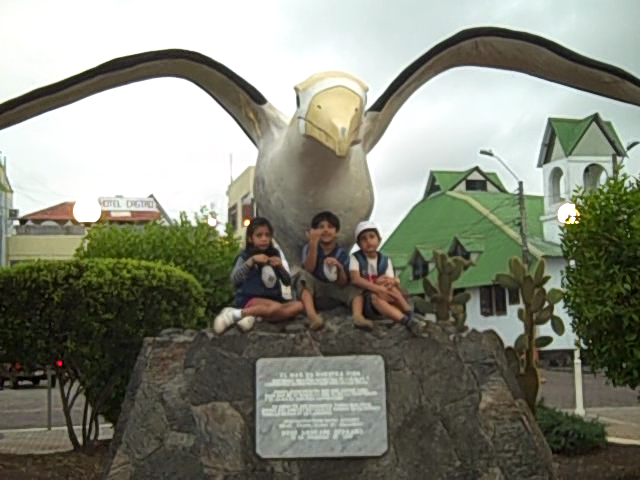 Last week’s Bird Club sessions saw eight, nine, and one participant(s) in the Wednesday 2th-4th grade group, Thursday 5-6th grade group, and Friday 7th-12th grade group, respectively. My goal had been to start a papier-mâché project, but after forty-five minutes the youngest group was eager to walk through town, so we left the balloons to dry and reviewed the usual crowd at the Fisherman’s Wharf with the addition of a Great Blue Heron and an Elliot’s Storm Petrel. Since some of the eight kids hadn’t come to the first week, it was still a pretty good day, except that most of the students didn’t take their balloons home with them. This week, only three students arrived on Wednesday (it is final examination week), so we made papier-mâché again and this time everyone took their birds home to dry for next week’s wing and beak addition, and perhaps even painting.
Given the younger students’ response to the papier-mâché, I came to the Thursday group last week prepared to put the issue to a vote. Quite a few kids came half an hour late, so we ended up walking to Tortuga Bay, a 45-minute trip through the Park on a path surrounded by cacti and trees that always yields Galápagos Flycatchers, Galápagos Mockingbirds, and a couple species of finch. When we reached the shore a small group of Ruddy Turnstones flew away, and after a couple minutes we had to turn back towards Puerto Ayora. This Thursday, almost the same group of nine students made their balloons and drew their wing-plans on cereal boxes.
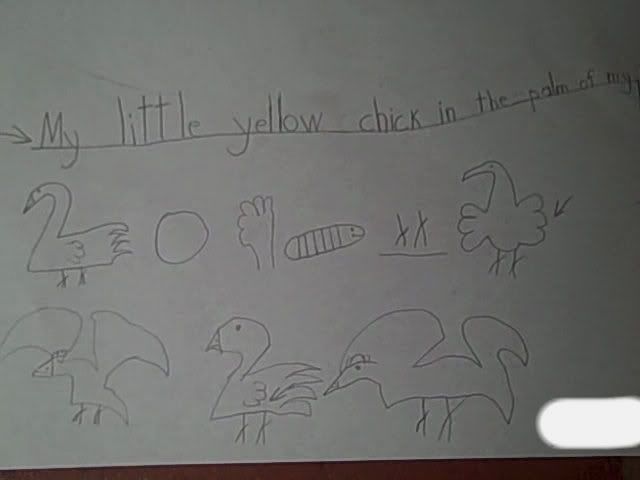
This past week, apart from being the second session of the Bird Club, I was teaching 1st and 2nd graders English, Science, and Art (e.g. bird names, bird biology, bird crafts). I wasn’t quite prepared for the radical change in behavior between 7th-12th graders and 1st-2nd graders in the classroom, though obviously I expected there would be significant differences.
But when on your first day a group of nineteen 6-year-olds spontaneously and simultaneously burst into a song about a little yellow chick in the palm of their hand while you’re trying to teach the basic body parts of a duck you’ve drawn on the whiteboard, you have a good sign that things might get tough. If this song includes mention of a hawk, which scares the chicks into hiding under their desks while the chosen bird of prey stalks the room to catch any straying chick-children, then things are already tough and you have to act accordingly.
For the past two weeks I’ve been planning my bird-related extracurricular activity at Tomás de Berlanga, the school where I’m on my fourth full week of volunteering English substitute teaching for grades 1, 2, and 7-12 (1st and 2nd graders are taught English as a class, and the older students are classified based on skill level—I taught Intermediate for a week and Advanced for two weeks).
I decided on a weekly 2-hour (4-6PM) meeting of what we’d call the “Club de Aves,” the Bird Club, and I sent a small paper invitation and permission sheet home with students of 2nd grade and up. About 50 students brought back responses allowing them to participate, and a dozen or so slips denying permission because the student was otherwise engaged after school (Santa Cruz has a great cycling team that is quite competitive on a national level). Given this unexpectedly high number, I had to supplement my planned Thursday and Friday groups with a Wednesday one: about twenty 2nd, 3rd and 4th graders for Wednesday; thirteen 5th and 6th graders for Thursday; and eighteen 7th-12th graders for Friday.
 My penultimate post covered the participatory monitoring workshop I attended the last week of June. Here I will describe our results in the last two days of the meetings.
When dividing the attendees into different groups with assigned topics of discussion, the workshop organizers assigned me as discussion leader of the Resident (Urban and Rural) group, where six or seven of us talked about varied approaches and types of programs.
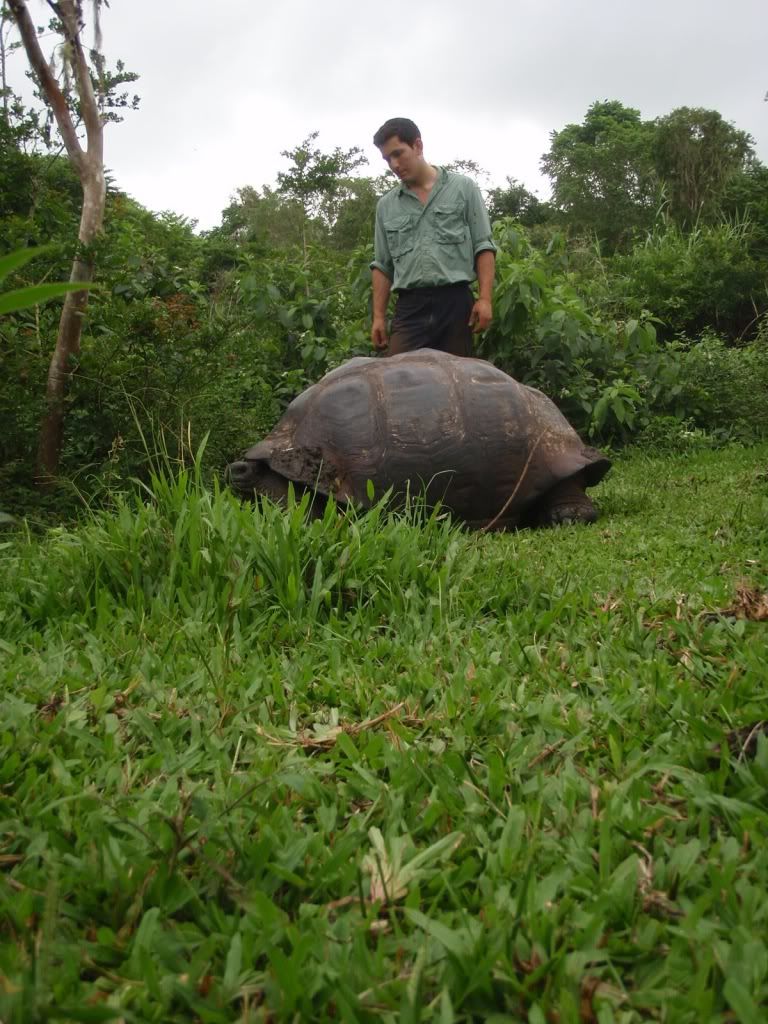
We started with the rural residents, focusing on farmers since the majority of landowners in the agricultural region of Santa Cruz fit that category, either with coffee, sugarcane, cattle, or other crops. There are countless farms in the area, and only about a dozen of them practice any tourism, but we considered this smaller group the perfect audience for a pilot project, since they should be more interested in completing periodic checklists of focal species that serve as tourist attractions. Guides from cruises or local operators often take groups of tourists up into the highlands to see wild giant tortoises and less common landbird species like the Vermilion Flycatcher, and these few farms offer not only passage in their land (as safe havens for the attractive species) but also their coffee or homebrewed sugarcane rum to the tourists. Some properties even have lava tunnels, one of which I’ve been told by a Hawaiian visitor is even more impressive than the famous Thurston lava tunnel on the other well-known volcanic archipelago of the Pacific Ocean.
 Organikos