
Bird of the Day: Magnificent Frigatebird (Los Dolores, Baja California Sur, Mexico)
Photo by Milo Inman, India
During my last post I mentioned this agricultural strategy in passing, and I’m actually fairly surprised that the topic hasn’t come up anywhere on the blog before. After all, IPM is an increasingly effective and interdisciplinary way to curb economic losses in crops around the world, and one that often attempts to reduce reliance on environmentally unfriendly chemicals like pesticides.
Completely eliminating an agricultural pest is not the ultimate goal of IPM. In fact, due to ecological intricacies and the risks of removing certain species from an ecosystem, merely lowering the number of pests to numbers that do not cause significant economic damage is more advisable. Achieving this reduction in pest populations “requires an understanding of the ecology of the cropping system, including that of the pests, their natural enemies, and the surrounding environment,” according to Professor Anthony Shelton of the Entomology Department at Cornell University. For example, knowing that a certain pest caterpillar species has certain predator species, a farmer might introduce some of the natural predators into his crop to prey on the harmful caterpillars. If the farmer also physically removes the caterpillars by hand and the pest population dwindles to zero, the natural predators might turn to a beneficial insect, like a pollinator, or even attack the crop itself. This is a very vague and hypothetical example but one that reflects the need to understand causes and effects in an ecosystem if one is planning to employ IPM effectively.
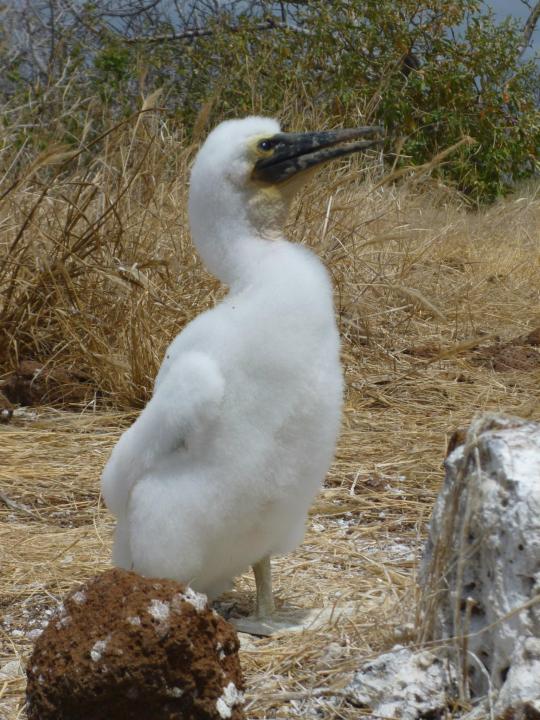
North Seymour Island, Galapagos, Ecuador

Photo credit: BU Dining Services
Earlier this week I wrote about an entirely different sort of swamp. This brief post is about a topic much more in tune with the holiday season: cranberries. Grown in bogs with layers of peat, sand, gravel, and clay, cranberries are native to North American wetlands (our readers across the pond will probably know the European variety of the fruit as lingonberries). In the United States they are primarily grown in Massachusetts, New Jersey, Oregon, Washington, and Wisconsin (ordered alphabetically, not by output). Something not many people may know is that these cranberry bogs are cyclically flooded with vast amounts of water every season; some might worry over the constant waste of this precious liquid in areas of major cranberry production, or the contamination of water tables with pesticides and fertilizers common to agricultural use.
But I am about to tell you about some of the advantages cranberry-growers have over other industrial agriculturalists in terms of their water utilization. Why will I share this with you? Well, cranberry sauce features prevalently in the traditions of recent holidays, namely Thanksgiving and Christmas (and was thus probably consumed in an overwhelming majority of American households at least once in the past 60 days), plus my grandparents swear by cranberry juice, but I also recently found out that cranberries–and the water they are flooded with for harvesting–make for excellent art, or sport. What I never would have guessed is that Red Bull would be the one to show me this; just watch the video below:
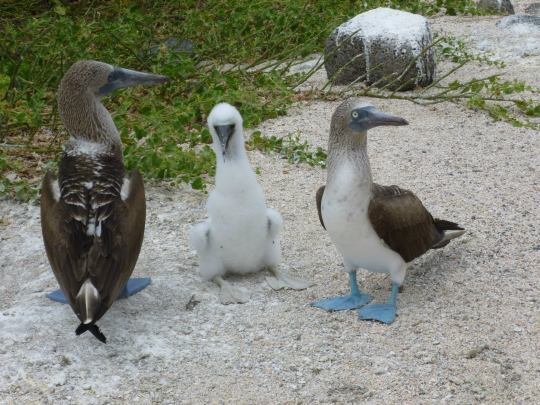
North Seymour Island, Galapagos, Ecuador
 In his environmental history of the Mejong River Delta in Vietnam, David Biggs analyzes the influential trend of forced—and often failed—attempts to control the water and earth of the landscape, with various effects on local populations. Looking back even farther than the mid-19th-century colonization of the area by the French, Biggs considers the traditional identities of human “improvements” of the delta such as dikes, canals, and dams essential to habitation and agriculture. The imposed land and water use projects enforced by the French colonists, with their newer, large-scale technologies, expanded what Biggs calls the colonial grid, which colonial officials endeavored to push beyond inhabited areas in ways often contrary to Vietnamese custom or ecological wellbeing.
Canal-digging, road-building, railroad-setting, river-dredging, forest-clearing, and swamp-draining, all part of the colonizing and pioneering process, were frequently carried out without fully considering the ecological and political effects such “nation-building” would have on the Vietnamese people and landscapes, or their relationships to each other. Although the environmental consequences for these earlier projects are not quite as severe as his case studies, Paul Josephson might label these activities as milder brute force technologies—if not these earlier efforts then perhaps those pushed forth by American agencies later in the 1960s and 1990s. The planting of methods tried and tested in quite different locations from the Mekong River Delta, and the frequent disregard or ignorance of the diverse intricacies in ethnic groups or soil and water types, impacted how effective the colonial and post-colonial programs of hydroagricultural reform were. Unlike Johnson, however, Biggs does not represent these technologies as overwhelmingly or constantly negative for the environment. Continue reading

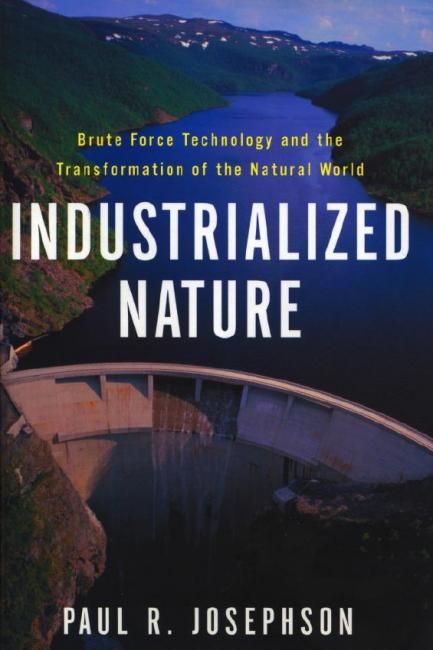 In my last book review sourced from the course I’m taking on environmental history, I hinted that some of the authors we read were very keen to list our failures of the past and quantify the damage we’ve done. Paul R. Josephson, in his Industrialized Nature, does just this, seeking to demonstrate how large-scale resource management systems almost always ensure environmental degradation and long-term losses in different ways. Dubbing these systems “brute force technologies,” Josephson studies how they were employed by varied combinations of diverse political systems, social groups, and economic goals on different types of raw materials in several countries. All led to similarly disastrous results for the ecosystems in question, but, the author argues, man’s hubris is strong enough to convince political and scientific spheres that further innovation can solve problems and maintain profitable advances in the future. While describing the ecological damage caused by brute force technologies, Josephson makes sure to include social stresses inflicted upon local communities, such as native tribes and other underrepresented groups directly affected by the overwhelmingly negative changes.
I like Joseph Gordon-Levitt.

“I feel like, Socrates, or something,” said actor Joseph Gordon-Levitt while looking out at the crowd framed by the round and columned architecture of Bailey Hall.
That’s why, several months ago, when I learned he was coming to do a show in Bailey Hall at Cornell, I committed to waking up early and facing the failing web servers to buy two of over a thousand tickets that were to sell out in less than half an hour, making the show the fastest to sell out at Cornell in a while. And I only bought two because that was the limit per student — by the time I got through to the webpage only balcony seats were left. Continue reading
 Whether merely traveling or settling down to start new lives, American emigrants to the Western frontier held certain beliefs about the “salubrity,” or health, of the land and how it could affect their own wellbeing. Such is the subject material of Conevery Valenčius’ book The Health of the Country, which explores the realm of eighteenth-century settlers as they struggled to cope with new and changing environments—primarily in Missouri and Arkansas.
Like Ann Greene in her book about horses that I reviewed last week, Valenčius does not discuss environmental degradation or change on a scale anywhere close to some other authors I’ll refer to in future posts (partly due to the limited temporal scope of the work but also given the text’s narrower subject of “medical geography”), but both The Health of the Country and Horses at Work share the distinction of being a creative sort of environmental history that readily utilizes some of this new field’s best characteristics: use of interdisciplinary evidence and modes of analysis, reconstruction of past landscapes through culture (e.g. myth, law, perception) and science, and concentration on the two-way discourse between man and nature.
By now we all know the importance and value of recycling, right? Right. Except when wrong. So, to be clear in case my occasional thoughts of science writing as a career go somewhere: I am in a course that requires my written reflection on some amazing books and articles related to environmental history. Raxa Collective, whose blog I have been contributing to since mid-2011, has asked me to recycle some of that work for the sake of its readers. Agreed. I hope we are all right, alright?
First, one thing I am learning in university is that it is never too late to review literature. Some posts on this site point to evidence in favor of that idea. Ann Greene’s Horses at Work is just a few years old (whereas Swerve is a review of poetry from millennia past) but is already part of a canon: it made the cut for this course. Continue reading
I recently discovered that National Geographic offers grants to researchers, conservationists, and explorers between 18 and 25 years old to pursue projects around the world in archaeology, filmmaking, biology, adventure, and exploration, to name a few fields. These Young Explorers Grants, which generally range between $2000 and $5000, can often be a perfect catalyst for more or future funding for people trying to fulfill a lifelong research dream or experiment with a concrete fieldwork idea — after all, having National Geographic’s name on your list of supporters is pretty impressive, and a sign of great potential!
This morning, I attended a workshop given by several members of the National Geographic team hosted by Cornell University and sponsored by the Lab of Ornithology, The North Face, and other groups, which gave an overview of NatGeo’s mission as well as quite specific examples of research possibilities from past and current Young Explorer Grantees. Continue reading
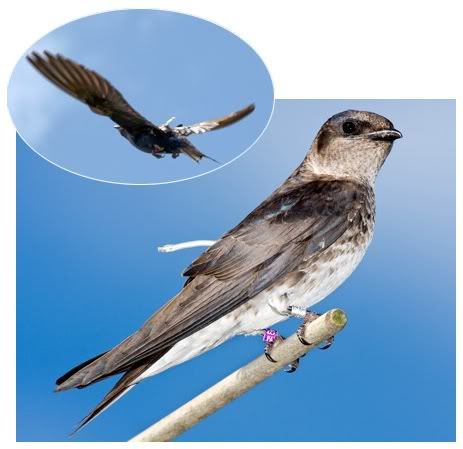
A banded adult purple martin wearing a light logger geolocator. Source: Patrick Kramer and Tim Morton, ScienceMag.
In the time it takes each of us to drink a cup of coffee, acres of tropical forest are cut down. Over the past thirty years, more than half the traditional coffee farms in Latin America have been converted to a newer growing method for higher production. Since the 1960s dozens of migratory bird species from northeastern United States have experienced long-term chronic declines in population size, with few signs of leveling off.
All these events are connected. Deforestation is occurring around the world faster than ever for plenty of reasons, but one of the most widespread and impactful ones is agriculture, and sun coffee (that is, coffee not grown under shade but in huge fields with pesticide, herbicide, and fertilizer assistance) is becoming more common to increase yields in the very same countries where North American migratory birds stay for their winters. But more about sun coffee and its negative ecological impacts later.
 Jean-Jacques Rousseau, writing in mid-18th century Geneva, discusses in The Social Contract several types of government and societies that depend on them, scorning and praising elements of each. Overall, he seems rather cynical about the possibilities of a decent society existing where the people and the government maintain an optimal state of equilibrium, but takes care not to criticize or admire one political system too closely–partly, perhaps, to avoid controversy and imprisonment or exile (which didn’t work, by the way) but also to keep his arguments logical and well-formed. He always emphasizes the generalizations, exceptions, or complexities associated with particular systems (e.g. monarchy), and rarely mentions contemporary examples when Sparta or Rome will suffice.
The Social Contract was published in 1762, and Rousseau passed away in 1778. His ideas were purportedly influential in the 1789 French Revolution (although the majority of the participants were illiterate), and it is typical to wonder what Rousseau would have thought of the execution of King Louis XVI, the formation of the National Assembly, and the rise of Maximilien Robespierre (himself an ardent supporter of Rousseau’s theories). During this year’s turbulent political season in the United States, I find myself wondering if Rousseau (who most of the Founding Fathers undoubtedly read) would have endorsed the system Americans have been so proud of.
Scuba Iguana trips start from the office on Charles Darwin Ave. either going north in a taxi to Itabaca Canal or taking a boat at the Scuba Iguana dock behind the office. All boat rides ranged from 35 to 120 minutes, and were generally pretty smooth. On the way, we could see Common Noddies, Blue-footed Boobies, Elliot’s Storm Petrels, Galápagos Shearwaters, and on North Seymour I saw a Red-billed Tropicbird twice! If I remember correctly, some Nazca Boobies were sitting on the coast of Floreana as well.
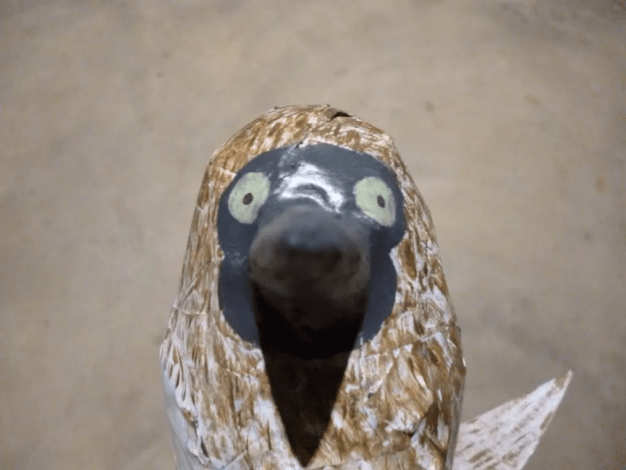
Last Wednesday was the final day the Union Educativa Modelo Tomás de Berlanga Bird Club would be gathering under my supervision. In the end, I was never able to get the papier-mâché project off the ground for most of the kids – two students did end up making penguins, but forgot to bring them to this last day to attach body parts and spray the final product with a protective varnish, and my hosts’ son painted a bird I made (looks like a male frigatebird). The photo above is of the Blue-footed Booby I made for my host family.
I just got back from Isabela Island, where I was able to snorkel with a sea lion as playful as the ones in this video (taken, once again, by the ScubaIguana guide Quike Morán), and play with it alone in the relatively shallow waters of Tintoreras (named for the reef sharks that can often be seen there; tinto is red in Spanish; you get the point).
I tried to mimic the swirling, bubble-blowing, and alternating fast and slow approaches as I played with the juvenile sea lion, and was rewarded with a dance even longer than that seen in the video. Continue reading
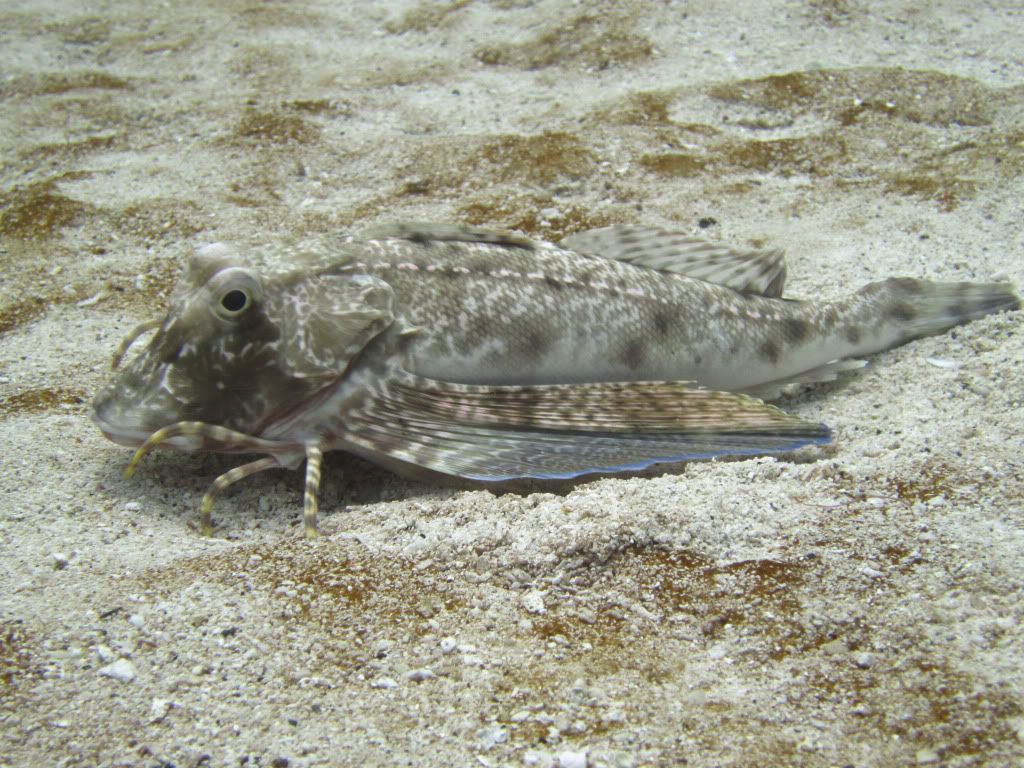
Six legs and two sail-like fins! What?!
My last post shared a video of some of my scuba trips and a few images of two absolutely bizarre ocean species: the Red-lipped Batfish and the Galápagos Searobin. I had no clue that any such creatures existed in nature, or at least not under the light of the sun no more than 15 meters below surface level. Once again, Quike Morán of Scuba Iguana took the pictures and video with a point-and-shoot digital camera in a plastic waterproof case, and the two dives featured here were at Seymour Island and Mosquera Island, north of Santa Cruz.
with a rat – Brook Run Park, GA

