Before the Flood

21BEFOREFLOOD-master768-v2.jpg

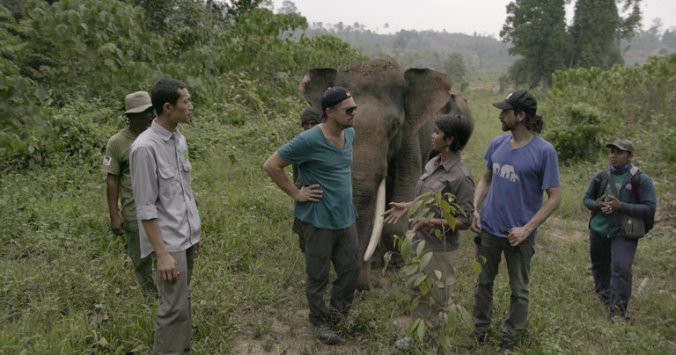
Leonardo DiCaprio in a scene from the global-warming documentary “Before the Flood.” Credit National Geographic

Have you seen it? Let us know if the reviewer got it right:

Review: In ‘Before the Flood,’ Leonardo DiCaprio Sounds the Climate-Change Alarm

Even if you subscribe to the view that a problem isn’t a problem until a Hollywood celebrity tells you it is, “Before the Flood” feels out of phase. It’s a documentary in which Leonardo DiCaprio sounds the alarm about global warming, something that could not possibly have escaped anyone’s attention in recent years and is at this point probably beyond discussion: Either you think climate change is real or you don’t, and the battle lines aren’t likely to be shifted by an earnest movie star. Continue reading

Big Data & Environmental Activism

3702

Kate Brandt speaking at the 2016 SXSW Eco conference in Austin, Texas. Photograph: Diego Donamaria

We do not see enough of this type of story:

How Google is using big data to protect the environment

Google’s sustainability officer Kate Brandt outlines the company’s wide-range interest in sustainable fishing, green buildings and renewable energy

by Ucilia Wang

For many people, Google is simply the gateway to a vast archive of facts and memories. For those who pay closer attention to its business dealings, the company also invests billions to find new ways to use the power of computers: it’s developing robots, virtual reality gear and self-driving cars. Remember all the hubbub about Google Glass?

Google has been using the same approach in sustainability – spreading its wealth in a variety of projects to cut its waste and carbon footprint, initiatives which may one day generate profits. During the SXSW Eco conference this week, I caught up with Google’s sustainability officer, Kate Brandt, to find out more. Brandt joined the company in July last year after serving as the nation’s chief sustainability officer in the Obama administration. Continue reading

Bass, Harbinger Of Hope

16nature-master768

Its numbers fluctuate, but the striped bass is far more common than it was just a few decades ago. Credit Getty Images

Thanks to Mr. Taft and the New York Times for this note of reversed fortunes for the fish, and for the anglers who champion them most vocally:

Striped Bass of the Hudson

By

With the jutting jaw of a mob kingpin and the pinstripes of a Wall Street executive, striped bass swim through the brackish waters of New York Harbor like old-school New Yorkers — as if they own the place. Continue reading

Bravo, Romania

980xz

Romania’s government has taken action to protect its large carnivores from trophy hunters.iStock

There was a time when we found portions of the hunting-to-support-conservation argument compelling. Our view is getting more and more firm against it. We applaud a small country teeming with wildlife for taking a firm stand:

Wildlife Advocates Celebrate: Romania Bans Trophy Hunting

By Alicia Graef

In a surprise move that has wildlife advocates cheering, Romania’s government has taken action to protect its large carnivores from trophy hunters.

Last week, the Environment Ministry announced a total ban on trophy hunting of brown bears, wolves, lynx and and other wild cats, which is expected to save thousands of animals from being killed. Continue reading

Bill McKibben On Oil, Banks & Solidarity With A Just Cause

screen-shot-2016-09-28-at-2-50-55-pmFighting Big Oil and Big Banks to Save Sacred Lands, Precious Water and Unraveling Climate

Bill McKibben

Most Americans live far from the path of the Dakota Access Pipeline—they won’t be able to visit the encampments on the Standing Rock Sioux reservation where representatives of more than 200 tribes have come together in the most dramatic show of force of this environmental moment. They won’t be able to participate in the daily nonviolent battle along the Missouri River against a $3.7 billion infrastructure project that threatens precious water and myriad sacred sites, not to mention the planet’s unraveling climate. Continue reading

Momentum In Tribal Territory


12tribes-listy9-jumbo.jpg

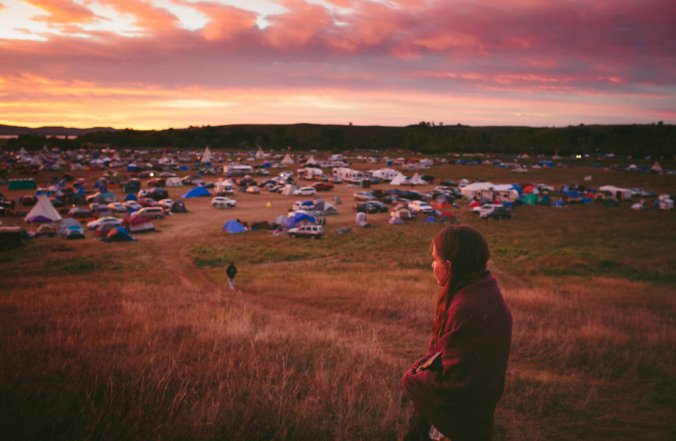
Susan Leopold, a member of the Patawomeck tribe of Virginia, watching the sun rise over an encampment where thousands have come to protest an oil pipeline near Cannon Ball, N.D.   Credit Alyssa Schukar for The New York Times

This is a great follow up to the earlier stories we read on this topic. We appreciate that the New York Times is now giving this as much attention as it deserves, and doing so with the dignity and respect that the protesters deserve:

From 280 Tribes, a Protest on the Plains

NEAR CANNON BALL, N.D. — When visitors turn off a narrow North Dakota highway and drive into the Sacred Stone Camp, where thousands have come to protest an oil pipeline, they thread through an arcade of flags whipping in the wind. Each represents one of the 280 Native American tribes that have flocked here in what activists are calling the largest, most diverse tribal action in at least a century, perhaps since Little Bighorn. Continue reading

Make Trouble When It Is Needed

lead_960 (1).jpg

Protesters demonstrate against the Energy Transfer Partners’ Dakota Access oil pipeline near the Standing Rock Sioux reservation in Cannon Ball, North Dakota, U.S. September 9, 2016. REUTERS/Andrew Cullen

We are happy that the trouble-maker who brought this to our attention, and those pictured above are heard by the Trouble-Maker-In-Chief of the USA (who we hope uses his remaining four months in that office to similar good effect):

The Obama Administration Temporarily Blocks the Dakota Access Pipeline

The surprise move came after a federal judge declined to stop the 1,100-mile fossil fuel project’s construction.

The Standing Rock Sioux Tribe and the hundreds of Native protestors who have joined them in rural North Dakota won a huge but provisional victory in their quest to stop the Dakota Access pipeline, as the U.S. government announced late on Friday afternoon that it was voluntarily halting work on the project. Continue reading

From A Favorite Trouble-Maker

591.jpg

‘We see the effects of warming on land: the floods, the droughts, the refugees headed towards temporary safety.’ Photograph: Malcolm Francis/NIWA

Please click here so that credit goes to the source for this editorial by one of the thinkers we regularly turn to, one of our favorite sources of reminder to take action:

So, just as a refresher, it’s always good to remember that we live on an ocean planet. Most of the Earth’s surface is salt water, studded with the large islands we call continents.

It’s worth recalling this small fact – which can slip our minds, since we humans congregate on the patches of dry ground – because new data shows just how profoundly we’re messing with those seven seas. The International Union for the Conservation of Nature has published an extensive study concluding that the runaway heating of the oceans is “the greatest hidden challenge of our generation”. Continue reading

Mobile Farmers Market Headed to Austin Neighborhoods

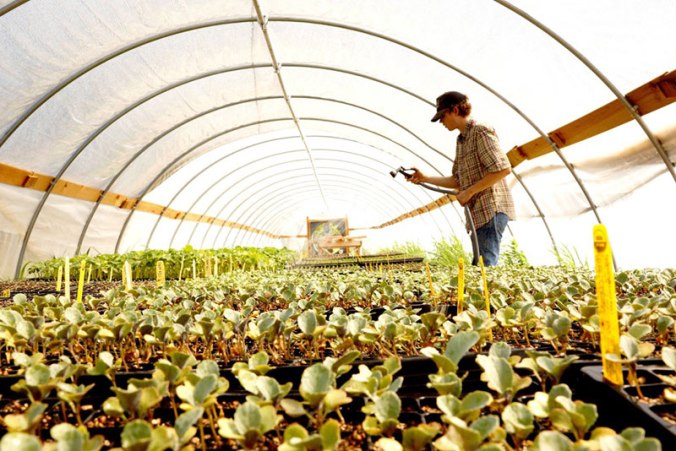
ben-watering-transplants-2

Source: Farmshare Austin

We have shared on previous occasions the benefits of organic farming. Well, getting affordable organic produce to neighborhoods who don’t have a single grocery store is commendable task, and the mission of Farmshare Austin. The non-profit organization received a grant from the city to help launch the program, which will make designated weekly stops in neighborhoods around Austin that lack access to organic fruits and veggies.

“Large areas of the city and county do not have full-service grocery stores, and it can be difficult for people in these places to get fresh, affordable food for themselves and their families,” [says] Taylor Cook, Farmshare Austin’s executive director. The market will target four areas, for now, that need the service most, and it will park in each district through an afternoon and evening. Cook says besides offering fresh seasonal produce from the organization’s 7-acre organic farm, they will also offer other staples, like cooking oil, on hand, so residents will have access to everything they need to cook a meal. The program accepts SNAP benefits and participates in the Sustainable Food Center’s Double Dollars program, allowing consumers using food assistance  to double their buyer power for fruits and vegetables. The pilot program will begin next month and run through the end of December. Cook says they hope to expand the mobile farmers market program in the coming years.

Continue reading

A Rio Restaurant Feeding the Homeless

img_9450-hero

All images from modernfarmer.com

Before the start of the Olympics, I shared a story about Rio de Janeiro that put a slightly dour mood onto the prospect of the international event. However, there are other important stories to share that cast a much brighter light on Brazil’s second-most populous city. Here’s an inspirational story about a restaurant in Rio that exemplifies a business model rooted on two principles, altruism and sustainability, and is helping solve two major problems in the city: feeding the homeless and decreasing food waste.

by Andrew Jenner

It’s coming up on 1 p.m. on Saturday, and the kitchen staff is hard at work. On one end, they’re chopping cabbage, onions, chayote, and a chicken. On the other, another pair of cooks preps a tangerine and carrot sorbet. Massimo Bottura—a dude with owlish glasses whose establishment in Italy was just named the world’s best by the British magazine, Restaurant—peeks over their shoulders with encouragement and a caution: easy on the sugar, OK?

In the front of the house, volunteers wander to and fro, harried people jab their phones, and a Telemundo TV crew jockeys for a few minutes with Bottura and David Hertz, the Brazilian chef and social entrepreneur who represents the other half of the brains behind the place. Outside, a generator outside throws off diesel fumes and a hellish racket, while construction workers tear apart the sidewalk to—Bottura and Hertz desperately hope—fix some issue with the kitchen’s gas supply. It’s one of a million little problems this little restaurant has faced, but Refettorio Gastromotiva is the little restaurant that could.

Continue reading

A DIY Desalination Machine

fayez-al-hindi-solar-desalination-3-889x514

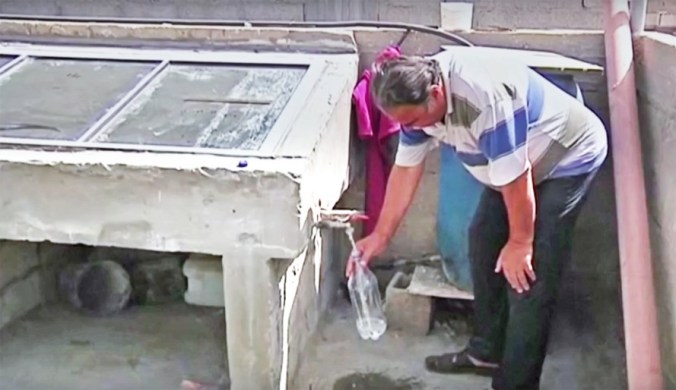
Fayez al-Hindi gathering drinking water from his solar-powered desalination machine Source: Inhabitat.com

We love DIY (Do-It-Yourself) projects, especially when they involve creating a  sustainable mechanism that solves a critical problem. Fayez al-Hindi, a resident of the Gaza region, created a homemade solar-powered desalination machine that can produce 2.6 gallons of fresh water every day. His creation is of particular importance considering that 90 percent of the region’s water supply is unfit for human consumption. Al-Hindi’s distilled water was proven to be safe drinking water by the Coastal Municipalities Water Utility. The most promising part of the story is that he plans to help other local residents build their own distillation systems, making potable water accessible to a greater number of people.

Watch the video on his invention below! Continue reading

Bill McKibben Deserves Better

07mckibbenSUB-master768.jpg

We frequently have linked to articles about, and to messages by, this man whenever we see them. It is not surprising to read this, but it is important that we are all aware of this additional price he pays for the actions he takes on behalf of the environment:

MIDDLEBURY, Vt. — THERE are shameful photos of me on the internet.

In one series, my groceries are being packed into plastic bags, as I’d forgotten to bring cloth ones. In other shots, I am getting in and out of … cars. There are video snippets of me giving talks, or standing on the street. Sometimes I see the cameraman, sometimes I don’t. The images are often posted to Twitter, reminders that I’m being watched.

In April, Politico and The Hill reported that America Rising Squared, an arm of the Republican opposition research group America Rising, had decided to go after me and Tom Steyer, another prominent environmentalist, with a campaign on a scale previously reserved for presidential candidates. Using what The Hill called “an unprecedented amount of effort and money,” the group, its executive director said, was seeking to demonstrate our “epic hypocrisy and extreme positions.” Continue reading

Bad News for a Few European World Heritage Sites

Protections have been weakened for Russian natural areas like the Western Caucasus. © WWF-Russia / Sergey Trepet

Last time we mentioned UNESCO World Heritage Sites, it wasn’t good news either, when many Sites were listed as “in danger.” The places newly at risk, according to the World Wildlife Fund (WWF), are often in the way of logging enterprises, often by the very governments who should be protecting the internationally recognized areas.  From the WWF:

The UNESCO World Heritage Committee today expressed concern over three sites facing severe pressures from harmful industrial activities, but failed to take bold action to protect them.

At the meeting, WWF objected to a sharp logging increase in the Polish portion of Bialowieza Forest World Heritage site, which also spans part of Belarus. The forest is one of Europe’s oldest, and is home to the most wild European bison, as well as lynxes and wolves. The government of Poland has argued that logging is necessary in order to combat a bark beetle infestation, a claim Polish scientists reject.

Continue reading

Environment, Rights & Responsibilities

Okeowo-Rebecca-Martin-Fights-Niagara-Bottling-1200.jpg

The singer Rebecca Martin helped keep Niagara, a water-bottling company, from tapping a reservoir near her adopted home, in upstate New York. “What’s more important than drinking water? Nothing,” she says. PHOTOGRAPH BY PAT KEPIC

Thanks to Alexis Okeowo for this note about actions our fellow citizens take, a reminder of our rights and responsibilities:

A JAZZ SINGER FIGHTS NIAGARA BOTTLING

By Alexis Okeowo

For years, Rebecca Martin was used to being transient, without a permanent home or commitments. As a jazz musician who performed both solo and with a band named Once Blue, Martin spent much of her time on the road touring and performing, while being loosely based in New York City. When she decided, almost fifteen years ago, to move to Kingston, ninety miles north of the city on the Hudson River, she felt a sense of relief. She had “really lost touch with the idea of community and responsibility to one another,” she said, and took the chance to grow her family and settle down. She started noticing ways that her new town could improve. There was a shop in her neighborhood that was selling large knives, big enough to be called swords, near two schools. Continue reading

Watch Your Wood, Know Its Origin

2000 (1)

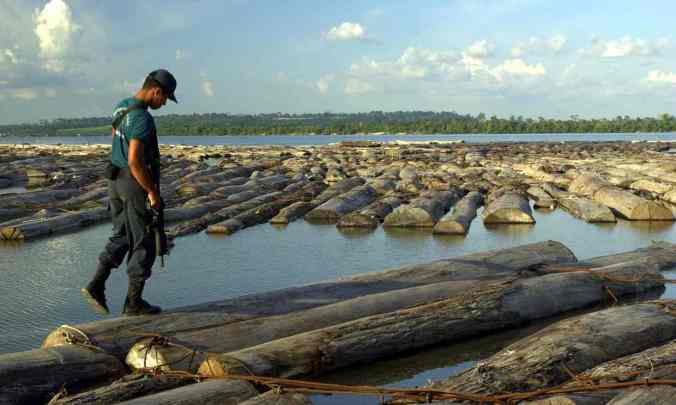
An armed officer inspects a seizure of thousands of illegal mahogany logs in Brazil. Photograph: Dado Galdieri/AP

Thanks to the Guardian for this reminder that we consumers need to do our caveat emptor duties when buying wood products:

Deforestation is rife in the Amazon, Colombia and the Philippines, say environmental groups

British shoppers could be unknowingly buying wooden furniture, flooring and even food items that are byproducts of destructive illegal logging in the Amazon, environmental campaigners are warning.

Friends of the Earth is calling on ministers to make companies reveal the source of their products in order to stop the black market trade. Last week human rights watchdog Global Witness revealed that 185 environmental activists were killed in 2015, many of whom had been trying to stop illegal logging in the Amazon. An estimated 80% of Brazilian hardwood is illegally logged.

Continue reading

Bees, Art, Action

Terence-koh-slide-W63E-master768

The artist Terence Koh recently installed a single-occupancy “bee chapel” upstate, left; at right, the chapel has been reconstructed in a modified form at Andrew Edlin Gallery on the Bowery.Credit From left: Stewart Shining; Olya Vysotskaya

The New York Times has a story currently that would interest anyone aware of the crisis related to bees and other pollinators; it helps if you also see art as a worthy tool of engagement for addressing complex major challenges facing the planet, and humanity; have a read either way:

An Art World Provocateur Returns to New York With an Unexpected Subject: Bees

By

“Good afternoon,” the elusive artist Terence Koh said over the phone earlier this week. He’d called to discuss his new show, which opened at Andrew Edlin Gallery over the weekend. “I’m inside the bee chapel. I’m lying down and looking straight up at the ceiling. They’re really busy today because it’s sunny.”

The Beijing-born, Canadian-raised enfant terrible was once the poster boy of aughts excess — a decade ago, he gold-plated his own feces and sold them at Art Basel for about a half-million dollars; he also once, rather infamously, told T, “I am the Naomi Campbell of the art world.” But the past few years have brought a different turn: He discontinued his gallery representations and, in 2014, moved to a mountaintop in the Catskills. The relocation was widely construed as a ceremonial retirement of sorts, but Koh insists the opposite: “I never had any intention of quitting the art world, I just moved to a different part of the world,” he says. “It was something that happened naturally.” He has since lived peacefully in what he describes as a personal Eden dusted with goldenrod and apple trees. In the branches of one, he built a hut and called it a “bee chapel,” which would become the titular heart of his new exhibition. Continue reading

Better Packaging for the Ocean’s Sake

Over the years we have referenced Ecovative Designs before, as a mycological solution for styrofoam and way to reduce reliance on petrochemicals. Recently we learned about a new method of replacing plastics that doesn’t involve fungus–at least not directly. Using the byproducts of beer-making (which technically includes yeast, a fungus), the Saltwater Brewery partnered with WeBelievers to create edible six-pack rings for beer cans, as you can see in the video below:

Continue reading

Fighting Flouting Fishing Fleets

3888

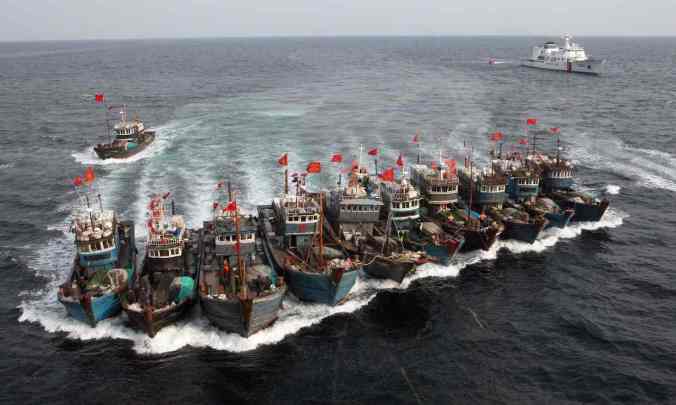
Chinese boats banded together with ropes, after alleged illegal fishing in South Korean waters in the Yellow Sea off the southwestern coast county of Buan. Photograph: Dong-A Ilbo/AFP/Getty Images

Tragedy of the commons on the high seas, fought by those who perceive their interests in common enough to do something about it (a tricky thing, as we note frequently), once again in the news.  Thanks to the Guardian, and environmental reporter Emma Bryce, for this reportage:

Tens of countries sign up to shut pirate fishers out of their ports

The first of its kind, a new international treaty obliges signatories to intercept pirate fishers before they can sell their catch

In March, the Argentinian coast guard shot at and sank a Chinese vessel that was alleged to be fishing illegally in Argentinian waters (the crew were all rescued). While it’s unclear whether the boat was committing crime, the incident showed that the tension surrounding pirate fishing is reaching a peak, marked elsewhere by increasing conflict, and the detainment and scuttling of illegal fishing fleets. But for pirate fishers, the financial gains appear to be worth these risks. Continue reading

Greenpeace, At It, As Ever

2500.jpg

Thanks to the Guardian for ongoing coverage of the band of environmentalists who are doing their best to keep the planet’s oceans healthy:

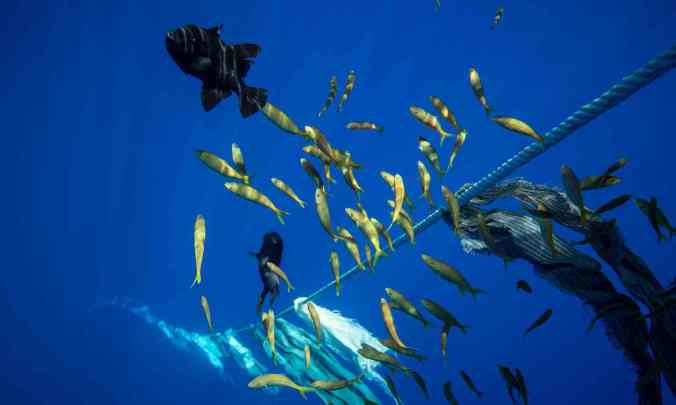
Greenpeace activists target destructive fishing in Indian Ocean – in pictures

With some Indian Ocean tuna stocks on the brink of collapse, the expedition exposes harmful methods by the world’s largest tuna company, Thai Union, owner of John West

Continue reading