Let’s Consider Meat Free Monday

MFM-LogoAs a former Beatle urges, let’s consider a simple mechanism for doing something other than taking to the streets or publishing an op-ed item–both of which we also encourage if your location and clout allow–in advance of the Climate Change conference. Why this particular mechanism? Well, to start with it is easy. Also, the impact could add up if enough of us participated. You probably already know about meat’s carbon footprint, but here is a message from Meat Free Monday to refresh your memory:

Fact1

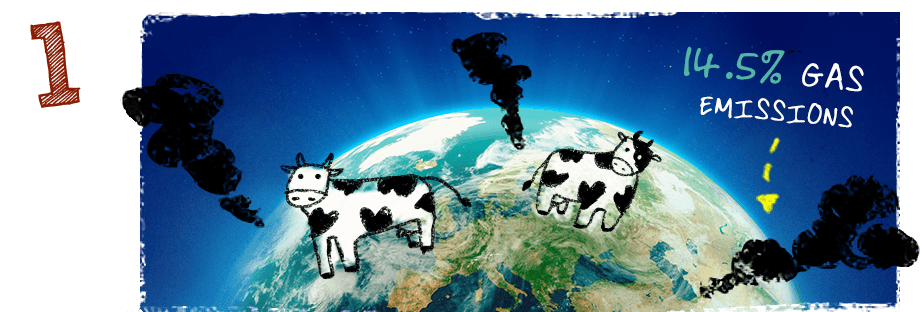
Meat production is responsible for 14.5 per cent of global greenhouse gas emissions, according to the United Nations Food and Agricultural Organization1, with some scientists saying the percentage is higher. Continue reading

Night Train, Climate Change, Action

Illustration by Otto


If you did not happen to be in New York today, but agreed that small sacrifices are necessary even if insufficient conditions for battling climate change, consider signing the petition mentioned in the following (a guest editorial, in today’s Guardian), which you should read all the way through before deciding:

Back in May I was on a sleeper train between Paris and Berlin, chewing on a biro and filling out a questionnaire. As the sun set across the rolling hills of the French countryside, I assiduously answered question after question about how often I used night trains and how I felt about the standard of service. I was hopeful that the questionnaire heralded a new era of growth in this crucial service. I couldn’t have been more wrong.

This month Germany’s state railway provider, Deutsche Bahn, confirmed it has decided to terminate a large number of overnight services, including the lines from Copenhagen to Basle/Amsterdam/Prague, and Paris to Hamburg/Berlin/Munich. The network cites low income, high overheads, losses of millions of euros and slow growth. Continue reading

If You Happen To Be In New York City

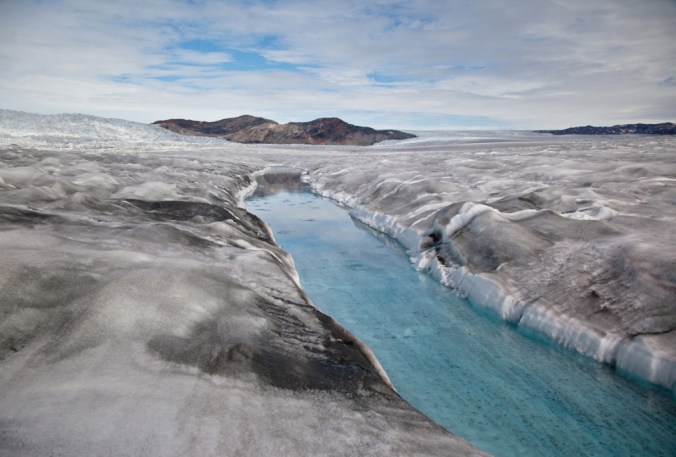
Henrik Egede Lassen/Alpha Film/Arctic Monitoring and Assessment Programme Global warming is already wreaking havoc on human civilization.

Henrik Egede Lassen/Alpha Film/Arctic Monitoring and Assessment Programme
Global warming is already wreaking havoc on human civilization.

The New Yorker interviews a former staff writer, now an activist, about an event today in New York City that looks worthy of attendance if you are in town. We have noted several of this fellow‘s earlier activities, and do not tire of doing more of the same. Click the image above to go to the original invitation in Rolling Stone in May:

On Sunday, tens of thousands of demonstrators are expected to join the People’s Climate March through midtown Manhattan; its Web site describes it as the “largest climate march in history.” In May, Bill McKibben wrote an article in Rolling Stone, “A Call to Arms: An Invitation to Demand Action on Climate Change,” which laid some of the groundwork for this weekend’s events. We spoke about the march with McKibben, one of its lead organizers, and a former New Yorker staff writer.

According to the Los Angeles Times, anywhere between a hundred thousand and four hundred thousand people are expected to come to New York City for the People’s Climate March. Can you tell us about how you, and others, came up with the idea for a large demonstration and how you turned it into what it is now?

Continue reading

Birds Are Barometers, Among Other Things

12348-v1-490x

A recent study projects that the summer range of the Allen’s hummingbird will shrink by 90 percent by 2080. Photo by Loi Nguyen/Audubon Photography Awards

One more story related to the centenary mentioned here, this time with a podcast interview with  to accompany our previous post linking to his editorial in the New York Times:

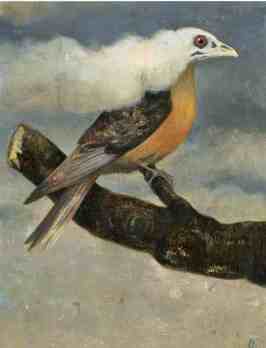
It’s been 100 years since the last passenger pigeon died. Would we have been able to save the bird today? What is the state of bird conservation in North America? Gary Langham of the National Audubon Society and Ken Rosenberg from the Cornell Lab of Ornithology discuss which species are under threat and how climate change might affect birds in the future.

Food Rebels

From guerilla gardeners, to food foraging, to our own movement toward preserving food biodiversity and farm to table sustainability, we love to write about the food we eat and how it reaches our plate.

Luckily for all of us we’re not alone in either our interest or speaking out about it. Generations since Rachel Carson‘s seminal book there have been people writing about, and more importantly, acting upon the need to re-embrace the old methods of food production while sometimes using technology to our more healthy advantage.

Food Forward opens the door into a new world of possibility, where pioneers and visionaries are creating viable alternatives to the pressing social and environmental impacts of our industrial food system. Continue reading

Documenting the Conservation Story, Part 2

Photo courtesy of Heena Metha

Photo credit: Heena Metha

As I mentioned earlier, the internship program for my school requires we do an Informational Interview with our supervisor. I wanted to share the interview here for other people who are interested in entrepreneurial conservation. The rest of the information from the interview will soon be in the updated About section of the site.

Informational Interview with Crist Inman, Founder of La Paz Group:

1. How does the partnership between environment and business work in the sustainable tourism industry?

The idea behind it is what we call the valorization of nature, paying for conservation through experiential services rather than exploiting nature for its extractive value. For example, you can cut down a tree only once, but you can monetize it by having people pay for a hike over and over again. It is a partnership between environment and business that engages people in conservation. Philanthropic conservation such as writing a check to WWF or The Nature Conservancy is good and important, but there is still a deficit of conservation.

The public sector plays an incredibly important role as well, but we are going to need more than philanthropy and public sector work because the world is losing more wilderness than all the philanthropies and governments in the world combined can protect. The intangibles of culture loss are harder to detect and comprehend but the world is losing too much cultural heritage as well. This is a business model that allows people to engage in conservation rather than just writing a check as a donation or in the form of tax. This allows people to participate and experience nature and culture in a way that makes business sense as much as it achieves conservation.

2. What is entrepreneurial conservation?

Usually these two words don’t get used in the same sentence. Together though, these words build something more valuable and effective than either could on their own. The premise underlying entrepreneurial conservation is that there are good economic reasons to preserve natural and cultural heritage. And when such good reasons present themselves, opportunity and need go hand in hand. Essentially, it is professionals developing and/or managing a business whose profits are invested in the conservation of natural and/or cultural patrimony. Continue reading

Conservation, Passenger Pigeons, History Of Extinction

Gérard DuBois

Gérard DuBois

My favorite doomsday journalist (and I mean that as the highest compliment) posted over the weekend an unamusing memo to remind us that this is an important centenary anniversary. It ups the ante on our commitment to the community of birdwatchers, casual and serious alike, who support important conservation of wildlife habitat all over the world.

It is not amusing to be reminded about various tragic commons, especially ones for which collective action would seem to have been achievable. We link to these stories in the hope that doomsday outcomes will become less likely if we remind ourselves often enough.

Yesterday the ever-better New York Times, newspaper of record that pays more and better attention to environmental issues than most other publications, saw fit to print this piece by the Executive Director of the Cornell Lab of Ornithology, for which we give our thanks and share with you in whole due to its value as a public service:

ITHACA, N.Y. — THE passenger pigeon is among the most famous of American birds, but not because of its beauty, or its 60-mile-an-hour flight speed. Nor is it a cherished symbol of our great country. No, we remember the passenger pigeon because of the largest-scale human-caused extinction in history.

Continue reading

Thank You, Oxfam International

Photo courtesy of behindthebrands.org

Photo courtesy of behindthebrands.org

The Oxfam International campaign Behind the Brands aims to address how little is known about supply chains of the top 10 largest food and beverage companies. Listening to the NPR Salt Chat provides a good explanation about how pushing for transparency from these big companies is a catalyst for on-the-ground change. The campaign has only been around for a year and a half and they’ve already seen great progress in terms of land rights for local community, government intervention, and women’s rights.

It’s not always easy to connect the dots between the food we consume and the people who grow it, or the impact of growing and processing that food on the health of our planet.

But a campaign called Behind the Brands, led by Oxfam International, an advocacy organization dedicated to fighting poverty, is trying to make the inner workings of the 10 biggest food companies in the world more visible…

We sat down to talk with Chris Jochnick, one of the architects of this campaign and Oxfam America’s director of private sector development. We touched on how social media is giving activists more power, why big food companies respond to pressure, and whether corporate executives are his friends or his enemies.

We also wanted to know: Will the promises that these companies make really translate into concrete changes on, say, cocoa farms in West Africa?

Continue reading

Why We Walk

Photo Courtesy of digitaldeconstruction.com

Photo Courtesy of digitaldeconstruction.com

I have been endlessly fascinated by walking. I asked myself Why We Walk while I walked 400 km on the Camino de Santiago. A recent article by Adam Gopnik in the New Yorker has brought me to this question again in a new context. The article talks about what it means to be a pedestrian in the modern world and how the role of walking has changed as it’s become less necessary. The sad thing about walking for pleasure instead of necessity means that it occurs less. Many of us spend our lives in the sitting position: sitting in cars to then go sit at work and then sitting at home after a long day of sitting. I’m generalizing here as I call myself out on my sedentary life. Our bodies are made to walk, so I must ask myself, Why Don’t We Walk?

Roads are not enjoyable to walk in an increasingly auto dependent world. When living in a residential area there isn’t much activity to make walking around something that invites ‘randomness’. Adam Gopnik writes in the New Yorker about Why We Walk. He says,”We start walking outdoors to randomize our experience of the city, and then life comes in to randomize us.” The sidewalks are public space. In the suburbs we have a lot of private space and little public space. I have to wonder how it could affect our psyche to not brush up against the world. I wonder what we take away when we lose the opportunity to have chance interactions in indeterminate public spaces.  I wonder how creative we could be as a culture if the majority of our interactions with strangers didn’t occur over money exchanges. Adam Gopnik talks about the vague excitement and pure chance of walking in New York City.

You could walk anywhere. Saturday all day, Sunday all day, I’d tramp through the lower-Manhattan neighborhoods. The differences, architectural and social, among Tribeca and SoHo and the East Village, to name only contiguous areas, were distinct and vivid and nameable then: cast-iron buildings shading off into old egg- and paper-carton factories sweetly interrupted by small triangular parks, and edging over, as you walked east, into poor-law tenements that were just being reclaimed by painters. I would set off on a Saturday morning and walk all day, and achieve Kazin’s feeling of vague excitement, of unearned release, in a way that I have never felt before or since.

I like this description because it shows the way he was able to interact with the environment around him as a walker. Suburbs that are designed for cars make walking an outdated form of transportation. It’s inefficient and time consuming if you live in a city that’s designed for cars rather than pedestrians. In the suburbs, there aren’t many people dancing in the ‘sidewalk ballet’ as Jane Jacobs puts it. So, I just wonder what a healthier culture there would be if there were more public space for people to live outward facing lives that brushed up against each other.

The article brings up a quote from Frédéric Gros’s book A Philosophy of Walking, “The purpose of walking, is not to find friends but to share solitude, for solitude too can be shared, like bread and daylight.” This quote to me highlights the sort of communion we can have with each other while walking. While I was walking the Camino, I felt that communion with fellow walkers as well as with the landscape. I was sharing solitude with the landscape. I think taking away that walking aspect of communion in our lives further isolates us from nature. Continue reading

Ocean Conservation, Of Vital Interest Among Islanders Everywhere, Gets Its Due From The Relatively Tiny Barbuda

A map of protected marine zones that are being established around the Caribbean island of Barbuda. Credit Waitt Institute

A map of protected marine zones that are being established around the Caribbean island of Barbuda. Credit Waitt Institute

We had not expected to see Dot Earth again, but all of a sudden, thanks again for the surprise Mr. Revkin:

A Small Island Takes a Big Step on Ocean Conservation

Marine life in the Caribbean has been badly hurt in recent decades by everything from an introduced pathogen that killed off reef-grooming sea urchins to more familiar insults like overfishing and impacts of tourism and coastal development.

Some small island states are now trying to restore once-rich ecosystems while sustaining their economies. A case in point is Barbuda, population 1,600 or so, where the governing council on Aug. 12 passed a suite of regulations restricting activities on a third of the island’s waters. The regulations and reef “zoning,” in essence, came about after months of discussions involving fishing communities, marine biologists and other interested parties, facilitated by the Waitt Institute, a nonprofit conservation organization. Continue reading

Lost At Sea

From the Drifters Project by Pam Longobardi

From the Drifters Project by Pam Longobardi

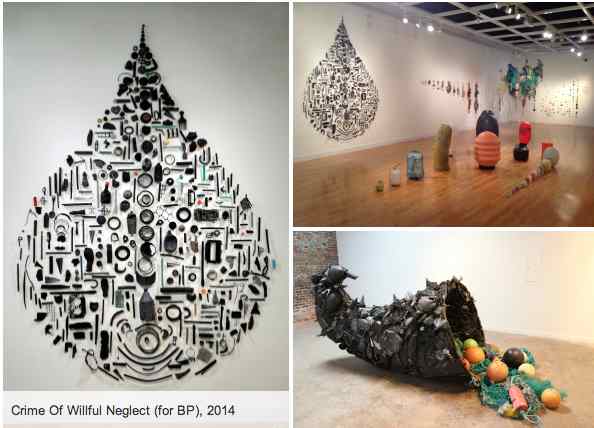
The world’s oceans effect all life on earth and it’s no longer news that even the most pristine places on earth are impacted by our “toxic legacy,” as artist Pam Longobardi puts it. The project statement for her Drifters project is really worth reading. Here is an excerpt I found particularly poignant:

Plastic objects are the cultural archeology of our time.  These objects I see as a portrait of global late-capitalist consumer society, mirroring our desires, wishes, hubris and ingenuity.  These are objects with unintended consequences that become transformed as they leave the quotidian world and collide with nature to be transformed, transported and regurgitated out of the shifting oceans.  The ocean is communicating with us through the materials of our own making.  The plastic elements initially seem attractive and innocuous, like toys, some with an eerie familiarity and some totally alien.  At first, the plastic seems innocent and fun, but it is not.  It is dangerous.   We are remaking the world in plastic, in our own image, this toxic legacy, this surrogate, this imposter.

By doing this Drifters project, she has removed thousands of pounds of material that would be considered trash and then presenting it within a cultural context. Amie wrote a previous post about artists using ocean trash as materials for art. They too found themselves telling the story of global consumerism using plastic.   Continue reading

Seed Saving as a Safeguard for Biodiversity

logo

This is a seed savers network we are looking to collaborate with on our organic farm initiatives.

The recent post here about The New Yorker article on genetically modified seeds and Vandana Shiva helped me understand more about this era we are entering of biotechnology.

Regardless of whether or not it’s healthy to consume genetically modified foods, we are at risk of losing biodiversity and heirloom varieties. In support of protecting biodiversity, having heirloom varieties of plants in the La Paz Group gardens is important. Once the plants go to seed, we can save them to plant the following season.  Continue reading

Seeds, Activism, Hope

140825_r25365_sq-320

Vandana Shiva is leading the opposition to genetically modified crops. Are they a scourge or a solution to hunger

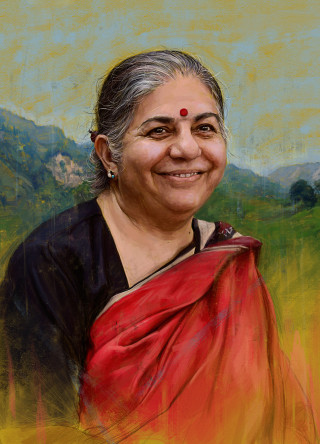
We had never heard of her before, but seeds have been on our mind lately so we immediately want to know more. So thanks to Michael Specter for his profile Against the Grain–An activist’s controversial crusade against genetically modified crops:

Early this spring, the Indian environmentalist Vandana Shiva led an unusual pilgrimage across southern Europe. Beginning in Greece, with the international Pan-Hellenic Exchange of Local Seed Varieties Festival, which celebrated the virtues of traditional agriculture, Shiva and an entourage of followers crossed the Adriatic and travelled by bus up the boot of Italy, to Florence, where she spoke at the Seed, Food and Earth Democracy Festival. After a short planning meeting in Genoa, the caravan rolled on to the South of France, ending in Le Mas d’Azil, just in time to celebrate International Days of the Seed.

Continue reading

Tea and Conversation

Credit: Ea Marzarte

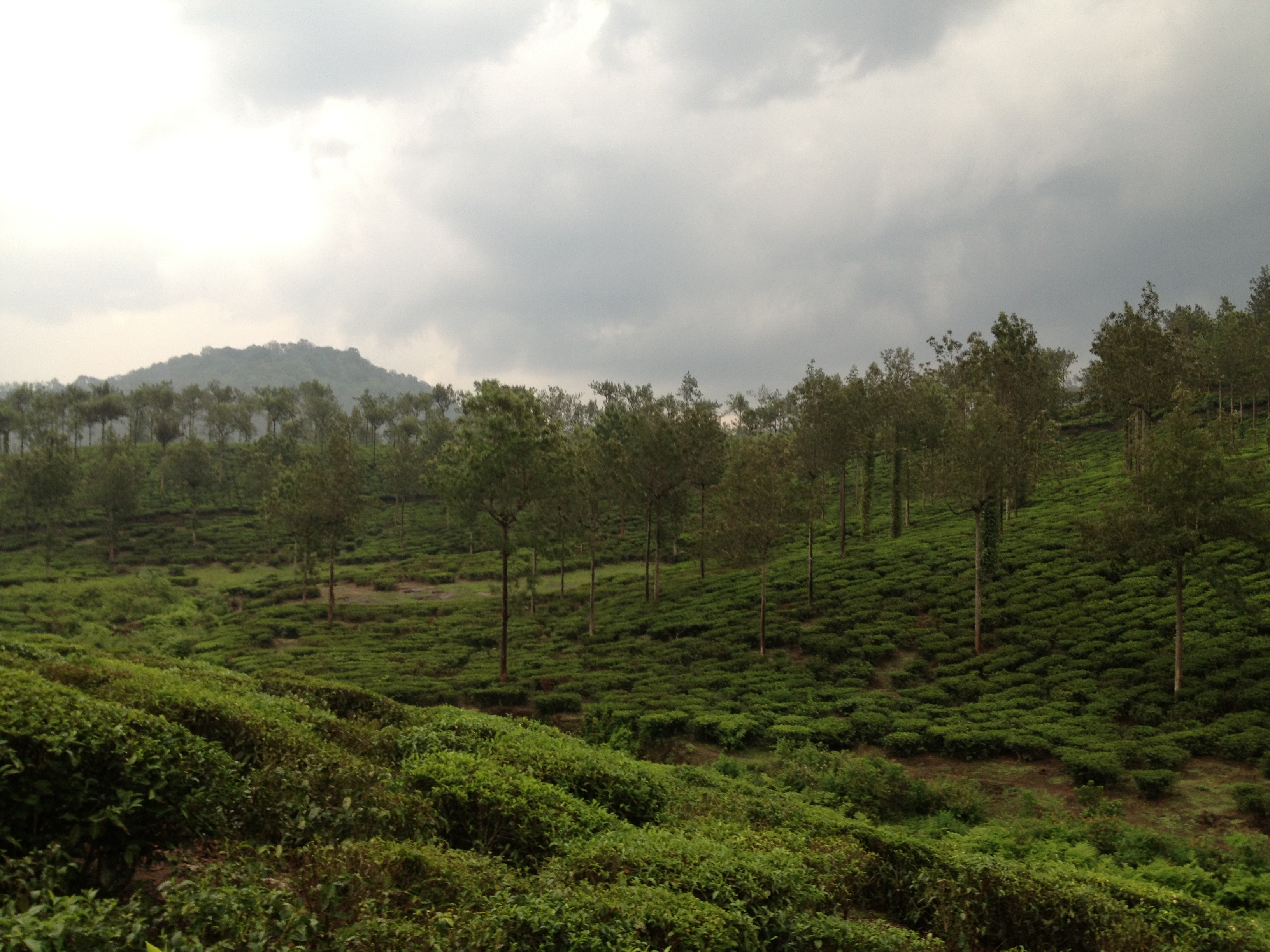
As I wrote about in my last post, my current project is documenting the conservation story of RAXA Collective. Yesterday we were driving up to the Cardamom County property in Thekkady from Spice Harbor in Cochin. I’m used to the busy main “highway” but this time we took a different route. It was through Vagamon, which is this lush, green landscape with waterfalls and not many cars on the road. We drove through tea plantations. Driving through the tea plantations with all the greenery and fog kind of enchanted me into this quiet, contemplative space.

In order to document the conservation story, I have been asking Crist questions whenever we have time to sit down about the business model of projects they’ve worked on. While driving through the tea, we had plenty of time for this conversation.

The landscape and the conservation seemed to pull me within, pointing out the shape and feeling of an idea. I don’t know what it will end up being, but I can feel the progress and formation of something. This shape seems to be magnetizing key words and planting them like seeds. I am inspired by the idea of creating a business model that funds environmental and cultural conservation.  Continue reading

Documenting the Conservation Story

a8cbefa7f9b9970419b4595b3c5dbd49

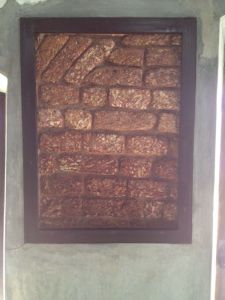
This is a wall from the Spice Harbor property. A lot of the conservation story can be told in the design. The way they built this property is an example of historical/cultural conservation. The restaurant building was a “go down”, or waterfront warehouse, that used to store spices. They didn’t knock down the old building, they actually just built around it and framed pieces of the old wall to display it as art. This design concept has been passed on by word of mouth-taught to the workers here, but it hasn’t been documented yet.

I felt that this blog could better serve its purpose if the conservation story was told in one place. The stated purpose of the RAXA Collective site is to provide a space for people to learn about entrepreneurial conversation. It seems to me that highlighting the details of the property is less meaningful without context of the concept and history behind them.

The summarized version as stated in the RAXA Collective “About section” is to have a business whose profits are invested in conservation of natural and cultural patrimony. However, as I’ve been learning, the way this model manifests itself depends on the situation. Each story is pretty radically different than the next. So, we have a very general description (About section) and very specific descriptions (every day posts), but we don’t have the overall narrative of each property to show how “it depends” shows up differently in the field of entrepreneurial conservation.

I resonate with the initially stated goal in the About section about having this site provide a space for university students to learn about alternatives to mainstream occupations and career paths. As a university student myself, that is really what I am here as an intern to learn. I have been able to offer my skills and passions for organic agriculture and gain more practice in that field as an intern here. However, that is a skill I have picked up along my studies, which are driven by the bigger goals of conservation and environmental business models.

Continue reading

Hambledooners, Conservation Entrepreneurs

Hambledon Hill, Dorset, UK, in late afternoon sunlight. Photograph: Mark Bauer/Alamy

Hambledon Hill, Dorset, UK, in late afternoon sunlight. Photograph: Mark Bauer/Alamy

National Trust is a private UK-based conservation organization whose nearly 4,000,000 members and more than 60,000 volunteers make great things happen. That leads to about 50,000,000 visitors to sites like this recently created protected area:

National Trust buys Hambledon Hill in Dorset

Pristine chalky outcrop is a treasure trove of plant species and a butterfly haven untouched by modern farming since Iron age

Continue reading

If You Care About Books But Have Not Followed This Story, Start Here

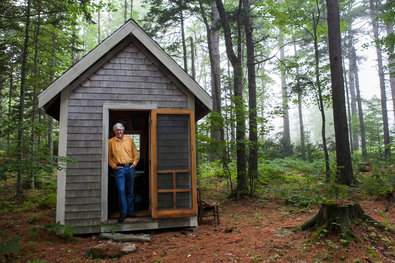
Craig Dilger for The New York Times. Douglas Preston, a best-selling author with Hachette Publishing, at his writing shack in Maine.

Craig Dilger for The New York Times. Douglas Preston, a best-selling author with Hachette Publishing, at his writing shack in Maine.

We started paying attention to this issue here. It relates to our longstanding belief that reading and books are essential goods. So who we trust with books matters:

Plot Thickens as 900 Writers Battle Amazon

A Sophie’s Choice Moment For Two Species, One Environment, And No Solomon In Sight

Damian Mulinix — Chinook Observer. A small portion of the cormorant colony as seen from a bird blind.

Damian Mulinix — Chinook Observer. A small portion of the cormorant colony as seen from a bird blind.

You can read about this in a major media outlet, but try another approach for this story. Local journalism is alive and well, and covering complex, important topics through the local lens:

A plan to kill 16,000 double-crested cormorants on East Sand Island has some residents on the North Coast scratching their heads. Although still in the proposal phase, the plan drew many to an open house in Astoria last week to ask questions of the federal agencies involved. “I can’t believe in this day and age we can’t come up with an alternative solution to killing things,” said Tommy Huntington of Cannon Beach. Continue reading

Thank You, General Mills

cheerios

Photo Credit: Grist Article

I came across this article on Grist.com about General Mills’s new action plan to reduce their contribution to climate change. After being called out by Oxfam International,  Oxfam says that General Mills will be, “the first major food and beverage company to promise to implement long-term science-based targets to cut emissions.”

With both a mitigation and adaptation plan, I am pretty impressed by this corporations efforts to take responsibility of their role. On the official page of their website describing this policy, they cite the 2014 Intergovernmental Panel on Climate Change (IPCC) Working Group II Summary for Policy Makers, which suggests to me that they have people on their team helping them make really informed decisions grounded in scientific evidence. I appreciate in the report the full acknowledgement of the IPCC’s call to action:

“Science based evidence suggests we must limit the global mean temperature rise to less than 2 degrees Celsius above preindustrial levels in order to avoid permanently altering the atmosphere and negatively impacting the environmental, social and economic systems that sustain us – both today and in the future.”

I haven’t seen a big corporation like this that would normally be considered a “dirty business” so blatantly speak to the environmental reality we face. To see a corporation cite this gives me hope that mainstream conversations around climate change are moving towards what we can do and away from whether or not its real. I hope more corporations follow their lead just for the sake of drumming the beat of awareness.

The true colors of this policy will show in how effectively it is implemented, because that will determine whether it is a fluffy ‘greenwashing’ tactic with loopholes built in.

Here are a few of the main points of the policy:

  • Set global targets and track progress related to reductions in GHG emissions, energy, water, transportation, packaging and solid waste.
  • Support the Innovation Center for U.S. Dairy commitment to reduce fluid milk GHG emissions by 25 percent by 2020.  Work with smallholder and conventional farmers to strengthen globally sustainable farming practices.
  • Address GHG emissions due to land use change through sustainable sourcing efforts in key supply chains and growing regions.  Our aim is to achieve zero net deforestation in high-risk supply chains by 2020. We will regularly report progress towards the zero net deforestation goal.
  • Ensure responsible governance and oversight of all sustainability efforts, including climate mitigation and adaptation.  Convene the General Mills Sustainability Governance Committee 3 times per year to review and approve strategies, programs and key investments.
  • Report progress against goals – our own as well as those in our broader supply chain – on an annual basis via our Global Responsibility Report, available on the General Mills website

For a more extensive look at the report, click here.

While I raise my eyebrows at some of the vague wording in their initiatives, like “support”, “work with”, and “ensure” that are less concrete objectives, I also see timelines and checkpoints to keep themselves more accountable to this than they had to. I have learned to appreciate initiatives that move in the direction of the ideal, rather than criticizing anything that doesn’t model the most perfect action. While it is good to remain skeptical, I think it is important to acknowledge leadership in the right direction when we see it.

 

Reflecting: Half-a-World Away

Cardamom Siesta

Cardamom Siesta

Five months have elapsed since my departure from Cardamom County and Raxa Collective in Kerala — sufficient time, in my opinion, to think back on my experience and growth during my adventures there, as well as the time I have spent back in the United States.

Words cannot express how thankful I am for having been given the opportunity to travel farther and live longer away from home than I ever have before, and in a truly amazing, diverse, and different region of the world than I could ever imagine.  The head honchos, Crist and Amie Inman, have an ethos rooted deeply in progressive ecological conservation that is truly admirable, and for the area they are established, borderline revolutionary.

Continue reading