Improving Governance For The Environment, One Citizen And One Pollinator At A Time

We have been noting increasing stories about loss of pollinators in the USA and Europe, and especially notice how seriously this problem is taken in the UK. Solutions? Not so obvious.  But we are on the lookout each day for innovations in both the public and private sectors. This UK governance procedure seems a promising mechanism for getting citizens aware of, then involved finding solutions for environmental challenges such as the alarming loss of pollinators nationwide:

A consultation on the National Pollinator Strategy: for bees and other pollinators in England

Overview

Defra is seeking views on a proposed national pollinator strategy for bees and other pollinators in England.  The strategy sets out proposals to safeguard these important insects given their role in pollinating many food crops and wild plants and their contribution to our food production and the diversity of our environment… Continue reading


West, Water, Waste. Whence? Whither?

This slideshow requires JavaScript.

National Geographic has an excellent special multimedia report on the Colorado River that covers its beauty, utility, history and future:

“Rivers affect the health of our seas, wildlife, communities, and economies. Restoring freshwater habitats is no longer optional;
it’s imperative.”

Osvel Hinojosa Huerta,
Conservationist and NG Emerging Explorer Continue reading

This Modern World, Its Conceptual Artists, Its Discontents

What with bird-counting, we almost missed the dumb hoax–not to say the hoax was dumb but that the hoax about dumb was almost lost on us.  And not only because we do not always scan the “news” far and wide enough to catch such scintillating plums. Also because we might not have seen the art in this concept; only the discontent, the humor, the clever. Is it art? Protest? Both?  The post below on the New Yorker’s website, as often happens, sheds the light we need to “get” what might otherwise have been lost:

Last weekend, a pop-up shop called Dumb Starbucks appeared in Los Feliz, Los Angeles, five miles east of the Hollywood Hills. It seemed like any other Starbucks store, but it gave away “dumb” versions of items sold by the Seattle-based coffee giant: Dumb Iced Vanilla Latte and Dumb Blonde Roast. For full effect, there were compact discs with names like “Dumb Jazz Standards,” “Dumb Taste of Cuba,” and “Dumb Nora (sic) Jones” by the registers. Californians waited in line for hours for the “horrible coffee,” while Starbucks grew flustered at the use of its “protected trademark.” Before the caffeine buzz could wear off, the loud voices of the social-media sphere started wondering: Who put up Dumb Starbucks? And was it a legitimate political statement about consumerism—perhaps an offshoot of Occupy Wall Street—or a well-executed viral marketing stunt? Continue reading

“Change the Mascot”

The United States National Football Leage (NFL) and it’s Hunky Dory Saucery Thing (which is beyond my scope of imagination) have never held any interest for me. The sport doesn’t elicit any reaction other than sympathy for the players’ bodies, although my disinterest bears  no grudge against those who enjoy a game, whether from within the dynamic minefield of titanic collisions or from the comfort of their own home’s sofa, or anything in between. In fact, I know so little of the culture, statistics, and geopolitical implications of the sport that before last week I couldn’t have named three teams off the top of my head. Today, I unsuspectingly watched this:


Continue reading

Watch, Weep, Read, Wonder, Share

A synopsis of this documentary is here:

Blackfish tells the story of Tilikum, a performing killer whale that killed several people while in captivity. Along the way, director-producer Gabriela Cowperthwaite compiles shocking footage and emotional interviews to explore the creature’s extraordinary nature, the species’ cruel treatment in captivity, the lives and losses of the trainers and the pressures brought to bear by the multi-billion dollar sea-park industry. Continue reading

Classics-R-Us

PRIVATE COLLECTION/KEN WELSH/THE BRIDGEMAN ART LIBRARY. Fourteenth-century Florentine poet Petrarch so loved the classical authors that he imagined conversations with them.

PRIVATE COLLECTION/KEN WELSH/THE BRIDGEMAN ART LIBRARY. Fourteenth-century Florentine poet Petrarch so loved the classical authors that he imagined conversations with them.

Among all the topics we survey, link to and write about on this site, the classics are if anything underrepresented relative to their importance in matters of community, collaboration and conservation. History is probably the most visible, thanks to Seth’s recent series on Iceland. Book reviews and shout outs to great professors are also visible with some frequency. Maybe enough, maybe not. Anyway, once more to the trenches, on the side of the humanities but not against practical considerations; the liberal arts matter to our future, not just to our past as this essay reaffirms, so let’s not lose them:

In 2011, the University of California at Los Angeles decimated its English major. Such a development may seem insignificant, compared with, say, the federal takeover of health care. It is not. What happened at UCLA is part of a momentous shift in our culture that bears on our relationship to the past—and to civilization itself. Continue reading

Just Stop, Leave, And Do Not Come Back

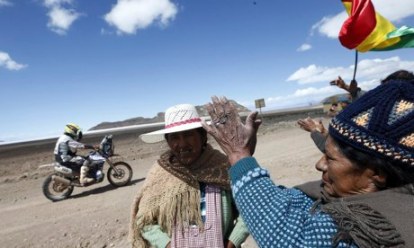
A Dakar rally competitor passes indigenous people between Bolivia and Chile. The rally, it is claimed, turns their land into a tourist attraction. Photo: Felipe Trueba/EPA

A Dakar rally competitor passes indigenous people between Bolivia and Chile. The rally, it is claimed, turns their land into a tourist attraction. Photo: Felipe Trueba/EPA

From 2008-2010, several contributors to this platform were spending time in the Patagonia region of Chile working on various projects, and during that period first came to know of the obscene event known as the Dakar Rally.

With no offense intended to motorbike racing, car racing or other enthusiasts of motorized sport, it is impossible to reconcile the destruction this event causes with any supposed positive outcomes. We can think of plenty of healthier alternatives to this method of getting around the southern part of South America. And yet, the event organizers have continued making their case to a government that has continuing granting an unwarranted privilege, and the annual event it is still going strong in spite of all the evidence of its negative spillovers:

The Dakar Rally of 500 off-road vehicles bumping and skidding through clouds of dust may be one of the world of motor sport’s most spectacular sights but archaeologists, environmentalists and indigenous groups are warning the 14-day event is ruining Chile’s ancient heritage.

Chilean government studies seen by the Guardian confirm the damage done to geoglyphs, protected sites, burial grounds and tracks on the Inca trail during previous races, but such is the race’s importance for tourism that it has once again been given the green light. Continue reading

$350,000 Conversation Piece

A protest outside the Dallas Convention Centre against the auction of a black rhino hunting permit. Photograph: Tony Gutierrez/AP

A protest outside the Dallas Convention Centre against the auction of a black rhino hunting permit. Photograph: Tony Gutierrez/AP

This coverage in the Guardian provides an answer to the lingering question of how much good the killing of an endangered animal can do, but does not answer the fundamental question raised by this endeavor:

A permit to hunt an endangered African black rhino sold for $350,000 at a Dallas auction held to raise money for conservation efforts but criticised by wildlife advocates.

Steve Wagner, a spokesman for the Dallas Safari Club, which sponsored the closed-door event Saturday night, confirmed the sale of the permit for a hunt in the African nation of Namibia. He declined to name the buyer. Continue reading

Photographing A Community In Flux, With Empathic Eyes

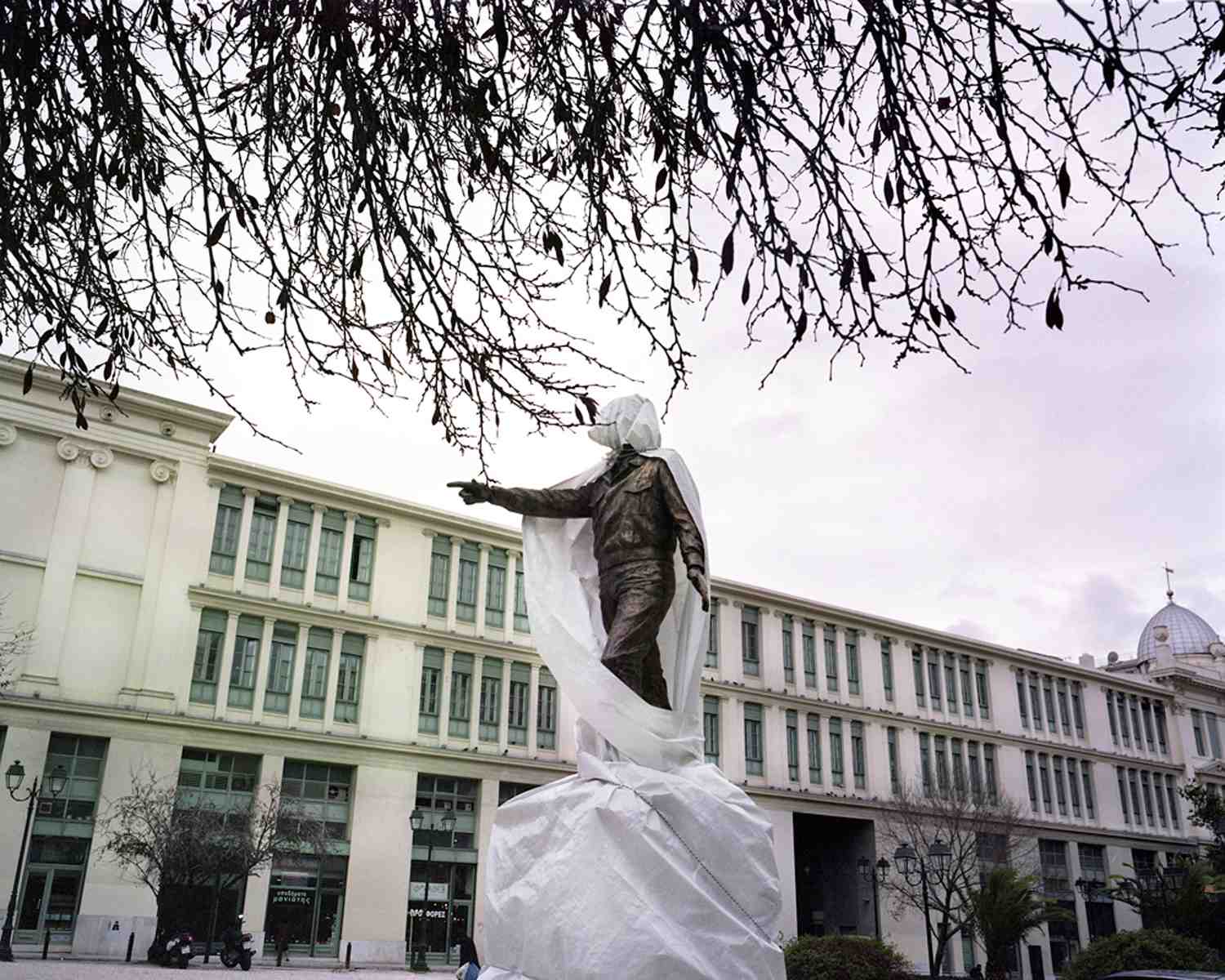
Statue under construction of Alexandros Panagoulis, resistance fighter against the fascist regime. Photograph by Eirini Vourloumis

Statue under construction of Alexandros Panagoulis, resistance fighter against the fascist regime. Photograph by Eirini Vourloumis

For numerous reasons, Raxa Collective has deep care for the fortunes of Greece, of Greeks, and especially for the institutions that will move Greece to a better future. In no particular order, a few reasons for this deep care: one of Raxa Collective’s founders entered an immersion language tutorial in Greece for most of 1981, and developed an affection for the place that became a lifelong commitment; the grandmother of two Raxa Collective contributors is from Greece, and so their family in Athens has been living through the unfolding of events the rest of us see as headlines; two other contributors to Raxa Collective met in New York’s JFK airport 30+ years ago waiting to board a flight to Greece, and have made frequent pilgrimages back to Greece to pay tribute to its importance in their lives; several Raxa Collective contributors were recently in Greece tasting organic olive oil from the village where that grandmother is from, and Raxa Collective is currently developing a project to support that organic olive oil initiative.

A blog post by the New Yorker‘s Elissa Curtis brought to our attention today the photography of a Greek who has captured some arresting images that is relevant to us for any and all of the above reasons:

As the economic crisis roiled Greece, the photographer Eirini Vourloumis stepped away from the chaos and found quiet spaces in her home country to tell the story of disruption and decline. She had returned to Greece after eleven years abroad, and she saw it again with fresh eyes. Continue reading

Brown, Crickets, Entrepreneurship And Kickstarter

This slideshow requires JavaScript.

We have been following both Kickstarter and Brown University for some time, with interest in how this generation of graduating entrepreneurs from universities are pursuing careers in sustainability-related fields. And now, a word about alternative sources of nutrition that intersects these interests:

10g bioavailable protein. All-natural. Gluten/grain/soy/dairy free. Made in America.

Exo will introduce to the West one of the most nutritious and sustainable protein sources in the world: insects. Through combining cricket flour (slow roasted and milled crickets) with organic and all-natural ingredients such as raw cacao, dates, almond butter and coconut, we have created a bar that is high in protein, low in sugar, incredibly nutritionally dense, and packed with omega 3 fatty acids, iron and calcium. Our bars are free of: unnatural sugars, gluten, grains, dairy, soy, artificial preservatives and anything processed. Continue reading

Sun Bear Habitat, Palm Oil Cultivation, And The Conflict Of Interests

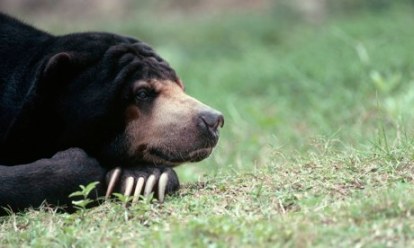
Sun bearJust as we were beginning to worry about what might have happened, months having passed since the Guardian’s Environment section had an article we wanted to link to, yesterday we encountered a semi-precious and today a gem quality article that reminds us of why we check that section each day:

Like a proud dad, Siew Te Wong’s office walls and desk are covered in baby pictures, but unlike ordinary infants these possess four-inch claws and a taste for insects and honey. Wong, a leading sun bear researcher, has a heartfelt passion for the world’s smallest bear that is as big as the problems facing the species. Continue reading

Conversation, Conservation, Controversy

We have recommended more conversation, and we mean all kinds, including the occasional heated debate. When it comes to the subject of climate change, we do not feel obliged to air the views of big-moneyed propagators of denial.  When it comes to potential solutions to slow the acceleration of climate change, or mitigate its impact, or such reasonable areas of debate, the doors are wide open, topically speaking.

We hope to learn from citizen scientists, research scientists and practitioners alike so we can become better informed and make better judgements on this complex topic. Take a look at the wording of this memo from the “Sierra Club Grazing Core Team” to Sierra Club staff and volunteers “(particularly those involved with sustainable-energy/climate-change campaigns, and commercial grazing on public lands)” before watching the TED talk above:

Summary

Recent widespread interest in Holistic Management (HM), primarily stemming from Allan Savory’s presentation at the February 2013 Long Beach, CA, TED conference, makes it important that Club members and staff be consistent in their response to calls for application of HM. Savory has received considerable attention for his claim that application of HM to husbandry of ungulate livestock (typically cattle) in the world’s grasslands could sequester sufficient atmospheric carbon to reduce atmospheric carbon concentrations to pre-industrial levels. The Sierra Club’s Grazing Core Team urges the Sierra Club to reject HM as a tactic to reverse climate change for the following reasons: Continue reading

Can Hunting Help An Endangered Species?

Tom Brakefield/Getty Images

Tom Brakefield/Getty Images

To Save The Black Rhino, Hunting Club Bids On Killing One

by NPR STAFF

December 29, 2013

Hunters of wild ducks have been extremely important contributors to, and activists for, wetlands preservation in the USA. Does that mean hunting is good for conservation? National Public Radio in the USA covered a story a few days ago that, as a headline cast hunting in a grotesque light, but listening to the participants there was a whole new perspective. Raxa Collective has no plans to add hunting to the list of activities it offers travelers, but we are obliged to participate in the conversation:

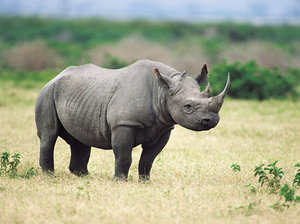
Fewer than 5,000 black rhinos are thought to exist in the wild, and in an effort to preserve the species, the Dallas Safari Club is offering a chance to kill one.

The Texas-based hunting organization is auctioning off a permit to hunt a rhinoceros in Nambia. It’s a fundraiser intended to help save the larger population. Continue reading

Self-Sufficiency Taken To The Outer Extremes

Before the lights go out on the last New Yorker issue of 2013, one more of several articles we found worth the read, and relevant to our common themes of interest–community-building, innovation, environmentalism, farming, etc.–on this blog, even if we tend to incremental change rather than the radicalism on display here:

Marcin Jakubowski, the owner of a small farm in northwestern Missouri, is an agrarian romantic for high-tech times. A forty-one-year-old Polish-American, he has spent the past five years building industrial machines from scratch, in a demonstration of radical self-sufficiency that he intends as a model for human society everywhere. He believes that freedom and prosperity lie within the reach of anyone willing to return to the land and make the tools necessary to erect civilization on top of it. His project, the Global Village Construction Set, has attracted a following, but among the obstacles he has faced is a dearth of skilled acolytes: the people who show up at his farm typically display more enthusiasm for his ideas than expertise with a lathe or a band saw. Continue reading

What Part Of Sacred Is So Difficult To Understand?

Navajo activist Klee Benally chains himself to an excavator on the San Francisco Peaks, which he and 13 tribes consider sacred. Ethan Sing

Navajo activist Klee Benally chains himself to an excavator on the San Francisco Peaks, which he and 13 tribes consider sacred. Ethan Sing

We are encouraged to see more coverage of these important cultural-ethical issues:

The Paris auction of 27 sacred American-Indian items earlier this month marks just the latest in a series of conflicts between what tribes consider sacred and what western cultures think is fair game in the marketplace. Continue reading

Tough Times’ Temptations

Computer-generated images of the 'EuroVegas' gambling complex and conference centre outside Madrid

Computer-generated images of the ‘EuroVegas’ gambling complex and conference centre outside Madrid

This was never a good idea for Spain. When we first read the horrifying news that Madrid was not only willing, but desperately vying, to become home to a megacasino and all the dark arts that accompany such a beast, we did not have the heart to share those reports. The ick factor hung like a cloud imagining it.  In the last week, news broke that the whole deal had fallen through; here is a recap of the story’s perfect ending, from the New Yorker‘s website:

The puns practically wrote themselves, last week, when headlines announced that the billionaire casino magnate Sheldon Adelson had folded on a years-long bet to build a mega-casino in Spain. Dubbed EuroVegas, it was supposed to be Adelson’s foothold on the Continent: a thirty-billion-dollar venture, replete with twelve hotels, nine theatres, six casinos, and three golf courses.

A year earlier, Adelson had chosen Madrid as the sunny, temperate hub for his European incursion. He’s had a captive audience ever since. Presiding over a wobbly economy and an unemployment rate of around twenty-five per cent, the Spanish government was desperate for any large-scale investment, let alone one as immense as Adelson’s. The project’s gaudy name provoked derision, even revulsion, in some quarters in Spain. Continue reading

The Ocean Never Sleeps

Image Courtesy The Huffington Post

It’s no secret that icecaps are losing mass due to increased global warming; and one of the world’s safeguards against carbon emissions, the ocean, is working overtime trying to sequester anthropogenic gases.  The ocean as a carbon sink has been well known for quite some time, although recently it seems as though it has been on the back-burner for many governments, organizations, corporations, businesses, etc.

Continue reading

Radical Interpretation Of Plants’ Secret Lives

When he goes out on a limb he invites others to join him, and like any journalist worth his salt he keeps pushing further out onto the limb. The venues in which he publishes deserve credit for having faith in readers willing to get out onto that limb:

In 1973, a book claiming that plants were sentient beings that feel emotions, prefer classical music to rock and roll, and can respond to the unspoken thoughts of humans hundreds of miles away landed on the New YorkTimes best-seller list for nonfiction. “The Secret Life of Plants,” by Peter Tompkins and Christopher Bird, presented a beguiling mashup  Continue reading

Masking Cultural History

(A man looks at an antique tribal mask, Tumas Crow Mother, circa 1860-1870, revered as a sacred ritual artifact by the Native American Hopi tribe in Arizona, displayed at the Drouot auction house ahead of its sale in Paris December 9, 2013. REUTERS/Christian Hartmann)

(A man looks at an antique tribal mask, Tumas Crow Mother, circa 1860-1870, revered as a sacred ritual artifact by the Native American Hopi tribe in Arizona, displayed at the Drouot auction house ahead of its sale in Paris December 9, 2013. REUTERS/Christian Hartmann)

Reuters reports today on a remarkable act by a foundation to restore cultural artifacts, at long last, to their rightful place (click the image above to go to the source):

An American foundation bought nearly two dozen Native American artefacts and will return them to the Hopi tribe in Arizona, which had mounted legal challenges to their planned sale by a French auction house. Continue reading