A Hero’s Welcome On Familiar Ground

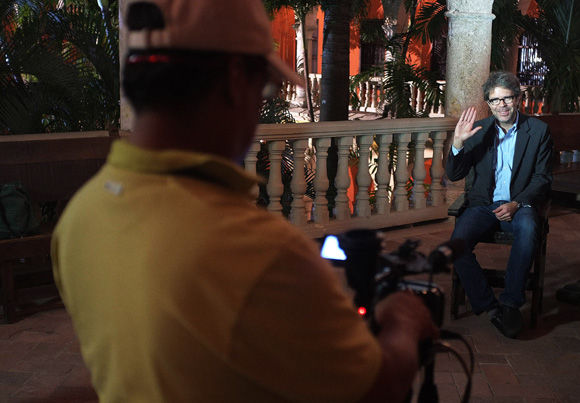
Stephanie Mitchell/Harvard Staff Photographer. “My goal is to bring at least some of you out of retirement and into a life of climate-change activism,” said Bill McKibben, who delivered the annual Robert C. Cobb Sr. Memorial Lecture, sponsored by the Harvard Institute for Learning in Retirement.

This article, about one of the activists we have favored in past posts more than once, is worth a spark to the imagination about the power that could be unleashed if he has captured the attention of his fellow alumni:

If you Google “Bill,” the first hit you get is the phrase “Bill me later.” It’s an accidental tribute to the writer-turned-activist whom everyone calls by his first name: Bill McKibben ’82, who spoke at Harvard Tuesday.

McKibben’s message for years has been that oil-based economies shelve the issue of the environmental costs of fossil fuels. When it comes to the natural systems that support humanity — clean air, fresh water, and pristine seas — the message from developing countries has been: Bill me later.

Well, the bill is due, McKibben said, and it may be too late to pay. Seas are rising, temperatures climbing, storms intensifying, and floods and droughts worsening because of fossil fuel emissions, a statement with a 95 percent chance of certainty, according to the Intergovernmental Panel on Climate Change, up from 66 percent in 2001. Continue reading

Poet, Publisher, Arboreal Millionaire

Dennis Publishing staff planting native broadleaf saplings for The Heart of England Forest project that has planted one million trees, Warwickshire. Photograph: The Heart of England Fores

Dennis Publishing staff planting native broadleaf saplings for The Heart of England Forest project that has planted one million trees, Warwickshire. Photograph: The Heart of England Fores

We like, therefore we link:

A scheme by one of Britain’s most successful entrepreneurs to reforest the heart of England planted its millionth tree.

Poet and publisher Felix Dennis said he was proud to have planted the first 10% of his ambitious vision. “I’m hoping that long after I’m dead that the charity I founded will one day be the proud possessor of 25,000 acres of woodland planted with 10 million native broadleafed trees, completely open to the public,” he said. Continue reading

Franzen’s Dilemma

Photo by Kaveh Kazemi/Getty Images

Photo by Kaveh Kazemi/Getty Images

It is going to be our generation’s contribution to the colloquial cliche; equivalent to Catch 22.  Maria Bustillos makes the best case, in the fewest and least heavy words. for a great writer to change his mind. She is compelling. But he is an activist for a good cause, so we must be in his corner, even if it is just wiping the sweat:

Jonathan Franzen has a real gift for getting people into a tizzy. This time, the fracas was occasioned by a September 13th essay he wrote for the Guardian (“What’s Wrong With the Modern World”) excoriating our “media-saturated, technology-crazed, apocalypse-haunted historical moment” and lauding the early-twentieth-century Viennese satirist Karl Kraus, whose essays Franzen reveres, as a prophet for our own times. Though the essay’s specific criticisms are so familiar as to be unremarkable—he writes that Salman Rushdie “ought to have known better” than to “succumb” to Twitter, and rages against Amazon’s depredations of the book trade and the various hegemonies of Apple—in the few days since its publication, the author has been accused of irrelevance and cane-shaking, his sex life and his digestion have been impugned, and Rushdie told him to “enjoy [his] ivory tower”; he’s been called “an old windbag,” “a whingeing miseryguts,” and a “Chardonnay bore,” and has been generally dragged through the digital mud. Continue reading

Fish Or No Fish, Take Stock

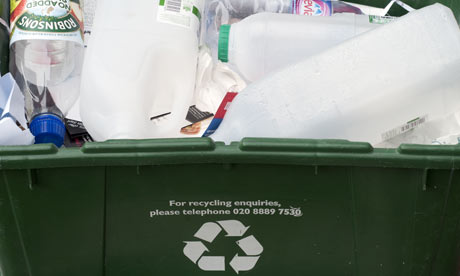
When asked why they recycled, 89% of people in 2010 identified the danger of climate change as a motivator. Photograph: Alex Segre/Rex Features

Thank you, Sarah:

As a member of the science and technology select committee I am delighted to have secured and be participating in an inquiry into public understanding of climate change.

As we have interviewed expert witnesses and considered a range of written evidence, one thing has struck me in particular. While there is an ongoing public discussion on climate change that needs more scientific input and greater participation, a clear development in recent years has been the rise in the numbers of people prepared to do something about climate change. Continue reading

Fish Stock

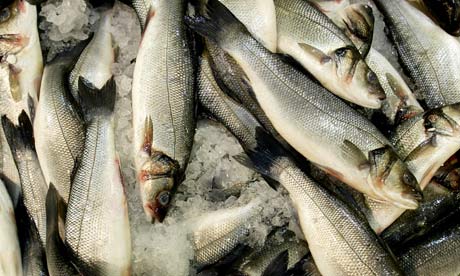
A display of Sea bass for sale at Billingsgate Fish Market in London. Photograph: Scott Barbour/Getty Images


Seth got us started with historical perspective on this topic a couple years back, and Phil recently created the most popular series of posts of the year, also on this topic; we have even tried sharing a sense of humor when possible.  But grim tidings continue:

First it was the cod, then the haddock, the swordfish and even the anchovy – now sea bass looks likely to join the list of no-nos for eco-conscious dinner party menus.

Stocks of the palatable species have sunk to their lowest in the past 20 years, according to a new assessment by the International Council for the Exploration of the Seas. Continue reading

Citizen Science in Belize – Update – If You Can’t Beat’em, Wear’em

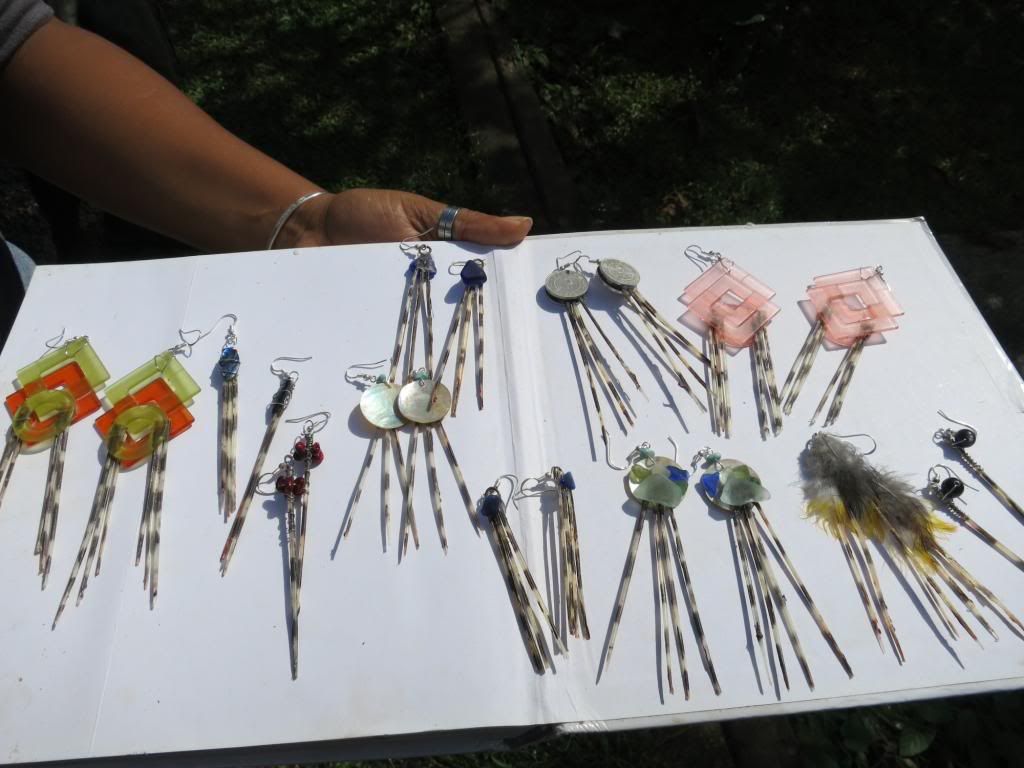
Lionfish spine earrings crafted by Palovi Baezar, Punta Gorda, Belize. Credit: Polly Alford, ReefCI

In earlier posts about my volunteer experience in Belize with ReefCI, I talked about the lionfish invasion that is threatening coral reef and other marine ecosystems throughout the Caribbean, Gulf of Mexico, and Southern Atlantic Seaboard of the United States, and noted that, at least for the foreseeable future, human intervention, particularly the establishment of a commercial fishery for the species, appears to be the only solution to keep the invasion under control.

I mentioned the idea of lionfish jewelry as a possible way of increasing the economic return to fisherfolk who may otherwise be reluctant to go after lionfish given the difficulty of catching them (the fish must be harvested by spearing or hand netting rather than through traditional methods such as lines or nets). I’ve been pleased to learn that at least one artisan in Belize has picked up on the idea, using some of the lionfish spines that I collected while I was there. She has already crafted some beautiful earrings (see photo above) and is working on other jewelry items as well as decorative mirrors. Elsewhere, jewelry crafted from lionfish tails and fins is being sold online, and through a retail outlet in Curaçao.  Continue reading

Cheetahs And Shepherd Dogs, Partners In Entrepreneurial Conservation

Thanks to a friend’s travels to the southern tip of Africa, a story from the field about colleagues we hope to meet soon. The friend learned of this program during a visit to a Cape Town winery (cheers to them and that; click the logo to the right to read more than we can share here):

Cheetah Outreach

Promoting the survival of the free ranging, Southern African cheetah through environmental education and delivering conservation initiatives.

As a result of the success of Cheetah Conservation Fund’s livestock guarding dog programme in Namibia, a trial programme was launched by De Wildt’s Wild Cheetah Management Project (WCMP) and Cheetah Outreach in 2005 to introduce the Anatolian shepherd to serve farmers in South Africa. To give this trial the best possible chance of success, farmers  Continue reading

The Journalism-Academic Complex

Illustration to John Seabrook's 2011 article "Snacks For A Fat Planet" showing: Indra Nooyi, the C.E.O. of PepsiCo, says it must be a “good company” in a moral sense.

Illustration to John Seabrook’s May 16, 2011 article “Snacks For A Fat Planet” in the New Yorker. showing: Indra Nooyi, the C.E.O. of PepsiCo, says it must be a “good company” in a moral sense.

The Military-Industrial Complex that then-exiting President Eisenhower warned about is unfortunately alive and well, as we saw in the previous decade, when journalists were mostly asleep at the wheel, often even contributors to the dark complex. But journalism has been reborn in some quarters with a new sense of purpose, and new approaches to vigilance that is worthy of the Fourth Estate. Diligent investigative journalism allied with advanced academic research-driven thinking skills produces a better complex.

Case in point: when accomplished academics such as Professor Aaron Chatterji share cogent, punchy follow up posts to articles that caught our attention years back, today’s news on labor activism meets yesterday’s analysis of the intersection of food/health trends and corporate buzz phrases like social responsibility. Thanks to this Duke University professor, New Yorker readers get follow up on a story that might otherwise have been fading, but should not:

Nooyi has backed up her rhetoric with concrete steps, acquiring healthier brands like Tropicana and Quaker Oats and creating Pepsi Next, a lower-calorie version of the flagship brand. She even hired a former official from the World Health Organization to oversee the reforms. Continue reading

When The Going Gets Tough, Name Names

Bill McKibben is not likely to give up,  but you knew that already. Click the image above to go to the video and the new petition:

Petition to the WMO to name extreme storms after climate change deniers. Continue reading

Foraged Cuisine

The concept of ethical eating isn’t new to these pages and neither is the suggestion that cuisine might be the secret weapon in the fight against invasive species. So we were thrilled to read about chef, artist, environmentalist and social activist Bun Lai’s menus based primarily on what he can forage from his 100 acres of shellfishing grounds off of the Thimble Islands in Connecticut.

The kitchen is the perfect place to exhibit the spirit of exploration and creativity–why not exploit it as a method of controlling ecological pests?

India’s Road Culture, Changing In Kerala

Young Indians aim to knock ‘honking’ off the roads

Young Indians aim to knock ‘honking’ off the roads

We missed this when it was first published, but better late than never for news like this:

The city branch of Young Indians (Yi), the youth wing of the Confederation of Indian Industry (CII), organised a silent march against noise pollution here in connection with the World Environment Day on Tuesday.

Twenty people, including school students and professionals, started their march from Greater Cochin Development Authority (GCDA) building in Kadavanthra.

They carried placards and banners displaying slogans like ‘Think Before Honking’ and ‘Reduce Noise Pollution’. Continue reading

Citizen Science in Belize: Part 2/2 – If You Can’t Beat’em, Eat’em

Photo by Alexander Vasenin

Lionfish sushi – Photo © World Lionfish Hunters Association (click on photo to visit their website)

In Part 1 of this post I talked about the lionfish invasion that is threatening coral reef and other marine ecosystems throughout the Caribbean, Gulf of Mexico, and Southern Atlantic Seaboard of the United States.  Scientists, environmental groups and governments that are studying the problem have all come to the conclusion that it is probably impossible to eradicate lionfish in the Atlantic – they are here to stay. Continue reading

Citizen Science in Belize: Part 1/2

Photo © ReefCI

Photo © ReefCI

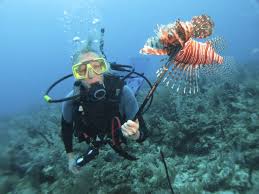
It might seem strange to accompany a posting about marine conservation with a photo of a fish on a spear, but in this case, it is entirely warranted.

I recently returned from the Sapodilla Cayes Marine Reserve in Southern Belize, where I spent two weeks working as a volunteer with ReefCI, a NGO dedicated to coral reef ecosystem conservation. Located 30 miles off the coast of Belize on the southern tip of the Mesoamerican Barrier Reef (the second largest in the world, after Australia’s Great Barrier Reef), the Sapodilla Cayes constitute a unique ecosystem.

Along with other volunteers, I assisted the ReefCI marine biologist with population surveys of conch, lobster, and commercial fish species, as well as coral reef health checks. At least one, and sometimes two surveys were carried out each day. The data collected is provided to the Belize Fisheries Department as well as to other cooperating NGOs.

Now about that fish on a spear. One of ReefCI’s projects is lionfish control. Spears Continue reading

Ecological Modernism Elucidated

Thanks  to Yale Environment 360 for this big mental poke:

New Green Vision: Technology As Our Planet’s Last Best Hope.

The concept of ecological modernism, which sees technology as the key to solving big environmental problems, is gaining adherents and getting a lot of buzz these days. While mainstream conservationists may be put off by some of the new movement’s tenets, they cannot afford to ignore the issues it is raising.

by Fred Pearce

There is a new environmental agenda out there. One that is inimical to many traditional conservationists, but which is picking up kudos and converts. It calls itself environmental modernism — which for many is an oxymoron. Continue reading

Those Fabulous Buffett Boys

It sure sounds like a great way to pass time, giving away billions of dollars. The fact that they seem to think deeply about the implications of their wealth, as well as their methods of getting and giving, makes them even more noteworthy. Thanks to tax-payer, and listener-supported National Public Radio in the USA for bringing the other brother/son to our attention with this story:

Get Howard Buffett into the cab of a big ole’ farm tractor and he’s like a kid — albeit a 58-year-old, gray-haired one. He’s especially excited when it comes to the tractor’s elaborate GPS system, which he describes as “very cool.”

“I’m driving hands-free,” says Buffett, the son of billionaire investor Warren Buffett. Continue reading

Convocation Power Well Used

Open, N.Y.

Open, N.Y.

We are grateful when people whose name and heritage give them convocation power use their power on behalf of others less fortunate (until they shake our confidence), so we give thanks to the New York Times and to Peter Buffett, both privileged, for sharing this startling opinion piece. We, a small group of moderately privileged people with a small platform for sharing ideas, are particularly interested in the intersection of good and market forces, so Mr. Buffett’s challenge here is germane to our mission and to our practice:

I HAD spent much of my life writing music for commercials, film and television and knew little about the world of philanthropy as practiced by the very wealthy until what I call the big bang happened in 2006. That year, my father, Warren Buffett, made good on his commitment to give nearly all of his accumulated wealth back to society.

Continue reading

Noise Pollution’s Viral Enemy

Yesterday was another milestone for anti-noise pollution’s cleverest activists in India. We have mentioned this project, introduced here when it was still just a catchy much-needed idea, but it has now become a movement. We are still hoping for an update in person from the idea’s originator, but meanwhile: don’t honk if you like HNOP, but like it on Facebook!

Really, Charles?

Prince Charles

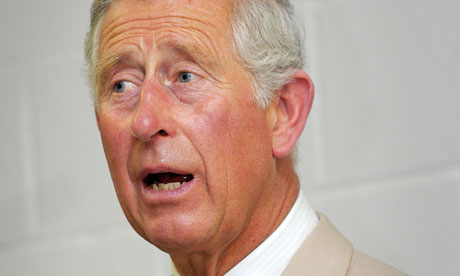
Prince Charles, who has criticised the global food industry for shipping ‘vast quantities of commodities halfway round the world’. Photograph: Tim Ireland/PA

We have been impressed with him on occasion in the past, so it was with some surprise, and a tinge of nausea, that we read this :

Prince Charles is funding his charities with profits from shipping royal-branded mineral water 6,000 miles to the Middle East in an arrangement that has been described by Friends of the Earth as “completely insane”. Continue reading

Bravo, WWF & Odnoklassniki!

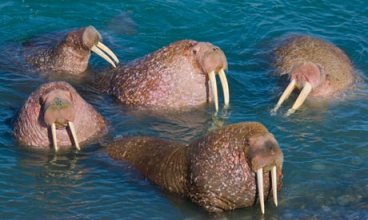
Pacific walruses (Odobenus rosmarus divergens) come ashore at a gravel beach on Arakamchechen Island in the Bering Sea, Chukotka, Russia. Photograph: Jenny E Ross/Corbis

Thanks to Guardian’s coverage of this excellent, innovative campaign:

The 148m users of the Russian social network service Odnoklassniki are being targeted by a World Wildlife Fund for Nature campaign that uses ‘404’ error pages to raise awareness of species on the verge extinction.

Continue reading

Complications Of Kayaktivism

What makes a great New Yorker Talk of the Town piece?

Small surprises.

Quirks.

Unexpected perspective.

At the outset in this case our hearts are immediately with the folks daring the harbor on kayaks, but our brains are (gulp) subsequently with the residents against the kayakers.  All within a few hundred words:

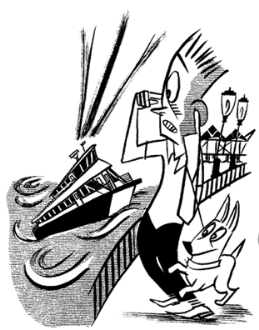
…Last year, in her capacity as a co-chair of the New York City Water Trail Association, Brous began collating the complaints of other paddlers that the myriad ferryboats using the river routinely failed to toot their horns before pulling away from the dock, in defiance of maritime law, specifically Inland Navigation Rule 34. The kayakers feared that a ferry might run one of them down. Brous wrote to various entities with some waterfront sway and eventually found herself sending periodic e-mails to the Coast Guard, detailing instances of law-flouting ferries. Nothing changed. The ferries ferried hornlessly…