Read, Weep, Act

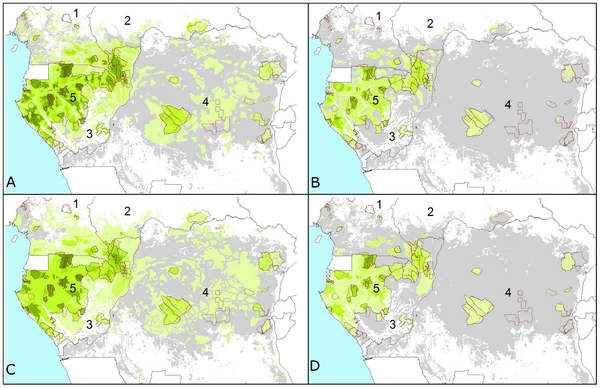
Figure 1. Elephant dung density and range reduction across the Central African forests.

A just-released scientific study documents the destruction.  Roughly 25,000 elephants per year are killed in Africa to feed the demand for ivory in Asia, and the pace has increased in the last decade such that, in another decade, extinction is possible.  A petition that led to one important-sounding announcement provided momentary hope until it was noted that no dates or even vague timelines were committed to.  For now, we have only the clear, cold facts of science and whatever stimulus these findings provide for us to take action:

Abstract

African forest elephants– taxonomically and functionally unique–are being poached at accelerating rates, but we lack range-wide information on the repercussions. Analysis of the largest survey dataset ever assembled for forest elephants (80 foot-surveys; covering 13,000 km; 91,600 person-days of fieldwork) revealed that population size declined by ca. 62% between 2002–2011 Continue reading

A Petition, A Meeting, A Smile

th_pm

On behalf of elephants, the 1.5 million people who signed a petition to this end, and all the other people who care about their welfare, including the ecosystems where they continue to exist in the wild, we extend our strongest thanks for this announcement–years late but still very much appreciated. We hope, following the smiling moment at this important meeting, you will back it up with strict enforcement (click the image to the left for the full press release on the CITES website):

On behalf of the Government and people of the Kingdom of Thailand, I would like to welcome all of you to Bangkok, for the 16th Meeting of the Conference of the Parties to the Convention on International Trade in Endangered Species of Wild Fauna and Flora or CITES CoP16. Continue reading

Holding Food Brands Accountable

Click the image above to take action. Thanks to Oxfam for the insistence that we hold the usual suspects accountable for the foods that make their way to our grocers:

You’re more powerful than any of the Big Ten food companies. Without you, they won’t stay big for long. Use Facebook and Twitter to nudge your favourite brands. Contact the CEO personally and tell them what needs to change. We’ll be constantly updating the scorecard so you can see the impact you’re having.  Continue reading

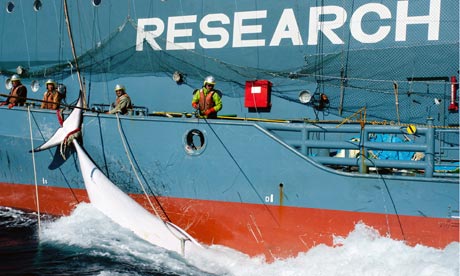
See Sea Shepherd’s Saves

The Sea Shepherd vessel Bob Barker tries to stop a from being whale loaded on to the Nisshin Maru. Photograph: Glenn Lockitch / Sea Shepherd Australia

The Sea Shepherd vessel Bob Barker tries to stop a whale from being loaded on to the Nisshin Maru. Photograph: Glenn Lockitch / Sea Shepherd Australia

From the Guardian’s ongoing coverage of some of our favorite activists (click the image above to go to the story):

I don’t think that there is a more isolated, more remote, or more forbidding place on this planet than where we find ourselves at this moment.

Draw a line due south from Sri Lanka for 4,404 nautical miles and it will bring you to Prdyz Bay, deep in the Cooperation Sea, close to the massive Amory ice shelf. Continue reading

Good Conservation Personified

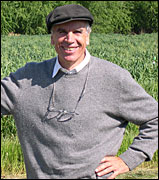
DougTompkins

Doug Tompkins, Co-Founder, North Face

Click the image to the left for a podcast interview worth listening to. If you are a fan of this man, chances are you are also a fan of this man, who has carried out more tangible action for deep ecology than anyone, perhaps ever:

Entrepreneur, conservation philanthropist, and documentary filmmaker are some of the titles that Doug Tompkins has possessed over his career. Doug’s love of mountaineering led him to start North Face, the outdoor apparel company. He then cofounded the international clothing giant, Esprit, which he later sold. Doug has spent the last few decades focusing his energies on sustainable farming, land conservation and biodiversity preservation in Chile and Argentina. With the purchase of more than 2 million acres of land in South America, Doug has pioneered one of the largest private conservation efforts in the world.

Doug speaks to Jessica about his journey from selling dresses out of a van to conserving South America’s natural environment, from scratch.

If You Happen To Be In Washington, DC

Protest

Click the image above to go to Sierra Club’s website for more information. At minimum it is a learning opportunity, a chance to participate or to just observe. Lend your presence and your voice:

Rally Speakers

  • Michael Brune; Sierra Club Executive Director
  • Bill McKibben; 350.org President, Scholar at Middlebury College
  • Continue reading

Getting All Green In Western Australia

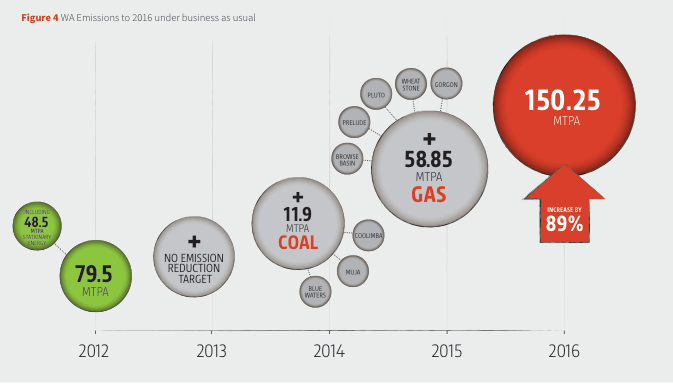
An article that, like the graph above, defines the BAU scenario, is worth reading just to get those three letters fixed in our mind’s eye.  The Greens of Western Australia will not leave it to your imagination; rather they’ll wonk you into submission to the facts and into action politically to resist BAU:

The Greens Party has unveiled an ambitious new document that outlines possible pathways to turn Western Australia – one of the most energy-intensive states in the world – into one where its stationary energy needs are powered 100 per cent by renewable energy sources in less than two decades. Continue reading

Really, Nevada?

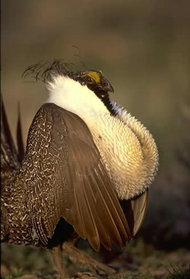
In the spirit of enthusiasm with which we welcomed the news of one politician’s move in an interesting direction, we grouse with equal enthusiasm about the actions of another politician, this one inclined in the opposite direction of entrepreneurial conservation (click the image to go to the story):

The ouster of a Nevada wildlife official has fanned a debate over whether the sage grouse can best be kept off the Endangered Species List by protecting its habitat or by killing more of its predators.

Kenneth Mayer, who had been the director of the Nevada Department of Wildlife and serves on regional and national committees that deal with sage grouse conservation, startled environmentalists and many Nevadans last week by announcing that Gov. Brian Sandoval had demanded his resignation. Continue reading

Bird Lovers, Unite Around Cats To Go

We appreciate the Guardian‘s coverage of this issue, and activists like this one:

Last week Gareth Morgan, an economist and conservation campaigner, called for cats to be confined or eradicated from his native New Zealand to protect the wildlife. Meanwhile, in the US, a study published this week in the journal Nature found cats are killing more birds and mammals than previously thought. Writer Tom Cox, who shares his home with four cats, and Morgan discuss whether it’s time we learned to live without our feline friends. Emine Saner listens in.

Continue reading

Oil, Rainforest, Communities

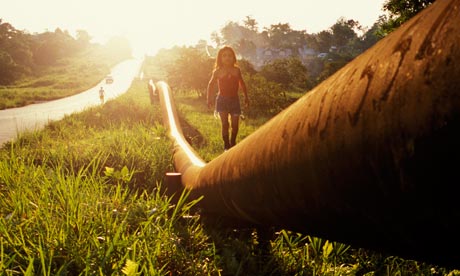
Pipe dreams: the 500km pipeline that transports oil from Lago Agrio to the port of Esmeraldas, on the Pacific Coast. The oil discovery destroyed the area. Photograph: Remi Benali/Corbis

Can there be happy endings related to oil discovery in remote, ecologically and culturally sensitive areas? Note likely.  But this story is worth a read:

American biologist Kelly Swing thwacks a bush with his butterfly net and a dozen or so bugs and insects drop in. One is a harvester, or daddy-long-legs, another a jumping spider which leaps on to a leaf where two beetles are mating. Continue reading

Really, Whole Foods?

conscious capitalism_book cover

John Mackey has a new book out.  He is a visionary, no doubt.  He co-founded and co-leads a company we admire.  But he is not the sole shareholder in Whole Foods, and when he decides to be provocative, as he often does, the company’s reputation is at stake along with his own.  He claims not to be a climate change skeptic, but also says he does not believe we need to take any action because climate change is likely going to benefit humans.  Specifically, in an interview in the Guardian he says:

We’ve been in a gradual warming trend since the ending of the “Little Ice Age” in about 1870, and climate change is perfectly natural and not necessarily bad. Continue reading

Prized Bird Activism

Click the image to the left to go to the National Audubon Society’s website to read the entire announcement:

George Archibald is the first recipient of the Dan W. Lufkin Prize for Environmental Leadership.  As founder of the International Crane Foundation (ICF), he has devoted his life to protecting cranes and their ecosystems around the world and to helping thousands of people understand, and be inspired by, the global significance of bird conservation.

In 1973, with fellow Cornell University graduate student Continue reading

Opposition to Arctic Drilling

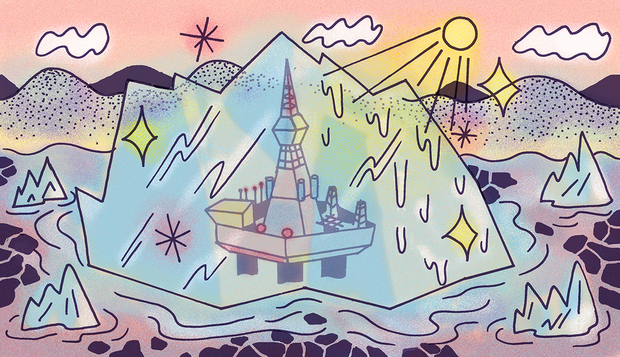
Illustration by Aisha Franz

Illustration by Aisha Franz

Click on the image above to read an open letter from two influential policy insiders:

Why We Now Oppose Drilling in the Arctic

By Carol Browner & John Podesta Jan 18, 2013
The Arctic Ocean is subject to some of the most volatile weather patterns on the planet. Geologists believe it also contains vast undersea oil and gas reserves. Continue reading

If You Happen To Be In New York City

photo4384

Join Sea Shepherd Conservation Society NYC chapter for a training session for on-shore activists. Learn about Sea Shepherd Conservation Society, our history, our tactics, and our campaigns. Learn how to effectively outreach to individuals who attend our events and come to our tables. Please RSVP to nyc@seashepherd.org as space is limited.

From the Sea Shepherd Conservation Society’s website events calendar page:

On-Shore Volunteer Training – New York, NY

Wed, 23 Jan, 2013 6:30 PM – 8:00 PM

Continuum Coffee 199 Avenue B New York, NY

Fees:   Free

Cause For The Ages

noise-465

Click the image to the right to go to the story at the New Yorker website. We are not the only generation to be concerned about the boundaries between the beautiful and necessary sounds of life, and the excessive sounds of noise pollution. Even a century back in New York, sound had its judges and quiet had its activists:

…Sound does not persist, neither across space nor across generations, so the tremendous rattle of horse-drawn drays, the clink of cupboards, the sneezes and shuffles of domestic life fall into the vacuous, silent crevices of history. “How did diners respond to the switch from pewter to china?” Schwartz wondered aloud. “How did a midwife register the sound of a new baby coming into the world? How did a person walking out in the woods register the sound of thunder or lighting?” In the course of nearly two decades of research, Continue reading

Sparking Activism

We have linked to 350, its various activities and sister concerns plenty of times before, but this three minute thought bubble is another good link to get the point: we all must do our part.  We link to organizations and actions instead of his name because we recognize the temptation to idolize Bill McKibben for his activism; if we do that without taking action, what is the point?

Starting 2013 With Promised Land

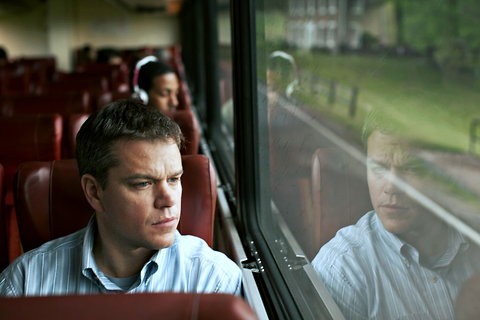
Scott Green/Focus Features. Matt Damon stars in “Promised Land,” directed by Gus Van Sant.

Scott Green/Focus Features.
Matt Damon stars in “Promised Land,” directed by Gus Van Sant.

From Green Blog, a suggestion first to read the review of, then listen the actor/director conversation about, a new film related to the most controversial of the alternatives to old school fossil fuels:

Writing in The Times, A.O. Scott praises “Promised Land,” Gus Van Sant’s new film about the battle over fracking, as a film that “works,” mainly “by putting character ahead of story” and “inviting the actors to be warm, funny and prickly.” Continue reading

Just Keep Saying No To These

The National Trust is against plans for a golf course at the edge of the Giant's Causeway in Northern Ireland. Photograph: Paul Faith/PA

The National Trust is against plans for a golf course at the edge of the Giant’s Causeway in Northern Ireland. Photograph: Paul Faith/PA

We have the occasional urge to just say no, site unseen. Anything with the name Trump  attached, especially if involving golf and Scotland, is generally a good candidate. This is another one:

Conflict is synonymous with the Giant’s Causeway. Children in Northern Ireland are weaned on the legend of how its rugged landscape was formed when the giant Finn MacCool confronted his Scottish rival, Fingal, by hurling rocks into the sea.

A more prosaic, but no less violent, explanation for the causeway’s genesis attributes the creation of its 39,000 hexagonal, basalt stones to a series of volcanic eruptions 60m years ago. Continue reading

Angelic Scream

British Sea Shepherd volunteer Natalie Fox. Photograph: Sea Shepherd

British Sea Shepherd volunteer Natalie Fox. Photograph: Sea Shepherd

Her leader has many admirers among our ranks, but without Natalie and others screaming for justice, the whales would not survive the fury of the fleet from Japan:

One of Natalie Fox’s most cherished memories is of kayaking just off the coast of America Continue reading