Para – Traditional Measuring Vessel

Photo credits : Aaradhana

Photo credits: Aaradhana

A Para is a traditional measuring vessel associated with the rice paddy system in Kerala. Customarily the vessels are made of either brass or wood. Filling a Para to overflowing with a paddy offering to God is an important ritual by many devotees. Continue reading

If You Happen To Be In Sydney

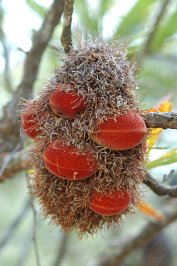
Fruit of Banksia aemula

Fruit of Banksia aemula

Tomorrow, at long last, the latest greatest seed bank in the world is opening:

The Australian PlantBank

The Australian PlantBank is a science and research facility of the Royal Botanic Gardens and Domain Trust and is located at the Australian Botanic Garden, Mount Annan. It houses the Trust’s seedbank and research laboratories that specialise in horticultural research and conservation of Australian native plant species, particularly those from New South Wales.

Visiting PlantBank

The Australian PlantBank opens to the public on Saturday 12 October, 12 noon to 4 pm.

Continue reading

Food Futures

No one would mistake this for entertainment.  It is two hours of research findings, all wrestling over complex food issues. No gastronomic delights. Rather, the puzzle over how to feed a rapidly multiplying human population.  Click the screen above to go to the video:

By 2050, 2 billion more people are expected to be vying for food and energy. Access to fresh water and arable land will be heavily constrained. And the food supply for the world’s 9 billion people will be increasingly produced under flood conditions, drought or both, as climate change accelerates. Continue reading

Farm Fresh From Ghana

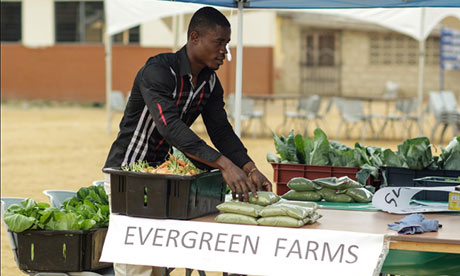
Accra Green Market Photo Courtesy of The Guardian

Accra Green Market
Photo Courtesy of The Guardian

Recently Ghana had its first ever farmer’s market in its capital of Accra, featuring locally grown, sustainable, and organic produce. This is a big step for the organic farmers in the area to expose their products to the local people. According to an article in The Guardian,

The only space we (the farmers) usually get to market our products are at the bazaars of international schools, where we sell to a lot of expats, but we need more markets like this – the best feedback we have had for our products is from Ghanaians.

Continue reading

Cattle Race – Onam Celebrations

Photo credits : R R Ranjith

Photo credits: R R Ranjith

The cattle race is one of the many charismatic Onam celebrations enjoyed by farmers during the end of the harvest season. A special 100 meter track filled with mud and water is created. The skilled drivers balance precariously on a modified plow while the pairs of bullocks charge through the farmland at hair-raising speed. Continue reading

Traditional Duck Farming of Kerala

This slideshow requires JavaScript.

If you visit Kuttanad, Kerala at a certain time of year, you are able to hear on the rice fields a noise one might not expect, the quacking of ducks. It is not the sound of a few ducks, but the sound of thousands. In Kuttanad when the harvest season is finished duck farmers move in, and take their flocks through the pre-designated rice fields for feeding.

Aby, a 38-year old duck farmer calculates that his 10,000 ducklings are worth around Rs. 24 lakh. According to him, if the ducks survive through the period, one can save up to Rs. 5 lakh a season, despite expenses for medicine and daily wages for his helpers.

This is a livelihood for many of the farmers, but their process differs greatly from many of the commercial duck farmers you will see in the United States. Some US duck farms can process up to 70,000 ducks per week at a single site, but the good news is that duck farmers who visit Kuttanad have neither the facilities nor manpower to produce or maintain such large quantities. Instead these farmers spend 6 months of the year keeping their flocks on the move, to keep them feeding until they are ready to sell. In some ways this is the definition of “free range” meat, but at what cost? Continue reading

Bees Provide Much

Earlier this week we highlighted a new clearing house for bee news, and now we have come across another, deeper well of knowledge related to bees, and all that they do/provide more than honey. Who knew, for example, that among the important physical realm issues he pondered, bees figured into this man’s thinking:

“If the bee disappeared off the surface of the globe then man would only have four years of life left. No more bees, no more pollination, no more plants, no more animals, no more man.” Albert Einstein

This and more, from CIBER (Centre of Integrative Bee Research) at the University of Western Australia in Perth, Western Australia. Their cross-disciplinary research team includes: Continue reading

Of Birds and Beans Redux

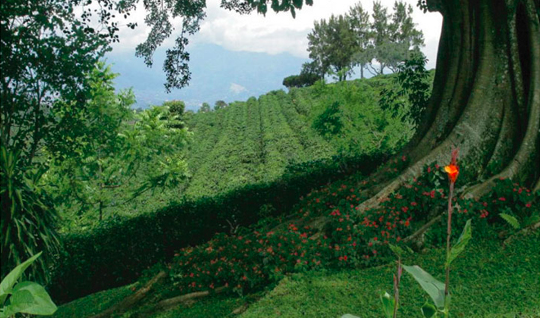
Shade grown coffee plantations in Costa Rica; photo credit: Emilia Ferreira

What first struck me when I read about the Smithsonian Migratory Bird Center this morning was that their bird friendly coffee certification was a great idea. What struck me second was that I’d read about it before on this site, or at least a teaser on the subject. Chalk not having a “part 2” up to a Cornell student’s busy schedule, but it certainly left the door open for me to discover this wonderful initiative on my own.

We’ve discussed the environmental benefits of shade grown coffee on these pages before, and the Cornell Lab of Ornithology is a La Paz Group “touch stone” in many ways. Leave it to them to so clearly make sense of all the sustainable coffee certifiers on the market from a bird’s eye point of view.

Making Sense of Sustainable Coffee Labels
They’re those little rectangular icons lined up on your favorite gourmet coffee bags—a tree, a flower, a frog, a harvester, each trying to tell you something about how the coffee was grown. But what does each one mean, and how do they differ? Here’s a list of common labels and their benefits for birds….

Bird Friendly. Certified by scientists from the Smithsonian Migratory Bird Center, this coffee is organic and meets strict requirements for both the amount of shade and the type of forest in which the coffee is grown. Bird Friendly coffee farms are unique places where forest canopy and working farm merge into a single habitat. By paying a little extra and insisting on Bird Friendly coffee, you can help farmers hold out against economic pressures and continue preserving these valuable lands. The good news is that there’s more Bird Friendly coffee out there than many people realize—we just need to let retailers know we want it…

Organic. As with other organic crops, certified organic coffee is grown without most synthetic pesticides and fertilizers and is fairly sustainable—although there are no criteria for shade cover. Because of coffee’s growth requirements, it’s likely that organic coffee has been grown under some kind of shade. However, many farmers shade their coffee using other crops or nonnative, heavily pruned trees that provide substantially less habitat for birds, and the organic label offers no information about this. Continue reading

Farmer’s Market

Photo credits Ramesh Kidangoor

Photo credits: Ramesh Kidangoor

India is primarily an agricultural country and agriculture plays an important role in the economy. Many times the small scale farmers and middle class customers are exploited by the middlemen. In order to eliminate this problem,  farmers have introduced a new concept called a “Farmer’s Market“. These markets offer customers fresh vegetables and fruits directly from the farmers at a reasonable price. Continue reading

Urban Pollinators

There are a growing number of websites, like the one above, that simply bring attention to an important issue in the ever-urbanizing world: how important plant life is to human life, and (not incidentally) the importance of how those plants get pollinated.  Click here for perhaps the leading blog on this issue, at least in the UK, which seems to lead the world on paying attention to this issue. The Guardian‘s Alys Fowler is the most consistent supporter in the journalistic world: Continue reading

Those Fabulous Buffett Boys

It sure sounds like a great way to pass time, giving away billions of dollars. The fact that they seem to think deeply about the implications of their wealth, as well as their methods of getting and giving, makes them even more noteworthy. Thanks to tax-payer, and listener-supported National Public Radio in the USA for bringing the other brother/son to our attention with this story:

Get Howard Buffett into the cab of a big ole’ farm tractor and he’s like a kid — albeit a 58-year-old, gray-haired one. He’s especially excited when it comes to the tractor’s elaborate GPS system, which he describes as “very cool.”

“I’m driving hands-free,” says Buffett, the son of billionaire investor Warren Buffett. Continue reading

Cardamom Reserve Hills

Cardamom Plantations

Cardamom Plantations

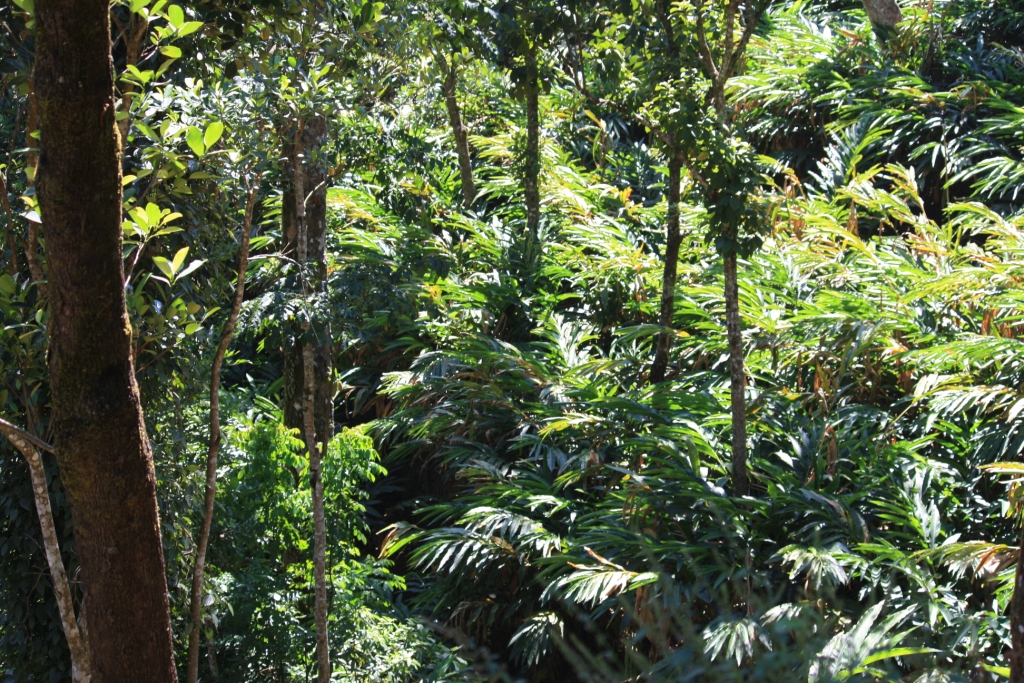
Cardamom is popularly known as the “Queen of Spice” and is one of the important commercial crops found in the high ranges of Kerala.  The best quality cardamom grown in and around the Idukkki District is the species Mysore Cardamom.  Continue reading

Ducks at Kuttanad

Photo credits : Ramesh Kidangoor

Photo credits : Ramesh Kidangoor

Kuttanad is a large area made up of low-lying land spread across Alappuzha District. Agriculture is the major occupation and paddy is grown as far as the eye can see. Duck rearing is a subsidiary occupation for many farmers and thousands of ducks wadding over the fields, lakes and rivers is a beautiful sight across the district. Duck growers from even distant places bring their flocks to Kuttanad during the harvest season. Continue reading

Kuttanad – Alappuzha

Photo credits: Ramesh Kidangoor

Photo credits: Ramesh Kidangoor

The lush paddy fields of Kuttanad are referred to as the “Rice bowl of Kerala”. It’s one of the few places in the world where farming is done below sea level. This one-time prosperous trading and fishing centre is today a world renowned backwater tourist destination.   Continue reading

The Pastoral Muse

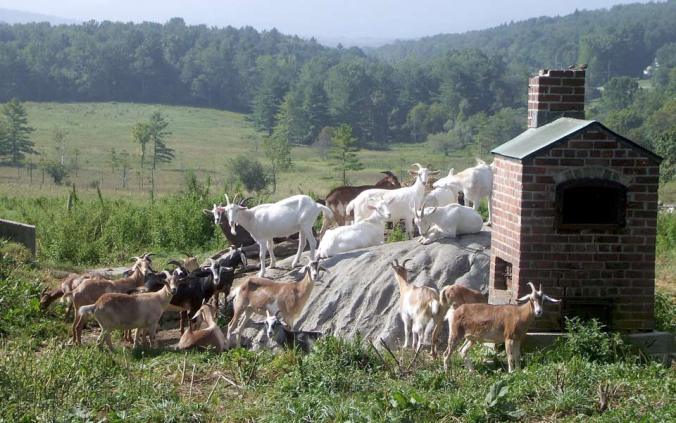
Goats on the hillside in Vermont. Photo by Anne Buchanan

Goats on the hillside in Vermont. Photo by Anne Buchanan

It has been some time since we first found an article in this publication, which we have continued following. There is at least one emerging pattern to explain why we keep going back: every article has an image that transports us, that makes us want to go see the who, what and where of the description:

…Jennifer and her husband Melvin work Polymeadows Farm, a small goat dairy farm and dairy plant in Vermont. They are currently milking about 120 goats. During kidding season, twice a year, the newborns spend their first night in a barrel of hay in the kitchen. This is important during Vermont winters, but also in summer, so that Jennifer knows the kids are healthy before they go out and join the rest. Continue reading

Sunflower- Helianthus annuus

Photo credits : Ramesh Kidangoor

Photo credits : Ramesh Kidangoor

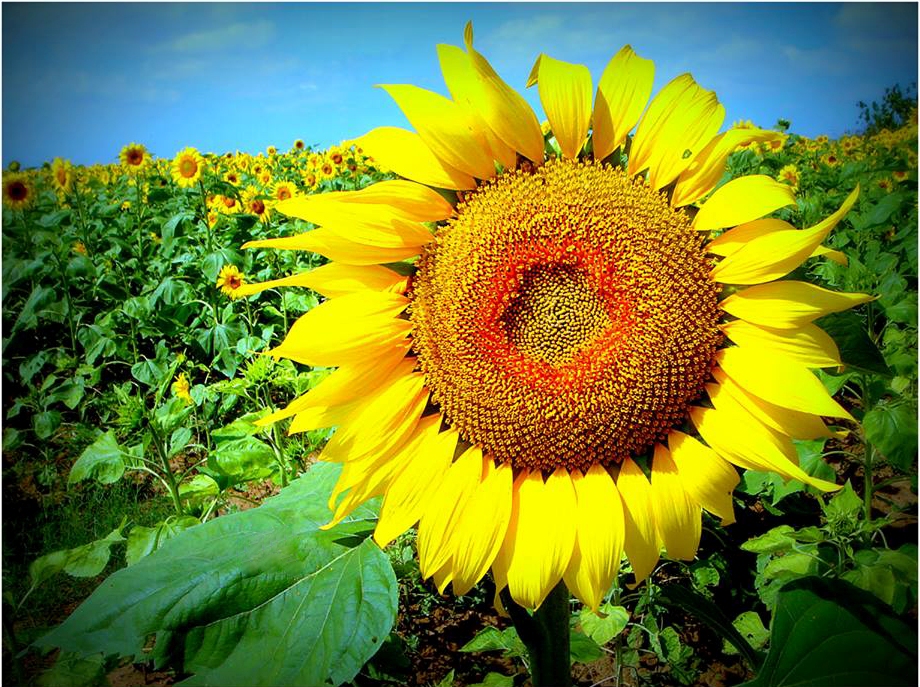
The Sunflower is an annual plant and its name is derived from the image and shape of the flower, which depicts the Sun. Sunflowers are also an important source of food. It’s oil is valued as a healthy vegetable oil, making it a popular agricultural crop in south India. Continue reading

Other Winged Wonders

Birds are the most common feature on this site, for reasons we cannot possibly explain in the prelude to a post about another type of flying creature. Butterflies are certainly underrepresented here, and with this post we will begin to correct that. Four of Raxa Collective’s contributors, and many others who have visited Costa Rica, first learned of butterfly farming due to the good graces of Joris Brinckerhoff and Maria Sabido and that is just one of the reasons to smile thanks to Robert Krulwich’s recent post:

I’ve got a friend, Destin, who has a YouTube channel called Smarter Every Day, where he pokes around with his camera to get extremely intimate looks at small miracles in nature. In this one, about the secret life of baby butterflies, he learns that when it comes time for the caterpillar to turn itself into a butterfly, it doesn’t spin a lot of silk and build itself a shelter (a pupa). I thought that what caterpillars do. But no … take a look at what actually happens. Continue reading

Why agroforestry has struggled in Barrio Nuevo

The sacrifices of agriculture are obvious to some, yet unperceived by others.

The sacrifices of agriculture are obvious to some, yet unperceived by others.

Good news: after lots of talking, listening, and uphill walking, we’ve completed our work in Barrio Nuevo. Researching the shade coffee project in Barrio Nuevo was extremely insightful. I admit, the success of the project was a bit disappointing, but this itself was a lesson in being more detached form one’s research. From a research standpoint, there’s nothing wrong with a project failing. What good would this evaluation be if we were only confirming that everything was going well?

So what went wrong? Why did it go wrong? How can it be fixed? And is there hope for agroforestry in Barrio Nuevo still? These are the questions I’ve been asking myself for almost a month and here’s what I’ve concluded from the first stage. Continue reading

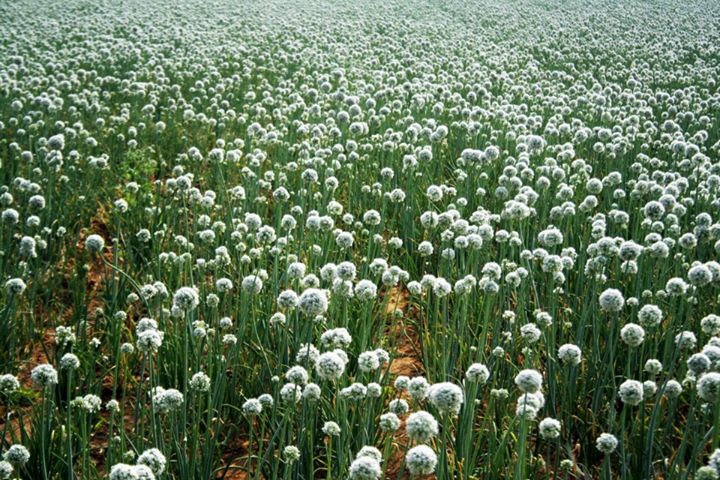
Onion Plantation

Photo credits: Dileep

Photo credits: Dileep

In India and throughout the world, onions are often used as a spice, and are an essential ingredient in many meals.  Specifically in India, onions are considered to be one of the most important cash crops.  They are a staple food, and are relied upon by everyone from the rich to the poor.     Continue reading