Reanimating Coffee

fuel-gauge-coffee-mugConsidering the coffee farming and roasting operation, not to mention all the coffee served at Chan Chich Lodge; also considering the constant search for new options relevant to ecologically sensitive operations, this catches our attention. Thanks to Anthropocene and Prachi Patel:

A simpler route to biodiesel from used coffee grounds

The world produces almost 10 million tons of waste coffee grounds every year. Researchers have now discovered an efficient way to turn that waste into a green fuel. Their simple one-step process, outlined in the Journal of Environmental Chemical Engineering, would save time and the cost of producing biodiesels from coffee. Continue reading


The Honeymoon Is Over

4865

‘But when it comes to the defining issue of our day, climate change, he’s a brother to the fat old guy in DC.’ Photograph: Sean Kilpatrick/AP

Bill McKibben, tireless fighter for causes we believe in, editorializes with no affection for the man who not long ago seemed to be the embodiment of all that was better about the North American neighbor of the country that elected a man who effectively campaigned against environmental protection. We thought this one was different; we were wrong. We avoid political news, but we do not hide from, nor hide, a clear argument calling out horrific policy:

Stop swooning over Justin Trudeau. The man is a disaster for the planet

Donald Trump is a creep and unpleasant to look at, but at least he’s not a stunning hypocrite when it comes to climate change Continue reading

Big USA Cities & Potential For Solar

980x.pngThanks to EcoWatch for this note about the Google site that helps residents of major cities in the USA think more clearly about solar as an option:

It just got a whole lot easier to decide whether or not to get solar panels for your roof. Google’s Project Sunroof site will help you locate your home, see how much sun it gets on average and what you could save if you purchased panels. Continue reading

Rare Birds, Climate Change & Dialogue

Headshot-Jerry

Jerry Taylor, founder of the Niskanen Center, a libertarian think tank.

We like birds. We like rare birds. Jerry Taylor sounds worthy of attention. Thanks to Marc Gunther and Yale 360 for Climate Converts: The Conservatives Who Are Switching Sides on Warming:

It’s hardly being noticed, given the current political atmosphere in Washington. But a small yet growing number of Republicans, conservatives, and libertarians are starting to push for action on climate.

As liberal Democrats and conservative Republicans pull farther apart in the long-running, increasingly polarized debate over climate change, Jerry Taylor is a rare bird — Continue reading

Model Mad, Markets

01leshy-master768

Leigh Wells

On a day often reserved for gags and laughs, we instead repeat, without much cheer but plenty of conviction, two of our favorite words: entrepreneurial conservation. Two opinion pieces today highlight the role of both government and market forces as vehicles of environmental protection. When government must take action, as John D. Leshy and Mark Squillace point out, there is a law that allows the President of the United States to protect nature in the public interest. That law is endangered, and it is not okay, these model mad legal scholars remind us. They also point out that markets have tended to follow and reward the actions Presidents have taken to protect natural monuments in the last 111 years since that law was enacted.

A former Mayor of New York City, who also has credibility when it comes to market forces, reminds us in another editorial that with or without a President’s leadership we can still make progress on our environmental commitments. But only if all the rest of us are fully on board, and ready to shake things up when needed, providing all the more reason for each of us to keep all these model mad examples fresh in mind. If you only have time for one quick read at the moment, make this the one:

Climate Progress, With or Without Trump

Climate Change, Economic Growth, Santa Claus & Sanity Clause

MacKinnon-CanWeSlowGlobalWarmingandStillGrow-1200.jpg

America led the world in reducing carbon pollution in 2016, with a decline of three per cent. But the Trump Administration’s plans suggest that current trends are about to shift. PHOTOGRAPH BY KAYANA SZYMCZAK / THE NEW YORK TIMES / REDUX

Thanks to J. B. MacKinnon for this post on the New Yorker website about the relationship between things we know to be true, things we want to be true, and things which may seem like wishful thinking (for which Santa Claus might be the only hope if we cannot adhere to the sanity clause of our compact with the planet):

CAN WE SLOW GLOBAL WARMING AND STILL GROW?

On March 17th, the International Energy Agency announced that 2016 marked the third year in a row that global carbon emissions had stayed at the same level while the world’s economy grew. This three-time repeat has put to rest any lingering suspicions of gremlins in the data. Something new is happening. The global economy has now grown nearly ten per cent without any increase in the annual CO2 emissions that are the principal human contribution to climate change. In the parlance of sustainability, growth and emissions appear to have “decoupled.” Continue reading

Carbon, Climate, Concern & Confusion

4754.jpg

Americans love clean energy and climate policies. Photograph: Alamy

 Odd, but noteworthy (thanks to the Guardian for this article its environment section):

There’s broad support for climate policies in every state and county, but Americans view global warming as a distant problem

The Yale Program on Climate Change Communication published the findings of its 2016 survey on American public opinion about climate change. The results are interesting – in some ways confusing – and yet they reveal surprisingly broad support for action to address climate change. The Yale team created a tool with which the results can be broken down by state, congressional district, or county to drill down into the geographic differences in Americans’ climate beliefs. Continue reading

Install Solar Power In Your Home

Solar.jpg

Thanks to the Guardian for this series of videos:

Every day, the sun kickstarts mini power plants in about 942,000 homes around America. We are of course talking about solar energy – and in 2017, it’s never been cheaper to invest in it for your home. The Guardian looks at key tips for installing solar panels and why now is the time to switch

How to install solar panels at home

You Had Us At Non-Toxic

flow-battery2

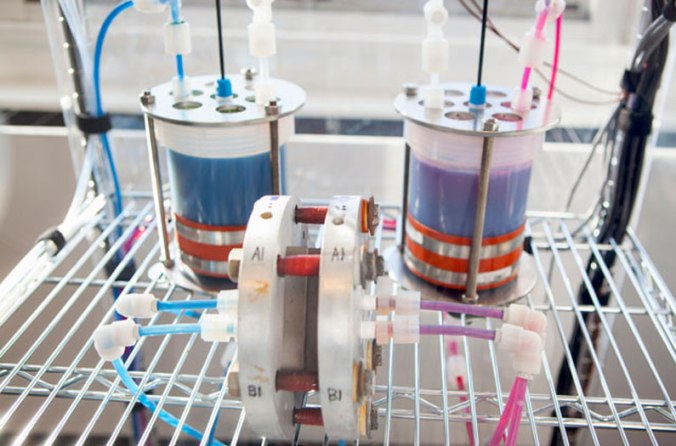
Photo: Organic mega-flow battery in the Harvard SEAS lab. (Photo by Eliza Grinnell, Harvard School of Engineering and Applied Sciences)

Thanks to Anthropocene:

This non-toxic battery lasts a decade, could be renewable energy’s missing piece

by Prachi Patel

As more and more people install solar panels, the need to store solar power is growing. Batteries that store sun-generated electricity are key for houses to have power at night or when it’s cloudy. But today’s battery technologies are riddled with issues such as high cost, toxicity, and short life. Continue reading

Energy Incubator, Alive And Well, For Now

ARPA_TA-610327846.jpg

STEVE PROEHL/GETTY IMAGES

Thanks to Wired for a story whose title starts The Government’s Green Energy Incubator Fights for Survival and is worth the read:

LIKE MANY FEDERAL employees, Eric Rohlfing will be watching President Trump on Tuesday night as he addresses a joint session of Congress. Specifically, the chemist will be listening carefully for clues to his future employment status. Rohlfing is the leader of a unique science and technology start-up agency tucked inside the Department of Energy, and he and his staff have been trying to convince the new administration to keep it alive. Continue reading

Jimmy’s Sunny Disposition

What a decent man, we say every time we see news of Jimmy Carter. This story is no exception, and we especially appreciate the example he is setting with this action:

PLAINS, Ga. — The solar panels — 3,852 of them — shimmered above 10 acres of Jimmy Carter’s soil where peanuts and soybeans used to grow. The panels moved almost imperceptibly with the sun. And they could power more than half of this small town, from which Mr. Carter rose from obscurity to the presidency. Continue reading

Offshore Windfarm Primetime

00offshorewind1-superJumbo.jpg

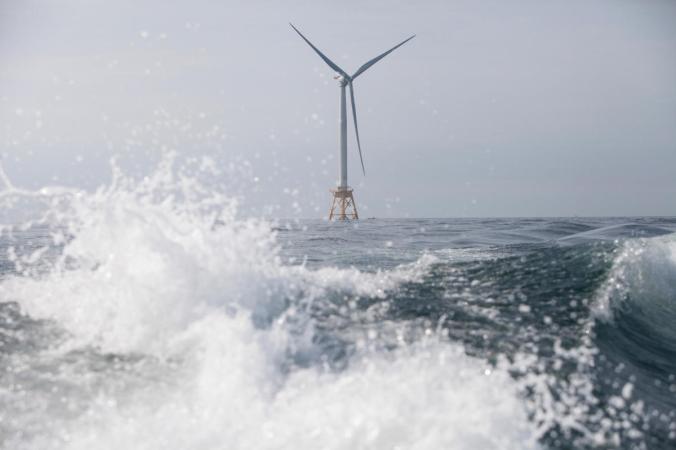
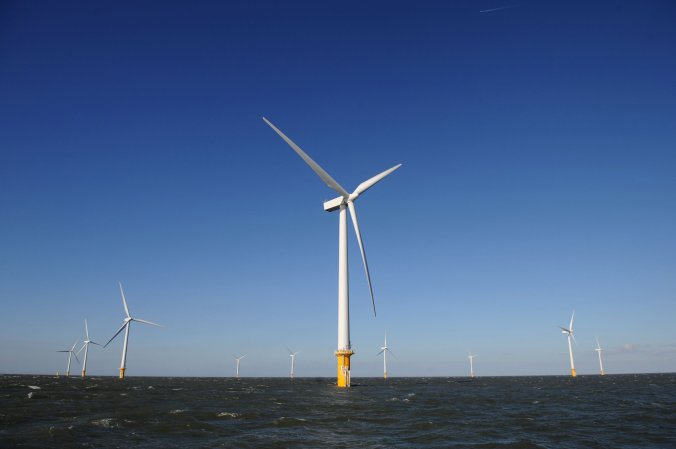
Dong Energy, a Danish company, is installing 32 turbines that stretch 600 feet high off the coast of Britain. Credit Andy Teebay

Thanks to the New York Times for this news from the world of alternative energy:

Offshore Wind Moves Into Energy’s Mainstream

By

LIVERPOOL, England — When engineers faced resistance from residents in Denmark over plans to build wind turbines on the Nordic country’s flat farmland, they found a better locale: the sea. The offshore wind farm, the world’s first, had just 11 turbines and could power about 3,000 homes. Continue reading

Clean Energy, Nordic Style

norway-dam

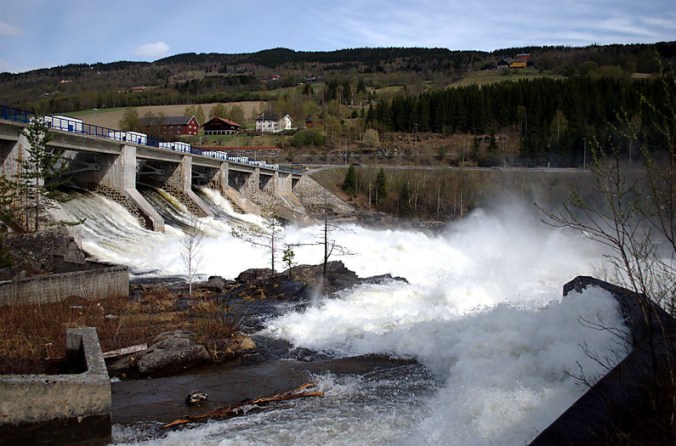
Hunderfossen Dam, Norway via Sigurd Rage/Flickr

Thanks to Anthropocene:

Nordic countries offer important lessons for clean-energy transition

Continue reading

Limits Of Bioenergy

5506555344_49220b13ab_b

Andrew Walsh, Flickr Creative Commons

Thanks to Anthropocene for this summary of the latest findings on how far we can expect renewable resources to take us in our efforts to reduce our carbon footprint:

Bioenergy has its limits for cutting emissions

Scotland’s Awesome Accomplishments

4248

Scotland’s new strategy calls for a totally carbon-free electricity sector by 2032. Photograph: Murdo Macleod for the Guardian

Thanks to the Guardian for their excellent environmental coverage:

Scotland sets ambitious goal of 66% emissions cut within 15 years

Holyrood ministers aim higher after hitting target of 42% cut by 2020 six years early, but say Brexit poses challenge Continue reading

Urban Shape & Ecoefficiency

mini-sao-paulo.jpg

Thanks to Anthropocene for this summary of a counterintuitive finding:

To save energy on heating and cooling, look at the shape of cities, not just their buildings

Solar Road In Normandy Breaks New Ground

3906

A test phase will evaluate whether the solar panel road can provide enough energy to power street lighting. Photograph: Christophe Petit Tesson/EPA

When we think of Normandy, apples and oysters come to mind. Calvados, too. We are happy those traditions endure but even happier to see the roads there as a hotbed of environmental innovation:

World’s first solar panel road opens in Normandy village

Route in Tourouvre-au-Perche cost €5m to construct and will be used by about 2,000 motorists a day during two-year test period Continue reading

Bright Spot To Close Out 2016

solar2016

Thanks to Bloomberg for a surprising bit of good news about the prospects for solar energy going forward:

World Energy Hits a Turning Point: Solar That’s Cheaper Than Wind

Emerging markets are leapfrogging the developed world thanks to cheap panels.

by Tom Randall

A transformation is happening in global energy markets that’s worth noting as 2016 comes to an end: Solar power, for the first time, is becoming the cheapest form of new electricity.  Continue reading

Winds Over The Water Serving Those On Shore

00windpower-superjumbo

The Block Island Wind Farm’s turbines off the coast of Rhode Island in August. They began spinning on Monday and will deliver electricity to Block Island, a community nearby. Credit Kayana Szymczak for The New York Times

 Thanks to the Science section of the New York Times:

America’s First Offshore Wind Farm Spins to Life

By

Until this week, all of the wind power generated in the United States was landlocked. Continue reading

Understanding The Solar-Carbon Threshold

sunset

Image: Daniel Parks/Flickr

We are constantly playing catch up with the terminology, let alone the science, of environmental efficiency in all its forms and considerations. Anthropocene delivers the daily goods, in the form of a summary of an environmentally-oriented scientific study, that we constantly find useful:

Solar power will cross a carbon threshold by 2018